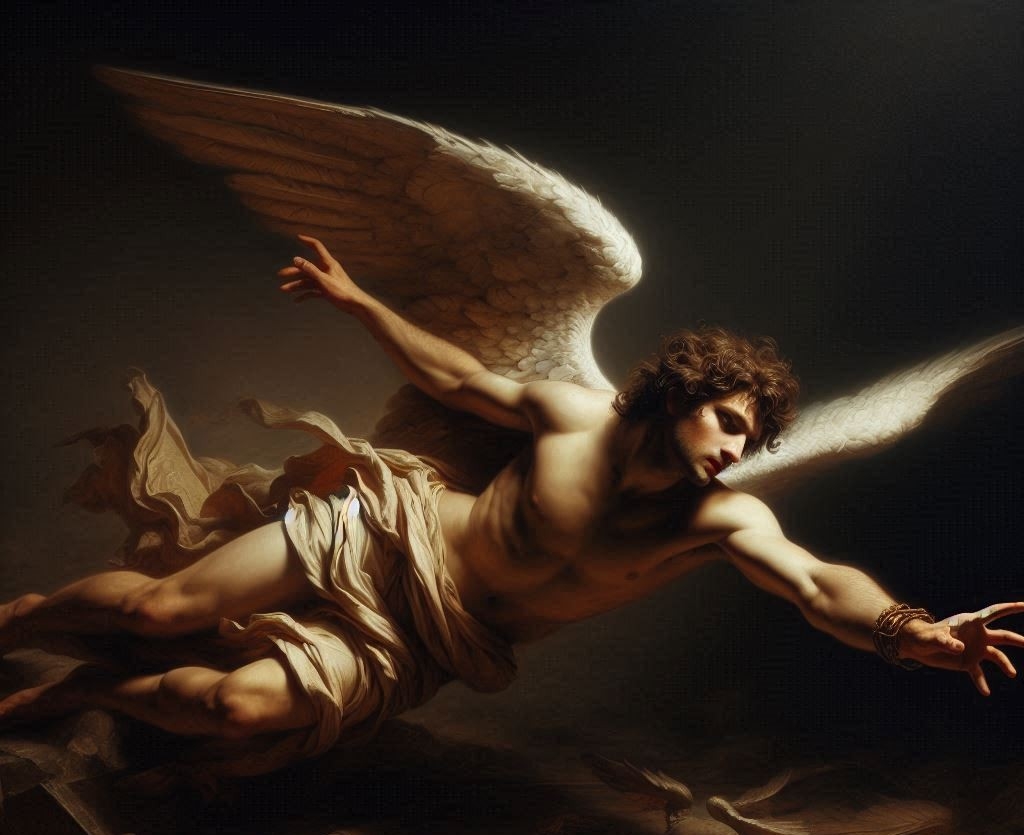
 Genesis 6:1-4 records an event that has puzzled scholars for years. Scholarly views vary concerning the meaning of the phrase “sons of God” in verses 2 and 4. There are three major views concerning this passage. In the first view, the “sons of God” are understood to refer to the godly line of Seth which intermarried with the ungodly line of Cain. Warren Wiersbe states, “What was Satan’s plan for defeating God’s people in Noah’s day? To entice the godly line of Seth (“the sons of God”) to mix with the ungodly line of Cain (“the daughters of men”) and thus abandon their devotion to the Lord.”[1] Thomas Constable agrees with Wiersbe. A second view is that demon possessed men married women. Concerning this view, Allen P. Ross states, “They [the sons of God] were probably powerful rulers who were controlled (indwelt) by fallen angels. It may be that fallen angels left their habitation and inhabited bodies of human despots and warriors, the mighty ones of the earth.”[2] Henry Morris agrees, saying, “these fallen angelic ‘sons of God’ accomplished their purposes by something equivalent to demon possession, indwelling the bodies of human men, and then also taking (or “possessing”) the bodies of the women as well.”[3] A third view is that the “sons of God” refers to fallen angels who took human form and cohabited with women to produce a genetically mixed race of beings. This view finds linguistic support, for the Hebrew phrase, bene ha-Elohim (בְנֵי־הָאֱלֹהִים) is used only a few times in Scripture, and in each occurrence, it refers to angels (Job 1:6; 2:1; 38:7). The argument for why these fallen angels would do this was to prevent God from fulfilling His word to Eve, that a “seed” would come from her body that would crush the head of the serpent (Gen 3:15). In favor of the fallen angel view, Arnold Fruchtenbaum writes:
Genesis 6:2 records the actual intermarriage that occurred. The first statement, that the sons of God saw the daughters of men that they were fair, presents the crisis. The sons of God in Hebrew is bnei ha-Elohim. This term, in the Hebrew Bible, is always a reference to angels, both good and bad ones. Examples occur in Job 1:6 and 2:1, where Satan was among the sons of God, and in Job 38:7 where the sons of God were present at creation. The Septuagint uses the same term in Deuteronomy 32:8, where it refers to angels. A variation of this term is bnei eilim, which is usually translated as “the sons of the Mighty,” a term also used of angels. Examples include: Psalm 29:1, the sons of the mighty or the sons of God; Psalm 89:6, the son of the mighty or the sons of God; and Psalm 82:6 uses a different variation, the sons of the Most High. Another form is the Aramaic bar Elohim, which means a son of God. So everywhere else this word is used, it is always in reference to angels, a point on which all expositors concur. Nevertheless, some wish to make Genesis 6 the one exception. However, it is not wise to make exceptions unless there are very good exegetical reasons to do so, and there is no good reason to make this one passage the exception to the rule.[4]
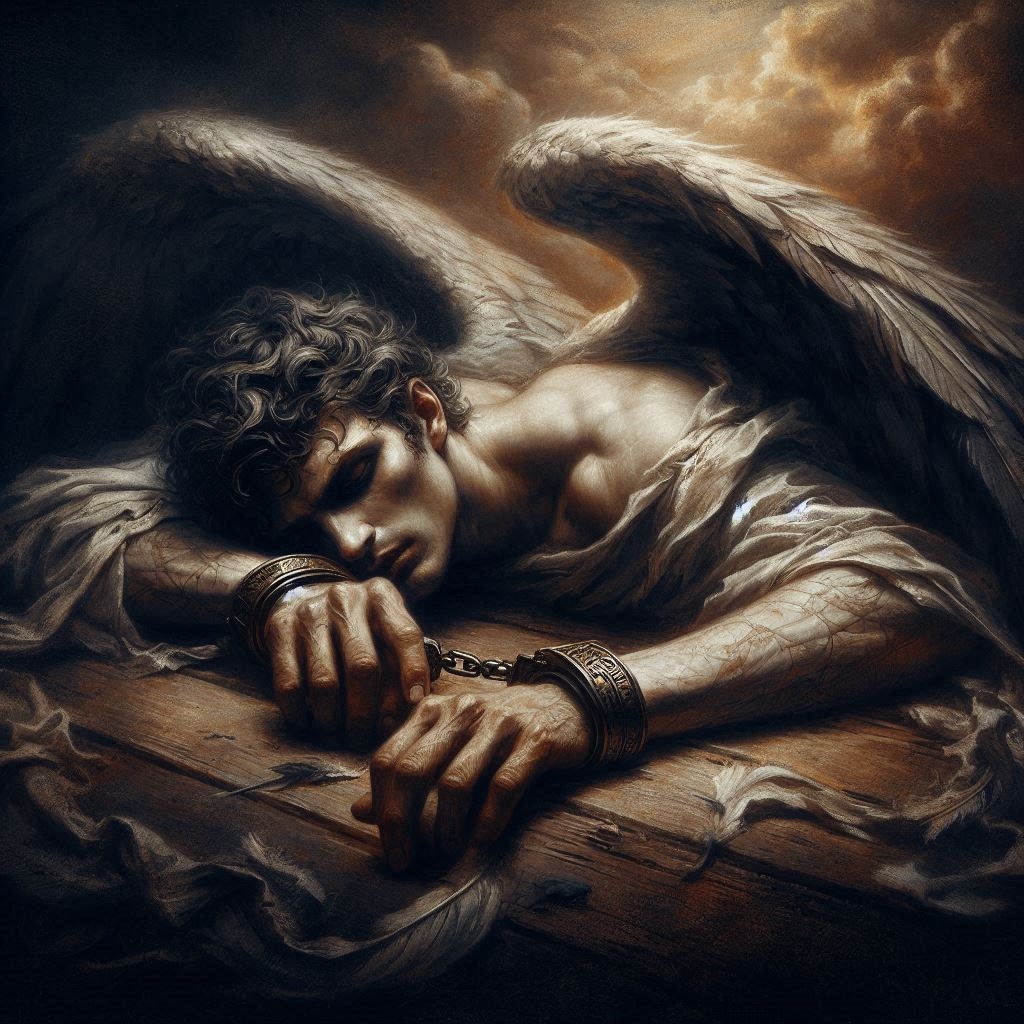 The NT would seem to support this understanding as well. The apostle Peter wrote about angels who are “now in prison” (1 Pet 3:19). Peter states these demons “were disobedient” during “the days of Noah” (1 Pet 3:20). In his second epistle, Peter wrote, “God did not spare angels when they sinned, but cast them into hell [Τάρταρος Tartaros – an abode of the damned] and committed them to pits of darkness, reserved for judgment” (2 Pet 2:4). Their angelic sin is connected with the days of Noah, in which God “did not spare the ancient world, but preserved Noah, a preacher of righteousness, with seven others, when He brought a flood upon the world of the ungodly” (2 Pet 2:5). Jude—the Lord’s half-brother—wrote about these fallen angels, saying, “And angels who did not keep their own domain, but abandoned their proper abode, He has kept in eternal bonds under darkness for the judgment of the great day” (Jude 1:6). Jude tells us something about their sin being connected with immoral sexual behavior, comparing it to “Sodom and Gomorrah and the cities around them, since they [the Sodomites] in the same way as these [fallen angels] indulged in gross immorality and went after strange flesh, are exhibited as an example in undergoing the punishment of eternal fire” (Jude 1:7). Concerning this statement by Jude, William MacDonald writes:
“We believe that Jude is referring to what is recorded in Genesis 6:1–7. The sons of God left their proper estate as angelic beings, came down to the earth in human form, and married the daughters of men. This marital union was contrary to God’s order and an abomination to Him. There may be a suggestion in verse 4 that these unnatural marriages produced offspring of tremendous strength and wickedness.”[5]
One objection to the fallen angel view is that Jesus said of resurrected believers, that they will not marry, “but are like angels in heaven” (Mat 22:30). This is true of believers in resurrected bodies who are obedient to the Lord in the eternal state. In this regard, they are obedient, “like angels in heaven” are obedient. However, fallen angels are not obedient, and so the argument from Matthew does not seem to apply.
It is noteworthy that the fallen angel view was held by Jewish scholars for centuries before the birth of Christ, and the same view was held by the early church for the first three centuries after the birth of Jesus.[6] It was not until the fourth century AD, especially under the influence of Augustine, that Christians began promoting the view that the “sons of God” in Genesis 6 referred instead to the godly line of Seth (City of God 15.23).
Lastly, it is possible these imprisoned angels are the ones currently kept in the Abyss, a temporary spiritual prison, and will be released during the Tribulation to inflict God’s judgment upon the world. This demonic hoard will be led by a powerful angel whose name in Hebrew is Abaddon and in Greek Apollyon (Rev 9:1-12). Additionally, four unnamed, but very dangerous angels, are said to be bound under the River Euphrates (Rev 9:13-16). These four angels will kill one third of mankind during the Great Tribulation.
Steven R. Cook, D.Min., M.Div.
If this article has enriched your understanding and walk with Christ, and you feel led to support my ministry, your generosity is greatly appreciated. Your gifts enable me to continue sharing the gospel of grace and providing in-depth biblical teachings. Thank you for partnering with me in this mission.
Related Articles:
- The Free Gift of God is Eternal Life
- The Armor of God
- Holy Angels and How They Influence Mankind
- Demons and How They Influence Mankind
- Satan as the Ruler of this World
- Satan’s Evil World-System
- Satan’s Strategies to Defeat God’s People
- Spiritual Attacks in the Natural Realm
- Spiritual Health in a Sick World
- Resist the Devil
[1] Warren W. Wiersbe, Be Basic, “Be” Commentary Series (Colorado Springs, CO: Chariot Victor Pub., 1998), 88.
[2] Allen P. Ross, “Genesis,” in The Bible Knowledge Commentary: An Exposition of the Scriptures, ed. J. F. Walvoord and R. B. Zuck, vol. 1 (Wheaton, IL: Victor Books, 1985), 36.
[3] Henry M. Morris, The Genesis Record: A Scientific and Devotional Commentary on the Book of Beginnings (Grand Rapids, MI: Baker Books, 1976), 169.
[4] Arnold G. Fruchtenbaum, Ariel’s Bible Commentary: The Book of Genesis, 1st ed. (San Antonio, TX: Ariel Ministries, 2008), 145.
[5] William MacDonald, Believer’s Bible Commentary: Old and New Testaments, ed. Arthur Farstad (Nashville: Thomas Nelson, 1995), 2341.
[6] For example, the Book of 1 Enoch—a widely read Jewish text from the Second Temple period—states, “And it came to pass when the children of men had multiplied… the angels, the children of the heaven, saw and lusted after them, and said to one another: ‘Come, let us choose us wives from among the children of men’” (1 Enoch 6:1–2). This interpretation remained dominant in early Christianity, with church fathers such as Justin Martyr affirming that “the angels transgressed this appointment… and begat children who are those that are called demons and devils” (Second Apology 5).