Controversial Passages in First John

First John makes a consistent distinction between position and fellowship, eternal life and temporal life quality. John is not testing who is saved; he is diagnosing spiritual health among those already saved (1 John 5:13). His purpose is pastoral and corrective, calling believers to walk in the light so that their experience aligns with their secure standing in Christ (1 John 1:6–7). Below is a catalogue of the major controversial texts in First John, with explanations that remain internally consistent and exegetically defensible.

  1. Walking in the Light vs. Walking in Darkness (1 John 1:6–7). “Walking” (peripateō) refers to conduct and life direction, not entrance into salvation. Light is the sphere of God’s will, truth, and fellowship. Constable notes, “Walking in the light means walking in the sphere that the light of God’s will prescribes. Here light does not mean God Himself, as in 1 John 1:5, but the sphere in which God lives and operates.”[1] Darkness is the sphere of carnality, error, and self-rule. A believer can walk in darkness without forfeiting eternal life (cf. John 10:28; 1 Cor. 3:1–3). What is affected is fellowship, joy, and experiential cleansing, not justification, which is already settled (cf. John 15:4; Eph. 5:8; Gal. 5:16; 1 John 1:9).
  2. “If we say we have no sin” (1 John 1:8). John includes himself (“we”), showing this refers to believers, not unbelievers (cf. 1 John 1:10). The denial is experiential and doctrinal self-deception, specifically a refusal to acknowledge the continuing presence of the sin nature (Rom. 7:18, 21–23; Gal. 5:17; 1 Pet. 2:11). The issue is arrogance and rejection of biblical anthropology, which blocks fellowship and growth (Eccl. 7:20; 1 Kings 8:46; Prov. 20:9; Ps. 143:2; Jam. 3:2). This verse refutes perfectionism.
  3. “If we say that we have not sinned” (1 John 1:10). This refers to the denial of personal acts of sin, not the absence of salvation. John again includes believers (“we”). To deny one’s personal sins is to contradict God’s truthful assessment, which John describes as “making Him a liar.” Personal sin does not result in loss of eternal life but broken fellowship and doctrinal malfunction. The phrase “His word is not in us” means God’s Word is not operating or governing the believer’s thinking and conduct. Confession restores fellowship; denial entrenches carnality (cf. 1 John 1:9).
  4. “If anyone sins, we have an Advocate with the Father” (1 John 2:1b). This assumes believers will sin (Eccl. 7:20; Jam. 3:2; 1 John 1:8), not that they must sin (cf. Rom. 6:12–14; Gal. 5:16).[2] Radmacher notes, “According to Greek grammar, the if before anyone sins carries the added sense of ‘and it is assumed that we all do.’ This statement is not an encouragement to sin but a warning to all Christians to be on guard against sinful tendencies.”[3] Advocacy is for believers only, since it presupposes an existing family relationship with God as “the Father” (cf. John 1:12; Rom. 8:15–16; Gal. 4:6). Salvation was settled once for all at the moment of faith in Christ (Rom. 3:28; 5:1) and is not overturned by post-salvation failure (John 3:16; 10:28; 1 Cor. 1:30). 1 John 2:1 teaches that when a believer sins, Jesus Christ speaks on his behalf before the Father, maintaining fellowship on the basis of His finished work, not because the believer remains sinless.
  5. “Whoever keeps His word, in him the love of God has been perfected” (1 John 2:5). In this verse, the phrase “the love of God” (hē agapē tou Theou) is best understood as an objective genitive, referring to the believer’s love directed toward God, not God’s love toward the believer. This love reaches maturity through obedience (cf. John 14:21; 1 John 2:3). The verse teaches that obedience to God’s Word brings the believer’s love for God to maturity in experience as he walks by faith. The issue is spiritual growth and fellowship, not the believer’s eternal standing before God.
  6. “The one who says he abides in Him ought himself to walk” (1 John 2:6). Abiding (menō) means “to continue in an activity or state…to remain in, to keep on.”[4] This is fellowship language, referring to remaining in active, experiential dependence on Christ. It describes the believer’s moment-by-moment walk, not a fixed positional status. This usage is consistent throughout the New Testament, where believers are exhorted to abide, showing that it is not automatic but maintained through obedience and adherence to truth (John 15:4–10; 1 John 2:24; 3:24). All believers are “in Christ,” but not all abide.
  7. Loving the World (1 John 2:15–17). Believers are warned not to love the world. This presupposes the capacity of regenerate people to do so. Loving the world does not mean proof or loss of salvation, but loss of intimacy with the Father and loss of eternal reward (cf. 1 Cor. 3:12–15).
  8. “They went out from us” (1 John 2:19), where “us” most naturally refers to the apostolic circle and its authoritative witness rather than to the church at large. Hodges notes, “The special deceptiveness of the ‘many antichrists’ was that they had once been part of the same fellowship to which the apostles themselves belonged: they went out from us. No other meaning than this one is really suitable in this context.”[5] The false teachers had once aligned themselves with apostolic instruction but later departed when their doctrine deviated, exposing that they never truly shared the apostles’ teaching. John’s concern is not to establish perseverance as a test of salvation, but to explain the rise of antichrists who abandoned apostolic truth, making the issue fidelity to revealed doctrine rather than the loss or proof of eternal life.
  9. “Everyone who practices righteousness is born of Him” (1 John 2:29) describes the observable outworking of God’s life in the believer, not a test for determining who is saved. John uses present practice to show how divine influence expresses itself in conduct. Constable notes, “Practicing righteousness is normal, but not inevitable, for one who is truly born of God. Such behavior identifies one as a Christian. However, not everyone who practices righteous behavior is a Christian, because non-Christians can behave righteously, and Christians can walk in darkness. Therefore, we should not judge a person’s salvation by his or her behavior.”[6]
  10. “No one who abides in Him sins” (1 John 3:6) is durative, describing what is true while a believer is actively abiding in Christ. It does not teach sinless perfection, but that fellowship with Christ precludes sin at that moment; when fellowship is broken, sin resumes. This aligns with the command to “abide in Me” (John 15:4–6) and the promise that walking by the Spirit prevents the fulfillment of the flesh (Gal. 5:16).
  11. “No one who is born of God practices sin” (1 John 3:9). John is speaking of the new nature, not the whole person. The one “born of God” possesses God’s seed, the imparted life of regeneration, and that life cannot sin because sin never originates from the new nature. Sin arises from the flesh, which remains present in the believer until glorification, as Paul plainly states, “nothing good dwells in me, that is, in my flesh” (Rom. 7:18), and as John himself affirms, “If we say that we have no sin, we are deceiving ourselves” (1 John 1:8). John is not denying that believers commit sins; he is explaining that sin is inconsistent with the believer’s new nature in Christ. According to Constable, “The Christian becomes a partaker of God’s divine sinless nature when he or she experiences the new birth. The Christian sins because he also has a sinful human nature. However, in this verse, John was looking only at the sinless nature of the indwelling Christ that we possess.”[7]
  12. “By this the children of God and the children of the devil are obvious” (1 John 3:10). “Obvious” (phaneros) means “being evident so as to be readily known, visible, clear, plainly to be seen.”[8] It refers to observable conduct, not eternal destiny. John is contrasting patterns of influence, not redefining sonship. Baily notes, “Christians who are abiding in God will produce good works, and others can identify them as Christians by their godly behavior.”[9] A believer can act under satanic influence without becoming a child of the devil (cf. Matt. 16:23).
  13. “We know that we have passed out of death into life, because we love the brethren” (1 John 3:14). This is experiential death and life. John is speaking of vitality and fellowship, not justification. Love evidences spiritual health, not eternal security. Hodges notes, “It is a claim to a certain quality of experience. The apostles are able to recognize their experience of love as an experience of life rather than death.”[10]
  14. “No murderer has eternal life abiding in him” (1 John 3:15) means that a believer who lives in hatred is not experiencing the life he already possesses. John is not denying salvation, but the present enjoyment and expression of eternal life, just as Christ’s abiding presence is tied to fellowship (John 15:4). This is evident in believers such as David (2 Sam. 11:14–17; Ps. 32:1–5), Moses (Ex. 2:11–12; Matt. 17:3), and Paul (Acts 7:58; 8:1; 22:4), who committed murder yet remained saved. The issue is broken fellowship, not lost salvation.
  15. “Everyone who loves is born of God” (1 John 4:7). This verse teaches that love originates from God and is expressed when believers walk in fellowship with Him. John does not claim that all who are born of God will necessarily persevere in love, nor that the absence of love proves one was never saved. Love marks spiritual maturity and active fellowship, not the certainty or permanence of one’s walk, thereby undercutting the claim that perseverance in godliness is the necessary proof of regeneration.
  16. “Whoever does not love does not know God” (1 John 4:8). This continues the same line of thought as verse 7 by addressing experience, not entrance into salvation. The verb ginōskō points to personal, relational knowledge based on obedience, so a believer who fails to love is not enjoying intimate fellowship with God, even though his position as God’s child remains secure. John is describing the loss of experiential knowledge of God, not the absence of regeneration.
  17. “Perfect love casts out fear” (1 John 4:18). Fear is associated with divine discipline and accountability, not eternal condemnation. Mature love stabilizes the believer in fellowship and confidence. Hodges states, “The matured experience of God’s love is incompatible with fear and expels fear from the heart.”[11]
  18. “Whatever is born of God overcomes the world” (1 John 5:4). This verse teaches that victory belongs to every believer from the moment of faith in Christ. It does not promise a life of uninterrupted success over sin and the world. Overcoming is grounded in faith, which must continue to be exercised (cf. Rom. 8:37; 1 John 5:5). Scripture also makes clear that believers can live inconsistently with that victory when they set their minds on the flesh rather than on the things of the Spirit or drift into unbelief (cf. 1 Cor. 3:1–3; Heb. 3:12). Constable states, “Every Christian has overcome the world by his or her initial faith in Jesus Christ…To continue to overcome the world, the flesh, and the devil, all we need to do is continue to exercise faith in God (cf. Rom. 8:37; 1 Cor. 15:57).”[12]
  19. “The one who does not have the Son does not have the life” (1 John 5:12). John speaks positionally. Eternal life is secured solely by possessing the Son through faith, not by obedience, love, or perseverance (John 3:16; 5:24; 6:47; Rom. 3:28; 5:1; Eph. 2:8–9).
  20. Sin Leading to Death (1 John 5:16–17). John warns of extreme divine discipline for believers who persist in willful rebellion, which can culminate in physical death. This does not involve loss of salvation but removal from earthly life, as seen in the Corinthians who died under discipline (1 Cor. 11:30–32) and in Ananias and Sapphira (Acts 5:1–11).
  21. “We know that no one who is born of God sins” (1 John 5:18). This restates the principle of 1 John 3:9 and refers to the regenerate nature, which does not practice sin or live under its dominion (1 John 3:6, 9; Rom. 6:6–11). John does not deny acts of sin in the believer’s life (1 John 1:8–10; 2:1), but affirms God’s protecting work so that the evil one does not rule the believer who lives in dependence on Him (John 10:28–29; Jam. 4:7).

In summary, First John is not a salvation test. It is a fellowship manual. The epistle answers this question: How does eternal life function in daily experience? Eternal life is free and irrevocable. Fellowship is conditional, dynamic, and dependent on walking in truth.

Steven R. Cook, D.Min., M.Div.

If this article has enriched your understanding and walk with Christ, and you feel led to support my ministry, your generosity is greatly appreciated. Your gifts enable me to continue sharing the gospel of grace and providing in-depth biblical teachings. Thank you for partnering with me in this mission.

Related Articles:

[1] Tom Constable, Tom Constable’s Expository Notes on the Bible (Galaxie Software, 2003), 1 John 1:7.

[2] The “if” in 1 John 2:1 is a first-class condition, assuming the reality of the case: believers do sin. John’s point is not uncertainty or threat, but assurance that when sin occurs, Christ’s advocacy with the Father is already in place.

[3] Earl D. Radmacher, et al, The Nelson Study Bible: New King James Version (Nashville: T. Nelson Publishers, 1997), 1 John 2:1.

[4] Johannes P. Louw and Eugene Albert Nida, Greek-English Lexicon of the New Testament: Based on Semantic Domains (New York: United Bible Societies, 1996), 655.

[5] Zane C. Hodges, The Epistle of John: Walking in the Light of God’s Love (Irving, TX: Grace Evangelical Society, 1999), 108.

[6] Tom Constable, Tom Constable’s Expository Notes on the Bible, 1 John 2:29.

[7] Ibid., 1 John 3:9.

[8] William Arndt et al., A Greek-English Lexicon of the New Testament and Other Early Christian Literature (Chicago: University of Chicago Press, 2000), 1047.

[9] Mark Bailey et al., Nelson’s New Testament Survey: Discover the Background, Theology and Meaning of Every Book in the New Testament (Nashville: Word, 1999), 587.

[10] Zane C. Hodges, The Epistle of John, 156.

[11] Zane C. Hodges, “1 John,” in The Bible Knowledge Commentary: An Exposition of the Scriptures, ed. J. F. Walvoord and R. B. Zuck, vol. 2 (Wheaton, IL: Victor Books, 1985), 900.

[12] Tom Constable, Tom Constable’s Expository Notes on the Bible, 1 John 5:4.

The Finished Work of the Cross

The cross is God’s righteous solution to the problem of sin, as well as His greatest display of love toward sinners. Law and grace, life and death, as well as time and eternity all intersect at the cross; displaying a divine wisdom that staggers the imagination and leads the humble heart to bow in thankful adoration. To understand the cross of Christ is to understand the heart of God toward a fallen world He wants to save.

Scripture reveals that the cross satisfied the righteous demands of a holy God: “For all have sinned and fall short of the glory of God” (Rom. 3:23), and “the wages of sin is death” (Rom. 6:23a). God’s justice could not ignore sin. Yet at the cross, God publicly displayed Christ “as a propitiation in His blood through faith” so that He would be “just and the justifier of the one who has faith in Jesus” (Rom. 3:25–26). The Greek term hilastērion speaks of satisfaction. The wrath that sin deserved was borne by Another. God’s justice was not set aside; it was fulfilled in the death of Christ.

At the same time, the cross manifests the immeasurable love of God, for “God demonstrates His own love toward us, in that while we were yet sinners, Christ died for us” (Rom. 5:8). The death of Christ was substitutionary, for “He Himself bore our sins in His body on the cross” (1 Pet. 2:24), and “He made Him who knew no sin to be sin on our behalf, so that we might become the righteousness of God in Him” (2 Cor. 5:21). The Innocent died for the guilty. Peter wrote, “Christ died for sins once for all, the just for the unjust, so that He might bring us to God” (1 Pet. 3:18). This was an act of love, for we cannot save ourselves.

The cross also marks the decisive turning point in history. It stands at the center of God’s redemptive plan, foreknown before the foundation of the world (1 Pet. 1:18–20), yet accomplished “when the fullness of the time came” (Gal. 4:4). There Jesus took upon Himself the judgment due us, “offered one sacrifice for sins for all time” (Heb. 10:12), cried, “It is finished” (John 19:30), and secured eternal redemption (Heb. 9:12). Nothing can be added to the finished work of Christ. Salvation rests entirely upon what He accomplished.

Therefore, the issue for every sinner is not works or reform, but faith alone in Christ alone. The matter is simple: “Believe in the Lord Jesus, and you will be saved” (Acts 16:31), for “Whoever believes in Him shall not perish, but have eternal life” (John 3:16). The cross does not merely reveal God’s heart; it opens the way of reconciliation, for “God was in Christ reconciling the world to Himself, not counting their trespasses against them” (2 Cor. 5:19). The cross is both the vindication of divine righteousness and the invitation of divine grace. If you have never trusted in Christ, believe in Him now for the free gift of eternal life, and receive the salvation He accomplished for you at the cross.

Steven R. Cook, D.Min., M.Div.

If this article has enriched your understanding and walk with Christ, and you feel led to support my ministry, your generosity is greatly appreciated. Your gifts enable me to continue sharing the gospel of grace and providing in-depth biblical teachings. Thank you for partnering with me in this mission.

Related Articles:

Why Grace and Works Don’t Mix

Scripture states, “The wages of sin is death, but the free gift of God is eternal life in Christ Jesus our Lord” (Rom 6:23). These are two different systems with different outcomes. One is a works paradigm; the other is a grace paradigm. Works is a system where payment is tied to performance. In this framework, every laborer is paid what he deserves. The Greek word opsōnia—translated “wages”—was used for the payment a soldier or worker received for services rendered. Paul previously established that “There is none righteous, not even one … for all have sinned and fall short of the glory of God” (Rom 3:10, 23). We produce sin, and what we earn is death—not just physical death, but spiritual separation from God now and eternal death later (Eph 2:1; Rev 20:14). This is strict justice. It’s what we deserve for what we’ve done. And there’s no mercy or grace in a paycheck.

But the second half of the verse is a word of grace: “But the free gift of God is eternal life in Christ Jesus our Lord” (Rom 6:23b). Here, Paul shifts the entire paradigm. We are no longer talking about wages, we are talking about grace. The word translated “free gift” is charisma, and it refers to a grace gift. It is not earned, merited, or achieved. It is not God’s reward for being good. It is a gift for the guilty, the unrighteous, the undeserving. It is rooted solely in the character and bounty of the Giver, not in the performance of the recipient. Grace flips the script. Where wages are earned by sinners, grace is given by God to the undeserving. And the gift He gives is eternal life, which means it lasts forever. It comes “in Christ Jesus our Lord,” meaning it is grounded entirely in His work, not ours. Jesus lived the perfect life we could not live, died the death we deserved, and rose victorious over sin and death (2 Cor 5:21; Rom 4:25). Now He offers us what we could never earn—eternal life. And it is offered freely, paid in full, and received by faith alone in Christ alone. Eternal life is not found in self-reformation, law-keeping, or good deeds (all works-based systems). It is found only in Jesus, our Savior (Acts 4:12).

These two paradigms cannot coexist. One is a works-based system; the other is a grace-based system. One puts man at the center, focusing on human effort and merit. The other puts God at the center, highlighting divine generosity and mercy. One ends in just condemnation; the other in undeserved salvation. The works paradigm always produces death because it demands perfection, and “all have sinned and fall short of the glory of God” (Rom 3:23). But the grace paradigm makes salvation possible because it depends not on the sinner, but on the Savior. Scripture declares, “For by grace you have been saved through faith; and that not of yourselves, it is the gift of God; not as a result of works, so that no one may boast” (Eph 2:8-9). Grace silences boasting, exalts Christ, and offers the free gift of eternal life to any sinner willing to come to Jesus. Scripture states, “whoever believes in Him shall not perish, but have eternal life” (John 3:16).

The choice is before us every day: keep living by a works-based system and collect eternal death, or believe in Jesus and receive the free gift of eternal life. There is no third option. There is no hybrid model. One path leads to ruin; the other to life. If salvation could be earned, it would exalt man. But because it is a gift, it glorifies God. The cross is the proof that we could never save ourselves, and the resurrection is the guarantee that Jesus has done all the saving work for us. All that remains is to believe Him. The empty hand of faith simply receives what the grace of God freely gives. Take the gift, and take it now. Don’t wait another day: “Believe in the Lord Jesus, and you will be saved” (Acts 16:31).

Steven R. Cook, D.Min., M.Div.

If this article has enriched your understanding and walk with Christ, and you feel led to support my ministry, your generosity is greatly appreciated. Your gifts enable me to continue sharing the gospel of grace and providing in-depth biblical teachings. Thank you for partnering with me in this mission.

Related Articles:

Fullness in Christ

A Christian is not saved because he does things for God; rather, he is one for whom God has done great things to bring about salvation. Eternal salvation is never about what we accomplish for Him, but about what He has accomplished for us through the person and work of the Lord Jesus Christ on the cross (Eph 2:8-9; Tit 3:5). Jesus is the eternal Son of God (John 1:1, 14), and “in Him all the fullness of Deity dwells in bodily form” (Col 2:9). In His humanity, Jesus lived a sinless life (1 John 3:5), and willingly went to the cross and died a death He did not deserve (Mark 10:45; John 10:18), and provides the life we can never earn (John 3:16; 10:28; 1 Pet 3:18). At Calvary, Christ bore our sins in His body (1 Pet 2:24), paid the full penalty we deserved (Rom 5:8), and secured the gift of eternal life for all who believe in Him (John 3:16). Once eternal life is received, it is locked in (John 10:28), we are sealed forever (Eph 1:13-14), and it cannot be revoked (Rom 11:29).

Once saved, the humble and obedient believer is called to walk in step with God, glorifying Him and edifying others (1 Cor 10:31; 1 Th 5:11). This new walk is not fueled by personal willpower but by divine enablement (Eph 5:18). God Himself has equipped the believer for such a life by placing him into union with Christ (1 Cor 1:30), granting him new life (2 Cor 5:17), indwelling him with the Holy Spirit (Rom 8:9), entrusting him with a spiritual gift (1 Pet 4:10), and providing time and opportunity for growth (2 Pet 3:18). God, in His grace, has supplied all that is necessary for life and godliness, for “His divine power has granted to us everything pertaining to life and godliness” (2 Pet 1:3). There’s no excuse for failure in the Christian life. None whatsoever.

As the believer advances toward spiritual maturity (Heb 6:1), his growth is marked by walking by faith (2 Cor 5:7) and applying the spiritual resources God has given. The Spirit empowers obedience (Eph 5:18), the Word renews the mind (Rom 12:2), and prayer cultivates dependence (Phil 4:6-7). These are the means of grace through which the believer experiences the fullness of life Christ promised. Jesus said, “I came that they may have life, and have it abundantly” (John 10:10). He came to give, not to get. While eternal life is a free gift received at the moment of faith in Christ (phase one), the abundance He promises is enjoyed in the believer’s daily walk (phase two). As born-again Christians, we step into this fullness when we humbly submit to Him (Jam 4:7), learn and live His Word by faith (2 Tim 3:16-17), and live sacrificially for the good of others (Phil 2:3-4). These blessings belong to phase two of the Christian life—blessings contingent upon obedience and faith—and they overflow in the joy of fellowship with Christ (John 15:10-11). Abundant life is not automatic; it is cultivated in the soil of obedience and watered by daily communion with the Savior. The Christian who is disobedient to God and pursues sinful living brings down God’s discipline (Heb 12:6), and forfeits blessings now and in eternity (1 Cor 3:12-15).

The maturing Christian learns to keep his focus on Christ, drawing strength from Him in every circumstance (Phil 4:13). He understands that the Christian life is not a sprint of self-effort but a steady walk of faith, empowered by God’s Spirit and informed by God’s Word (Gal 5:16, 25). As he lives in fellowship with God, his life begins to bear the fruit of the Spirit—love, joy, peace, and other virtues that reflect Christ’s character (Gal 5:22-23). These virtues do not develop overnight but are the steady harvest of a heart yielded to God over time (Col 1:10).

This is the ideal Christian life—a life of humility and obedience that glorifies God and edifies others. It is not lived in order to keep salvation, nor to prove oneself worthy of it, but as a grateful response to the unearned grace that saved us in the first place (Col 3:17). It is the life God designed for His children—a life lived by faith, under grace, and in the power of the Spirit, so that in all things He might receive the glory and honor due His name (Rom 11:36). And when such a life is lived, it becomes a visible testimony to the watching world that Jesus truly changes everything. Jesus said, “Let your light shine before men in such a way that they may see your good works, and glorify your Father who is in heaven” (Matt 5:16).

Steven R. Cook, D.Min., M.Div.

If this article has enriched your understanding and walk with Christ, and you feel led to support my ministry, your generosity is greatly appreciated. Your gifts enable me to continue sharing the gospel of grace and providing in-depth biblical teachings. Thank you for partnering with me in this mission.

Related Articles:

When the Gospel Becomes a Burden

Lordship Salvation has left a trail of wounded believers in its wake. It burdens the sinner with front-loaded demands that God never required for salvation. It subtly shifts the spotlight from Christ’s finished work to the sinner’s ongoing commitment. The result? Endless introspection, nagging fear, and a gospel of probation rather than pardon. Instead of proclaiming the cross as the place where sin was dealt with once and for all, Lordship theology makes it the starting line of a lifelong test. “Did I repent enough?” “Did I truly surrender?” “Did I truly turn form my sin?” “Have I made Jesus Lord enough?” These questions don’t lead to peace. They lead to paralysis. The wounded sit in the pews wondering if they ever really got saved—because their performance hasn’t lived up to the fine print someone added to the gospel.

This system collapses the biblical distinction between justification and sanctification. Justification is a legal declaration by God, the moment He credits righteousness to the one who believes (Rom 3:28; 4:5; 2 Cor 5:21; Phil 3:9). Sanctification is the lifelong process of spiritual growth, where the justified believer learns to walk with God and grow in grace (1 Pet 2:2; 2 Pet 3:18). Lordship Salvation refuses to let these doctrines breathe. It demands that you prove you’re justified by the way you live, and if you don’t live a certain way, then you were never justified to begin with. That’s not biblical; that’s backdoor works-righteousness. It may sound pious to insist that salvation must result in a transformed life, but when that transformation becomes the test of genuine faith, grace gets strangled. God justifies the ungodly (Rom 4:5), not the already-reformed.

Eternal life is not earned. It’s not a reward. It’s a gift—fully paid for by Jesus, freely offered to us. Paul could not be clearer: “For the wages of sin is death, but the free gift of God is eternal life in Christ Jesus our Lord” (Rom 6:23). Jesus—the eternal Son of God—bore the penalty for our sins on the cross. He died, was buried, and rose again the third day (1 Cor 15:3-4). That’s the gospel. When we believe in Him—trust in Him alone—we receive eternal life. Scripture states, “whoever believes in Him shall not perish, but have eternal life” (John 3:16b). Jesus said, “I give eternal life to them, and they will never perish” (John 10:28a). This life is not on layaway. It’s not on trial. It’s not a reward for surrender. It is received at the moment of faith—and never lost.

Some object, “That’s too easy.” Easy for us, yes. But not for Him. Our salvation was bought with infinite cost—the blood of the Son of God (1 Pet 1:18-19). We insult grace when we treat it as cheap or shallow. It cost Him everything so it could be free to us. If it weren’t free, none of us could afford it. And if we had to earn it, we’d all be doomed. The cross is not a partial payment. Jesus declared, “It is finished” (John 19:30). Paid in full. God is satisfied (1 John 2:2). The work is done. So now, it’s not about what we do for Him—it’s about whether we’ll trust what He did for us.

After we’re saved, that’s when the real journey begins. Not to stay saved, not to prove we’re saved, but because we are saved. We are called to learn God’s Word (2 Tim 2:15), walk by faith (2 Cor 5:7), grow in righteousness (Tit 2:11-12), glorify Him in all things (1 Cor 10:31), and build up others in the faith (1 Th 5:11). But these things are part of the Christian life—not conditions for becoming a Christian. Confusing those two distorts the gospel and crushes the soul. Spiritual growth takes time. It’s not automatic. It doesn’t look the same in everyone. Some believers grow quickly. Others crawl. Some fall flat on their face and need to be lifted up again—and again. But salvation isn’t on the line. It never was.

The biblical message is this: “believe in the Lord Jesus Christ, and you will be saved” (Acts 16:31). Not “might,” not “eventually,” not “if you really mean it.” Will be. Because salvation is not about what we bring to God—it’s about what God did for us in Christ. The moment we trust Him, we are sealed with the Holy Spirit (Eph 1:13), adopted into God’s family (Gal 4:4-7), and declared righteous in His sight (2 Cor 5:21; Phil 3:19). That’s not license to sin. That’s the foundation for love, gratitude, and growth. The grace that saves us also teaches us to deny ungodliness—not through fear, but through freedom (Tit 2:11-12). Anything less isn’t biblical. It’s bondage. And Christ died to set us free.

Friend, if you’ve been weighed down by the fear-driven demands of a gospel that sounds more like a contract than a gift, then hear this clearly: Jesus is enough. Right now—where you are, just as you are—you can receive the free gift of eternal life by believing in Him. Not by turning over a new leaf. Not by making promises. Not by reforming your life. But by placing your trust in the One who died in your place and rose again. He did all the work. He bore all the wrath. He satisfied every demand of God’s justice. All that’s left is for you to believe. That’s not cheap grace—it’s priceless grace, fully paid for, and freely offered. “Whoever believes in Him has eternal life” (John 6:47). That “whoever” includes you. Believe in the Lord Jesus Christ today—and rest in the unshakable promise of God’s salvation.

Steven R. Cook, D.Min., M.Div.

If this article has enriched your understanding and walk with Christ, and you feel led to support my ministry, your generosity is greatly appreciated. Your gifts enable me to continue sharing the gospel of grace and providing in-depth biblical teachings. Thank you for partnering with me in this mission.

Related Articles:

False Additions to the Gospel

The gospel is the good news that God, in His grace, has provided a way of salvation through the death and resurrection of His Son, Jesus Christ. Though all have sinned and fall short of the glory of God (Rom 3:23), Jesus—the eternal Son of God—took our sins upon Himself and paid the full penalty through His death on the cross (Mark 10:45; 1 Pet 2:24; 3:18). He was buried and rose again on the third day (1 Cor 15:3-4), proving His victory over sin and death (Rom 6:9). God now offers eternal life as a free gift to anyone who believes in Jesus Christ alone as Savior (John 3:16; Eph 2:8-9). We are not saved by good works, religious rituals, or personal reform (Rom 4:4-5), but by faith alone in Christ alone (Acts 4:12; 16:31). The moment we believe, we are forgiven (Acts 10:43), declared righteous (Rom 3:28), and given eternal life (John 10:28), secure forever in God’s grace (Rom 5:1).

Sadly, many well-meaning people muddy the clarity of the gospel by adding extra steps God never required. These additions shift the spotlight from Christ’s finished work to our own efforts, emotions, or rituals. One popular phrase is “Invite Jesus into your heart.” It sounds spiritual, but it’s found nowhere in Scripture. Salvation doesn’t happen by inviting Jesus into a trash heap—it happens by believing in Him for eternal life (John 3:16; Acts 16:31). Another common error is “Say the sinner’s prayer.” While someone may express faith through prayer, no prayer saves. We’re saved by trusting in Christ (John 3:16; Acts 4:12), not by reciting a prayer.

Another extra-biblical tradition is “Walk the aisle” or “come forward.” Moving your body doesn’t move your soul. Plenty have walked aisles without believing, and plenty have believed without ever leaving their seat. The gospel isn’t about geography—it’s about faith. Similarly, “Give your life to Christ” or “Make Jesus Lord of your life” flips the gospel on its head. We don’t give anything to be saved—we receive what God gives freely (Rom 6:23; John 1:12). And while Jesus is Lord, salvation is not about surrendering every aspect of life. That comes as we grow spiritually after salvation, but it is not a condition for it (Rom 4:5).

Some say you must “turn from all your sins” to be saved. But that’s reformation, not redemption. Repentance in salvation means a change of mind—specifically about Christ—not a vow to clean yourself up (Acts 17:30). Sanctification comes later; salvation is a gift received by faith. The most dangerous twist is the “believe and…” gospel—believe and be baptized, believe and do good works, believe and join a church. But once you add anything to faith, you cancel the gospel (Gal 1:6-9). Paul said it best: “Believe in the Lord Jesus, and you will be saved” (Acts 16:31). Period.

Salvation is by grace alone (Rom 6:23; Eph 2:8-9), through faith alone (Rom 3:28; Gal 2:16), in Christ alone (John 14:6; Acts 4:12). No gimmicks. No rituals. No religious hoops to jump through. Just faith in the Savior who finished the work. As Jesus said, “The one who believes in Me has eternal life” (John 6:47), and “I give eternal life to them, and they will never perish; and no one will snatch them out of My hand” (John 10:28). That’s simple, clear, and forever.

In summary, the gospel is good news precisely because it’s not about what we do for God, but about what He has done for us through Jesus Christ. When we add anything to faith—no matter how religious or heartfelt—we muddy the message of the gospel and rob it of its power. God’s offer of eternal life is simple and pure: “Believe in the Lord Jesus, and you will be saved” (Acts 16:31). That’s it. No aisle to walk, no prayer to recite, no checklist to complete. Just trust in the crucified and risen Savior who paid it all. Strip away the clutter, and you’ll find a gospel that is truly grace from start to finish—free, full, and forever.

Dr. Steven R. Cook

If this article has enriched your understanding and walk with Christ, and you feel led to support my ministry, your generosity is greatly appreciated. Your gifts enable me to continue sharing the gospel of grace and providing in-depth biblical teachings. Thank you for partnering with me in this mission.

Related Articles:

Eternal Life Is Free, but Eternal Rewards Are Earned

Eternal life is a free gift. Rewards are earned. We can’t lose our salvation—ever, because it’s an irrevocable free gift, by grace alone, through faith in Christ alone (John 10:28; Eph 2:8-9). It’s the gift of God (Rom 6:23), not of works (Rom 4:4-5). But while eternal life is secure, rewards are not. We can forfeit eternal rewards through failure in the spiritual life. Rewards are tied to faithfulness, obedience, and production under the filling of the Spirit. They’re not about keeping salvation. They’re about honor, authority, privilege, and commendation before Jesus Christ at the Judgment Seat of Christ (Rom 14:10; 2 Cor 5:10). Salvation gets us into heaven. Rewards determine what happens after we get there. We must not confuse the two. Paul said, “the free gift of God is eternal life in Christ Jesus our Lord” (Rom 6:23b). We cannot earn what is freely given (think about that). But what is earned can be lost. This is why John warned, “Watch yourselves, that you do not lose what we have accomplished, but that you may receive a full reward” (2 John 1:8). The possibility of losing rewards is real; otherwise, John’s admonition is pointless. Here are key rewards we can either gain or lose:

First—commendation and praise from Christ. At the Judgment Seat of Christ, we’re told, “each man’s praise will come to him from God” (1 Cor 4:5). This is divine approval—recognition from the Lord—His words, “Well done, good and faithful servant” (Matt 25:21). That’s our goal. But if we blow it in the spiritual life, we forfeit His praise. We’re saved, but no approval. No “well done.” No commendation. We’ll enter eternity by grace, but without this recognition.

Second—crowns. Scripture names multiple crowns: the imperishable crown for disciplined advance (1 Cor 9:25), the crown of righteousness for loving His appearing (2 Tim 4:8), the crown of life for enduring testing (Jam 1:12; Rev 2:10), and the crown of glory for faithful pastors (1 Pet 5:4). These crowns represent honor and privilege in eternity. But if we waste our time, quit, or get distracted by the world, the flesh, or the devil, we risk losing our crown (Rev 3:11). The crown is a reward—not a guarantee.

Third—rulership with Christ. Faithfulness in time determines authority in the Millennial Kingdom. To the faithful steward, Jesus says, “Well done… have authority over ten cities” (Luke 19:17). Greater faithfulness means greater rulership. Paul wrote, “If we endure, we will also reign with Him” (2 Tim 2:12a). But if we fail in this life, we’re still in the kingdom by grace—but no crown, no authority, no rulership.

Fourth—eternal treasures. Jesus instructed His disciples, saying, “Store up for yourselves treasures in heaven” (Matt 6:20). This refers to spiritual wealth accumulated through obedience, generosity, and good works. Paul echoed this teaching, telling wealthy believers to “store up for themselves the treasure of a good foundation for the future” (1 Tim 6:18-19). Some of us will enter eternity spiritually rich; others, spiritually bankrupt. Still saved. Still in heaven. But without treasure.

Fifth—loss of opportunity and blessing in time. Prolonged carnality and being out of fellowship cause us to forfeit opportunities, impact, and blessings here and now. Paul wrote, “I could not speak to you as to spiritual men, but as to men of flesh, as to infants in Christ” (1 Cor 3:1). However, recovery of fellowship is possible, for “If we confess our sins, He is faithful and righteous to forgive” (1 John 1:9). Yet, wasted time is gone forever; the loss of time is the loss of opportunity. At death, all of life’s decisions are fixed for eternity, so we must be good stewards and maximize the time God gives us.

In summary, salvation is irrevocable, but rewards are conditional. We can’t lose eternal life (John 10:28). It’s not possible. But we can lose eternal rewards (1 Cor 3:12-15; 2 Cor 5:10). Salvation guarantees heaven, but rewards determine honor, responsibility, and privilege in eternity. Let’s run our race, stay focused, and keep the faith, “So that no one will take your crown” (Rev 3:11).

Dr. Steven R. Cook

If this article has enriched your understanding and walk with Christ, and you feel led to support my ministry, your generosity is greatly appreciated. Your gifts enable me to continue sharing the gospel of grace and providing in-depth biblical teachings. Thank you for partnering with me in this mission.

Related Articles:

Sanctification and the Renewing of the Mind

I’ve been a Case Manager for over twenty years (since 2004) and work in the community with the poor, elderly, and disabled. Over the years, I’ve entered homes that look beautiful from the outside, only to find that inside lies a very different world. Behind closed doors, some of these homes are hoarder houses, with years of trash and clutter piled high, and only narrow, worn paths leading from room to room. The air is often stale. The space, though technically livable, feels claustrophobic. To reclaim such a home requires time, energy, discernment, and sometimes a painful willingness to part with things once thought valuable.

This physical reality serves as a compelling analogy for the inner life of a new Christian. At the moment of faith in Christ, the believer is born again (1 Pet 1:3, 23), made alive in Christ (Eph 2:5), and permanently indwelt by the Holy Spirit (1 Cor 6:19; Eph 1:13-14). Positionally, they are complete in Christ, fully accepted by God, and secure in their salvation (Rom 5:1; Col 2:10). But practically, their mind is often filled with years—sometimes decades—of spiritual clutter: false beliefs, worldly values, dysfunctional coping mechanisms, prideful self-justifications, and sin-conditioned thought patterns.

Paul commands, “Do not be conformed to this world, but be transformed by the renewing of your mind” (Rom 12:2). This exhortation implies that transformation does not occur automatically at conversion. Rather, it is a progressive process involving the removal of old thought patterns and the construction of new ones built upon divine truth. The mind, like a hoarder’s house, must be cleaned—room by room, layer by layer. Some of the clutter consists of ideas that once felt necessary for survival. For example, a person may cling to unforgiveness, hoping for an opportunity to exact revenge in some way. Another may hold onto worry, convinced that anxious vigilance can prevent future harm—mistaking anxiety for responsibility. Some constantly replay past failures, punishing themselves with guilt, as though ongoing shame could somehow atone for sin. These thoughts are not only false—they are spiritually toxic. Yet they remain because they are familiar, and familiarity feels safe, even when it is harmful.

Over time, such thoughts carve deep neural pathways in the brain. The more frequently they are used, the more “natural” they feel. Paul refers to these entrenched mental habits as “strongholds,” which must be torn down by “taking every thought captive to the obedience of Christ” (2 Cor 10:4-5). This requires discernment to identify which thoughts align with God’s truth and which must be discarded. The cleansing process is not simply about removing trash—it is also about replacing it with something better. The believer must saturate the mind with Scripture, allowing God’s Word to reshape values, beliefs, priorities, and affections (Col 3:16; Psa 119:11). The Spirit of God uses the Word of God to produce real change. Sanctification, then, is not behavioral modification, but spiritual renovation—an inner work that manifests outwardly over time (Gal 5:22-23).

Paul’s description of the new life in Ephesians 4 is instructive, as he directs Christians to “Lay aside the old self, which is being corrupted in accordance with the lusts of deceit, and… be renewed in the spirit of your mind, and put on the new self, which in the likeness of God has been created in righteousness and holiness of the truth” (Eph 4:22-24). The verbs “lay aside,” “be renewed,” and “put on” describe a conscious, continual process. The old mental clutter must go, the mind must be renovated, and new mental furniture acquired and kept clean. This housecleaning metaphor also reminds us to be gracious with others. Just as it takes time and patience to clear out years of physical hoarding, so too does it take time for God to sanctify a believer’s mind. New Christians may still walk the narrow, familiar pathways of fear, anxiety, lust, or legalism—not because they are unwilling to change, but because they are still learning a better way. Grace allows space for that transformation to unfold.

In the end, the goal is freedom—freedom to think biblically, to move about mentally and spiritually without stumbling over old junk, and to dwell in peace. Isaiah captures it beautifully, saying, “You will keep him in perfect peace, whose mind is stayed on You, because he trusts in You” (Isa 26:3). This is not mere sentiment; it is the fruit of a mind progressively cleared of garbage and filled with the truth of God’s Word.

So, we engage in the task of mental housecleaning—not to earn God’s favor (we already have that in Christ), but to experience the spiritual vitality and clarity He intends for His children. Sanctification is hard work, yes—but it is holy work. And by God’s grace, it is also fruitful work. As the believer matures and walks in mental freedom, they are better equipped to come alongside others—offering compassion, wisdom, and hope to those still trapped in the clutter of old thinking. A clean and Spirit-filled mind becomes not only a sanctuary for peace but also a platform for ministry, helping others find their footing on the path to righteousness and renewal.

Dr. Steven R. Cook

If this article has enriched your understanding and walk with Christ, and you feel led to support my ministry, your generosity is greatly appreciated. Your gifts enable me to continue sharing the gospel of grace and providing in-depth biblical teachings. Thank you for partnering with me in this mission.

Related Articles:

Sovereignty and the Open Door of Grace

God is absolutely sovereign, but in His sovereignty, He chose to give mankind volition. That means people have the capacity to choose—to believe or reject, to obey or disobey. While all are born spiritually dead in Adam, that death is separation, not inability. A spiritually dead person is not a rock or a robot. Dead does not mean nonfunctional; it means cut off from God, not insensible. The Bible shows that unbelievers can perceive truth, respond to God, and are held accountable for doing so (Rom 1:18-20; Acts 17:27-31). The idea that only some are chosen to be saved and the rest left without any real chance is a theological fiction, not biblical doctrine. Scripture clearly states that Christ died for the sins of all humanity—not just the elect (1 John 2:2; Heb 2:9). The invitation is universal because the provision is universal. God desires all to be saved and come to the knowledge of the truth (1 Tim 2:4). That’s not wishful thinking—it’s divine intent.

Faith is not a gift infused at regeneration; it is the non-meritorious response of a person persuaded by the gospel (John 3:16; Rom 4:5). Regeneration follows faith, not the other way around. The Spirit convicts the world of sin, righteousness, and judgment (John 16:8), illuminating the truth so that anyone can believe. To argue that one must be born again before believing turns the gospel into a closed system accessible only to a pre-selected few. The biblical order is crystal clear: “Whoever believes…has eternal life” (John 3:16), not “Whoever has eternal life will believe.” God persuades through truth, not coercion.

And then there’s the myth of irresistible grace—the notion that the elect cannot say no. But Scripture shows otherwise. People can resist the Holy Spirit (Acts 7:51), reject the counsel of God (Luke 7:30), and turn away from the truth (John 5:40). Grace, by definition, must be free, not forced. If you can’t say no, it’s not grace—it’s override. God does not bulldoze human will. He invites, persuades, pleads, and warns—but He never forces.

Finally, the idea that all true believers will inevitably persevere in faith and good works is theological wishful thinking, not doctrinal reality. The Bible is replete with examples of genuine believers who failed, faltered, or even died in carnality (1 Cor 3:1-3; 11:30-32; 1 John 5:16). Eternal life is secure the moment one believes—permanently and irrevocably (John 10:28-29). But sanctification? That’s another matter. That’s progressive, not guaranteed. Believers are commanded to walk by the Spirit (Gal 5:16), renew their minds (Rom 12:2), and grow in grace (2 Pet 3:18). Failure in these areas does not prove one was never saved; it just proves the believer is still capable of sin—because volition doesn’t vanish at salvation. Salvation is by grace alone through faith alone in Christ alone—period. The gospel is an open door, not a guarded gate.

Dr. Steven R. Cook

If this article has enriched your understanding and walk with Christ, and you feel led to support my ministry, your generosity is greatly appreciated. Your gifts enable me to continue sharing the gospel of grace and providing in-depth biblical teachings. Thank you for partnering with me in this mission.

Related Articles:

Why Regeneration Does Not Precede Faith

Introduction

Strict Calvinists teach that genuine saving faith necessarily produces a life of obedience and submission to Christ’s authority. According to this view, true faith cannot be separated from repentance—defined as turning from sin—and a willingness to follow Christ as both Savior and Lord. Because strict Calvinism holds that all humanity is spiritually dead and utterly incapable of responding to God on their own—often illustrated by the analogy of a lifeless corpse—God must first regenerate the elect, those He has sovereignly chosen to save. Only after this divine act of regeneration are they made spiritually alive. At that moment, God imparts a special kind of faith that not only enables them to believe in Christ for salvation but also transforms their desires, inclining them to seek God and live in obedience to Him. This faith, they argue, inevitably results in a life marked by perseverance, submission, and good works (Phil 1:6, 29; Jam 2:14-26). Therefore, if a professing believer does not demonstrate ongoing transformation, Reformed theology views this as evidence that true salvation never took place.

The Flawed View of Strict Calvinism

Total Depravity – In strict Calvinism, all humanity is spiritually dead and total depraved. Their understanding of total depravity means everyone is totally unwilling and incapable of responding to God. J. I. Packer states, “Total depravity entails total inability, that is, the state of not having it in oneself to respond to God and his Word in a sincere and wholehearted way (John 6:44; Rom 8:7-8).”[1] In other words, total inability suggests that humans, in their fallen state, lack the inherent ability to believe in Christ without divine intervention.

Monergistic Regeneration – Because of humanities’ total inability, God must flip the switch and cause His elect ones to receive spiritual life before they can exercise faith. When God regenerates one of His elect, they will turn from their sin and trust in Jesus as Savior. From their view, total depravity necessitates regeneration preceding faith in Christ. Sproul states, “Regeneration precedes faith…faith is the fruit of the regeneration God performs in our hearts.”[2] Demerest states, “regeneration precedes personal belief in the Gospel, repentance from sin, and wholehearted trust in Christ.”[3]

The Gift of Faith – Calvinists teach that God’s elect, in order to be saved, are given a special kind of faith that enables them to believe in Jesus as Savior. Reymond states, “Scripture makes it clear that faith in Jesus Christ is a spiritual gift traceable to divine grace.”[4] According to Lloyd-Jones, “God gives us the new birth; He gives us this power and faculty of faith and then He enables us to exercise it… He calls upon me to believe in Him, and He has given me, by the gift of faith, the power to believe.”[5] This gift, they argue, enables the new regenerated person to believe in Jesus.

Perseverance of the Saints – Calvinists, and Lordship Salvation advocates, teach that all God’s elect will persevere in faith and good works to the end of their lives. According to MacArthur, “lordship salvation is nothing other than the doctrine of perseverance!”[6] Grudem states, “The perseverance of the saints means that all those who are truly born again will be kept by God’s power and will persevere as Christians until the end of their lives, and that only those who persevere until the end have been truly born again.”[7] According to Grenz, “The perseverance of the saints refers to the belief that those who are truly among the elect will remain faithful to the end.”[8] According to Calvinism, if someone fails to persevere in faith and good works, it proves that person was never truly saved.

The Biblical View

Total Depravity – Total depravity means that all people are born spiritually dead[9] (separated from God in time), meaning that sin has affected every part of human nature—mind, will, emotions, and body (Rom 3:10-12; Eph 2:1). However, total depravity does not mean total inability to believe. By God’s prevenient grace and the convicting work of the Holy Spirit (John 16:8-11), unbelievers are capable of understanding and responding to the gospel.[10] Faith is the non-meritorious response God requires for eternal life (John 3:16; Rom 1:16; 4:5), and it is not a work nor irresistibly given. Salvation remains entirely of grace, through faith alone in Christ alone. In short, people are not zombies dragged into faith against their will; they are image-bearers graciously persuaded by the Spirit through the Word (John 16:8-11), called to respond freely, and, when they do, they are instantaneously “made alive together with Christ” (Eph 2:5). That’s grace at work.

Regeneration – Regeneration, or the new birth, is the work of God whereby He imparts spiritual life to the believer (Tit 3:5). The word “regeneration” occurs only twice in the Bible (Matt 19:28 and Tit 3:5). In both places the Greek word used is παλιγγενεσία (paliggenesia), which means rebirth, new birth, new beginning. According to Enns, “Succinctly stated, to regenerate means ‘to impart life.’ Regeneration is the act whereby God imparts life to the one who believes.”[11] Biblically, faith precedes regeneration, or new life (John 3:15-16; Eph 1:13; cf. John 1:12-13; 6:47; Acts 16:31; Rom 1:16; 3:28; Gal 3:26; Eph 2:8-9).[12]

Faith in Jesus – Faith is personal trust in Jesus Christ for eternal life (John 3:16; Acts 4:12; 16:31; Eph 2:8). This is not a special kind of faith, but the everyday faith we all have. Saving faith always has Jesus as its object, for “whoever believes in Him will have eternal life” (John 3:15). The biblical order is that faith precedes regeneration. Scripture states, “For God so loved the world, that He gave His only begotten Son, that whoever believes in Him shall not perish, but have eternal life” (John 3:16). Faith leads to life; it is not the product of regeneration. Paul wrote, “After listening to the message of truth, the gospel of your salvation—having also believed, you were sealed in Him with the Holy Spirit of promise” (Eph 1:13). The order is unmistakable: hearing the gospel → believing → being sealed with the Holy Spirit.

Perseverance of the Saints – The Bible teaches that all who trust in Jesus Christ for eternal life are eternally secure, kept by God’s power and promise (John 10:28-29; Rom 8:38-39). Justification is by grace alone through faith alone, apart from works, and does not guarantee a life of obedience or spiritual maturity (Eph 2:8-9; 1 Cor 3:1-3). Nevertheless, believers are clearly and repeatedly commanded to grow in grace, pursue holiness, and serve the Lord as faithful stewards (Rom 12:1-2; 2 Pet 3:18; 1 Cor 4:1-2). While not all believers will persevere, those who respond to the call of discipleship will be empowered by the Holy Spirit and rewarded at the judgment seat of Christ for their faithfulness (Gal 5:16; 1 Cor 3:12-15; 2 Tim 4:7-8). Salvation is free; reward is earned. Eternal life is a gift; discipleship is a costly, lifelong journey of obedience and spiritual growth.

Conclusion

In the final analysis, the framework of strict Calvinism—while seeking to uphold God’s sovereignty and holiness—ultimately confuses salvation with sanctification, collapsing the free gift of eternal life into the costly demands of discipleship. By insisting that regeneration precedes faith and that true salvation must manifest in a life of unwavering obedience and perseverance, it subtly replaces the gospel of grace with a system that tests faith by works. Scripture, however, makes a clear and liberating distinction: eternal life is received by faith alone in Christ alone, totally apart from works (Rom 4:4-5; Gal 2:16; Eph 2:8-9), and is eternally secure the moment one believes (John 5:24; 10:28). Good works and spiritual growth are indeed God’s will for every believer, but they are not the measure or means of salvation—they are the response of the grateful, Spirit-empowered believer walking in fellowship with the Lord (Rom 12:1-2; Gal 5:16). As we proclaim the biblical gospel, we must be vigilant to protect its purity and clarity, declaring boldly that salvation is free, full, and forever—for all who simply believe in Jesus (John 3:16; 6:47).

Dr. Steven R. Cook

If this article has enriched your understanding and walk with Christ, and you feel led to support my ministry, your generosity is greatly appreciated. Your gifts enable me to continue sharing the gospel of grace and providing in-depth biblical teachings. Thank you for partnering with me in this mission.

Related Articles:

[1] J. I. Packer, Concise Theology: A Guide to Historic Christian Beliefs (Wheaton, IL: Tyndale House, 1993), 84.

[2] R. C. Sproul, What Does It Mean to Be Born Again?, vol. 6, The Crucial Questions Series (Lake Mary, FL: Reformation Trust Publishing, 2010), 38.

[3] Bruce A. Demarest, The Cross and Salvation: The Doctrine of Salvation, Foundations of Evangelical Theology (Wheaton, IL: Crossway Books, 1997), 227.

[4] Robert L. Reymond, A New Systematic Theology of the Christian Faith (Nashville: T. Nelson, 1998), 679.

[5] David Martyn Lloyd-Jones, God the Holy Spirit (Wheaton, IL: Crossway Books, 1997), 176–178.

[6] John MacArthur, Jr., “Perseverance of the Saints”, The Master’s Journal, 4 (1993), 9.

[7] Wayne A. Grudem, Systematic Theology: An Introduction to Biblical Doctrine (Leicester, England; Grand Rapids, MI: Inter-Varsity Press; Zondervan Pub. House, 2004), 788.

[8] Stanley Grenz, David Guretzki, and Cherith Fee Nordling, Pocket Dictionary of Theological Terms (Downers Grove, IL: InterVarsity Press, 1999), 90.

[9] There are different kinds of death mentioned in the Bible. Biblically, death means separation, not cessation. The three major kinds of death mentioned in Scripture include: 1) spiritual death, which is separation from God in time (Gen 2:16-17; 3:1-7; Rom 5:12; Eph 2:1-2), 2) physical death, which is the separation of the human spirit from the body (Gen 35:18; Eccl 12:7; 2 Cor 5:8; Phil 1:23-24; 2 Tim 4:6; Jam 2:26), and 3) the second death (aka eternal death), which is the perpetuation of physical and spiritual separation from God for all eternity (Rev 20:11-15).

[10] The first instance of spiritual death occurred in the Garden of Eden when God warned Adam, “from the tree of the knowledge of good and evil you shall not eat, for in the day that you eat from it you will surely die” (Gen 2:17). This death was not physical but spiritual—separation from God in time. After their disobedience, Adam and Eve did experience this separation (Gen 3:1–7), yet they still sensed God’s presence and “heard the sound of the LORD God walking in the garden” (Gen 3:8). They could also hear His voice when He asked, “Where are you?” (Gen 3:9). This shows that even in their spiritually dead state, they retained the ability to perceive and respond to God. Furthermore, by faith, they accepted God’s gracious provision when “the LORD God made garments of skin for Adam and his wife, and clothed them” (Gen 3:21). Thus, Scripture reveals that faith is the instrument by which a person receives spiritual life—not the inevitable result of a prior regeneration.

[11] Paul P. Enns, The Moody Handbook of Theology (Chicago, IL: Moody Press, 1989), 338.

[12] The Greek word ἀναγεννάω (anagennaō) can be added to the idea of regeneration as well. The word appears twice in Peter’s first epistle (1 Pet 1:3, 23). The basic meaning is, to begat again, and is translated born again in both instances and has the idea of imparting new life. The expression “born again” in John 3:3, 7 translates the Greek γεννηθῇ ἄνωθεν (gennēthē anōthen), meaning “to be born from above,” underscoring that regeneration is a spiritual birth caused by God in response to faith in Christ, not by human effort, moral reform, or religious heritage (John 1:12-13; Tit 3:5).

Salvation is Free, Discipleship is Costly

Salvation is the gift of God—period. There are no strings attached, no preconditions, and no performance requirements. It is not a trade agreement, contract, or partnership. It is grace. That means it’s free. And if it’s not free, it’s not grace (Rom 11:6). The sole condition for receiving eternal life is personal faith in Jesus Christ—believing that He is the Son of God (John 1:1; Col 2:9) who died for our sins and rose again (1 Cor 15:3-4). No commitment, no works, no rituals, no emotional displays—just faith. Scripture states, “To the one who does not work, but believes in Him who justifies the ungodly, his faith is credited as righteousness” (Rom 4:5). The instant a person believes in Christ, they are born again (1 Pet 1:3, 23), justified forever (Rom 5:1), and placed into union with Christ—permanently (1 Cor 12:13; Eph 1:3-4). Salvation is not a process. It’s a one-time event, executed by God, based on the finished work of Christ on the cross (John 19:30).

Now, discipleship is another matter. That’s the Christian life. That’s growth (1 Pet 2:2), maturity (Heb 5:14), suffering (Phil 1:29; 2 Tim 3:12), service (Rom 12:1; Gal 5:13), and reward (1 Cor 3:14; 2 Cor 5:10). Discipleship costs. Salvation doesn’t. Jesus said, “If anyone wants to come after Me, he must deny himself, take up his cross daily, and follow Me” (Luke 9:23). That’s not the gospel of eternal life—that’s the call to spiritual responsibility. The two are not the same. One is a free gift received by faith alone (Rom 6:23; Eph 2:8-9). The other is a life of obedience, discipline, and sacrifice. If you blur the lines between these, you destroy grace and confuse believers. You turn salvation into a performance-based treadmill and discipleship into a vague abstraction. The Bible never does that—and we shouldn’t either.

Assurance, then, rests not on how we feel or how well we perform, but on the integrity of God and the sufficiency of Christ. Eternal security is a grace reality. Jesus said, “I give eternal life to them, and they will never perish; and no one will snatch them out of My hand” (John 10:28). That’s a promise. That’s not a suggestion, a wish, or a hope. It’s a guarantee backed by divine character. The believer’s relationship with God is unbreakable, but fellowship is another matter. When we sin, we don’t lose salvation—we lose fellowship (1 John 1:6). We’re still in the family, but out of the house. Restoration doesn’t come by trying harder; it comes through confession (1 John 1:9). God is not impressed by guilt trips or religious posturing. He’s looking for truth in the inner man (Psa 51:6)—and that begins with understanding grace, not earning it.

God expects us, as His redeemed children, to learn and live His Word (2 Tim 3:16-17), to walk by faith (2 Cor 5:7), and to glorify Him in all things (1 Cor 10:31). Our salvation is settled, but our sanctification—our spiritual growth—is ongoing. We are called to build others up in love (Eph 4:11-12), to be rich in good works (Tit 3:8), and to pursue lives marked by righteousness, self-control, and godliness. Paul writes, “The grace of God has appeared, bringing salvation to all men, instructing us to deny ungodliness and worldly desires and to live sensibly, righteously and godly in the present age” (Tit 2:11-12). These aren’t conditions for salvation—they’re expectations for those already saved. Grace teaches, motivates, and empowers us to live in a way that honors the Lord. It’s not about paying God back. It’s about walking worthy of the calling we’ve received (Eph 4:1).

In the end, it all comes back to grace. God does the saving, and we do the believing—nothing more, nothing less (John 6:29). But once saved, we are not called to coast; we are called to grow. The Christian life isn’t lived to earn eternal life but to reflect the One who gave it freely. That’s the beauty of grace—it saves us without condition and then trains us to live with conviction. We are secure in Christ, sealed by the Spirit, and set apart for God’s purposes (Eph 1:13-14; Rom 8:29). So let’s rest in the certainty of our salvation and rise to the challenge of our discipleship. Let’s not confuse the gift with the walk, the birth with the growth, or the position with the practice. We are saved by grace through faith, and now, by that same grace, we are called to walk in a manner worthy of our Lord—not to gain His favor, but because we already have it. 

Dr. Steven R. Cook

If this article has enriched your understanding and walk with Christ, and you feel led to support my ministry, your generosity is greatly appreciated. Your gifts enable me to continue sharing the gospel of grace and providing in-depth biblical teachings. Thank you for partnering with me in this mission.

Related Articles:


The Gospel of Grace

The gospel of Jesus Christ is the good news that God, in His love and grace, has provided a way of eternal salvation for all people through the death and resurrection of His Son. Scripture declares plainly that “Christ died for our sins according to the Scriptures… He was buried… He was raised on the third day” (1 Cor 15:3-4). This is not a limited offer to a select group. It is a universal provision, made available to whoever believes. Scripture states, “For God so loved the world, that He gave His only begotten Son, that whoever believes in Him shall not perish, but have eternal life” (John 3:16). The love of God and the sacrifice of Christ are not reserved for a predetermined few—they are extended to the entirety of the human race. Jesus is “the Lamb of God who takes away the sin of the world” (John 1:29), and He is “the propitiation… for the sins of the whole world” (1 John 2:2). That’s not theological theory—it’s biblical fact.

Jesus is the eternal Son of God who added humanity to Himself (John 1:1, 14; Phil 2:6-7; Col 2:9), lived the perfectly righteous life we never could (2 Cor 5:21; Heb 4:15; 1 Pet 2:22), willingly laid down His life as our substitute (Isa 53:5-6; John 10:17-18; Rom 5:8), and conquered sin and death through His resurrection on the third day—never to die again (Rom 6:9-10; Rev 1:18). His resurrection is essential to our eternal salvation, for “if Christ has not been raised, your faith is worthless; you are still in your sins” (1 Cor 15:17). But He has been raised, and because He lives, all who trust in Him will live also.

Mankind is lost in sin, yes, but not incapable of response. People are not spiritually comatose or robotic. They are responsible beings, made in the image of God, capable of responding to His revelation. Though sin has affected every aspect of human nature, it has not rendered the unbeliever unable to understand the gospel. That’s why Scripture repeatedly calls people to believe. Jesus said, “This is the work of God, that you believe in Him whom He has sent” (John 6:29). Paul told the Philippian jailer, “Believe in the Lord Jesus, and you will be saved” (Acts 16:31). And to the Athenians, Paul declared, “God is now declaring to men that all people everywhere should repent” (Acts 17:30)—that is, to change their mind and respond to the truth of the gospel. The command to believe is meaningless unless the unbeliever has the capacity to respond. Faith is not a work—it is non-meritorious. It is the hand that receives the gift.

Salvation is not a sovereign lottery. It is not a secretive process whereby God chooses some and bypasses others for reasons hidden in the mystery of eternity. God desires all to be saved. “God our Savior… desires all men to be saved and to come to the knowledge of the truth” (1 Tim 2:3–4). He is “not wishing for any to perish but for all to come to repentance” (2 Pet 3:9). Election in Scripture is corporate—we are chosen “in Christ” (Eph 1:4), not independently of Christ. The moment a person believes in Christ, they are united with Him and share in everything He is and has. But no one is forced into union. God never violates volition.

The atonement was not a selective payment—it was a once-for-all satisfaction of divine justice. Jesus Christ bore the sins of all—past, present, and future. As Scripture declares, “By this will we have been sanctified through the offering of the body of Jesus Christ once for all” (Heb 10:10), and again, “For by one offering He has perfected for all time those who are sanctified” (Heb 10:14). Paul wrote, “We have fixed our hope on the living God, who is the Savior of all men, especially of believers” (1 Tim 4:10). That doesn’t mean all are saved, but that salvation is available to all. The issue isn’t “for whom did Christ die?” The issue is: will you believe?

And finally, eternal life is secure—not because we persevere, but because God keeps His promise. Jesus said, “Truly, truly, I say to you, he who believes has eternal life” (John 6:47). That’s not temporary life. That’s not probationary life. That’s eternal life—guaranteed the moment you believe. He said, “I give eternal life to them, and they will never perish; and no one will snatch them out of My hand” (John 10:28). We don’t hold onto Him—He holds onto us. And even when we are faithless, “He remains faithful, for He cannot deny Himself” (2 Tim 2:13). Salvation is by grace, through faith, and it is eternally secure—not because of our endurance, but because of His finished work.

The gospel is simple: Christ died for your sins, was buried, and rose again. He did it for you. And the only thing God requires is that you believe—not try, not promise, not perform. Believe. The moment you do, God gives you eternal life—freely, irrevocably, and forever. If you’ve not trusted in Jesus as your Savior, don’t wait another day. Let today be the day of salvation for you. You’ll be eternally grateful.

Dr. Steven R. Cook

If this article has enriched your understanding and walk with Christ, and you feel led to support my ministry, your generosity is greatly appreciated. Your gifts enable me to continue sharing the gospel of grace and providing in-depth biblical teachings. Thank you for partnering with me in this mission.

Related Articles:

A Biblical Critique of Roman Catholic Doctrine

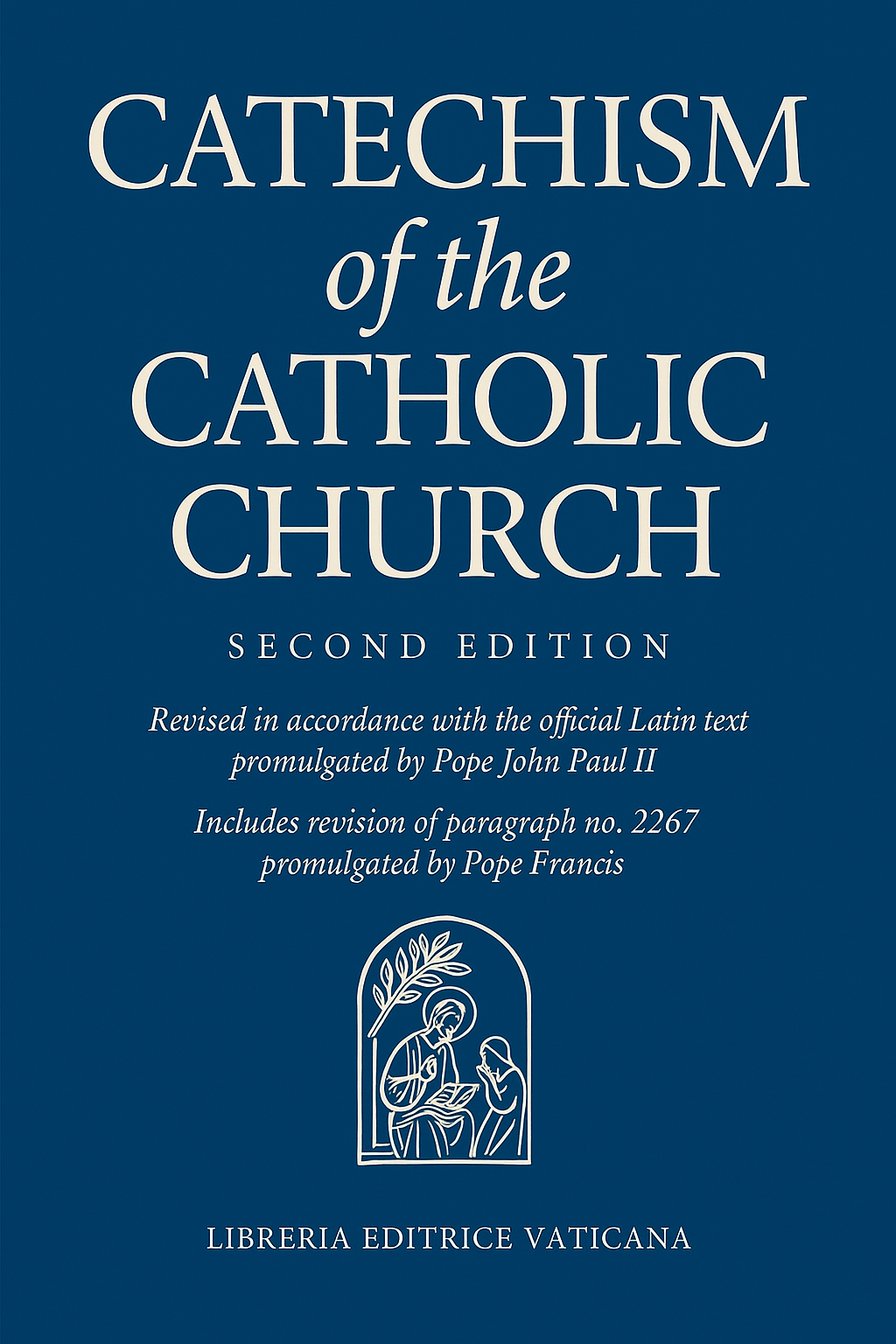
The Roman Catholic Church holds to several major doctrines that are theologically flawed and inconsistent with Scripture. Perhaps the most significant error lies in Rome’s teaching that salvation, while initiated by grace, must be maintained and completed through works. According to the Catechism of the Catholic Church (CCC §§ 2023), justification begins at baptism and continues through faithful participation in the sacraments (eucharist, confession, penance, etc.). This view, however, directly contradicts the clear teaching of Scripture that justification is a once-for-all declarative act of God received by faith alone in Christ alone, apart from any human works (Rom 3:28; 4:5; Eph 2:8-9; Tit 3:5). To add works as a condition for maintaining salvation undermines the very nature of grace and pollutes the gospel message (Rom 11:6; Gal 1:6-8; 2:16).

A related error is the Roman Catholic doctrine of authority, which teaches that divine revelation comes through both Scripture and Sacred Tradition, as interpreted by the Church’s Magisterium (CCC §§81–85). This threefold source of authority places church tradition on equal footing with God’s written Word. In contrast, the Bible teaches that Scripture alone is the final and sufficient authority for doctrine and life (Prov 30:5-6; 2 Tim 3:16-17; 2 Pet 1:3-4). Jesus rebuked religious leaders for allowing their tradition to invalidate God’s Word (Mark 7:13), and the Bereans were commended for examining the Scriptures—not tradition—to test Paul’s teaching (Acts 17:11).

The Roman Catholic view of the papacy also departs from biblical truth. The pope is claimed to be the successor of Peter and the vicar of Christ on earth, with universal jurisdiction and the gift of infallibility when speaking ex cathedra (CCC §§882–891). Yet Peter never claimed supremacy over the other apostles; in fact, Paul publicly rebuked him for doctrinal error (Gal 2:11-14). Christ alone is the head of the Church (Col 1:18), and no human being is infallible. A study of the popes throughout church history reveals them to be flawed individuals. For example, Pope Alexander VI (Rodrigo Borgia), who reigned from 1492 to 1503, was infamous for his blatant nepotism, political corruption, and immoral lifestyle, including fathering several children while in office. His papacy became a symbol of the moral decay that fueled the Protestant Reformation (see E. R. Chamberlin, The Bad Popes, Barnes & Noble, 1993). The concept of apostolic succession as taught by Rome finds no support in the New Testament.

Another significant error is the doctrine of purgatory, which Rome describes as a temporary state of purification for souls who die in grace but are not yet perfected (CCC §§1030–1032). This teaching suggests that Christ’s atonement was insufficient to fully cleanse believers from sin. However, Scripture declares that Christ’s sacrifice has perfected believers forever (Heb 10:10-14). The notion of a postmortem purification contradicts the biblical teaching that judgment follows death (Heb 9:27) and that believers, upon death, enter directly into the presence of the Lord (2 Cor 5:8).

Central to Catholic practice is the sacramental system, particularly baptismal regeneration and the doctrine of transubstantiation in the Eucharist (CCC §§1210–1419). Rome teaches that baptism removes original sin and that the elements of the Eucharist become the literal body and blood of Christ. Yet Scripture teaches that salvation is by grace through faith, not through any ritual (Rom 6:23; Acts 16:31; Eph 2:8-9). Baptism is an outward symbol of inward faith, not a regenerative act (Acts 10:44-48). The Lord’s Supper is a memorial of Christ’s once-for-all sacrifice, not a re-sacrificing of Him (Luke 22:19; 1 Cor 11:24-25; Heb 9:25-28).

Another key distinction between Roman Catholicism and biblical Christianity is its doctrine of the priesthood. In Catholic theology, priests are viewed as a distinct class of clergy who serve as mediators between God and man, offering sacrifices (especially the Eucharist), hearing confessions, and dispensing grace through the sacraments (CCC §§1544–1553). The Catholic priest is said to act in persona Christi—“in the person of Christ”—particularly during the Mass, where he is believed to re-present Christ’s sacrifice. However, the New Testament teaches that all believers are priests before God (Rev 1:6; 5:10). Through faith in Christ, every Christian has direct access to the Father without the need for a human mediator (1 Pet 2:5, 9; Heb 4:14-16). Christ alone is our High Priest (Heb 7:23–28), and His once-for-all sacrifice on the cross has forever removed the need for an ongoing priestly system (Heb 10:10-14). The idea of a separate, sacrificing priesthood is a return to Old Testament shadows that were fulfilled in Christ. In contrast, the church operates under the doctrine of the universal priesthood of believers (Rev 1:6), where every Christian is called to worship, pray, and minister in service to the Lord with full access to God’s throne of grace (Heb 4:16).

The veneration of Mary and the saints is another area of concern. Mary is exalted as the “Queen of Heaven,” “Mediatrix,” and “Co-Redemptrix” (CCC §§966, 969, 971). The faithful are encouraged to pray to her and to the saints for help. Yet Scripture is clear that Christ is the one and only Mediator between God and man (1 Tim 2:5), and prayer is to be directed to God alone (Matt 6:6-9). Mary was God’s instrument of grace to bring the Messiah into the world as the God-Man (Luke 1:30-35), but she was also a sinner in need of a Savior (Luke 1:46-47). She is to be honored as a faithful servant of the Lord. However, exalting Mary to a near-divine status detracts from the unique person and work of Jesus Christ and has no basis in Scripture.

Finally, the Roman Catholic Church teaches that justification is not a judicial declaration by God but a process involving the infusion of grace and the cooperation of the individual through good works (CCC §§1989–1995). Biblically, however, justification is a forensic act in which God declares the believing sinner righteous based solely on the imputed righteousness of Christ (Rom 4:5; 2 Cor 5:21; Phil 3:9). While sanctification—spiritual growth and transformation—is a process, justification is not. The confusion of these two doctrines leads to an insecure view of salvation and a reliance on human effort.

In summary, the Roman Catholic Church has added layers of tradition, ritual, and human effort to what the Bible presents as a simple and sufficient message of grace. The gospel according to Scripture is clear: Christ died for our sins, was buried, and was raised again (1 Cor 15:3-4). Eternal life is the free gift of God (Rom 6:23), received by grace alone through faith in Jesus Christ—nothing more, nothing less (John 3:16; Eph 2:8-9). As Paul wrote with clarity and conviction, “I do not nullify the grace of God, for if righteousness comes through the Law, then Christ died needlessly” (Gal 2:21).

The Gospel of grace is the declaration that Jesus Christ, the eternal Son of God (John 1:1, 14; Col 2:9), became true humanity through the virgin birth (Isa 7:14; Luke 1:30-35), lived a sinless life (1 Pet 2:22; 1 John 3:5), and voluntarily went to the cross (John 10:18), where He bore the penalty for all human sin (John 1:29; 1 John 2:2), past, present, and future (Heb 10:10-14). On the cross, He was judged in our place (Isa 53:5-6; Rom 5:8), fully satisfying the justice of God (2 Cor 5:21; 1 Pet 3:18). Salvation is not earned, deserved, or maintained by any human effort—no works, rituals, or law-keeping. It is the free gift of God (Rom 6:23), offered to all and received by faith alone in Christ alone (John 3:16; Acts 4:12; Eph 2:8-9). The moment anyone believes in Jesus as Savior (John 3:16; Acts 16:31), he receives the irrevocable gift of eternal life (John 10:28), is justified before God (Rom 3:28; 5:1), and becomes permanently secure in Christ (John 5:24; Rom 8:1). Grace means God does all the work, and man simply responds by believing—no gimmicks, no strings attached. The Bible plainly states, “whoever believes in Him shall not perish, but have eternal life” (John 3:16b). Man needs only Christ to be saved. Nothing more.

Dr. Steven R. Cook

If this article has enriched your understanding and walk with Christ, and you feel led to support my ministry, your generosity is greatly appreciated. Your gifts enable me to continue sharing the gospel of grace and providing in-depth biblical teachings. Thank you for partnering with me in this mission.

Related Articles:

The Gift of Life and the Call to Discipleship

Eternal life is free. Absolutely free. No strings attached. It costs us nothing—not one good deed, not one tear of remorse. Why? Because it cost Christ everything. He paid it all. The cross wasn’t a down payment; it was the full purchase price (John 19:30). He bore our sins (1 Pet 2:24), satisfied divine justice (Rom 3:25-26), and secured eternal life as a gift for all who believe (Rom 6:23; Eph 2:8-9). We don’t earn it, work for it, feel our way into it, or promise to do better tomorrow. We simply believe in the Lord Jesus Christ. God’s Word is clear: “whoever believes in Him shall not perish, but have eternal life” (John 3:16b), and “The one who believes in the Son has eternal life, but the one who refuses to believe in the Son will not see life; instead, the wrath of God remains on him” (John 3:36), and “the free gift of God is eternal life in Christ Jesus our Lord” (Rom 6:23b).

But discipleship? That’s a different matter. Discipleship costs. It demands something of us. It calls for lifelong commitment, learning, training, and sacrifice. It’s not a ticket to heaven—it’s a call to follow the King in the devil’s world. Eternal life is ours the moment we trust in Christ. Discipleship is the daily grind of growing up spiritually, standing firm, and making choices that often come with a price tag (Luke 14:27-33). We don’t become disciples to be saved; we choose to be disciples because we are saved.

Let’s not conflate justification with sanctification. Blurring the line between eternal life and discipleship muddies the gospel and frontloads grace with legalism. Grace doesn’t demand—discipleship does. Eternal life is received by faith alone (John 3:16); discipleship is pursued through ongoing obedience as we learn and live God’s Word by faith (1 Pet 2:2; 2 Cor 5:7). One gives us a new position in Christ. The other determines our spiritual growth and impact in the devil’s world.

As Christian disciples, God tells us how to live the spiritual life. He commands us to “be filled with the Spirit” (Eph 5:18), to “walk by the Spirit” (Gal 5:16), and instructs us “to deny ungodliness and worldly desires and to live sensibly, righteously, and in a godly manner in the present age” (Tit 2:11-12). He also supplies the power to live righteously, strengthening us “with power through His Spirit in the inner self” (Eph 3:16). God faithfully takes care of us, for He “will supply all your needs according to His riches in glory in Christ Jesus” (Phil 4:19; cf. Matt 6:31-33). And when our life is over and our mission is complete, He evaluates and rewards us, “For we must all appear before the judgment seat of Christ, so that each one may receive compensation for his deeds done through the body, in accordance with what he has done, whether good or bad” (2 Cor 5:10; cf. 1 Cor 3:13-14).

In summary, eternal life is God’s gift to us (Rom 6:23; Eph 2:8-9). Discipleship is God’s work in us and through us, as we submit to Him (Jam 4:7), learn His Word (1 Pet 2:2), walk by faith (2 Cor 5:7), and advance to spiritual maturity (Heb 6:1). Eternal life is instantaneous and permanent, accomplished the moment we believe in Christ (John 3:16). Discipleship is progressive, a lifelong journey of transformation (Rom 12:2; 2 Cor 3:18; Col 2:6-7; Phil 1:6). God’s gift of eternal life secures our position in heaven (John 10:28), while discipleship determines our capacity to glorify Him in time and our reward in eternity (1 Cor 3:12-15; 2 Cor 5:10).

Dr. Steven R. Cook

If this article has enriched your understanding and walk with Christ, and you feel led to support my ministry, your generosity is greatly appreciated. Your gifts enable me to continue sharing the gospel of grace and providing in-depth biblical teachings. Thank you for partnering with me in this mission.

Related Articles:

What Motivates Christians to Live Righteously?

The Bible clearly teaches that God calls us to love and do good works. Scripture affirms that “we ourselves are taught by God to love one another” (1 Th 4:9) and exhorts us to “be imitators of God, as beloved children; and walk in love” (Eph 5:1-2). We are encouraged to “do good to all people, and especially to those who are of the household of the faith” (Gal 6:10), recognizing that “we are His workmanship, created in Christ Jesus for good works, which God prepared beforehand so that we would walk in them” (Eph 2:10). Furthermore, Scripture instructs us “to do good, to be rich in good works, to be generous and ready to share” (1 Tim 6:18). This call to godly living is grounded in God’s grace, for “the grace of God has appeared, bringing salvation to all men, instructing us to deny ungodliness and worldly desires and to live sensibly, righteously, and godly in the present age” (Tit 2:11-12). But what motivates us as Christians to serve the Lord and walk in obedience?

First, we are motivated by God’s love. Scripture states, “We love, because He first loved us” (1 John 4:19). Love begets love. When we grasp the depth of God’s love for us, it stirs in us a desire to please Him and to love others as we have been loved. Paul wrote, “For the love of Christ controls us, having concluded this, that one died for all, therefore all died; and He died for all, so that they who live might no longer live for themselves, but for Him who died and rose again on their behalf” (2 Cor 5:14-15).

Second, God’s grace compels us to serve Him out of gratitude, not obligation. Paul declared, “By the grace of God I am what I am, and His grace toward me did not prove vain; but I labored even more than all of them, yet not I, but the grace of God with me” (1 Cor 15:10). Grace transforms service from a burden into a joyful response to God’s unmerited favor. Paul also stated, “For the grace of God has appeared, bringing salvation to all men, instructing us to deny ungodliness and worldly desires and to live sensibly, righteously and godly in the present age” (Tit 2:11-12). Grace not only saves but also teaches and motivates good behavior.

Third, experiencing God’s mercies fuels our devotion and obedience. After expounding on “the mercies of God” in Romans 1–11, Paul urged us to “present [our] bodies as a living and holy sacrifice, acceptable to God, which is [our] spiritual service of worship” (Rom 12:1). Grasping the depth of God’s mercies naturally moves us toward a life of sacrificial service. Offering ourselves as a “living and holy sacrifice” means daily devotion—not out of fear, but from a heart of gratitude. God is repeatedly revealed as “merciful and gracious” toward us (Psa 86:15; 145:8; Jam 5:11).

Fourth, the promise of rewards at the Judgment Seat of Christ serves as a strong incentive for faithfulness. Paul emphasized, “We must all appear before the judgment seat of Christ, so that each one may receive compensation for his deeds done through the body, in accordance with what he has done, whether good or bad” (2 Cor 5:10). This accountability before Christ reminds us that our choices matter, encouraging us to live with purpose, knowing that faithfulness will be honored and rewarded in eternity (1 Cor 3:12-14; Rev 22:12). Paul wrote, “Therefore, my beloved brethren, be steadfast, immovable, always abounding in the work of the Lord, knowing that your toil is not in vain in the Lord” (1 Cor 15:58).

Fifth, Christ’s example of humility and obedience inspires our devotion. Hebrews 12:2 urges us to fix our eyes on Jesus, who endured suffering for the joy set before Him. His obedience and sacrificial love compel us to follow Him (John 13:15). Peter wrote, “For you have been called for this purpose, since Christ also suffered for you, leaving you an example for you to follow in His steps” (1 Pet 2:21). When we meditate on His endurance, selflessness, and unwavering commitment to the Father’s will, we are strengthened to persevere in our own calling (Phil 2:5-8; Rom 8:17).

Sixth, encouragement from other believers strengthens and motivates our spiritual growth, as Scripture says, “Let’s consider how to encourage one another in love and good deeds” (Heb 10:24-25). God designed the church for mutual edification, accountability, and encouragement, spurring us toward maturity (Eph 4:11-16). When we support one another through prayer, fellowship, and exhortation, we help each other persevere in faith and remain steadfast in devotion to Christ (Gal 6:2; 1 Th 5:11).

Seventh, the anticipation of Christ’s return motivates holiness and faithful service, for “everyone who has this hope set on Him purifies himself, just as He is pure” (1 John 3:3). Living with the eschatological certainty that we will see our Lord motivates us to live faithfully (Tit 2:13-14; Matt 24:45-47). This blessed hope instills a sense of urgency, reminding us that our time to serve Christ is limited and that we should be found faithful when He returns (2 Pet 3:11-12).

Eighth, a desire to glorify God compels our service. Jesus said, “Let your light shine before men in such a way that they may see your good works, and glorify your Father who is in heaven” (Matt 5:16). Service is not about self-promotion but about directing attention to God’s greatness. Paul stated, “Whether, then, you eat or drink or whatever you do, do all to the glory of God” (1 Cor 10:31). Peter added that our service should be empowered by God so that “in all things God may be glorified through Jesus Christ” (1 Pet 4:11).

But what about fear of God’s discipline? Does it motivate service? God does discipline His sinning children, as Scripture affirms, “For those whom the Lord loves He disciplines” (Heb 12:6). While divine discipline may restrain sin and correct our course, it is not necessarily a motivator for loving others and doing good. Rather, it serves as a loving correction that keeps us on the right path. Since it is corrective rather than punitive, it reminds us of God’s fatherly care. Those who respond properly to divine discipline turn from sin and return to a life of righteousness. Unfortunately, there are some Christians who will not turn from their sin, and the Lord deals with these children in His own way (1 Cor 3:10-15; 11:30; 1 John 5:15; 2 John 1:8).

Christian, you are deeply loved by God, and redeemed by the Lord who is merciful and gracious to you. Know the Lord and His goodness, and let His love compel you to a life of service to Him. Live each day in the light of eternity, for His glory and the edification of others, knowing that your labor in the Lord is never in vain. Stand firm in the faith, walk in righteousness, and glorify Him in all you do, for He who called you is faithful, and He will accomplish His work in you (1 Th 5:24).

Dr. Steven R. Cook

If this article has enriched your understanding and walk with Christ, and you feel led to support my ministry, your generosity is greatly appreciated. Your gifts enable me to continue sharing the gospel of grace and providing in-depth biblical teachings. Thank you for partnering with me in this mission.

Related Articles:

Eternal Life Is the Greatest Gift of All!

Good news, everyone: “The free gift of God is eternal life in Christ Jesus our Lord” (Rom 6:23b)! I like free gifts, especially when they’re valuable. And there’s nothing more valuable to us than the free gift of eternal life, for it ensures we will spend eternity forever with God in heaven and never face the lake of fire. What an amazing gift! What an amazing God!

God’s free and precious gift of eternal life was fully purchased by Jesus through His “precious blood, as of a lamb unblemished and spotless, the blood of Christ” (1 Pet 1:19). This payment for sin occurred on the cross, where Jesus took our sins upon Himself and paid our sin debt in full (Col 2:13-14; 1 Pet 3:18). Eternal salvation was made possible because of His death, burial, and resurrection (1 Cor 15:3-4). Eternal life comes to us, not because we’re worthy, but because God is love and wants us to be saved (John 3:16). God the Father did everything necessary to save us through the work of Jesus on the cross, for “God demonstrates His own love toward us, in that while we were yet sinners, Christ died for us” (Rom 5:8).

Now, eternal salvation is available to everyone who wants it (1 Tim 4:10; 2 Pet 3:9), and it is offered freely by grace. God’s Word declares, “For by grace you have been saved through faith; and that not of yourselves, it is the gift of God; not as a result of works, so that no one may boast” (Eph 2:8-9). Faith in Jesus is the sole condition for receiving eternal life. To believe in Jesus means we trust in Him, and Him alone, to save us. We do not rely on ourselves or any system of religious works, “For we maintain that a man is justified by faith apart from works of the Law” (Rom 3:28). Once we believe in Jesus as our Savior, we are forever justified in God’s sight, for “we have believed in Christ Jesus, so that we may be justified by faith in Christ and not by the works of the Law; since by the works of the Law no flesh will be justified” (Gal 2:16). Jesus did all the work to save us. We do nothing to save ourselves. He gets all the glory! We get the benefits of His work on the cross. That’s grace!

Once justified in God’s sight, He calls us to live sanctified lives that align with His character and will. Scripture informs us, “For the grace of God has appeared, bringing salvation to all men, instructing us to deny ungodliness and worldly desires and to live sensibly, righteously, and godly in the present age” (Tit 2:11-12). God’s call to discipleship is radical and requires total commitment to learn His Word (1 Pet 2:2; 2 Pet 3:18), to walk by faith (2 Cor 5:7; Heb 10:38), to live in righteous conformity to His Word (2 Tim 3:16-17), to live in a manner worthy of the calling with which we have been called (Eph 4:1), to do good works (Gal 6:10; Eph 2:10), and to “press on to maturity” (Heb 6:1). Such lives will honor and glorify God (1 Cor 10:31; 1 Pet 4:11), edify others (1 Th 5:11), result in mental and emotional stability (Isa 26:3; Phil 4:6-11), and maximize our rewards in eternity when we stand before Christ (Rom 14:10; 1 Cor 3:10-15; 2 Cor 5:10; 2 John 1:8).

Though good works should follow salvation, they are never the condition for it (Rom 3:28; 4:4-5; Gal 2:16; Eph 2:8-9). This distinction is crucial because it protects the gospel from being reduced to a works-based system, which would undermine the sufficiency of Christ’s sacrifice. While eternal life is a free gift (Rom 6:23; Eph 2:8-9), it is not cheap. Jesus paid a great price for our salvation! He suffered on the cross, bearing our sin and enduring the wrath of God that rightly belonged to us. Eternal security is not a license to sin but a guarantee that the believer’s standing before God rests on Christ’s finished work, not personal performance (John 10:28-29). Justification lays the groundwork for sanctification but does not guarantee it. Only those Christians who possess positive volition and humility will submit to God (Rom 12:1-2; Jam 4:7), learn and live His Word by faith (1 Pet 2:2; 2 Cor 5:7), and advance spiritually (Heb 6:1). Though all Christians sin (Eccl 7:20; 1 John 1:10; 2:1), and some more than others, God has provided a means of restoration through confession (1 John 1:9), enabling believers to resume their walk in the Spirit (Gal 5:16; Eph 5:18).

However, it is possible for a Christian, after receiving eternal life, to turn to a lifestyle of sin (like the Prodigal son; Luke 15:11-32). This is contrary to God’s will for His child, and though such a believer is never in danger of losing eternal life, which is impossible (John 10:28; Rom 8:1), he is in danger of incurring God’s discipline (Heb 12:6), which can be severe (1 Cor 11:30), even resulting in physical death (1 John 5:16) and the loss of eternal rewards (1 Cor 3:10; 2 John 1:8). In every generation, there will be Christians who fail to grasp or appreciate God’s grace, refusing to live humbly and obediently before the Lord. As a result, they will suffer greatly for their foolishness. Yet we will see these Christians in heaven. I implore you—do not be a foolish Christian who pursues a sinful lifestyle. Save yourself the pain. Humble yourself before the Lord and pursue good works, righteousness, love, mercy, and all the Christian virtues that reflect the highest and best in the Christian life (Gal 5:22-23). You will be glad you did. And others will be blessed by your life.

Dr. Steven R. Cook

If this article has enriched your understanding and walk with Christ, and you feel led to support my ministry, your generosity is greatly appreciated. Your gifts enable me to continue sharing the gospel of grace and providing in-depth biblical teachings. Thank you for partnering with me in this mission.

Related Articles:

Totally by His Grace

Salvation is 100% the work of the Lord—grace from start to finish. It is all of God and none of man. No human effort, no good works, no religious activity can ever satisfy the perfect righteousness of God. Works do not save—they never have, and they never will. The only work that matters is the finished work of Jesus Christ on the cross, where He bore the penalty for sin in full (Mark 10:45; Rom 5:8; 1 Pet 3:18). He gets all the praise and glory.  I dare not try to steal any for myself. Yet, if I think my good works contribute in any way to my salvation, then, to that degree, I am attempting to add to His finished work on the cross. And to that degree, I am trying to steal His glory for myself. Human pride desires this—it wants me to have glory for what I do. But God does not share His glory with sinners, with prideful men who think their tainted good works help save them. No. I am a spiritually dead sinner, separated from God, morally bankrupt, bringing absolutely nothing to God. He does all the work of salvation; I simply receive His grace gift. The moment I believe in Christ, I receive forgiveness of sins (Acts 10:43), the imputation of divine righteousness (Phil 3:9), eternal life (John 10:28), and the absolute guarantee of a future home in heaven (John 14:1-3). He alone deserves all the praise for saving me—an ungodly, wretched sinner who deserves the lake of fire.

Divine forgiveness is granted to me solely by grace through faith in Christ (Eph 2:8-9; Tit 3:5). The Bible teaches that “everyone who believes in Him receives forgiveness of sins” (Acts 10:43). Here, forgiveness is granted solely on the basis of faith in Christ. There is no mention of works, rituals, or human merit—only faith in Christ as the necessary and sufficient condition for receiving forgiveness. Elsewhere, it is written, “In Him we have redemption through His blood, the forgiveness of our trespasses, according to the riches of His grace” (Eph 1:7). Here, the basis of forgiveness is Christ’s sacrificial death, and the means by which it is applied to the believer is God’s grace. The phrase “according to the riches of His grace” underscores that forgiveness is entirely an unmerited gift from God, not something earned or deserved.

Furthermore, the moment a person believes in Jesus Christ as Savior, God declares that person righteous on the grounds that God’s perfect righteousness has been credited to their account (Rom 4:5-7). God gives His righteousness to the one who believes in Christ as Savior. The Apostle Paul describes this as “the gift of righteousness” (Rom 5:17). It’s a free gift from God to us. This righteousness is not our own, which is relative to whatever standard we might follow, but God’s righteousness deposited in us. Paul calls it “the righteousness which comes from God on the basis of faith” (Phil 3:9). When God looks at us, as Christians, He sees His righteousness in us and declares us justified in His sight (Rom 3:24, 28; Gal 2:16). God justifies “the ungodly” the moment we believe (Rom 4:5), and we are “justified by faith apart from works of the Law” (Rom 3:28). Good works should follow our justification (Gal 6:10; Eph 2:10; Tit 2:11-14), but they are never a condition of it (John 3:16; Rom 4:1-5; Eph 2:8-9). We are justified before God, not because of any good works we do, but because of the work of Jesus on the cross and the imputed righteousness of God that is credited to our account (Rom 5:17; 2 Cor 5:21; Phil 3:9). Jesus paid our sin debt on the cross, and we are redeemed “with precious blood, as of a lamb unblemished and spotless, the blood of Christ” (1 Pet 1:19). As Christians, we are “justified by His blood” (Rom 5:9), and not by any good works we may produce before, during, or after salvation. That’s total grace!

Grace Offends the Proud

The doctrine of grace offends human pride because it utterly removes all grounds for boasting, leaving no room for personal merit in salvation. People naturally resist the idea that divine forgiveness is granted solely by grace through faith in Christ, apart from any promise of moral improvement (Eph 2:8-9; Tit 3:5). The flesh craves validation, seeking to contribute something—whether good works, religious rituals, or moral effort—to earn or prove righteousness. But Scripture is clear: salvation is an unmerited gift (Rom 6:23; Eph 2:8-9), based entirely on Christ’s work on the cross, received through faith alone in Jesus (Acts 10:43; Rom 4:5). This is intolerable to those who believe their morality or religious devotion should give them an advantage before God. Grace levels the playing field, placing the upright citizen and the lifelong criminal on equal footing—both hopeless apart from Christ, both justified the same way (Rom 3:24, 28; Phil 3:9).

Pride is further offended by grace because it contradicts human notions of fairness. The idea that a sinner who believes in Christ on his deathbed is equally justified as a lifelong churchgoer is repulsive to those who think in terms of merit. But God does not justify the worthy—He justifies “the ungodly” (Rom 4:5). His standard is perfect righteousness, which no one can attain through effort, so He freely credits it to those who believe (Rom 5:17; 2 Cor 5:21). This infuriates those who want to earn or prove their salvation through moral improvement and good works.

Many also reject grace out of fear that it leads to lawlessness. The argument is simple: If works are not required for salvation, won’t people sin freely? It is possible that a person might continue in sin after being saved (1 John 2:1), but not without consequences—either divine discipline (Heb 12:6; cf. 1 Cor 11:30) or loss of eternal rewards (1 Cor 3:10-15). Justification is distinct from sanctification. God, who justifies us, also calls us to be sanctified; however, the former is not conditioned on the latter. We are justified by grace alone, through faith alone, in Christ alone. Though good works should follow salvation (Gal 6:10; Eph 2:10), they are never a condition of it.

God Saves the Helpless

God has saved me, a helpless sinner in need of grace, and He did this as an act of love and mercy toward me, because I cannot save myself (Rom 5:8; Tit 3:5). I am like the helpless, crucified thief next to the Lord of glory—guilty, condemned, and utterly incapable of saving myself. My hands are nailed, unable to perform any good work. My feet are fastened, unable to walk a path of righteousness. I have nothing to offer, nothing to give—only the desperate plea of a condemned sinner in need of grace. Yet, in that moment of helplessness, salvation is as near as the One beside me, and He is open to hear my cry. With a simple act of faith—and faith alone—I turn to Christ, and in compassion and grace He promises me paradise when I die (Luke 23:43). I simply trust Him at His Word, and He saves me entirely. He does the work; I receive the blessing. And oh, what joy fills my soul as I cling to His promise! That is salvation—total, unearned, unmerited, all of Him and none of me. That is total grace! Amen.

Bound to my cross, bearing my blame,
Helpless to save, feeling my shame.
To the Lord of glory, a plea I make,
He speaks, and saves, for mercy’s sake.

His love flows down, so full and free,
He paid the price that ransomed me.
Now heaven’s joy is mine to share,
A home with Christ, beyond compare.

No work I bring to earn His grace,
But from His love, my hands embrace,
The call to serve, to walk His way,
A life of light, His name to praise.

Dr. Steven R. Cook

If this article has enriched your understanding and walk with Christ, and you feel led to support my ministry, your generosity is greatly appreciated. Your gifts enable me to continue sharing the gospel of grace and providing in-depth biblical teachings. Thank you for partnering with me in this mission.

Related Articles:

Can Christians Turn Away from God?

Can Christians turn away from God after being saved? Yes, they can. Do they lose their salvation if this happens? No, they do not. Eternal life, once received, cannot be lost or forfeited. While there are consequences for turning away from God—such as divine discipline and the loss of rewards—losing eternal salvation is not one of them. Scripture teaches, “If we are faithless, He remains faithful, for He cannot deny Himself” (2 Tim 2:13). The word “faithless” translates the Greek verb apisteō (ἀπιστέω), which means refuse to believe, disbelieve, or be unfaithful. The verb is in the present tense, which implies ongoing action. This means that even if we are unbelieving, God remains faithful to us as His children. God has integrity, which means He always keeps His word, for “it is impossible for God to lie” (Heb 6:18). As Scripture affirms, “God is not a man, that He should lie, nor a son of man, that He should change His mind. Has He said, and will He not do it? Or has He spoken, and will He not make it good?” (Num 23:19). Paul consistently wrote about God’s faithfulness to reassure Christians that He has integrity and keeps His Word (see Rom 3:3; 1 Cor 1:9; 2 Cor 1:18; 1 Th 5:24; 2 Th 3:3). Our eternal salvation depends of our initial act of faith in Christ, not the continuation of faith.

The Bible teaches that once we are born again as Christians (1 Pet 1:3, 23), our salvation is eternally secure and cannot be lost or forfeited. Jesus said, “I give eternal life to them, and they will never perish” (John 10:28a). Eternal life is both a present possession (John 3:36) and a future promise, ensuring that believers will spend eternity with God in heaven (John 14:1-3). Christians will never perish. This means the possibility of suffering in the Lake of Fire is forever removed from the one who simply believes in Jesus as Savior. The one who has believed in Jesus as Savior “has eternal life, and does not come into judgment, but has passed out of death into life” (John 5:24), and “there is now no condemnation for those who are in Christ Jesus” (Rom 8:1). So then, if a person believes in Jesus for eternal life, but then later turns away from God as an unbeliever—perhaps even denouncing Him and claiming to be an atheist—that person will still go to heaven, because once saved always saved.

If we believe our salvation can be lost by something we do, then by implication, our salvation must be maintained by something we do (or don’t do). This implies Jesus saved us (maybe 90%), but we must work to keep ourselves saved (by doing the remaining 10%). But this creates a fuzzy theology, for it leaves us guessing about what we must do to stay secure in our salvation. This way of thinking is tantamount to adding works to our salvation, and this cheapens the work of Christ on the cross and diminishes the gospel of grace. It means we can never have final assurance of our salvation. But because Jesus saves us 100%, it means we can full assurance of our eternal life. The apostle John wrote, “These things I have written to you who believe in the name of the Son of God, so that you may know that you have eternal life” (1 John 5:13). If we look to God and accept His promises that we have eternal life (John 3:16; 5:24; 10:28), we have assurance of salvation. If we look to ourselves, unstable as we are, we will never have assurance, but will always live with a degree of doubt and fear. Let  us be those who trust God’s Word and rest in the finished work of Christ our Savior.

The believer who understands the doctrine of eternal security lives in the light of eternity and stands on the conviction that he cannot do anything to cancel what God has accomplished (Rom 5:5). Assured of eternal life forever in the presence of God, he leaves the settled issue of salvation behind and realizes a meaningful life on earth of faithfully serving the Lord. Conversely, the believer who is preoccupied with loss of salvation—always questioning, doubting, reaffirming his faith—squanders his opportunity and cannot move forward in the Christian life.

Consequences for Christian Unbelief

There is another side to this issue that must be addressed: the consequences of unbelief in Christians. First, such actions are sinful and place the Christian in a state of carnality (1 Cor 3:1-3), meaning they are under the control of their sin nature (Gal 5:16-17). This condition deprives them of the benefit of being guided by God the Holy Spirit and equipped to cope with life’s pressures through divine viewpoint and faith application.

Second, if the unbelief persists, it will bring God’s discipline upon His child. Scripture states, “For the Lord disciplines the one He loves and punishes every son He receives” (Heb 12:6). Jesus said, “Those whom I love, I reprove and discipline” (Rev 3:19a). God’s discipline unfolds in stages, including warning discipline, intensified discipline, and ultimately physical death, as He takes the sinful child home to heaven. This is what happened to the carnal Christians living in Corinth who failed to walk properly with the Lord, as Paul explained, “many of you are weak and ill, and some have died” (1 Cor 11:30). Christians should know, “There is sin that brings death” (1 John 5:16).

Third, sinful behavior results in the loss of eternal rewards at the bema seat of Christ in heaven. Paul wrote, “For we must all appear before the judgment seat of Christ, so that each one may be recompensed for his deeds in the body, according to what he has done, whether good or bad” (2 Cor 5:10). This judgment does not determine who will be in heaven, as all Christians will be there. Rather, it pertains to how we lived on earth and the rewards we will receive in heaven. Those who live spiritually and glorify God exhibit behavior classified as “gold, silver, and precious stones,” while those who live according to the flesh and seek to glorify themselves exhibit behavior classified as “wood, hay, and straw” (1 Cor 3:12). Believers who live spiritually “will receive a reward” (1 Cor 3:14), whereas those who live carnally “will suffer loss” (1 Cor 3:15a). However, even those who suffer the loss of reward due to carnal living “will be saved, yet so as through fire” (1 Cor 3:15b). Although sinful living may diminish eternal rewards, the believer’s eternal security in heaven remains intact.

Don’t be a foolish Christian who turns away from the Lord in unbelief. Love Him who reconciled you to Himself through the death of Christ. Commit yourself to Him and a life of service. Learn His Word and live by faith. Such a life will glorify Him, edify others, and result in the best version of you that is possible this side of heaven. But be warned. If you choose foolishness and turn away from God in unbelief, though your eternal salvation is not in danger, God will discipline you as His child, and you will also forfeit rewards at the bema seat of Christ.

What people do with Jesus determines their eternal destiny. Those who believe in Jesus as their Savior will have eternal life, but those who reject Jesus as their Savior are choosing eternal damnation. Scripture states, “Anyone who believes in Him is not condemned, but anyone who does not believe is already condemned, because he has not believed in the name of the One and Only Son of God” (John 3:18), and “The one who believes in the Son has eternal life, but the one who refuses to believe in the Son will not see life; instead, the wrath of God remains on him” (John 3:36). Believing in Jesus results in eternal life. Refusing to believe in Jesus results in eternal damnation. The choice is ours to make. Volition is the issue. God forces no one to be saved. Though Christ died for everyone (John 3:16; 1 John 2:2), the benefits of the cross are applied only to those who believe Him, and “whoever believes in Him shall not perish, but have eternal life” (John 3:16).

Dr. Steven R. Cook

If this article has enriched your understanding and walk with Christ, and you feel led to support my ministry, your generosity is greatly appreciated. Your gifts enable me to continue sharing the gospel of grace and providing in-depth biblical teachings. Thank you for partnering with me in this mission.

Related Articles:

Why Grace is Hard for Many to Accept

God’s eternal salvation is based on a grace paradigm, not a works paradigm. Grace means undeserved or unmerited favor. It is the kindness one person extends to another without any regard for the beauty or worth of the recipient. All are lost sinners, which means no one deserves salvation. Good works do not save; therefore, God’s gift of salvation cannot be earned by human effort. Salvation is never what we do for God; rather, it’s what He’s done for us through the Person and work of Jesus who died for our sins, was buried in a grave, raised to life on the third day, and seen by many, as Scripture teaches (1 Cor 15:3-5). Jesus accomplished what we cannot. He conquered sin and death, and He offers salvation as a free gift to all who want it.

God’s gift of eternal life is offered freely to anyone who will accept it. Salvation through Jesus Christ is available to everyone, “whoever believes in Him shall not perish, but have eternal life” (John 3:16; 1 Tim 2:4 Tit 2:11; 2 Pet 3:9). It’s a gift (Rom 3:24; 6:23, Eph 2:8-9). No payment is required. Good works do not save (Isa 64:6; Rom 3:28; 4:4-5; Gal 2:16; Eph 2:8-9; 2 Tim 1:9; Tit 3:5). God’s gift of eternal life is offered by grace alone (we don’t deserve it), received by faith alone (not by works), in Christ alone (not anyone else). We bring nothing to add to God’s salvation package. Nothing at all. We simply receive it by believing in Christ as our Savior. Sinners are saved by faith in Christ (Rom 3:28; Gal 2:16). This means we trust Him to do for us what we cannot do for ourselves: to save us eternally. Sadly, the majority of humanity will not turn to Christ as Savior, even though eternal salvation is open to everyone.

Reasons Why People Reject Grace

The number #1 reason people reject God’s grace is human pride. Arrogance hinders people from coming to God because it resists acknowledging dependence on Him. Many struggle to admit they can’t save themselves. Receiving grace requires humility, recognizing that all human efforts are “like filthy rags” before a holy God (Isa 64:6). Pride in moral achievements or social standing blinds people to the reality that their works cannot bridge the gap between them and God. The refusal to set aside self-righteousness makes grace difficult to accept. The following categories are facets of sinful pride.

  1. Helping the Poor 3The Addition of Human Works: The Bible teaches the validity and necessity of works in human systems. By means of human effort, one earns an academic degree, a paycheck, a promotion, or some valid recognition in life (i.e., an honor or award). From the beginning of creation, God established work as part of human life. When God placed Adam in the Garden of Eden, He directed him “to work it and keep it” (Gen 2:15). God created the six-day work week, saying, “Six days you shall labor and do all your work” (Ex 20:9), and the seventh day was a time of rest (Ex 20:10) Throughout Scripture, diligence, responsibility, and honest labor are commended. Solomon wrote, “In all labor there is profit, but mere talk leads only to poverty” (Prov 14:23). The apostle Paul wrote, “if anyone is not willing to work, then he is not to eat” (2 Th 3:10), and “The laborer is worthy of his wages” (1 Tim 5:18), which affirms the importance of work in the human economy. However, while human labor is commendable and essential in divinely ordained systems (school, business, government, etc.), the grace paradigm of salvation is entirely different. In matters of eternal salvation, human works are excluded entirely, and grace alone is the basis upon which we are reconciled to God. The grace paradigm can be difficult for many to accept, largely because of the deeply ingrained human tendency to equate value and worth with performance. In the world’s system, success is measured by merit. This is the system most people operate under in every other area of life, where their hard work leads to promotion, recognition, or financial gain. Consequently, when people approach the question of salvation, they are inclined to apply the same logic, thinking they must “do” something to earn God’s salvation. This confusion between the two systems—one of merit and one of grace—prevents many from understanding and receiving God’s free gift of salvation.
  2. The Threat of Losing Power: The threat of losing power can be a reason why some people reject Jesus as Savior. One key example is found in the attitudes of the religious leaders during Jesus’ ministry. The Pharisees, Sadducees, and chief priests had significant religious and social power. When Jesus began His ministry, preaching the kingdom of God, He challenged their teachings, exposed their hypocrisy, and threatened their influence. John wrote about them, saying, “the chief priests and the Pharisees convened a council, and were saying, “What are we doing? For this man is performing many signs. If we let Him go on like this, all men will believe in Him, and the Romans will come and take away both our place and our nation” (John 11:47-48). Their rejection of Jesus was partly driven by the fear of losing their authority and position.
  3. Great Wealth: Money can be a hindrance to accepting God’s grace in salvation, as it can foster a sense of self-sufficiency and security in worldly wealth. Jesus said, “It is easier for a camel to go through the eye of a needle than for a rich person to enter the kingdom of God” (Matt 19:24). Wealth can create the illusion that one can control or earn their way into salvation, similar to how people often obtain things through money in everyday life. This reliance on material wealth can prevent individuals from recognizing their spiritual poverty and need for God’s grace.
  4. The Offense of the Cross: The message of the cross offends people because it undermines self-sufficiency. Paul wrote, “But we preach Christ crucified, a stumbling block to Jews and foolishness to Gentiles” (1 Cor 1:23). The cross represents the ultimate statement that human efforts are inadequate and that salvation comes only through Christ’s sacrifice, which some find offensive because it highlights human inability to save oneself.
  5. The Resurrection of Jesus: For some, the resurrection of Jesus is an obstacle because it challenges naturalistic views and requires belief in a supernatural event. Some find it difficult to accept, as it defies human logic and experience. When Paul preached Jesus’ resurrection (Acts 17:30-31), Luke tells us that “some mocked him” (Acts 17:32). This mocking is a sign of negative volition concerning the gospel. Yet, the resurrection is essential to faith, as Paul said, “if Christ has not been raised, your faith is futile” (1 Cor 15:17). Accepting the resurrection affirms Jesus’ divine authority and victory over sin, which some resist because it confronts their antisupernaturalistic worldview.
  6. Cultural Relativism: In some cultures, there is a resistance to absolute truth and an aversion to the idea of a singular way to God. Jesus said, “I am the way, and the truth, and the life; no one comes to the Father but through Me” (John 14:6). Peter said, “And there is salvation in no one else; for there is no other name under heaven that has been given among men by which we must be saved” (Acts 4:12). For some, this way of salvation is perceived as narrow and exclusive. This exclusivity can lead to rejection of the grace message because it demands surrender to one way—God’s way—rather than allowing for multiple paths that validate human effort.
  7. Misconception of Fairness: The grace paradigm is sometimes misunderstood as unfair. People tend to believe that those who have lived “moral” lives deserve to be saved more than those who have lived in sin. The parable of the laborers in the vineyard (Matt 20:1-16) shows how God’s sovereign grace, which offers the same reward to all, regardless of when they come, can be perceived as unfair by human standards. This notion of undeserved favor is difficult for some people to accept. But Scripture teaches that God saves the helpless, sinners, ungodly, and His enemies (Rom 5:6-10).
  8. Religious Tradition: Some reject grace because they have been conditioned by religious systems that emphasize rituals, sacraments, or law-keeping as necessary components for salvation. The Judaizers, who tried to impose the necessity of circumcision and the Mosaic Law for salvation, are a clear example of this (Acts 15:1-5; Gal 5:2-4). Many religious systems today perpetuate this legalistic mentality (Catholicism, Mormonism, Jehovah’s Witnesses, etc.), making it hard for people to comprehend the simplicity of salvation by grace alone, through faith alone, in Christ alone (John 3:16; Acts 4:12; Rom 3:28; 6:23; Eph 2:8-9).
  9. Fear of Losing Control Over Behavior: Some perceive grace as dangerous, believing it leads to moral laxity or a license to sin. While Paul taught that where sin abounds, grace abounds even more (Rom 5:20), he also firmly rejects the notion that grace permits ongoing sin (Rom 6:1-2). God forgives all sin (judicially), but it doesn’t mean sin is without consequence. A child who touches a hot stove may be forgiven by her mother for disobeying her warning, but the consequences of that action are not removed. Grace protects us from eternal damnation (John 10:28; Rom 8:1), but it does not shield us from divine discipline in time (1 Cor 11:30-32; Heb 12:5-11) or the loss of eternal rewards for carnal living (1 Cor 3:10-15; 2 John 1:8). While grace indeed provides forgiveness of sins (Acts 10:43) and eternal life (John 3:16), it also calls believers to walk in righteousness (Tit 2:11-14).
  10. Love of Sin: John wrote, “the Light has come into the world, but people loved the darkness rather than the Light, because their deeds were evil” (John 3:19). To “love the darkness” means they are committed to Satan’s values and world-system that brings them power and carnal pleasure. Many reject the gospel because they realize that salvation in Christ brings a call to a new way of thinking, values, and behavior. While a transformed life is not a requirement for receiving salvation—since salvation is by grace alone through faith alone—God does expect His people to pursue holiness afterward (1 Pet 1:15-16). Though salvation is a free gift, afterwards, God expects His people to grow to spiritual maturity (Heb 6:1) and be obedient-to-the-Word believers (Jam 1:22). So then, some people may reject the gospel of grace as they fear losing control over their lives or having to abandon sinful behaviors they enjoy.

God’s Free Gift of Eternal Life

Eternal Life 3Eternal salvation is a gift from the Lord. It is the most precious gift ever provided. And though the gift was very expensive to God, it is absolutely free to us. The precious gift of our salvation was paid in full by the Lord Jesus Christ who died for our sins, who hung between heaven and earth and paid our sin-debt in full. In grace, God does all the work, and we receive His gift freely, totally apart from good works. Good works are not a prerequisite, corequisite, or postrequisite to God’s offer of salvation. According to God’s Word, “the free gift of God is eternal life in Christ Jesus our Lord” (Rom 6:23). The words “free gift” translate the Geek noun charisma (χάρισμα) which, according to BDAG, refers to “that which is freely and graciously given, favor bestowed, a gift.”[1] Joseph Thayer defines it as “a gift of grace; a favor which one receives without any merit of his own.”[2] Paul, when writing to the Christians at Ephesus, said, “For by grace you have been saved through faith; and that not of yourselves, it is the gift of God; not as a result of works, so that no one may boast” (Eph 2:8-9; cf., Rom 4:4-5; Tit 3:5). To say we are saved by grace means our salvation is unearned and undeserved in any way. God’s gift of salvation is totally apart from any good works we may produce, and since good works do not save, bad works cannot unsave (though they can bring divine discipline). A gift focuses on the graciousness of the giver, whereas a reward focuses on the work of the recipient. Salvation is NOT a reward for work we’ve accomplished; rather, it is a free gift from God and based totally on the finished work of Christ. We pay nothing. Jesus paid it all. We receive God’s free gift by faith alone in Christ alone.

Furthermore, eternal life is a right-now-truth. It is not something we can have in the future, but something we have at the very moment we trust in Jesus as our Savior. John wrote, “whoever believes in Him will have eternal life” (John 3:15), and “whoever believes in Him shall not perish, but have eternal life” (John 3:16b). Jesus said, “everyone who beholds the Son and believes in Him will have eternal life” (John 6:40a), and “he who believes has eternal life” (John 6:47b), and “I give eternal life to them, and they will never perish” (John 10:28a). When Jesus said “I give,” He used the Greek verb didōmi (δίδωμι – to give), which is in the present tense, meaning it’s a right-now-truth. That is, eternal life is what the believer possesses at the moment of faith in Christ. This eternal life is connected with being in a relationship with Jesus Christ. John wrote, “God has given us eternal life, and this life is in His Son. He who has the Son has the life; he who does not have the Son of God does not have the life” (1 John 5:11-12).

Jesus on Cross with Cloudy SkyThe realization that salvation is offered freely, based solely on the perfect work of Jesus on the cross, offers profound relief to the person who has been laboring under the yoke of a works-based system. Those who operate under a works-based system of salvation will never reach a place of certainty in their relationship with God, for they will never know whether they have done enough to gain entrance into heaven. But the truth that salvation is a grace-gift from God, received by faith alone, liberates those who accept it. When properly grasped, God’s gospel of grace alleviates the pressure to perform and the fear of falling short and brings a deep sense of peace and joy, knowing our salvation is secure, not because of our own efforts, but because of Christ’s finished work. Peace comes when we look to Christ and the promises of Scripture and not to ourselves. This gospel of grace transforms our relationship with God from one of fear and striving to one of gratitude and love, as the focus moves from what we must do to what Christ has already accomplished on our behalf. This grace-based approach encourages us to live out our faith from a place of thankfulness rather than obligation, resulting in a more authentic and joyful Christian life.

Summary

In conclusion, the Bible presents a clear distinction between the necessity of works within human systems and the nature of salvation, which is solely grounded by God’s grace. While human effort is essential for earning recognition and success in various aspects of life, such as academics or employment, the paradigm of salvation operates on an entirely different principle. As outlined in Scripture, works hold no merit in securing salvation; rather, salvation is a free gift from God, received by faith alone in Christ alone. Despite common misconceptions and societal norms that equate worth with performance, true salvation is unearned and not contingent upon human actions. This grace can be difficult for many to accept due to factors such as pride, cultural beliefs, and the desire for control. Nevertheless, God’s invitation to eternal life is open to all who trust in Christ, emphasizing that salvation is a gracious gift, freely given, and based entirely on the work of Christ and not any human effort.

Dr. Steven R. Cook

If this article has enriched your understanding and walk with Christ, and you feel led to support my ministry, your generosity is greatly appreciated. Your gifts enable me to continue sharing the gospel of grace and providing in-depth biblical teachings. Thank you for partnering with me in this mission.

Related Articles:

[1] William Arndt et al., A Greek-English Lexicon of the New Testament and Other Early Christian Literature (Chicago: University of Chicago Press, 2000), 1081.

[2] Joseph Henry Thayer, A Greek-English Lexicon of the New Testament: Being Grimm’s Wilke’s Clavis Novi Testamenti (New York: Harper & Brothers., 1889), 667.

Salvation is Free and Simple

God has made our eternal salvation free and simple. It is free to us because the Lord Jesus Christ paid the ultimate price for our sins when He died on the cross in our place, bearing the punishment that rightfully belonged to us. Isaiah prophesied this truth, saying “Surely our griefs He Himself bore, and our sorrows He carried; yet we ourselves esteemed Him stricken, smitten of God, and afflicted. But He was pierced through for our transgressions, He was crushed for our iniquities; the chastening for our well-being fell upon Him, and by His scourging we are healed” (Isa 53:4-5). These verses emphasize that Jesus bore the weight of our sins and the consequences they deserved, offering us relational-healing and peace with God. Though salvation was extremely costly to God and Christ, it is absolutely free to us. Receiving the gift of eternal life is simple because God has set only one condition: faith alone in Christ alone. Jesus is the sole object of our faith. As the God-Man, Jesus lived a sinless life, willingly died for our sins, was buried, and was resurrected on the third day, never to die again. Forgiveness of sins and eternal life are offered as a free gift to anyone who believes in Jesus as their Savior. Nothing more is required.

Salvation is Free

A Free Gift of SalvationWhat does it mean that eternal life is free? Free means it comes from God to us without charge. No payment is required of us before, during, or after salvation. No payment at all. It’s 100% free. No strings attached. It’s free to us because Christ did all the work when He hung on the cross, bore our sins, died in our place and paid the penalty that was due to us. This was all according to God the Father’s plan from eternity past. Nearly 2,000 years ago, God the Father sent God the Son into the world to accomplish our salvation. Jesus is God in the flesh (John 1:1, 14), “For in Him all the fullness of Deity dwells in bodily form” (Col 2:9). The merger of God and man occurred by means of God the Holy Spirit who brought about the union within the womb of the virgin Mary (Isa 7:14; Luke 1:30-35; Gal 4:4). The purpose of His coming was for our salvation, “For the Son of Man has come to seek and to save that which was lost” (Luke 19:10). The motivation was love, “For God so loved the world, that He gave His only begotten Son” (John 3:16a), and God “loved us and sent his Son to be the atoning sacrifice for our sins” (1 John 4:10). This work on the cross was necessary, for if we could save ourselves, then Jesus would not have needed to come and die in our place. But He came, and He lived the sinless life we cannot live (1 Pet 2:22; 1 John 3:5), and He alone dealt with our sins on the cross (2 Cor 5:21). And the means of payment for our sins was His “precious blood, as of a lamb unblemished and spotless, the blood of Christ” (1 Pet 1:19). The blood of Christ is the only coin of the heavenly realm that God the Father accepts as payment for our sin debt. While on the cross, “Christ died for our sins” (1 Cor 15:3), He died in our place, “the just for the unjust, so that He might bring us to God” (1 Pet 3:18).

Jesus died for everyone, not just a select few, for “God has sent the Son to be the Savior of the world” (1 John 4:14). Jesus is “the Lamb of God who takes away the sin of the world!” (John 1:29), and He gave His life “as a ransom for all” (1 Tim 2:6), and He “tasted death for everyone” (Heb 2:9), and “He is the atoning sacrifice for our sins, and not only for ours but also for the sins of the whole world” (1 John 2:2). The death of Christ was a one-and-done event, for “the death that He died, He died to sin once for all” (Rom 6:10), as He “offered one sacrifice for sins for all time” (Heb 10:12). Jesus made one payment for sin, and it perfectly satisfied every righteous demand of the Father and is altogether sufficient to save all who come to Him in faith.

Jesus CrucifiedAfter Jesus paid for all our sins, “He said, ‘It is finished!’ And He bowed His head and gave up His spirit” (John 19:30). Salvation was finished at the cross. Finished! There’s nothing for us to pay, because Jesus paid it all. God had to arrange it this way, because we are totally unworthy and helpless to save ourselves. “For there are none righteous, not even one…for all have sinned and fall short of the glory of God” (Rom 3:10, 23). And Paul wrote, “For while we were still helpless, at the right time Christ died for the ungodly…[and] God demonstrates His own love toward us, in that while we were yet sinners, Christ died for us” (Rom 5:6, 8). Because Jesus died for everyone, everyone is savable, for God has brought “salvation to all men” (Tit 2:11), and He “desires all men to be saved” (1 Tim 2:4), and is “not wishing for any to perish” (2 Pet 3:9). After Jesus died, He was placed in a grave and was resurrected to life on the third day (Acts 2:23-24; 4:10; 10:40; 1 Cor 15:3-4), never to die again (Rom 6:9). He conquered sin and death and made a way for us to be saved from eternal damnation. Salvation is never what we do for God, but rather, what He’s done for us through the person and work of Jesus Christ.

God’s eternal salvation is totally free to us, for “the free gift of God is eternal life in Christ Jesus our Lord” (Rom 6:23). And it is “by grace you have been saved through faith; and that not of yourselves, it is the gift of God; not as a result of works, so that no one may boast” (Eph 2:8-9). Eternal life is a free gift. If we have to pay or promise anything for our salvation, it ceases to be a gift and becomes something we’ve purchased by our own efforts. But we cannot save ourselves. God saves. And His salvation is a free gift. Free! No strings attached. In the book of Revelation, Jesus said, “let the one who wants it take the water of life free of charge” (Rev 22:17b). All who desire this living water, this eternal life, can receive it free of charge simply by believing in Christ, as God’s offer of salvation is open to all who come to Him in faith.

Trying to earn or pay for salvation opens the door to pride, which runs contrary to the humility that is necessary in approaching God. Paul asked, “Where then is boasting?” He answered, “It is excluded….by the law of faith” (Rom 3:27). When salvation is by grace alone through faith alone, there is no room for boasting or self-righteousness. In essence, trying to pay for salvation—whether through good works, rituals, or personal sacrifices—reduces God’s act of love to a mere transaction. It shifts the focus from the grace of God, who lovingly offers salvation at the cost of His Son’s sacrifice, to human effort, which implies that God’s free gift is not truly free. This mindset undermines the core message of the gospel, which centers on God’s grace through the finished work of Christ. Jesus’ atoning death on the cross paid the full price for sin, and to attempt to contribute to this work is to devalue the sufficiency of His sacrifice. Trying to earn salvation treats God’s priceless gift as though it were something to be purchased or bargained for. This not only offends God, who has freely given the gift out of His love, but also distorts the true nature of the gospel, turning it into a human-centered system of merit rather than a divine offer of grace. Salvation, by its very nature, is a gift to be received with humility, not a reward to be earned through prideful self-effort. Thus, any attempt to pay for what God has freely provided goes against the heart of the gospel and the very nature of God’s grace. Only a prideful person would demand that some form of works be added as a prerequisite, corequisite, or postrequisite to salvation, and in so doing, neutralize the gospel message and exchange it for a damnable lie.

Salvation is Simple

Salvation being simple means that the process by which we are saved is simple and not dependent on human effort, works, or merit. This simplicity stems from the fact that God has done all the work necessary for our salvation through Jesus Christ’s death, burial, and resurrection (1 Cor 15:3-4). As humans, we cannot achieve salvation by our own strength, moral conduct, or religious activity. Instead, God requires only one thing from us: to trust in Jesus Christ alone for our salvation. This is the essence of simple salvation. But simple does not mean “cheap” as some claim. As stated previously, our salvation was extremely costly to God, as He sent His Son into the world to live the righteous life we cannot live, and to offer Himself as a perfect sacrifice on the cross where He was judged in our place (Rom 5:8; 1 Pet 3:18), and where the payment for our sins was His “precious blood, as of a lamb unblemished and spotless, the blood of Christ” (1 Pet 1:19).

The Bible emphasizes that faith is the sole condition for receiving eternal life, as Scripture reveals, “everyone who believes in Him receives forgiveness of sins” (Acts 10:43), and “whoever believes in Him shall not perish, but have eternal life” (John 3:16). The simplicity of salvation lies in this truth: that faith in Christ, not our works, is the means by which we receive salvation. Therefore, salvation is simple because it does not require us to pay for it in any way, but only to believe in Jesus as Savior. Good works are not a prerequisite, corequisite, or postrequisite to being saved. Rather, the Scriptures state, “a man is justified by faith apart from works of the Law” (Rom 3:28), and “the one who does not work, but believes in Him who justifies the ungodly, his faith is credited as righteousness” (Rom 4:5), and we are “justified by faith in Christ and not by the works of the Law” (Gal 2:16). Good works should follow salvation (Eph 5:10; Gal 6:10; Tit 2:11-14), but they are never a condition of it (John 3:16; 5:24; 6:40, 47; 20:31; Acts 4:12; 16:31; Eph 2:8-9; Tit 3:5).

Asian Woman Welcoming GiftIt’s crucial to clarify that faith itself does not have the power to save. Jesus is the one who saves. Faith is merely the means, or the “empty hand” that receives God’s free gift. Just as a hand receives a gift without offering anything in return, so too does faith receive salvation without contributing anything to it. This reflects the grace of God—His unmerited favor. The gift of eternal life is available to all people, but it can only be received by those who believe in Christ as their Savior. Many people stumble over the simplicity of the gospel because it’s difficult to imagine that God could offer something so wonderful as a free gift. But His free gift is that simple to receive. Others stumble because of pride, because they want to feel like they’re doing something to help save themselves. But there’s no place for pride when it comes to the gospel of grace. God alone gets all the glory, for He does all the work, and we receive the benefit of His effort. He alone saves.

Jesus Christ is the sole object of our faith. In believing, we trust Him to do for us what we cannot do for ourselves: to save us. Paul said it simply: “believe in the Lord Jesus, and you will be saved” (Acts 16:31). Faith in Christ is exercised with a view to receiving eternal life, the benefit of His redemptive work on the cross. Faith does not add to the work of salvation; it merely accepts what God has already done through Jesus. Jesus said, “I am the way, and the truth, and the life; no one comes to the Father but through Me” (John 14:6). And Peter said, “there is salvation in no one else; for there is no other name under heaven that has been given among men by which we must be saved” (Acts 4:12).

In summary, our eternal salvation is both free and simple. It’s free because Jesus Christ paid the full price for our sins through His death on the cross, offering us forgiveness of sins and eternal life as a gift. God requires no works or effort from us to receive this gift—faith alone in Christ alone is the sole condition for salvation. God the Son died for our sins, was buried, and raised again on the third day (1 Cor 15:3-4), conquering sin and death, and He grants eternal life to us who simply believe in Him as our Savior (John 3:16; Acts 16:31). Salvation is by grace, through faith, and is entirely the work of God, making it both a free and simple process, accessible to all who believe.

Dr. Steven R. Cook

If this article has enriched your understanding and walk with Christ, and you feel led to support my ministry, your generosity is greatly appreciated. Your gifts enable me to continue sharing the gospel of grace and providing in-depth biblical teachings. Thank you for partnering with me in this mission.

Related Articles:

I Am Sure of My Salvation

A Bible TruthI am confident of my salvation, and this confidence is not based on my own efforts or worthiness but on the unchanging character and promises of God. God is a God of integrity, and His nature guarantees the fulfillment of His Word. As Scripture affirms, “God is not a man, that He should lie, nor a son of man, that He should change His mind. Has He said, and will He not do it? Or has He spoken, and will He not make it good?” (Num 23:19). Unlike humans, who are often subject to inconsistency and failure, God is perfect in truth and faithfulness. His promises are unwavering, and His Word is eternally reliable.

The foundation of my assurance lies not only in the fact that God makes promises, but in the fact that He is unable to lie or deceive. Hebrews 6:18 reinforces this by stating, “It is impossible for God to lie,” which highlights the absolute trustworthiness of His character. Additionally, Paul wrote of the hope of “eternal life, which God, who cannot lie, promised long ages ago” (Tit 1:2). These verses demonstrate that God’s very nature ensures the truth of His promises

God’s Word tells me that “whoever believes in Him shall not perish, but have eternal life” (John 3:16). I have believed in the Lord Jesus as my Savior (Acts 4:12; 16:31), and now I possess eternal life. This life was given to me by Jesus, who said, “I give eternal life to them, and they will never perish; and no one will snatch them out of My hand” (John 10:28). This assures me that I am eternally saved and will never face the lake of fire, for the one who believes in Jesus “has eternal life, and does not come into judgment, but has passed out of death into life” (John 5:24). Even when I sin, I do not fear the fires of hell, for “there is now no condemnation for those who are in Christ Jesus” (Rom 8:1). Although I fear God’s discipline in time (Psa 32:2-4; 1 Cor 11:30-32; Heb 12:6; 1 John 5:16), and the potential loss of rewards in eternity (1 Cor 3:10-15; 2 John 1:8), I do not question my salvation or eternal security. Why should I? God has spoken. His Word is true (Psa 119:160; John 17:17).

Looking to the Cross 5Salvation is never about what I do for God, but what He has done for me at the cross. Jesus is the God-Man (John 1:1, 14), and “in Him all the fullness of Deity dwells in bodily form” (Col. 2:9). The record of Scripture is that Jesus “knew no sin” (2 Cor 5:21), was “without sin” (Heb 4:15), “committed no sin” (1 Pet 2:22), and “in Him there is no sin” (1 John 3:5). In His humanity, Jesus walked in perfect conformity to God the Father’s holy character and divine revelation. And He came into this world to die for me, for “the Son of Man has come to seek and to save that which was lost” (Luke 19:10) and “to give His life a ransom for many” (Mark 10:45b). Mission accomplished! He did it—He accomplished what I could not. He made a way for me to be saved and reconciled to God. At the cross, God judged my sin as His righteousness required, and pardons me, the sinner, as His love desires.

The Bible reveals that “God demonstrates His own love toward us, in that while we were yet sinners, Christ died for us” (Rom 5:8). Jesus died for me. That’s the good news of the gospel of grace, “that Christ died for our sins according to the Scriptures, and that He was buried, and that He was raised on the third day according to the Scriptures” (1 Cor 15:3-4). Peter tells us that Jesus “bore our sins in His body on the cross” (1 Pet 2:24), and that He “died for sins once for all, the just for the unjust, so that He might bring us to God” (1 Pet 3:18). Jesus died a substitutionary death on the cross—He took my sin and was judged in my place. He bore the Father’s wrath in my stead. He did this voluntarily (John 10:18) and because He loves me, for “We know love by this, that He laid down His life for us” (1 John 3:16). The children’s hymn is correct when it says, “Jesus loves me, this I know, for the Bible tells me so.”

JustifiedHaving believed in Jesus as my Savior, I am “justified as a gift by His grace through the redemption which is in Christ Jesus…and justified by faith apart from works of the Law” (Rom 3:24, 28; cf. Gal 2:16). God’s salvation comes to me by grace alone (I don’t deserve it), through faith alone (not by good works), in Christ alone. Paul wrote, “For by grace you have been saved through faith; and that not of yourselves, it is the gift of God; not as a result of works, so that no one may boast” (Eph 2:8-9), and “the free gift of God is eternal life in Christ Jesus our Lord” (Rom 6:23). God does not lie, and His Word is truth. Eternal salvation is His gift to me—no strings attached. If I have to work for it, it’s no longer a gift but something I’ve earned and am owed.

Because my salvation is 100% from the Lord, and He cannot lie, I am 100% sure I am saved, for “I know whom I have believed and I am convinced that He is able to guard what I have entrusted to Him until that day” (2 Tim 1:12). The apostle John wrote, “God has given us eternal life, and this life is in His Son. He who has the Son has the life; he who does not have the Son of God does not have the life” (1 John 5:11-12). The assurance of salvation does not come by looking to myself, but to the One who saved me. John also wrote, “These things I have written to you who believe in the name of the Son of God, so that you may know that you have eternal life” (1 John 5:13). My assurance of salvation is not a guessing game—God’s Word is true. I have eternal life. Praise God!

Dr. Steven R. Cook

If this article has enriched your understanding and walk with Christ, and you feel led to support my ministry, your generosity is greatly appreciated. Your gifts enable me to continue sharing the gospel of grace and providing in-depth biblical teachings. Thank you for partnering with me in this mission.

Related Articles:

The Great Lie

The Great LieA large portion of humanity buys into the great lie that we have the ability within ourselves to save ourselves, or at least to help God in the salvation process, whether to a small or large degree. The Bible is plain that salvation is completely by grace and not by human works (Eph 2:8-9). Grace is unmerited favor; it is undeserved goodness. Grace flows from the heart of a giver who loves graciously and chooses to bestow kindness regardless of merit. None of us deserve God’s salvation, and we cannot, by any means whatsoever, earn it. The beauty of grace is that it is given freely, without cost to the recipient, and with no expectation of payment. It’s a gift. Free and simple.

A Free Gift of SalvationIn grace, the kindness shown is rooted in the goodness and open-handedness of the giver and is in no way predicated on the beauty or worth of the object. In fact, grace is greatest when the object is the least worthy or most undeserving, for if any merit can be given by the recipient, then grace ceases to be grace. Human works do not save. They never have, and never will. God expects good works to follow salvation (Gal 6:10; Eph 2:10), but they are never the condition of it (Rom 4:4-5; Gal 2:16).[1] Paul wrote, “We maintain that a man is justified by faith apart from works of the Law” (Rom 3:28), and “To the one who does not work, but believes in Him who justifies the ungodly, his faith is credited as righteousness” (Rom 4:5). Additionally, he stated, “By grace you have been saved through faith; and that not of yourselves, it is the gift of God; not as a result of works, so that no one may boast” (Eph 2:8-9). God’s plan of salvation excludes all human efforts. His eternal salvation is based on grace, where He does all the work, and we receive His blessings as a free gift. This means God gets all the credit and glory, while we benefit from His goodness.

Jesus CrucifiedAny human effort to save oneself, whether as a prerequisite, corequisite, or postrequisite to faith in Christ, automatically produces a false gospel that saves no one. Salvation is entirely from the Lord. God sent His Son to die for our sins, and to die for all of them. And the Son accomplished the Father’s work on the cross, forever satisfying every righteous demand of the Father concerning our sins. The plain teaching of Scripture is that Jesus is “the Lamb of God who takes away the sin of the world!” (John 1:29), and “Christ died for sins once for all, the just for the unjust, so that He might bring us to God” (1 Pet 3:18), and “He Himself is the propitiation for our sins; and not for ours only, but also for those of the whole world” (1 John 2:2). As spiritually impoverished, we approach God with the empty hands of faith, offering nothing but receiving everything He offers. It’s important to understand that faith does not save; rather, Christ saves. He alone deserves all glory and credit, and we receive the blessings of His sacrifice on the cross.

Gift from God 2Eternal salvation is a free gift from God, available to all who desire it. Jesus died for everyone (John 3:16; Heb 2:9; 1 John 2:2), which means everyone is savable, and the gospel of grace is open to all who want it. The Bible speaks of “God our Savior, who desires all men to be saved and to come to the knowledge of the truth” (1 Tim 2:3-4), who has brought “salvation to all men” (Tit 2:11), and is “not wishing for any to perish but for all to come to repentance” (2 Pet 3:9). Faith in Christ is the sole condition for salvation. Scripture states, “whoever believes in Him shall not perish, but have eternal life” (John 3:16), and “you are all children of God through faith in Christ Jesus” (Gal 3:26), and “I have written to you who believe in the name of the Son of God, in order that you may know that you have eternal life” (1 John 5:13). Paul tells us, “The free gift of God is eternal life in Christ Jesus our Lord” (Rom 6:23). Eternal life is completely free because none of us can earn it; the cost is too high, and we lack the currency to pay for such a priceless gift. But Jesus paid our sin debt in full, having died on the cross in our place, and we were redeemed “with precious blood, as of a lamb unblemished and spotless, the blood of Christ” (1 Pet 1:19). The blood of Christ is the coin of the heavenly realm that paid our sin debt, and when we trust in Christ as our Savior, all the benefits of the cross are applied to us, and we receive eternal life.

God has brought eternal salvation to an irreducible minimum whereby faith alone in Christ alone is all that is needed to be saved. But Satan, the great liar, because he cannot reduce the gospel message by means of subtraction, always seeks to pervert and neutralize it by means of the addition of good works (i.e., water baptism, turning from sin, joining a church, etc.). The Christian who seeks to evangelize the lost must always be careful when sharing the gospel of grace to make clear that salvation is by grace alone (it’s underserved), through faith alone (not by works), in Christ alone. A person needs only Christ to be saved. No one else. Nothing more. The matter is simple, Jesus died for our sins, was buried, and raised again on the third day as Scripture reveals (1 Cor 15:3-4). That’s what He did for us. He died for our sins. And to receive the benefits of the cross, forgiveness of sins (Acts 10:43; Eph 1:7) and eternal life (John 10:28; Rom 6:23), we simply “Believe in the Lord Jesus Christ” (Acts 16:31). Believing in Christ means we trust Him to do for us what we cannot do for ourselves; to save us eternally. Please trust in Christ as your Savior.

Dr. Steven R. Cook

If this article has enriched your understanding and walk with Christ, and you feel led to support my ministry, your generosity is greatly appreciated. Your gifts enable me to continue sharing the gospel of grace and providing in-depth biblical teachings. Thank you for partnering with me in this mission.

Related Articles:

[1] Good works have no saving merit before God. Isaiah wrote, “all of us have become like one who is unclean, and all our righteous deeds are like a filthy garment” (Isa 64:6a). Paul wrote, “a man is not justified by the works of the Law but through faith in Christ Jesus, even we have believed in Christ Jesus, so that we may be justified by faith in Christ and not by the works of the Law; since by the works of the Law no flesh will be justified” (Gal 2:16), for “by grace you have been saved through faith; and that not of yourselves, it is the gift of God; not as a result of works, so that no one may boast” (Eph 2:8-9), and God “saved us and called us with a holy calling, not according to our works” (2 Tim 1:9), and “He saved us, not on the basis of deeds which we have done in righteousness” (Tit 3:5a). Though human good works may have value in the sight of other people, they have absolutely no saving merit in God’s sight. None at all!

When Jesus Says: “I Never Knew You”

Towards the end of Jesus’ Sermon on the Mount (Matthew chapters 5-7), He warned His disciples to “Beware of the false prophets, who come to you in sheep’s clothing, but inwardly are ravenous wolves” (Matt 7:15). These false prophets will bear bad fruit (Matt 7:16-20), which is their false teachings and demonically empowered miracles. These pseudo-prophets are deceived, thinking they’re doing the Lord’s work (Matt 7:21-22). But when they stand in judgment before His great white throne (Rev 20:11-15), He will say to them, “I never knew you; depart from me, you who practice lawlessness” (Matt 7:23). In this pericope, Jesus is not talking about saved persons, who have eternal life and cannot lose their salvation (John 10:28-28; Rom 8:1); rather, He is talking about false prophets who were never saved to begin with.

The Context for Jesus’ Statement

Jesus’ Sermon on the Mount (Matthew chapters 5-7) was not a message on salvation; rather, it was a message to His disciples concerning how to live righteously under the Mosaic Law. In the message, Jesus addressed two groups of people, the saved and the lost. The saved were Jesus’ disciples (Matt 5:1-2), believers who called God their “Father” (Matt 5:16, 44-45, 48; 6:1, 4, 6, 8-9, 14-15, 18, 26, 32; 7:11), and who could earn rewards for righteous living (Matt 5:12, 46; 6:1-6, 16-18). The unsaved were the “scribes and Pharisees” (Matt 5:20), Israel’s religious leaders who were promoting their man-made traditions and not the Scriptures. The teaching of the scribes and Pharisees was known as the “tradition of the elders” (Matt 15:1-2; cf., Matt 15:6; Mark 7:8-9).

Scribes and PhariseesIn the Gospels, the “tradition of the elders” (Matt 15:2) refers to a set of oral and written traditions and interpretations of the Mosaic Law that were passed down within Jewish society by the religious leaders (what became known as the Mishna and Talmud). These traditions were not part of the written Torah but were considered by some Jewish groups, particularly the Pharisees, to be equally authoritative with the Scriptures. The Pharisees believed in the importance of upholding these traditions alongside the written Law. Jesus challenged the authority of the religious leaders by emphasizing the primacy of God’s commandments according to the Mosaic Law. Jesus accused the scribes and Pharisees of breaking God’s law, saying, “you invalidate the Word of God for the sake of your tradition (Matt 15:6), and “Neglecting the commandment of God, you hold to the tradition of men” (Mark 7:8), and “You are experts at setting aside the commandment of God in order to keep your tradition” (Mark 7:9).

Throughout His message, Jesus corrected a number of false statements made by the scribes and Pharisees (Matt 5:21-22, 27-28, 31-32, 33-34, 38-39, 43-44). After explaining the correct understanding of the Mosaic Law (Matt 5:17-44), and discussing love and prayer towards one’s enemies (Matt 5:44-47), Jesus told His disciples, “Therefore, you are to be perfect, as your heavenly Father is perfect” (Matt 5:48). In context, to “be perfect” was a synonym for mature spiritual love and not a call for sinless perfection. It meant Jesus’ disciples were to love their enemies, pray for those who persecute them, and show common grace to all. Earl Radmacher states, “In the context of Matthew 5:43-48…Jesus’ followers are to be as mature or perfect as God in the ways that they love.”[1] According to Warren Wiersbe, “The word perfect in Matthew 5:48 does not imply sinlessly perfect, for that is impossible in this life. It suggests completeness, maturity, as the sons of God. The Father loves His enemies and seeks to make them His children, and we should assist Him!”[2] William MacDonald states:

The word perfect must be understood in the light of the context. It does not mean sinless or flawless. The previous verses explain that to be perfect means to love those who hate us, to pray for those who persecute us, and to show kindness to both friend and foe. Perfection here is that spiritual maturity which enables a Christian to imitate God in dispensing blessing to everybody without partiality.[3]

In Matthew chapter six, Jesus continued His instruction to His disciples, saying, “Beware of practicing your righteousness before men to be noticed by them” (Matt 6:1). Jesus talked about the scribes and Pharisees who were hypocrites, religious pretenders who loved the attention of people more than God (Matt 6:2, 5, 16), who corrupted the temple worship, and were acquiring great wealth for themselves. Jesus’ disciples were not to be this way, but were to seek heavenly matters (Matt 6:19-34), judge others properly (Matt 7:1-6), pray constantly (Matt 7:7-11), treat others well (Matt 7:12), and enter through the narrow gate of righteous living, and not the wide gate of legalism and man-made traditions (Matt 7:13-14).

Jesus warned His disciples about the scribes and Pharisees, saying, “Beware of the false prophets, who come to you in sheep’s clothing, but inwardly are ravenous wolves” (Matt 7:15). The scribes and Pharisees were false teachers who sought to magnify themselves rather than God, to promote their own doctrines and traditions rather than Scripture, and to exploit others for their own benefit and power. Twice, Jesus said of these false prophets, “you will know them by their fruits” (Matt 7:16a, 20). The fruit of the scribes and Pharisees referred to their words and actions, which contradicted God and His Word. Jesus concluded, “Every tree that does not bear good fruit is cut down and thrown into the fire” (Matt 7:19). In context, Jesus is talking about the scribes and Pharisees and their particular doctrines, traditions, and practices of self-righteousness. According to Louis A. Barbieri Jr., “In Jesus’ evaluation, the Pharisees were obviously producing bad fruit; the only thing to do with bad trees is to cut them down and destroy them. If they do not fulfill their purpose for existence, they should be removed.”[4] We should be cautious here, for true believers can produce bad fruit (i.e., false teaching and sinful living), but this does not mean they are unsaved. Alternatively, unsaved people can do some good things. This means we must not be quick to judge.

After Jesus repeated that His disciples would know false prophets by their bad fruit (Matt 7:20), He said, “Not everyone who says to Me, ‘Lord, Lord,’ will enter the kingdom of heaven, but he who does the will of My Father who is in heaven will enter” (Matt 7:21). There were many religious leaders in Israel who called God their Lord, but these were not saved persons. Who is the one who will get into heaven? Jesus said, “he who does the will of My Father who is in heaven will enter” (Matt 7:21b). The will of God is that lost sinners not trust in themselves or good works, but believe in Jesus as their Savior. Jesus said, “For this is the will of My Father, that everyone who beholds the Son and believes in Him will have eternal life, and I Myself will raise him up on the last day” (John 6:40; cf., John 1:12; 3:16; 6:47).

Religious leaders who promote man-made religion will be shocked that their good works do not gain them entrance into heaven. Jesus said of false prophets, “Many will say to Me on that day, ‘Lord, Lord, did we not prophesy in Your name, and in Your name cast out demons, and in Your name perform many miracles?’ And then I will declare to them, ‘I never knew you; depart from Me, you who practice lawlessness’” (Matt 7:22-23). To practice man-made religion is to practice lawlessness in God’s sight, for it is a rejection of God and His Word. According to Louis A. Barbieri Jr., “Those hearing this sermon must have wondered about the religious leaders, who seemed to be good men, teaching spiritual truths about Messiah and His kingdom. Jesus made it clear they were not good for they were leading others astray….They would be refused admission to the kingdom because Jesus had no personal relationship with them (Matt 7:21, 23).”[5]

On one occasion, Jesus said to the scribes and Pharisees, “You are of your father the devil, and you want to do the desires of your father” (John 8:44a). Later, Jesus said to them, “woe to you, scribes and Pharisees, hypocrites, because you shut off the kingdom of heaven from people; for you do not enter in yourselves, nor do you allow those who are entering to go in” (Matt 23:13), and “you travel around on sea and land to make one proselyte; and when he becomes one, you make him twice as much a son of hell as yourselves” (Matt 23:15). Jesus said to the scribes and Pharisees, “you outwardly appear righteous to men, but inwardly you are full of hypocrisy and lawlessness” (Matt 23:28), and “you testify against yourselves, that you are sons of those who murdered the prophets” (Matt 23:31), and “You serpents, you brood of vipers, how will you escape the sentence of hell?” (Matt 23:33). Just because these persons called God their Lord did not mean they were saved or would get into heaven.

But what about their claim that they prophesied, cast out demons, and performed miracles in God’s name? Well, these are false prophets who perform miracles in the power of Satan and his demons. Remember, when Moses was executing God’s plagues upon Egypt, it is recorded that three times, “the magicians of Egypt did the same with their secret arts” (Ex 7:10-11; cf., Ex 7:21-22; 8:6-7). Later, Moses wrote about false prophets who would arise among God’s people and be able to perform “a sign or a wonder” (Deut 13:1-2). Moses said these miracle workers would be identified as false prophets by the fruit of their lips as they would contradict Scripture and seek to lead others away from God, saying, “Let us go after other gods…and let us serve them” (Deut 13:2). This contradicted God’s written command, “You shall have no other gods before Me” (Ex 20:3). False prophets would even use the name of the Lord, as God told Jeremiah, “The prophets are prophesying falsehood in My name. I have neither sent them nor commanded them nor spoken to them; they are prophesying to you a false vision, divination, futility and the deception of their own minds” (Jer 14:14; cf. Jer 23:15-16, 26).

Speaking about future events, Jesus said, “false Christs and false prophets will arise and will show great signs and wonders, so as to mislead, if possible, even the elect” (Matt 24:24). And Paul spoke of the coming Antichrist, “whose coming is in accord with the activity of Satan, with all power and signs and false wonders, and with all the deception of wickedness for those who perish, because they did not receive the love of the truth so as to be saved” (2 Th 2:9-10). There will be a false prophet during the Tribulation who will be able to perform “great signs” which are intended to deceive others (Rev 13:11-14; 16:13-14; 19:20).

We know from Scripture that false prophets will arise in churches and will introduce false doctrines (read 2 Pet 2:1-3). These false prophets will attack the incarnation of Jesus Christ (2 Pet 2:1b; cf. 1 John 4:1-3), as well as His redeeming work of the cross (2 Pet 2:1). The motivation of false prophets is greed, in which they will exploit people for money (2 Pet 2:3a), molding their messages to suit their hearers. Believers who know and live God’s Word will guard their hearts from false teaching.

Three Views on Matthew 7:21-23

Arminians, proponents of Lordship Salvation, and Free Grace Bible teachers hold differing interpretations of Matthew 7:21-23. Arminians and advocates of Lordship Salvation maintain that salvation involves a combination of faith and obedience, while Free Grace teachers assert that salvation is solely a free gift from God, independent of any human works. Additionally, Arminians and Lordship Salvation proponents may conflate justification with sanctification, whereas Free Grace teachers typically distinguish between these aspects of God’s salvation plan for believers. The basic views are as follows.

First, Arminians interpret Matthew 7:21-23 as a caution against nominal Christianity and emphasize the need for genuine faith and perseverance in good works, believing that only “the one who endures to the end will be saved” (Matt 24:13). In their view, Jesus’ Word underscores the importance of a consistent, obedient relationship with Christ, and to “work out your salvation with fear and trembling” (Phil 2:12). Because they believe good works are necessary to stay saved, failure to live obediently as a Christian can result in loss of salvation.

Second, those who teach Lordship Salvation understand Matthew 7:21-23 as stressing the necessity of genuine faith in Christ and the evidence of true discipleship through obedience. Proponents of Lordship Salvation emphasize God’s sovereignty in the salvation process, stressing the transformative power that necessarily results in obedience to Christ’s lordship. Their argument is that God’s elect will prove their salvation by means of the good works He will cause to happen, for “He who began a good work in you will perfect it until the day of Christ Jesus” (Phil 1:6), and “Faithful is He who calls you, and He also will bring it to pass” (1 Th 5:24). Because they believe good works prove the genuineness of one’s faith, failure  to live obediently to the lord is proof one was never saved.

Third, those who teach Free Grace Salvation generally view Matthew 7:21-23 as a cautionary note that even those who appear to be outwardly religious may not truly belong to Christ. Unlike Arminians and those who teach Lordship Salvation, we do not conflate justification with sanctification, but keep them distinct, understanding that justification does not guarantee sanctification. Whereas God alone forever justifies those who believe in Christ as Savior, being “justified as a gift by His grace” (Rom 3:24), sanctification requires positive volition on the part of the Christian and a lifetime of learning God’s Word and applying it by faith. The godly Christian will “walk in a manner worthy of the Lord” (Col 1:10), will glorify God (1 Cor 10:31), edify others (1 Th 5:11), and receive rewards for eternity (1 Cor 3:10-15; 2 John 1:8).

Looking to the Cross 5Biblically, we know God calls His children to a life of good works, “which He prepared beforehand so that we would walk in them” (Eph 2:10), and when the occasion arises, to “do good to all people, and especially to those who are of the household of the faith” (Gal 6:10), and to be “zealous for good deeds” (Tit 2:14). Though good deeds should follow salvation, they are never the condition of it. Faith alone in Christ alone is the sole condition of salvation. Faith + good works are taught by Arminians and those who promote Lordship Salvation. But Free Grace teachers advocate that eternal salvation is by grace alone (Rom 3:24; Eph 2:8-9), through faith alone (Rom 3:28; 5:1; Gal 2:16; Eph 2:8-9), in Christ alone (John 14:6; Acts 4:12), provided as a free gift from God. Paul said we are “justified as a gift by His grace through the redemption which is in Christ Jesus” (Rom 3:24), and “the free gift of God is eternal life in Christ Jesus our Lord” (Rom 6:23), and “by grace you have been saved through faith; and that not of yourselves, it is the gift of God” (Eph 2:8). A gift is often given as a gesture of affection or goodwill. And it is given willingly to someone without expectation of payment in return, no strings attached, being paid in full by the giver and offered absolutely free to the recipient. If the recipient has to pay for the item in any way, in part or in whole, it ceases to be a gift. But salvation is a gift from God, and this means it cannot be earned through human effort or good works. Good works have no saving merit in God’s sight (Isa 64:6; Rom 4:4-5; Eph 2:8-9; Tit 3:5). When a person accepts the gospel message that Christ died for them, was buried, and raised on the third day (1 Cor 15:3-4), and then personally believes in Jesus as their Savior, they are immediately and forever justified in the eyes of the Lord. Justification in God’s sight is a once-and-done event that forever declares a person is right with the Lord, and this because the finished work of Christ has been applied to them at the moment they trusted Jesus as their Savior. At the moment of faith in Christ, “everyone who believes in Him receives forgiveness of sins” (Acts 10:43), receives “the gift of righteousness” (Rom 5:17), which is “the righteousness which comes from God on the basis of faith” (Phil 3:9), and “the free gift of…eternal life” (Rom 6:23; cf., John 10:28). At the moment of spiritual birth (1 Pet 1:3, 23), the believer is sealed by God the Holy Spirit (Eph 1:13; 4:30), and thus cannot be unsealed.

After we become children of God by faith in Christ (John 1:12; Gal 3:26), the Lord expects us to become sanctified. Christian sanctification refers to the process by which a believer is set apart and made holy or purified by God. It’s a progressive work of the Holy Spirit in the life of a Christian, transforming us to become more like Christ in character, conduct, and devotion to God. The process of sanctification begins at the moment of salvation, when the believer is declared holy in God’s sight through the imputed righteousness of Christ (Rom 5:17; Phil 3:9). However, sanctification continues throughout the believer’s life as we grow in our relationship with God.

Those who have positive volition, and are obedient-to-the-Word believers, will respond positively to God and pursue sanctification. As those who are now “the saints in Light” (Col 1:12), we need to act like it, “for you were formerly darkness, but now you are Light in the Lord; walk as children of Light; for the fruit of the Light consists in all goodness and righteousness and truth, trying to learn what is pleasing to the Lord” (Eph 5:8-10). And we are to “lay aside the deeds of darkness and put on the armor of light” (Rom 13:12), and learn to function “in the midst of a crooked and perverse generation, among whom you appear as lights in the world” (Phil 2:15). Being a light in the world means helping those who are positive to God to know Him. It means sharing Scripture with them. It means sharing the gospel of grace to the lost who want to know God so they might be saved (John 3:16; Acts 4:12; 16:31; 1 Cor 15:3-4; Eph 2:8-9). And for Christians who want to grow spiritually, it means helping them know God’s Word so they can advance to spiritual maturity (Heb 6:1; cf., 2 Tim 3:16-17; 1 Pet 2:2; 2 Pet 3:18). This life honors the Lord, edifies others, and creates within us a personal sense of destiny that is tied to the infinite, personal, creator God who has called us into a relationship and walk with Him.

But it is possible for Christians to turn to a lifestyle of sin, and this until the end of their days. But there are severe consequences for Christians who choose the sinful path. When Christians sin, we are not in danger of condemnation (Rom 8:1; 35-39), we do not forfeit the free gift of eternal life (John 10:28; Rom 3:24; 6:23), and we do not cease to possess the righteousness of God that was given to us at the moment of faith in Christ (Rom 5:17; Phil 3:9). When Christians sin, we are walking in darkness and have broken fellowship with God (1 John 1:5-6), and stifled the work of the Holy Spirit who dwells within us (Eph 4:30; 1 Th 5:19). If we continue in sin, or leave our sin unconfessed, we are in real danger of divine discipline from the Lord (Psa 32:3-4; Heb 12:6; 1 John 5:16-17; cf. Dan 4:37). Even though David was forgiven for his sin with Bathsheba (2 Sam 12:13), he still faced earthly consequences that impacted him and his family (2 Sam 12:10-14). Egregious sin, and ongoing sin, can eventuate in divine discipline to the point of physical death (1 John 5:16; cf., Lev 10:1-2; Acts 5:3-5; 1 Cor 11:30), as well as the loss of eternal rewards (1 Cor 3:10-15; 2 John 1:8). These are serious punishments by the Lord which impact a  believer in time and eternity; however, the sinning saint is not in danger of losing salvation.

Summary

In summary, in Matthew 7:15-23, Jesus issued a warning to His disciples about false prophets who masquerade as righteous persons. These false prophets, often religious leaders like the scribes and Pharisees, prioritize and propagate their false doctrines and man-made traditions over God’s written commandments. Jesus emphasized the importance of recognizing these false prophets by their fruits, which refer to their teachings and actions which contradict God’s Word. Today, different theological perspectives interpret Matthew 7:15-23 differently, with Arminians emphasizing the necessity of works alongside faith for salvation, proponents of Lordship Salvation highlighting the transformative nature of genuine faith, and Free Grace proponents asserting salvation as a free gift from God, independent of human works.

Jesus’ words in Matthew 7:15-23 were a caution against false prophets, not an effort to instill fear, insecurity, or uncertainty in believers about their eternal salvation. The Bible plainly teaches that Christians can have assurance of their salvation, as John wrote, “I have written to you who believe in the name of the Son of God, so that you may know that you have eternal life” (1 John 5:13). Possessing eternal life is not a guessing game. As Christians, we know whom we have believed in, and can say with Paul, “I know whom I have believed and I am convinced that He is able to guard what I have entrusted to Him until that day” (2 Tim 1:12).

Dr. Steven R. Cook

If this article has enriched your understanding and walk with Christ, and you feel led to support my ministry, your generosity is greatly appreciated. Your gifts enable me to continue sharing the gospel of grace and providing in-depth biblical teachings. Thank you for partnering with me in this mission.

Related Articles:

__

[1] Earl D. Radmacher, Ronald Barclay Allen, and H. Wayne House, Nelson’s New Illustrated Bible Commentary (Nashville: T. Nelson Publishers, 1999), 1150.

[2] Warren W. Wiersbe, The Bible Exposition Commentary, vol. 1 (Wheaton, IL: Victor Books, 1996), 24–25.

[3] William MacDonald, Believer’s Bible Commentary: Old and New Testaments, ed. Arthur Farstad (Nashville: Thomas Nelson, 1995), 1223.

[4] Louis A. Barbieri Jr., “Matthew,” in The Bible Knowledge Commentary: An Exposition of the Scriptures, ed. J. F. Walvoord and R. B. Zuck, vol. 2 (Wheaton, IL: Victor Books, 1985), 34.

[5] Ibid., 34.

What Must I Believe to Be Saved?

The Terms of Salvation

God requires that certain information be believed before He saves someone. This means saving faith requires content. Though faith alone is the only requirement by God, the content of faith has changed throughout the ages, depending on what God revealed at a particular time. What God revealed to Adam and Eve was different than what He revealed to Abraham, and what He revealed to Abraham was different than what He reveals to us. Before addressing the content of saving faith, let’s look at what it means to believe.

What it Means to Believe

Curious LookThe word believe, in the OT, derives from the Hebrew verb aman (אָמַן) which means “to regard something as trustworthy, to believe in.”[1] And in the NT, the Greek verb pisteuō (πιστεύω) means “to consider something to be true and therefore worthy of one’s trust.”[2] In Genesis we see where Abraham “believed [aman] in the LORD; and He reckoned it to him as righteousness” (Gen 15:6). When citing this passage in the NT  (Rom 4:3; Gal 3:6; Jam 2:23), the writers used the Greek verb pisteuō (πιστεύω) in place of the Hebrew verb aman (אָמַן), which shows the words are synonymous. Faith, as a verb, is used of trust in God (Gen 15:6; Heb 11:6; cf. Rom 4:3), trust in Jesus (Acts 16:31; 1 Pet 1:8), and trust in Scripture (John 2:22).[3] Biblically, faith means having an attitude of confidence in God, being certain that He will keep His Word and do as He promised, for He cannot lie (Num 23:19; Heb 6:18; Tit 1:2). When faith is exercised, it trusts solely in the object and no one else. Abraham is an example of a believer who trusted God at His Word, for “with respect to the promise of God, he did not waver in unbelief but grew strong in faith, giving glory to God, and being fully assured that what God had promised, He was able also to perform” (Rom 4:20-21).

To believe is to have a mental conviction that a testimony is true or that someone or something is reliable and worthy of confidence. Faith starts with mental assent and results in placing one’s faith in the object itself. For example, one can assent that a chair is structurally sound and able to support a person, and then, by faith, sit in the chair and relax. Or one can assent that an automobile is safe to drive, and then, trusting the car, get behind the wheel and drive it to a desired destination. Faith always demands an object, is exercised with a view to receiving a benefit, and the object gets the credit for doing what it was supposed to do. For Christians, Jesus is the object of our faith, eternal life is the benefit we receive, and Christ gets all the glory as the One who saves. When we believe in Jesus, we acknowledge that He is the incarnate Son of God (John 1:1, 14), that our salvation was accomplished by means of His death, burial, and resurrection (1 Cor 15:3-4), and we trust in Him alone to save us eternally (Acts 4:12; 16:31). Christ alone saves. Nothing more. The following illustration is helpful:

“Many people misunderstand what the Bible means by “believe.” Belief basically means trust. As an example, imagine you are stranded on one side of a river. The only way across is via a tightrope suspended overhead. A man on the other side has a wheelbarrow and says he can rescue you. Being a skilled acrobat, he crosses the tightrope with the wheelbarrow successfully. Now, you believe that the man himself can cross the tightrope, but in order to be saved, you have to trust him to get you over the tightrope in the wheelbarrow! Will you believe in him or not? Similarly, trusting Jesus for salvation means trusting him to do for you what you cannot do for yourself. There’s no way we can earn heaven; we must trust Jesus to carry us there.”[4]

The Content of Saving Faith

Eternal salvation has always been by grace alone through faith alone; however, the content of faith (i.e., what is believed), has changed throughout the ages. According to Arnold Fruchtenbaum, “Indeed, there always was, always is, and always will be only one means of salvation: by grace through faith.”[5] Though grace and faith are constants, the content of faith has changed over time, depending on what God revealed to each person or generation, as divine revelation came in stages. William MacDonald sates, “From Adam to Christ, God saved those who put their faith in Him on the basis of whatever revelation He gave them. Abraham, for example, believed God, and it was reckoned to him for righteousness (Gen 15:6).”[6] According to Norman Geisler, “the revealed content of the gospel varied from age to age in the progress of revelation.”[7] Charles Ryrie notes, “The basis of salvation is always the death of Christ; the means is always faith; the object is always God (though man’s understanding of God before and after the Incarnation is obviously different); but the content of faith depends on the particular revelation God was pleased to give at a certain time.”[8] Thomas Constable adds, “The basis of salvation is always the death of Christ. No one is saved except by what He accomplished at Calvary. The requirement for salvation is always faith. It is never works. The object of faith is always the Person of God. The content of faith is always a promise from God.”[9] The following examples demonstrate that the content of faith has changed over time.

Adam and EveFirst, after the historic fall of Adam and Eve (Gen 3:1-7), the content of saving faith was God’s promise of an offspring of Eve who would crush the head of the serpent. In the presence of Adam and Eve, God told Satan, “I will put enmity between you and the woman, and between your seed and her seed; He shall bruise you on the head, and you shall bruise him on the heel” (Gen 3:15). This is commonly regarded as the protoevangelium; that is, the first gospel message. The crushing of Satan’s head—a fatal blow—was accomplished by the Lord Jesus at the cross where He triumphed over sin and death. How much Adam and Eve understood about this prophecy is not known. However, it is assumed they trusted God at His word concerning the future offspring that would crush the serpent’s head. Shortly after giving the promises, God killed an animal, which meant shedding its blood,  and made clothes from its hide and gave it to them to wear (Gen 3:21). Arnold Fruchtenbaum notes, “The covering of animal skins, which required the shedding of blood to give them the atonement, replaced the covering of fig leaves. Then the verse states: and clothed them. Physically, He clothed their nakedness, but spiritually, He also covered their sin by making for them their atonement.”[10] And according to Charles Ryrie, “When Adam looked upon the coats of skins with which God had clothed him and his wife, he did not see what the believer today sees looking back on the cross of Calvary.”[11] We should not assume that Adam and Eve understood the death, burial, and resurrection of Messiah. What they understood was God’s promise of a future offspring who would crush the serpent, and then they witnessed God killing an animal, taking its skin, and making clothing for them. When they believed God’s promise and accepted His provision, it resulted in their salvation.

Second, in the book of Genesis we have the record of Abraham’s salvation. Moses wrote that Abraham “believed in the LORD; and He reckoned it to him as righteousness” (Gen 15:6). The content of Abraham’s faith was the promise of God concerning the Abrahamic covenant (Gen 12:1-3), especially as it related to God giving him a biological descendant (Gen 15:1-6). Abraham accepted God’s promise as true and reliable, which meant he trusted in God Himself. And when Abraham believed in Yahweh, we’re told that God “reckoned it to him as righteousness” (Gen 15:6b).[12] Concerning Abraham’s faith in God, Arnold Fruchtenbaum states, “The content of his faith was the promises of God. The object of his faith was Jehovah.”[13] According to J. Carl Laney Jr., “God had just promised Abraham, an elderly man with a barren wife, that his descendants would be as numerous as the stars. In spite of the physical hindrances to the fulfillment of this promise, Abraham trusted God…Because Abraham accepted God’s word as true and reliable, God declared him righteous, and therefore acceptable.”[14] Paul cited Genesis 15:6 in Romans (Rom 4:3) and Galatians (Gal 3:6) when making his case that believers are justified by faith alone, and not by any works of the Law (Rom 4:4-5).

Third, in the book of Ruth we find a good example of a Gentile who came to trust in the Lord. Ruth told her mother-in-law, Naomi, “Your people shall be my people, and your God, my God” (Ruth 1:16). Here is an expression of faith in the Lord Himself. God directed Israel to serve as His witnesses (Isa 43:10), telling others, “I, even I, am the LORD, and there is no savior besides Me” (Isa 43:11). For a Gentile to be saved, it meant trusting in Yahweh alone and not pagan idols. It also meant not trusting in works, which is what pagan idolatry required. Concerning this verse, Warren Wiersbe states, “Ruth’s statement in Ruth 1:16-17 is one of the most magnificent confessions found anywhere in Scripture…[as] she confessed her faith in the true and living God and her decision to worship Him alone.”[15] And Arnold Fruchtenbaum notes, “Ruth invoked the name of God in her oath and not the name of Chemosh. This shows in whom she truly believed.”[16] What’s interesting is that after Ruth married Boaz (Ruth 4:13), she was brought into the family line that led to King David (Ruth 4:18-22), and the Messiah Himself (Matt 1:1, 5). Ruth was among the Gentiles in the OT who believed in Yahweh and were saved. Other Gentile believers include Melchizedek (Gen 14:18), Rahab (Matt 1:5; Heb 11:31), and likely the Queen of Sheba (1 Ki 10:1-13), Naaman the Aramean (2 Ki 5:15-19), the Ninevites (Jonah 3:5, 9-10), Nebuchadnezzar (Dan 2:47; 3:29; 4:34-37),[17] and the Magi who came from the east to worship Messiah (Matt 2:1-2, 11).

Sacrificial LambFourth, during the time of Jesus’ life and ministry—but prior to His death on the cross—people were directed to believe the gospel of the kingdom (Matt 3:1-2; 4:17; Mark 1:14-15). The gospel of the kingdom directed Israelites to look to Jesus as the promised Messiah. This meant looking to Jesus as the “the Lamb of God who takes away the sin of the world!” (John 1:29; cf. Isa 53:4-11). Faith in Jesus would result in their spiritual and eternal salvation. The object of their faith is Christ alone. John wrote, “whoever believes in Him will have eternal life” (John 3:15), and “God so loved the world, that He gave His only begotten Son, that whoever believes in Him shall not perish, but have eternal life” (John 3:16), and “He who believes in the Son has eternal life” (John 3:36). And Jesus pointed others to Himself, saying, “For this is the will of My Father, that everyone who beholds the Son and believes in Him will have eternal life, and I Myself will raise him up on the last day” (John 6:40), and “Truly, truly, I say to you, he who believes has eternal life” (John 6:47; cf., John 10:28).

The gospel of the kingdom also pertained to Israel’s theocratic kingdom, where God would rule over His people through Jesus, the descendant of David and rightful King of the nation (2 Sam 7:16; Psa 89:3-4, 35-37; Isa 9:6-7; Jer 23:5; 33:15; Luke 1:31-33; Matt 19:28; 25:31; Rev 11:15; 20:4-6). John the Baptist preached, “Repent, for the kingdom of heaven is at hand” (Matt 3:2). To be “at hand” meant the earthly kingdom was being offered to Israel. Additionally, the gospel of the kingdom was preached by Jesus and His disciples even after John had been arrested. Mark wrote, “Now after John had been taken into custody, Jesus came into Galilee, preaching the gospel of God, and saying, ‘The time is fulfilled, and the kingdom of God is at hand; repent and believe in the gospel’” (Mark 1:14-15; cf. Matt 9:35; 10:5-7). Norman Geisler correctly states, “The messianic kingdom is a visible, earthly, political kingdom promised to Israel in which Christ, her Messiah, will reign from a throne in Jerusalem over the whole earth, with His apostles and other disciples serving Him.”[18] Merrill F. Unger states, “The Gospel of the Kingdom [is] the good news that God’s purpose is to establish an earthly mediatorial kingdom in fulfillment of the Davidic covenant (2 Sam 7:16).”[19] If the leadership and people Israel would change their minds (i.e., repent) and accept Jesus as their rightful King, they would experience national deliverance from Gentile tyranny, which they were experiencing, being under the rule of Rome. According to Arnold Fruchtenbaum, “Jesus went around Israel, city to city and synagogue to synagogue, proclaiming His Messiahship and preaching the gospel of the Kingdom. He was offering to Israel the Kingdom of the Jewish prophets, but the Kingdom was preconditioned by Israel’s acceptance of Him as the Messianic King.”[20] We know that Israel rejected Jesus as the Messiah (Matt 12:24-32; 27:20-23), and the result was judgment upon them (Matt 23:37-39; Rom 11:25-26). Afterwards, Jesus was crucified for the sins of the world (John 3:16; 1 John 2:2), was buried, and raised again on the third day (1 Cor 15:3-4). The crucifixion of Jesus was part of God’s predetermined plan for the redemption of humanity, regardless of Israel’s response. The gospel of the kingdom was postponed until the time of the Tribulation. According to Merrill F. Unger, “Two proclamations of the gospel of the kingdom are mentioned, one already past, beginning with the ministry of John the Baptist, carried on by our Lord and His disciples, and ending with the Jewish rejection of the Messiah. The other preaching is yet future (Matt 24:14), during the Great Tribulation, and heralding the second advent of the King.”[21]

The gospel of the kingdom that was preached by John the Baptist, and Jesus and His disciples, cannot be the gospel of grace that is preached by Christians today. Why? The content of the gospels are different. Paul preached “the gospel of the grace of God” (Acts 20:24), which was “to everyone who believes, to the Jew first and also to the Greek” (Rom 1:16), whereas the gospel of the kingdom was solely “to the lost sheep of the house of Israel” (Matt 10:6). Furthermore, the gospel of grace includes “the cross of Christ” (1 Cor 1:17), telling us that “Christ died for our sins according to the Scriptures, and that He was buried, and that He was raised on the third day according to the Scriptures” (1 Cor 15:3-4). But the death, burial, and resurrection of Jesus was not communicated by the disciples when they preached the “gospel of the kingdom” (Matt 4:23). How do we know this? After Jesus had been rejected by the leadership of Israel, Matthew tells us, “Jesus began to show His disciples that He must go to Jerusalem, and suffer many things from the elders and chief priests and scribes, and be killed, and be raised up on the third day” (Matt 16:21). Apparently the disciples did not like what Jesus said, as Matthew tells us, “Peter took Him aside and began to rebuke Him, saying, ‘God forbid it, Lord! This shall never happen to You’” (Matt 16:22). For a brief moment, Peter was an enemy of the cross, trying to prevent Jesus from going to the cross, and he was rebuked for it. The Lord said to Peter, “Get behind Me, Satan! You are a stumbling block to Me; for you are not setting your mind on God’s interests, but man’s” (Matt 16:23). If Peter had had his way, Jesus would never have gone to the cross. The second time Jesus spoke about the events of His crucifixion (Matt 17:22-23), we’re told the disciples “were deeply grieved” (Matt 17:23b), implying they did not fully understand the significance of the cross. Jesus mentioned His crucifixion to His disciples a third time (Matt 20:18-19), but there was no response. Later, Peter tried to defend Jesus with a sword to prevent His arrest, which implied he did not understand the significance of the cross (Matt 26:51-52). Though they were saved by faith alone in Christ alone, they did not grasp the significance of the cross, for if they had, they would not have opposed His arrest or crucifixion. In fact, the disciples did not understand Jesus’ resurrection until after it happened (John 20:1-8), which is what John revealed, saying, “For as yet they did not understand the Scripture, that He must rise again from the dead” (John 20:9). After Jesus’ resurrection, they finally understood His words.

If the gospel of the kingdom that was preached by John the Baptist and Jesus’ disciples included the death burial and resurrection of Jesus, then Peter would not have been surprised and reacted so strongly to Jesus’ words. He would have thought, “Oh yeah, that’s what we’ve been preaching all along, and now the time is near for His death.” But that was not Peter’s reaction. Peter tried to stop Jesus from going to the cross (Matt 16:22; 26:51-52). Renald Showers correctly notes, “The language indicates that although the disciples had already been preaching one gospel [of the kingdom], up to this point Jesus had never told them about His coming death, burial, and resurrection. Therefore, the first gospel contained nothing concerning Jesus’ death, burial, and resurrection.”[22]

Jesus CrucifiedFifth, for those living in the church age, the content of faith is the good news that Jesus—the Messiah—died for our sins, was buried, and resurrected on the third day (1 Cor 15:3-4). When people accept this as historically true, and then place their faith in Jesus, they experience salvation. According to Fruchtenbaum, “we must believe that Yeshua died for our sins as our substitute, that He was buried and rose again, and that He therefore has provided salvation. Thus, one trusts Yeshua for one’s salvation.”[23] According to Robert B. Thieme Jr., “First Corinthians 15:3-4 defines the boundaries of the Gospel, beginning with the work of Christ and ending with His resurrection…Any Gospel message that strays from the cross or denies Jesus Christ’s resurrection from physical death is inaccurate and out of bounds.”[24] Today we understand the saving gospel message as, “Christ died for our sins according to the Scriptures, and that He was buried, and that He was raised on the third day according to the Scriptures” (1 Cor 15:3-4). Knowing the good news of what God accomplished for us through Christ at the cross, we must then “Believe in the Lord Jesus” (Acts 16:31), and trust exclusively in Him as our Savior, for “there is salvation in no one else; for there is no other name under heaven that has been given among men by which we must be saved” (Acts 4:12). Salvation is by grace alone (Rom 3:24; Eph 2:8-9), through faith alone (Rom 3:28; 5:1; Gal 2:16; Eph 2:8-9), in Christ alone (John 14:6; Acts 4:12. And when we believe in Christ as Savior, we are forgiven all our sins (Acts 10:43; Eph 1:7), given eternal life (John 10:28), become children of God (John 1:12; Gal 3:26), are “rescued us from the domain of darkness, and transferred to the kingdom of His beloved Son” (Col 1:13), become citizens of heaven (Phil 3:20), and are blessed “with every spiritual blessing in the heavenly places in Christ” (Eph 1:3).

Sixth, during the seven-year tribulation many will be saved, both Jews and Gentiles. The apostle John described 144,000 Jewish believers, taken from the twelve tribes of Israel, who are called “bond-servants of our God” (Rev 7:3), and who will be  sealed by the Lord (Rev 7:4). After describing these Jewish believers, John then saw “a great multitude which no one could count, from every nation and all tribes and peoples and tongues, standing before the throne and before the Lamb, clothed in white robes” (Rev 7:9). When John asked, “where have they come from?” (Rev 7:13), the answer was given, “These are the ones who come out of the great tribulation, and they have washed their robes and made them white in the blood of the Lamb” (Rev 7:14). The last clause that mentions “the blood of the Lamb” speaks of the work of Jesus Christ on the cross, “the blood of Christ” (1 Pet 1:19) which purchased our salvation. But what did these Tribulational saints believe that resulted in their salvation?

In the Olivet Discourse (Matthew chapters 24-25), Jesus prophesied about the future tribulation and His second coming and said, “This gospel of the kingdom shall be preached in the whole world as a testimony to all the nations, and then the end will come” (Matt 24:14). The gospel of the kingdom that was offered to Israel during Messiah’s first coming is similar to the gospel message preached during the time of the Tribulation. J. Dwight Pentecost notes, “Although the news at the first advent was restricted to Israel, prior to the second advent it will be announced not only to Israel but to the whole world.”[25] William MacDonald states, “the gospel of the kingdom is the good news that Christ is coming to set up His kingdom on earth, and that those who receive Him by faith during the Tribulation will enjoy the blessings of His Millennial Reign.”[26] The gospel of the kingdom offers both spiritual and national deliverance to those living during the tribulation. According to J. Dwight Pentecost. “This was the Gospel Christ proclaimed as He offered Israel the covenanted kingdom and invited them to put faith in Him. This same message will be proclaimed again during the years of the Tribulation period preceding Messiah’s second advent to the earth.”[27] The first part of its message directs people to look to Jesus as “the Lamb of God who takes away the sin of the world!” (John 1:29). This results in spiritual and eternal salvation. The second part of the gospel of the kingdom pertains to Israel’s theocratic kingdom, where God will rule over His people and the world, through Jesus, the descendant of David and rightful King of the nation. This gospel will last until the seven years are completed, and then, as Jesus said, “the end will come” (Matt 24:14b). The “end” refers to the end of the seven year tribulation, when Jesus returns and puts down all rebellion (Rev 19:11-21) and establishes His kingdom on earth for a thousand years (Rev 20:1-6). It is at that time, “when the Son of Man comes in His glory, and all the angels with Him, then He will sit on His glorious throne” (Matt 25:31), and He will reign for “a thousand years” (Rev 20:6). According to Louis A. Barbieri Jr.:

“Though this will be a terrible time of persecution, the Lord will have servants who will witness and spread the good news concerning Christ and His soon-coming kingdom. This message will be similar to that preached by John the Baptist, Jesus, and the disciples at the beginning of Matthew’s Gospel, but this message will clearly identify Jesus in His true character as the coming Messiah. This is not exactly the same message the church is proclaiming today. The message preached today in the Church Age and the message proclaimed in the Tribulation period calls for turning to the Savior for salvation. However, in the Tribulation the message will stress the coming kingdom, and those who then turn to the Savior for salvation will be allowed entrance into the kingdom. Apparently many will respond to that message (cf. Rev 7:9-10).”[28]

J. Dwight Pentecost adds:

“The Gospel of the kingdom is the message that John the Baptist proclaimed to Israel. It involved first a call to repentance, then an invitation to behold or to look by faith to the Lamb of God that takes away the sin of the world (John 1:29). This is the same message that will be proclaimed in the world during that period Christ called, literally, “the tribulation, the great one” (Matt 24:21). This future period is the unfulfilled seven years of Daniel’s prophecy of the seventy weeks (Dan 9:24-27). During this period the Gospel of the kingdom will be preached to Gentiles by 144,000 who will be sovereignly redeemed and commissioned to be God’s servants (Rev 7:1-8). They will proclaim salvation by grace through faith based on blood so that men can have “washed their robes and made them white in the blood of the Lamb” (Rev 7:14). The same message will be proclaimed by the two witnesses (Rev 11:3), prophets God will raise up to bring a message to the nation Israel. Indeed, their message is no different than the one the prophets have always brought to a disobedient covenant people down through the ages.”[29]

In summary, saving faith is always a response to God and a promise He has made. Today, God the Holy Spirit draws people to Christ, convicting them of one particular sin, and that is the sin of not trusting in Jesus as Savior. Jesus specified the particular sin, saying, “because they do not believe in Me” (John 16:9). When people respond positively to the work of the Holy Spirit, they will believe in Jesus as Savior, accepting the truth “that Christ died for our sins according to the Scriptures, and that He was buried, and that He was raised on the third day according to the Scriptures” (1 Cor 15:3-4). And having accepted this good news, they will then turn to Christ as Savior, and “Believe in the Lord Jesus” (Acts 16:31), and be saved.

Dr. Steven R. Cook

If this article has enriched your understanding and walk with Christ, and you feel led to support my ministry, your generosity is greatly appreciated. Your gifts enable me to continue sharing the gospel of grace and providing in-depth biblical teachings. Thank you for partnering with me in this mission.

Related Articles:

__

[1] Ludwig Koehler et al., The Hebrew and Aramaic Lexicon of the Old Testament (Leiden: E.J. Brill, 1994–2000), 64.

[2] William Arndt et al., A Greek-English Lexicon of the New Testament and Other Early Christian Literature (Chicago: University of Chicago Press, 2000), 816.

[3] The NT also presents faith as a noun (πίστις pistis), which often refers to “that which evokes trust and faith…the state of being someone in whom confidence can be placed, faithfulness, reliability, fidelity” (BDAG 818). The word is used with reference to God who is trustworthy (Rom 3:3; 4:19-21), and of people who possess faith (Matt 9:2, 22; 21:21), which can be great (Matt 15:28; cf. Acts 6:5; 11:23-24), small (Matt 17:19-20), or absent (Mark 4:39-40; cf. Luke 8:25). It is also used of Scripture itself as a body of reliable teaching (i.e. Acts 14:22; 16:5; Rom 14:22; Gal 1:23; 2 Tim 4:7). And we see faith as an adjective (πιστός pistos), which describes someone “being worthy of belief or trust, trustworthy, faithful, dependable, inspiring trust/faith” (BDAG 820). The word is used God (1 Cor 1:9; 10:13; 2 Tim 2:13; Heb 10:23; Rev 1:5), and of people (Matt 25:23; 1 Cor 4:17; Col 1:7; 1 Tim 1:12; 2 Tim 2:2; Heb 3:5).

[4] Michael Klassen and William W. Klein, “Romans,” in The Apologetics Study Bible for Students, ed. Sean McDowell (Nashville, TN: Holman Bible Publishers, 2017), 1410.

[5] Arnold G. Fruchtenbaum, Ariel’s Bible Commentary: The Book of Genesis, 1st ed. (San Antonio, TX: Ariel Ministries, 2008), 275.

[6] William MacDonald, Believer’s Bible Commentary: Old and New Testaments, ed. Arthur Farstad (Nashville: Thomas Nelson, 1995), 1690.

[7] Norman L. Geisler, Systematic Theology, Volume Four: Church, Last Things (Minneapolis, MN: Bethany House Publishers, 2005), 484.

[8] Charles Caldwell Ryrie, Dispensationalism, Rev. and expanded. (Chicago: Moody Publishers, 1995), 140.

[9] Tom Constable, Tom Constable’s Expository Notes on the Bible (Galaxie Software, 2003), Ex 12:43.

[10] Arnold G. Fruchtenbaum, Ariel’s Bible Commentary: The Book of Genesis, 110.

[11] Charles C. Ryrie, Dispensationalism, 134.

[12] In his commentary on Genesis, Allen Ross notes, “The text does not necessarily mean that Abram came to faith here. Hebrews 11:8 asserts that he left Ur by faith. Genesis 15:6 simply reports at this point the fact that Abram believed, and for that belief God had credited him with righteousness.” (Allen P. Ross, Creation and Blessing: A Guide to the Study and Exposition of Genesis, Grand Rapids, MI: Baker Books, 1998, 310).

[13] Arnold G. Fruchtenbaum, Ariel’s Bible Commentary: The Book of Genesis, 275.

[14] J. Carl Laney Jr., “Soteriology”, Understanding Christian Theology, 238–239.

[15] Warren W. Wiersbe, Be Committed, “Be” Commentary Series (Wheaton, IL: Victor Books, 1993), 21.

[16] Arnold G. Fruchtenbaum, Ariel’s Bible Commentary: The Books of Judges and Ruth, 1st ed. (San Antonio, TX: Ariel Ministries, 2006), 300.

[17] It’s very likely that Nebuchadnezzar trusted God after being humbled by the Lord (see Daniel 4:1-37). Throughout the decades of Nebuchadnezzar’s life, he’d had interactions with Daniel, Hananiah, Mishael and Azariah, and the king gained knowledge about God. From his own mouth, Nebuchadnezzar said to Daniel, “Surely your God is a God of gods and a Lord of kings” (Dan 2:47), and to Hananiah, Mishael and Azariah he declared, “no other god is able to deliver in this way” (Dan 3:29). After the king had suffered for seven years, he eventually came to the place where he said, “I blessed the Most High and praised and honored Him who lives forever” (Dan 4:34), and “Now I, Nebuchadnezzar, praise, exalt and honor the King of heaven” (Dan 4:37). Though one cannot be dogmatic, Nebuchadnezzar’s final words strongly imply salvific faith in God—at least as he understood Him from his interactions with the Hebrews—and the result was one of worship to the Lord. If one accepts Nebuchadnezzar’s words as an expression of his conversion, it means he trusted in the God of Israel.

[18] Norman L. Geisler, Systematic Theology, Volume Four: Church, Last Things (Minneapolis, MN: Bethany House Publishers, 2005), 461.

[19] Merrill F. Unger, “Gospel,” ed. R.K. Harrison, The New Unger’s Bible Dictionary (Chicago: Moody Press, 1988), 493.

[20] Arnold G. Fruchtenbaum, The Footsteps of the Messiah: A Study of the Sequence of Prophetic Events, Rev. ed. (Tustin, CA: Ariel Ministries, 2003), 294.

[21] Merrill F. Unger, “Gospel,” ed. R.K. Harrison, The New Unger’s Bible Dictionary (Chicago: Moody Press, 1988).

[22] Renald E. Showers, There Really Is a Difference!: A Comparison of Covenant and Dispensational Theology (Bellmawr, NJ: The Friends of Israel Gospel Ministry, Inc., 1990), 3–4.

[23] Arnold G. Fruchtenbaum, Faith Alone: The Condition of Our Salvation: An Exposition of the Book of Galatians and Other Relevant Topics, ed. Christiane Jurik, Second Edition. (San Antonio, TX: Ariel Ministries, 2016), 6.

[24] Robert B. Thieme, Jr. “Gospel”, Thieme’s Bible Doctrine Dictionary, (Houston, TX., R. B. Thieme, Jr., Bible Ministries, 2022), 113

[25] J. Dwight Pentecost, Things to Come: A Study in Biblical Eschatology (Grand Rapids, MI: Zondervan, 1958), 472.

[26] William MacDonald, Believer’s Bible Commentary: Old and New Testaments, ed. Arthur Farstad (Nashville: Thomas Nelson, 1995), 1294.

[27] J. Dwight Pentecost, Thy Kingdom Come: Tracing God’s Kingdom Program and Covenant Promises throughout History (Grand Rapids, MI: Kregel Publications, 1995), 311.

[28] Louis A. Barbieri Jr., “Matthew,” in The Bible Knowledge Commentary: An Exposition of the Scriptures, ed. J. F. Walvoord and R. B. Zuck, vol. 2 (Wheaton, IL: Victor Books, 1985), 77.

[29] J. Dwight Pentecost, Thy Kingdom Come, 121–122.

Salvation from Sin and its Consequences

Our salvation is necessary because of the problem of sin. The word sin is found throughout Scripture, and both the Hebrew and Greek share the same basic meaning. The Hebrew word chata (חָטָא) means “to miss the target, or to lose the way,”[1] and the Greek word hamartanō (ἁμαρτάνω) is defined as “miss the mark, err, or do wrong.”[2] In Judges 20:16 the Hebrew word is used of skilled soldiers who do not miss their target, and in Proverbs 19:2 of a man who hurries and misses his way.[3] Sin is when we transgress God’s law and depart from His intended path.[4] The apostle John states, “Everyone who practices sin also practices lawlessness; and sin is lawlessness” (1 John 3:4). Sin is a failure to conform to the holy character of God, a deviation from His righteous will.

Divine laws are a reflection of the righteousness of God. The righteousness of God may be defined as the intrinsic, immutable, moral perfection of God, from which He commands all things, in heaven and earth, and declares as good that which conforms to His righteousness and as evil that which deviates. God’s character is the basis upon which all just laws derive; either divine laws from God Himself or human laws which conform to His righteousness.[5] Merrill F. Unger states:

“The underlying idea of sin is that of law and of a lawgiver. The lawgiver is God. Hence sin is everything in the disposition and purpose and conduct of God’s moral creatures that is contrary to the expressed will of God (Rom 3:20; 4:15; 7:7; Jam 4:12, 17). The sinfulness of sin lies in the fact that it is against God, even when the wrong we do is to others or ourselves (Gen 39:9; Psa 51:4).”[6]

Robert B. Thieme Jr. states:

“Man’s sin is disobedience to, or falling away from, God’s perfect standard and expressed will. Regardless of the sinner’s action or intent, all sin is ultimately directed against God (Gen 39:9; Psa 51:4). The temptation for sin comes from the sin nature, but only when volition consents is the sin committed. Knowingly or unknowingly, man transgresses divine standards because he wills to do so.”[7]

The First Sin

God is sovereign and permits sin, but is never the author of it. Sin is the expression of a creaturely will that is set against God. The first sin occurred in heaven, by Lucifer, an angel of the class of cherubim.  Scripture reveals that Lucifer “had the seal of perfection, and was full of wisdom and perfect in beauty” (Ezek 28:12). Lucifer personally served in the presence of God (Ezek 28:13-14), until he sinned. God said of him, “You were blameless in your ways from the day you were created until unrighteousness was found in you” (Ezek 28:15). Being the first creature to fall away from God, his sin was purely volitional and self-actuated, as there was no temptation or sin apart from the first sin he committed. And the first sin he committed was a mental attitude sin, as God says of him, “You were internally filled with violence, and you sinned” (Ezek 28:16). Satan’s violence was connected with his pride, as the Lord states, “Your heart was lifted up because of your beauty; you corrupted your wisdom by reason of your splendor” (Ezek 28:17). Satan is brilliant in mind and appearance, but his pride is his weakness, as it corrupts his ability to reason. And Satan, having an inflated sense of himself, thought he could be God, and sought to usurp the Lord’s place over the creation (Isa 14:12-14). Satan also convinced a third of the angels to follow him in his rebellion (Rev 12:4, 7). Satan operates from a base of power, which takes priority over all else. And he will employ reason to the degree that it accommodates his power; however, if his power is threatened, he will abandon reason and resort to lies, manipulation, and brute force if needed.

The Fall of Humanity

Adam and EveSatan’s kingdom of darkness was expanded to include the earth when he persuaded Adam and Eve to follow him rather than God (Gen 3:1-8). The first human sin occurred in the Garden of Eden. God had warned Adam and Eve, saying, “from the tree of the knowledge of good and evil you shall not eat, for in the day that you eat from it you will surely die” (Gen 2:17). The warning was that if they disobeyed God, on that very day, they would die. When Satan came into the Garden of Eden, he engaged Eve through discussion, posing a question, “Indeed, has God said, ‘You shall not eat from any tree of the garden?’” (Gen 3:1), and after hearing Eve’s reply (Gen 3:2-3), Satan responded, “You surely will not die! For God knows that in the day you eat from it your eyes will be opened, and you will be like God, knowing good and evil” (Gen 3:4-5). Of course, this was a bold lie, and Eve, rather than trust the Lord, trusted Satan, and “she took from its fruit and ate; and she gave also to her husband with her, and he ate” (Gen 3:6). Adam and Eve experienced spiritual death at the moment they disobeyed God (Gen 3:7). Though both sinned, Adam’s act of disobedience was greater than Eve’s because he was the spiritual head of the marriage, and whereas Eve  was deceived (1 Tim 2:14), Adam was not deceived. Because of Adam’s disobedience, sin and death were introduced into the human race (Gen 3:1-7; Rom 5:12, 18-19; 1 Cor 15:22).

At the time of the fall (Gen 3:1-6), the first humans—God’s theocratic administrators (Gen 1:26-28)—gave Satan the title deed to the earth (Luke 4:6). This explains why Jesus referred to Satan as “the ruler of this world” (John 12:31; 14:30; 16:11). And other passages of Scripture call Satan “the god of this world” (2 Cor 4:4), and “the prince of the power of the air” (Eph 2:2), informing us “that the whole world lies in the power of the evil one” (1 John 5:19). Satan rules by deception, oppression, and enslavement. Scripture reveals he has “weakened the nations” (Isa 14:12), and currently “deceives the whole world” (Rev 12:9; cf. Rev 20:3). And because he is a finite creature, he relies on others—fallen angels and people—to help him advance his kosmos world-system (1 John 2:15-16), a philosophical and moral structure that is inherently and systemically corrupt, hostile to God, and completely opposed to anything divine.

As Christians living in Satan’s world system, who still retain our sinful flesh (Rom 6:6; 13:14; Gal 5:17, 19; Eph 4:22; Col 3:9), we are constantly tempted to sin and act contrary to the character and will of God. The sin we commit may be mental, verbal, or physical. It may be private or public, impacting one or many, with short or lasting results. Below are biblical examples of believer’s sin:

  1. Adam and Eve disobeyed the command not to eat the fruit from “the tree of the knowledge of good and evil” (Gen 2:15-17; 3:1-7).
  2. Lot’s daughters got him drunk and had sex with him (Gen 19:30-38).
  3. Aaron led the Israelites to worship an idol (Ex 32:1-6).
  4. Moses struck the rock when the Lord told him to speak to it (Num 20:8-12).
  5. Samson slept with prostitutes (Judg 16:1-4).
  6. David had an affair with Bathsheba and had her husband, Uriah, murdered (2 Sam 11:1-21).
  7. Solomon worshiped idols (1 Ki 11:1-10).
  8. James and John (nicknamed Boanerges, or “Sons of Thunder”; Mark 3:17) wanted to call fire down from heaven to kill the residents of a Samaritan city (Luke 9:51-55).
  9. The mother of James and John requested special treatment for her sons, that they might have a place of prominence seated on thrones to the right and left of Jesus (Matt 20:20-21). This upset the other disciples (Matt 20:24).
  10. The disciples argued amongst themselves as to who was greatest in the kingdom (Luke 9:46).
  11. Peter tried to prevent Jesus from going to the cross (Matt 16:21-23).
  12. Peter publicly denied the Lord three times (Matt 26:34-35; 69-75).
  13. The Christians at Corinth engaged in quarrels (1 Cor 1:11), jealousy and strife (1 Cor 3:1-3), fornication (1 Cor. 5:1-2), selfishness and drunkenness (1 Cor 11:21).
  14. Peter engaged in hypocrisy and was publicly rebuked by Paul (Gal. 2:11-14).
  15. The Apostle John twice worshipped an angel and was rebuked for it (Rev 19:10; 22:8-9).

The above list is a just a sampling of sins in the Bible. Biblically, every person is a sinner in God’s sight (1 Ki 8:46; Prov 20:9; Isa 53:6; Rom 3:9-10; 23; 5:12, 18-19). Jesus is the single exception. Jesus, because of His divine nature (John 1:1, 14; Col 2:9), and the virgin conception (Isa 7:14; Luke 1:30-35), is the only person ever born without sin and who committed no sin (2 Cor 5:21; Heb 4:15; 1 Pet 2:22; 1 John 3:5). His perfect humanity and sinless life qualified Him to go to the cross and die in our place. Sin separates us from God and renders us helpless to merit God’s approval. We are helpless to solve the sin problem and save ourselves (Rom 5:6-10; Eph 2:1-3). Good works have no saving merit before God (Isa 64:6; Eph 2:8-9; Tit 3:5). We cannot save ourselves any more than we can jump across the Grand Canyon or throw rocks and hit the moon. Sadly, many people buy into the lie that they can help save themselves by doing good works. The biblical teaching is that salvation is never based on good works or adherence to law, but by grace alone, through faith alone, in Christ alone (John 3:16; 14:6; Acts 4:12; 16:31). Scripture states, we are “not justified by the works of the Law but through faith in Christ Jesus, even we have believed in Christ Jesus, so that we may be justified by faith in Christ and not by the works of the Law; since by the works of the Law no flesh will be justified” (Gal 2:16; cf. Rom 3:20, 28), for “if righteousness comes through the Law, then Christ died needlessly” (Gal 2:21).

According to Norman Geisler, “Sin is the precondition for salvation; salvation isn’t necessary unless there are sinners in need of being saved. As to the origin of salvation, there is universal agreement among orthodox theologians: God is the author of our salvation, for whereas human sin originated with human beings on earth, salvation originated with God in heaven.”[8] And according to Robert Lightner, “The Bible is explicit about the condition of all who have not been born again. They are lost (Luke 19:10), condemned (John 3:18), under God’s wrath (John 3:36), dead in trespasses and sin (Eph 2:1), having no hope, and without God in the world (Eph 2:12), and unrighteous (Rom 1:19-32).”[9] It matters little what people think of themselves. God provides the only true estimation of people, and His Word declares that we are utterly lost in sin and helpless to save ourselves. According to Lewis Chafer:

“The greatest problem for the infinite God was to provide the reconciliation of the cross: the greatest problem for man is simply to believe the record in its fulness. To reject the Savior is not only to refuse the gracious love of God, but is to elect, so far as one can do, to remain under the full guilt of every sin as though no Savior had been provided, or no sacrifice had been made. No more terrible sin can be conceived of than the sin of rejecting Christ.”[10]

Salvation from Sin and its Consequences

Looking to the CrossEternal salvation is available to us because Jesus went to the cross and died in our place and bore the punishment that rightfully belongs to us. God is holy, and we are guilty sinners who stand condemned before Him, contaminated by sin and utterly helpless to change our fallen condition (Rom 5:6-8). But God is love (1 John 4:8), and He loves us so much that He sent His Son into the world to pay the sin debt we cannot pay. We’re told that “God sent His only begotten Son into the world so that we might live through Him” (1 John 4:9). And because of Jesus’ death on the cross, God “canceled out the certificate of debt consisting of decrees against us, which was hostile to us; and He has taken it out of the way, having nailed it to the cross” (Col 2:14). Jesus paid our sin debt in full, “For Christ died for sins once for all, the just for the unjust, so that He might bring us to God” (1 Pet 3:18a). There’s nothing for us to add to Jesus’ work on the cross. The sole condition of salvation is to believe in Christ as our Savior. The good news is that Jesus died for us, was buried, and rose again on the third day (1 Cor 15:3-4). Salvation is not Jesus plus anything we do. It’s Jesus alone. He saves. Our contribution to the cross was sin and death, as Jesus took our sin upon Himself and died in our place. Salvation is never what we do for God; rather, it’s what He’s done for us through the cross of Christ. That’s all. It’s a gift that is received by faith alone in Christ alone, for “the free gift of God is eternal life in Christ Jesus our Lord” (Rom 6:23). And God’s gift is available to everyone, for “whoever believes in Him shall not perish, but have eternal life” (John 3:16). The matter is simple: “Believe in the Lord Jesus, and you will be saved” (Acts 16:31).

Dr. Steven R. Cook

If this article has enriched your understanding and walk with Christ, and you feel led to support my ministry, your generosity is greatly appreciated. Your gifts enable me to continue sharing the gospel of grace and providing in-depth biblical teachings. Thank you for partnering with me in this mission.

Related Articles:

__

__

[1] Ludwig Koehler et al., The Hebrew and Aramaic Lexicon of the Old Testament, 305.

[2] William Arndt et al., A Greek-English Lexicon of the New Testament and Other Early Christian Literature, 49.

[3] G. Herbert Livingston, “638 חָטָא,” ed. R. Laird Harris, Gleason L. Archer Jr., and Bruce K. Waltke, Theological Wordbook of the Old Testament (Chicago: Moody Press, 1999), 277.

[4] Other Hebrew and Greek words related to sin include: evil (רָע ra – Gen 3:5), wicked (רָשָׁע rasha – Prov 15:9), rebel (מָרָה marah – Deut 1:26), transgress (פָּשַׁע pasha – Isa 1:2), iniquity (עָוֹן avon – Isa 53:6), error (שָׁגָה shagah – Lev 4:13), guilt (אָשַׁם asham – Lev 4:22), go astray (תָּעָה taah – Psa 58:3), sin (ἁμαρτία hamartia – 1 Cor 15:3), bad (κακός kakos – Rom 12:17), evil (πονηρός poneros – Matt 7:11), ungodly (ἀσεβής asebes – Rom 4:5), guilty (ἔνοχος enochos – 1 Cor 11:27), unrighteousness (ἀδικία adikia – Rom 1:18), lawless (ἄνομος anomos – 1 Tim 1:9), transgression (παράβασις parabasis – Gal 3:19), ignorance (ἀγνοέω agnoeo – Acts 17:23), go astray (πλανάω planao – 1 Pet 2:25), trespass (παράπτωμα paraptoma – Rom 5:15), and hypocrisy (ὑπόκρισις hupokrisis – 1 Tim 4:2).

[5] If there is no God, then there is no absolute standard for right and wrong and we are left with arbitrary laws based on manufactured values.

[6] Merrill F. Unger, “Sin,” The New Unger’s Bible Dictionary, 1198.

[7] Robert B. Thieme, Jr. “Personal Sin”,  Thieme’s Bible Doctrine Dictionary, 196.

[8] Norman L. Geisler, Systematic Theology, Volume Three: Sin, Salvation, 181.

[9] Robert P. Lightner, Handbook of Evangelical Theology, 188.

[10] Lewis Sperry Chafer, Salvation, 52–53.

What is Free Grace Theology?

Free Grace Theology is a theological perspective within Protestant Christianity that emphasizes that salvation is by grace alone (we don’t deserve it), through faith alone (and not by works), in Christ alone (John 14:6; Acts 4:12), totally apart from any human effort or good works (Rom 3:28; 4:4-5; 11:6; Gal 2:16; Eph 2:8-9; 2 Tim 1:9; Tit 3:5). This means that eternal life is not something we work for, but a free gift from God, given to all who believe in Jesus as Savior (John 3:16; 20:31; Acts 16:31). Scripture affirms, “by grace you have been saved through faith; and that not of yourselves, it is the gift of God” (Eph 2:8), and that we are “justified as a gift by His grace through the redemption which is in Christ Jesus” (Rom 3:24). As Paul also wrote, “the free gift of God is eternal life in Christ Jesus our Lord” (Rom 6:23). Salvation is a gift, free to all who want it, at no cost whatsoever to the recipient, no strings attached, without charge or obligation to give anything, and freely received by those who trust solely in Jesus as their Savior.

Our salvation was very costly to God and Christ and is the most expensive gift ever offered to anyone, and His precious and gracious gift is offered freely to anyone who accepts it by faith alone in Christ alone. Jesus paid the ultimate price for our sins (Mark 10:45; Rom 5:8; 1 Pet 3:18), satisfying every righteous demand of the Father (1 John 2:2; 4:10), and forever justifying those who place their faith in Him as Savior (Rom 3:28; 6:23; Gal 2:16). Salvation is not by works, “For we maintain that a man is justified by faith apart from works of the Law” (Rom 3:28). When a person hears and accepts the gospel message that “Christ died for our sins according to the Scriptures, and that He was buried, and that He was raised on the third day according to the Scriptures” (1 Cor 15:3-4), that person can then “Believe in the Lord Jesus” for salvation (Acts 16:31), for “whoever believes in Him shall not perish, but have eternal life” (John 3:16). Believing in Christ means we trust Him to save us, for only Christ is needed for salvation. No one else. Nothing more.[1]

Our faith needs to be in Jesus alone. This, of course, is the Jesus of the Bible, for no other Jesus will do. A false Messiah, such as the Jesus of Mormonism or Jehovah’s Witness, does not save anyone. The Jesus of Scripture is the second member of the Trinity—God the Son (John 1:1; Heb 1:8)—who added perfect humanity to Himself nearly two thousand years ago (John 1:14; Col 2:9; 1 John 4:2). He was born of a Jewish virgin girl (Isa 7:14; Luke 1:26-35), in the prophesied city of Bethlehem (Mic 5:2; Matt 2:1, 6), as a biological descendant of Abraham and David (Matt 1:1), and came as the promised Jewish Messiah (Matt 1:1, 17). He lived a sinless life (2 Cor 5:21; Heb 4:15; 1 Pet 2:22; 1 John 3:5) and willingly went to the cross to die for us (John 10:18; Rom 5:8; 1 Pet 3:18), atoning for our sins (Rom 6:10; Heb 7:27; 1 Pet 1:18-19). He was raised again on the third day (Acts 10:40-41; 1 Cor 15:3-4; 1 Th 4:14), never to die again (Rom 6:9). This is the Jesus of Scripture, the One who saves those who trust solely in Him. No one else can save. Scripture declares of Jesus, “whoever believes in Him will have eternal life” (John 3:15), and again, “whoever believes in Him shall not perish, but have eternal life” (John 3:16). It further states, “He who believes in Him is not judged” (John 3:18), and “He who believes in the Son has eternal life” (John 3:36; cf. John 6:47; 10:9; 11:25; 14:6; Acts 4:12; 1 John 5:12). These passages clearly emphasize that eternal life is obtained exclusively through belief in Jesus Christ.

Those who reject Jesus as Savior will spend eternity away from God in the lake of fire, for “These will pay the penalty of eternal destruction, away from the presence of the Lord and from the glory of His power” (2 Th 1:9; cf., Rev 20:15). This is avoidable, for God “desires all men to be saved and to come to the knowledge of the truth” (1 Tim 2:4), and is “not wishing for any to perish but for all to come to repentance” (2 Pet 3:9), and to this end “He gave His only begotten Son, that whoever believes in Him shall not perish, but have eternal life” (Joh. 3:16). Salvation is available to everyone; therefore, no one goes to hell by accident, but by their own choice (John 3:18; 5:39-40). Salvation is open to all, for God has not elected anyone to damnation.

At the moment we place our faith in Jesus as our Savior, we are “born again to a living hope” (1 Pet 1:3), become “children of God” (Gal 3:26), instantly receive “forgiveness of sins” (Acts 10:43; cf. Eph 1:7; Col 2:13-14), are given “eternal life” (John 10:28), and receive “the gift of righteousness” (Rom 5:17; cf. Phil 3:9). We become “a new creature” in Christ (2 Cor 5:17), are “rescued from the domain of darkness and transferred to the kingdom of His beloved Son” (Col 1:13), are spiritually “baptized into” union with Christ (1 Cor 12:13), become part of “the body of Christ” (1 Cor 12:27), are given a spiritual “gift” (1 Pet 4:10), and are “blessed with every spiritual blessing in the heavenly places in Christ” (Eph 1:3). These are just a few of the amazing blessings we receive from God at the moment of salvation.

Once we are saved, God calls us to grow in our relationship with Him. This is accomplished as we learn and live His Word (2 Tim 2:15; 3:16-17; 1 Pet 2:2; 2 Pet 3:18), submit to Him (Jam 4:7), walk by faith (2 Cor 5:7; Heb 10:38), advance to spiritual maturity (Heb 6:1), serve Him (Rom 12:1-2), live righteously (Rom 6:11-14; 2 Tim 3:16), love others (Eph 5:1-2; 1 Th 4:9), serve others (Gal 5:13; 1 Pet 4:10), and  do good works (Gal 6:10; Eph 2:10; Tit 2:11-14), for which He promises to reward us eternally if we comply (1 Cor 3:10-15; 2 John 1:8). Those who obey God and walk by faith will develop a personal sense of destiny that is tied to the infinite, personal, creator God who has called us into a relationship and walk with Him.

If believers turn to a lifestyle of sin—like the prodigal son—they do not forfeit their salvation, for that is not possible (John 10:28; Rom 8:1). However, they do break fellowship with God (1 John 1:5-7) and place themselves under divine discipline (1 Cor 11:32; Heb 12:6). This discipline is designed to restore them to fellowship, but if they persist in rebellion, it may result in physical death (1 John 5:16) and the loss of eternal rewards (1 Cor 3:12-15; 2 John 1:8).

In conclusion, Free Grace Theology magnifies the grace of God and the sufficiency of Christ’s work on the cross. It preserves the simplicity of the gospel message—that eternal life is a free gift received through faith alone in Christ alone—and upholds the eternal security of the believer. At the same time, it clearly distinguishes salvation from discipleship, justification from sanctification, and eternal destiny from eternal rewards. This perspective not only honors the integrity of Scripture but also exalts the character of God, who is both infinitely gracious and perfectly just. As recipients of such amazing grace, we are called not to earn or keep what God has freely given, but to respond in love, gratitude, and obedience, walking by faith and living for His glory and the edification of others.

Dr. Steven R. Cook

If this article has enriched your understanding and walk with Christ, and you feel led to support my ministry, your generosity is greatly appreciated. Your gifts enable me to continue sharing the gospel of grace and providing in-depth biblical teachings. Thank you for partnering with me in this mission.

Related Articles:

[1] Repentance is necessary for salvation if it is understood to mean having “a change of mind” about God and trusting in Christ alone as Savior. We teach “repentance toward God and faith in our Lord Jesus Christ” (Acts 20:21). Repentance does not mean turning from sin, as unbelievers cannot stop sinning. Repentance acknowledges that God is holy and completely set apart from sin (Psa 99:9; Hab 1:13), that we are corrupted by sin and cannot save ourselves (Rom 3:10-12; Tit 3:5), and that God freely offers us forgiveness of sins (Acts 10:43) and eternal life (John 10:28) if we come to Christ alone and accept His atoning work on the cross as sufficient to save us forever. We understand that salvation is by grace alone (we don’t deserve it), through faith alone (and not by works), in Christ alone. Knowing this, we change our minds about our ability to save ourselves, understanding that He died for our sins, was buried, and raised again on the third day (1 Cor 15:3-4), and we trust in Christ alone as our Savior (Acts 16:31).

Saved by Grace Alone, Through Faith Alone, in Christ Alone

Jesus CrucifiedThe gospel is the solution to a problem. The problem for us is that God is holy, mankind is sinful, and we cannot save ourselves. Salvation is never what we do for God; rather, it’s what He’s done for us through the Person and work of Jesus who is the Son of God incarnate (John 1:1, 14; 20:28; Heb 1:8; 1 John 4:2), whose sacrificial death on the cross atoned for our sins (Rom 6:10; 1 Pet 3:18; 1 John 2:2), who was resurrected (Rom 6:9; 1 Cor 15:3-4), and who grants eternal life to those who place their trust solely in Him (John 3:16-18; 10:28; Acts 4:12; 16:31). Jesus died for everyone (John 3:16; Heb 2:9; 1 John 2:2), but the benefits of the cross, such as forgiveness of sins (Eph 1:7), and eternal life (John 10:28), are applied only to those who believe in Him as Savior.

God is Absolutely Righteous and Hates Sin

The Bible reveals God is holy, which means He is righteous and set apart from all that is sinful and can have nothing to do with sin except to condemn it. It is written, “For the LORD is righteous, He loves righteousness” (Psa 11:7), and “Exalt the LORD our God and worship at His holy hill, for holy is the LORD our God” (Psa 99:9; cf. Isa 6:3). Habakkuk wrote, “Your eyes are too pure to approve evil, and You cannot look on wickedness with favor” (Hab 1:13). And, “God is Light, and in Him there is no darkness at all” (1 John 1:5). This means God is pure and free from all that is sinful.

Being absolutely righteous, God can only hate and condemn sin. God Himself said, “Pride and arrogance and the evil way and the perverted mouth, I hate” (Prov 8:13b), and “let none of you devise evil in your heart against another, and do not love perjury; for all these are what I hate, declares the LORD” (Zech 8:17). And of God is it written, “everyone who acts unjustly is an abomination to the LORD your God” (Deut 25:16b), and “You hate all who do iniquity” (Psa 5:5), and “You have loved righteousness and hated wickedness” (Psa 45:7), and “the way of the wicked is an abomination to the LORD” (Prov 15:9a), and “evil plans are an abomination to the LORD” (Prov 15:26), and “You have loved righteousness and hated lawlessness” (Heb 1:9a).[1]

All Mankind is Sinful

To be saved, a person must accept the divine viewpoint estimation of himself as sinful before God. The Bible reveals “there is no man who does not sin” (1 Ki 8:46), and “no man living is righteous” (Psa 143:2), and “there is not a righteous man on earth who continually does good and who never sins” (Eccl 7:20), and “your iniquities have made a separation between you and your God, and your sins have hidden His face from you so that He does not hear” (Isa 59:2), and “all of us have become like one who is unclean, and all our righteous deeds are like a filthy garment; and all of us wither like a leaf, and our iniquities, like the wind, take us away” (Isa 64:6), and “there is none righteous, not even one” (Rom 3:10), and “all have sinned and fall short of the glory of God” (Rom 3:23), and “If we say that we have no sin, we are deceiving ourselves and the truth is not in us” (1 John 1:8), and “If we say that we have not sinned, we make Him a liar and His word is not in us” (1 John 1:10). Solomon asked, “Who can say, ‘I have cleansed my heart, I am pure from my sin?’” (Prov 20:9). The answer is: no one! God is righteous and we are guilty sinners. Biblically, we are sinners in Adam (Rom 5:12; 1 Cor 15:21-22), sinners by nature (Rom 7:18-21; Gal 5:17; Eph 2:1-3), and sinners by choice (1 Ki 8:46; Prov 20:9; Isa 53:6; Rom 3:9-23). Sin separates us from God and renders us helpless to merit God’s approval.

We Cannot Save Ourselves

Sitting Near Lake of FireAll humanity is quite competent to produce sin, but utterly inept and powerless to produce the righteousness God requires for acceptance. Scripture reveals we are helpless, ungodly, sinners, and enemies of God (Rom 5:6-10), and prior to our salvation, we were dead in our trespasses and sins (Eph 2:1). We cannot save ourselves. Only God can forgive sins (Eph 1:7; Col 1:13-14), and only God can give the gifts of righteousness (Rom 5:17; 2 Cor 5:21; Phil 3:9) and eternal life (John 10:28) that make us acceptable in His sight. Our good works have no saving merit, as God declares righteous “the one who does not work, but believes in Him who justifies the ungodly” (Rom 4:5a), for “a man is not justified by the works of the Law…since by the works of the Law no flesh will be justified” (Gal 2:16), for “by grace you have been saved through faith; and that not of yourselves, it is the gift of God; not as a result of works, so that no one may boast” (Eph 2:8-9), and God saves us, but “not on the basis of deeds which we have done in righteousness” (Tit 3:5a). We cannot save ourselves any more than we can stop the rotation of the earth, jump across the Grand Canyon, or run at the speed of light. Christ alone saves. No one else. Nothing more.

Salvation is by Grace Alone, Through Faith Alone, in Christ Alone

The Gospel of GraceThe Bible teaches that we are “justified as a gift by His grace through the redemption which is in Christ Jesus” (Rom 3:24), and “justified by faith apart from works of the Law” (Rom 3:28). Salvation is free, and it is received freely by “the one who does not work, but believes in Him who justifies the ungodly, his faith is credited as righteousness” (Rom 4:5). Our salvation was accomplished entirely by Jesus at the cross when He shed His blood at Calvary, for we are redeemed “with precious blood, as of a lamb unblemished and spotless, the blood of Christ” (1 Pet 1:19). And because our salvation was accomplished in full at the cross, it means there’s nothing for us to pay. Nothing at all. Salvation is a gift, given freely to us who don’t deserve it. That’s grace, which is unmerited favor, underserved kindness, unwarranted love, unearned generosity, and unprovoked goodness. Scripture reveals, “For by grace you have been saved through faith; and that not of yourselves, it is the gift of God; not as a result of works, so that no one may boast” (Eph 2:8-9). Salvation is never what we do for God; rather, it’s what He’s done for us by sending His Son into the world to live a righteous life and die a penal substitutionary death on the cross in our place, “the just for the unjust, so that He might bring us to God” (1 Pet 3:18).

Our faith needs to be in Jesus alone. This, of course, is the Jesus of the Bible, for no other Jesus will do. A false Jesus does not save anyone, such as the Jesus of Mormonism or Jehovah’s Witness. The Jesus of Scripture is the second member of the Trinity, God the Son (John 1:1; Heb 1:8), who added perfect humanity to Himself two thousand years ago (John 1:14; 1 John 4:2), was born of a virgin (Isa 7:14; Luke 1:26-35), in the prophesied city of Bethlehem (Mic 5:2; Matt 2:1, 6), a descendant of Abraham and David (Matt 1:1), as the Jewish Messiah (Matt 1:1, 17), who lived a sinless life (2 Cor 5:21; Heb 4:15; 1 Pet 2:22; 1 John 3:5), and willingly went to the cross and died for us (John 10:18; Rom 5:8; 1 Pet 3:18), atoning for our sins (Rom 6:10; Heb 7:27; 1 Pet 1:18-19), and was raised again on the third day (Acts 10:40-41; 1 Cor 15:3-4; 1 Th 4:14), never to die again (Rom 6:9). This is the Jesus of Scripture, the One who saves those who trust solely in Him for salvation. No one else can save. Scripture says of Jesus, “whoever believes in Him will have eternal life” (John 3:15), and “whoever believes in Him shall not perish, but have eternal life” (John 3:16), and “He who believes in Him is not judged” (John 3:18), and “He who believes in the Son has eternal life” (John 3:36). Jesus Himself said, “Truly, truly, I say to you, he who believes has eternal life” (John 6:47), and “I am the resurrection and the life; he who believes in Me will live even if he dies” (John 11:25), and “I am the door; if anyone enters through Me, he will be saved” (John 10:9), and “I am the way, and the truth, and the life; no one comes to the Father but through Me” (John 14:6), The apostle John wrote, “He who has the Son has the life; he who does not have the Son of God does not have the life” (1 John 5:12). These passages emphasize that eternal life is obtained through belief in Jesus Christ. Salvation is exclusively in Jesus. Those who reject Jesus as Savior will spend eternity away from God in the lake of fire, for “These will pay the penalty of eternal destruction, away from the presence of the Lord and from the glory of His power” (2 Th 1:9; cf., Rev 20:15).

To be saved, one must turn to Christ alone for salvation and trust Him 100% to accomplish what we cannot – to rescue us from eternal damnation. We must believe the gospel message, “that Christ died for our sins according to the Scriptures, and that He was buried, and that He was raised on the third day according to the Scriptures” (1 Cor 15:3-4). Knowing the good news of what God accomplished for us, we must then “Believe in the Lord Jesus” (Acts 16:31), and trust exclusively in Him, for “there is salvation in no one else; for there is no other name under heaven that has been given among men by which we must be saved” (Acts 4:12). We should not look to ourselves for salvation, for there is nothing in us that can save us. Nothing at all. Christ alone saves. No one else. Nothing more. Salvation is by grace alone, through faith alone, in Christ alone.

Walk Worthy of the Lord

Man Reading His Bible 2God’s children are called “to walk in a manner worthy of the calling with which you have been called” (Eph 4:1), to “conduct yourselves in a manner worthy of the gospel of Christ” (Phil 1:27), to “walk in a manner worthy of the Lord, to please Him in all respects, bearing fruit in every good work and increasing in the knowledge of God” (Col 1:10), and to “walk in a manner worthy of the God who calls you into His own kingdom and glory” (1 Th 2:12). In biblical language, the term “walk” often represents one’s way of life or conduct. It’s a metaphor for the journey of life and how one navigates it. To walk “worthy” emphasizes the importance of living in a manner that is fitting or appropriate for the calling we have received as Christians. We are children of God by faith in Christ (Gal 3:26), adopted brothers and sisters to the King of kings and Lord of lords, and our performance in life should match our position in Christ. Salvation is free. It’s a gift, paid in full by the Lord Jesus who died on Calvary. God’s gift is received freely, by grace, no strings attached, and is received by faith alone in Christ alone (John 3:16; Acts 4:12; 16:31; Eph 2:8-9). That’s all. However, living the sanctified life as a new Christian is radical and calls for commitment to God. This requires positive volition and dedication to learning and living God’s Word on a daily basis. It means prioritizing and structuring our lives in a way that factors God and His Word into everything. It means bringing all aspects of our lives—marriage, family, education, work, finances, resources, entertainment, etc.—under the authority of Christ. This is the sanctified life when we learn Scripture (Psa 1:2-3; Jer 15:16; Ezra 7:10; 2 Tim 2:15; 3 :16-17; 1 Pet 2:2; 2 Pet 3:18), walk by faith (2 Cor 5:7; Heb 10:38; 11:6), and advance to spiritual maturity (Heb 6:1). As we advance, God’s Word will saturate our thinking and govern our thoughts, values, words, and actions. A sign of maturity is when God and His Word are more real and dominant than our experiences, feelings, or circumstances. This is the place of spiritual maturity and stability.

Unfortunately, not everyone answers the call to Christian service, as our justification does not guarantee sanctification. But for those who have positive volition and who answer the call, there is no better life, no higher calling, no nobler pursuit, than that which we live in our daily walk with the God of the universe who has called us “out of darkness and into His marvelous light” (1 Pet 2:9; cf. Eph 4:8-9). As those who are now “the saints in Light” (Col 1:12), we need to act like it, “for you were formerly darkness, but now you are Light in the Lord; walk as children of Light; for the fruit of the Light consists in all goodness and righteousness and truth, trying to learn what is pleasing to the Lord” (Eph 5:8-10). And we are to “lay aside the deeds of darkness and put on the armor of light” (Rom 13:12), and learn to function “in the midst of a crooked and perverse generation, among whom you appear as lights in the world” (Phil 2:15). Being a light in the world means helping those who are positive to God to know Him. It means sharing Scripture with them. It means sharing the gospel of grace to the lost who want to know God so they might be saved (John 3:16; Acts 4:12; 16:31; 1 Cor 15:3-4; Eph 2:8-9). And for Christians who want to grow spiritually, it means helping them know God’s Word so they can advance to spiritual maturity (Heb 6:1; cf., 2 Tim 3:16-17; 1 Pet 2:2; 2 Pet 3:18). This life honors the Lord, edifies others, and creates within us a personal sense of destiny that is tied to the infinite, personal, creator God who has called us into a relationship and walk with Him.

Dr. Steven R. Cook

Related Articles:

[1] The atheist rejects the existence of God; therefore, in his mind, there is no One to whom he must account for his life. In the mind of the atheist, good and evil are merely artificial constructs that can be arbitrarily adjusted to suit one’s life. Apart from the atheists, there are many who desire to be religious, but do not acknowledge or accept the true God, which was the case with the scribes, Sadducees and Pharisees. Religion is man, by man’s efforts, trying to win the approval of God. Worldly religion is a works-based salvation where a person tries to live a good-enough-life to gain entrance into heaven. A false god is always self-serving and rarely condemns. And if the man feels condemned by his false god, there’s always a way for him to correct his wrong, pay some penance, and save himself by his own good works. Salvation by good works tells you the person worships a false god and not the God of the Bible.

Reconciliation with God

In his letter to the Christians at Corinth, the apostle Paul wrote that “God was in Christ reconciling the world to Himself, not counting their trespasses against them” (2 Cor 5:19). The word reconcile translates the Greek word katallassō (καταλλάσσω), which refers to “the exchange of hostility for a friendly relationship.”[1] According to Merrill F. Unger, “Reconciliation, therefore, means that someone or something is completely altered and adjusted to a required standard (cf. Rom 5:6–11). By the death of Christ the world is changed in its relationship to God. Man is reconciled to God, but God is not said to be reconciled to man. By this change lost humanity is rendered savable.”[2]

The word counting translates the Greek word logizōmai (λογίζομαι) which was an accounting term that means “to determine by mathematical process, reckon, calculate, frequently in a transferred sense, count, take into account something.”[3] It is used to communicate the idea of something being imputed or credited to another. For example, Paul said that when Abraham believed God, “it was credited (λογίζομαι) to him for righteousness” (Rom 4:3). That is, when Abraham believed God at His Word, the Lord credited righteousness to his account. Paul later called this “the gift of righteousness” (Rom 5:17). In 2 Corinthians 5:19 Paul used the negative particle me (μή) to negate logizōmai. That is, God is not counting, not calculating, or not taking into account “their trespasses against them.” The phrase as a whole emphasizes that God, through Christ, is offering reconciliation to His enemies, and this comes to those who believe in Christ as Savior.

Jesus on Cross with Cloudy SkyOf course, to talk about reconciliation is to assume there are two or more persons who need to be reconciled because of a fractured relationship, because at least one person has been offended by the actions of another. Biblically, God is the one who has been offended by His sinful creatures. Because of our offensive sin, our relationship with God was broken. God loves us, but not our sin. We are quite apt to produce sin, but are powerless to deal with it. God initiated the restoration of the relationship by dealing with our sin. This is why the cross was necessary, for “God demonstrates His own love toward us, in that while we were yet sinners, Christ died for us” (Rom 5:8). At the cross, God judged our sin as a His righteousness required, and offers salvation as His love desires. All our sin, which is an offense to God, was imputed to Christ on the cross where He was judged in our place and paid the penalty for all our sin. Jesus tasted “death for everyone” (Heb 2:9), and is Himself “the propitiation for our sins; and not for ours only, but also for those of the whole world” (1 John 2:2). God did His part to reconcile us to Himself. The positive human response to believe in Christ is what actuates the benefits of the cross to us and brings about the reconciliation God desires. When we trust in Christ as our Savior, we are given the very righteousness of God as a gift (Rom 5:17; 2 Cor 5:21; Phil 3:9), and are justified by the blood of Christ “and shall be saved from the wrath of God through Him” (Rom 5:9).

To receive God’s offer of reconciliation, the lost sinner need only receive Christ as Savior. When a person believes in Jesus as their Savior, trusting Him alone to save them, the benefits of the cross are applied, and a relationship with God is gained. This reconciled relationship is obtained only in Jesus, who said, “I am the way, and the truth, and the life; no one comes to the Father but through Me” (John 14:6). Because of the shed blood of Christ on the cross, God was able to “to reconcile all things to Himself, having made peace through the blood of His cross” (Col 1:20). Faith in Christ is the human response that completes the reconciliation and brings relational peace. Peace is secured because both sides accept the work of Christ on the cross. Jesus mediated our peace, “For there is one God, and one mediator also between God and men, the man Christ Jesus, who gave Himself as a ransom for all” (1 Tim 2:5-6a). Unbelief is the only thing that keeps a person from being reconciled to God and experiencing peace with Him. God could not have done more that He did at the cross, nor made reconciliation more simple for mankind.

The Father was satisfied with the death of Christ and the barrier of sin has been removed (expiated) by Jesus, who is “the Lamb of God who takes away the sin of the world” (John 1:29), and who “who loves us and released us from our sins by His blood” (Rev 1:5). God now calls everyone to believe in Christ as Savior, the mediator between God and mankind, that the benefits of the cross might be applied to them and forgiveness of sins received. God judged our sin at the cross where Jesus “died for sins once for all, the just for the unjust, so that He might bring us to God” (1 Pet 3:18). The Bible teaches that God “desires all men to be saved and to come to the knowledge of the truth” (1 Tim 2:4), and is “not wishing for any to perish but for all to come to repentance” (2 Pet 3:9b). But God is not a bully and does not force anyone to be saved. Forgiveness of sins (Eph 1:7), the gift of righteousness (Rom 5:17), and eternal life (John 10:28) are received in the one who believes in Christ as their Savior.

While the way is open for everyone to be saved, it is effective only to those who believe in Jesus as their Savior. When we trust in Christ as Savior, there is actual peace between us and God, for “having been justified by faith, we have peace with God through our Lord Jesus Christ” (Rom 5:1). For though we were enemies of God, “we were reconciled to God through the death of His Son” (Rom 5:10). God has set aside His enmity toward lost sinners and desires peace, but the lost sinner must lay aside his enmity toward God and accept His offer of peace by accepting Christ as Savior. Positive volition is needed for salvation to occur.

Through the death of Christ, God made a way for sinful people to come to Him and have peace with Him. The atoning work of Christ on the cross is finished and reconciliation is accomplished on the divine side. God extends peace to those who will accept it. This relational peace between God and people is actualized when the lost person accepts God’s offer of reconciliation and believes in Jesus as Savior. Then, and only then, are the benefits of the cross applied and salvation is received. Reconciliation then becomes a reality on both sides. I “beg you on behalf of Christ, be reconciled to God” (2 Cor 5:20). I say with Paul, “Believe in the Lord Jesus, and you will be saved” (Acts 16:31).

Dr. Steven R. Cook

Related Articles:

[1] William Arndt et al., A Greek-English Lexicon of the New Testament and Other Early Christian Literature (Chicago: University of Chicago Press, 2000), 521.

[2] Merrill F. Unger, “Reconciliation,” The New Unger’s Bible Dictionary (Chicago: Moody Press, 1988), 1067.

[3] William Arndt et al., A Greek-English Lexicon of the New Testament and Other Early Christian Literature, 597.

The Cross & Crucifixion of Jesus

Jesus CrucifiedThe cross overshadowed the life of Jesus, and He knew dying for lost sinners was the ultimate purpose of the Father. When facing the cross, Jesus said, “Now My soul has become troubled; and what shall I say, ‘Father, save Me from this hour ‘? But for this purpose I came to this hour” (John 12:27). For lost sinners, the cross of Christ is both personal and purposeful. It is personal, because “Christ died for us” (Rom 5:8), “for our sins” (1 Cor 15:3), and “not for ours only, but also for those of the whole world” (1 John 2:2). And His death was purposeful, “so that He might bring us to God” (1 Pet 3:18), and that we might “reconciled to God through the death of His Son” (Rom 5:10). The cross is God’s righteous solution to the problem of sin, as well as His greatest display of love toward sinners. At the cross, God judged our sin as His righteousness required, and pardons the sinner as His love desires. To understand the cross of Christ is to understand the heart of God toward a fallen world He wants to save.

The word “cross” translates the Greek noun stauros (σταυρός), which refers to “a pole to be placed in the ground and used for capital punishment, cross.”[1] The word “crucify” translates the Greek verb stauroō (σταυρόω), which means, “to fasten to a cross, crucify.”[2] Crucifixion was practiced by ancient cultures such as the Egyptians (Gen 40:19), Persians (Est 7:10), Assyrians and Greeks. By the time of Christ, the Romans had used crucifixion as a means of death more than previous cultures. According to John Stott:

“Crucifixion seems to have been invented by “barbarians” on the edge of the known world and taken over from them by both Greeks and Romans. It is probably the most cruel method of execution ever practiced, for it deliberately delayed death until maximum torture had been inflicted. The victim could suffer for days before dying. When the Romans adopted it, they reserved it for criminals convicted of murder, rebellion or armed robbery, provided that they were also slaves, foreigners or other nonpersons.”[3]

Jesus ScourgedJust prior to crucifixion, a person was scourged with a whip which had thongs that were braided with sharp objects such as nails. As an act of public humiliation, criminals carried their own cross to the place of execution, and once there, were stripped naked before being fastened to the cross, either with rope or nails. Being tied to a cross with ropes was less painful in the beginning, but would leave the victim to hang for a longer period of time, even days, which would make the experience more painful in the end. Some who were tied to the cross are recorded to have lasted for nine days. Nailing a person to a cross was more painful from the beginning and would have led to a quicker death. The body would hang between three to four feet from the ground. On occasion, the Romans would build a fire at the base of the cross and the rising smoke would cause the victim to choke. Sometimes a soporific was given to the victim to help numb the senses. In Jesus case, it was “wine mixed with myrrh” (Mark 15:23), which our Lord rejected because it would have clouded His thinking (Matt 27:34). In some situations the Romans would break the victim’s lower leg bones which would hasten death (called crurifragium), but according to Scripture, Jesus was already dead by the time the soldiers considered doing this (John 19:32-34). Unger notes, “In most cases the body was allowed to rot on the cross by the action of the sun and rain or to be devoured by birds and beasts.”[4] We know that Joseph of Arimathea, a disciple of Jesus, came to Pilate and asked for Jesus’ body, that he might bury it, and Pilate granted his request (Matt 27:57-60). It’s most likely that Jesus was crucified in April, AD 33.[5]

The cross of Christ became central to the message of the gospel. The apostle Paul was sent by the Lord Jesus “to preach the gospel, not in cleverness of speech, so that the cross of Christ would not be made void” (1 Cor 1:17). Paul was not concerned with human sophistry, winning arguments, or impressing his audience by means of rhetorical prowess, but merely with presenting the simple message of the cross of Christ, which brings eternal salvation to those who trust in Jesus as their Savior. Paul continued his line of reasoning, saying, “For the word of the cross is foolishness to those who are perishing, but to us who are being saved it is the power of God…[and] we preach Christ crucified, to Jews a stumbling block and to Gentiles foolishness, but to those who are the called, both Jews and Greeks, Christ the power of God and the wisdom of God” (1 Cor 1:18; 23-24). Paul summarized his message when he said, “I determined to know nothing among you except Jesus Christ, and Him crucified” (1 Cor 2:2). The image of a crucified Savior seems entirely foolish to a world that creates its saviors out of strong heroes; strong in the human sense of one who can save himself and others. Jesus is certainly strong; after all, He’s God! And He does save forever those who come to Him in faith. However, the humility of the cross, with all its offense and shame, leaves no place for human wisdom or pride; for one must admit it was his sin that placed Messiah on the cross to be judged and die. To come to Jesus as a crucified Messiah requires humility, for one must honestly look at oneself from the divine perspective and admit he is a lost sinner in need of a Savior. A Savior who was willing to lay down His life and bear the punishment of the guilty. This requires truth, to see oneself from the divine perspective as utterly sinful and lost. And it requires humility, to admit one it powerless and cannot save himself from a damnable future to which he is certainly headed. It is the work of Messiah that saves. Nothing more is required. Jesus paid it all. W. E. Vine notes, ‘“The Cross of Christ’ does far more than express the fact of the infinite love of God to man in the death of His Son; it exposes the enmity of the human heart against God, reveals the true nature of sin as in the sight of God, and makes known the impossibility of bridging, by any human effort, the chasm that separates unregenerate man from God.”[6] Wendell Johnston adds:

“The cross stands at the center of Paul’s theology (1 Cor 1:23). He saw this humiliating and cruel instrument in a new light—as the extraordinary opportunity to boast in his Savior (Gal 6:14). The shameful cross stood for everything the world despised and thus His allegiance to Christ separated him from the world. Jesus’ death was like a magnet drawing the outcasts of the world to Christ (John 12:32). It makes human wisdom foolish (1 Cor 1:27) and weak people strong (1 Cor 1:25), and it breaks the spirit of the proud and lifts up the meek and humble (1 Cor 1:28). Because of His death Jesus breaks the shackles of those in bondage who believe in Him. The Cross brings peace to those in fear (Heb 2:14–15), and it unites Jews and Gentiles into one body (Eph 2:16). The Cross brought complete fulfillment to the system of the Mosaic Law and did away with all the regulations standing against humanity (Col 2:14–18). Because of the Cross, God gives eternal life to those who believe (Rom 5:18). The Cross, which to the world seemed proof of defeat, became the means of triumph (Col 2:15).”[7]

The cross represents the love of the Father, as “God demonstrates His own love toward us, in that while we were yet sinners, Christ died for us” (Rom 5:8). And it represents the love of Jesus for us, as Paul wrote of “the Son of God, who loved me and gave Himself up for me” (Gal 2:20b).

Paul saw himself as crucified with Jesus, as he wrote, “I have been crucified with Christ” (Gal 2:20a). The words “crucified with” translates the Greek verb sustauroō (συσταυρόω), which means one is crucified with another. This is used in a literal sense of persons crucified in physical proximity to each other, such as “The robbers who had been crucified with Him”, that is, Jesus (Matt 27:44; cf., Mark 15:32; John 19:32). But Paul uses the word in Galatians 2:20 in a spiritual sense, in which he is identified with Christ on the cross. This same spiritual identification truth is for all who have trusted in Christ as our Savior, for to be “crucified with Christ” means that we are identified with our Lord in His death, burial, and resurrection. God sees us there are the cross, with Christ, dying with Him. Paul states, “our old self was crucified with Him” (Rom 6:6), and “we have died with Christ” (Rom 6:8). Furthermore, we partook of His burial, resurrection, and ascension, for “we have been buried with Him” (Rom 6:4), and “raised up with Christ” (Col 3:1; cf., Eph 2:6a), and even now are seen to be seated “with Him in the heavenly places in Christ Jesus” (Eph 2:6b). Concerning Galatians 2:20, William MacDonald states:

“The believer is identified with Christ in His death. Not only was He crucified on Calvary, I was crucified there as well—in Him. This means the end of me as a sinner in God’s sight. It means the end of me as a person seeking to merit or earn salvation by my own efforts. It means the end of me as a child of Adam, as a man under the condemnation of the law, as my old, unregenerate self. The old, evil “I” has been crucified; it has no more claims on my daily life.”[8]

Steven R. Cook, D.Min., M.Div.

If this article has enriched your understanding and walk with Christ, and you feel led to support my ministry, your generosity is greatly appreciated. Your gifts enable me to continue sharing the gospel of grace and providing in-depth biblical teachings. Thank you for partnering with me in this mission.

Related Articles:

[1] William Arndt et al., A Greek-English Lexicon of the New Testament and Other Early Christian Literature (Chicago: University of Chicago Press, 2000), 941.

[2] Ibid., 941.

[3] John R. W. Stott, The Cross of Christ (Downers Grove, IL: IVP Books, 2006), 29.

[4] Merrill Frederick Unger et al., “Cross”, The New Unger’s Bible Dictionary (Chicago: Moody Press, 1988), 264.

[5] See Harold Hoehner’s book, Chronological Aspects of the Life of Christ, pages 95-114.

[6] W. E. Vine and C. F. Hogg, Vine’s Topical Commentary: Christ (Nashville, TN; Dallas; Mexico City; Rio de Janeiro: Thomas Nelson, 2010), 108-109.

[7] Wendell G. Johnston, “Cross,” ed. Charles R. Swindoll and Roy B. Zuck, The Theological Wordbook, Swindoll Leadership Library (Nashville, TN: Word Publishing, Inc., 2000), 77–78.

[8] William MacDonald, Believer’s Bible Commentary: Old and New Testaments, ed. Arthur Farstad (Nashville: Thomas Nelson, 1995), 1880.

The Suffering of Jesus Christ

Jesus' Sorrow as He Faces the CrossWhen God the Son added perfect humanity to Himself, this enabled Him to experience suffering and death with, and on behalf of, humanity. The suffering of Christ may be viewed in at least two ways: 1) His suffering during His time on earth prior to the cross, and 2) the suffering of the cross. As the God-Man, Jesus was perfectly holy in all His thoughts, words, and actions. Such perfect holiness brought with it a special form of suffering in this world that the rest of us could never know, since we are capable of yielding to the pressures of sinful temptation. When the time of His death was nearing, Jesus told His disciples “that He must go to Jerusalem, and suffer many things from the elders and chief priests and scribes, and be killed, and be raised up on the third day” (Matt 16:21; cf., Mark 8:31; Luke 9:22). It’s noteworthy that Jesus said His suffering, dying, and resurrection were things that “must” happen to Him. The use of the Greek verb dei (δεῖ) here denotes divine necessity, which meant it was the will of God the Father that these things happen to Christ. Thomas Constable notes, “Jesus said that it was necessary (Gr. dei) for Him to go to Jerusalem. He had to do this because it was God’s will for Messiah to suffer, die, and rise from the dead. He had to do these things to fulfill prophecy (Isa 53; cf. Acts 2:22–36).”[1] The absolute necessity of Jesus’ death on the cross further emphasizes our helplessness to save ourselves, for if our salvation could have been secured by any other means, then the death of Christ would have been unnecessary.

While in the Garden of Gethsemane, Jesus prayed to God the Father, saying, “My Father, if it is possible, let this cup pass from Me; yet not as I will, but as You will” (Matt 26:39). In His humanity, Jesus struggled to face the cross, understanding the scope of what it meant and the agony associated with it. Jesus prayed a second time, saying, “My Father, if this cannot pass away unless I drink it, Your will be done” (Matt 26:42). The reference to the “cup” speaks of the suffering of the cross. John A. Witmer states, “In the Old Testament a ‘cup’ sometimes symbolized wrath (Jer 25:15), and so Jesus was aware that His coming death meant He would bear the wrath of God the Father against sin. Though Christ had no sin (2 Cor 5:21), He bore the sins of the world on Himself (1 Pet 2:24). Thus He was made ‘a curse for us’ because of His being hanged on a tree (Gal 3:13).”[2]

While on the cross, Jesus cried out, “My God, My God, why have You forsaken Me?” (Matt 27:46). This was the cry of Jesus from His humanity. Peter tells us that Jesus “Himself bore our sins in His body on the cross” (1 Pet 2:24). Peter’s reference to Jesus’ “body” indicates humanity, not deity. Sin cannot be imputed to deity. Humanity can bear sin. It was while Jesus was on the cross that He bore the wrath of the Father as He died in our place and bore the punishment that rightfully belongs to us. And the Spirit sustained Jesus’ humanity while He bore our sins. Robert G. Gromacki states, “God the Son incarnate suffered and died. The Father did not suffer and die. Nor did the Holy Spirit suffer and die, even though He filled Christ when the Savior suffered and died.”[3] The suffering and death of Jesus on the cross was salvific, as Jesus was made “sin on our behalf” (2 Cor 5:21). Mark wrote, “When the sixth hour came, darkness fell over the whole land until the ninth hour. At the ninth hour Jesus cried out with a loud voice, ‘Eloi, Eloi, lama sabachthani?’ which is translated, ‘My God, My God, why have You forsaken Me?’” (Mark 15:33-34; cf., Matt 27:45-46; Luke 23:44-46). Concerning this moment on the cross, Witmer states, “It was at this point, as Jesus bore the sin of the world, that God, the Judge of sin, turned away from Jesus Christ, His incarnate Son, the Sin-bearer, as far as the personal consciousness of Jesus was concerned.”[4] But there is some mystery at work here, for God the Father could not forsake God the Son, as a separation within the Trinity is not possible. Yet, somehow, the humanity of Christ—not His deity—was forsaken at the time of the judgment on the cross, otherwise the words of Jesus would be meaningless. But Jesus’ suffering and death did happen, and it was His time on the cross that brought about our salvation; a salvation that is applied to us at the moment we trust in Christ as our Savior.

Even after Jesus’ resurrection, Jesus said to the two disciples on the road to Emmaus, “Was it not necessary for the Christ to suffer these things and to enter into His glory?” (Luke 24:26). In the book of Acts, Luke records that Jesus “presented Himself alive after His suffering” (Acts 1:3). Peter said, “the things which God announced beforehand by the mouth of all the prophets, that His Christ would suffer, He has thus fulfilled” (Acts 3:18). And Paul reasoned “from the Scriptures, explaining and giving evidence that the Christ had to suffer and rise again from the dead” (Acts 17:2b-3; cf., Acts 26:23). Jesus’ suffering and death were necessary for salvation to be available to humanity.

Dr. Steven R. Cook

Related Articles:

[1] Tom Constable, Tom Constable’s Expository Notes on the Bible (Galaxie Software, 2003), Mt 16:21.

[2] John A. Witmer, “Jesus Christ”, Understanding Christian Theology (Nashville, TN: Thomas Nelson Publishers, 2003), 352.

[3] Robert G. Gromacki, “The Holy Spirit”, Understanding Christian Theology (Nashville, TN: Thomas Nelson Publishers, 2003), 468–469.

[4] John A. Witmer, “Jesus Christ”, Understanding Christian Theology, 352.

Eternal Assurance: Trusting in Christ Alone

Young Man Reading BibleBack in the early 90’s I faced a crisis as I held to a works-based salvation and constantly lived in fear of my eternal destiny. I had no assurance of my salvation because I never knew if I’d performed enough good works to validate my salvation. It was a terrible place to be. The solution came when I began to study the Scriptures carefully, stopped looking at myself, and fixed my “eyes on Jesus, the author and perfecter of faith” (Heb 12:2). I trusted Jesus at His word when He said, “I give eternal life to them, and they will never perish; and no one will snatch them out of My hand” (John 10:28). And the apostle John, who wrote, “These things I have written to you who believe in the name of the Son of God, so that you may know that you have eternal life” (1 John 5:13). And when I sinned, I trusted that there is “no condemnation for those who are in Christ Jesus” (Rom 8:1), turned to the Lord in confession (1 John 1:9), and resumed my Bible study (2 Tim 2:15; 3:16-17; 1 Pet 2:2) and walk of faith (2 Cor 5:7; Heb 10:38). As I began to live by faith in God and His Word, my fear disappeared, the burden lifted, and my heart was filled with joy. That’s the blessing of learning God’s Word and trusting the Lord moment by moment. It’s the walk of faith.

Jesus Christ Saves

The Bible teaches that salvation is by grace alone, through faith alone (Eph 2:8-9), in Christ alone (Acts 4:12), totally apart from any human works whatsoever (Gal 2:16; Eph 2:8-9; Tit 3:5). The teaching is that the lost sinner is “justified as a gift by His grace through the redemption which is in Christ Jesus” (Rom 3:24), for “to the one who does not work, but believes in Him who justifies the ungodly, his faith is credited as righteousness” (Rom 4:5). The Scripture is clear, “For by grace you have been saved through faith; and that not of yourselves, it is the gift of God; not as a result of works, so that no one may boast” (Eph 2:8-9). For God “has saved us and called us with a holy calling, not according to our works, but according to His own purpose and grace which was granted us in Christ Jesus from all eternity” (2 Tim 1:9). Our salvation was accomplished in full by the Lord Jesus Christ who, while on the cross, bore all our sins and paid our sin debt in full, for “while we were yet sinners, Christ died for us” (Rom 5:8), and He “died for sins once for all, the just for the unjust, so that He might bring us to God” (1 Pet 3:18). Just before Jesus died on the cross, He said, “It is finished” (John 19:30). Our salvation was finished at the cross. Jesus paid it all. God has “forgiven us all our transgressions, having canceled out the certificate of debt consisting of decrees against us, which was hostile to us; and He has taken it out of the way, having nailed it to the cross” (Col 2:13-14). Our salvation was finished at the cross, and we bring absolutely nothing to God for salvation. No good works are required of those who would be saved; none before, during, or after salvation. Salvation a gift. If we have to pay for it, in any way or to any degree, then it ceases to be a gift and becomes something we’ve purchased.

Now, the Bible teaches that good works should follow salvation (Eph 2:10; Gal 6:10), but they are never the condition of it. Those who learn and live God’s Word (2 Tim 2:15; 3:16-17; 1 Pet 2:2), and walk by faith (2 Cor 5:7; Heb 10:38), will honor the Lord as they “walk in a manner worthy of the calling with which [they] have been called” (Eph 4:1). Their performance in life will match their position in Christ. Furthermore, these obedient-to the-word believers will “live sensibly, righteously and godly in the present age” (Tit 2:12), and “through love serve one another” (Gal 5:13), and earn rewards for eternity (1 Cor 3:10-15).

To be born again (1 Pet 1:3, 23), we need to come to Christ, for He said, “I am the way, and the truth, and the life; no one comes to the Father but through Me” (John 14:6). And Peter said, “there is salvation in no one else; for there is no other name under heaven that has been given among men by which we must be saved” (Acts 4:12). We need only Christ to be saved. Believing in Christ means we trust Him to do for us that which we cannot do for ourselves; to save us. If would save ourselves, then it would not have been necessary for Christ to die; but He did die, and the benefits of His death, burial, and resurrection are available to those who come with the empty hands of faith, trusting in Christ alone to save. If you’ve not trusted in Christ as your Savior, then I “beg you on behalf of Christ, be reconciled to God” (2 Cor 5:20). Your reconciliation with God occurs at the moment of faith in Christ. The matter is simple, “Believe in the Lord Jesus, and you will be saved” (Acts 16:31).

Dr. Steven R. Cook

If this article has enriched your understanding and walk with Christ, and you feel led to support my ministry, your generosity is greatly appreciated. Your gifts enable me to continue sharing the gospel of grace and providing in-depth biblical teachings. Thank you for partnering with me in this mission.

Related Articles:

The Spirit’s Convicting Ministry to the World

Holy Spirit as a DoveThere is a special work that God the Holy Spirit is doing in the hearts of unbelievers to help prepare them to turn to Christ as Savior.[1] Concerning this special work, Jesus said, “And He, when He comes, will convict the world concerning sin and righteousness and judgment” (John 16:8). Jesus’ statement about the Holy Spirit is in the future tense (He will convict), which implies the Spirit’s special ministry was not active at the time Jesus uttered His statement. This special convicting ministry would be inaugurated on the day of Pentecost. The word convict translates the Greek word elegcho (ἐλέγχω), which means, “to bring a person to the point of recognizing wrongdoing, convict, [or] convince someone of something.”[2] Jesus said the Spirit’s convincing work would fall into three areas: 1) “concerning sin, because they do not believe in Me” (John 16:9), 2) “concerning righteousness, because I go to the Father and you no longer see Me” (John 16:10), and 3) “concerning judgment, because the ruler of this world has been judged” (John 16:11). Let’s look at these in order.

The Sin of Unbelief

The sin mentioned by Jesus in John 16:8 does not refer to a catalogue of sins one might be guilty of (i.e., lust, greed, worry, gossip, stealing, etc.), but rather, one specific sin, which is unbelief, as Jesus said, “because they do not believe in Me” (John 16:9). The word for sin is hamartia (ἁμαρτία), which in Jesus’ statement is a singular noun that refers to a specific crime; namely, unbelief. Sylva notes, “Here sin is unbelief. Jesus faces people with a decision for or against himself: by belief or unbelief a person decides either for life or for death (John 8:24; 9:41; 16:8–9).”[3] There is only one sin that keeps a person out of heaven, and that’s the sin of unbelief. Wiersbe states:

The Holy Spirit convicts the world of one particular sin, the sin of unbelief. The law of God and the conscience of man will convict the sinner of his sins (plural) specifically; but it is the work of the Spirit, through the witness of the believers, to expose the unbelief of the lost world. After all, it is unbelief that condemns the lost sinner (John 3:18–21), not the committing of individual sins. A person could “clean up his life” and quit his or her bad habits and still be lost and go to hell.[4]

The Spirit always performs His work perfectly in the hearts of the lost, but because people have volition, and their hearts are corrupt, the vast majority of people suppress His message (Matt 7:13-14; John 5:39-40; Rom 1:18-32). Only the Holy Spirit can reveal to the human heart the truth about Jesus, as well as the truth about their sin of unbelief. To suppress the Spirit’s work about Jesus as the Son of God and Savior is the greatest of sins possible, as well as the most fatal sin that forever condemns a person to hell. Robert Lightner states:

Apart from God the Father there would have been no plan of salvation. Without God the Son there would have been no provision for salvation. Apart from the work of God the Spirit there would be no application of this great salvation to man’s needs. It is the third member of the Godhead who procures salvation for all who believe.[5]

The Righteousness of Jesus

God alone sets the standard for righteousness, not people. Divine righteousness may be defined as the intrinsic, immutable, moral perfection of God, from which He commands all things, in heaven and earth, and declares as just that which conforms to His righteousness and as sinful that which deviates. Borchert is correct when he states, “Humanity is not in control either of the future or of setting the standards for life. That is the work of God.”[6] And Merrill C. Tenney states, “Apart from a standard of righteousness, there can be no sin; and there must be an awareness of the holiness of God before a person will realize his own deficiency.”[7] Though Jesus was rejected and treated as a criminal, God the Father declared Him righteous and welcomed Him to heaven, His natural home. Jesus is “the Holy and Righteous One” (Acts 3:14), and throughout His life “knew no sin” (2 Cor 5:21), was “without sin” (Heb 4:15), “committed no sin” (1 Pet 2:22), and in whom “there is no sin” (1 John 3:5). The rejection and crucifixion of Jesus was the greatest miscarriage of justice in the history of the human race. Jesus said those who rejected and crucified Him would “rejoice” (John 16:20), but as Borchert notes, “their rejoicing at being finished with Jesus turned out to be the rejoicing of the damned.”[8] William Hendriksen offers the following insights:
The world, represented by the Jews, was about to crucify Jesus. It was going to say, “He ought to die” (John 19:7); hence, in the name of righteousness it was going to put him to death. It proclaimed aloud that he was anything but righteous. It treated him as an evil-doer (John 18:30). But the exact opposite was the truth. Though rejected by the world, he was welcomed by the Father, welcomed home via the cross, the cross which led to the crown…By means of the resurrection the Father would place the stamp of His approval upon His life and work (Acts 2:22, 23, 33; Rom 1:4). He, the very One whom the world had branded as unrighteous, would by means of His victorious going to the Father be marked as the Righteous One (8:46; Acts 3:14; 7:52; 2 Cor 5:21; 1 Pet 3:18; 1 John 2:1; and cf., Luke 23:47). Thus, the world would be convicted with respect to righteousness.[9]

Christians do not need to struggle to convince people about the perfect righteousness of Christ, nor of the sinner’s failed righteousness before a holy God. They need only to communicate the biblical truth about Christ and fallen humanity, and leave the Spirit to do what only He can do, to convince them of the truth about Christ as the only Savior of mankind. If unbelievers suppresses the work of the Holy Spirit in their hearts, then no amount of reasoning or argumentation on the part of Christians will advance the gospel even one inch.

The Judgment of the Ruler of this World

Fallen angelA third area where the Holy Spirit is working in the hearts of unbelievers concerns judgment, “because the ruler of this world has been judged” (John 16:11). Satan has been judged and found guilty before God. This means that Satan and his world-system is condemned. Being the ruler of this world, Satan naturally rules in the hearts of all unbelievers. Three times Jesus referred to Satan as “the ruler of this world” (John 12:31; 14:30; 16:11). Other passages of Scripture call Satan “the god of this world” (2 Cor 4:4), and “the prince of the power of the air” (Eph 2:2), informing us “that the whole world lies in the power of the evil one” (1 John 5:19). Satan rules as a tyrant who has “weakened the nations” (Isa 14:12), and currently “deceives the whole world” (Rev 12:9). Satan continues to attack God’s people today (1 Pet 5:8), practices deception (2 Cor 11:13-15), and has well developed strategies of warfare (Eph 6:10-12). Furthermore, humanity is living in an “evil age” (Gal 1:4), under “the dominion of Satan” (Acts 26:18), whose sphere of influence is called “the domain of darkness” (Col 1:13). But Satan has been judged and his punishment is pending execution. Furthermore, those who side with Satan in this life will be judged with him in eternity. According to Ryrie, “At the cross, Christ triumphed over Satan, serving notice on unbelievers of their judgment to come.”[10] Radmacher notes, “Satan was judged at the Cross, and the Holy Spirit would convince people of the judgment to come. Satan has been judged, so all who side with him will be judged with him. There is no room for neutrality. A person is either a child of God or a child of the devil.”[11] Merrill Tenney states:

To convince any unbeliever of sin, righteousness, and judgment is beyond human ability. It may be possible to fix upon him the guilt of some specific sin if there is sufficient evidence to bring him before a jury; but to make him acknowledge the deeper fact, that he is a sinner, evil at heart, and deserving of punishment because he has not believed in Christ, is quite another matter. To bring a man to some standard of ethics is not too difficult; for almost every person has ideals that coincide with the moral law at some point. To create in him the humiliating consciousness that his self-righteousness is as filthy rags in comparison with the spotless linen of the righteousness of God cannot be effected by ordinary persuasion. Many believe in a general law of retribution; but it is almost impossible to convince them that they already stand condemned. Only the power of the Holy Spirit, working from within, can bring about that profound conviction which leads to repentance. The Spirit anticipates and makes effective the ministry of the disciples in carrying the message to unbelievers.[12]

Satan has been judged and will spend eternity in the lake of fire. Those who reject Christ as Savior naturally default to an alliance with Satan, and these will spend eternity in the lake of fire with him, “the eternal fire which has been prepared for the devil and his angels” (Matt 25:41). The lake of fire is avoidable. If the lost simply trust in Christ as their Savior, they will have eternal life and spend eternity with God in heaven. However, if they reject Christ as Savior, then they will spend eternity in hell, for “if anyone’s name was not found written in the book of life, he was thrown into the lake of fire” (Rev 20:15).

Dr. Steven R. Cook

Related Articles:

[1] In the NT, God the Holy Spirit took on a new ministry after Jesus returned to heaven (John 16:7-15; cf., Acts 1:6-8; 2:1-4; 15:7-9). Part of His ministry is to believers, and part is to unbelievers. Concerning the Spirit’s ministry to believers, Jesus said, “I tell you the truth, it is to your advantage that I go away; for if I do not go away, the Helper will not come to you; but if I go, I will send Him to you” (John 16:7). The Helper is the Holy Spirit, whom Jesus will send (future tense of the Greek verb pempo) to believers. The Spirit’s work in Christians would be multifaceted and would relate to their sanctification and godly influence in a fallen world. After Pentecost (Acts 2), God the Holy Spirit would work in and through His church to other Christians, to help with their sanctification, and to unbelievers, to share the gospel of grace that they might be saved.

[2] William Arndt et al., A Greek-English Lexicon of the New Testament and Other Early Christian Literature (Chicago: University of Chicago Press, 2000), 315.

[3] Moisés Silva, ed., New International Dictionary of New Testament Theology and Exegesis (Grand Rapids, MI: Zondervan, 2014), 260.

[4] Warren W. Wiersbe, The Bible Exposition Commentary, vol. 1, 362.

[5] Robert P. Lightner, Handbook of Evangelical Theology: A Historical, Biblical, and Contemporary Survey and Review (Grand Rapids, MI: Kregel Publications, 1995), 196.

[6] Gerald L. Borchert, John 12–21, vol. 25B, The New American Commentary (Nashville: Broadman & Holman Publishers, 2002), 167.

[7] Merrill C. Tenney, “John,” in The Expositor’s Bible Commentary: John and Acts, ed. Frank E. Gaebelein, vol. 9 (Grand Rapids, MI: Zondervan Publishing House, 1981), 157.

[8] Gerald L. Borchert, John 12–21, vol. 25B, The New American Commentary (Nashville: Broadman & Holman Publishers, 2002), 167.

[9] William Hendriksen and Simon J. Kistemaker, Exposition of the Gospel According to John, vol. 2, New Testament Commentary (Grand Rapids: Baker Book House, 1953–2001), 326.

[10] Charles Caldwell Ryrie, Ryrie Study Bible: New American Standard Bible, 1995 Update, Expanded ed. (Chicago: Moody Press, 1995), 1712.

[11] Earl D. Radmacher, Ronald Barclay Allen, and H. Wayne House, Nelson’s New Illustrated Bible Commentary (Nashville: T. Nelson Publishers, 1999), 1350.

[12] Merrill C. Tenney, John: The Gospel of Belief, The New International Commentary on the Old and New Testament (Grand Rapids, MI; Cambridge, U.K.: Wm. B. Eerdmans Publishing Co., 1976), 237.

Who is the One Who Saves?

There are four basic views concerning who saves. First is autosoterism (auto = self + soter = savior) which is a belief that entrance into heaven is entirely by good works. Autosoterists don’t feel they need salvation from an outside source. Their good works are enough. Second is syntheosoterism (syn = with + theo = God + soter = savior) which is a belief that people partner with God and contribute to their initial salvation by good works, or a promise to perform them. These frontload the gospel with some human requirement in addition to faith in Jesus (i.e., turn from all their sin, keep the Sabbath, water baptism, etc.). Third is posttheosoterism (post – after + theo = God + soter = savior) which is the belief that salvation is by grace alone, through faith alone, in Christ alone, but later, after being saved, the Christians are persuaded they must perform good works to keep themselves saved (like the Christians in Galatia). Last is solatheosoterism (sola = alone + theo = God + soter = savior), which is the belief that salvation is entirely a work of God through Christ and is provided by grace alone, though faith alone, in Christ alone, plus nothing more. In this view, salvation is a gift from God, freely given and freely received with no requirement of good works before, during, or after receiving salvation. These understand that good works should follow salvation (Eph 2:10), but they are never the condition of it. These four views are unpacked in the rest of this article.

Autosoterism

The autosoterists believe that, from beginning to end, they save themselves by adhering to a moral code that will secure their entrance into heaven. In this system of thought, the Bible becomes a moral guide to one’s path to heaven (perhaps among other guides). I’ve personally heard people say, “I’ll keep the Ten Commandments and hope God lets me into heaven”, or “I’ll love God and my neighbor and trust that He will let me into His kingdom when I die.” Historically, this would be similar to Pelagianism, a teaching derived from a British monk named Pelagius who lived and preached in Rome circa A.D. 400. According to Ryrie, Pelagius “believed that since God would not command anything that was not possible, and that since He has commanded men to be holy, everyone therefore can live a life that is free from sin.”[1] In this teaching, a person needs only follow God’s laws to be saved from hell and accepted into heaven. From beginning to end, this is a works-salvation.

The problem with autosoterism—among several—is that those who think they can save themselves by works fail to grasp God’s absolute standard of righteousness to gain entrance into heaven. The Bible reveals God is holy (Psa 99:9; Isa 6:3), which means He is perfectly righteous and completely set apart from sin (Psa 99:9; 1 Pet 1:14-16). Because God is holy, He cannot have anything to do with sin except to condemn it. The Scripture states, “Your eyes are too pure to approve evil, and You cannot look on wickedness with favor” (Hab 1:13), and “This is the message we have heard from Him and announce to you, that God is Light, and in Him there is no darkness at all” (1 John 1:5). Autosoterists also fail to understand the biblical teaching about sin and total depravity, in which sin permeates every aspect of our being—intellect, body, will, and sensibilities—and that we are helpless to correct our fallen position. The biblical teaching is that all mankind is sinful and separated from God (Rom 3:10-23). We are sinners in Adam (Rom 5:12; 1 Cor 15:21-22), sinners by nature (Rom 7:14-25; 13:12-14), sinners by choice (Isa 59:2; Jam 1:14-15), and completely helpless to solve the sin problem and save ourselves (Rom 5:6-10; Eph 2:1-3). Good works have no saving merit before God (Isa 64:6; Rom 4:4-5; Eph 2:8-9; Tit 3:5). Paul wrote, “we maintain that a man is justified by faith apart from works of the Law” (Rom 3:28), and “a man is not justified by the works of the Law but through faith in Christ Jesus, even we have believed in Christ Jesus, so that we may be justified by faith in Christ and not by the works of the Law; since by the works of the Law no flesh will be justified” (Gal 2:16).

Furthermore, autosoterists are trapped in a vague system of rules-for-salvation that can never provide assurance of their salvation. No matter how much good they do, there is always that nagging question, “have I done enough?” The reason they can never have assurance of their salvation is because the Bible does not teach that salvation is by human works, either in total or in part. Those who approach God by their works are in want of any passage of Scripture that can provide them assurance they’ve done enough to secure their place in heaven. For if one performs a hundred good works during a lifetime, how do  they know that God doesn’t require a hundred and one, or a hundred and two? They don’t, because the Bible does not teach salvation by works. Autosoterists are not saved, as they trust entirely in their good works to save them.

Syntheosoterism

The syntheosoterists are those who think good works are required in addition to their initial act of faith in Jesus. These teach faith in Christ, but then muddy the gospel by adding something we do, such as turning from sins, keeping the Sabbath, water baptism, promising to live a moral life, joining a church, receiving sacraments, etc. I don’t believe these persons are saved, as human activity is added to the gospel message from the beginning. We observe an example of this in the early church in which “Some men came down from Judea and began teaching the brethren, ‘Unless you are circumcised according to the custom of Moses, you cannot be saved’” (Acts 15:1). This teaching caused a huge reaction in Paul and Barnabas, who had “great dissension and debate with them” (Acts 15:2). The simple gospel message was: “we are saved through the grace of the Lord Jesus” (Acts 15:11). But some Judaizers from Judea were presenting a false gospel which frontloaded the message with a requirement to follow to the Law of Moses; specifically, circumcision. Concerning Acts 15:1, Arnold Fruchtenbaum states:

“Verse 1 describes the issue that led to the debate: Gentile circumcision. After their first missionary journey, Paul and Barnabas gave a report to the church of Antioch and spent some time with the Believers there. Eventually, certain men came down from Judea. They were members of the “circumcision party,” mentioned earlier, in Acts 11:2, who had challenged Peter about going into the home of an uncircumcised Gentile. Acts 15:24 makes it clear that these men had not been sent by the church of Jerusalem, but that they simply came down to Antioch of their own accord. In Galatians 2:4, Paul made reference to this same Jerusalem Council and describe these men as false brethren. They came to Antioch to teach. The Greek tense of the verb “teach” means they began to teach, and they kept at it with determination. The false teachers picked on the brethren, meaning the Gentile believers, because they were not circumcised. To these Gentile believers, they said: except ye be circumcised after the manner of Moses, ye cannot be saved. This was the Judaizers dictum: Believing Gentiles are not saved until they are circumcised. Today certain groups teach another heresy, namely, that believers are not saved until they have been baptized. Both statements are equally wrong. Both involve salvation by works and salvation through ritual.”[2]

If any human works or religious rituals are added to the simple gospel message, it is rendered null and void. A gospel message that includes human works is no gospel at all. Such a message saves no one. Warren Wiersbe states:

“God pronounces a solemn anathema on anyone who preaches any other Gospel than the Gospel of the grace of God found in Jesus Christ His Son (Gal 1:1–9). When any religious leader says, “Unless you belong to our group, you cannot be saved!” or, “Unless you participate in our ceremonies and keep our rules, you cannot be saved!” he is adding to the Gospel and denying the finished work of Jesus Christ. Paul wrote his Epistle to the Galatians to make it clear that salvation is wholly by God’s grace, through faith in Christ, plus nothing!”[3]

Posttheosoterism

The posttheosoterists are those who believe they are saved initially by grace alone, through faith alone, in Christ alone, but then later adopt a works-system to continue to be saved. I think many in this camp were saved when they heard and responded positively to the simple gospel message (perhaps as a child), placing their faith in Christ alone for salvation, but then later were persuaded to accept a system of legalistic teaching that told them they must do good works to continue to be saved. These would be similar to the Christians Paul wrote to in Galatia, who said, “I am amazed that you are so quickly deserting Him who called you by the grace of Christ, for a different gospel” (Gal 1:6). These were believers whom Paul called brethren (Gal 1:11; 3:15; 4:12, 28, 31; 5:11, 13; 6:1, 18), declaring they were “sons of God through faith in Christ Jesus” (Gal 3:26). The Christians in Galatia had trusted in Christ as their Savior; however, some “false brethren” (Gal 2:4) came among them and taught they must adhere to the Law of Moses to be saved. These were false teachers. According to Fruchtenbaum, “The problem that Paul was dealing with in his epistle to the Galatians concerns a group that has come to be known as ‘the Judaizers.’ These people felt that the Gentiles must obey the Law of Moses in order to be saved (Acts 15:1 and 5).”[4] Paul, in an effort to correct the false teaching, posed a few simple questions to the Galatian Christians, saying, “This is the only thing I want to find out from you: did you receive the Spirit by the works of the Law, or by hearing with faith? Are you so foolish? Having begun by the Spirit, are you now being perfected by the flesh?” (Gal 3:2-3). The Christians in Galatia had trusted in Christ as their Savior and had received the Holy Spirit. They were saved. Yet, the legalism of the Judaizers had corrupted the concept of faith alone in Christ alone. Fruchtenbaum notes, “Too many believers think they can and need to add to their salvation. By grace through faith alone does not seem to satisfy. People add the keeping of some of the laws of Moses to their salvation. Others believe their baptism plays a role in it. Again others throw what is commonly known as Lordship salvation into the mix.”[5] I think posttheosoterism describes many Christians today, who truly trusted Christ as their Savior, but then later were led to believe they needed good works to keep themselves saved. Chafer states, “True salvation is wholly a work of God. It is said to be both a finished work and a gift, and, therefore, it lays no obligation upon the saved one to complete it himself, or to make after payments of service for it.”[6]

I personally trusted Christ as my Savior at age eight; however, shortly afterwards I was taught I needed to keep myself saved by ceasing to sin and also by doing good works. Though I did not lose my salvation (which is impossible), the joy I had when I trusted Christ as my Savior was lost, as I became trapped in a vicious system of trying to keep my salvation by good works. Subsequently, I believed I lost my salvation every time I sinned (which  was daily), and felt I needed to come groveling back to God as a failure, and trusting Christ over and over again in order to be saved. Eventually, exhaustion took its toll, and after several years I walked away from God, thinking the Christian life was impossible. It was not until roughly fifteen years later that my assurance of salvation rested in Christ alone, and the joy of my salvation was restored.

Because pride is the default setting of the human heart; it’s our natural proclivity to think we can fix the problem of sin and righteousness and either earn God’s approval by our own efforts, or at least participate in the effort. Pride must die for salvation to occur, as we come to God with the empty hands of faith, offering nothing, but only receiving the salvation which He offers to us by grace alone, through faith alone, in Christ alone. Human efforts to save are useless. Lewis Chafer notes, “No one under any circumstances could forgive his own sin, impart eternal life to himself, clothe himself in the righteousness of God, or write his name in heaven.”[7]

Solatheosoterism

Gift from God 2Solatheosoterism is the correct biblical view. This teaches that our spiritual salvation is by grace alone, through faith alone, in Christ alone, plus nothing more. No good works are required for our salvation before, during, or after we trust in Christ. As stated before, good works should follow salvation (Eph 2:10), but they are never the condition of it. This is the record of Scripture in the OT, as “Salvation belongs to the LORD” (Psa 3:8), and “Our God is a God of salvation” (Psa 68:20 CSB), and “Salvation is from the LORD” (Jon 2:9). In the NT we read about Jesus, and that “He will save His people from their sins” (Matt 1:21), and “He rescued us from the domain of darkness, and transferred us to the kingdom of His beloved Son” (Col 1:13a), and “He saved us, not on the basis of deeds which we have done in righteousness, but according to His mercy, by the washing of regeneration and renewing by the Holy Spirit” (Tit 3:5), and it is “God who has saved us and called us with a holy calling, not according to our works, but according to His own purpose and grace which was granted us in Christ Jesus from all eternity” (2 Tim 1:8b-9). In these verses, salvation is always in one direction, from God to us.

Scripture reveals we are helpless, ungodly, sinners, and enemies of God (Rom 5:6-10), and prior to our salvation, we were dead in our trespasses and sins (Eph 2:1). Salvation is never what we do for God; rather, it’s what He’s done for us through the death of His Son, who paid the full penalty for all our sins on the cross at Calvary. Having paid the full price for our sins, there is nothing that remains for us to pay. Christ paid it all, and our spiritual salvation was completed at the cross, where Jesus said, “It is finished” (John 19:30). According to Francis Schaeffer, “Salvation is the whole process that results from the finished work of Jesus Christ as He died in space and time upon the cross.”[8] And Lewis Chafer notes, “As for revelation, it is the testimony of the Scriptures, without exception, that every feature of man’s salvation from its inception to the final perfection in heaven is a work of God for man and not a work of man for God.”[9]

No one has the means to redeem his own soul, nor the soul of another. Jesus asked, “what will a man give in exchange for his soul?” (Matt 16:26). The answer is nothing! If Jesus had not paid our sin-debt to God, there would be no hope of ever being liberated from spiritual slavery, for “no man can by any means redeem his brother or give to God a ransom for him—for the redemption of his soul is costly, and he should cease trying forever” (Psa 49:7-8). However, Paul writes of the “redemption which is in Christ Jesus” (Rom 3:24b), and this speaks to the payment He made on behalf of sinners. The word redemption translates the Greek apolutrosis (ἀπολύτρωσις) which means to “release from a captive condition.”[10] Redemption refers to the payment of a debt that one gives in order to liberate another from slavery. Jesus declared “the Son of Man did not come to be served, but to serve, and to give His life a ransom for many” (Mark 10:45), and the apostle Paul tells us that Jesus “gave Himself as a ransom for all” (1 Tim 2:6). When we turn to Christ as our only Savior “we have redemption through His blood, the forgiveness of our trespasses” (Eph 1:7; cf. Col 1:13-14). Because Jesus died in our place, He is able to set us free from our spiritual bondage and give us eternal life, but it is only because of His shed blood on the cross that He can do this, for we “were not redeemed with perishable things like silver or gold…but with precious blood, as of a lamb unblemished and spotless, the blood of Christ” (1 Pet 1:18-19). The blood of Christ is necessary, for “without shedding of blood there is no forgiveness” (Heb 9:22). And the blood of Christ is the coin of the heavenly realm that paid our sin debt. He paid it all, and there’s nothing more for us to pay. Salvation is a gift from God. If we have to pay for it, it ceases to be a gift.

Dr. Steven R. Cook

Related Articles:

[1] Charles Caldwell Ryrie, Basic Theology: A Popular Systematic Guide to Understanding Biblical Truth (Chicago, IL: Moody Press, 1999), 254.

[2] Arnold G. Fruchtenbaum, The Book of Acts (San Antonio, TX, Published by Ariel Ministries, 2022), 316.

[3] Warren W. Wiersbe, The Bible Exposition Commentary, vol. 1 (Wheaton, IL: Victor Books, 1996), 461.

[4] Arnold G. Fruchtenbaum, Faith Alone: The Condition of Our Salvation: An Exposition of the Book of Galatians and Other Relevant Topics, ed. Christiane Jurik, Second Edition. (San Antonio, TX: Ariel Ministries, 2016), 9.

[5] Ibid., 1.

[6] Lewis Sperry Chafer, Satan (New York: Gospel Publishing House, 1909), 111.

[7] Lewis Sperry Chafer, Systematic Theology, vol. 3 (Grand Rapids, MI: Kregel Publications, 1993), 7.

[8] Francis A. Schaeffer, Death in the City (Wheaton, IL: Crossway, 2002), 100.

[9] Lewis Sperry Chafer, Systematic Theology, vol. 3, p. 6.

[10] Walter Bauer, A Greek-English Lexicon of the New Testament and Other Early Christian Literature, rev. and ed. Frederick W. Danker, 3rd ed. (Chicago: University of Chicago Press, 2000), 117.

Defining Salvation in the Bible

Soteriology is the study of salvation. The word soteriology is derived from the Greek words soter (σωτήρ), which means savior, and logos (λόγος), which means a word about, or the study of something. Soteriology is the sphere of systematic theology that speaks to the nature, means, scope, and purpose of salvation. It is an important theme that runs throughout Scripture and reveals the God who saves.

Bridge_to_SalvationAs Christians, when we think of salvation, it most often pertains to our spiritual deliverance from the lake of fire, which is the place of eternal suffering for those who reject Christ as Savior. John tells us, “if anyone’s name was not found written in the book of life, he was thrown into the lake of fire” (Rev 20:15). Spiritual salvation is the most important kind of salvation mentioned in the Bible, for it matters little if one is rescued a thousand times from physical danger, but ultimately fails to receive deliverance from the danger of hell. God loves everyone and is “not wishing for any to perish but for all to come to repentance” (2 Pet 3:9). And He has made a way for lost sinners to be saved from hell and brought to heaven, and this through His Son, Jesus, for “there is salvation in no one else; for there is no other name under heaven that has been given among men by which we must be saved” (Acts 4:12).

God’s love for lost humanity is what motivated Him to act. Scripture reveals, “For God so loved the world, that He gave His only begotten Son, that whoever believes in Him shall not perish, but have eternal life” (John 3:16). And, “By this the love of God was manifested in us, that God has sent His only begotten Son into the world so that we might live through Him. In this is love, not that we loved God, but that He loved us and sent His Son to be the propitiation for our sins” (1 John 4:9-10). And, “God demonstrates His own love toward us, in that while we were yet sinners, Christ died for us” (Rom 5:8).

God offers salvation because we are lost in sin and helpless to save ourselves. If we could save ourselves, then the death of Christ would have been unnecessary. But we cannot save ourselves, as our sin renders us helpless before God. A weak understanding of God’s work in salvation will produce a weak gospel, one that tends to emphasize human good and man’s ability to save himself, or to participate in that salvation. When we understand the total depravity of mankind, and that we are totally lost and unable to save ourselves, only then does the work of God through Christ come into its full glory, and love and grace become so pronounced, that lost sinners realize their utterly helpless condition, and turn to Christ alone for that salvation which cannot be secured by any other means. What follows is a look at the meaning of salvation in the Old and New Testament.

Definition of Salvation in the Old Testament

The most common word for salvation in the Hebrew OT is yasha (יָשַׁע – sometimes as יְשׁוּעָה yeshuah) which means “deliverance, rescue, salvation, also safety, [and] welfare.[1] God is said to deliver His people from military attacks (2 Sam 22:3-4; 1 Ch 16:35; Psa 3:6-8), fear (Psa 34:4), troubles (Psa 34:17), or physical death (Psa 56:13).[2] Earl Radmacher notes, “Often the words save and salvation refer to physical not spiritual deliverance. This is especially true in the Old Testament. People were ‘saved’ (rescued or delivered) from enemies on the battlefield (Deut 20:4), from the lion’s mouth (Dan 6:20), and from the wicked (Psa 59:2).”[3] According to Charles Ryrie:

The most important Hebrew root word related to salvation in the Old Testament is yasha. Originally it meant to be roomy or broad in contrast to narrowness or oppression. Thus it signifies freedom from what binds or restricts, and it came to mean deliverance, liberation, or giving width and breadth to something. Sometimes this deliverance came through the agency of man (e.g., through judges, Judg 2:18; 6:14; 8:22; or kings, 1 Sam 23:2), and sometimes through the agency of Yahweh (Pss 20:6; 34:6; Isa 61:10; Ezek 37:23). Sometimes salvation is individual (Psa 86:1–2) and sometimes corporate, that is, of the nation (Isa 12:2, though all the world will share in it, Isa 45:22; 49:6).[4]

Yahweh is repeatedly referred to as the “the God of my salvation” (Psa 18:46; cf., Psa 25:5; 27:9; 51:14; 88:1; Isa 12:2; 17:10; Mic 7:7; Hab 3:18), and Jonah said, “Salvation is from the LORD” (Jon 2:9). In helpless situations, only God could save His people (Isa 43:11; cf., Isa 45:5-7, 22), and He saved them primarily for His own glory and reputation, as the psalmist states, “He saved them for the sake of His name, that He might make His power known” (Psa 106:8).

When delivering His people from a military threat, there were times when God called His people to do nothing, but watch Him fight their battles (2 Ch 20:17; Hos 1:7). When Israel left Egypt and Pharaoh’s army pursued them, Moses told the people, “Do not fear! Stand by and see the salvation [yeshuah] of the LORD which He will accomplish for you today; for the Egyptians whom you have seen today, you will never see them again forever. The LORD will fight for you while you keep silent” (Ex 14:13-14). Here, the Lord fought alone, killing the Egyptian soldiers who were pursuing His people for the purpose of killing them (see Ex 14:22-31). However, there were times when God required His people to take up arms and engage their enemy, and in those moments He would fight with them, ensuring their victory. For example, when Israel was to enter the land of Canaan, Moses told the people, “the LORD your God is the one who goes with you, to fight for you against your enemies, to save [yasha] you” (Deut 20:4). As Israel’s army fought the wicked Canaanites, God would be with them to secure their victory. And David, when standing against Goliath, said, “the battle is the LORD’S and He will give you into our hands” (1 Sam 17:47), and then he picked up his sling and a stone and struck his enemy with a mortal blow (1 Sam 17:48-49). God brought salvation through David, His servant. Liefeld states, “Although military leaders and others bring salvation in specific circumstances, ultimately it is God alone who is the true Savior. Israel had to learn not to trust human wisdom or military strength but to recognize God as the only source of deliverance.”[5] Solomon states the matter well, saying, “The horse is prepared for the day of battle, but victory belongs to the LORD” (Prov 21:31). Today, we might say, the soldier is to train well and keep his weapons clean, ready for action, but always realize it is ultimately God who gives the victory.

There was also a spiritual and eternal salvation for individuals who placed their faith in God. For example, in Genesis 15:6, we’re informed that Abram “believed in the LORD; and He reckoned it to him as righteousness” (Gen 15:6). Henry Morris states, “Here is the great principle of true salvation, set forth for the first time in the Bible. Not by works do men attain or manifest righteousness, but by faith. Because they believe in the Word of God, He credits them with perfect righteousness and therefore enables sinful men to be made fit for the fellowship of a holy God.”[6] And Ryrie adds, “Faith was the necessary condition for salvation in the Old Testament as well as in the New. Abraham believed in the Lord, and the Lord counted it to him for righteousness (Gen 15:6). The Hebrew prefix beth indicates that Abraham confidently rested his faith on God (cf. Ex 14:31; Jon 3:5).”[7]

Definition of Salvation in the New Testament

The concept of salvation in the NT derives from three words. First is the verb sozo (σῴζω), which refers to the act of physical deliverance in some biblical passages (Matt 8:25; 14:30; Mark 13:20; Luke 6:9; John 11:12; Acts 27:20, 31), and spiritual deliverance in others (Luke 7:50; 19:10; John 12:47; 1 Cor 1:21; Tit 3:5). As to our spiritual deliverance, we are saved from the penalty of sin (Rom 8:1, 33-34; Eph 2:8-9), the power of sin (Rom 6:11; Col 3:5), and ultimately the presence of sin (Phil 3:20-21; 1 John 3:2, 5). Second is the noun soter (σωτήρ), which means Savior, and refers to the agent of salvation, the one who rescues or delivers another from harm or danger (Luke 2:11; John 4:42; Acts 5:31; 13:23; Eph 5:23; Phil 3:20). Third is the noun soteria (σωτηρία), which refers to the provision of salvation, rescue, or deliverance brought by another (Luke 1:69; 19:9; John 4:22; Acts 7:25; 13:26, 47; Rom 1:16; 2 Cor 1:6; 6:2; Eph 1:13; Phil 1:28; 2:12; 2 Tim 2:10; Heb 1:14; 9:28; 1 Pet 1:5, 9; 2 Pet 3:15).

The Greek words in the NT communicate the basic meaning of yasha in the Hebrew OT. Radmacher notes, “In the New Testament the verb sōzō (“to save”) and the nouns sōtēr (“Savior”) and sōtēria (“salvation”) parallel the Hebrew word and its derivatives. Thus the Old Testament concept of deliverance is carried over to the New Testament.”[8] Ryrie agrees, saying:

In both the Septuagint and the New Testament the Greek verb sōzō and its cognates sōtēr and sōtēria usually translate yasha˒ and its respective nouns. However, a number of times the sōzō group translates shalom, peace or wholeness, and its cognates. Thus salvation can mean cure, recovery, remedy, rescue, redemption, or welfare. This can be related to preservation from danger, disease, or death (Matt 9:22; Acts 27:20, 31, 34; Heb 5:7).[9]

Earl Radmacher adds:

A number of times, however, sōtēria translates síālôm (“peace” or “wholeness”), which broadens the idea of rescue or deliverance to include recovery, safety, and preservation. There is a progression in these concepts: (a) rescue from imminent and life-threatening danger to (b) a place of safety and security and (c) a position of wholeness and soundness. The narrowness and restriction created by danger is replaced by the “breadth” of liberation in salvation. Visualize a person on the Titanic facing the imminent expectation of drowning and death, but then being placed in a lifeboat. That is rescue. Then picture the person now in the lifeboat removed from danger and death. That is safety. Now picture an ocean liner coming alongside the lifeboat and hoisting it and its passengers aboard ship. Now they enjoy security and soundness of mind. All three ideas are included in the biblical concept of salvation.[10]

The majority of usages of salvation in the NT refer to physical healing or deliverance from what injures, restricts, or threatens harm. For example, when Jesus was traveling between Samaria and Galilee, He healed ten men of leprosy (Luke 17:11-14), and when one of them returned to thank Him (Luke 17:15-16), He told the man, “your faith has made you well [sozo]” (Luke 17:19). In this context, the Greek verb sozo refers to physical deliverance from an infirmity. On another occasion, when Jesus was approaching the city of Jericho, a blind man called out for Jesus to have mercy on him (Luke 18:35-41), and Jesus healed the man, saying, “Receive your sight; your faith has made you well [sozo]” (Luke 18:42). Again, this refers to physical healing. An example of deliverance from physical danger is observed when Jesus came to His disciples when they were on a stormy sea (Matt 14:22-27). When Peter saw Jesus walking on the water, he called out to the Lord and asked to come to Him (Matt 14:28-29). However, as Peter was walking on the water, He took his eyes off Jesus and began looking at the stormy wind, and “he became frightened, and beginning to sink, he cried out, ‘Lord, save me! [sozo]’” (Matt 14:30). Peter was not asking for forgiveness of sins and the gift of eternal life; rather, he was asking Jesus to save him from physical harm as he sinking into the sea. Earl Radmacher states:

When the New Testament uses save and salvation to refer to physical deliverance, those instances are more individual than national. Also the New Testament occurrences suggest not only rescue but also remedy and recovery. A graphic example of rescue from imminent death is God’s sparing Paul’s life in the shipwreck on his way to Rome (Acts 27:20, 31, 34). This case is of special interest in that God promised deliverance in advance (Acts 27:23–24), and Paul confidently moved ahead on those promises (Acts 27:25, 34). In a physical sense salvation refers to being taken from danger to safety (Phil 1:19), from disease to health (Jam 5:15), and from death to life (Jam 5:20).[11]

Often, as Christians, we think of salvation in the spiritual sense, in which we are delivered from our sins and made right with God because of the finished work of Christ on the cross. As believers, we have been “reconciled to God through the death of His Son” (Rom 5:10). We have been made spiritually alive, and “born again to a living hope through the resurrection of Jesus Christ from the dead” (1 Pet 1:3). We should realize our salvation appears in three tenses. Lewis Sperry Chafer states:

In its broadest significance, the doctrine of salvation includes every divine undertaking for the believer from his deliverance out of the lost estate to his final presentation in glory conformed to the image of Christ. Since the divine objective is thus all-inclusive, the theme is divided naturally into three tenses: (a) The Christian was saved when he believed (Luke 7:50; Acts 16:30–31; 1 Cor 1:18; 2 Cor 2:15; Eph 2:8; 2 Tim 1:9). This past-tense aspect of it is the essential and unchanging fact of salvation. At the moment of believing, the saved one is completely delivered from his lost estate, cleansed, forgiven, justified, born of God, clothed in the merit of Christ, freed from all condemnation, and safe for evermore. (b) The believer is being saved from the dominion of sin (Rom 6:1–14; 8:2; 2 Cor 3:18; Gal 2:20; 4:19; Phil 1:19; 2:12; 2 Th 2:13). In this second tense of salvation the believer is being divinely preserved and sanctified. (c) The believer is yet to be saved from the presence of sin when presented faultless in glory (Rom 13:11; 1 Th 5:8; Heb 1:14; 9:28; 1 Pet 1:3–5; 1 John 3:1–3). To this may be added other passages which, each in turn, present all three tenses or aspects of salvation—1 Cor 1:30; Phil 1:6; Eph 5:25–27; 1 Th 1:9–10; Tit 2:11–13.[12]

Our spiritual salvation is entirely the work of God through Christ (John 3:16), who took our sin upon Himself on the cross and paid the penalty for it, having been judged in our place (1 Cor 15:3-4). Peter tells us, “Christ also died for sins once for all, the just for the unjust, so that He might bring us to God” (1 Pet 3:18). And this salvation is found exclusively in Christ, for “there is salvation in no one else; for there is no other name under heaven that has been given among men by which we must be saved” (Acts 4:12). One needs only Christ to be saved. God offers salvation to sinful humanity as a gift, given freely and unconditionally to all who believe in Jesus Christ as Savior, believing He died for our sins, was buried, and raised again on the third day (1 Cor 15:3-4). Faith in Christ is the only condition for spiritual salvation.

Summary

Soteriology, the study of salvation, delves into the complex nature, means, scope, and purpose of God’s deliverance. Whether examining God’s deliverance in the Old Testament or the New Testament, this study reveals a salvation that encompasses both physical rescue from harm and spiritual deliverance from sin and eternal suffering. Ultimately, soteriology paints a vivid picture of God’s love and grace, showcasing the inexhaustible depth of His saving plan. At the heart of soteriology is the cross of Christ. The cross is God’s righteous solution to the problem of sin, as well as His greatest display of love toward sinners. At the cross, God judged our sin as His righteousness required, and pardons the sinner as His love desires. To understand the cross of Christ is to understand the heart of God toward a fallen world He wants to save.

Dr. Steven R. Cook

Related Articles:

[1] Francis Brown, Samuel Rolles Driver and Charles Augustus Briggs, Enhanced Brown-Driver-Briggs Hebrew and English Lexicon, electronic ed. (Oak Harbor, WA: Logos Research Systems, 2000), 447.

[2] For other Hebrew words, see W. L. Liefeld, “Salvation,” The International Standard Bible Encyclopedia, Revised, vol. 4, (Wm. B. Eerdmans, 1979–1988), p. 289.

[3] Earl Radmacher, eds. Charles R. Swindoll and Roy B. Zuck, “Salvation”, Understanding Christian Theology (Nashville, TN: Thomas Nelson Publishers, 2003), 806.

[4] Charles Caldwell Ryrie, Basic Theology: A Popular Systematic Guide to Understanding Biblical Truth (Chicago, IL: Moody Press, 1999), 321.

[5] W. L. Liefeld, “Salvation,” ed. Geoffrey W. Bromiley, The International Standard Bible Encyclopedia, Revised, vol. 4 (Wm. B. Eerdmans, 1979–1988), 289.

[6] Henry M. Morris, The Genesis Record: A Scientific and Devotional Commentary on the Book of Beginnings (Grand Rapids, MI: Baker Books, 1976), 325.

[7] Charles Caldwell Ryrie, Basic Theology, 321.

[8] Earl Radmacher, eds. Charles R. Swindoll and Roy B. Zuck, “Salvation” Understanding Christian Theology (Nashville, TN: Thomas Nelson Publishers, 2003), 805.

[9] Charles Caldwell Ryrie, Basic Theology, 321–322.

[10] Earl Radmacher, eds. Charles R. Swindoll and Roy B. Zuck, “Salvation”, Understanding Christian Theology, 805–806.

[11] Earl Radmacher, eds. Charles R. Swindoll and Roy B. Zuck, “Salvation”, Understanding Christian Theology, 806.

[12] Lewis Sperry Chafer, Systematic Theology, vol. 3 (Grand Rapids, MI: Kregel Publications, 1993), 6.

[13] Charles Caldwell Ryrie, Basic Theology, 321–322.

Free Grace Salvation

Hand Receiving Gift

Free grace salvation means we are saved solely by God’s grace and not by any human effort or merit. All humanity is inherently sinful and unable to earn entrance into heaven. Good works do not save. They never have and never will. Salvation is entirely a work of God, and He offers it to sinful humanity as a gift, given freely and unconditionally to all who believe in Jesus Christ as Savior (Acts 16:31), believing He died for our sins, was buried, and raised again on the third day (1 Cor. 15:3-4). Faith in Christ is the only condition for salvation. Faith does not save. Christ saves. Faith is merely the instrument by which we receive the free gift. And we are saved by grace, which means we don’t deserve it. Scripture reveals, “For by grace you have been saved through faith; and that not of yourselves, it is the gift of God; not as a result of works, so that no one may boast” (Eph. 2:8-9).

The Bible reveals we are “justified as a gift by His grace through the redemption which is in Christ Jesus” (Rom. 3:24). Paul is emphatic that we are justified by faith and not by works, saying, “to the one who does not work, but believes in Him who justifies the ungodly, his faith is credited as righteousness” (Rom. 4:5). Justification is a single act that occurs at the moment we trust in Christ as Savior. It’s a one-and-done event. At that moment, we are declared just in God’s sight, not because of any righteousness of our own, but because of “the gift of righteousness” (Rom. 5:17) that God gives to us at the moment of salvation. This is God’s righteousness, and is gifted to us “apart from works” (Rom. 4:6). It is “the righteousness which comes from God on the basis of faith” (Phil. 3:9). It is this free gift of God’s righteousness that makes us acceptable in His sight.

Furthermore, at the moment of faith in Christ, we are forgiven all our sins (Acts 10:43; Eph. 1:7), have “passed out of death into life” (John 5:24), are given “eternal life” (John 10:28), and are among those “whose names are in the book of life” (Phil. 4:3). As a result, “there is now no condemnation for those who are in Christ Jesus” (Rom. 8:1). We will never experience the Lake of Fire. Never. As Christians, “our citizenship is in heaven, from which also we eagerly wait for a Savior, the Lord Jesus Christ” (Phil. 3:20).

Good Works Should Follow Salvation

Once saved and justified in God’s sight, the Lord directs us to “press on to maturity” (Heb. 6:1). That is, to grow up spiritually and become mature Christians who walk by faith (2 Cor. 5:7; Heb. 10:38). This glorifies God, edifies others, and results in the best life possible in this world. Good works is what God expects of His people. Jesus said, “Let your light shine before men in such a way that they may see your good works, and glorify your Father who is in heaven” (Matt. 5:16). Paul wrote, “For we are His workmanship, created in Christ Jesus for good works, which God prepared beforehand so that we would walk in them” (Eph. 2:10). The Lord instructs us “to deny ungodliness and worldly desires and to live sensibly, righteously and godly in the present age” (Tit. 2:12) and to be “zealous for good deeds” (Tit. 2:14). We agree with Paul who wrote, “So then, while we have opportunity, let us do good to all people, and especially to those who are of the household of the faith” (Gal. 6:10). God clearly calls His people to a life of obedience and good works. There is no question about this. The Scriptures are plain on the matter, instructing us, “like the Holy One who called you, be holy yourselves also in all your behavior” (1 Pet. 1:15).

What About Lordship Salvation?

Though good works should follow justification, they are never the condition of it. Unfortunately, there are some who teach Lordship Salvation, which conflates justification with sanctification. Justification is single event whereby we are declared righteous by God at the moment of faith in Christ. Sanctification is the process of growing spiritually and advancing in a life of good works. Those who advocate Lordship Salvation teach that in order to be saved, one must believe in Christ as Savior AND submit to His lordship, which means committing to a lifetime of obedience. According to John Frame, “you cannot accept Christ as Savior without accepting him as Lord…To receive Jesus as Lord is to make a commitment to keeping his commandments.”[2] And John MacArthur wrote, “Saving faith is a commitment to leave sin and follow Jesus Christ at all costs. Jesus takes no one unwilling to come on those terms.”[3] Though I love these men and appreciate much of their writings, I disagree with them on this matter, as their view presents salvation as a two-step-process where faith + commitment = salvation. It’s faith in Christ PLUS a total commitment to a life of obedience. According to Charles Bing:

“This view [of Lordship Salvation] demands that a person is saved through faith, but a faith that commits and surrenders to Jesus as the Lord of all of one’s life. In other words, commitment and surrender are conditions of salvation. Resulting from this starting point is the belief that a true Christian is therefore one who evidences that commitment and surrender in a life of good works…[in this view] God’s grace is no longer free, faith becomes works, and the unbeliever is subject to a performance basis for acceptance with God.”[4]

Problems with Lordship Salvation

There are several difficulties with Lordship Salvation. Firstly, it fundamentally undermines the concept of salvation by grace alone, through faith alone, in Christ alone, and appeals to those who, in pride, feel they can earn their salvation by means of good works. Such a view naturally becomes anthropocentric rather than Christocentric. No greater offense can be given to a legalist than the concept that salvation is entirely and freely by grace, as it gives all glory and credit to Christ, leaving none for them. Let them be offended, and let all glory rest in Christ alone! Secondly, it destroys one’s assurance of salvation, for if one’s eternal destiny is dependent on ongoing obedience, that person will never know if they’ve done enough to prove they were saved in the first place. Add to this the reality that sin is still present in an ongoing way in the life of believers (requiring regular confession; 1 John 1:9), it means sinless perfection will not happen this side of heaven. This means believers will never know if they’ve done enough to prove their salvation to themselves or others, for if their salvation (hypothetically) requires a hundred good works, how do they know it’s not really a hundred and one, or a hundred and two? They don’t know, so assurance is lost. But God wants us to have assurance, as the Bible states, “These things I have written to you who believe in the name of the Son of God, so that you may know that you have eternal life” (1 John 5:13). Thirdly, those who feel like they are displaying a lifestyle of good works that proves their salvation, there is the possibility of swelling pride and an attitude of condescension as they become fruit inspectors in the lives of others. In this case, legalism will fill the heart, and we know “Pride goes before destruction, and a haughty spirit before stumbling” (Prov. 16:18). Fourthly, Lordship Salvation can be confusing, overwhelming, and discouraging for the new Christian who probably knows little to nothing about the Bible and his new relationship with the Lord. Because we cannot live what we do not know, learning God’s Word necessarily precedes living His will. But this takes commitment, humility, and time. And even when we know God’s Word, it’s no guarantee we’ll obey it. This is why James wrote, “prove yourselves doers of the word, and not merely hearers who delude themselves (Jam. 1:22), and “to one who knows the right thing to do and does not do it, to him it is sin” (Jam. 4:17).

Salvation is Free

Jesus on Cross with Cloudy SkySalvation is free. Paid in full by the Lord Jesus who died in our place on the cross, Who “died for sins once for all, the just for the unjust, so that He might bring us to God” (1 Pet. 3:18). Once saved, God calls us to a lifelong process of sanctification. Sanctification is the life we live after being justified, and this process continues until we leave this world, either by death or rapture. The sanctified life requires us to learn and live God’s Word (2 Tim. 2:15; 1 Pet. 2:2; 2 Pet. 3:18), walk by faith (2 Cor. 5:7; Heb 10:38), be filled with the Spirit (Eph. 5:18), walk by the Spirit (Gal 5:16), and make ongoing good choices to stay on the path of God’s will.

Nothing cheapens the gospel more than adding human works as a requirement for salvation. Salvation is a gift from God to us. Freely offered and freely received. According to Radmacher, “A gift, by definition, is free, with no cost whatsoever.”[5] All believers are “justified as a gift by His grace through the redemption which is in Christ Jesus” (Rom. 3:24). And “the free gift of God is eternal life in Christ Jesus our Lord” (Rom. 6:23). And, “For by grace you have been saved through faith; and that not of yourselves, it is the gift of God; not as a result of works, so that no one may boast” (Eph. 2:8-9). It’s an insult to God’s grace and Christ’s sacrifice. Our salvation was costly to God, but is free to us. It is without charge. That’s grace. Salvation is never what we do for God; rather, it what He’s done for us through the Person and work of Christ who died in our place. Good works should follow salvation (Eph. 2:10; Gal. 6:10), but they are never the condition of it. Never. Adding good works as a requirement for salvation only mucks it up. Let grace be grace.

What Happens When We Sin?

Do we sin as Christians? Yes. We sin as Christians. It is possible for a Christian to sin, and to sin as badly as any unbeliever. However, unlike the unbeliever, God disciplines His own (Heb. 12:5-11), which includes the removal of eternal rewards (1 Cor. 3:10-15; 2 John 1:8), and, if necessary, disciplines the Christian to the point of physical death (1 Cor. 11:30; 1 John 5:16). It’s never the will of God that we sin, but when we sin, it’s always His will that we handle it by means of confession (1 John 1:9), and then get back into our walk with the Lord.

Let’s be those Christians who commit ourselves to the Lord, learn and live His Word, advance to spiritual maturity, live holy lives, and live sacrificially for the good of others. This glorifies God, edifies others, and results in the best life we can live in this fallen world.

Steven R. Cook, D.Min., M.Div.

If this article has enriched your understanding and walk with Christ, and you feel led to support my ministry, your generosity is greatly appreciated. Your gifts enable me to continue sharing the gospel of grace and providing in-depth biblical teachings. Thank you for partnering with me in this mission.

Related Articles:

[1] Earl Radmacher, eds. Charles R. Swindoll and Roy B. Zuck, “What is the Gospel?”, Understanding Christian Theology (Nashville, TN: Thomas Nelson Publishers, 2003), 868.

[2] John M. Frame, Salvation Belongs to the Lord: An Introduction to Systematic Theology (Phillipsburg, NJ: P&R Publishing, 2006), 197.

[3] John MacArthur, The Gospel According to Jesus (Grand Rapids, Mich: Zondervan, 1988), 87.

[4] Charles C. Bing, Grace, Salvation, and Discipleship: How to Understand Some Difficult Bible Passages (Brenham, TX: Lucid Books, 2015).

[5] Earl Radmacher, eds. Charles R. Swindoll and Roy B. Zuck, “Salvation as a Gift”, Understanding Christian Theology (Nashville, TN: Thomas Nelson Publishers, 2003), 869.

Christians Under the Law of Christ

Law-ScrollGod gives law to humans living in every age. He gave commands to the first humans living in the sinless environment of the Garden of Eden (Gen 1:26-30; 2:15-17). He gave commands to Noah (Gen 6-9). He gave commands to Abraham (Gen 12:1; 17:10-14). He gave commands to the Israelites—known as the Mosaic Law—after delivering them from their bondage in Egypt (Ex 20 – Deut 34). He has given commands to Christians (Romans 1 to Revelation 3). These biblical distinctions are important, for though all Scripture is written for the benefit of the Christian, only some portions of it speak specifically to him and command his walk with the Lord. Just as the Christian would not try to obey the commands God gave to Adam in Genesis 1-2, or the commands God gave to Noah in Genesis 6-9, so he should not try to obey the commands God gave to Israel in Exodus through Deuteronomy. Romans chapter 1 through Revelation chapter 3 marks the specific body of Scripture that directs the Christian life both regarding specific commands and divine principles. Charles Ryrie states:

C. RyrieAdam lived under laws, the sum of which may be called the code of Adam or the code of Eden. Noah was expected to obey the laws of God, so there was a Noahic code. We know that God revealed many commands and laws to Abraham (Gen 26:5). They may be called the Abrahamic code. The Mosaic code contained all the laws of the Law. And today we live under the law of Christ (Gal 6:2) or the law of the Spirit of life in Christ (Rom 8:2). This code contains the hundreds of specific commandments recorded in the New Testament.[1]

Israel and the Church are both the people of God, but they operate under distinct law codes. The Mosaic Law was given specifically to the nation of Israel and referred to “the statutes and ordinances and laws which the LORD established between Himself and the sons of Israel through Moses at Mount Sinai” (Lev 26:46). The Mosaic Law revealed the holy character of God (Lev 11:45; cf. Rom 7:12), was given specifically to Israel circa 1445 BC (Lev 27:34), was regarded as a unit of laws (613 total), was to be taken as a whole (Gal 3:10; 5:3; Jam 2:10) and existed for nearly 1500 years before being rendered inoperative (Heb 7:18; 8:13; cf. Rom 7:1-4). Jesus was born under the Mosaic Law (Gal 4:4), and directed others to abide by it (Matt 8:1-4; 23:1-3). However, on the night before He was crucified, Jesus provided teaching to His disciples that pertained to the dispensation of the Church (John chapters 13-17); then He went to the cross and died for our sins, just as He’d prophesied (Matt 16:21; 17:22-23; 20:18-19; Mark 10:45).

The Mosaic Law was never a means of justification before God, as that has always been by faith alone in God and His promises (Rom 3:24-28; 4:1-5; Gal 2:16, 21; 3:21; Eph 2:8-9). Over time, the Mosaic Law became perverted into a system of works whereby men sought to earn their salvation before God. Merrill F. Unger states:

M. UngerBy nature the Law is not grace (Rom 10:5; Gal 3:10; Heb 10:28). It is holy, righteous, good, and spiritual (Rom 7:12, 14). In its ministry it declares and proves all men guilty (Rom 3:19). Yet it justifies no one (Rom 3:20). It cannot impart righteousness or life (Gal 3:21). It causes offenses to abound (Rom 5:20; 7:7-13; 1 Cor 15:56). It served as an instructor until Christ appeared (Gal 3:24). In relationship to the believer, the Law emphatically does not save anyone (Gal 2:21). A believer does not live under the Law (Rom 6:14; 8:4), but he stands and grows in grace (Rom 5:2; 2 Pet 3:18). The nation, Israel, alone was the recipient of the Law (Ex 20:2).[2]

The New Testament reveals the Mosaic Law was regarded as a “yoke” which Israel had not “been able to bear” because their sinful flesh was weak (Acts 15:1-11). There is no fault with the Mosaic Law, for it “is holy, and the commandment is holy and righteous and good” (Rom 7:12). The Mosaic Law is holy because it comes from God who is holy. Because the Mosaic Law is holy, it exposes the faults of people and shows them to be sinful (Rom 3:20), and among many, it actually stimulates their sinful nature (Rom 5:20; 7:7-8). Paul made clear that the Mosaic Law was not the rule of life for the Christian (Rom 6:14). He even referred to it as a “ministry of death” (2 Cor 3:7) and a “ministry of condemnation” (2 Cor 3:9). Paul stated that it was intended to be temporary (Gal 3:19), that it was never the basis for justification (Gal 2:16, 21; 3:21, Rom 24-28; 4:1-5; Eph 2:8-9), but was intended to lead people to Christ that they may be justified by faith (Gal 3:24). Now that Christ has come and fulfilled every aspect of the Law and died on the cross, the Mosaic Law, in its entirety, has been rendered inoperative as a rule of life (Matt 5:17-18; Rom 10:1-4; Heb 8:13). According to Fruchtenbaum, “As a rule of life, the Law of Moses was temporary … [and] came to an end with the death of the Messiah.”[3] The Christian living in the dispensation of the church age is now under the Law of Christ (1 Cor 9:21; Gal 6:2).

God is the Author of both the Mosaic Law as well as the Law of Christ; therefore, it is not surprising that He chose to incorporate some of the laws He gave to Israel into the law-code which He has given to the Church. When trying to understand which laws have carried over and which have not, the general rule is: what God has not restated, has been altogether abrogated. Charles Ryrie states, “The Mosaic Law was done away in its entirety as a code. It has been replaced by the law of Christ. The law of Christ contains some new commands (1 Tim 4:4), some old ones (Rom 13:9), and some revised ones (Rom 13:4, with reference to capital punishment).”[4] The Church is no more under the Mosaic Law than a Canadian is under US law, as laws only have authority to its citizenry. Thomas Constable states:

T. ConstableThe law of Christ is the code of commandments under which Christians live. Some of the commandments Christ and His apostles gave us are the same as those that Moses gave the Israelites. However, this does not mean that we are under the Mosaic Code. Residents of the United States live under a code of laws that is similar to, but different from, the code of laws that govern residents of England. Some of our laws are the same as theirs, and others are different. Because some laws are the same we should not conclude that the codes are the same. Christians no longer live under the Mosaic Law; we live under a new code, the law of Christ (cf. 5:1).[5]

Though rendered inoperative as a rule of life, the Mosaic Law can be used to teach such things as God’s holiness, people’s sinfulness, the need for atonement, and the ultimate need for people to trust in Christ for salvation (Rom 3:10-25; 5:20; 10:1-4). All Scripture is for us, though not all Scripture is to us (1 Cor 10:11). And being under the grace-system does not mean believers are without law and can therefore sin as they please (Rom 6:14-16; Tit 2:11-12). The New Testament speaks of “the perfect law of liberty” (Jam 1:25), “the royal law” (Jam 2:8), the “Law of Christ” (Gal 6:2), and “the law of the spirit of life in Christ Jesus” (Rom 8:2). Henry Thiessen states:

The believer has been made free from the law, but liberty does not mean license. To offset this danger of antinomianism, the Scriptures teach that we have not only been delivered from the law, but also “joined to another, to Him who was raised from the dead, that we might bear fruit for God” (Rom 7:4). We are thus not “without the law of God but under the law of Christ” (1 Cor 9:21; cf. Gal 6:2). Freedom from law should not result in license, but love (Gal 5:13; cf. 1 Pet 2:16). The believer is, consequently, to keep his eyes on Christ as his example and teacher, and by the Holy Spirit to fulfill his law (Rom 8:4; Gal 5:18).[6]

Arnold Fruchtenbaum adds:

A. FruchtenbaumThe Law of Moses has been disannulled and we are now under a new law. This new law is called the Law of Christ in Galatians 6:2 and the Law of the Spirit of Life in Romans 8:2. This is a brand new law, totally separate from the Law of Moses. The Law of Christ contains all the individual commandments from Christ and the Apostles applicable to a New Testament believer. A simple comparison of the details will show that it is not and cannot be the same as the Law of Moses. Four observations are worth noting. First, many commandments are the same as those of the Law of Moses. For example, nine of the Ten Commandments are also in the Law of Christ. But, second, many are different from the Law of Moses. For example, there is no Sabbath law now (Rom 14:5; Col 2:16) and no dietary code (Mark 7:19; Rom 14:20). Third, some commandments in the Law of Moses are intensified by the Law of Christ. The Law of Moses said: love thy neighbor as thyself (Lev 19:18). This made man the standard. The Law of Christ said: love one another, even as I have loved you (John 15:12). This makes the Messiah the standard and He loved us enough to die for us. Fourth, the Law of the Messiah provides a new motivation. The Law of Moses was based on the conditional Mosaic Covenant and so the motivation was: do, in order to be blessed. The Law of Christ is based on the unconditional New Covenant and so the motivation is: you have been and are blessed, therefore, do. The reason there is so much confusion over the relationship of the Law of Moses and the Law of Christ is that many commandments are similar to those found in the Mosaic Law, and many have concluded that certain sections of the law have, therefore, been retained.[7]

The Church is not Israel and is not under the Mosaic Law as the rule for life. Just as Israel had a clear body of Scripture which guided their walk with the Lord, so the Church has a body of Scripture that guides us. According to Fruchtenbaum, “The rule of life for the saint today is found in the epistles of the New Testament. As with the Law of Moses, instructions and commandments of the New Testament are not the means of salvation but they are a ‘heavenly rule of life’ for those who are heavenly citizens through the power of God.”[8] Christians living under the Law of Christ have both positive and negative commands that direct their lives. Where the Scripture does not provide specific commands, it gives divine principles that guide the Christian’s walk (i.e., to walk in love, to glorify God in all things, etc.).

In Scripture, we learn that Israel is a nation (Ex 19:6), but the church is not a nation (Rom 10:19). God’s program for Israel focused on the land promised to Abraham (Gen 12:1; 15:18; 17:8), whereas the church is called to go out to many lands (Matt 28:19-20; Acts 1:8). Israel was mentioned throughout the Old Testament and recognized by other nations (Num 14:15; Josh 5:1), but the church was a mystery not known in the Old Testament (Eph 3:1-6; Col 1:26-27; cf. Rom 16:25-26).[9] Israel was under “the Law” of Moses (John 1:17), whereas the Church is under the “Law of Christ” (1 Cor 9:21; Gal 6:2). Israel had a priesthood that was specific to the tribe of Levi (Num 3:6-7), whereas all Christians are priests to God (Rev 1:6). Israel worshipped first at the Tabernacle and later the Temple (Ex 40:18-38; 2 Ch 8:14-16), but for Christians, their body is the temple of the Lord and they gather locally where they want (1 Cor 6:19-20; cf. 1 Cor 16:19; Col 4:15). Israel offered animal sacrifices to God (Lev 4:1-35), but Christians offer spiritual sacrifices (1 Pet 2:5; cf. Rom 12:1; Heb 13:15). Israel was required to tithe from the produce of their land (Deut 14:22-23; 28-29; Num 18:21), but there is no tithe required from Christians, only a joyful attitude when giving, “for God loves a cheerful giver” (2 Cor 9:7).

Dr. Steven R. Cook

Related Articles:

[1] Charles Ryrie, Basic Theology (Chicago, IL: Moody Press, 1999), 351.

[2] Merrill F. Unger, Unger’s Commentary on the Old Testament (Chattanooga, TN., AMG Publishers, 2002), 125.

[3] Arnold G. Fruchtenbaum, Israelology: The Missing Link in Systematic Theology, Rev. ed. (Tustin, CA: Ariel Ministries, 1994), 373.

[4] Charles Ryrie, Basic Theology (Chicago, IL: Moody Press, 1999), 351-52.

[5] Tom Constable, Tom Constable’s Expository Notes on the Bible (Galaxie Software, 2003), Gal. 6:2.

[6] Henry Clarence Thiessen and Vernon D. Doerksen, Lectures in Systematic Theology (Grand Rapids, MI; Cambridge: William B. Eerdmans Publishing Company, 1979), 171.

[7] Arnold G. Fruchtenbaum, Israelology: The Missing Link in Systematic Theology, Rev. ed. (Tustin, CA: Ariel Ministries, 1994), 650-51.

[8] Ibid., 379.

[9] A mystery (musterion) is something “which in other ages was not made known to the sons of men, as it has now been revealed by the Spirit to His holy apostles and prophets” (Eph. 3:5). Paul then states what that mystery is, “that the Gentiles should be fellow heirs, of the same body, and partakers of His promise in Christ through the gospel” (Eph. 3:6).