
Introduction
Throughout Scripture, God has revealed Himself in ways both dramatic and ordinary. Mighty acts, visible glory, audible voice, and miraculous signs all testify to His reality and power. Yet the consistent testimony of the biblical record is sobering: supernatural experience, no matter how powerful, does not produce faithful obedience. The problem is not with the clarity of God’s revelation but with the condition of the human heart. Negative volition resists divine truth, explains it away, or substitutes human viewpoint in its place. From Israel’s wilderness generation to Christ’s own ministry, from the apostolic witness to the judgments of the Tribulation, the pattern repeats. Miracles may astonish, experiences may terrify or thrill, but apart from faith in God’s Word, they leave no lasting spiritual change.
Experience vs. Faith
 The record of Scripture demonstrates with certainty that supernatural experience does not produce faithful obedience to God. Israel’s wilderness generation is the classic example. They saw the plagues devastate Egypt and witnessed their supernatural release from slavery (Ex 7–12). They passed through the Red Sea on dry ground, then watched the Lord collapse the waters upon Pharaoh’s army (Ex 14:21-31). They lived under the visible manifestation of God’s glory in the pillar of cloud and fire, ate manna from heaven, and drank water from the rock (Ex 16–17). Furthermore, at Sinai they experienced the climactic theophany of thunder, lightning, cloud, trumpet blast, and earthshaking terror (Ex 19:16-19). They vowed obedience, saying, “All that the LORD has spoken we will do!” (Ex 19:8; 24:3). Yet within forty days they built the golden calf and credited their deliverance to a man-made image (Ex 32:1-6). The greatest display of divine power, even accompanied by audible revelation, did not restrain the sinful impulses of their hearts.
Later, when ten of the twelve spies who scouted the land of Canaan returned in unbelief—magnifying the giants and minimizing God, spreading fear through the camp, and leading the nation to reject His promise (Num 13:31-33)—the people believed the lie, despite all the miracles they had seen. The result was catastrophic: “Then all the congregation lifted up their voices and cried, and the people wept that night. All the sons of Israel grumbled against Moses and Aaron; and the whole congregation said to them, ‘Would that we had died in the land of Egypt! Or would that we had died in this wilderness!’” (Num 14:1-2). Their response confirmed the principle that repeated supernatural experiences (such as their deliverance from Egypt, the pillar of cloud and fire, daily manna, and water from the rock) do not override negative volition. With undeniable evidence before their eyes, they still grumbled, doubted, and longed for slavery, declaring, “Would it not be better for us to return to Egypt?” (Num 14:3). Then, plotting together, they said, “Let us appoint a leader and return to Egypt” (Num 14:4). According to Cole, “The very people who had seen first-hand the marvelous and miraculous demonstration of God’s omnipotence against one of the most powerful nations of the second millennium B.C. now longed to return to a world of bondage rather than believe a word of blessing.”[1] Israel tested God ten times in the wilderness (Num 14:22). Their experiences were real, but “the word they heard did not profit them, because it was not united by faith” (Heb 4:2). Without faith, experience degenerates into a fleeting impression, incapable of producing obedience. Hence Moses continually directed them back to the Word of the covenant, not the wonders they had seen (Deut 8:2-3). Healthy faith rests not on sight but on trusting God’s revealed Word, which alone provides the foundation for endurance and obedience.[2]
The lesson is repeated in the rebellion of Nadab and Abihu. These sons of Aaron, consecrated as priests, were specifically named among those who “went up with Moses and Aaron, Nadab and Abihu, and seventy of the elders of Israel, and they saw the God of Israel” (Ex 24:9-11). They had already joined the people in promising, “All that the LORD has spoken we will do” (Ex 19:8; 24:3). Yet even after such a privileged experience, they disobeyed the Lord, for “Nadab and Abihu… offered strange fire before the LORD, which He had not commanded them. And fire came out from the presence of the LORD and consumed them, and they died before the LORD” (Lev 10:1-2). Ross notes, “They had been on the holy mount and had looked upon the glorious vision of God.”[3] Yet that great spiritual experience of God’s presence did not insulate them from arrogance and irreverence. The real issue lies deeper. Jeremiah declared, “The heart is more deceitful than all else and is desperately sick” (Jer 17:9). Fallen man resists divine authority even in the face of overwhelming evidence.
Jesus underscored this same reality in His account of the rich man and Lazarus. When the rich man insisted that a resurrection would persuade his brothers, Abraham answered that if they would not hear Moses and the Prophets, “they will not be persuaded even if someone rises from the dead” (Luke 16:31). Jesus places Scripture above experience. His reference to “Moses and the Prophets” speaks of the authoritative written revelation of God. By contrast, resurrection is an obvious sign of divine power, yet even this will not overcome hardened unbelief. In fact, when Jesus raised Lazarus of Bethany from the dead (a different Lazarus than the one in Jesus’ account) the response of the religious leaders exposed their negative volition and suppression of revelation. John wrote, “But the chief priests planned to put Lazarus to death also; because on account of him many of the Jews were going away and were believing in Jesus” (John 12:10-11). Rather than submitting to the truth, they actively resisted, seeking to destroy the evidence itself.
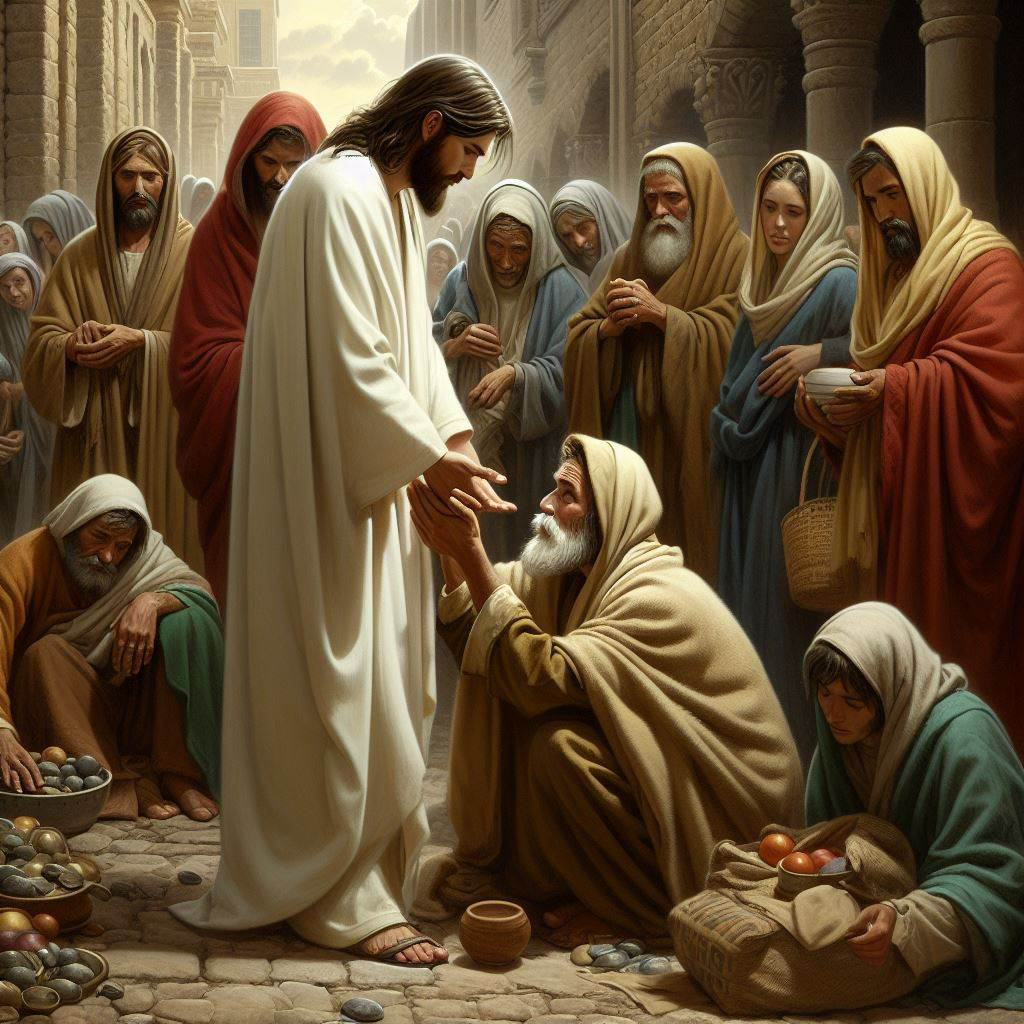 Jesus performed numerous miracles of staggering scope: healing the sick, restoring sight, cleansing lepers, calming storms, feeding thousands, and raising the dead (Matt 4:24; Mark 4:39; John 11:43-44). These were done openly before multitudes, yet John records, “Though He had performed so many signs before them, yet they were not believing in Him” (John 12:37). Miracles authenticated His authority but could not penetrate hardened hearts. When Jesus prayed, “Father, glorify Your name,” the Father answered audibly from heaven, “I have both glorified it, and will glorify it again.” Yet the crowd was divided, with “some…saying that it had thundered; others…saying, ‘An angel has spoken to Him’” (John 12:28-29). This demonstrates that negative volition either dismisses revelation as natural or reinterprets it according to human viewpoint rather than receiving it as divine truth. Paul affirms the same principle, declaring that creation itself testifies to God’s eternal power and divine nature, leaving humanity without excuse (Rom 1:20). But those with negative volition suppress God’s truth and exchange His glory for lies and idols (Rom 1:18, 23).
This same principle continues in the apostolic witness. Peter, James, and John beheld the glory of Christ at the Transfiguration and heard the Father’s voice from heaven (Matt 17:1-6). Peter later testified, “we were eyewitnesses of His majesty” and “we ourselves heard this utterance made from heaven” (2 Pet 1:16-18). Yet he immediately adds, “So we have the prophetic word made more sure, to which you do well to pay attention” (2 Pet 1:19). The apostle insists that the written Word—not spiritual experience—is the abiding foundation for faith. Fruchtenbaum states, “Although Peter did have a great and remarkable experience when he witnessed the Transfiguration, the written Word of God is still a more valid source of authority than anybody’s experience.”[4]
This dynamic of negative volition plays out in the Tribulation. Global judgments fall, and mankind recognizes they come directly from God. The kings of the earth cry out to be hidden from “the wrath of the Lamb” (Rev 6:16-17). Yet their knowledge does not lead to humility or a change of mind (cf. Rev 9:20-21). During the bowls of wrath, they “blasphemed the God of heaven because of their pains and their sores; and they did not repent of their deeds” (Rev 16:11). Again, though men know the source of judgment, “they blasphemed God because of the plague of the hail” (Rev 16:21). According to Thomas, “The followers of the beast knew exactly the source of these huge stones, and responded by shaking their fist in the face of God.”[5] This reveals that without humility and faith, even direct recognition of God’s hand only deepens rebellion, as pride chooses defiance over submission.
 God’s Word is fully sufficient to strengthen faith in those who, with humility, are willing to receive it, learn it, and put it into practice. Peter exhorts newborn believers to “long for the pure milk of the word, so that by it you may grow in respect to salvation” (1 Pet 2:2). Paul commended the Ephesian elders “to God and to the word of His grace, which is able to build you up and to give you the inheritance among all those who are sanctified” (Acts 20:32). He also affirmed that “all Scripture is inspired by God and profitable for teaching, for reproof, for correction, for training in righteousness; so that the man of God may be adequate, equipped for every good work” (2 Tim 3:16-17). The emphasis is consistent: spiritual health and growth come not through sight or experience, but through the intake and application of the written Word of God. Experiences fade, memories dull, and miracles pass, but “the word of our God stands forever” (Isa 40:8). Only those who humble themselves before God and receive His Word in faith find enduring stability, transformation, and blessing.
Conclusion
The believer must not chase after the extraordinary as though experience could replace truth. Scripture consistently testifies that spiritual stability does not rest on what the eyes see or the senses feel, but on the eternal Word of God. “The righteous shall live by faith” (Heb 10:38), and that faith comes by hearing and believing God’s revelation (Rom 10:17). To walk by faith and not by sight (2 Cor 5:7) means humbly submitting to God’s authority, depending on the Spirit’s filling (Eph 5:18), and feeding daily on His Word (Psa 1:2; 2 Tim 3:16-17; 1 Pet 2:2). Miracles may dazzle and experiences may stir the heart, but they cannot transform it. Only the Word of God, received in humility with faith, brings lasting change, maturity, and blessing.
Steven R. Cook, D.Min., M.Div.
If this article has enriched your understanding and walk with Christ, and you feel led to support my ministry, your generosity is greatly appreciated. Your gifts enable me to continue sharing the gospel of grace and providing in-depth biblical teachings. Thank you for partnering with me in this mission.
Related Articles:
- The Free Gift of God is Eternal Life
- The Spiritual Life and the Walk of Faith
- Mastering Focus as We Walk by Faith
- The Faithfulness of the Lord
- The Choice of Blessing or Cursing
- Reasons Why We Obey God
- Bible Promises that Strengthen our Faith
- Walking with God
- The High Calling of God’s Servants
- Knowing and Doing the Will of God
- Reasons Why We Obey God
- The Righteous Lifestyle of the Believer
–
[1] R. Dennis Cole, Numbers, vol. 3B, The New American Commentary (Nashville: Broadman & Holman Publishers, 2000), 225.
[2] Life demonstrates a striking paradox. Some people, though surrounded with every advantage—privileges, provisions, and even great spiritual experiences—still waste their lives in unbelief and disobedience. Others, despite disadvantages, obstacles, and hardships, press through to faith, obedience, and lasting impact. The difference is not external circumstance but internal response. Scripture describes this as volition: the heart’s decision either to receive or resist divine revelation. Positive volition is marked by humility and a willingness to submit to God’s authority, embracing His truth in faith, however weak or limited the outward resources may be (Heb 11:6; Rom 10:17; Jam 1:21-22). Negative volition, by contrast, springs from pride and self-rule, suppressing the truth and explaining away even the most overwhelming evidence of God’s power and grace (Rom 1:18-20). This principle explains why supernatural experiences, no matter how dramatic, cannot produce lasting transformation apart from faith and humble submission to God’s Word.
[3] Allen P. Ross, Holiness to the Lord: A Guide to the Exposition of the Book of Leviticus (Grand Rapids, MI: Baker Academic, 2002), 233.
[4] Arnold G. Fruchtenbaum, The Messianic Jewish Epistles: Hebrews, James, First Peter, Second Peter, Jude, 1st ed. (Tustin, CA: Ariel Ministries, 2005), 399.
[5] Robert L. Thomas, Revelation 8-22: An Exegetical Commentary (Chicago: Moody Publishers, 1995), 277.