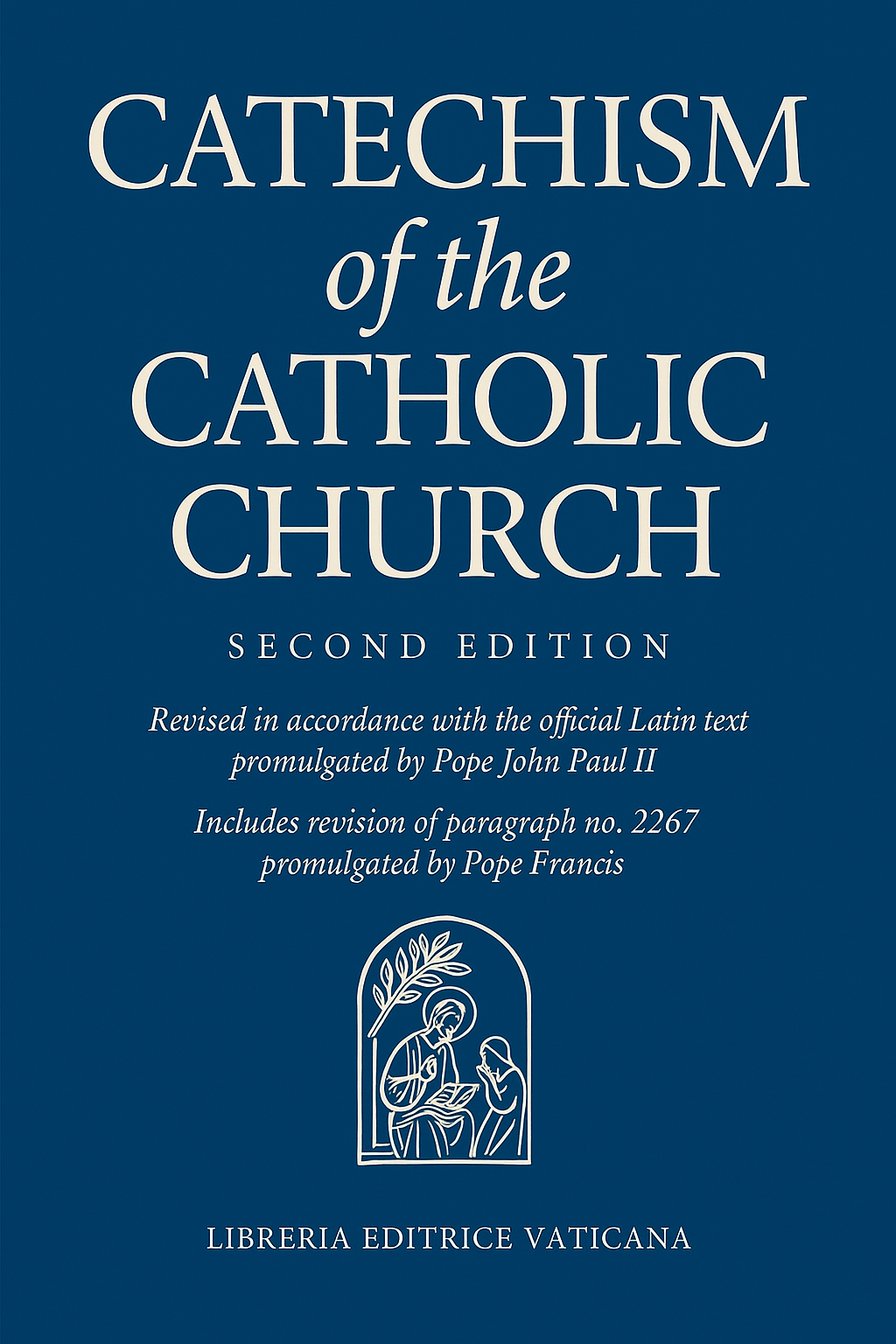
 The Roman Catholic Church holds to several major doctrines that are theologically flawed and inconsistent with Scripture. Perhaps the most significant error lies in Rome’s teaching that salvation, while initiated by grace, must be maintained and completed through works. According to the Catechism of the Catholic Church (CCC §§ 2023), justification begins at baptism and continues through faithful participation in the sacraments (eucharist, confession, penance, etc.). This view, however, directly contradicts the clear teaching of Scripture that justification is a once-for-all declarative act of God received by faith alone in Christ alone, apart from any human works (Rom 3:28; 4:5; Eph 2:8-9; Tit 3:5). To add works as a condition for maintaining salvation undermines the very nature of grace and pollutes the gospel message (Rom 11:6; Gal 1:6-8; 2:16).
A related error is the Roman Catholic doctrine of authority, which teaches that divine revelation comes through both Scripture and Sacred Tradition, as interpreted by the Church’s Magisterium (CCC §§81–85). This threefold source of authority places church tradition on equal footing with God’s written Word. In contrast, the Bible teaches that Scripture alone is the final and sufficient authority for doctrine and life (Prov 30:5-6; 2 Tim 3:16-17; 2 Pet 1:3-4). Jesus rebuked religious leaders for allowing their tradition to invalidate God’s Word (Mark 7:13), and the Bereans were commended for examining the Scriptures—not tradition—to test Paul’s teaching (Acts 17:11).
 The Roman Catholic view of the papacy also departs from biblical truth. The pope is claimed to be the successor of Peter and the vicar of Christ on earth, with universal jurisdiction and the gift of infallibility when speaking ex cathedra (CCC §§882–891). Yet Peter never claimed supremacy over the other apostles; in fact, Paul publicly rebuked him for doctrinal error (Gal 2:11-14). Christ alone is the head of the Church (Col 1:18), and no human being is infallible. A study of the popes throughout church history reveals them to be flawed individuals. For example, Pope Alexander VI (Rodrigo Borgia), who reigned from 1492 to 1503, was infamous for his blatant nepotism, political corruption, and immoral lifestyle, including fathering several children while in office. His papacy became a symbol of the moral decay that fueled the Protestant Reformation (see E. R. Chamberlin, The Bad Popes, Barnes & Noble, 1993). The concept of apostolic succession as taught by Rome finds no support in the New Testament.
Another significant error is the doctrine of purgatory, which Rome describes as a temporary state of purification for souls who die in grace but are not yet perfected (CCC §§1030–1032). This teaching suggests that Christ’s atonement was insufficient to fully cleanse believers from sin. However, Scripture declares that Christ’s sacrifice has perfected believers forever (Heb 10:10-14). The notion of a postmortem purification contradicts the biblical teaching that judgment follows death (Heb 9:27) and that believers, upon death, enter directly into the presence of the Lord (2 Cor 5:8).
Central to Catholic practice is the sacramental system, particularly baptismal regeneration and the doctrine of transubstantiation in the Eucharist (CCC §§1210–1419). Rome teaches that baptism removes original sin and that the elements of the Eucharist become the literal body and blood of Christ. Yet Scripture teaches that salvation is by grace through faith, not through any ritual (Rom 6:23; Acts 16:31; Eph 2:8-9). Baptism is an outward symbol of inward faith, not a regenerative act (Acts 10:44-48). The Lord’s Supper is a memorial of Christ’s once-for-all sacrifice, not a re-sacrificing of Him (Luke 22:19; 1 Cor 11:24-25; Heb 9:25-28).
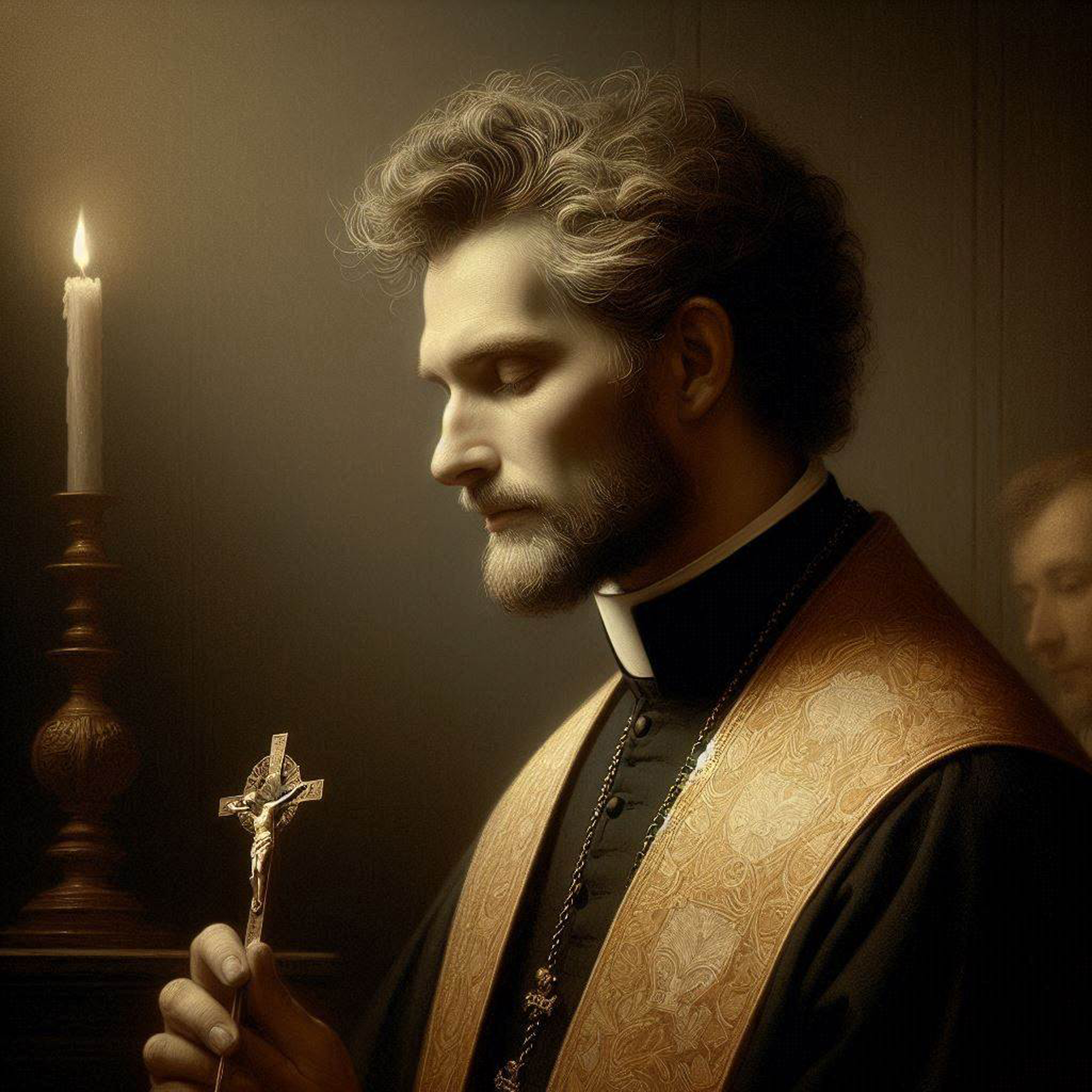 Another key distinction between Roman Catholicism and biblical Christianity is its doctrine of the priesthood. In Catholic theology, priests are viewed as a distinct class of clergy who serve as mediators between God and man, offering sacrifices (especially the Eucharist), hearing confessions, and dispensing grace through the sacraments (CCC §§1544–1553). The Catholic priest is said to act in persona Christi—“in the person of Christ”—particularly during the Mass, where he is believed to re-present Christ’s sacrifice. However, the New Testament teaches that all believers are priests before God (Rev 1:6; 5:10). Through faith in Christ, every Christian has direct access to the Father without the need for a human mediator (1 Pet 2:5, 9; Heb 4:14-16). Christ alone is our High Priest (Heb 7:23–28), and His once-for-all sacrifice on the cross has forever removed the need for an ongoing priestly system (Heb 10:10-14). The idea of a separate, sacrificing priesthood is a return to Old Testament shadows that were fulfilled in Christ. In contrast, the church operates under the doctrine of the universal priesthood of believers (Rev 1:6), where every Christian is called to worship, pray, and minister in service to the Lord with full access to God’s throne of grace (Heb 4:16).
 The veneration of Mary and the saints is another area of concern. Mary is exalted as the “Queen of Heaven,” “Mediatrix,” and “Co-Redemptrix” (CCC §§966, 969, 971). The faithful are encouraged to pray to her and to the saints for help. Yet Scripture is clear that Christ is the one and only Mediator between God and man (1 Tim 2:5), and prayer is to be directed to God alone (Matt 6:6-9). Mary was God’s instrument of grace to bring the Messiah into the world as the God-Man (Luke 1:30-35), but she was also a sinner in need of a Savior (Luke 1:46-47). She is to be honored as a faithful servant of the Lord. However, exalting Mary to a near-divine status detracts from the unique person and work of Jesus Christ and has no basis in Scripture.
Finally, the Roman Catholic Church teaches that justification is not a judicial declaration by God but a process involving the infusion of grace and the cooperation of the individual through good works (CCC §§1989–1995). Biblically, however, justification is a forensic act in which God declares the believing sinner righteous based solely on the imputed righteousness of Christ (Rom 4:5; 2 Cor 5:21; Phil 3:9). While sanctification—spiritual growth and transformation—is a process, justification is not. The confusion of these two doctrines leads to an insecure view of salvation and a reliance on human effort.
In summary, the Roman Catholic Church has added layers of tradition, ritual, and human effort to what the Bible presents as a simple and sufficient message of grace. The gospel according to Scripture is clear: Christ died for our sins, was buried, and was raised again (1 Cor 15:3-4). Eternal life is the free gift of God (Rom 6:23), received by grace alone through faith in Jesus Christ—nothing more, nothing less (John 3:16; Eph 2:8-9). As Paul wrote with clarity and conviction, “I do not nullify the grace of God, for if righteousness comes through the Law, then Christ died needlessly” (Gal 2:21).
 The Gospel of grace is the declaration that Jesus Christ, the eternal Son of God (John 1:1, 14; Col 2:9), became true humanity through the virgin birth (Isa 7:14; Luke 1:30-35), lived a sinless life (1 Pet 2:22; 1 John 3:5), and voluntarily went to the cross (John 10:18), where He bore the penalty for all human sin (John 1:29; 1 John 2:2), past, present, and future (Heb 10:10-14). On the cross, He was judged in our place (Isa 53:5-6; Rom 5:8), fully satisfying the justice of God (2 Cor 5:21; 1 Pet 3:18). Salvation is not earned, deserved, or maintained by any human effort—no works, rituals, or law-keeping. It is the free gift of God (Rom 6:23), offered to all and received by faith alone in Christ alone (John 3:16; Acts 4:12; Eph 2:8-9). The moment anyone believes in Jesus as Savior (John 3:16; Acts 16:31), he receives the irrevocable gift of eternal life (John 10:28), is justified before God (Rom 3:28; 5:1), and becomes permanently secure in Christ (John 5:24; Rom 8:1). Grace means God does all the work, and man simply responds by believing—no gimmicks, no strings attached. The Bible plainly states, “whoever believes in Him shall not perish, but have eternal life” (John 3:16b). Man needs only Christ to be saved. Nothing more.
Dr. Steven R. Cook
If this article has enriched your understanding and walk with Christ, and you feel led to support my ministry, your generosity is greatly appreciated. Your gifts enable me to continue sharing the gospel of grace and providing in-depth biblical teachings. Thank you for partnering with me in this mission.
Related Articles:
- The Free Gift of God is Eternal Life
- Assurance of Salvation
- Saved by Grace Alone, Through Faith Alone, in Christ Alone
- Not of Works
- The Cross & Crucifixion of Jesus
- Defining Salvation in the Bible
- Who is the One Who Saves?
- Faith from Beginning to End
- The Righteous Lifestyle of the Believer
- Walking Worthy of God’s Call to Service
- Walking in the Light
- God Uses Imperfect People
- Knowing and Doing the Will of God
- The High Calling of God’s Servant
- The Life of Faith