
God loves you. He wants you to spend eternity with Him in heaven, not separated from Him in the lake of fire. The Bible says God is “not wishing for any to perish but for all to come to repentance” (2 Pet. 3:9), and that He “desires all men to be saved” (1 Tim. 2:4). Yet every person stands condemned because of sin (Rom. 3:10, 23; 6:23). Left to ourselves, we are all headed for the lake of fire (Rev. 20:11-15). But no one has to go there. Jesus Christ went to the cross, bore our sins, paid our sin-debt in full, and cried, “It is finished” (John 19:30; Isa. 53:5-6; Rom. 5:8; 1 Pet. 3:18). Because His work is complete, God now offers eternal life as a free gift to everyone who believes in His Son as Savior.
On the negative side, “the wages of sin is death” (Rom. 6:23a). Because we are all sinners, we have earned spiritual death, which is separation from God. If left unaddressed, that spiritual condition culminates in eternal separation from Him in the lake of fire (Rev. 20:11-15). We are totally helpless to fix our sin problem (Rom. 5:6-10). We cannot rescue ourselves from this fate. No amount of morality, religion, good works, or personal reform can remove our sin or satisfy God’s perfect righteousness (Isa. 64:6; Rom. 3:20, 28; Gal. 2:16). But what we could never do for ourselves, God did for us through His Son. “The free gift of God is eternal life in Christ Jesus our Lord” (Rom. 6:23b). Scripture tells us, “by grace you have been saved through faith; and that not of yourselves, it is the gift of God; not as a result of works, so that no one may boast” (Eph. 2:8-9). Grace means God gives us what we do not deserve. Faith is the nonmeritorious means by which we receive what God freely offers. And because our salvation was purchased in full by Jesus Christ at the cross, God can now offer eternal life as a free gift, leaving nothing for us to pay. Faith is the empty hand that receives God’s free gift. We simply believe in Christ, and the moment we do, God gives us eternal life (John 3:16; 10:28; Acts 16:31).

Those who perish eternally do so because they reject God’s gracious provision, not because He failed to provide salvation. God has made Himself known through creation, conscience, and His revelation (Ps. 19:1-4; Rom. 1:18-20; 2:14-15). He is also able to direct further light to those who genuinely seek Him (Acts 8:26-39; 10:1-48; Heb. 11:6). Those who respond positively to the light they have receive more truth, culminating in the gospel of Jesus Christ. Those who suppress the truth and refuse God’s revelation remain under condemnation because they reject the light already given (John 3:19-20; Rom. 1:21-25). Their judgment is not due to a lack of divine love or provision, but because they refuse God’s gracious offer of eternal life. God does not force anyone to be saved. Though He does not approve of their sinful choices, He respects their volition and holds them accountable for the choices they make. What they do with Jesus in time determines their eternal destiny.
God also demonstrates His perfect justice and abundant grace toward those who are incapable of understanding or responding to the gospel. Scripture gives good reason to conclude that infants, young children, and those with profound intellectual and developmental disabilities are not held morally accountable in the same way as those capable of understanding God’s revelation (Deut. 1:39; 2 Sam. 12:23; Isa. 7:15-16). God always judges righteously and never condemns anyone unjustly (Gen. 18:25). His grace extends to those who lack the capacity for moral accountability, granting them a place with Him. But for those who can understand the gospel, the issue is clear. God has done everything necessary for salvation. Eternal life is His free gift, purchased entirely by Christ. The only question that remains is whether you will accept God’s gift by believing in Jesus Christ, or reject it and bear the consequences of that decision (John 3:18, 36).

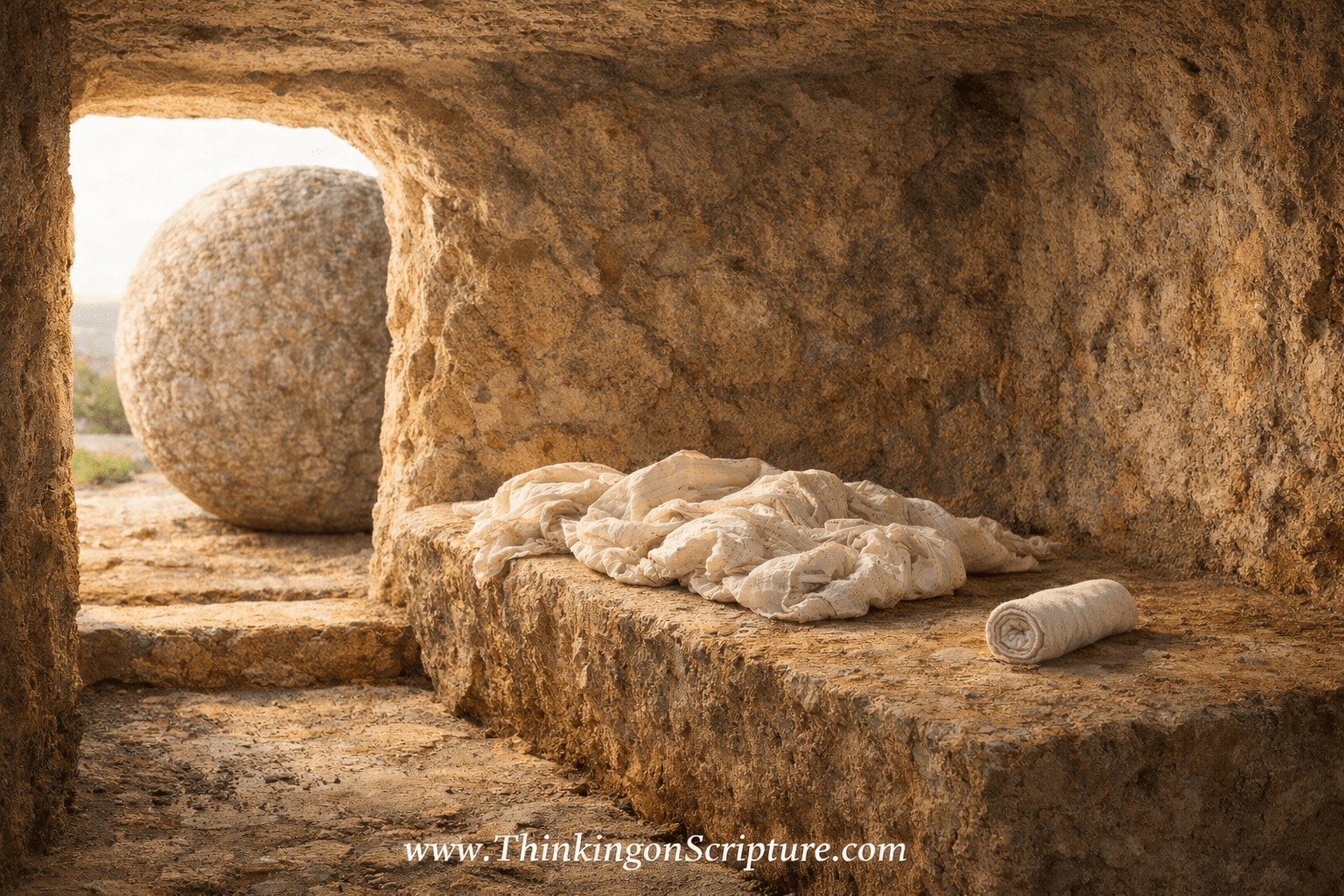
Jesus is the eternal Son of God (John 1:1) who added true humanity to Himself (John 1:14). He lived a sinless life (1 John 3:5), died on the cross where He paid the penalty for all our sins (Rom. 5:8; 1 Pet. 3:18), was buried, rose on the third day (1 Cor. 15:3-4), and afterward appeared alive to hundreds of eyewitnesses (1 Cor. 15:5-8). He conquered sin and death and now offers eternal life as a free gift to everyone who believes in Him (John 3:16; Rom. 6:23). This is the Jesus who saves forever, and “Whoever believes in Him shall not perish, but have eternal life” (John 3:16). Do not wait another moment. Believe in Jesus Christ as your Savior and receive God’s free gift of eternal life. The moment you believe in Him, you are forgiven (Acts 10:43), given eternal life (John 3:16), and forever secure in God’s saving grace (10:28; Rom. 8:1).
Steven R. Cook, D.Min., M.Div.
If this article has enriched your understanding and walk with Christ, and you feel led to support my ministry, your generosity is greatly appreciated. Your gifts enable me to continue sharing the gospel of grace and providing in-depth biblical teachings. Thank you for partnering with me in this mission.
Related Articles:
- The Free Gift of God is Eternal Life
- Learning to Rest in God
- Faith from Beginning to End
- Mastering Focus as We Walk by Faith
- Trusting God in Difficult Times
- Recalibrating the Mind with Scripture
- The Christian with Integrity
- The Righteous Lifestyle of the Believer
- Walking Worthy of God’s Call to Service
- Walking in the Light
- God Uses Imperfect People
- Knowing and Doing the Will of God
- The High Calling of God’s Servant
- The Life of Faith

 The kingdom will finally be established at the Second Coming of Christ described in Revelation 19 and 20. Jesus will return from heaven in power and glory, destroy His enemies, and judge the rebellious nations (Rev. 19:11-21). Satan will then be bound and imprisoned for one thousand years so that he cannot deceive the nations (Rev. 20:1-3). Christ will reign on earth for a thousand years with resurrected saints who share in His rule (Rev. 20:4-6). This period of a thousand years is called the Messianic Kingdom because it will be ruled by Messiah. According to Fructenbaum, “The name Millennial Kingdom emphasizes how long this kingdom will last: one thousand years. The form of the Messianic or Millennial Kingdom is that of an earthly literal kingdom which Jesus will rule from the Throne of David.”



 At a point in time, without surrendering deity, God the Son added true humanity to Himself. John wrote, “The Word became flesh, and dwelt among us” (John 1:14a). Paul states, “For in Him all the fullness of Deity dwells in bodily form” (Col. 2:9). Jesus was “born of a woman” (Gal. 4:4), born of a virgin (Isa. 7:14; Luke 1:35), entering the human race without inheriting Adam’s sin. He lived under genuine human limitations while perfectly relying on the Father and the Spirit. He “emptied Himself” not of deity, but of the independent use of His divine attributes, taking “the form of a bond-servant” (Phil. 2:6–7). According to Fruchtenbaum, “The kenosis does not imply that He divested Himself of the form of deity. Rather, it means that He laid aside the independent exercise of His divine attributes by which the form of God expresses itself.”
 Jesus’ earthly life displayed perfect righteousness in thought, word, and deed. Scripture affirms, “in Him there is no sin” (1 John 3:5; cf. 2 Cor. 5:21). Peter testifies, “Who committed no sin, nor was any deceit found in His mouth” (1 Pet. 2:22). Though He faced real temptation, He was “tempted in all things as we are, yet without sin” (Heb. 4:15). He fulfilled the Law in its entirety, for He said, “Do not think that I came to abolish the Law or the Prophets… but to fulfill” (Matt. 5:17), and Paul states, “Christ is the end of the law for righteousness to everyone who believes” (Rom. 10:4). His obedience was active and continuous, grounded in love for the Father’s will, for of the Son it is written, “You have loved righteousness and hated lawlessness” (Heb. 1:9).
 Jesus’ saving work was substitutionary, sufficient, and final. On the cross, “God demonstrates His own love toward us, in that while we were yet sinners, Christ died for us” (Rom. 5:8). The penalty of sin is death (Rom. 6:23a), and He bore that penalty in our place. Paul states, “He made Him who knew no sin to be sin on our behalf, so that we might become the righteousness of God in Him” (2 Cor. 5:21). The issue for salvation is not human merit or reform, but faith in Jesus to save. Scripture states, “Believe in the Lord Jesus, and you will be saved” (Acts 16:31), “For by grace you have been saved through faith… not as a result of works” (Eph. 2:8–9). Because Jesus’ work is complete, forgiveness is secured, for “In Him we have redemption through His blood, the forgiveness of our trespasses” (Eph. 1:7), and eternal life is granted to all who believe, for “He who believes in the Son has eternal life” (John 3:36a).
 The risen Christ did not abandon His Davidic claim. After His resurrection He declared, “All authority has been given to Me in heaven and on earth” (Matt. 28:18), and He ascended to the Father’s right hand (Ps. 110:1; Acts 2:33–35). He now awaits the appointed time when He will return visibly and bodily. The angelic promise stands: “This Jesus… will come in just the same way as you have watched Him go into heaven” (Acts 1:11). At His second coming He will sit on “His glorious throne” (Matt. 25:31) and fulfill the covenant made with David, for God swore, “I will raise up your descendant after you… and I will establish the throne of his kingdom forever” (2 Sam. 7:12–13). He will reign from Jerusalem as King over all the earth, for “The Lord will be king over all the earth” (Zech. 14:9), and “the government will rest on His shoulders… on the throne of David and over his kingdom” (Isa. 9:6–7). The One who came in humility will return in glory, and His kingdom will be righteous, visible, and everlasting.