 Spirituality is the life the Christian enjoys when properly living in dependence upon the Holy Spirit and walking according to Scripture. This advance assumes one has believed in Christ as Savior and has spiritual life (John 3:16; 6:28-29; 20:31; Acts 4:12; Rom 5:6-10; Eph 2:8-9; Tit 3:5; 1 Pet 1:3, 23). Salvation is by grace alone, through faith alone, in Christ alone. Only Christ’s atoning work on the cross is sufficient to satisfy God’s righteous demands toward our sin (1 John 2:2). No works are necessary for us to be saved. We need only Christ. When the Philippian Jailer asked the apostle Paul, “What must I do to be saved?” (Acts 16:30). Paul replied, “Believe in the Lord Jesus, and you will be saved” (Acts 16:31). Believing in Christ means we trust Him to do for us that which we cannot do for ourselves; to save us. It means we trust solely in Him and nothing more. Though good works should follow our salvation, they are never the condition of it.
Once we are born again, God desires that we advance to spiritual maturity, which glorifies Him and blesses us and others. The information taught in this article applies only to the Christian, for “The unbeliever does not receive the things of the Spirit of God, for they are foolishness to him. And he cannot understand them, because they are spiritually discerned” (1 Cor 2:14 NET; cf. John 8:43-44).[1]
 The advance to spiritual maturity is a process that takes time as Christians learn and live God’s Word on a regular basis. There is always opposition, for we live in a fallen world and are confronted with many obstacles and distractions that seek to push or pull us away from God. Though constant distractions are all around us, we move forward by “destroying speculations and every lofty thing raised up against the knowledge of God, and are taking every thought captive to the obedience of Christ” (2 Cor 10:5). Bringing our thoughts into captivity means focusing our minds on God and His Word (Isa 26:3; Prov 3:5-6; Col 3:1-2), and not allowing our thoughts to be bogged down and trapped with the cares of this world (Matt 6:25-34). Biblically, several things are necessary for us to reach spiritual maturity, and these are as follows.
Be in submission to God. Scripture tells us to “Submit to God” (Jam 4:7), and to “present your bodies a living and holy sacrifice, acceptable to God, which is your spiritual service of worship” (Rom 12:1). Submission is a will surrendered to the will of another. Being in submission to God is a sign of positive volition that we’ve prioritized our relationship with Him above all else, and that we trust Him to guide and provide in all things. Like a good friend, He is naturally in our thoughts, and we live every day conscious of Him, being sensitive to what may offend, and making every effort to please Him through a life of faith. When we yield to God, His Word opens up to us, as Jesus said, “If anyone is willing to do His will, he will know of the teaching, whether it is of God or whether I speak from Myself” (John 7:17; cf. Luke 24:45; Acts 16:14; 1 John 5:20).
 Continually study God’s Word. Ezra, the priest, was one who “had set his heart to study the law of the LORD and to practice it, and to teach His statutes and ordinances in Israel” (Ezr 7:10). The growing believer is one whose “delight is in the law of the LORD, and in His law he meditates day and night” (Psa 1:2). As Christians, we understand that “All Scripture is inspired by God and profitable for teaching, for reproof, for correction, for training in righteousness; so that the man of God may be adequate, equipped for every good work” (2 Tim 3:16-17). We cannot live what we do not know, and learning God’s Word necessarily precedes living His will. From regeneration onward, we study God’s Word in order to grow spiritually, that we might reach Christian maturity. God helps His people by means of Pastors and Teachers (Eph 4:11), whom He has given to His church “for the equipping of the saints for the work of service, to the building up of the body of Christ; until we all attain to the unity of the faith, and of the knowledge of the Son of God, to a mature person, to the measure of the stature which belongs to the fullness of Christ” (Eph 4:12-13). Pastors and Teachers have an obligation to communicate God’s Word accurately. Christians have the individual responsibility of studying God’s Word in order to live the best life and grow to maturity (2 Tim 2:15; Heb 5:12-14; 1 Pet 2:2; 2 Pet 3:18).
Live by faith. Faith as a verb (πιστεύω pisteuo) means to believe, trust, or have confidence in someone or something. It is used of trust in God (Heb 11:6; cf. Rom 4:3), Jesus (Acts 16:31; 1 Pet 1:8), and Scripture (John 2:22). Faith as a noun (πίστις pistis) often refers to that which evokes trust. It is used with reference to God who is trustworthy (Rom 3:3; 4:19-21), and of people who possess faith (Matt 9:2, 22; 21:21). It is also used of Scripture itself as a body of reliable teaching (Acts 14:22; 16:5; Rom 14:22; Gal 1:23; 2 Tim 4:7). Faith as an adjective (πιστός pistos), describes someone who is trustworthy or dependable. The word is used both of man (Matt 25:23; 1 Cor 4:17; Col 1:7; 1 Tim 1:12), and God (1 Cor 1:9; 10:13; 2 Tim 2:13; Heb 10:23; Rev 1:5). Living by faith means we trust God at His Word. Christian faith starts with knowledge, as Paul wrote, “faith comes by hearing, and hearing by the word of God” (Rom 10:17 KJV). The writer to the Hebrews states, “But my righteous one shall live by faith; and if he shrinks back, my soul has no pleasure in him” (Heb 10:38; cf. Heb 3:7—4:2), for “without faith it is impossible to please Him, for he who comes to God must believe that He is and that He is a rewarder of those who seek Him” (Heb 11:6). It is possible to learn God’s Word and not believe it. For example, the Exodus generation heard God’s Word and understood it; however, “the word they heard did not profit them, because it was not united by faith in those who heard” (Heb 4:2). Our faith is effective when God’s Word is more real and dominant than our experiences, feelings, or circumstances.
Do not Love the World. The apostle John warns Christians, saying, “Do not love the world nor the things in the world. If anyone loves the world, the love of the Father is not in him. For all that is in the world, the lust of the flesh and the lust of the eyes and the boastful pride of life, is not from the Father, but is from the world” (1 John 2:15-16). When John writes and tells the Christian “Do not love the world”, he’s not talking about the physical planet. The Greek word κόσμος kosmos as it is used by the apostle John and others most often refers to “that which is hostile to God…lost in sin, wholly at odds with anything divine, ruined and depraved.”[2] The world, or world-system, originated with Satan and consists of those philosophies and values that perpetually influence humanity to think and behave contrary to God and His Word. The world-system is mankind and society functioning without God, and is first and foremost a mindset that is antithetical to divine viewpoint. Lewis S. Chafer explains:
The kosmos is a vast order or system that Satan has promoted which conforms to his ideals, aims, and methods. It is civilization now functioning apart from God-a civilization in which none of its promoters really expect God to share; who assign to God no consideration in respect to their projects, nor do they ascribe any causality to Him. This system embraces its godless governments, conflicts, armaments, jealousies; its education, culture, religions of morality, and pride. It is that sphere in which man lives. It is what he sees, what he employs. To the uncounted multitude it is all they ever know so long as they live on this earth. It is properly styled “The Satanic System” which phrase is in many instances a justified interpretation of the so-meaningful word, kosmos.[3]
Satan’s world system is a spiritual darkness that envelopes and permeates the human race, influencing every aspect of thought and behavior in such a way that the depraved nature of man is magnified while God is excluded. We should be careful to understand that Satan’s system is a buffet that offers something for everyone who rejects God, whether he is moral or immoral, religious or irreligious, educated or simple, rich or poor. Satan is careful to make sure there’s even something for the Christian in his world-system, which is why the Bible repeatedly warns the believer not to love the world or the things in the world. We are to be set apart (Col 2:8; Jam 1:27; 4:4; 1 John 2:15-16). Robert Lightner states:
The world is the Christian’s enemy because it represents an anti-God system, a philosophy that is diametrically opposed to the will and plan of God. It is a system headed by the devil and therefore at odds with God (2 Cor 4:4). Likewise, the world hates the believer who lives for Christ (John 17:14). The Lord never kept this a secret from his own. He told them often of the coming conflict with the world (e.g., John 15:18-20; 16:1-3; 32-33; cf. 2 Tim 3:1-12). It is in this wicked world we must rear our families and earn our livelihoods. We are in it, yet are not to be a part of it.[4]
Do not Quench the Spirit. Paul wrote to the church at Thessalonica and said, “Do not quench the Spirit” (1 Th 5:19). The word “quench” translates the Greek word σβέννυμι sbennumi which means to “stifle or suppress.”[5] The word carries the idea of dowsing water on a fire so as to extinguish it. To “quench the Spirit” is to resist His revealed will and not follow as He leads. The Holy Spirit wants to work in our lives, but we must let Him have His way, and this means yielding, or submitting to Him on a regular basis, as opportunity permits; however, the Spirit does not force us to be spiritual, therefore He can be resisted. John Walvoord states, “Quenching the Spirit may simply be defined as being unyielded to Him, or saying, ‘No.’ The issue is, therefore, the question of willingness to do His will.”[6]
Do not Grieve the Spirit. To the church at Ephesus, Paul wrote, “Do not grieve the Holy Spirit of God, by whom you were sealed for the day of redemption” (Eph 4:30). The Spirit is a Person, and He is grieved with us as Christians when we sin and act contrary to His holy character. Our sin hurts our relationship with Him and hinders His work in our lives. Grieving the Spirit is a willful act on our part when we think and behave sinfully. John Walvoord writes:
The Scriptures often testify to the fact that the Spirit of God is holy and that He is a person. The indwelling presence of this holy person constitutes the body of a believer a temple of God. In the nature of the case, the presence of sin in any form grieves the Holy Spirit. Accordingly, when the Christian is exhorted to “grieve not the Holy Spirit of God, in whom ye were sealed unto the day of redemption” (Eph 4:30), it is an appeal to allow nothing in his life contrary to the holiness of the Spirit. It is clear that the one cause of grieving the Holy Spirit is sin.[7]
When the Christian is walking as he should, according to Scripture, then the Holy Spirit can work through him to touch the lives of others. When the Christian commits sin, then the Spirit is grieved and His ministry to others is diminished, and the Spirit must then begin to work on the heart of the Christian to bring him back into fellowship. Lewis S. Chafer states, “Sin destroys spirituality. It is necessarily so; for where sin is tolerated in the believer’s daily life, the Spirit, who indwells him, must then turn from His blessed ministry through him, to a pleading ministry to him.”[8]
 Restore Broken Fellowship with God Through Confession of Personal Sin. All believers sin, and there are none who attain perfection in this life (Pro 20:9; Eccl 7:20; 1 John 1:8-10). For this reason, familial forgiveness is necessary for a healthy relationship with God. David understood the folly of trying to conceal his sins, which resulted in psychological disequilibrium and pain; however, when he confessed his sin, God forgave him (Psa 32:2-5). John wrote, “If we confess our sins, He is faithful and righteous to forgive us our sins and to cleanse us from all unrighteousness” (1 John 1:9). God forgives because it is His nature to do so, for He “merciful and gracious, slow to anger and abundant in lovingkindness and truth” (Psa 86:15; cf. Psa 103:8-14). And He is able to forgive because Christ has atoned for our sins at the cross, satisfying the Father’s righteous demands regarding our offenses. The apostle John wrote, “My little children, I am writing these things to you so that you may not sin. And if anyone sins, we have an Advocate with the Father, Jesus Christ the righteous; 2 and He Himself is the propitiation for our sins; and not for ours only, but also for those of the whole world” (1 John 2:1-2). The challenge for many believers is to trust God at His word and accept His forgiveness and not operate on guilty feelings. William MacDonald states:
The forgiveness John speaks about here [i.e., 1 John 1:9] is parental, not judicial. Judicial forgiveness means forgiveness from the penalty of sins, which the sinner receives when he believes on the Lord Jesus Christ. It is called judicial because it is granted by God acting as Judge. But what about sins which a person commits after conversion? As far as the penalty is concerned, the price has already been paid by the Lord Jesus on the cross of Calvary. But as far as fellowship in the family of God is concerned, the sinning saint needs parental forgiveness, that is, the forgiveness of His Father. He obtains it by confessing his sin. We need judicial forgiveness only once; that takes care of the penalty of all our sins—past, present, and future. But we need parental forgiveness throughout our Christian life.[9]
Be Filled with the Spirit. Paul wrote to Christians, “don’t get drunk with wine, which leads to reckless actions, but be filled by the Spirit” (Eph 5:18 CSB). If a believer consumes too much alcohol, it can lead to cognitive impairment and harmful behavior. But the believer who is filled with the Spirit will possess divine viewpoint and manifest the fruit of godliness, worship, and thankfulness to the Lord (Eph 5:19-20). Being filled with the Spirit means being guided by Him rather than our own desires or the desires of others. The Spirit’s guidance is always according to Scripture. Being filled with the Spirit does not mean we have more of Him, but that He has more of us, as we submit to His leading. Warren Wiersbe comments:
“Be filled with the Spirit” is God’s command, and He expects us to obey. The command is plural, so it applies to all Christians and not just to a select few. The verb is in the present tense, “keep on being filled”, so it is an experience we should enjoy constantly and not just on special occasions. And the verb is passive. We do not fill ourselves but permit the Spirit to fill us. The verb “fill” has nothing to do with contents or quantity, as though we are empty vessels that need a required amount of spiritual fuel to keep going. In the Bible, filled means “controlled by.” “They… were filled with wrath” (Luke 4:28) means “they were controlled by wrath” and for that reason tried to kill Jesus. “The Jews were filled with envy” (Acts 13:45) means that the Jews were controlled by envy and opposed the ministry of Paul and Barnabas. To be “filled with the Spirit” means to be constantly controlled by the Spirit in our mind, emotions, and will…But how can a person tell whether or not he is filled with the Spirit? Paul stated that there are three evidences of the fullness of the Spirit in the life of the believer: he is joyful (Eph. 5:19), thankful (Eph. 5:20), and submissive (Eph. 5:21–33). Paul said nothing about miracles or tongues, or other special manifestations.[10]
Lewis S. Chafer wrote:
To be filled with the Spirit is to have the Spirit fulfilling in us all that God intended Him to do when he placed Him there. To be filled is not the problem of getting more of the Spirit: it is rather the problem of the Spirit getting more of us. We shall never have more of the Spirit than the anointing which every true Christian has received. On the other hand, the Spirit may have all of the believer and thus be able to manifest in him the life and character of Christ. A spiritual person, then, is one who experiences the divine purpose and plan in his daily life through the power of the indwelling Spirit. The character of that life will be the out-lived Christ. The cause of that life will be the unhindered indwelling Spirit (Eph 3:16-21; 2 Cor 3:18).[11]
Charles Ryrie states:
To be filled with the Spirit means to be controlled by the Spirit. The clue to this definition is found in Ephesians 5:18 where there is contrast and comparison between drunkenness and Spirit-filling. It is the comparison which gives the clue, for just as a drunken person is controlled by the liquor which he consumes, so a Spirit-filled Christian is controlled by the Spirit. This will cause him to act in ways which are unnatural to him, not implying that such ways will be erratic or abnormal, but asserting that they will not be the ways of the old life. Control by the Spirit is a necessary part of spirituality.[12]
 Walk in the Spirit. Paul wrote, “walk by the Spirit, and you will not carry out the desire of the flesh” (Gal 5:16). In this passage walking is a metaphor for daily living, which can be influenced by God (Deut 5:33; 10:12), other righteous persons (Prov 13:20), sinners (Psa 1:1; Pro 1:10-16; 1 Cor 15:33), or one’s own sin nature (Gal 5:17-21). To walk in the Spirit means we depend on His counsel to guide and power to sustain as we seek to do His will. The Spirit most often guides us directly by Scripture. Jesus, speaking of the ministry of the Holy Spirit, said, “the Holy Spirit, whom the Father will send in My name, He will teach you all things, and bring to your remembrance all that I said to you” (John 14:26). The Holy Spirit helps the Christian know the Word of God, and to recall Scripture when needed for guidance. The Holy Spirit also works through mature believers—whose thinking is saturated with God’s Word—to help provide sound biblical advice for others. Warren Wiersbe states:
The New Testament calls the Christian life a “walk.” This walk begins with a step of faith when we trust Christ as our Savior. But salvation is not the end—it’s only the beginning—of spiritual life. “Walking” involves progress, and Christians are supposed to advance in the spiritual life. Just as a child must learn to walk and must overcome many difficulties in doing so, a Christian must learn to “walk in the light.”[13]
Charles Ryrie adds:
Constant dependence on the power of the indwelling Spirit of God is essential to spiritual growth and victory. By its very nature, walking is a succession of dependent acts. When one foot is lifted in order to place it front of the other one, it is done in faith—faith that the foot that remains on the ground will support the full weight of the body. You can only walk by the exercise of faith. You can live the Christian life only by dependence on the Holy Spirit. Such dependence will result in the Spirit’s control over the deeds of the flesh (Gal 5:17-21) and the Spirit’s production of the fruit of the Spirit (vv. 22-23). Dependence on the power of God and effort on the part of the believer are not mutually exclusive. Self-discipline and Spirit-dependence can and must be practiced at the same time in a balanced spiritual life. Dependence itself is an attitude, but that attitude does not come automatically; it usually requires cultivation. How many genuine Christians there are who live day after day without even sensing their need of dependence on Him. Experience, routine, pride, self-confidence all tend to drag all of us away from that conscious dependence on God which we must have in order to live and act righteously.[14]
Accept God’s Trials. Paul wrote, “we exult in our tribulations, knowing that tribulation brings about perseverance; and perseverance, proven character; and proven character, hope” (Rom 5:3-4). James said, “Consider it a great joy, my brothers, whenever you experience various trials, knowing that the testing of your faith produces endurance. But endurance must do its complete work, so that you may be mature and complete, lacking nothing” (Jam 1:2-4 CSB). The Lord uses the fire of trials to burn away the dross of our weak character and to refine those golden qualities consistent with His character. The growing believer learns to praise God in and for the trials, knowing He uses them to strengthen our faith and develop us into spiritually mature Christians. Trials can make us bitter or better, depending on how we respond to them.
Pray to God. Prayer is essential to spiritual growth as we need to have upward communication with God to express ourselves to Him. Prayer is the means by which we make requests to God, believing He has certain answers ready for us, and that we just need to ask (Jam 4:2). Scripture directs us to “pray without ceasing” (1 Th 5:17), and “pray at all times in the Spirit” (Eph 6:18; cf. Jude 1:20). To pray in the Spirit means we pray in the power of the Holy Spirit as He directs and energizes our prayer life.
 Worship and Give Thanks to the Lord. The writer to the Hebrews stated, “let us continually offer up a sacrifice of praise to God, that is, the fruit of lips that give thanks to His name” (Heb 13:15). And Paul wrote to the Christians at Thessalonica, saying, “in everything give thanks; for this is God’s will for you in Christ Jesus” (1 Th 5:18). To give thanks (εὐχαριστέω eucharisteo) is to have a daily attitude of gratitude toward God for His goodness and mercy toward us. Part of this attitude comes from knowing “that God works all things to work together for good to those who love God, to those who are called according to His purpose” (Rom 8:28). God does this because He “is for us” (Rom 8:31).
Fellowship with Other Believers. The writer of Hebrews states, “let us consider how to stimulate one another to love and good deeds, not forsaking our own assembling together, as is the habit of some, but encouraging one another; and all the more as you see the day drawing near” (Heb 10:24-25). Spiritual growth ideally happens in community, for God expects us to exercise our spiritual gifts for the benefit of others (see Rom 12:10-13; 14:19; Eph 4:32; Phil 2:3-4; 1 Th 5:11-15).
Serve Others in Love. We are part of the body of Christ and God calls us to love and serve each other. Paul wrote, “you were called to freedom, brethren; only do not turn your freedom into an opportunity for the flesh, but through love serve one another” (Gal 5:13), and “while we have opportunity, let us do good to all people, and especially to those who are of the household of the faith” (Gal 6:10). Peter states, “As each one has received a special gift, employ it in serving one another as good stewards of the manifold grace of God” (1 Pet 4:10). As Christians, we are told, “Do nothing from selfishness or empty conceit, but with humility of mind regard one another as more important than yourselves; do not merely look out for your own personal interests, but also for the interests of others” (Phil 2:3-4).
 Take Advantage of the Time God Gives. Time is a resource we should manage properly. Paul writes, “Be careful how you walk, not as unwise men but as wise, making the most of your time, because the days are evil” (Eph 5:15-16). Solomon wrote, “Whatever you find to do with your hands, do it with all your might, because there is neither work nor planning nor knowledge nor wisdom in the grave, the place where you will eventually go” (Ecc 9:10 NET). God has determined the length of our days, as David wrote, “in Your book were all written the days that were ordained for my life when as yet there was not one of them” (Psa 139:16). Every moment is precious and we must make sure our days are not wasted on meaningless pursuits, but on learning God’s Word, living His will, and loving those whom the Lord places in our path.
As Christians, we will face ongoing worldly distractions in our lives which are designed by Satan to prevent spiritual growth. We have choices to make on a daily basis, for only we can choose to allow these distractions to stand between us and the Lord. As Christians, we experience our greatest blessings when we reach spiritual maturity and utilize the rich resources God has provided for us. However, learning takes time, as ignorance gives way to the light of God’s revelation. Frustration is often the handmaiden of ignorance, but spiritual success comes with knowledge of God and His Word.
Dr. Steven R. Cook
Related Articles:
[1] Unless otherwise stated, all Scripture quotes are taken from the New American Standard Bible, 1995 Update, published by the Lockman Foundation.
[2] Walter Bauer, A Greek-English Lexicon of the New Testament and Other Early Christian Literature, 3rd ed., rev. and ed. Fredrick William Danker (Chicago: University of Chicago Press, 2000), 562.
[3] Lewis S. Chafer, “Angelology Part 4” Bibliotheca Sacra 99 (1942): 282-283.
[4] Robert P. Lightner, Handbook of Evangelical Theology: A Historical, Biblical, and Contemporary Survey and Review (Grand Rapids, MI: Kregel Publications, 1995), 206.
[5] Walter Bauer, A Greek-English Lexicon of the New Testament and Other Early Christian Literature, 917.
[6] John F. Walvoord, The Holy Spirit (Grand Rapids, MI., Zondervan Publishing, 1977), 197.
[7] Ibid., 200.
[8] Lewis S. Chafer, He that is Spiritual (Grand Rapids, Mich. Zondervan Publishing, 1967), 70.
[9] William MacDonald, Believer’s Bible Commentary: Old and New Testaments, ed. Arthur Farstad (Nashville: Thomas Nelson, 1995), 2310-11.
[10] Warren Wiersbe, The Bible Exposition Commentary: New Testament, Vol. 2 (Colorado Springs, Col., Victor Publishing, 2001), 48.
[11] Lewis S. Chafer, He that is Spiritual (Grand Rapids, Mich. Zondervan Publishing, 1967), 43-44.
[12] Charles C. Ryrie, “What is Spirituality?” Bibliotheca Sacra 126 (1969): 206.
[13] Wiersbe, The Bible Exposition Commentary: New Testament, Vol. 2, 479.
[14] Charles Ryrie, Balancing the Christian Life (Chicago. Ill., Moody Press, 1994), 198.
 Salvation began in eternity past with the plan of God. Before the foundation of the world, God the Father designed redemption and commissioned God the Son to accomplish it. Scripture declares that God “saved us and called us… according to His own purpose and grace which was granted us in Christ Jesus from all eternity” (2 Tim. 1:9). The Son, the eternal Word, willingly agreed to this mission, saying, “Behold, I have come… to do Your will, O God” (Heb. 10:7). Scripture reveals, “when the fullness of the time came, God sent forth His Son, born of a woman” (Gal. 4:4). He entered history as the God-Man, true deity and true humanity united without confusion or division. This is the hypostatic union, the only Person qualified to mediate between God and man (1 Tim. 2:5).
 The Holy Spirit played a decisive role in the incarnation. Jesus was conceived through divine agency in the womb of the virgin Mary, a supernatural act. The angel Gabriel explained, “The Holy Spirit will come upon you, and the power of the Most High will overshadow you; and for that reason, the holy Child shall be called the Son of God” (Luke 1:35). This ensured that Christ’s humanity was real yet untainted by sin. He was born without a sin nature, fully human and perfectly righteous. Scripture affirms, “He knew no sin” (2 Cor. 5:21), and “in Him there is no sin” (1 John 3:5). His unstained humanity qualified Him to go to the cross as the spotless Lamb of God (John 1:29), uniquely able to bear the sins of the world.
 At the cross, the purpose of His coming reached its climax. In His humanity, in His physical body, Jesus bore our sins and paid the full penalty. Scripture states, “He Himself bore our sins in His body on the cross” (1 Pet. 2:24). The justice of God was satisfied as Christ was judged in our place. Isaiah writes, “He was pierced through for our transgressions” (Isa. 53:5), and “The Lord has caused the iniquity of us all to fall on Him” (Isa. 53:6). This is substitutionary atonement. Christ died as our substitute, taking the punishment we deserved, so that God could remain just while justifying the one who believes in Jesus (Rom. 3:26–28; 4:5; 5:1). When Jesus declared, “It is finished” (John 19:30), the work of redemption was fully accomplished. Afterward, He died physically and was placed in a grave (Matt. 27:59–60), and then was raised to life on the third day (Matt. 28:5–6).
 Jesus’ resurrection was bodily, literal, and permanent. He rose never to die again (Rom. 6:9), demonstrating victory over sin, death, and the grave. His work on the cross was sufficient for all mankind, for “He Himself is the propitiation for our sins; and not for ours only, but also for those of the whole world” (1 John 2:2). Unlimited atonement means “that Messiah died for all humanity, and salvation, based upon that death, is therefore offered to all humanity.”[1] Christ died for all, but the benefits of His work are applied only to those who believe. The sole condition for receiving eternal life is faith alone in Christ alone. Scripture states, “He who believes in Him has eternal life” (John 3:16). At the moment of faith in Jesus, God grants forgiveness (Acts 10:43), imputes His righteousness (2 Cor. 5:21), and gives eternal life (John 10:28).
 This brings the issue to a point of personal decision. Christ has done the work. The penalty has been paid in full. Eternal life is offered as a free gift. Scripture says, “The free gift of God is eternal life in Christ Jesus our Lord” (Rom. 6:23b). The question is whether one will believe in Him. Will you trust that Jesus is the eternal Son of God who came in the flesh, died for your sins, and rose again? This is not about good works, reform, or religion. Scripture is clear, “For by grace you have been saved through faith; and that not of yourselves, it is the gift of God not as a result of works, so that no one may boast” (Eph. 2:8–9). At this very moment, you can place your faith in Christ and receive eternal life. Scripture reveals, “whoever believes in Him shall not perish, but have eternal life” (John 3:16b), and “He who believes in the Son has eternal life” (John 3:36a). We need only Christ to be saved.


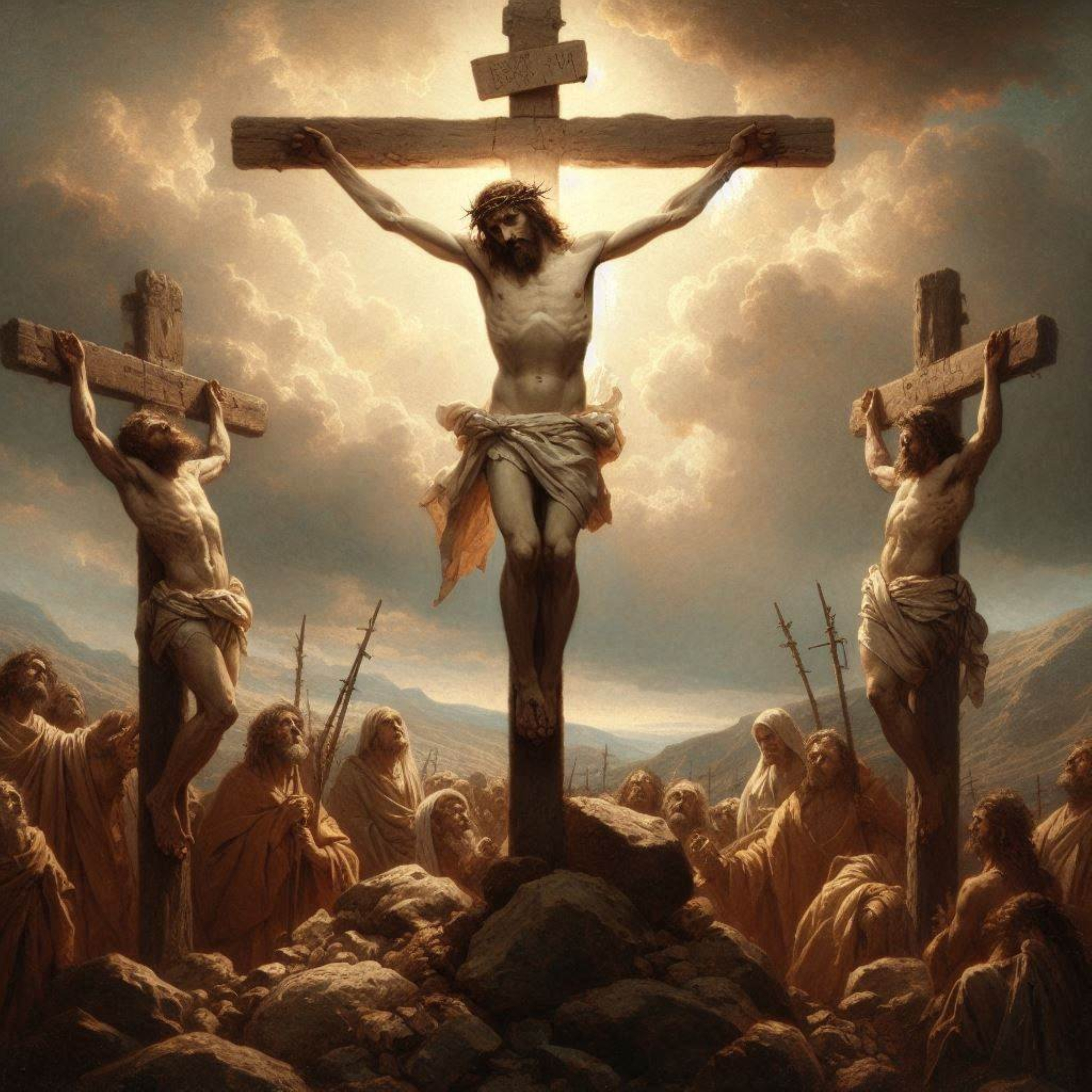




 The gospel is the solution to a problem. The problem for us is that God is holy, mankind is sinful, and we cannot save ourselves. Salvation is never what we do for God; rather, it’s what He’s done for us through the Person and work of Jesus who is the Son of God incarnate (John 1:1, 14; 20:28; Heb 1:8; 1 John 4:2), whose sacrificial death on the cross atoned for our sins (Rom 6:10; 1 Pet 3:18; 1 John 2:2), who was resurrected (Rom 6:9; 1 Cor 15:3-4), and who grants eternal life to those who place their trust solely in Him (John 3:16-18; 10:28; Acts 4:12; 16:31). Jesus died for everyone (John 3:16; Heb 2:9; 1 John 2:2), but the benefits of the cross, such as forgiveness of sins (Eph 1:7), and eternal life (John 10:28), are applied only to those who believe in Him as Savior.
 All humanity is quite competent to produce sin, but utterly inept and powerless to produce the righteousness God requires for acceptance. Scripture reveals we are helpless, ungodly, sinners, and enemies of God (Rom 5:6-10), and prior to our salvation, we were dead in our trespasses and sins (Eph 2:1). We cannot save ourselves. Only God can forgive sins (Eph 1:7; Col 1:13-14), and only God can give the gifts of righteousness (Rom 5:17; 2 Cor 5:21; Phil 3:9) and eternal life (John 10:28) that make us acceptable in His sight. Our good works have no saving merit, as God declares righteous “the one who does not work, but believes in Him who justifies the ungodly” (Rom 4:5a), for “a man is not justified by the works of the Law…since by the works of the Law no flesh will be justified” (Gal 2:16), for “by grace you have been saved through faith; and that not of yourselves, it is the gift of God; not as a result of works, so that no one may boast” (Eph 2:8-9), and God saves us, but “not on the basis of deeds which we have done in righteousness” (Tit 3:5a). We cannot save ourselves any more than we can stop the rotation of the earth, jump across the Grand Canyon, or run at the speed of light. Christ alone saves. No one else. Nothing more.
 The Bible teaches that we are “justified as a gift by His grace through the redemption which is in Christ Jesus” (Rom 3:24), and “justified by faith apart from works of the Law” (Rom 3:28). Salvation is free, and it is received freely by “the one who does not work, but believes in Him who justifies the ungodly, his faith is credited as righteousness” (Rom 4:5). Our salvation was accomplished entirely by Jesus at the cross when He shed His blood at Calvary, for we are redeemed “with precious blood, as of a lamb unblemished and spotless, the blood of Christ” (1 Pet 1:19). And because our salvation was accomplished in full at the cross, it means there’s nothing for us to pay. Nothing at all. Salvation is a gift, given freely to us who don’t deserve it. That’s grace, which is unmerited favor, underserved kindness, unwarranted love, unearned generosity, and unprovoked goodness. Scripture reveals, “For by grace you have been saved through faith; and that not of yourselves, it is the gift of God; not as a result of works, so that no one may boast” (Eph 2:8-9). Salvation is never what we do for God; rather, it’s what He’s done for us by sending His Son into the world to live a righteous life and die a penal substitutionary death on the cross in our place, “the just for the unjust, so that He might bring us to God” (1 Pet 3:18).
 God’s children are called “to walk in a manner worthy of the calling with which you have been called” (Eph 4:1), to “conduct yourselves in a manner worthy of the gospel of Christ” (Phil 1:27), to “walk in a manner worthy of the Lord, to please Him in all respects, bearing fruit in every good work and increasing in the knowledge of God” (Col 1:10), and to “walk in a manner worthy of the God who calls you into His own kingdom and glory” (1 Th 2:12). In biblical language, the term “walk” often represents one’s way of life or conduct. It’s a metaphor for the journey of life and how one navigates it. To walk “worthy” emphasizes the importance of living in a manner that is fitting or appropriate for the calling we have received as Christians. We are children of God by faith in Christ (Gal 3:26), adopted brothers and sisters to the King of kings and Lord of lords, and our performance in life should match our position in Christ. Salvation is free. It’s a gift, paid in full by the Lord Jesus who died on Calvary. God’s gift is received freely, by grace, no strings attached, and is received by faith alone in Christ alone (John 3:16; Acts 4:12; 16:31; Eph 2:8-9). That’s all. However, living the sanctified life as a new Christian is radical and calls for commitment to God. This requires positive volition and dedication to learning and living God’s Word on a daily basis. It means prioritizing and structuring our lives in a way that factors God and His Word into everything. It means bringing all aspects of our lives—marriage, family, education, work, finances, resources, entertainment, etc.—under the authority of Christ. This is the sanctified life when we learn Scripture (Psa 1:2-3; Jer 15:16; Ezra 7:10; 2 Tim 2:15; 3 :16-17; 1 Pet 2:2; 2 Pet 3:18), walk by faith (2 Cor 5:7; Heb 10:38; 11:6), and advance to spiritual maturity (Heb 6:1). As we advance, God’s Word will saturate our thinking and govern our thoughts, values, words, and actions. A sign of maturity is when God and His Word are more real and dominant than our experiences, feelings, or circumstances. This is the place of spiritual maturity and stability.
 Of course, to talk about reconciliation is to assume there are two or more persons who need to be reconciled because of a fractured relationship, because at least one person has been offended by the actions of another. Biblically, God is the one who has been offended by His sinful creatures. Because of our offensive sin, our relationship with God was broken. God loves us, but not our sin. We are quite apt to produce sin, but are powerless to deal with it. God initiated the restoration of the relationship by dealing with our sin. This is why the cross was necessary, for “God demonstrates His own love toward us, in that while we were yet sinners, Christ died for us” (Rom 5:8). At the cross, God judged our sin as a His righteousness required, and offers salvation as His love desires. All our sin, which is an offense to God, was imputed to Christ on the cross where He was judged in our place and paid the penalty for all our sin. Jesus tasted “death for everyone” (Heb 2:9), and is Himself “the propitiation for our sins; and not for ours only, but also for those of the whole world” (1 John 2:2). God did His part to reconcile us to Himself. The positive human response to believe in Christ is what actuates the benefits of the cross to us and brings about the reconciliation God desires. When we trust in Christ as our Savior, we are given the very righteousness of God as a gift (Rom 5:17; 2 Cor 5:21; Phil 3:9), and are justified by the blood of Christ “and shall be saved from the wrath of God through Him” (Rom 5:9).
 Those who are children of Satan are called “sons of disobedience” (Eph 2:2), are under “the dominion of Satan” (Acts 26:18), and reside in his “domain of darkness” (Col 1:13; cf., Rom 2:19). These walk “in the futility of their mind” (Eph 4:17b), and are “darkened in their understanding, excluded from the life of God because of the ignorance that is in them, because of the hardness of their heart” (Eph 4:18). Paul said that Satan “has blinded the minds of the unbelieving so that they might not see the light of the gospel of the glory of Christ, who is the image of God” (2 Cor 4:4). But these are not unwilling victims; for though they are born into Satan’s kingdom and “held captive by him to do his will” (2 Tim 2:26), they also enjoy what he offers and are said to “love the darkness rather than the Light” (John 3:19). The word love in this passage translates the Greek verb agapao (ἀγαπάω), which is in the active voice and means they willingly love the darkness of Satan’s world system and all their affections are tied to it. They continue as residents of his kingdom by choice and not by chance. Freedom awaits them if they want it. Freedom in Christ. But they don’t want freedom. And when given the opportunity to be liberated from their captor, they prefer to clutch their chains of familiar pleasures and practices than to step into the unknown freedom and responsibilities of liberty in Christ. Jesus said of them, “you are unwilling to come to Me so that you may have life” (John 5:40).
 It is to our benefit to realize we live in a fallen world, and when we walk with God, in total devotion to Christ, the world will reject us. Jesus said, “If the world hates you, you know that it has hated Me before it hated you. If you were of the world, the world would love its own; but because you are not of the world, but I chose you out of the world, because of this the world hates you” (John 15:18-19). We understand that the gospel of grace and solid Bible teaching will, on occasion, threaten other people’s pride and power, and we should not be surprised when they react negatively and with hostility, either verbally or physically. If possible, we are to get along with others and pursue peace (Rom 12:18), but never at the price of neglecting our mission to preach the gospel (Mark 16:15), or gather together for Bible study (Acts 2:42; 2 Tim 2:15), fellowship (Heb 10:25), worship (Eph 5:19-20), and prayer (1 Th 5:17). Because we live in a fallen world, there will be times when we must choose whether we will serve God or man. Of course, the correct choice is, “We must obey God rather than men” (Acts 5:29; cf. Dan 3:18). And though we may enjoy periods of peace and blessing, the world is currently under Satan’s control, which means it will only get worse, not better. As Christians, we are both realistic and optimistic about the world and the future. Realistic that we will not win the world to Christ during our time on earth (though not for want of effort by sharing the gospel and Bible teaching), and optimistic because we know Christ is coming back and will make everything right when He returns. Lastly, we must keep our focus on God and His Word (Isa 26:3; Col 3:2, 16), as it provides mental and emotional stability when trouble comes (and it will). Adversity is inevitable, and we must handle it by wisdom and faith.
 Amazingly, there were some at the church in Corinth who taught “that there is no resurrection of the dead” (1 Cor 15:12). Paul addressed this issue head on, saying, “if there is no resurrection of the dead, not even Christ has been raised; and if Christ has not been raised, then our preaching is vain, your faith also is useless…For if Christ has not been raised, your faith is worthless; you are still in your sins.” (1 Cor 15:13-14, 17). The clear teaching of Scripture is that “Christ has been raised from the dead, the first fruits of those who are asleep” (1 Cor 15:20), and being “raised from the dead, is never to die again” (Rom 6:9). Praise God! By His resurrection, Jesus overcame sin and death.
 Biblically, we understand that it is God who saves (John 3:16). The gospel is what we must believe to receive that salvation. Paul wrote, “How will they believe in Him whom they have not heard? And how will they hear without a preacher?” (Rom 10:14). But now you’ve heard the good news. I’ve just preached it to you. And if you’ve not trusted Christ as your Savior, I beg you, don’t wait another moment. Place your faith in Him. That single decision will forever change the course of your life and eternal destiny in ways that are beyond your ability to fully calculate, for “No eye has seen, no ear has heard, and no mind has imagined what God has prepared for those who love him” (1 Cor 2:9). At the moment you trust Christ as your Savior, you will receive forgiveness of all your sins (Eph 1:7; Heb 10:10-14), the gift of righteousness (Rom 5:17; Phil 3:9), eternal life (John 10:28), become a child of God (John 1:12), be rescued from Satan’s “domain of darkness” and transferred “to the kingdom of His beloved Son” (Col 1:13), and become a member of the royal family of God, related to Jesus, Who is “the King of kings and Lord of lords” (1 Tim 6:15). These, and other wonderful blessings will become yours at the moment you trust in Christ as your Savior, for God will bless you with a portfolio of spiritual blessings that stagger the imagination (Eph 1:3). The gospel is simple, and the choice is yours. I pray you act wisely.
 Proverbs 3:5-6 is perhaps one of the best-known passages in all of Scripture. These words written by Solomon are found on many plaques, posters, and paintings that hang on home and office walls. Like any proverb, it encapsulates a big truth in a small phrase. The words are an exhortation to trust in God in everything we do (Prov 3:5-6a), with a promise that He will make our paths straight if we comply (Prov 3:6b). As believers who are called to “walk by faith” (2 Cor 5:7), we are to know God’s Word and rely on it more than our own inadequate understanding. As believers, our walk of faith requires a discipline of mind and will, for fear and pride—our perennial enemies of the heart—can derail our walk if we let them.
 If we turn away from the Lord and trust in mankind (or any created thing), then we place our confidence in something that is, by its very nature, weak and subject to failure. Elsewhere, Solomon wrote, “He who trusts [בָּטַח batach] in his riches will fall, but the righteous will flourish like the green leaf” (Prov 11:28), and “He who trusts [בָּטַח batach] in his own heart is a fool, but he who walks wisely will be delivered” (Prov 28:26). And a psalmist penned, “Do not trust [בָּטַח batach] in princes, in mortal man, in whom there is no salvation” (Psa 146:3). I don’t think these verses are to be taken to mean we never trust in people at all, for practical living requires it. Rather, the idea is that we do not trust in things, self, or others to provide direction or meet needs that only God can provide.
 The word acknowledge translates the Hebrew verb יָדָע yada, which means to know. But this is not merely an academic knowledge of God’s Word, but the experiential knowledge that one has by applying the truth of Scripture. Living by faith is a two-step process. First, it requires us to know God’s Word, which means studying it carefully and thoroughly on a regular basis (Psa 1:2; 2 Tim 2:15). Second, it means we make choices in the light of His revelation and follow His directives and cling to His promises, being “doers of the word, and not merely hearers” who deceive ourselves (Jam 1:22). To acknowledge the Lord is an intentional act, in which we consciously and purposefully set our minds upon the Lord and insert His Word into everything we think, say, and do. And “the LORD knows the way of the righteous” (Psa 1:6), as we walk with Him in the light of His truth. But this way of living can be risky business as we cast ourselves fully upon the Lord, trusting that His ways are best and that He will keep His promises to us, all in His time and way.

 Perspective is critical to how we approach life and the problems we face. Invariably, we will all face difficult situations that will influence us to feel fearful; and though difficulties are inevitable, how we handle them is optional. When problems and feelings rise high, faith must rise higher, for God expects us to live by faith and trust Him (Prov 3:5-6; Heb 10:38; 11:6). We must not allow fear to overrun the command center in our soul (i.e., our volition). Though our emotions are turbulent, we must choose to be governed by wisdom and not feelings. We must operate on the principle that Christian stability is predicated, to a large degree, on the biblical content and continuity of our thinking. This requires a discipline of the mind in which we “destroy speculations and every lofty thing raised up against the knowledge of God, and take every thought captive to the obedience of Christ” (2 Cor 10:5). This is not always easy; especially if we’re tired, or dealing with fatigue from the pressures of life. However, the alternative means we fall victim to the situation and that our soul is overrun with crippling fear.
 Stable thinking occurs when we manage our thought processes and insert divine viewpoint into the stream of our consciousness (Isa 26:3; Jer 17:7-8; Nah 1:7). Having a strong sense of God’s sovereignty is helpful (Psa 10:16; 103:19; 135:6; Dan 4:35). As growing believers, we should learn to manage our own thoughts, as confidence is raised when we connect them to God and His Word. David provides a good example of a believer or managed his own thoughts during a time of conflict; when he faced his Goliath on a field of battle. Prior to facing Goliath, God had worked with David to train him for that conflict. We know King Saul doubted David’s ability to kill Goliath, telling him, “You are not able to go against this Philistine to fight with him; for you are but a youth while he has been a warrior from his youth” (1 Sam 17:33). Saul was operating purely from human viewpoint, and so his thinking was handicapped. But David, operating from divine viewpoint, said to the king, “Your servant was tending his father’s sheep. When a lion or a bear came and took a lamb from the flock, I went out after him and attacked him, and rescued it from his mouth; and when he rose up against me, I seized him by his beard and struck him and killed him” (1 Sam 17:34-35). During those prior conflicts—when David was a shepherd boy—he had no idea that God was training him for a future victory. David further explained to the king, “Your servant has killed both the lion and the bear; and this uncircumcised Philistine will be like one of them, since he has taunted the armies of the living God…The LORD who delivered me from the paw of the lion and from the paw of the bear, will also deliver me from the hand of this Philistine” (1 Sam 17:36-37).
 In 1445 B.C., after the Israelite exodus from Egypt, Moses found himself standing at the edge of the Red Sea, watching as the Egyptian army approached with the intent of enslaving the Israelites (Ex 14:5). Moses wrote, “As Pharaoh drew near, the sons of Israel looked, and behold, the Egyptians were marching after them, and they became very frightened; so the sons of Israel cried out to the LORD” (Ex 14:10). Operating under divine orders, Moses inserted divine viewpoint into the minds of his fellow Israelites, saying, “Do not fear! Stand by and see the salvation of the LORD which He will accomplish for you today; for the Egyptians whom you have seen today, you will never see them again forever. The LORD will fight for you while you keep silent” (Ex 14:13-14). Fear is overcome when the solution is greater than the problem. In this situation, the problem was Pharoah and his army coming to re-enslave the Israelites. The solution was God Himself, who promised to protect His people and neutralize the threat. God kept His Word and killed Pharaoh and his soldiers (see Ex 14:22-31). The destruction of Pharaoh and his army caused Moses to rejoice, as he sang, “The LORD is a warrior; the LORD is His name. Pharaoh’s chariots and his army He has cast into the sea; and the choicest of his officers are drowned in the Red Sea” (Ex 15:3-4).
 In 1405 B.C., just before Moses died, he sought to strengthen the souls of Israelites who were about to enter the land of Canaan and face their enemies. These Israelites needed courage for the battles they were about to face. Like before, Moses sought to offset their fears by framing their situation from the divine perspective. Moses told them, “Do not fear them, for the LORD your God is the one fighting for you” (Deut 3:22). Because fear tends to raise its head over and over, Moses wisely repeated these words several times. For a second time, Moses said, “You shall not be afraid of them; you shall well remember what the LORD your God did to Pharaoh and to all Egypt: the great trials which your eyes saw and the signs and the wonders and the mighty hand and the outstretched arm by which the LORD your God brought you out. So shall the LORD your God do to all the peoples of whom you are afraid” (Deut 7:18-19). And a third time, Moses said, “When you go out to battle against your enemies and see horses and chariots and people more numerous than you, do not be afraid of them; for the LORD your God, who brought you up from the land of Egypt, is with you” (Deut 20:1). And a fourth time, saying, “The LORD is the one who goes ahead of you; He will be with you. He will not fail you or forsake you. Do not fear or be dismayed” (Deut 31:8). Fear was to be the mental attitude of God’s enemies, not God’s people. Faith in God was the antidote to fear. Moses’ repetition of this truth helped God’s people adjust to the reality of their situation, and this strengthened them within.
 In 701 B.C., in the fourteenth year of King Hezekiah’s reign (2 Ki 18:13), he faced a stressful situation when “Sennacherib king of Assyria came and invaded Judah and besieged the fortified cities, and thought to break into them for himself” (2 Ch 32:1). Here was an extremely stressful situation for the king and all the citizens of Judah. King Hezekiah could not control the attitude or actions of Sennacherib, but he had a choice to control his response. The king proved to be a wise leader who made good choices as he rallied his leadership team and took practical steps to fortify the city and its defenses (2 Ch 32:2-5). But Hezekiah knew external fortifications would not be enough. He needed his people to be fortified in their souls, strengthened within, so they might have the courage necessary to face the opposition. We learn that Hezekiah “appointed military officers over the people and gathered them to him in the square at the city gate, and spoke encouragingly to them” (2 Ch 32:6). Here is wisdom. Here is good leadership. Operating from divine viewpoint—which strengthened his own soul—Hezekiah used his words to insert divine viewpoint into the minds of his hearers, saying, “Be strong and courageous, do not fear or be discouraged because of the king of Assyria nor because of all the horde that is with him; for the One with us is greater than the one with him. With him is only an arm of flesh, but with us is the LORD our God to help us and to fight our battles” (2 Ch 32:7-8a). If the people of God’s kingdom were to be strengthened within, they would need to place their focus on God rather than the overwhelming problem at hand. Apparently, the people had positive volition and received his words. And the result was, “Hezekiah’s words greatly encouraged the people” (2 Ch 32:8b). Now they were ready to face the enemy. Now they were ready to win.
 As we grow and develop mentally, we develop a worldview, which is a biased perspective on life. A worldview is a mental framework of beliefs that guide our understanding of what is. It’s the assumptions we employ to help us make sense of the world, ourselves and our experiences. Early in life—when our perception of the world is being shaped—we are influenced by the worldviews of family, friends, and surrounding culture. As we grow older, we are confronted with different and opposing worldviews via religious and educational institutions, literature, movies, music and art. At some point in our development—it’s different for each person—we choose what we believe and why. Our worldview is important because it’s the basis for our values which influence our relationships, money habits, social and political decisions, and everything we say and do. At its core, there are basically two worldviews a person can have. Either one is a theist or an atheist. Choices have consequences, and the worldview we adopt has far reaching ramifications. The biblical worldview offers value, purpose, and hope. The atheistic worldview—when followed to its logical conclusion—leads to a meaningless and purposeless life that eventuates in despair.
 A myriad of men are born; they labor and sweat and struggle for bread; they squabble and scold and fight; they scramble for little mean advantages over each other. Age creeps upon them; infirmities follow; shames and humiliations bring down their prides and their vanities. Those they love are taken from them and the joy of life is turned to aching grief. The burden of pain, care, misery, grows heavier year by year. At length ambition is dead; pride is dead; vanity is dead; longing for release is in their place. It comes at last – the only unpoisoned gift ever had for them – and they vanish from a world where they were of no consequence; where they achieved nothing; where they were a mistake and a failure and a foolishness; where they have left no sign that they have existed – a world which will lament them a day and forget them forever. Then another myriad takes their place and copies all they did and goes along the same profitless road and vanishes as they vanished – to make room for another and another and a million other myriads to follow the same arid path through the same desert and accomplish what the first myriad and all the myriads that came after it accomplished – nothing!
 Man is the product of causes which had no prevision of the end they were achieving; that his origin, his growth, his hope and fears, his loves and beliefs, are but the outcome of accidental collocations of atoms; that no fire, no heroism, no intensity of thought and feeling, can preserve an individual life beyond the grave; that all the labors of the ages, all the devotion, all the inspiration, all the noonday brightness of human genius are destined to extinction in the vast death of the solar system, and that the whole temple of man’s achievement must inevitably be buried beneath the debris of a universe in ruin – all these things, if not quite beyond dispute, are yet so nearly certain, that no philosophy that rejects them can hope to stand. Only within the scaffolding of these truths, only on the firm foundation of unyielding despair, can the soul’s habitation henceforth be safely built [bold added for emphasis].
 I would argue that most atheists really don’t want to talk about the logical conclusion of their position, and choose to go about their daily lives ignoring the issue altogether, as it’s too painful to consider. This is why Sartre abandoned reason and advocated that we seek for meaning in the choices we make, even if those choices are irrational. Aldous Huxley proposed using psychedelic drugs with the idea that one might be able to find truth and meaning inside his own head. “He held this view up to the time of his death. He made his wife promise to give him LSD when he was ready to die so that he would die in the midst of a trip. All that was left for Aldous Huxley and those who followed him was truth inside a person’s own head.”
 The atheistic view regards mankind as merely a part of the animal kingdom. But if people are just another form of animal—a naked ape as someone once described—then there’s really no reason to get upset if we behave like animals. A pack of wild lions in the Serengeti suffer no pangs of conscience when they gang up on a helpless baby deer and rip it to shreds in order to satisfy their hunger pains. They would certainly not be concerned if they drove a species to extinction; after all, it’s survival of the fittest. Let the strong survive and the weak die off. Evolution could also logically lead to racism, which is implied in Charles Darwin’s book, The Origin of Species, which original subtitle mentions the Preservation of Favored Races in the Struggle for Life. Ironically, we teach evolution in public schools, telling children they are just another animal species, but then get upset when they act like animals toward each other. We can’t have it both ways. We can’t logically teach atheistic evolution and simultaneously advocate for morality. It’s a non sequitur. If there are no moral absolutes, then one cannot describe as evil the behavior of Nazis who murdered millions of Jews in World War II. Neither can one speak against the murder of tens of millions of people under the materialistic communistic regimes of Joseph Stalin, Mao Zedong, or Pol Pot.
 But the Christian worldview is different. The biblically minded Christian has an answer in the Bible which gives lasting meaning and hope; and this allows us to use our reasoning abilities as God intended. The Bible presents the reality of God (Gen 1:1; Ex 3:14; Rev 1:8), who has revealed Himself to all people (Psa 19:1-2). The apostle Paul argued this point when he wrote, “For since the creation of the world His invisible attributes, His eternal power and divine nature, have been clearly seen, being understood through what has been made, so that they are without excuse” (Rom 1:20).
 While discussing eternal rewards in His Sermon on the Mount (Matt 5:1-2, 12, 46; 6:1-6, 16-18), Jesus taught there would be varying degrees of placement in the kingdom of heaven. In Matthew 5:19, Jesus said, “whoever breaks one of the least of these commands and teaches others to do so will be called least in the kingdom of heaven. But whoever practices and teaches these commands will be called great in the kingdom of heaven.” In this verse, Jesus talked about two kinds of saved people, both of which will be “in the kingdom of heaven.” This is plainly understood from what Jesus said. The first group will be believers who, after salvation, live a life of disobedience to God, rebelling against His Word, and teaching others to do the same. These disobedient-to-the-Word believers will forfeit eternal rewards and have a low status in heaven. Jesus calls them least, which translates the Greek word ἐλάχιστος elachistos, which refers to being “the lowest in status, least…being considered of very little importance, insignificant.”
 To explain further, let me draw a distinction between the gospel that saves and the life of good works that should follow. From the divine side, our salvation was very costly: it cost God His Son. Jesus willingly bore our sins on the cross and paid our sin debt in full (Mark 10:45; John 10:18; 1 Pet 2:24). He died in our place, “the just for the unjust, so that He might bring us to God” (1 Pet 3:18). At the cross, God judged our sin as His righteousness requires, and saves us, the sinner, as His love desires. From the human side, salvation is very simple: believe in Christ as Savior. We obtain our entrance in heaven when we simply believe that “Christ died for our sins according to the Scriptures, and that He was buried, and that He was raised on the third day according to the Scriptures” (1 Cor 15:3-4). God’s free gift of salvation comes to us by grace alone, through faith alone, in Christ alone (Eph 2:8-9; Tit 3:5).
 Let’s get back to the subject of rewards. As Christians, we know there will be a future time in which we will stand before the judgment seat of Christ. Paul said, “For we must all appear before the judgment seat of Christ, so that each one may be recompensed for his deeds in the body, according to what he has done, whether good or bad” (2 Cor 5:10). This judgment seat evaluation is not to determine whether or not we get into heaven. That has already been made secure by the death, burial, and resurrection of Christ. This judgment seat evaluation pertains solely to eternal rewards. And these rewards are determined by how we live in accordance with God’s revealed will in Scripture. The obedient-believer will produce a life of “gold, silver, and precious stones” which all survive the test by fire and will go with us into eternity (1 Cor 3:12). The rebel-believer will produce a life of “wood, hay, and straw” which will not survive the test by fire and will be burned up (1 Cor 3:12). The quality of work produced by the obedient-believer will remain and “he will receive a reward” (1 Cor 3:14). The quality of work produced by the rebel-believer will be burned up and “he will suffer loss” (1 Cor 3:15). Though the rebel-believer has no rewards, “he himself will be saved, yet so as through fire” (1 Cor 3:15). For more on this subject, see my article,
  The Bible is a big book with lots of information. There is information about God, the origin of the universe, mankind, sin, salvation, Israel, the church, the future, etc. It’s my opinion that a good teacher knows the Bible well enough that he/she can delve into its depths and provide solid biblical answers to life’s biggest questions. However, I also believe a good teacher should be able to condense a lot of information and—without compromising accuracy—give a short answer in plain language (Charles Ryrie has impressed me with his ability to do this very thing). Over the years I’ve worked to take the essentials of the Gospel message and present it quickly and concisely. In one sense, the Gospel can be as simple as 1 Corinthians 15:3-4, John 3:16, or Acts 16:31. However, these verses, as wonderful as they are, do not answer some of the issues that stand behind them. For example:
 The gospel is the solution to a problem. There are two parts to the problem. First, God is holy (Psa 99:9; Isa 6:3), which means “He is righteous” (Psa 11:7) and set apart from sin and “cannot look on wickedness with favor” (Hab 1:13; cf., 1 John 1:5). Second, all mankind is sinful and separated from God (Rom 3:10-23). We are sinners by nature (Rom 5:12-19; 7:14-25; 13:12-14), sinners by choice (Isa 59:2; Jam 1:14-15), and completely helpless to solve the sin problem and save ourselves (Rom 5:6-10; Eph 2:1-3). Furthermore, good works have no saving merit before God (Isa 64:6; Eph 2:8-9; Tit 3:5). None whatsoever. We cannot save ourselves any more than we can jump across the Grand Canyon or throw rocks and hit the moon. But God, because of His mercy and love toward us (John 3:16; Eph 2:3-7), accomplished what we cannot do for ourselves. God provided a solution to the problem of sin, and that solution is Christ and the cross (1 Cor 1:18; 15:3-4). Nearly two thousand years ago, God the Son—the second Person of the Trinity—came into the world by human birth (Luke 1:26-35), lived a perfectly righteous life (1 John 3:5), and willingly died in our place (John 10:18), and bore the punishment for our sins. Jesus solved both problems: 1) He lived the righteous life that God demands and committed no sin (2 Cor 5:21; Heb 4:15; 1 Pet 2:22; 1 John 3:5), and 2) He died for us on the cross and paid the penalty for all our sins (Mark 10:45; Rom 5:8; 1 Cor 15:3-4; 1 Pet 3:18).
 Solomon likens hebel to “striving after wind” (Eccl 1:14), which is the most common picture employed throughout the book of Ecclesiastes (Eccl 1:14, 18; 2:11, 17, 26; 4:4, 6, 16; 6:9). When I think of the phrase “striving after wind”, I imagine someone wasting his time trying to catch the wind in his hands. It’s as futile as someone trying to hold his breath for a thousand years or trying to pour the ocean into a thimble. It’s futile.
  When Moses was nearing death, he gave Joshua instructions about leading the Israelites into the Promised Land, and he said “The LORD is the one who goes ahead of you; He will be with you. He will not fail you or forsake you. Do not fear or be dismayed” (Deut.31:8). It’s easy to be afraid when you’ve had someone fail you over and over again. However, God never fails His people and His faithfulness is a repeated theme throughout Scripture (Deut 4:31; Josh 1:5; 1 Ch 28:20; Zeph 3:5; 2 Th 3:3). As the believer studies the Bible, he learns that God has perfect integrity and always keeps His promises. The believer only benefits from his study of Scripture when he learns to trust in God and to take Him at His Word. It’s only by faith that we receive the blessings God offers.
  Faith demands an object as it must have something or someone upon which to rest. To receive salvation, the unbeliever is told to “believe in the Lord Jesus, and you will be saved” (Acts 16:31a). For the unbeliever, faith in Christ is exercised with a view to receiving a benefit, and that benefit is eternal life (John 3:16). To be clear, faith does not save; God saves! Faith is merely the means by which the unsaved person receives salvation, as God alone does the saving. Though we may exercise faith and receive a benefit, the object always gets the credit, and in the case of our salvation, God alone gets the glory.
  The Bible gives us truth that is certain, though our feelings and circumstances are unstable. We may feel good and be completely in sin, or we may feel bad and be completely in God’s will. Jesus was always in the will of God, though there were times He felt grieved and distressed. The Scripture declares that Jesus was, “despised and forsaken of men, a man of sorrows and acquainted with grief” (Isa 53:3). And just hours before His crucifixion, Jesus “began to be grieved and distressed” (Matt 26:37), telling a few of His disciples, “My soul is deeply grieved, to the point of death” (Matt 26:38). Even during His time of human rejection and sorrow, Jesus was sustained by the Holy Spirit (Heb 9:14). Jesus was always spiritual, even when He was experiencing emotional anguish. Emotions are wonderful, and in many ways complement our spiritual life (Acts 20:36-38; Eph 5:18-20). However, we do well to subordinate our emotions to the truths of Scripture, for God calls us to live by faith in Him and His Word, not by our feelings (Rom 10:17; Heb 11:6).