 The lake of fire is the final place of eternal punishment, described as “the second death,” where conscious separation from God is permanently experienced (Rev. 20:14). It was created originally for Satan and fallen angels as the ultimate expression of God’s righteous judgment against irrevocable rebellion, as Jesus stated, “the eternal fire which has been prepared for the devil and his angels” (Matt. 25:41). According to Fruchtenbaum, “the Lake of Fire is the eternal abode of all lost ones, both angels and men.”[1] Those people who go there are all who remain outside of Christ, having rejected God’s provision of eternal life, and whose names are “not found written in the book of life” (Rev. 20:15). Demy states, “According to Revelation 20:11–15, unbelievers will be cast into the lake of fire after the Great White Throne judgment at the end of the millennium and remain there forever.”[2]
The Lake of Fire is Forever
Scripture presents the lake of fire as eternal because it is described with the same unqualified duration language used for God’s own life and for the believer’s eternal destiny. Jesus stated, “These will go away into eternal punishment, but the righteous into eternal life” (Matt. 25:46). The key Greek adjective in Matthew 25:46 is aiōnios which denotes “a period of unending duration, without end.”[3] The parallelism is significant. The same adjective modifies both destinies. If eternal life is unending, eternal punishment must be unending as well. Any attempt to limit the duration of the punishment logically undermines the permanence of life. The same word describes God Himself as “the eternal God” (Rom. 16:26). If aiōnios were limited in duration, God’s existence would be limited as well. Context governs meaning, and the context of final judgment demands permanence.
Revelation reinforces this conclusion with even stronger language. The devil, the beast, and the false prophet are thrown into the lake of fire and are said to be “tormented day and night forever and ever” (Rev. 20:10). The Greek phrase eis tous aiōnas tōn aiōnōn is the strongest possible Greek construction for endless duration. It is used repeatedly in Revelation for God’s eternal reign and glory (Rev. 1:6; 4:9–10; 5:13; 10:6; 11:15). When unbelievers are later cast into the same lake of fire (Rev. 20:14–15), the text gives no hint of a different outcome or duration. The place, the punishment, and the language are identical.
Another significant term is basanizō, translated “tormented” (Rev. 20:10). It denotes conscious, ongoing suffering, not annihilation or momentary pain. In Revelation 20:10, it refers to “the eternal torment that comes upon the devil, the beast, the false prophet, and those who worship the beast.”[4] Likewise, Revelation 14:11 states, “the smoke of their torment goes up forever and ever; they have no rest day and night.” The expression “no rest” rules out cessation of existence. Annihilation would bring rest. Scripture denies it.
Finally, the lake of fire is eternal because it is the final state, not a corrective or purifying phase. Revelation 20–22 presents a closed eschatological sequence: final judgment, eternal punishment, then the new heaven and new earth. There is no subsequent release, restoration, or end to judgment. The lake of fire is described as “the second death” (Rev. 20:14), not because existence ceases, but because it is irreversible separation from God, experienced consciously and forever. Eternal judgment is eternal because God says it is, using the same words He uses for eternal life.
The Lake of Fire is Avoidable
 No one has to go to the lake of fire. It is entirely avoidable because God has provided a complete and sufficient rescue through the person and work of Jesus Christ. Jesus declared, “Truly, truly, I say to you, he who hears My word, and believes Him who sent Me, has eternal life, and does not come into judgment, but has passed out of death into life” (John 5:24). The issue is not moral reform, religious effort, or perseverance in works, but faith alone in Christ alone. Scripture states, “whoever believes in Him shall not perish, but have eternal life” (John 3:16b), and “He who believes in Him is not judged; he who does not believe has been judged already, because he has not believed in the name of the only begotten Son of God” (John 3:18). Christ “died for sins once for all, the just for the unjust, so that He might bring us to God” (1 Pet. 3:18). Jesus died for everyone (1 John 2:2; 2 Cor. 5:14–15), which makes everyone savable (John 3:16; 1 Tim. 2:4), but the benefits of the cross are applied only to those who believe in Him (John 1:12).
 Eternal life is offered as a gift, not a wage: “For the wages of sin is death, but the free gift of God is eternal life in Christ Jesus our Lord” (Rom. 6:23). Jesus is the eternal Son of God (John 1:1, 14), who took upon Himself true humanity (Phil. 2:6–7; Heb. 2:14), lived a perfectly righteous and sinless life (1 Pet. 2:22; 1 John 3:5), and willingly went to the cross (John 10:17–18), where He died for our sins as a substitutionary sacrifice (Isa. 53:5–6; 1 Cor. 15:3). He was buried, confirming the reality of His death (Matt. 27:57–60; 1 Cor. 15:4), and was raised bodily on the third day (1 Cor. 15:4; Luke 24:6–7), conquering sin and death (Rom. 4:25; 1 Cor. 15:54–57). Now He offers eternal life freely to all who receive it by faith alone (John 3:16; 5:24; Eph. 2:8–9). At the moment of faith, the believer is justified (Rom. 3:28; 5:1), forgiven (Eph. 1:7; Col. 2:13), and sealed by the Holy Spirit (Eph. 1:13–14). Final judgment is no longer a threat (John 5:24; 10:28–29), because “there is now no condemnation for those who are in Christ Jesus” (Rom. 8:1). The matter is simple: “Believe in the Lord Jesus, and you will be saved” (Acts 16:31).
Steven R. Cook, D.Min., M.Div.
If this article has enriched your understanding and walk with Christ, and you feel led to support my ministry, your generosity is greatly appreciated. Your gifts enable me to continue sharing the gospel of grace and providing in-depth biblical teachings. Thank you for partnering with me in this mission.
Related Articles:
- The Free Gift of God is Eternal Life
- Salvation if Free, Discipleship is Costly
- The Gospel of Grace
- Eternal Life
- Assurance of Salvation
- Total Depravity, Faith in Christ, and Regeneration
- Saved by Grace Alone, Through Faith Alone, in Christ Alone
- Not of Works
- When a Christian Turns to a Sinful Lifestyle
- God Uses Imperfect People
- The Righteous Lifestyle of the Believer
- Walking Worthy of God’s Call to Service
- God’s Gift of Righteousness
- The Cross & Crucifixion of Jesus
- Defining Salvation in the Bible
- Who is the One Who Saves?
[1] Arnold G. Fruchtenbaum, The Footsteps of the Messiah: A Study of the Sequence of Prophetic Events, Rev. ed. (Tustin, CA: Ariel Ministries, 2003), 745.
[2] Timothy J. Demy, “Lake of Fire,” in The Harvest Handbook of Bible Prophecy, (Eugene, OR: Harvest House Publishers, 2020), 212.
[3] William Arndt et al., A Greek-English Lexicon of the New Testament and Other Early Christian Literature (Chicago: University of Chicago Press, 2000), 33.
[4] Christopher A. Beetham, ed., “Βασανίζω,” in Concise New International Dictionary of New Testament Theology and Exegesis (Grand Rapids, MI: Zondervan Academic, 2021), 137.







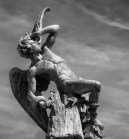 A third area where the Holy Spirit is working in the hearts of unbelievers concerns judgment, “because the ruler of this world has been judged” (John 16:11). Satan has been judged and found guilty before God. This means that Satan and his world-system is condemned. Being the ruler of this world, Satan naturally rules in the hearts of all unbelievers. Three times Jesus referred to Satan as “the ruler of this world” (John 12:31; 14:30; 16:11). Other passages of Scripture call Satan “the god of this world” (2 Cor 4:4), and “the prince of the power of the air” (Eph 2:2), informing us “that the whole world lies in the power of the evil one” (1 John 5:19). Satan rules as a tyrant who has “weakened the nations” (Isa 14:12), and currently “deceives the whole world” (Rev 12:9). Satan continues to attack God’s people today (1 Pet 5:8), practices deception (2 Cor 11:13-15), and has well developed strategies of warfare (Eph 6:10-12). Furthermore, humanity is living in an “evil age” (Gal 1:4), under “the dominion of Satan” (Acts 26:18), whose sphere of influence is called “the domain of darkness” (Col 1:13). But Satan has been judged and his punishment is pending execution. Furthermore, those who side with Satan in this life will be judged with him in eternity. According to Ryrie, “At the cross, Christ triumphed over Satan, serving notice on unbelievers of their judgment to come.”
 Those who are children of Satan are called “sons of disobedience” (Eph 2:2), are under “the dominion of Satan” (Acts 26:18), and reside in his “domain of darkness” (Col 1:13; cf., Rom 2:19). These walk “in the futility of their mind” (Eph 4:17b), and are “darkened in their understanding, excluded from the life of God because of the ignorance that is in them, because of the hardness of their heart” (Eph 4:18). Paul said that Satan “has blinded the minds of the unbelieving so that they might not see the light of the gospel of the glory of Christ, who is the image of God” (2 Cor 4:4). But these are not unwilling victims; for though they are born into Satan’s kingdom and “held captive by him to do his will” (2 Tim 2:26), they also enjoy what he offers and are said to “love the darkness rather than the Light” (John 3:19). The word love in this passage translates the Greek verb agapao (ἀγαπάω), which is in the active voice and means they willingly love the darkness of Satan’s world system and all their affections are tied to it. They continue as residents of his kingdom by choice and not by chance. Freedom awaits them if they want it. Freedom in Christ. But they don’t want freedom. And when given the opportunity to be liberated from their captor, they prefer to clutch their chains of familiar pleasures and practices than to step into the unknown freedom and responsibilities of liberty in Christ. Jesus said of them, “you are unwilling to come to Me so that you may have life” (John 5:40).
 It is to our benefit to realize we live in a fallen world, and when we walk with God, in total devotion to Christ, the world will reject us. Jesus said, “If the world hates you, you know that it has hated Me before it hated you. If you were of the world, the world would love its own; but because you are not of the world, but I chose you out of the world, because of this the world hates you” (John 15:18-19). We understand that the gospel of grace and solid Bible teaching will, on occasion, threaten other people’s pride and power, and we should not be surprised when they react negatively and with hostility, either verbally or physically. If possible, we are to get along with others and pursue peace (Rom 12:18), but never at the price of neglecting our mission to preach the gospel (Mark 16:15), or gather together for Bible study (Acts 2:42; 2 Tim 2:15), fellowship (Heb 10:25), worship (Eph 5:19-20), and prayer (1 Th 5:17). Because we live in a fallen world, there will be times when we must choose whether we will serve God or man. Of course, the correct choice is, “We must obey God rather than men” (Acts 5:29; cf. Dan 3:18). And though we may enjoy periods of peace and blessing, the world is currently under Satan’s control, which means it will only get worse, not better. As Christians, we are both realistic and optimistic about the world and the future. Realistic that we will not win the world to Christ during our time on earth (though not for want of effort by sharing the gospel and Bible teaching), and optimistic because we know Christ is coming back and will make everything right when He returns. Lastly, we must keep our focus on God and His Word (Isa 26:3; Col 3:2, 16), as it provides mental and emotional stability when trouble comes (and it will). Adversity is inevitable, and we must handle it by wisdom and faith.