The Bible teaches that Christians today are not under the Mosaic Law but are governed by the Law of Christ (Gal 6:2). The apostle Paul states, “you are not under law but under grace” (Rom 6:14), and again, “Christ is the end of the law for righteousness to everyone who believes” (Rom 10:4). The Mosaic Law was given exclusively to the nation Israel as part of a covenant made at Sinai (Ex 19:5-6; Deut 5:1-3). Moses wrote, “These are the statutes and ordinances and laws which the Lord established between Himself and the sons of Israel through Moses at Mount Sinai” (Lev 26:46). The Mosaic Law was never intended as a universal code for all people or for all time. With the death of Christ, that covenant—and the law that sustained it—was rendered inoperative (Eph 2:15; Heb 8:13). Though the Law remains part of inspired Scripture and is valuable for teaching (2 Tim 3:16), it no longer functions as the rule of life for those who are in Christ. Fruchtenbaum correctly states, “The Law of Moses has been disannulled and we are now under a new law. This new law is called the Law of Christ in Galatians 6:2 and the Law of the Spirit of Life in Romans 8:2. This is a brand new law, totally separate from the Law of Moses.” (A. G. Fruchtenbaum, Israelology, 650).
Throughout history, God has governed people through various legal systems suited to their time and purpose. Adam was under the Edenic command, Noah operated under a broader moral framework, and Abraham walked by faith apart from any codified law (Gen 15:6; 26:5). Then, at Mount Sinai, Israel received the Mosaic Law—a national, theocratic code containing moral, civil, and ceremonial regulations (Ex 19-40; Lev 1-27; Num 5-6, 15, 18-19, 28-30; Deut 1-34). This law set Israel apart from the Gentiles and defined the covenantal obligations of the nation under God’s direct rule. Gentiles were never placed under this law, and the Church, composed of both Jews and Gentiles in one spiritual body (1 Cor 10:32; 12:13), was never brought under it either (Rom 2:14; 6:14).
God’s dealings with mankind have unfolded in stages, each marked by new revelation and responsibility. While His character remains immutable, the way He governs and communicates with humanity has changed. This is evident in shifting commands about sacrifices, Sabbath observance, priesthood, and food laws. The sacrificial system, once essential under the Mosaic Law, is now obsolete due to Christ’s once-for-all atonement (Heb 10:10-14). Believers today are under the Law of Christ (Gal 6:2; 1 Cor 9:21), which consists of the commands and teachings given by Jesus (John 13–17) and His apostles (Romans to Revelation 3).
The New Testament teaches that Christians, though not under the Levitical system, are called to offer spiritual sacrifices acceptable to God through Jesus Christ (1 Pet 2:5). These include the presentation of our bodies as living and holy sacrifices, set apart for God’s purposes (Rom 12:1); the continual offering of praise and thanksgiving, described as “the fruit of lips that give thanks to His name” (Heb 13:15); and acts of goodness and generosity, which are also called pleasing sacrifices to God (Heb 13:16). Evangelism and discipleship are viewed as priestly offerings, as Paul described his ministry to the Gentiles as a kind of spiritual service (Rom 15:16). Additionally, financial giving is described as “a fragrant aroma, an acceptable sacrifice” that pleases God (Phil 4:18). These offerings are not performed to gain or retain salvation, but flow from hearts already justified by grace through faith, seeking to honor the Lord in every area of life (1 Cor 10:31).
At the heart of this present age is the message of grace. Eternal life is the free gift of God (Rom 6:23; Eph 2:8-9), received by faith alone (John 3:16; Rom 3:28) in Christ alone (John 14:6; Acts 4:12). Jesus is the eternal Son of God (John 1:1; Heb 1:8), who became fully Human (John 1:14; Col 2:9), and lived a sinless life (1 John 3:5). The gospel declares that Christ died for our sins, was buried, and rose again on the third day (1 Cor 15:3-4). Those who believe in Him are justified before God apart from works of the Law (Rom 3:28; 4:5). Salvation is not earned by law-keeping, ritual observance, or moral improvement. It is granted entirely on the basis of what Christ accomplished through His death and resurrection. Faith in Jesus is the only condition, and once exercised, it results in the permanent possession of eternal life (John 3:16; 5:24; 6:47; 10:28).
Christians today live under the Law of Christ (Gal 6:2; 1 Cor 9:21), which is made up of the commands and teachings delivered by Christ (John 13–17) and His apostles (Romans to Revelation 3). According to Fruchtenbaum, “The Law of Christ contains all the individual commandments from Christ and the Apostles applicable to a New Testament believer.” (A. G. Fruchtenbaum, Israelology, 650). While all Scripture is inspired and instructive, only certain portions are directive for how Christians are to live under the Law of Christ. While we study the whole counsel of God, we must interpret and apply Scripture in light of where we stand in God’s plan: as members of the body of Christ (1 Cor 12:27), indwelt by the Spirit (1 Cor 3:16), and called to walk in love and holiness (Eph 5:1-2; 1 Pet 1:15-16). We do not return to Sinai for sanctification—we go forward, empowered by grace, as we serve the Lord in newness of life (Rom 7:6).
Steven R. Cook, D.Min., M.Div., B.Sc.
If this article has enriched your understanding and walk with Christ, and you feel led to support my ministry, your generosity is greatly appreciated. Your gifts enable me to continue sharing the gospel of grace and providing in-depth biblical teachings. Thank you for partnering with me in this mission.
I took this picture with my camera phone while passing through an apartment complex one day. The person living in the apartment apparently thought the message important enough to stick on the front of her door for others to read as they passed by. It certainly reveals her theology. So, will you “tithe if you love Jesus”?
The word tithe means “to give a tenth.” Prior to the giving of the Mosaic Law (ca. 1445 B.C.), we see an example of Abraham giving Melchizedek a tenth of the spoils of war which he had accumulated after he had defeated Chedorlaomer at the Valley of Shaveh (Gen 14:17-20). Later, Jacob made a vow to give God a tenth of his possessions if God would be faithful to protect him on a journey (Gen 28:20-22). In the accounts of Abraham and Jacob, there was no mandate from heaven for them to give a tenth, and when they did give a tenth, it appears to be a one-time act, never repeated as far as Scripture is concerned. It was not until several centuries later that tithing became mandatory for the nation of Israel when they entered into the Mosaic Covenant and came under the Mosaic Law.
When God established the nation of Israel as a theocracy under the leadership of Moses and Aaron (ca.1445 B.C.), He gave them 613 commandments known as the Mosaic Law. This law-code was designed to regulate the values and behavior of the citizens of the nation, morally, religiously, socially, economically, etc. Within the Mosaic Law, God required Israel to pay several tithes, which was tantamount to a form of taxation. According to Ross, “The so-called tithe (‘a tenth’) added up to far more than a simple 10% annually, because there was a second tithe annually, and a third tithe in the third and fifth years…In the Old Testament economy all the giving covered the sanctuary offerings for God, the taxes for the nation, and charitable gifts all rolled together.”[1]
The tithe consisted of produce and livestock (Lev 27:30-32), and was given to the Levites for their support for ministry (Num 18:21-24). The Levites, in turn, gave a tithe of the tithe to the Priests for their service (Num 18:25-28). Additionally, the worshipper could eat a portion of the sacrifice with his family and the Levites (Deut 12:17-19; 14:22-27). Lastly, a tithe was taken every third year to help the poor, the alien, the orphans and the widows. This tithe was comparable to a social welfare system for the most unfortunate in society. Moses wrote, “At the end of every third year you shall bring out all the tithe of your produce in that year, and shall deposit it in your town. The Levite, because he has no portion or inheritance among you, and the alien, the orphan and the widow who are in your town, shall come and eat and be satisfied, in order that the LORD your God may bless you in all the work of your hand which you do” (Deut 14:28-29)
The tithe was to be gathered into a “storehouse” (הָאוֹצָר בֵּית – bet ha otsar; Mal 3:10), which referred to a large room where “they put the grain offerings, the frankincense, the utensils and the tithes of grain, wine and oil prescribed for the Levites, the singers and the gatekeepers, and the contributions for the priests” (Neh 13:5). Withholding the tithe was a form of robbery to God, the Levites, and the less fortunate in society who depended on it for daily living (Mal 3:6-11).
Some pastors have grievously misapplied Malachi 3:8–10 by imposing it upon the Church, using the passage as a means to coerce believers through guilt and intimidation into financial giving. In extreme cases, some have demanded access to members’ tax returns or have publicly displayed individual contributions as a method of exerting social pressure. The misuse of this Old Testament text reveals both a lack of sound hermeneutical understanding and a deficiency in spiritual maturity among church leaders. In its original context, Malachi 3:8–10 pertains to Israel under the Mosaic Law, not to the Church of Jesus Christ in the present dispensation.
To be clear, Israel and the Church are both God’s people, but Israel was under “the Law” of Moses (John 1:17), whereas the Church is under the “Law of Christ” (1 Cor 9:11; Gal 6:2). Israel had a priesthood that was specific to the tribe of Levi (Num 3:6-7), whereas all Christians are priests to God (Rev 1:6). Israel worshipped first at the Tabernacle and later the Temple (Ex 40:18-38; 2 Chron 8:14-16), but for Christians, their body is the temple of the Lord and they gather locally where they want (1 Cor 6:19-20; cf. 1 Cor 16:19; Col 4:15). Israel offered animal sacrifices to God (Lev 4:1-35), but Christians offer spiritual sacrifices (1 Pet 2:5; cf. Rom 12:1; Heb 13:15). Israel was required to tithe from the produce of their land (Deut 14:22-23; 28-29; Num 18:21), but there is no tithe required from Christians, only a joyful attitude when giving, “for God loves a cheerful giver” (2 Cor 9:7).
To Christians, the apostle Paul mentions systematic giving (1 Cor 16:1-2), but nowhere specifies an amount. Giving 10% of one’s income is fine, so long as it is understood that it’s a voluntary action and not required by the Lord. One could easily set aside a different amount to be given on a regular basis. Certainly, the financial support of the Pastor is in line with Scripture (Gal 6:6; 1 Tim 5:17-18), although the apostle Paul supported himself in his own ministry as an example to others of sacrificial living (Acts 20:32-35). Giving systematically and giving joyfully is consistent with the teaching of the New Testament (1 Cor 16:1-2; 2 Cor 9:7).
Lastly, we should realize all we have is on loan from God, for “the earth is the LORD’S, and all it contains, the world, and those who dwell in it” (Psa 24:1). The Lord declares, “every beast of the forest is Mine, the cattle on a thousand hills” (Psa 50:10), and “‘The silver is Mine and the gold is Mine’, declares the LORD of hosts” (Hag 2:8). When we give to the Lord, it’s a test of our love and loyalty to Him; for what we give is already His, and giving back to Him means we trust and support His work in the world. David captures this well when he says, “who am I and who are my people that we should be able to offer as generously as this? For all things come from You, and from Your hand we have given You” (1 Ch 29:14).
God gives law to humans living in every age. He gave commands to the first humans living in the sinless environment of the Garden of Eden (Gen 1:26-30; 2:15-17). He gave commands to Noah (Gen 6-9). He gave commands to Abraham (Gen 12:1; 17:10-14). He gave commands to the Israelites—known as the Mosaic Law—after delivering them from their bondage in Egypt (Ex 20 – Deut 34). He has given commands to Christians (Rom 1-Rev 3). These biblical distinctions are important, for though all Scripture is written for the benefit of the Christian, only some portions of it speak specifically to him and command his walk with the Lord. Just as the Christian would not try to obey the commands God gave to Adam in Genesis 1-2, or the commands God gave to Noah in Genesis 6-9, so he should not try to obey the commands God gave to Israel in Exodus through Deuteronomy. Romans chapter 1 through Revelation chapter 3 marks the specific body of Scripture that directs the Christian life both regarding specific commands and divine principles. According to Charles Ryrie:
Adam lived under laws, the sum of which may be called the code of Adam or the code of Eden. Noah was expected to obey the laws of God, so there was a Noahic code. We know that God revealed many commands and laws to Abraham (Gen 26:5). They may be called the Abrahamic code. The Mosaic code contained all the laws of the Law. And today we live under the law of Christ (Gal 6:2) or the law of the Spirit of life in Christ (Rom 8:2). This code contains the hundreds of specific commandments recorded in the New Testament. (Charles Ryrie, Basic Theology, 351)
God gives law to direct the behavior of His people, and the Mosaic Law is no exception. The Mosaic Law refers to “the statutes and ordinances and laws which the LORD established between Himself and the sons of Israel through Moses at Mount Sinai” (Lev.26:46). The Mosaic Law:
Revealed the holy character of God (Psa 19:9; Rom 7:12).
Was given specifically to Israel circa 1445 B.C. (Lev 26:46).
Was regarded as a unit of laws (613 total), and had to be taken as a whole (Gal 3:10; 5:3; Jam 2:10).
Existed for nearly 1500 years before being rendered inoperative (2 Cor 3:7, 11; Heb 8:13).
The Mosaic Law is typically viewed in three integrated parts:
The moral law consisting of the Ten Commandments (Ex 20:2-17; Deut 5:6-21).
The civil law which addressed slavery, property rights, economics, etc., (Ex 21:1–24:18).
The ceremonial law which addressed the tabernacle, priests, worship and the sacrificial system as a whole (Ex 25:1–40:38).
It should be noted that these categories are intermingled in the text of Exodus–Deuteronomy; within a given context, all three aspects of the law may be described. Nor is it always a simple matter to distinguish between the three aspects of the law. In any case, the law was Israel’s constitution with the Lord, the King. (Paul P. Enns, The Moody Handbook of Theology, 59)
The Mosaic Law was the expected rule of life for the Israelite (Ex 20-Deut 28). None of the surrounding nations of Israel—the Gentiles—were expected to live by the commands of the Mosaic Law, because they were not God’s people and were not in a covenantal relationship with Him (see Eph 2:12). The Gentile was no more under the Mosaic Law than a Canadian is under US law, as laws only speak and have authority to its citizenry.
The Mosaic Law was never a means of justification before God, as that has always been by faith alone in God and His promises (Gal 2:16). Over time, the Mosaic Law became perverted into a system of works whereby men sought to earn their salvation before God (Luke 18:9-14). Even in the time of Christ men asked, “What shall we do, so that we may work the works of God?” Jesus responded, “This is the work of God, that you believe in Him whom He has sent” (John 6:28-29). Regarding the fact that the Mosaic Law never justifies anyone, Merrill F. Unger comments:
By nature the Law is not grace (Rom 10:5; Gal 3:10; Heb 10:28). It is holy, righteous, good, and spiritual (Rom 7:12, 14). In its ministry it declares and proves all men guilty (Rom 3:19). Yet it justifies no one (Rom 3:20). It cannot impart righteousness or life (Gal 3:21). It causes offenses to abound (Rom 5:20; 7:7-13; 1 Cor 15:56). It served as an instructor until Christ appeared (Gal 3:24). In relationship to the believer, the Law emphatically does not save anyone (Gal 2:21). A believer does not live under the Law (Rom 6:14; 8:4), but he stands and grows in grace (Rom 5:2; 2 Pet 3:18). The nation, Israel, alone was the recipient of the Law (Ex 20:2). (Merrill F. Unger, Unger’s Commentary on the Old Testament, 125)
The New Testament reveals the Mosaic Law was regarded as a “yoke” which Israel had not “been able to bear” because their sinful flesh was weak (Acts 15:1-11; cf. Rom 8:2-3). There is no fault with the Mosaic Law, for it “is holy, and the commandment is holy and righteous and good” (Rom 7:12). The Mosaic Law is holy because it comes from God, who is holy and righteous and good. Because the Mosaic Law is holy, it exposes the faults of mankind and shows him to be sinful (Rom 3:20). More so, because man is inherently sinful and bent toward sin, when he comes into contact with God’s holy Law, it actually stimulates his sinful nature and influences him to sin even more (Rom 5:20; 7:7-8).
Paul made clear that the Mosaic Law was not the rule of life for the Christian. He even referred to it as a ministry of “death” and “condemnation” (2 Cor 3:5-11). Paul stated that it was intended to be temporary (Gal 3:19), that it was never the basis for justification (Gal 2:16, 21; 3:21; cf. Rom 4:1-5), but was intended to lead men to Christ that they may be justified by faith (Gal 3:24). Now that Christ has come and fulfilled every aspect of the Law and died on the cross, the Mosaic Law, in its entirety, has been rendered inoperative as a rule of life (Matt 5:17-18; Rom 8:2-4; 10:4; 2 Cor 3:7, 11; Heb 8:13). “As a rule of life, the Law of Moses was temporary … [and] came to an end with the death of the Messiah.” (Arnold G. Fruchtenbaum, Israelology, 373-374)
Too many pastors and theologians attempt to keep part of the Mosaic Law alive today and make it part of the Christian walk, but there is no need to do this, as the Mosaic Law has been rendered inoperative in its entirety, and the New Testament guides the believer to live by “the Law of Christ” (Gal 6:2). Because God is the Author of both law-codes (i.e. the Law of Moses as well as the Law of Christ), it is not surprising that He chose to incorporate some of the laws He gave to Israel into the law-code which He has given to the Church. When trying to understand which laws have carried over and which have not, the general rule to follow is: what God has not restated in the New Testament to the Church, has been altogether abrogated. Charles Ryrie states:
The Mosaic Law was done away in its entirety as a code. It has been replaced by the law of Christ. The law of Christ contains some new commands (1 Tim 4:4), some old ones (Rom 13:9), and some revised ones (Rom 13:4, with reference to capital punishment). All the laws of the Mosaic code have been abolished because the code has. (Charles Ryrie, Basic Theology, 351-52)
Paul stated the church-age believer is “no longer under law, but under grace” (Rom 6:14; cf. Gal 5:1-4). Grace is the rule of life for the Christian. Though rendered inoperative as a rule of life, the Mosaic Law can be used to teach such things as God’s holiness, man’s sinfulness, the need for atonement, and the ultimate need for men to trust in Christ for salvation (Rom 3:10-25; 5:20; 10:1-4). All Scripture is for us, though not all Scripture is to us (1 Cor 10:11). Regarding our being under grace, Henry Thiessen states:
The believer has been made free from the law, but liberty does not mean license. To offset this danger of antinomianism, the Scriptures teach that we have not only been delivered from the law, but also “joined to another, to Him who was raised from the dead, that we might bear fruit for God” (Rom 7:4). We are thus not “without the law of God but under the law of Christ” (1 Cor 9:21; cf. Gal 6:2). Freedom from law should not result in license, but love (Gal 5:13; cf. 1 Pet 2:16). The believer is, consequently, to keep his eyes on Christ as his example and teacher, and by the Holy Spirit to fulfill his law (Rom 8:4; Gal 5:18). (Henry Clarence Thiessen, Lectures in Systematic Theology, 171)
Being under the grace-system does not mean the believer is without law and can therefore sin as he pleases (Rom 6:14-16; Tit 2:11-12). The New Testament speaks of “the perfect law of liberty” (Jam 1:25), “the royal law” (Jam 2:8), the “Law of Christ” (Gal 6:2), and “the law of the spirit of life in Christ Jesus” (Rom 8:2). Writing about the Law of Christ in Galatians 6:2, Thomas Constable states:
The law of Christ is the code of commandments under which Christians live. Some of the commandments Christ and His apostles gave us are the same as those that Moses gave the Israelites. However this does not mean that we are under the Mosaic Code. Residents of the United States live under a code of laws that is similar to, but different from, the code of laws that govern residents of England. Some of our laws are the same as theirs, and others are different. Because some laws are the same we should not conclude that the codes are the same. Christians no longer live under the Mosaic Law; we live under a new code, the law of Christ (cf. 5:1). (Tom Constable, Tom Constable’s Expository Notes on the Bible, Gal 6:2)
Just as the Israelite living under the Mosaic Law had a clear body of Scripture to which he could look for guidance in day to day living (i.e. Ex 20-Deut 28), so the Christian has a clear body of Scripture that guides him (Rom 1 through Rev 3). To understand God’s will, the Christian should think and live according to the “Law of Christ” as it is revealed in the New Testament (Gal 6:2). Some of the commands from the Mosaic Law have carried over into the “Law of Christ” (e.g. no other gods, honor father and mother, etc.), but most have been abrogated (e.g. slavery laws, tithing, sacrificial system, dietary laws, etc.), and there are some new commands (e.g. do not grieve H.S., do not quench H.S., love as Christ loved, etc.). These distinctions are very important to understand if the believer is to live God’s will in every particular and glorify Him both in time and eternity.
The Law of Moses has been disannulled and we are now under a new law. This new law is called the Law of Christ inGalatians 6:2 and the Law of the Spirit of Life inRomans 8:2. This is a brand new law, totally separate from the Law of Moses. The Law of Christ contains all the individual commandments from Christ and the Apostles applicable to a New Testament believer. A simple comparison of the details will show that it is not and cannot be the same as the Law of Moses. Four observations are worth noting. First, many commandments are the same as those of the Law of Moses. For example, nine of the Ten Commandments are also in the Law of Christ. But, second, many are different from the Law of Moses. For example, there is no Sabbath law now (Rom 14:5; Col 2:16) and no dietary code (Mark 7:19; Rom 14:20). Third, some commandments in the Law of Moses are intensified by the Law of Christ. The Law of Moses said: love thy neighbor as thyself (Lev 19:18). This made man the standard. The Law of Christ said: love one another, even as I have loved you(John 15:12). This makes the Messiah the standard and He loved us enough to die for us. Fourth, the Law of the Messiah provides a new motivation. The Law of Moses was based on the conditional Mosaic Covenant and so the motivation was: do, in order to be blessed. The Law of Christ is based on the unconditional New Covenant and so the motivation is: you have been and are blessed, therefore, do. The reason there is so much confusion over the relationship of the Law of Moses and the Law of Christ is that many commandments are similar to those found in the Mosaic Law, and many have concluded that certain sections of the law have, therefore, been retained. It has already been shown that this cannot be the case, and the explanation for the sameness of the commandments is to be found elsewhere…The same is true when we compare the Law of Christ with the Law of Moses. There are many similar commandments. For example, nine of the Ten Commandments are to be found in the Law of Christ, but this does not mean that the Law of Moses is still in force. The Law of Moses has been rendered inoperative and we are now under the Law of Christ. There are many different commandments; under the Law of Moses we would not be permitted to eat pork, but under the Law of Christ we may. There are many similar commandments, but they are nonetheless in two separate systems. If we do not kill or steal today, this is not because of the Law of Moses but because of the Law of Christ. On the other hand, if I steal, I am not guilty of breaking the Law of Moses but of breaking the Law of Christ. (Arnold G. Fruchtenbaum, Israelology, 650-51)
The Christian living under the Law of Christ has both positive and negative commands that direct his life. Where the Scripture does not provide specific commands, it gives divine principles that guide the Christian’s walk (i.e. to walk in love, to glorify God in all things, etc.). Romans to Revelation provide the body of commands for the Christian living under “the Law of Christ”.
Mosaic Laws and Grace Laws are absolutes and the believer should never try to mix the two (Rom 6:14; 7:6; Gal 5:1-4). One is saved by grace (Eph 2:8-9), lives by grace (2 Pet 3:18), and performs good works as a “thank you” response to God’s kindness (1 John 4:7-11). When living by grace, the believer should realize that divine commands are consistent with grace, so long as they do not become a substitute for it. Grace is learned through daily study in the word of God. The ignorant believer almost always gravitates toward legalism, and thinks his works win God’s favor. As the believer advances in his knowledge of God’s Word, he realizes that faith is non-meritorious and the only way to receive God’s grace (Rom 3:28; Eph 2:8-9).
 The Bible teaches that Christians today are not under the Mosaic Law but are governed by the Law of Christ (Gal 6:2). The apostle Paul states, “you are not under law but under grace” (Rom 6:14), and again, “Christ is the end of the law for righteousness to everyone who believes” (Rom 10:4). The Mosaic Law was given exclusively to the nation Israel as part of a covenant made at Sinai (Ex 19:5-6; Deut 5:1-3). Moses wrote, “These are the statutes and ordinances and laws which the Lord established between Himself and the sons of Israel through Moses at Mount Sinai” (Lev 26:46). The Mosaic Law was never intended as a universal code for all people or for all time. With the death of Christ, that covenant—and the law that sustained it—was rendered inoperative (Eph 2:15; Heb 8:13). Though the Law remains part of inspired Scripture and is valuable for teaching (2 Tim 3:16), it no longer functions as the rule of life for those who are in Christ. Fruchtenbaum correctly states, “The Law of Moses has been disannulled and we are now under a new law. This new law is called the Law of Christ in Galatians 6:2 and the Law of the Spirit of Life in Romans 8:2. This is a brand new law, totally separate from the Law of Moses.” (A. G. Fruchtenbaum, Israelology, 650).
 The New Testament teaches that Christians, though not under the Levitical system, are called to offer spiritual sacrifices acceptable to God through Jesus Christ (1 Pet 2:5). These include the presentation of our bodies as living and holy sacrifices, set apart for God’s purposes (Rom 12:1); the continual offering of praise and thanksgiving, described as “the fruit of lips that give thanks to His name” (Heb 13:15); and acts of goodness and generosity, which are also called pleasing sacrifices to God (Heb 13:16). Evangelism and discipleship are viewed as priestly offerings, as Paul described his ministry to the Gentiles as a kind of spiritual service (Rom 15:16). Additionally, financial giving is described as “a fragrant aroma, an acceptable sacrifice” that pleases God (Phil 4:18). These offerings are not performed to gain or retain salvation, but flow from hearts already justified by grace through faith, seeking to honor the Lord in every area of life (1 Cor 10:31).
 At the heart of this present age is the message of grace. Eternal life is the free gift of God (Rom 6:23; Eph 2:8-9), received by faith alone (John 3:16; Rom 3:28) in Christ alone (John 14:6; Acts 4:12). Jesus is the eternal Son of God (John 1:1; Heb 1:8), who became fully Human (John 1:14; Col 2:9), and lived a sinless life (1 John 3:5). The gospel declares that Christ died for our sins, was buried, and rose again on the third day (1 Cor 15:3-4). Those who believe in Him are justified before God apart from works of the Law (Rom 3:28; 4:5). Salvation is not earned by law-keeping, ritual observance, or moral improvement. It is granted entirely on the basis of what Christ accomplished through His death and resurrection. Faith in Jesus is the only condition, and once exercised, it results in the permanent possession of eternal life (John 3:16; 5:24; 6:47; 10:28).
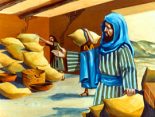
 Some pastors have grievously misapplied Malachi 3:8–10 by imposing it upon the Church, using the passage as a means to coerce believers through guilt and intimidation into financial giving. In extreme cases, some have demanded access to members’ tax returns or have publicly displayed individual contributions as a method of exerting social pressure. The misuse of this Old Testament text reveals both a lack of sound hermeneutical understanding and a deficiency in spiritual maturity among church leaders. In its original context, Malachi 3:8–10 pertains to Israel under the Mosaic Law, not to the Church of Jesus Christ in the present dispensation.
 God gives law to humans living in every age. He gave commands to the first humans living in the sinless environment of the Garden of Eden (Gen 1:26-30; 2:15-17). He gave commands to Noah (Gen 6-9). He gave commands to Abraham (Gen 12:1; 17:10-14). He gave commands to the Israelites—known as the Mosaic Law—after delivering them from their bondage in Egypt (Ex 20 – Deut 34). He has given commands to Christians (Rom 1-Rev 3). These biblical distinctions are important, for though all Scripture is written for the benefit of the Christian, only some portions of it speak specifically to him and command his walk with the Lord. Just as the Christian would not try to obey the commands God gave to Adam in Genesis 1-2, or the commands God gave to Noah in Genesis 6-9, so he should not try to obey the commands God gave to Israel in Exodus through Deuteronomy. Romans chapter 1 through Revelation chapter 3 marks the specific body of Scripture that directs the Christian life both regarding specific commands and divine principles. According to Charles Ryrie: