 Spiritual maturity and mental health don’t happen by accident. It results from intentional focus—looking in the right direction. Far too many believers get tangled in introspection, endlessly examining themselves for signs of progress or failure. But Scripture calls us to a different orientation: upward toward God, outward toward others, and forward into the future God has promised. This tri-directional focus reflects a biblically grounded and grace-driven model for the Christian life.
First, we must look upward to God. Spiritual success begins by fixing our eyes on the Lord, not on ourselves. Scripture states, “Set your mind on the things above, not on the things that are on earth. For you have died and your life is hidden with Christ in God” (Col 3:2–3). Our identity, stability, and sufficiency are all rooted in Him. This means trusting His wisdom when life doesn’t make sense (Rom 11:33), relying on His providence in the daily grind (Matt 6:33), and resting in His unchanging care (1 Pet 5:7). It also means standing on His promises, which are “yes” and “amen” in Christ (2 Cor 1:20). The more we look to God—His character, His grace, His sovereignty—the less we are rattled by earthly troubles.
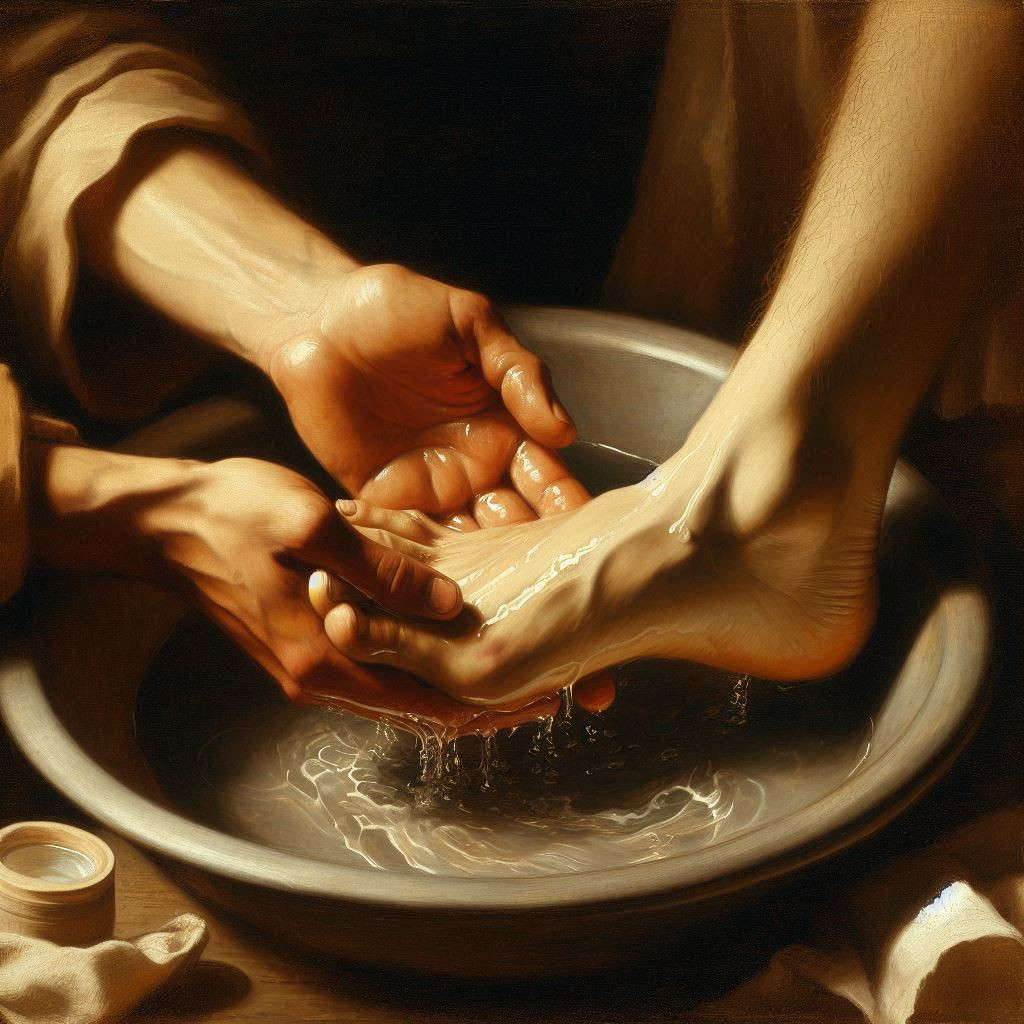 Second, we look outward to others. The spiritual life is not self-absorbed; it is others-focused. Jesus made this clear when He washed the disciples’ feet and said, “I gave you an example that you also should do as I did to you” (John 13:15). Paul echoed this with his call to “do nothing from selfishness or empty conceit, but with humility of mind regard one another as more important than yourselves” (Phil 2:3). Christian growth flourishes not in seclusion but in service. As we become more like Christ, we become more sacrificial, more generous, more ready to bear one another’s burdens (Gal 6:2). The inflow of divine grace should overflow in practical love (John 13:35).
Third, we must look forward in faith. Spiritual vitality requires forward momentum grounded in future promises. Abraham “was looking for the city which has foundations, whose architect and builder is God” (Heb 11:10). Paul lived with his eyes fixed on the prize, “forgetting what lies behind and reaching forward to what lies ahead” (Phil 3:13). The Christian hope is not wishful thinking—it’s a confident expectation anchored in God’s faithfulness. As we look ahead, we do so with assurance that Christ will return (1 Th 4:16), that our labor in the Lord is not in vain (1 Cor 15:58), and that God will supply all our needs according to His riches in glory (Phil 4:19). Forward faith fuels endurance.
Finally, this upward, outward, and forward focus leads to rest in God. Not rest as inactivity, but soul-deep confidence in His sovereign grace. Scripture states, “We who have believed enter that rest” (Heb 4:3). Rest doesn’t mean ease—it means trust. It means ceasing from self-effort to earn what Christ has already secured. We abide in Him (John 15:4), walk by the Spirit (Gal 5:16), and rest in His unfailing promises (Psa 62:1–2). This is not passivity—it is peaceful dependence.
So, if you want to grow, don’t stare at yourself. Get your eyes up. Fix your thoughts on the Lord. Open your heart wide in service to others. Keep moving forward with confidence in God’s promises. That’s not just spiritual maturity—that’s spiritual sanity. Let the world spin. We stand firm. Eyes up. Arms out. Heart forward.
Dr. Steven R. Cook
If this article has enriched your understanding and walk with Christ, and you feel led to support my ministry, your generosity is greatly appreciated. Your gifts enable me to continue sharing the gospel of grace and providing in-depth biblical teachings. Thank you for partnering with me in this mission.
Related Articles:
- The Free Gift of God is Eternal Life
- The Gospel of Grace
- What if I Don’t Feel Close to God?
- Sanctification and the Renewing of the Mind
- Recalibrating the Mind with Scripture
- Rejoice, Pray, and Give Thanks
- Faith from Beginning to End
- God Uses Imperfect People
- The Righteous Lifestyle of the Believer
- Walking Worthy of God’s Call to Service
- Walking in the Light
- The Life of Faith
- Knowing and Doing the Will of God


