The King, the Kingdom, and the Coming Reign of Christ

God’s kingdom program is rooted in the covenants and unfolds progressively throughout Scripture. Central to that program is the Davidic Covenant, in which God promised David an eternal dynasty, throne, kingdom, and descendant who would rule forever (2 Sam. 7:12-13; Ps. 89:3-4, 34-37). David had an earthly kingdom, and his “throne shall be established forever” (2 Sam. 7:16). Isaiah declared that the promised Son would sit “on the throne of David and over his kingdom” and that His government and peace would never end (Isa. 9:6-7). Jeremiah foretold a “righteous Branch” from David who would reign wisely and execute justice in the land (Jer. 23:5-6; 33:14-17). Ezekiel spoke of a restored Israel living securely under “My servant David” (Ezek. 34:23-24; 37:24-28). Daniel saw the Son of Man receiving an everlasting dominion that would crush all Gentile kingdoms (Dan. 2:44; 7:13-14, 27). Zechariah announced that the Lord Himself would one day be “king over all the earth” (Zech. 14:9). The New Testament opens with these promises still intact, as Gabriel told Mary that Jesus would receive “the throne of His father David” and reign forever (Luke 1:31-33). Jesus is repeatedly identified as the Son of David and rightful heir to the kingdom promises (Matt. 1:1; Rom. 1:3; Rev. 22:16). The kingdom promised in Scripture is a literal, earthly kingdom in which Christ will rule on earth, fulfilling the prayer, “Your kingdom come. Your will be done, on earth as it is in heaven” (Matt. 6:10).

Scripture also gives an extensive description of the ruler of this kingdom. The Messiah would come from the tribe of Judah and possess the scepter of rule (Gen. 49:10). He would be both human and divine, born of a virgin and called Immanuel (Isa. 7:14), “God with us” (Matt. 1:23; cf. John 1:1, 14; Col. 2:9), “Mighty God” and “Prince of Peace” (Isa. 9:6). Psalm 45 describes Him as a righteous king whose throne is eternal (Ps. 45:6-7), while Psalm 110 reveals Him as both King and Priest after the order of Melchizedek (Ps. 110:1-4). Isaiah 11 portrays Him as empowered by the Holy Spirit, ruling in righteousness and equity (Isa. 11:1-5). Micah declared that though He would be born in Bethlehem, His origins are “from the days of eternity” (Mic. 5:2). Yet before reigning in glory, the Messiah would first suffer for sin, bearing the iniquities of others (Isa. 53:1-12). The New Testament identifies Jesus as the fulfillment of these prophecies. He is the Son of David (Matt. 1:1), the King of Israel (John 1:49), and the returning conqueror who will rule the nations (Rev. 19:11-16).

At Christ’s first coming, the kingdom was genuinely offered to Israel. John the Baptist announced, “Repent, for the kingdom of heaven is at hand” (Matt. 3:1-2).[1] Jesus proclaimed the same message and traveled throughout Israel “preaching the gospel of the kingdom” (Matt. 4:17, 23; 9:35). The disciples were sent specifically to “the lost sheep of the house of Israel” with the message that “the kingdom of heaven is at hand” (Matt. 10:5-7). Christ authenticated His messianic claims through miracles that fulfilled kingdom prophecies concerning healing and restoration (Isa. 35:5-6; Matt. 11:2-6; Acts 2:22). The offer was real, the King was present, and the credentials of the kingdom were publicly displayed. According to Pentecost:

The “Gospel of the kingdom” is what was preached by both John and Jesus (Matt. 3:2, 4–17). This “Gospel” was the Good News that the kingdom was near and was a message with both a soteriological (salvation) and an eschatological (prophetic) emphasis. This Gospel directed sinners to “the Lamb of God, who takes away the sin of the world” (John 1:29) and promised the expectant ones that “the kingdom of heaven is near” (Matt. 3:2).[2]

The Kingdom Rejected

Israel’s leadership rejected the King and committed the offense that led to the removal of the kingdom offer. This climactic rejection occurred when the Pharisees attributed Christ’s miracles, performed through the power of the Holy Spirit, to Satan himself (Matt. 12:22-24; Mark 3:22-30; Luke 11:14-20). This marked a decisive turning point in Christ’s ministry. Jesus warned of judgment for this national rejection (Matt. 12:31-32) and began speaking in parables to conceal truth from hardened hearts while revealing it to responsive disciples (Matt. 13:10-17). Later, in the parable of the vineyard, Jesus declared, “the kingdom of God will be taken away from you and given to a people, producing the fruit of it” (Matt. 21:43). He lamented over Jerusalem and announced that the nation would not see Him again until it welcomed Him as Messiah (Matt. 23:37-39). John wrote, “He came to His own, and those who were His own did not receive Him” (John 1:11). The nation ultimately cried, “We have no king but Caesar” (John 19:15).

The Kingdom Postponed

Because the King was rejected, the establishment of the kingdom was postponed. Fruchtenbaum states, “When Jesus was rejected, the offer of the Messianic Kingdom was rescinded.”[3] This rejection did not cancel the covenant promises but delayed their fulfillment until Christ’s return. Jesus illustrated this postponement in the parable of the nobleman who went to a distant country to receive a kingdom and then return (Luke 19:11-27). Even after the resurrection, the disciples still expected a future earthly kingdom for Israel, asking, “Lord, is it at this time You are restoring the kingdom to Israel?” (Acts 1:6). Christ did not deny the kingdom’s future restoration but only the timing (Acts 1:7). Peter later preached that Christ remains in heaven until the “period of restoration of all things” spoken of by the prophets (Acts 3:19-21). Hebrews also states that the world has not yet been subjected to Christ in visible rule (Heb. 2:5-8). Presently, Christ sits at the Father’s right hand awaiting the time when His enemies will be made His footstool (Ps. 110:1; Acts 2:34-35).

The Millennial Kingdom

The kingdom will finally be established at the Second Coming of Christ described in Revelation 19 and 20. Jesus will return from heaven in power and glory, destroy His enemies, and judge the rebellious nations (Rev. 19:11-21). Satan will then be bound and imprisoned for one thousand years so that he cannot deceive the nations (Rev. 20:1-3). Christ will reign on earth for a thousand years with resurrected saints who share in His rule (Rev. 20:4-6). This period of a thousand years is called the Messianic Kingdom because it will be ruled by Messiah. According to Fructenbaum, “The name Millennial Kingdom emphasizes how long this kingdom will last: one thousand years. The form of the Messianic or Millennial Kingdom is that of an earthly literal kingdom which Jesus will rule from the Throne of David.”[4] After the millennium, Satan will be released briefly, lead a final rebellion, and then be cast forever into the lake of fire (Rev. 20:7-10). This is followed by the Great White Throne Judgment and the eternal state (Rev. 20:11-15; 21:1-4).

The prophets describe the millennial kingdom as a time of worldwide righteousness, peace, prosperity, and divine rule. Christ will reign personally from Jerusalem, and the nations will stream to Zion to learn the ways of the Lord (Isa. 2:1-4; Mic. 4:1-8; Zech. 14:9, 16-21). His government will be marked by perfect justice and righteousness (Isa. 11:3-5; Jer. 23:5; Ps. 72:1-4). War will cease as weapons are transformed into tools for agriculture (Isa. 2:4; Mic. 4:3). Even the animal kingdom will experience harmony as the curse is partially lifted from creation (Isa. 11:6-9; 35:1-7). Human life spans will increase, and the earth will produce abundantly (Isa. 65:20-25; Amos 9:13-14; Joel 3:18). Israel will be spiritually restored and regathered to the land under the blessings of the new covenant (Ezek. 36:24-28; 37:21-28; Rom. 11:25-27). A millennial temple will stand in Jerusalem as described in Ezekiel 40-48, and the nations will worship the King there (Zech. 14:16-21). Above all, the kingdom will be characterized by universal knowledge of God, “for the earth will be full of the knowledge of the LORD as the waters cover the sea” (Isa. 11:9; Hab. 2:14).

The Kingdom a Reward for the Faithful

Though all believers will enter the future earthly kingdom by grace, participation in its privileges and rulership is a reward for faithfulness in this life. Scripture consistently draws this distinction. Those who suffer with Christ will also reign with Him (2 Tim. 2:12), and those who overcome in the Christian life will be granted authority to rule the nations (Rev. 2:26-27). Faithful service, spiritual maturity, and endurance under trial form the pathway to inheriting the kingdom, not in terms of salvation, which is a free gift (Rom. 6:23), but in terms of honor, responsibility, and reward (Luke 19:17; 1 Cor. 3:13-15; Rom. 8:17b). Jesus will reward His servants at the Judgment Seat of Christ, and those who have proven faithful in smaller responsibilities will be entrusted with greater authority in His coming reign (2 Cor. 5:10; Luke 19:11-19). As Paul exhorted, “Whatever you do, do your work heartily, as for the Lord rather than for men, knowing that from the Lord you will receive the reward of the inheritance. It is the Lord Christ whom you serve” (Col. 3:23-24). This eternal perspective motivates us to live with intention and integrity, not merely content to enter the kingdom, but longing to reign with Christ in it. According to Fruchtenbaum, “All believers will enter the Messianic Kingdom but only those who live an obedient spiritual lifestyle will inherit the Kingdom (Gal. 5:21). This means that only such believers will be rewarded, honored, and given crowns of authority to co-rule in the Messianic Kingdom with Messiah, the King.”[5]

Steven R. Cook, D.Min., M.Div.

If this article has enriched your understanding and walk with Christ, and you feel led to support my ministry, your generosity is greatly appreciated. Your gifts enable me to continue sharing the gospel of grace and providing in-depth biblical teachings. Thank you for partnering with me in this mission.

Related Articles:


[1] In Mark 1:15, “the gospel of the kingdom” referred to the announcement that Israel’s promised Messianic King had arrived and the kingdom was being offered to the nation through repentance and faith, whereas the later gospel of grace centered on Christ’s death, burial, and resurrection (1 Cor. 15:3-4), truths the disciples did not yet understand and initially resisted when Jesus first revealed them (Matt. 16:21-22; Mark 9:31-32; Luke 18:31-34).

[2] J. Dwight Pentecost, Thy Kingdom Come: Tracing God’s Kingdom Program and Covenant Promises throughout History (Grand Rapids, MI: Kregel Publications, 1995), 251.

[3] Arnold G. Fruchtenbaum, Israelology: The Missing Link in Systematic Theology, Rev. ed. (Tustin, CA: Ariel Ministries, 1994), 624.

[4] Ibid., 611.

[5] Arnold G. Fruchtenbaum, The Messianic Jewish Epistles: Hebrews, James, First Peter, Second Peter, Jude, 1st ed. (Tustin, CA: Ariel Ministries, 2005), 244.


A Biblical Attitude Toward Israel

     Israel’s story begins with God taking the first step. He brought the nation into existence and shaped it according to His plan. Scripture states, “Thus says the Lord who created you, O Jacob, and He who formed you, O Israel” (Isa. 43:1), and again, “I am the LORD… the Creator of Israel” (Isa. 43:15). Having brought Israel into being, God then bound Himself to her, declaring, “the Lord your God has chosen you to be a people for His own possession” (Deut. 7:6). This divine commitment arose from God’s promises to Abraham, Isaac, and Jacob, establishing Israel as a nation uniquely related to Him (Gen. 12:1–3; 17:7–8). The permanence of Israel’s national existence is guaranteed by God Himself, who tied her continuance to the fixed order of creation, saying, “If this fixed order departs from before Me… then the offspring of Israel also will cease from being a nation before Me forever” (Jer. 31:35–36). She was precious to the Lord, called “the apple of His eye” (Zech. 2:8), and He said to her, “I have loved you with an everlasting love; therefore, I have drawn you with lovingkindness” (Jer. 31:3). God also placed Israel at the center of His historical dealings, saying of Jerusalem, “I have set her at the center of the nations” (Ezek. 5:5). Yet Scripture is equally honest about Israel’s repeated failures through unbelief and disobedience (Ps. 106:6; Neh. 9:26). Because of her unique relationship to God, Israel also experienced unique discipline, for the Lord declared, “You only have I chosen among all the families of the earth; therefore, I will punish you for all your iniquities” (Amos 3:2). Even when God disciplines Israel, His plans for her are never canceled (Jer. 31:35–37).

Israel’s Present

In the present age, Israel exists in a state of tension. Though widely opposed and often unbelieving, she remains “beloved for the sake of the fathers” because of the irrevocable promises God made to Abraham, Isaac, and Jacob (Rom. 11:28). God’s faithfulness to Israel does not rest on Israel’s consistency but on His own unchanging covenants, which He pledged to uphold forever (Gen. 12:1–3; 2 Sam. 7:12–16; Jer. 31:35–37). Scripture explains that this present condition includes a divinely imposed hardening that is partial and temporary, for “a partial hardening has happened to Israel until the fullness of the Gentiles has come in” (Rom. 11:25). This hardening serves God’s broader redemptive purpose by opening the door of blessing to the nations, while simultaneously preserving Israel for a future restoration. During this period, Israel’s unbelief does not nullify God’s promises but confirms that salvation history is unfolding according to His timetable rather than human expectation. Israel is being kept by God until His redemptive purposes are completed, demonstrating that divine faithfulness transcends human failure.

Israel’s Future

Israel’s future is secure because it depends completely on God’s promises, not on how well Israel has done in the past or how well it is doing now. Jesus will return to the earth as the rightful King of Israel, for “when the Son of Man comes in His glory, and all the angels with Him, then He will sit on His glorious throne” (Matt. 25:31), and “His feet will stand on the Mount of Olives, which is in front of Jerusalem on the east” (Zech. 14:4), reigning in fulfillment of God’s promises (Rev. 19:16).

When Jesus returns, Israel will finally realize that He is the very One they once rejected. They will look to Him, feel deep sorrow for what they did, and put their trust in Him as their Messiah. God foretold this when He said, “They will look on Me whom they have pierced; and they will mourn for Him, as one mourns for an only son, and they will weep bitterly over Him like the bitter weeping over a firstborn” (Zech. 12:10). That grief will lead them to faith, and Paul confirms the outcome when he says, “and so all Israel will be saved” (Rom. 11:26). At that time, Jerusalem will finally welcome her true King, just as Jesus said, “You will not see Me until you say, ‘Blessed is He who comes in the name of the Lord’” (Matt. 23:39; cf. Ps. 118:26).

     After His return, the Messiah will rule the world from Jerusalem. Scripture declares that “the Lord will be king over all the earth” (Zech. 14:9). He will reign as the promised Son of David, the One of whom God said, “He will be great and will be called the Son of the Most High” (Luke 1:32). God will place Him on David’s throne, fully carrying out His covenant promises, for “the Lord God will give Him the throne of His father David… and His kingdom will have no end” (Luke 1:32–33). His rule will bring lasting righteousness and peace to the entire world, because “there will be no end to the increase of His government or of peace” (Isa. 9:6–7), and “in His days the righteous will flourish, and abundance of peace” (Ps. 72:7). All opposition will be brought under control, since the Messiah will “break them with a rod of iron” (Ps. 2:9). His kingdom will never end, because “His dominion is an everlasting dominion which will not pass away” (Dan. 7:14). Israel’s future, then, clearly shows that God is faithful to His word and always brings His promises to their complete fulfillment.

The Christian Attitude Toward Israel

Because God has an unbroken past, present, and future plan for Israel, the Christian’s attitude toward Israel today should be marked by humility, respect, prayer, and confidence in God’s faithfulness. Scripture warns believers not to become arrogant toward Israel, since Gentile blessing rests on God’s promises to the patriarchs and not on Gentile merit (Rom. 11:18–20). Even in her present unbelief, Israel remains “beloved for the sake of the fathers,” because “the gifts and the calling of God are irrevocable” (Rom. 11:28–29). Christians are therefore to reject hostility or replacement thinking and instead recognize Israel’s continuing place in God’s plan (Rom. 11:1–2).

     This attitude expresses itself in action. Believers are to pray for Israel, especially for her salvation, sharing Paul’s desire when he said, “my heart’s desire and my prayer to God for them is for their salvation” (Rom. 10:1), and to pray for Jerusalem, as Scripture commands, “Pray for the peace of Jerusalem” (Ps. 122:6). Christians should also lovingly share the gospel with Jewish people, knowing that faith comes through hearing the word of Christ (Rom. 10:14–17), while trusting God’s timetable, since the present hardening is partial and temporary (Rom. 11:25). When possible, believers should also support Israel in gratitude, recognizing that Gentiles have shared in Israel’s spiritual blessings (Rom. 15:27). In all of this, the Christian looks forward with confidence to the day when God’s promises are fulfilled, when Israel turns to her Messiah and “all Israel will be saved” (Rom. 11:26), and the Lord reigns as King over all the earth (Zech. 14:9).

Steven R. Cook, D.Min., M.Div.

If this article has enriched your understanding and walk with Christ, and you feel led to support my ministry, your generosity is greatly appreciated. Your gifts enable me to continue sharing the gospel of grace and providing in-depth biblical teachings. Thank you for partnering with me in this mission.

Related Articles:


God as Israel’s King, Lawgiver, and Judge

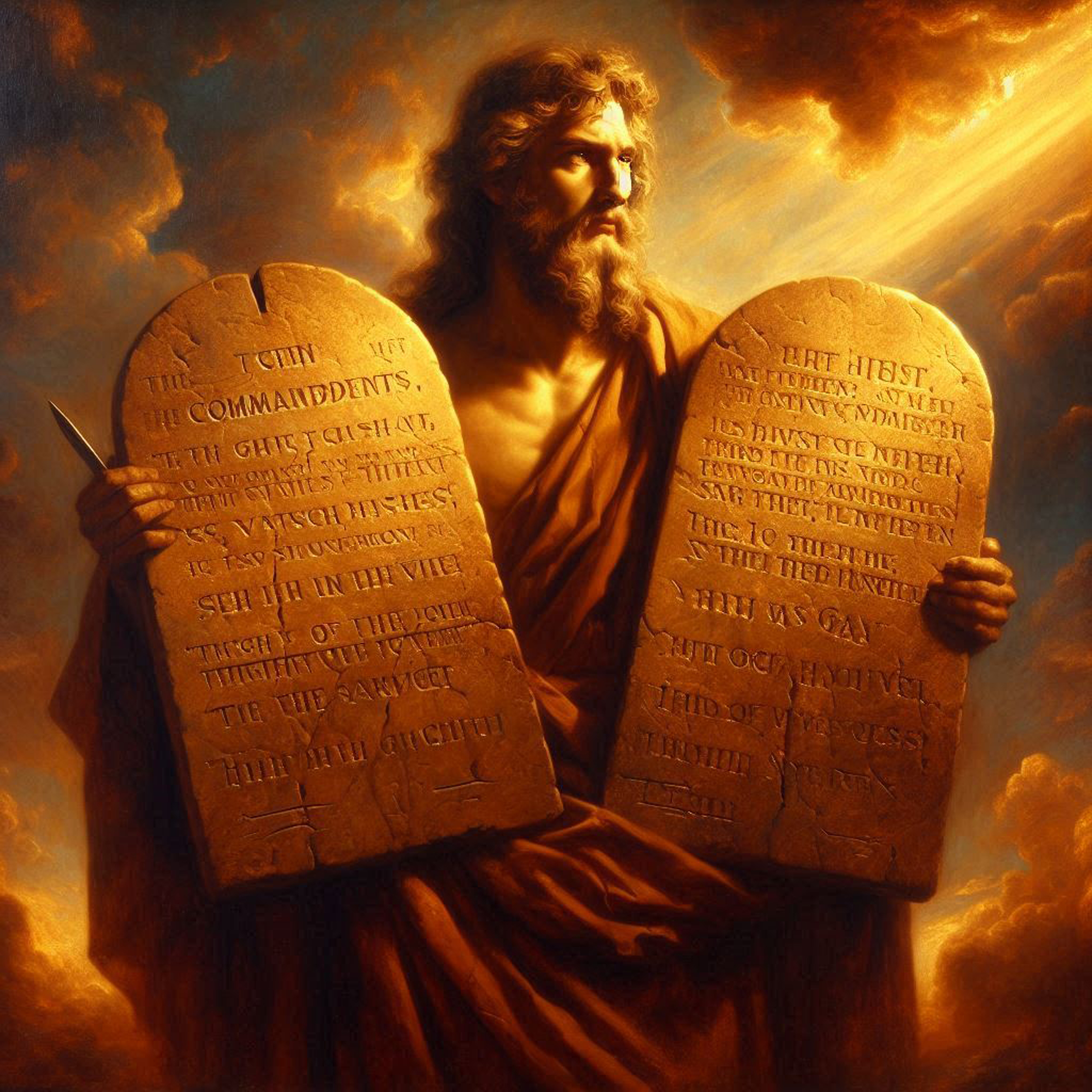
Israel was the only true theocracy to have ever existed, a nation uniquely governed by God Himself. Scripture reveals the Lord as Israel’s ultimate Judge, Lawgiver, and King. Isaiah declared, “For the LORD is our Judge, the LORD is our Lawgiver, the LORD is our King; He will save us” (Isa 33:22).[1] Though this verse anticipates the future Messianic reign when the Lord will personally rule in righteousness and peace, it also encapsulates the divine ideal that shaped Israel’s national life from the beginning. God alone was to be the source of all authority—judicial, legislative, and executive—directing the nation through His revealed Word and His appointed servants. Israel’s existence under this system demonstrated what it meant for a people to live under direct divine rule. Yet history records that the nation repeatedly rejected this theocratic structure, desiring to be governed like the surrounding nations. When they demanded a human monarch, the Lord told Samuel, “They have not rejected you, but they have rejected Me from being king over them” (1 Sam 8:7).

God as King

Yahweh was Israel’s King (melek). The nation was established as a true theocracy, ruled directly by God Himself, who reigned in both spiritual and national affairs. His kingship was first displayed in His mighty deliverance of Israel from Egyptian bondage, prompting Moses to declare, “The LORD shall reign forever and ever” (Ex 15:18). From that point forward, God’s sovereign rule was expressed through His covenantal authority, His law, and His presence among His people. His kingship was visibly represented in the tabernacle and later the temple, where His throne was symbolized above the mercy seat between the cherubim (1 Sam 4:4; Psa 99:1). Thus, Israel’s political and spiritual life were to be centered on the reality that Yahweh alone was their sovereign ruler, the true King who dwelt among them and governed by His Word. The Lord Himself declared, “I am the LORD, your Holy One, the Creator of Israel, your King” (Isa 43:15), and again, “Thus says the LORD, the King of Israel and his Redeemer, the LORD of hosts: ‘I am the first and I am the last, and there is no God besides Me’” (Isa 44:6). Because God was King, He established Israel’s constitution, determined Israel’s political decisions, declared alliances and wars, as would any ruler of a nation. When Israel later rejected divine rule in favor of a human monarch, the Lord said to Samuel, “They have not rejected you, but they have rejected Me from being king over them” (1 Sam 8:7).

God as Lawgiver

As the divine Lawgiver (chaqaq), God gave Israel His law through Moses at Mount Sinai, establishing the covenant constitution by which the nation was to live. Scripture states, “These are the statutes and ordinances and laws which the LORD established between Himself and the sons of Israel through Moses at Mount Sinai” (Lev 26:46), and “He declares His words to Jacob, His statutes and His ordinances to Israel. He has not dealt thus with any nation; and as for His ordinances, they have not known them” (Psa 147:19-20). Ryrie notes, “The Law was given to Israel. Both the Old and New Testaments are unanimous in this (Lev 26:46; Rom 9:4). Further, Paul contrasted the Jews who received the Law with the Gentiles who did not (Rom 2:14).”[2] The law was the expression of God’s holy character and revealed His righteous standards for every sphere of Israel’s life—moral, civil, and ceremonial (Deut 4:7–8; Psa 19:7–9). Through it, the Lord governed His people, defining how they were to relate to Him and to one another in covenant fellowship. The divine directives were intended to serve as the framework for a holy society that reflected His nature and glory. As Moses declared, “This is your wisdom and your understanding in the sight of the peoples who will hear all these statutes and say, ‘Surely this great nation is a wise and understanding people’” (Deut 4:6). Thus, the law served as the divine rule of life for Israel, intended to produce national order, righteousness, and blessing under God’s theocratic authority. Having been codified, God’s laws were to be studied and obeyed.

God as Judge

As Israel’s divine Lawgiver, God alone defines right and wrong for His people. As the Judge (shaphat), He alone has the prerogative to evaluate obedience or disobedience and to administer justice. God’s judgments reflected His holy character and were expressed through both blessing and discipline, rewarding obedience and correcting rebellion according to the covenant (Deut 28:1–2, 15). Ross notes, “Whatever charge God makes will be true; whatever decision God makes will be right.”[3] Throughout Israel’s history, He demonstrated this judicial oversight, especially during the period of the Judges, when He raised up deliverers to rescue the nation after they turned back to Him (Judg 2:16–18). Abraham acknowledged this same divine role when he appealed to “the Judge of all the earth” (Gen 18:25; cf. Psa 50:6; 75:7; Isa 11:4), affirming that God’s actions always conform to perfect righteousness. Yet even in His judgments, the Lord’s purpose was never to destroy His people but to restore them. As Hosea declared, “Come, let us return to the LORD. For He has torn us, but He will heal us; He has wounded us, but He will bandage us” (Hos 6:1). Moreover, the Lord delights in mercy and extends compassion to the humble who seek Him (Mic 7:18; Isa 57:15). God’s justice was not vindictive but corrective, designed to draw His people back into fellowship and bless them according to His covenant faithfulness.

Thus, Isaiah 33:22 stands as a comprehensive statement of God’s sovereignty over Israel—He is the One who rules as King, legislates as Lawgiver, and adjudicates as Judge. These roles anticipate their ultimate fulfillment in the Messiah, the Lord Jesus Christ, who will reign in righteousness during His future earthly kingdom (Isa 9:6–7; Jer 23:5–6; Zech 14:9).

Steven R. Cook, D.Min., M.Div.

If this article has enriched your understanding and walk with Christ, and you feel led to support my ministry, your generosity is greatly appreciated. Your gifts enable me to continue sharing the gospel of grace and providing in-depth biblical teachings. Thank you for partnering with me in this mission.

Related Articles:

[1] Isaiah’s order of God as Judge, Lawgiver, and King, reflects practical theology rather than historical chronology. Chronologically, God first reigned as King, then gave His Law, and finally judged according to that Law. Yet Isaiah writes from the standpoint of Israel under divine discipline, presenting God first as Judge who purifies His people, then as Lawgiver who restores righteousness, and finally as King who reigns in peace. The sequence thus anticipates the eschatological pattern of judgment, renewal, and rule (Isa 2:2–4; 11:1–5; 33:22).

[2] Charles C. Ryrie, Basic Theology: A Popular Systematic Guide to Understanding Biblical Truth (Chicago, IL: Moody Press, 1999), 350.

[3] Allen P. Ross, A Commentary on the Psalms 1–89: Commentary, vol. 2, Kregel Exegetical Library (Grand Rapids, MI: Kregel Academic, 2011–2013), 163–164.

Israel’s Land Not Fully Possessed

God promised to give the nation of Israel a specific territory as an everlasting possession. The Lord said to Abram, “For all the land which you see, I will give it to you and to your descendants forever” (Gen 13:15). This unconditional covenantal grant of land was reaffirmed to Isaac and Jacob (Gen 26:3; 28:13), encompassing a vast region “from the river of Egypt as far as the great river, the river Euphrates” (Gen 15:18). Historically, Israel has never possessed the full extent of this promised territory. However, many covenant theologians assert that God has already fulfilled His land promise to Israel, appealing to certain Old Testament passages as proof. They point, for example, to Joshua’s record: “So Joshua took the whole land, according to all that the Lord had spoken to Moses… Thus the land had rest from war” (Josh 11:23), and again, “the Lord gave Israel all the land which He had sworn to give to their fathers, and they possessed it and lived in it… Not one of the good promises which the Lord had made to the house of Israel failed; all came to pass” (Josh 21:43–45; cf. Josh 23:14). These verses are taken as evidence, by covenant theologians, that the Abrahamic land grant found its completion in the conquest under Joshua. Additionally, the statement that “Solomon ruled over all the kingdoms from the River to the land of the Philistines and to the border of Egypt” (1 Ki 4:21) is taken as evidence that Israel’s territory extended to the full Abrahamic boundaries (Gen 15:18). Even Nehemiah’s affirmation, “You… made a covenant with him to give the land… and You have fulfilled Your promise, for You are righteous” (Neh 9:7–8), is cited as confirmation that the divine land promise was fully realized.

However, though God fulfilled His promise in bringing Israel into the land, the narrative of Joshua makes it clear that large portions of territory remained unconquered. The Lord said to Joshua, “You are old and advanced in years, and very much of the land remains to be possessed” (Josh 13:1). Scripture further records that “the sons of Manasseh could not take possession of these cities” (Josh 17:12), that “they did not drive them out completely” (Josh 17:13), and that “they did not drive out the Canaanites who lived in Gezer” (Josh 16:10; cf. 15:63; 23:12–13). Following Joshua’s death, the book of Judges repeatedly affirms Israel’s incomplete obedience, stating that the tribes “did not drive out” the Canaanites from numerous regions (Judg 1:19, 21, 27–36). These repeated statements demonstrate that, while Israel possessed the land in principle under God’s covenant faithfulness, the full territorial boundaries promised to Abraham were not yet realized in practice. Fruchtenbaum notes, “Never in Old Testament history did Israel possess, dwell, and settle in all of the Promised Land. Nor did it ever happen in Jewish history since. However, the Palestinian Covenant guarantees that some day it will.”[1]

The conquest under Joshua and the later monarchy under Solomon cannot be regarded as the final fulfillment of the Abrahamic Covenant. Numerous prophecies anticipated Israel’s future inheritance of the land (Amos 9:14–15), and the nation never possessed the full extent of the territory promised to Abraham, which stretched eastward to the Euphrates (Gen 15:18). Israel’s occupation was neither permanent—since the Babylonian exile removed them from the land—nor complete, as Judges records that many Canaanite cities remained unconquered (Judg 1:27–34). The land described in Joshua 21 corresponded only to the Mosaic boundaries of Numbers 34, not the larger Abrahamic grant. Even in the New Testament era, Israel still awaited national restoration (Acts 1:6–8; Rom 11:25).

The book of Joshua, therefore, celebrates God’s covenant faithfulness in bringing His people into the land (Josh 21:43–45), yet it also acknowledges that their occupation was partial and temporary rather than ultimate and complete (Josh 13:1; 23:12–13). According to Phillips, “Not even during the great days of David and Solomon did Israel possess more than a tithe of the total land grant that is hers under the Abrahamic covenant.”[2] Geisler states that Israel “did not possess all the land that was promised to Abraham, namely, east of Jordan all the way to the Euphrates (Gen 15:18)… they did not possess it forever, as promised to Abraham, but were later dispossessed of it by the Babylonian captivity.”[3] Campbell adds, “This did not mean that every corner of the land was in Israel’s possession, for God Himself had told Israel they would conquer the land gradually (Deut 7:22).”[4] The conquest fulfilled God’s word to that generation, but not the full scope of the Abrahamic promise, which extends “from the river of Egypt as far as the great river, the river Euphrates” (Gen 15:18). Campbell further states, “Joshua 21:43 refers to the extent of the land as outlined in Numbers 34 and not to the ultimate extent as it will be in the messianic kingdom (Gen 15:18–21). Also, though Israel possessed the land at this time it was later dispossessed, whereas the Abrahamic Covenant promised Israel that she would possess the land forever (Gen 17:8).”[5]

Joshua 21:43 must be read in light of other passages of Scripture. It means that God fulfilled His word to that generation by granting the land they actually claimed in faith. The Lord had said, “Every place on which the sole of your foot treads, I have given it to you, just as I spoke to Moses” (Josh 1:3). God’s word to Joshua, therefore, was limited to the immediate context of conquest and distribution, not to the ultimate fulfillment of the covenant made with Abraham, Isaac, and Jacob. Regarding the remaining nations in the land, Joshua reminded Israel, “The Lord your God, He will thrust them out from before you and drive them from before you; and you will possess their land, just as the Lord your God promised you” (Josh 23:5). Yet even by the end of Joshua’s life, those nations still occupied significant portions of Canaan, a fact repeatedly acknowledged in the text (Josh 13:1–6; 23:12–13). Consequently, Joshua’s declaration that “the Lord gave Israel all the land” (21:43) should be understood through what scholars identify as representative universalism—a Hebrew idiom in which a part is spoken of as the whole. This linguistic feature is common in Scripture, where comprehensive terms convey theological completeness rather than exhaustive literal scope. Thomas Constable observes:

It was common among the Semites to regard a part of the whole as the whole (cf. Deut 26:5–10; 1 Kings 13:32; Jer 31:5; 2 Sam 5:6–10; Rev 14:1; 22:2; Rom 15:19–24). The name for this viewpoint is “representative universalism.” Some students of this passage believe that the writer was taking this view here. He was speaking in universal terms. He regarded the individual kings, towns, and areas that had been subdued as representative of the entire land of Canaan.[6]

This idiom appears elsewhere in the Old Testament. When Scripture says that “all the earth” came to Egypt to buy grain from Joseph (Gen 41:57), it does not mean every person on the globe. Similarly, “all Judea” and “all Jerusalem” going out to John the Baptist (Mark 1:5) or Solomon ruling “over all the kingdoms from the Euphrates River to the land of the Philistines and to the border of Egypt” (1 Ki 4:21) communicate general, not absolute, universality. Joshua’s use of this idiom expresses the theological truth that God had completely fulfilled what He promised to that generation. He had given them victory, possession, and rest. The remaining land would be conquered gradually, contingent upon Israel’s continued faith and obedience (Josh 23:5–13; cf. Judg 1:19, 27–36).

Therefore, the statements “the Lord gave Israel all the land” and “not one word has failed” (Josh 21:43–45; 23:14) should be understood as declarations of God’s proven covenant faithfulness within the historical framework of Joshua’s leadership. They do not mean that every geographical boundary of the Abrahamic Covenant was realized, but that God had done all He promised at that stage in redemptive history. Israel’s rest in the land (Josh 22:4; 23:1) was temporary and conditional, anticipating a greater rest that remains for the people of God (cf. Heb 4:8–9).

The Abrahamic Covenant itself remains unconditional and eternal, rooted in God’s sovereign promise and not dependent upon Israel’s obedience (Gen 12:1–3; 15:18–21; 17:7–8). Israel’s possession under Joshua was real but provisional. Their later disobedience brought discipline and dispersion, but not the cancellation of God’s covenantal oath. The full and everlasting fulfillment awaits the future Messianic Kingdom, when Israel will dwell securely in all the territory promised to Abraham, Isaac, and Jacob (Gen 15:18; Isa 11:10–16; Ezek 47:13–23; Zech 14:9–11). Thus, Joshua’s record stands as a powerful testimony to divine faithfulness—God did everything He promised in that generation, and He will yet do all He has pledged in the ages to come.

Steven R. Cook, D.Min., M.Div.

If this article has enriched your understanding and walk with Christ, and you feel led to support my ministry, your generosity is greatly appreciated. Your gifts enable me to continue sharing the gospel of grace and providing in-depth biblical teachings. Thank you for partnering with me in this mission.

Related Articles:

[1] Arnold G. Fruchtenbaum, Israelology: The Missing Link in Systematic Theology, Rev. ed. (Tustin, CA: Ariel Ministries, 1994), 632.

[2] John Phillips, Exploring the Minor Prophets (Kregel Publications; WORDsearch Corp., 2009), Ob 19–20.

[3] Norman L. Geisler, Systematic Theology, Volume Four: Church, Last Things (Minneapolis, MN: Bethany House Publishers, 2005), 579.

[4] Donald K. Campbell, “Joshua,” in The Bible Knowledge Commentary vol. 1 (Wheaton, IL: Victor Books, 1985), 364.

[5] Ibid., 365.

[6] Tom Constable, Tom Constable’s Expository Notes on the Bible (Galaxie Software, 2003), Josh 21:43.