The seven-year Tribulation refers to the future time of unprecedented distress that will fall upon the earth after the church is removed to heaven at the Rapture (1 Th 4:13–18; 1 Cor 15:51-52). This period is anchored in Daniel’s prophecy of the “seventy weeks” (Dan 9:24–27), where the final “week” (a heptad of years) is reserved for God’s dealings with Israel and the nations (Rev 6–19) before the establishment of Messiah’s earthly kingdom (2 Sam 7:12–16; Isa 2:2–4; Isa 9:6–7; Jer 23:5–6; 30:7; Ezek 37:24–28; Zech 14:3–9; Matt 19:28; 24:21-22; Luke 1:32–33; Acts 1:6–7; Rev 20:1–6). The event that begins this period is the confirmation of a covenant between “the prince who is to come” (the Antichrist) and unbelieving Israel (Dan 9:27). This covenant will likely promise Israel’s security and religious freedom, including the reinstitution of temple worship (2 Th 2:3–4; Rev 11:1–2), but it’s a façade for deception, as the Antichrist’s true character will be revealed in the middle of the Tribulation (Matt 24:15; Dan 9:27; Rev 13:4–7). Importantly, the Rapture of the church does not initiate the Tribulation but rather marks the conclusion of the church age, which began at Pentecost in Acts 2. The Tribulation formally begins with the signing of this covenant between the Antichrist and Israel. Fruchtenbaum clarifies, “The Rapture precedes the Tribulation, but it does not begin the Tribulation, a fact confused by many Pretribulationists. It is not the Rapture, but the seven-year covenant which begins the Tribulation. The Rapture will merely come some time before this, and may very well precede the Tribulation by a good number of years” (Arnold G. Fruchtenbaum, The Footsteps of the Messiah, p. 155).
The term Tribulation designates the entire seven-year period revealed in Daniel’s prophecy of the seventy weeks (Dan 9:27), a future era of unparalleled upheaval and divine judgment. The first half of this period is marked by the Antichrist’s deceptive rise, political consolidation, and restrained but mounting judgments. Jesus described this stage as “the beginning of birth pangs” (Matt 24:8), emphasizing that while distress is genuine, it steadily intensifies in both frequency and severity. During this time, the seal and trumpet judgments unfold (Rev 6–9), bringing economic collapse, ecological devastation, warfare, famine, and widespread death. Yet these judgments, though severe, remain restrained compared to what is to come.
The second half of the seven years is specifically called the Great Tribulation (Matt 24:21), when the full measure of God’s wrath is unleashed upon a rebellious world. Scripture identifies this climactic period as lasting “a time, times, and half a time” (Dan 7:25; 12:7; Rev 12:14), “forty-two months” (Rev 11:2; 13:5), or “1,260 days” (Rev 11:3; 12:6), underscoring its exact duration of three-and-a-half years. It begins at the midpoint when the Antichrist breaks his covenant with Israel, sets up the abomination of desolation in the temple (Dan 9:27; Matt 24:15; 2 Th 2:4), and demands global worship. During these final forty-two months (Rev 11:2; 13:5), the bowl judgments are poured out (Rev 16), unleashing the most catastrophic expressions of divine wrath. At the same time, the persecution of Israel intensifies as the Antichrist seeks to eradicate God’s covenant people (Rev 12:13–17), and worldwide rebellion against the Lord reaches its peak. According to Thomas Ice, “the Bible distinguishes between the tribulation period (seven years) and what is known as the great tribulation (the final three and a half years). In Matthew 24:9 the term ‘tribulation’ most likely refers to the full seven-year period of the tribulation. On the other hand, Matthew 24:21 speaks of the ‘great tribulation,’ which begins with the abomination of desolation that takes place after the midpoint of the seven-year period (Matt 24:15).” (Timothy J. Demy & Thomas Ice, Answers to Common Questions about the End Times, p. 65).
The coming seven-year Tribulation must be understood as an eschatological necessity: God’s appointed means to bring an end to human rebellion (Jer 25:31-33; Rev 6:15-17), to purify Israel for her Messiah (Ezek 20:37-38; Zech 13:8-9; Rom 11:26), and to prepare the nations for the visible return and reign of Christ (Matt 24:29-30; Rev 19:11-16). Thus, the Tribulation is both a period of judgment and of hope, for it paves the way for the long-awaited kingdom of God on earth (Dan 2:44; Zech 14:9; Rev 20:1-6) and the millennial blessings that will follow (Isa 11:6-9; Amos 9:13-15).
Steven R. Cook, D.Min., M.Div.
If this article has enriched your understanding and walk with Christ, and you feel led to support my ministry, your generosity is greatly appreciated. Your gifts enable me to continue sharing the gospel of grace and providing in-depth biblical teachings. Thank you for partnering with me in this mission.
The Rapture of the church is the future event in which Christ will descend from heaven to gather His bride, the church, to Himself. Paul describes it as a mystery previously unrevealed but now made known, declaring, “Behold, I tell you a mystery; we will not all sleep, but we will all be changed, in a moment, in the twinkling of an eye, at the last trumpet; for the trumpet will sound, and the dead will be raised imperishable, and we will be changed” (1 Cor 15:51-52). The term rapture comes from the Latin rapio, a translation of the Greek harpazō, meaning to seize or snatch away, as found in Paul’s statement that believers will be “caught up together with them in the clouds to meet the Lord in the air” (1 Th 4:17). This supernatural catching away involves the bodily resurrection of deceased believers, the transformation of living saints into their glorified bodies, and the collective meeting of the entire church with Christ in the air. According to Ryrie, “At the rapture some mortals (living) will only need to put on immortality, while those whose bodies have seen corruption (dead) will need to put on incorruption through resurrection. Both routes to heaven involve change—the living need to be translated and the dead raised. The last generation of Christians will not experience death.” (Charles Ryrie, A Survey of Bible Doctrine, p. 166). Unlike the Second Coming, where Christ visibly descends to the earth in judgment and to establish His earthly kingdom (Rev 19:11-16; Zech 14:4), the Rapture is Christ’s coming for His saints and constitutes the blessed hope of the church (Tit 2:13).
The comfort of the Rapture lies in the believer’s assurance of eternal union with Christ and deliverance from divine wrath. Paul emphasizes this comfort by saying, “For the Lord Himself will descend from heaven with a shout, with the voice of the archangel and with the trumpet of God, and the dead in Christ will rise first. Then we who are alive and remain will be caught up together with them in the clouds to meet the Lord in the air, and so we shall always be with the Lord. Therefore comfort one another with these words” (1 Th 4:16-18). This event is imminent, meaning it could occur at any moment, without warning signs, in keeping with Jesus’ promise: “I go and prepare a place for you. If I go and prepare a place for you, I will come again and receive you to Myself, that where I am, there you may be also” (John 14:2-3). The Rapture of the church is the believer’s hope not only of escaping the coming wrath (1 Th 1:10; 5:9) but also of entering into the joyful presence of Christ, where death and sorrow will forever be abolished (Rev 21:4). The Rapture thus motivates holy living, strengthens faith amidst trials, and orients the believer’s heart toward eternal realities. Fruchtenbaum states, “As each day ends, it brings the believer one day closer to the time when the Rapture may occur. Because of this imminency, it is time for believers to awaken out of sleep and to live a life consistent with the position of being sons of light.” (Arnold G. Fruchtenbaum, The Footsteps of the Messiah, p. 154).
In God’s sovereign plan, the removal of the church through the Rapture may serve as a divine reset upon the world stage, preparing the way for the rise of global events prophesied for the Tribulation period. With the restraining influence of the church and the indwelling Holy Spirit’s unique ministry through it removed (2 Th 2:6-7), the world will be positioned for the ascent of the man of lawlessness (2 Th 2:8) and the formation of a one-world system of government, economy, and religion (Dan 7:23-25; Rev 13:1-18; 17:1-18). Current movements toward globalism, international financial consolidation, ecumenical religious cooperation, and increasing hostility toward Israel may be viewed as preparatory shadows of what will unfold in full after the Rapture. God, who “changes the times and the epochs; He removes kings and establishes kings” (Dan 2:21), will sovereignly direct history toward its appointed climax. Thus, while the church eagerly waits for Christ from heaven, the world is unknowingly being set in motion toward the fulfillment of the very events Scripture foretells, events which will ultimately display both God’s judgment on rebellious humanity and His faithfulness to Israel and His covenant promises.
To be ready for the Rapture and the events that follow, a person must first belong to Christ, and this happens only through faith in Him, for “whoever believes in Him shall not perish, but have eternal life” (John 3:16). Jesus is the eternal Son of God (John 1:1; Heb 1:8), who became truly human while never ceasing to be divine (John 1:14; Col 2:9). He lived a perfectly sinless life, for “in Him there is no sin” (1 John 3:5), and at the cross He died in our place, bearing the penalty for our sins as the just for the unjust (Mark 10:45; 1 Pet 3:18). He was buried, and on the third day He rose again according to the Scriptures, conquering sin and death (1 Cor 15:3-4). Because of His finished work, He now offers eternal life as a free gift to all who believe in Him, for “the wages of sin is death, but the free gift of God is eternal life in Christ Jesus our Lord” (Rom 6:23). Becoming a Christian does not come through works, rituals, or self-effort, but through trusting in Christ alone for salvation. The matter is simple: “Believe in the Lord Jesus, and you will be saved” (Acts 16:31). Those who place their faith in Him are forgiven all their sins, declared righteous, and delivered from “the wrath to come” (1 Th 1:10). Jesus Himself assures, “I give eternal life to them, and they will never perish; and no one will snatch them out of My hand” (John 10:28). This is the simple yet profound promise of the gospel—eternal life through faith in Christ alone (John 3:16; Acts 4:12).
Steven R. Cook, D.Min., M.Div.
If this article has enriched your understanding and walk with Christ, and you feel led to support my ministry, your generosity is greatly appreciated. Your gifts enable me to continue sharing the gospel of grace and providing in-depth biblical teachings. Thank you for partnering with me in this mission.
What follows is an overview of future prophetic events as revealed in Scripture. It is not a comprehensive or technical analysis, but a panoramic survey designed to provide clarity and structure for understanding God’s prophetic program. This presentation moves sequentially—from the Rapture of the Church to the eternal state—outlining the major movements of eschatology as understood from a literal, historical, grammatical interpretation of Scripture. Each section is grounded in key biblical passages and reflects a traditional dispensational perspective, affirming the distinctiveness of Israel and the Church and the unfolding of God’s sovereign plan through both time and eternity. Readers should note that this is a bird’s-eye view, intended to give the big picture. Deeper exegetical and theological treatments of these subjects are available elsewhere—but for now, we take our place as students of prophecy, watching history move steadily toward its divine consummation.
Prophetic Overview
The next great event in God’s prophetic program is the Rapture of the Church (John 14:1-3), which is the sudden, bodily, and upward catching away of all Church-age believers—both living and dead—to meet Christ in the air (1 Th 4:13-18; 1 Cor 15:51-53). The word Rapture—though not found in English Bibles—comes from the Latin rapturo, which translates the Greek harpazō (“to snatch away”) in 1 Thessalonians 4:17, and accurately describes the sudden catching away of believers to meet Christ in the air. This event is imminent, meaning it could occur at any moment, with no signs preceding it. It is distinct from the Second Coming and is exclusively for the Church, the body and bride of Christ (Eph 5:25-27). At the Rapture, deceased believers will be resurrected, and living believers will be instantly transformed. This marks the end of the Church Age—a mystery age not revealed in the Old Testament—and removes believers from the earth before God pours out His wrath in the Tribulation (1 Th 1:10; 5:9). The Church is promised deliverance, not participation, in the Day of the Lord (Rev 3:10). According to Fruchtenbaum:
“The Church is composed of all true believers from Pentecost in Acts two until the Rapture of the Church. The Rapture excludes the Old Testament saints. It also excludes the Tribulation saints. The only saints who will be raptured are the Church saints. The Rapture passages clearly state that only those who are in Christ will partake of the Rapture.”[1]
After the Rapture and while the Tribulation unfolds on earth, believers in heaven will appear before the judgment seat of Christ—also called the Bema seat—for evaluation and reward (2 Cor 5:10; Rom 14:10-12). According to Pentecost, “The believer’s works are brought into judgment, called ‘the things done in his body’ (2 Cor. 5:10), in order that it may be determined whether they are good or bad.”[2] This is not a judgment for sin, as all sins were fully paid for by Christ on the cross (Rom 8:1; Heb 10:14), and believers are already justified by faith (Rom 3:28; 5:1; Gal 2:16). Rather, the Bema is a judgment of the believer’s service, motives, and faithfulness in the Christian life. Paul describes this as a testing of each person’s work—whether it was built with gold, silver, and precious stones, or with wood, hay, and straw (1 Cor 3:12-15). Those works of eternal value, done in alignment with God’s Word, empowered by the Spirit, and offered for the glory of God, will endure the fire of divine evaluation and be rewarded. Unfruitful or self-centered efforts will be burned up, resulting in loss of reward—but not loss of salvation. The Bema seat thus underscores the seriousness of our stewardship in this life and highlights the grace of God, who not only saves but also rewards His people for their faithfulness. It is here that crowns are awarded (2 Tim 4:8; 1 Pet 5:4; Jam 1:12), and the Church is made ready as the adorned bride of Christ (Rev 19:7-8).
Following the Rapture, the Tribulation period begins, a seven-year timeframe marked by divine judgment and escalating global chaos (Dan 9:27; Matt 24:4-28). According to Thomas Ice, “In this discourse [Matt 24:4-28], Jesus describes for the disciples the tribulation period. In verses 4-14, He speaks about the first half of the tribulation, and in verses 15-28, He describes the second half leading up to the second coming.”[3] The Tribulation begins with the signing of a covenant between the coming world ruler—the Antichrist—and Israel (Dan 9:27). This covenant allows Israel to resume temple worship, likely including animal sacrifices. The first half of the Tribulation (three and a half years) is marked by political deception, regional wars, famine, and limited divine judgments (Rev 6:1-8). Though catastrophic, these judgments are restrained, giving the world time to repent. Two notable events during this time include the ministry of the 144,000 sealed Jewish evangelists (Rev 7:1-8) and the rise of global religious syncretism symbolized by the harlot of Revelation 17.
Midway through the Tribulation, the Antichrist breaks his covenant with Israel, halts temple sacrifices, and sets up the abomination of desolation in the rebuilt Jewish temple, proclaiming himself to be God (Dan 9:27; Matt 24:15; 2 Th 2:3-4). This initiates the Great Tribulation, the second and more intense half of the seven-year period (Matt 24:21-22). During this time, Satan is cast down to earth with great fury (Rev 12:7-12), and the Antichrist is empowered to wage war against the saints, particularly the believing Jewish remnant and Gentile converts who refuse to worship him (Rev 13:7-10). The False Prophet promotes this global idolatry and enforces the mark of the beast (Rev 13:11-18). Despite escalating evil, God continues to offer grace through angelic proclamations (Rev 14:6-7) and the faithful witness of believers, many of whom are martyred.
As the Tribulation nears its end, a series of cataclysmic judgments intensify God’s wrath: trumpet and bowl judgments devastate the environment, economy, and world population (Rev 8-9; 16). Political alliances form against Israel, setting the stage for the Battle of Armageddon. The kings of the earth, stirred by demonic influence, gather in the valley of Megiddo to destroy Jerusalem and annihilate the Jewish people (Zech 12:2-3; Rev 16:13-16). But just as it seems all hope is lost, the heavens open, and Christ returns in glory with His holy angels and glorified saints (Zech 14:1-11; Rev 19:11-16). According to Ryrie, “the second coming of Christ will occur prior to the Millennium, which will see the establishment of Christ’s kingdom on this earth for a literal one thousand years.”[4] This Second Coming is visible, dramatic, and earth-shaking. Christ will personally destroy the Antichrist and the False Prophet, casting them into the lake of fire (Rev 19:19-20), and He will bind Satan in the abyss for 1,000 years (Rev 20:1-3).
At the return of Christ, the Millennial Kingdom will be established—a literal 1,000-year reign of Jesus Christ on earth, centered in Jerusalem (Rev 20:4-6). Fruchtenbaum states, “The Millennium will not begin the day immediately following the last day of the Great Tribulation because there will be a seventy-five day interval.”[5] The 75-day interval serves to cleanse and prepare the earth for Christ’s Millennial reign by judging the nations, restoring order, and inaugurating millennial blessings (Dan 12:11-12; Matt 25:31-46). After that, Christ will establish His kingdom on earth. He will fulfill all Old Testament covenants with Israel, including the Abrahamic (Gen 12:1-3), Davidic (2 Sam 7:16; Psa 89:35-37; Luke 1:31-33), and New Covenants (Jer 31:31-34). Israel will be regathered, restored, and exalted among the nations (Isa 2:2-4; Zech 14:16-21). The curse on nature will be partially lifted, and peace, righteousness, and justice will characterize Christ’s reign (Isa 11:1-10). Temple worship will resume, though modified, with sacrifices serving as memorials of Christ’s once-for-all sacrifice (Ezek 40–48). Though Satan is bound, human beings born during the Millennium—descendants of Tribulation survivors—will still have sin natures and need salvation.
At the end of the thousand years, Satan is released for a final rebellion (Rev 20:7-9). He will deceive a vast number of people, proving that even in a perfect environment, man’s sin nature still inclines him to rebel against God. Fire from heaven will consume the rebellious forces, and Satan will be cast into the lake of fire forever (Rev 20:10). Then comes the Great White Throne Judgment, where all unbelievers throughout history are resurrected, judged according to their works, and condemned to eternal separation from God in the lake of fire (Rev 20:11-15). This is not a judgment to determine salvation, but to reveal the just grounds for condemnation due to their rejection of God’s provision of grace. There is no mention of the Church here, as believers were already judged at the Bema Seat following the Rapture (2 Cor 5:10; Rom 14:10).
After the final judgment, God creates a new heaven and a new earth where righteousness dwells (2 Pet 3:13; Rev 21:1). The eternal state begins, free from sin, death, pain, and sorrow. The New Jerusalem descends from heaven, adorned like a bride, and becomes the dwelling place of the redeemed (Rev 21:2-4). God’s people from all ages will dwell in perfect fellowship with Him forever, enjoying His presence, His glory, and His goodness without end. There will be no temple in the New Jerusalem, for the Lord God and the Lamb are its temple (Rev 21:22). The curse is gone (Rev 22:3), the water of life flows freely, and the leaves of the tree are for the healing of the nations. Eternity will be a time of unbroken peace, joy, service, and worship. The former things will have passed away, and the redeemed will enjoy their inheritance in the presence of their Savior forever.
Summary
The prophetic Word of God unveils a majestic and ordered panorama of future events, from the imminent Rapture of the Church to the eternal state in the new heavens and new earth. Each stage—whether the Tribulation, Christ’s return, the Millennial Kingdom, or the final judgment—demonstrates God’s sovereign control over history and His faithfulness to fulfill every covenant and promise. For the Church, prophecy is about prediction and preparation. It reminds us that history is moving steadily toward divine consummation, and that our hope is anchored not in the shifting sands of this world, but in the unshakable promises of our returning Savior. As we await that blessed hope, we do so with confidence, vigilance, and joy, knowing that the same God who keeps His Word about the future is the same God who sustains us in the present. Come, Lord Jesus (Rev 22:20).
Steven R. Cook, D.Min., M.Div.
If this article has enriched your understanding and walk with Christ, and you feel led to support my ministry, your generosity is greatly appreciated. Your gifts enable me to continue sharing the gospel of grace and providing in-depth biblical teachings. Thank you for partnering with me in this mission.
[1] Arnold G. Fruchtenbaum, The Footsteps of the Messiah: A Study of the Sequence of Prophetic Events, Rev. ed. (Tustin, CA: Ariel Ministries, 2003), 142.
[2] J. Dwight Pentecost, Things to Come: A Study in Biblical Eschatology (Grand Rapids, MI: Zondervan, 1958), 223.
[3] Timothy J. Demy and Thomas Ice, Answers to Common Questions about the End Times (Grand Rapids, MI: Kregel Publications, 2011), 64.
[4] Charles C. Ryrie, Basic Theology: A Popular Systematic Guide to Understanding Biblical Truth (Chicago, IL: Moody Press, 1999), 522.
[5] Arnold G. Fruchtenbaum, The Footsteps of the Messiah, 361.
The Rapture of the Church is imminent—it could happen at any moment, without warning or prerequisite signs. However, while no event must occur before the Rapture, Scripture does reveal the conditions of the world leading up to the seven-year Tribulation that follows. As we observe present global trends, it appears that the stage is being set for the fulfillment of end-times prophecy. These developments, though not signs of the Rapture itself, may indicate how close the Tribulation—and thus the Rapture—may be.
The most significant prophetic development in modern history is the rebirth of Israel in 1948. After nearly two millennia of dispersion, the Jewish people were regathered to their ancient homeland in fulfillment of passages such as Ezekiel 36–37. This regathering is essential for later events in Daniel’s 70th week (Dan 9:27) and the book of Revelation. Alongside Israel’s return is the growing global focus on Jerusalem, which Zechariah foretold would become a burdensome stone for the nations (Zech 12:2-3). Today, political pressure continues to mount for the division of Jerusalem, in direct defiance of God’s covenant purposes (Joel 3:2).
In tandem with these geopolitical shifts, we see the rise of globalism. Revelation 13 describes a future one-world government under the Antichrist. Although the Antichrist cannot appear until after the Rapture (2 Th 2:6-8), the groundwork for centralized global control is clearly underway. Institutions such as the United Nations and the World Economic Forum openly advocate for global governance, digital identification, and economic systems that would allow for global compliance—precursors to the mark of the beast system in Revelation 13:16-17. Technological advances now enable worldwide surveillance, biometric tracking, and central bank digital currencies (CBDCs), all of which could be tools of totalitarian control during the Tribulation.
In the spiritual realm, the apostasy of the professing church is another powerful indicator. Paul warned of a falling away from the faith in the last days (1 Tim 4:1-3; 2 Tim 3:1-5), and that’s exactly what we’re witnessing. Many churches are abandoning sound doctrine in favor of entertainment, social agendas, or ecumenical compromise. The Gospel is often distorted—either by works-based systems or watered down to moralistic self-help. The rise of false teachers, doctrinal confusion, and biblical illiteracy is precisely what Scripture foretold.
Meanwhile, society at large is spiraling into moral chaos. Paul’s vivid description of last-days culture in 2 Timothy 3:1-5 reads like today’s headlines: people are lovers of self, arrogant, disobedient to parents, and lovers of pleasure rather than lovers of God. From the normalization of sin to the celebration of rebellion against divine design, the moral fabric of civilization is unraveling. Godlessness is promoted while righteousness is increasingly ridiculed.
Another fascinating development is the preparation for a third Jewish temple. According to Daniel 9:27 and 2 Thessalonians 2:4, the Tribulation temple must be present for the Antichrist to desecrate it mid-week. Today, groups such as the Temple Institute have recreated priestly garments, temple instruments, and have even bred red heifers for ritual purification. The desire and readiness for temple worship are alive and well in Jerusalem, awaiting only political opportunity.
Equally remarkable is the alignment of nations foretold in Ezekiel 38–39. Russia (Rosh), Iran (Persia), and Turkey (Togarmah) are all forging alliances today, united by hostility toward Israel. These are precisely the nations listed in Ezekiel’s prophecy of a northern coalition that will invade Israel. Though this invasion will be sovereignly thwarted by God, its precursors are visible on today’s geopolitical stage.
Economic instability is also setting the stage. Revelation 6:5-6 describes global hyperinflation and food shortages in the Tribulation. While these judgments have not yet arrived, current economic turmoil—soaring debt, inflation, unstable markets, and supply chain failures—highlight the fragility of modern economies and how quickly the world could tip into chaos when divine restraint is removed.
Lastly, there has been a dramatic rise in occultism and spiritual deception. Paul warned that in the latter times, many would follow deceitful spirits and doctrines of demons (1 Tim 4:1). This trend is exploding today through New Age mysticism, witchcraft, astrology, and Satanism—all marketed as personal empowerment and heavily promoted through media and pop culture. Spiritual darkness is gaining traction, especially among the youth.
Taken together, these developments create a compelling picture. While the Rapture itself is signless and could happen at any time, the stage-setting for the Tribulation strongly suggests that we may be living in the final moments before Christ calls His Church home. We are not looking for signs—we are listening for the shout (1 Th 4:16-17). Until then, we walk by faith, proclaim the gospel of grace, and remain steadfast in hope, knowing our blessed hope is Christ Himself (Tit 2:13).
Friend, if you’ve never trusted in Jesus Christ as your Savior, now is the time. The gospel of grace is the good news that the eternal Son of God took on human flesh (John 1:1, 14), lived a sinless life in perfect obedience to the Father (1 John 3:5), and willingly died a substitutionary death in our place (Rom 5:8; 2 Pet 3:18). On the cross, He bore all our sins—past, present, and future—in full (1 Pet 2:24). He was buried, and on the third day He rose again bodily, just as the Scriptures foretold (1 Cor 15:3-4). Through His finished work (John 19:30), Jesus offers complete forgiveness of sins (Acts 10:43) and eternal life as a free gift—freely given, never earned (Rom 6:23; Eph 2:8-9). This gift is available to anyone who believes in Him alone for salvation (John 3:16; Acts 16:31). You don’t need to clean yourself up, make promises, or prove yourself worthy. Simply believe in Jesus as your Savior, “for whoever believes in Him shall not perish, but have eternal life” (John 3:16).
Steven R. Cook, D.Min., M.Div., B.Sc.
If this article has enriched your understanding and walk with Christ, and you feel led to support my ministry, your generosity is greatly appreciated. Your gifts enable me to continue sharing the gospel of grace and providing in-depth biblical teachings. Thank you for partnering with me in this mission.
While we do not know the day or hour of the rapture of the church (1 Th 4:13-18), we can be discerning of the times and alert to developments that appear to be setting the stage for the coming Tribulation (1 Th 5:4-6). According to Scripture, the rapture will occur prior to the Tribulation, and it stands to reason that we may observe certain precursors unfolding before the Lord calls His church to heaven. In light of this, it seems that several world events and technological advances today align with what Scripture describes as dominant features of the Tribulation period, especially the rise of the Antichrist, a centralized global government, and a unified economic system (Dan 7:23-25; Rev 13:16-17). With this in mind, we identify several trends and developments that may help us see how the world is being prepared for these future realities:
First, Israel’s presence in the land. One of the most remarkable signs of stage-setting is Israel’s existence as a sovereign nation after nearly 2,000 years of dispersion. The rebirth of the nation in 1948 fulfills key aspects of biblical prophecy regarding Israel’s physical regathering (Ezek 36:24; Amos 9:14-15). While the current return is largely political and secular, it lays the foundation for God’s future dealings with Israel during the Tribulation, culminating in the nation’s spiritual restoration at Christ’s second coming (Zech 12:10; Rom 11:26). Israel’s control over Jerusalem and Jewish settlement in the land provide the geopolitical framework necessary for Daniel’s 70th week to unfold (Dan 9:24-27).
Second, hostility in the Middle East. The persistent hostility surrounding Israel, including terror threats, international pressures, and regional instability, reflects the prophetic picture of nations gathered against Jerusalem in the last days (Zech 12:2-3; 14:2). This unrelenting opposition makes the idea of a peace agreement increasingly appealing—creating fertile ground for the rise of the Antichrist, who will broker a temporary covenant with Israel, deceptively promising peace and security (Dan 9:27). His eventual betrayal will trigger unprecedented global conflict and fulfill Jesus’ warning of the “abomination of desolation” (Matt 24:15).
Third, a desire to rebuild the temple. Alongside Israel’s political resurgence, there is growing interest among Jewish groups to rebuild the temple in Jerusalem. The Temple Institute and similar organizations have already crafted priestly garments, temple vessels, and architectural plans, eagerly awaiting the restoration of temple worship. Prophecy indicates that a future temple will exist during the Tribulation (2 Th 2:4; Rev 11:1-2), where the Antichrist will desecrate the holy place. These modern preparations, though incomplete, show that the logistical and ideological groundwork for this prophetic temple is actively advancing.
Fourth, there is a move toward globalism and centralized control. We’re witnessing increasing calls for global governance to address transnational issues like climate change, pandemics, and economic instability. Organizations like the United Nations, World Economic Forum, and International Monetary Fund frequently promote global solutions, with language that echoes visions of a world unified under centralized authority. Though well-intentioned on the surface, such trends provide the ideological and bureaucratic infrastructure for the kind of world government over which the Antichrist will ultimately preside (Rev 13:7-8).
Fifth, digital currenciesand cashless economies. The rise of central bank digital currencies (CBDCs) is another remarkable development. Nations like China, and even the European Union and United States, are exploring or piloting digital currencies issued by governments. Such systems allow for unprecedented control over buying and selling, aligning with the technology implied in Revelation 13:16-17, where the Beast’s economic system requires a “mark” to buy or sell. While these technologies aren’t the mark of the beast (which won’t be implemented until the Antichrist’s reign), they show the increasing feasibility of a controlled, trackable, and mandatory economic system.
Sixth, advancements in surveillance technology. Mass surveillance through facial recognition, biometric databases, artificial intelligence, and global data networks is becoming normalized. Governments and corporations have more tools than ever to monitor individuals’ movements, communications, and transactions. The Antichrist’s regime will exercise total control over people’s religious, political, and economic activities (Rev 13:15-17), and modern surveillance tools could easily facilitate such global oversight.
Seventh, religious ecumenism and push toward religious unity. In the past few decades, we’ve seen growing efforts to unite world religions under a common banner, with interfaith dialogues, joint worship services, and ecumenical partnerships becoming commonplace. Revelation 17 describes a future false religious system (the harlot) that will initially have global influence before being destroyed by the Beast. The momentum toward religious pluralism and tolerance today reflects a mindset that could be co-opted into the future religious system of the Tribulation.
Eighth, erosion of traditional values and increasing moral lawlessness. Paul warned that “the mystery of lawlessness is already at work” (2 Th 2:7), and indeed we see accelerating moral confusion, hostility toward biblical truth, and the breakdown of social norms and divine institutions. This increasing lawlessness paves the way for a leader who will appear to provide solutions but will ultimately be “the lawless one” (2 Th 2:8).
Ninth, wars, instability, and calls for peace. Jesus described wars, rumors of wars, and global instability as “the beginning of birth pangs” (Matt 24:6-8). While these are not signs of the rapture, they foreshadow the geopolitical chaos that will characterize the Tribulation and create the conditions for the Antichrist to emerge as a false messiah offering peace (Dan 9:27).
All of these trends point to the increasing plausibility of a world political, economic, and religious system under centralized control—exactly the environment Scripture describes in the Tribulation. As believers, we should avoid date-setting or sensationalism, but at the same time, we can recognize the convergence of these developments as part of God’s providential orchestration of history (Isa 46:10). In practical terms, these observations should motivate us to walk wisely, redeem the time (Eph 5:15-16), and stay focused on proclaiming the gospel of grace to a world that desperately needs it (2 Cor 5:20). Rather than retreat in fear, we can take courage knowing that our “blessed hope” is not in political solutions or economic stability, but in the imminent return of our Lord Jesus Christ (Tit 2:13). And while the world may be unknowingly setting the stage for the Antichrist, we’re joyfully awaiting Christ Himself!
As someone once quipped, “When you see Christmas decorations going up, you know Thanksgiving is near.” In a similar way, if the world is preparing for the events of the Tribulation, how much closer must the rapture be? As Christians, we do not live in fear but in confidence in God, for we know He is directing human history toward the return of Christ. We are “looking for the blessed hope and the appearing of the glory of our great God and Savior, Christ Jesus” (Tit 2:13).
Dr. Steven R. Cook
If this article has enriched your understanding and walk with Christ, and you feel led to support my ministry, your generosity is greatly appreciated. Your gifts enable me to continue sharing the gospel of grace and providing in-depth biblical teachings. Thank you for partnering with me in this mission.
When Jesus returns to the earth after the time of the seven year Tribulation, He will establish His kingdom on earth.[1] This is a time when humanity will be saved from the tyranny of Satan who currently rules over the earth.[2] At His Second Coming, it is written, “And the armies which are in heaven, clothed in fine linen, white and clean, were following Him on white horses” (Rev 19:14). Concerning this passage, Radmacher states, “The armies in heaven may be angelic hosts (Rev 5:11; Matt 26:53), but Revelation 17:14 speaks of those with the Lord at His coming as being ‘called, chosen, and faithful,’ all terms for believers (Rom 1:7; Eph 1:1; 1 Pet 2:9).”[3] Wiersbe adds, “Certainly the angels are a part of this army (Matt 25:31; 2 Th 1:7); but so are the saints (1 Th 3:13; 2 Th 1:10).”[4] Norman Geisler states:
“Before the Tribulation, Christ comes for His bride (1 Th 4:16–17; John 14:3); then, at the end of the Tribulation, He will return with all His saints. Jude wrote, “See, the Lord is coming with thousands upon thousands of his holy ones” (Jude 1:14; cf., Matt 24:29–31). He cannot come with them until He has first come for them; we have identified the time interval between these events as seven years.”[5]
Wayne House comments:
“It is important to remember that when we say “the second coming” of Christ, we are not talking about the rapture that occurs prior to the second coming. The rapture is most clearly presented in 1 Thessalonians 4:13–18. It is characterized in the Bible as a “translation coming” (1 Cor 15:51–52; 1 Th 4:15–17) in which Christ comes for His church. The second advent is Christ returning with His saints, descending from heaven to establish His earthly kingdom (Zech 14:4–5; Matt 24:27–31).”[6]
At His Second Coming, Jesus will put down all rebellion, both human and satanic. The two main leaders of the world, the Antichrist and his false prophet, will be defeated and “thrown alive into the lake of fire which burns with brimstone” (Rev 19:20). Furthermore, those people who followed Antichrist “were killed with the sword which came from the mouth of Him who sat on the horse, and all the birds were filled with their flesh” (Rev 19:21). Afterwards, the Lord will send one of His angels to arrest and imprison Satan (Rev 20:1-3). John wrote about this angel, saying, “And he laid hold of the dragon, the serpent of old, who is the devil and Satan, and bound him for a thousand years; and he threw him into the abyss, and shut it and sealed it over him, so that he would not deceive the nations any longer” (Rev 20:2-3a). This will be a time of global deliverance from evil as Messiah reigns over all the earth in perfect righteousness.
[1] The subject of Messiah’s earthly kingdom is found throughout the OT (Dan 2:44; 7:13-14; 2 Sam 7:16; Psa 89:3-4, 34-37; Isa 9:6-7; Jer 23:5-6) and the NT (Matt 6:9-10; 19:28; 25:31; Luke 1:31-33; Rev 19:11-16; Rev 20:4-6).
[2] Three times Jesus referred to Satan as “the ruler of this world” (John 12:31; 14:30; 16:11). Other passages of Scripture call Satan “the god of this world” (2 Cor 4:4), and “the prince of the power of the air” (Eph 2:2), informing us “that the whole world lies in the power of the evil one” (1 John 5:19). Satan rules as a tyrant who has “weakened the nations” (Isa 14:12), and currently “deceives the whole world” (Rev 12:9). Satan continues to attack God’s people today (1 Pet 5:8), practices deception (2 Cor 11:13-15), and has well developed strategies of warfare (Eph 6:10-12). Furthermore, humanity is living in an “evil age” (Gal 1:4), under “the dominion of Satan” (Acts 26:18), whose sphere of influence is called “the domain of darkness” (Col 1:13).
[3] Earl D. Radmacher, Ronald Barclay Allen, and H. Wayne House, Nelson’s New Illustrated Bible Commentary (Nashville: T. Nelson Publishers, 1999), 1762.
[4] Warren W. Wiersbe, The Bible Exposition Commentary, vol. 2 (Wheaton, IL: Victor Books, 1996), 618.
[5] Norman L. Geisler, Systematic Theology, Volume Four: Church, Last Things (Minneapolis, MN: Bethany House Publishers, 2005), 618–619.
[6] H. Wayne House and Timothy J. Demy, Answers to Common Questions about Jesus (Grand Rapids, MI: Kregel Publications, 2011), 75–76.
The eschatological subject of the Rapture of the church can be related the study of Soteriology because it is regarded as a form of deliverance. When Messiah returns at the end of the church age, He will deliver His church from an evil world and a coming judgment that will last for seven years (Read Revelation chapters 6-18). A distinction is here drawn between Jesus coming for His saints at the Rapture, and Jesus coming with His saints at His Second Coming (Dan 7:13-14; Matt 19:28; 25:31; Rev 19:11-21). Jesus is now in heaven preparing a place for believers to be with Him there (John 14:1-3). Paul revealed Jesus will return for His church and that all Christians will be “caught up” to meet the Lord in the air (1 Th 4:13-18).
The doctrine of the Rapture was first presented by the Lord Jesus when He provided new information to His apostles on the night before His crucifixion. After speaking of His soon departure (John 13:33), Jesus comforted them, saying, “Let not your heart be troubled; believe in God, believe also in Me. In My Father’s house are many dwelling places; if it were not so, I would have told you; for I go to prepare a place for you. And if I go and prepare a place for you, I will come again, and receive you to Myself; that where I am, there you may be also” (John 14:1-3). The place where Jesus was going was heaven. The purpose of His going was to prepare a place for them. And, at some unspecified time, Jesus promised He would come again to receive them to Himself, that they may be with Him.
Paul described this as a time when “we shall all be changed, in a moment, in the twinkling of an eye, at the last trumpet; for the trumpet will sound, and the dead will be raised imperishable, and we shall be changed. For this perishable must put on the imperishable, and this mortal must put on immortality” (1 Cor 15:51-53). And, when writing to the church at Thessalonica, Paul explained, “the dead in Christ shall rise first. Then we who are alive and remain shall be caught up together with them in the clouds to meet the Lord in the air, and thus we shall always be with the Lord” (1 Th 4:16b-17). According to BDAG, the meaning of caught up (ἁρπάζω) is “to grab or seize suddenly so as to remove or gain control, snatch/take away.”[1] John Walvoord states, “The important point is that the verse says Christ will come for believers and take them from the earth to heaven, where they will be in His presence till they return with Him to the earth to reign. The Rapture will mean that all believers ‘will be with the Lord forever,’ enjoying Him and His presence for all eternity.”[2]
As Christians, we are “looking for the blessed hope and the appearing of the glory of our great God and Savior, Christ Jesus” (Tit 2:13). This Rapture is immanent, meaning it may occur at any time and without prior notice. All Christians who are alive at the time of the Rapture will be caught up to meet the Lord in the air, will go with Him to heaven, and be saved from the wrath to be poured out during the seven-year Tribulation. Our future is not one of judgment; rather, we are assured we will be saved from God’s future wrath, both in time and eternity (Rom 5:9; 1 Thess 1:10; 5:9; Rev 3:10).
[1] William Arndt et al., A Greek-English Lexicon of the New Testament and Other Early Christian Literature (Chicago: University of Chicago Press, 2000), 134.
[2] John Walvoord, eds. Charles R. Swindoll and Roy B. Zuck, Understanding Christian Theology (Nashville, TN: Thomas Nelson Publishers, 2003), 1265.
The Bible reveals Jesus will return to earth; however, a distinction must be drawn between Jesus coming for His saints at the Rapture (John 14:1-3; 1 Cor 15:51-53; 1 Thess 4:13-18; 2 Thess 2:1-3a; Tit 2:13), and Jesus coming with His saints at His Second Coming to reign for a thousand years (Dan 7:13-14; Matt 19:28; 25:31; Rev 19:11-21). There are basically six views on the rapture of the church which are held by Bible scholars.
Pre-Tribulation Rapture: The church is taken out of the world before the Tribulation begins (this author’s view).
Partial Rapture: Only believers who faithfully watch for the Lord’s return will be raptured out of the world before the Tribulation.
Mid-Tribulation Rapture: The church is taken out of the world in the middle of the Tribulation.
Pre-Wrath Rapture: The church is taken out of the world before God’s wrath is greatest, just before Christ returns to establish His earthly kingdom.
Post-Tribulation Rapture: The church is raptured up as Christ is returning to earth at His Second Coming.
No Rapture: Amillennialists conflate the rapture with the Second Coming, teaching that believers meet Christ in the air and immediately return with Him to judge the world and establish the eternal state.
The doctrine of the Rapture was first presented by the Lord Jesus when He provided new information to His apostles on the night before His crucifixion. After speaking of His soon departure (John 13:33), Jesus comforted them, saying, “Let not your heart be troubled; believe in God, believe also in Me. In My Father’s house are many dwelling places; if it were not so, I would have told you; for I go to prepare a place for you. And if I go and prepare a place for you, I will come again, and receive you to Myself; that where I am, there you may be also” (John 14:1-3). The place where Jesus was going was heaven. The purpose of His going was to prepare a place for them. And, at some unspecified time, Jesus promised He would come again to receive them to Himself, that they may be with Him.
Paul explained to the church at Corinth that the changing of our bodies at the Lord’s return was a mystery. Paul said, “Behold, I tell you a mystery; we shall not all sleep, but we shall all be changed, in a moment, in the twinkling of an eye, at the last trumpet; for the trumpet will sound, and the dead will be raised imperishable, and we shall be changed. For this perishable must put on the imperishable, and this mortal must put on immortality” (1 Cor 15:51-53). The word mystery translates the Greek word μυστήριον musterion, which means “the unmanifested or private counsel of God, (God’s) secret, the secret thoughts, plans, and dispensations of God.”[1] A mystery was something “which has been hidden from the past ages and generations, but has now been manifested to His saints” (Col 1:26). What Paul revealed for the first time—not found in the OT—pertained to the physical transformation that occurs at the Rapture, that our mortal bodies will be transformed into immortal ones.
Paul described a time in which Christians will be raptured out of the world and taken to heaven. He explained, “the dead in Christ shall rise first [i.e. be resurrected]. Then we who are alive and remain shall be caught up [ἁρπάζω harpazo] together with them in the clouds to meet the Lord in the air, and thus we shall always be with the Lord” (1 Thess 4:16b-17). The meaning of ἁρπάζω harpazo is “to grab or seize suddenly so as to remove or gain control, snatch/take away.”[2] The form of the Greek verb is passive, which means the Christian will offer no resistance when the Lord removes His church in a moment, without notice, and by force. Ryrie states:
The Latin translation of this verse used the word rapturo. The Greek word it translates is harpazō, which means to snatch or take away. Elsewhere it is used to describe how the Spirit caught up Philip near Gaza and brought him to Caesarea (Acts 8:39) and to describe Paul’s experience of being caught up into the third heaven (2 Cor 12:2–4). Thus, there can be no doubt that the word is used in 1 Thessalonians 4:17 to indicate the actual removal of people from earth to heaven.[3]
John Walvoord adds:
Some have asserted that the Rapture is not a biblical doctrine because, they argue, the word Rapture is not mentioned in the English Bible. However, the word Rapture comes from the words “caught up” in 1 Thessalonians 4:17. This verse could be translated, “Then we who are alive and remain shall be raptured together with them in the clouds.” The important point is that the verse says Christ will come for believers and take them from the earth to heaven, where they will be in His presence till they return with Him to the earth to reign. The Rapture will mean that all believers “will be with the Lord forever,” enjoying Him and His presence for all eternity.[4]
Paul reaffirmed his teaching of the Rapture in his second letter to the church at Thessalonica. Apparently, someone had upset the Christians living in Thessalonica by writing a false letter, as if from Paul, that the Rapture had already occurred and their suffering was a result of entering into the time of the Tribulation. Paul said, “Now we request you, brethren, with regard to the coming of our Lord Jesus Christ and our gathering together to Him [at the Rapture], that you not be quickly shaken from your composure or be disturbed either by a spirit or a message or a letter as if from us [i.e. a false letter], to the effect that the day of the Lord has come [day of the Lord = seven year Tribulation]” (2 Thess 2:1-2). Paul explained the Rapture could not have occurred yet, saying, “for it will not come unless the apostasy comes first” (2 Thess 2:3a). The word apostasy translates the Greek word ἀποστασία apostasia, which is believed by the majority of scholars today to refer to a special end-time rebellion against biblical teaching. Though this departure from God’s Word will happen in the days leading up to the Rapture (1 Tim 4:1-3; 2 Tim 3:1-5; 4:3-4; 2 Pet 3:3-6), it is argued—quit convincingly—by some Bible scholars that the word ἀποστασία apostasia is better understood as referring to the physical departure of the church at the time of the Rapture.[5] Dr. Thomas Ice states:
I believe that there is a strong possibility that 2 Thessalonians 2:3 is speaking of the rapture. What do I mean? Some pretribulationists, like myself, think that the Greek noun apostasia, usually translated “apostasy,” is a reference to the rapture and should be translated “departure.” Thus, this passage would be saying that the day of the Lord will not come until the rapture comes before it. If apostasia is a reference to a physical departure, then 2 Thessalonians 2:3 is strong evidence for pretribulationism.[6]
The above passages, taken as a whole, argue convincingly that we are “looking for the blessed hope and the appearing of the glory of our great God and Savior, Christ Jesus” (Tit 2:13). The appearing of Christ at the Rapture is what the Christian is looking for, since that is the next prophetic event to come. This Rapture is immanent, meaning it may occur at any time and without prior notice. All Christians who are alive at the time of the Rapture will be caught up to meet the Lord in the air, will go with Him to heaven, and be spared the wrath to be poured out during the seven-year Tribulation. Our future is not one of judgment; rather, we are assured we will be spared God’s future wrath, both in time and eternity (Rom 5:9; 1 Thess 1:10; 5:9; Rev 3:10).
Dr. Steven R. Cook
If this article has enriched your understanding and walk with Christ, and you feel led to support my ministry, your generosity is greatly appreciated. Your gifts enable me to continue sharing the gospel of grace and providing in-depth biblical teachings. Thank you for partnering with me in this mission.
[1] William Arndt et al., A Greek-English Lexicon of the New Testament and Other Early Christian Literature (Chicago: University of Chicago Press, 2000), 662.
[3] Charles Caldwell Ryrie, Basic Theology: A Popular Systematic Guide to Understanding Biblical Truth (Chicago, IL: Moody Press, 1999), 537.
[4] John Walvoord, Understanding Christian Theology (Nashville, TN: Thomas Nelson Publishers, 2003), 1265.
[5] Among these are Dr. E. Schuyler English, Dr. J. Dwight Pentecost, Dr. Thomas Ice, Dr. Andy Woods, Dr. Paul Lee Tan, Dr. Arnold Fruchtenbaum, Dr. Dave Olander, and others.
The church refers to the body of Christ which began on the day of Pentecost in Acts chapter 2. It is comprised of Jews and Gentiles who have accepted Jesus as Savior. The church exists universally as an organism, the global presence of Christians who form the body of Christ. The church also exists locally as an organization, a nearby assembly of believers who gather together for Bible study, worship, fellowship, and the practice of the ordinances of baptism and the Lord’s Supper. The Christian church is a mystery not revealed in the Old Testament and is separate from Israel, having a different identity and purpose.
The Meaning of Ekklesia
The term church is a common translation of the Greek word ekklesia, which means called out ones, assembly, congregation, or community of Christians.[1] The New Testament writers use the word both in a general and technical sense. When used in a general sense, the word refers to any assembly, such as an assembly of residents in a city (Acts 19:32, 39, 41). It is interesting that the assembly mentioned in Acts 19 refers to pagan worshippers of the Greek goddess Artemis and does not refer to believers at all (Acts 19:34-35). The word ekklesia is also applied to Israel as a general assembly or congregation (Matt. 18:17; Acts 7:38; Heb. 2:12). In Matthew 18:15-17 Jesus addresses the subject of discipline within the fellowship of a community (ekklesia); however, the evidence of the passage favors a Jewish assembly (i.e. a synagogue) and not the Christian church.[2] In Acts 7:38 Stephen is speaking to a Jewish audience and mentions “the congregation [ekklesia] in the wilderness.”[3] Stephen’s use of the word ekklesia simply refers to the assembly of Israelites who were brought out of Egypt by Moses. In Hebrews 2:12 the writer quotes Psalm 22:22, in which the Septuagint[4] has the term ekklesia, again, used in a general way of an assembly or congregation of Jewish people.
When applied to Christians in the New Testament, ekklesia takes on a technical meaning and refers to those who have been joined to the spiritual body of Christ (1 Cor. 12:13; Eph. 1:22-23) by means of personal faith in Jesus as Savior (Acts 4:12; 1 Cor. 15:3-4; Eph. 2:8-9). The first reference to the Christian church occurs in Matthew 16:18 after Peter had confessed that Jesus is “the Christ, the Son of the living God” (Matt. 16:16), and based on the rock-solid truth of Peter’s statement, Jesus said, “I will build [future tense] My church [ekklesia]; and the gates of Hades shall not prevail against it” (Matt. 16:18). Jesus’ future tense statement reveals a church that was not in existence when He spoke. The Christian church began on the day of Pentecost, in Acts 2, when the Holy Spirit began His baptizing ministry of placing believers into the body of Christ. Concerning this work of the Holy Spirit, Paul writes, “For by one Spirit we were all baptized into one body—whether Jews or Greeks, whether slaves or free—and have all been made to drink into one Spirit” (1 Cor. 12:13; cf. Gal. 3:26-28). “The Holy Spirit of God is the primary agent who identifies the believer with other believers. Each one is a member of the body, and each member is united with the other members and with Christ (Rom. 6:1–4).”[5] The comparison of Acts 1:4-5 with Acts 2:1-4 and 11:15-17 make a compelling case for the church’s origin in Acts 2. It is mainly in the writings of Paul that the Christian church is identified as the body of Christ. Note the following Scriptures:
And He put all things under His feet, and gave Him to be head over all things to the church, which is His body, the fullness of Him who fills all in all. (Eph. 1:22-23)
For the husband is head of the wife, as also Christ is head of the church; and He is the Savior of the body. (Eph. 5:23)
And He is the head of the body, the church, who is the beginning, the firstborn from the dead, that in all things He may have the preeminence. (Col. 1:18)
I now rejoice in my sufferings for you, and fill up in my flesh what is lacking in the afflictions of Christ, for the sake of His body, which is the church. (Col. 1:24)
Several times in the New Testament Jesus is referred to as the Head of the body, the church. The Greek word soma, translated body, occurs 142 times in the New Testament and is used most often of physical bodies; however, it is used “sixteen times to refer to the church, the body of Christ (Rom. 12:5; 1 Cor. 10:17; 12:13; Eph. 1:23; 2:16; 4:4, 12, 16; 5:23, 30; Col. 1:18, 24; 2:19; 3:15). With the exception of Eph. 5:28, in Ephesians it is always used metaphorically as a reference to the body of Christ, the church.”[6] Paul first learned about this identification when he, as an unbeliever, encountered the Lord Jesus on the road to Damascus when he was persecuting Christians and putting them in prison. While on the road, the Lord Jesus appeared to him in a bright light, which caused him to fall to the ground, and then a voice said, “Saul, Saul, why are you persecuting Me?” (Act 9:4; cf. 22:7; 26:14). When Paul asked, “who are You Lord?” The reply came, “I am Jesus, whom you are persecuting” (Acts 9:5). Paul learned that an attack on Christians is an attack on the Lord Jesus Christ Himself. “The question, ‘Why do you persecute Me?’ (cf. Acts 9:5) is filled with significance for it shows the union of Christ with His church. The Lord did not ask, ‘Why do you persecute My church?’ The reference to ‘Me’ gave Saul his first glimpse into the great doctrine of Christians being in Christ.”[7] When a person believes in Jesus as Savior he/she is united to the body of Christ by means of the Holy Spirit. This is a new designation in which ethnic, social, and gender identity are all secondary to the believer’s new identity of being in Christ Jesus (Gal. 3:26-28).[8]
The Universal Church
The New Testament church is understood both in a universal and local sense. The universal church refers to the global existence of the body of Christ. This is the organic church as it exists all over the planet. Several passages in the New Testament communicate the idea of a universal church, such as when Paul said, “Give no offense, either to the Jews or to the Greeks or to the church of God” (1 Cor. 10:32), and “God has appointed these in the church: first apostles, second prophets, third teachers, after that miracles, then gifts of healings, helps, administrations, varieties of tongues” (1 Cor. 12:28), and “He put all things under His feet, and gave Him to be head over all things to the church, which is His body, the fullness of Him who fills all in all” (Eph. 1:22-23; italics added). What is noticed in these and other places in Scripture is the use of the term church without a specific location (Matt. 16:18; Acts 8:3; 9:31; 20:28; Rom. 16:16; 1 Cor. 15:9; Eph. 3:10, 21; 5:23, 32; Col. 1:18, 24). Robert Lightner comments on this:
There are a number of usages of ekklesia that do not seem to refer to a local assembly of believers. Instead, they speak of that company of believers formed on the day of Pentecost into the body of Christ, which has been growing ever since as sinners trust Christ alone as Savior and are added to it. This company of the redeemed is called the church without consideration of whether or not those who are a part of it are members of local churches.[9]
The universal church exists all over the earth. When the rapture of the church occurs, all believers, wherever they are on the planet, will be caught up to meet the Lord in the air (1 Thess. 4:13-18). That is, the church, as it exists globally, will be removed from the earth and taken to be with Christ. Also, whenever we meet another Christian, we are meeting someone who belongs to the global body of Christ, whether they belong to a local assembly or not.
The Local Church
The word church is also used to refer to a local assembly of those who regularly meet at a specific location (1 Cor. 1:2; Col. 1:2; Rev. 2-3). Luke mentions “the church which was at Jerusalem (Acts 8:1), and “the church that was at Antioch” (Acts 13:1). Paul mentions “the church in Cenchrea” (Rom. 16:1), “the church of God which is at Corinth” (1 Cor. 1:2), “the saints in Christ Jesus who are in Philippi” (Phil. 1:1), and “the saints and faithful brethren in Christ who are in Colosse” (Col. 1:2) (italics added). The apostle John wrote the book of Revelation to churches in Ephesus, Smyrna, Pergamos, Thyatira, Sardis, Philadelphia, and Laodicea (Revelation 2-3). These were all local churches that existed in ancient cities, where Christians lived and worked. However, we can narrow the local church down a little further and say that Christians met in the homes of specific church members within each city. The first church—which was Jewish—met “in the temple” in Jerusalem, as well as “from house to house” (Acts 2:46). As the church grew, and included Gentiles, the home continued as the primary meeting place for believers. Luke records Paul’s ministry to Christians in Ephesus and explained that he taught “publicly and from house to house” (Acts 20:20). Paul mentions several home churches such as the one run by Aquila and Priscilla and “the church that is in their house” (1 Cor. 16:19), and about “Nymphas and the church that is in his house” (Col. 4:15), and “to the beloved Apphia, Archippus our fellow soldier, and to the church in your house” (Phm. 1:2) (italics added).
Who were the members of these local house churches? From several writings in the New Testament we get a demographic breakdown of church members, which consisted of men and women (Eph. 5:22-23), parents and children (Eph. 6:1-4), slaves and free persons (Eph. 6:5-9), rich and poor (1 Tim. 6:17-19; Jam. 2:2-5), spiritual and carnal (1 Cor. 3:1-3; Gal. 6:1), mature and immature (1 Cor. 2:6; 1 Pet. 2:2). We can also surmise that home churches generally had few members because of the size of the homes (probably not exceeding 50 people) and the fellowship probably tended to be personal, with an emphasis on learning God’s Word and enjoying Christian fellowship. Luke gives us a snapshot of some of the values and practices of the early church in which he tells us “they continued steadfastly in the apostles’ doctrine and fellowship, in the breaking of bread, and in prayers” (Acts 2:42).
We also know the first century church had problems. Churches then, like churches now, are no better or worse than the people who make up their fellowship. Christians who were immature, carnal and selfish tended to cause trouble. Churches struggled with problems such as jealousy and strife (1 Cor. 3:1-3), fornication (1 Cor. 5:1-2), selfishness and drunkenness (1 Cor. 11:21), relationship conflicts (Phil. 4:2), and legalism (Gal. 5:1-12). But God expected all to be “filled with the Spirit” (Eph. 5:18), and to “walk by the Spirit” (Gal. 5:16), manifesting “the fruit of the Spirit”, which is “love, joy, peace, patience, kindness, goodness, faithfulness, gentleness, [and] self-control” (Gal 5:22-23). In the church, Christians were to learn Scripture (2 Tim. 2:15; 1 Pet. 2:2), grow in grace (2 Pet. 3:18), advance to spiritual maturity (Eph. 4:11-16; 2 Tim. 3:16-17), seek the interests of others over self (Phil. 2:3-4), love one another (1 Cor. 13:4-8a; 1 Thess. 3:11-12; 4:9; 1 Jo. 4:7-11), pray for one another (Jam. 5:16), encourage one another (1 Thess. 5:11), edify each other (Rom. 15:1-2; Eph. 4:29), be kind and forgiving (Eph. 4:32), serve one another (Gal. 5:13; 1 Pet. 4:10), and do good works (Eph. 2:10; Tit. 2:11-14). These Christian qualities made the church attractive and productive.
The primary purpose of the church is to glorify God. Paul states, “we who first trusted in Christ should be to the praise of His glory” (Eph. 1:12), and “to Him be glory in the church by Christ Jesus to all generations, forever and ever” (Eph. 3:21; cf. Rom. 11:36; 16:27; 1 Pet. 2:5). Other purposes of the church include evangelizing the lost (Matt. 28:18-20), edifying believers through biblical teaching so they might advance to spiritual maturity (Eph. 4:11-16), praying for one another (Jam. 5:16), and showing love (John 13:34).
A Divided Understanding of the Church
One of the dispensational distinctives is that Israel and the church are separate. The church, which is the body of Christ (Eph. 1:22-23), is a company of believers, made up of Jews and Gentiles (1 Cor. 10:32), who have been spiritually united with Christ by means of the baptism of the Holy Spirit at the moment of salvation (1 Cor. 12:13; Gal. 3:26-28). The church, as the body of Christ, was revealed to the apostles only in the New Testament (Eph. 1:22-23; 3:1-12; 5:32; Col. 1:24-27). However, covenant theologians see the church existing as one people of God, a single group of people that goes all the way back to Genesis. Covenant theologian Wayne Grudem states, “The church is the community of all true believers for all time.”[10] And John Frame comments, “Israel was the church of the old covenant; the New Testament church is the Israel of the new covenant, what Paul calls ‘the Israel of God’ (Gal. 6:16).”[11] Covenant theologians such as Charles Hodge, B. B. Warfield, Louis Berkhof, Edward Young, J. I. Packer, R. C. Sproul, John Piper, and many others argue that Israel is the church and the church is Israel; they are the same. Though I have a great love for covenant theologians and am profoundly thankful for much of their writings, I respectfully disagree with their understanding of the church.
When one reads back through the Old Testament there were basically two groups of people on the earth: Jews and Gentiles. This distinction began with the call of Abraham, when God called him into a special relationship and promised to bless the world through him (Gen. 12:1-3). Biblically, a Jew is a Jew because he/she is a biological descendant of Abraham, Isaac, and Jacob (Gen. 12:1-3; 15:5; 17:7, 19; 22:15-17; 28:13-14; Ex. 2:24-25). “The biblical basis for defining Jewishness lies in the Abrahamic Covenant which promised that a nation would descend from Abraham, Isaac, and Jacob in Genesis 12:2a; 13:16; 15:5; 17:1–2, 7; 22:17; 26:4, 24; and 28:14; from which a simple definition of Jewishness can be deduced.”[12] A Gentile is anyone who is not a Jew. And a Gentile, no matter how hard he/she tried, could never be a biological Jew. Certainly Gentiles could participate in the Jewish blessings if he/she embraced God. Rahab and Ruth believed in God, but, though saved and in the line of Christ (Matt. 1:5), they were never regarded as biological Jews. Ruth continued to be called a Moabitess, even after her conversion (Ruth 2:2, 21; 4:5, 10). The Jew and Gentile distinction continued for millennia until the formation of the Christian church. Now, in the church age, there are three groups of people: Jews, Gentiles, and the church. This is why Paul makes the comment, “Give no offense, either to the Jews or to the Greeks or to the church of God” (1 Cor. 10:32; italics added). The church is now a third group that consists of Jews and Gentiles who have trusted in Christ as their Savior and been joined to the body of Christ.[13]
Though both Israel and Christians are the people of God, the Christian church is distinct from the nation of Israel. Several observations from the New Testament provide a compelling case. First, the term Israel occurs 73 times in the New Testament (30 times in the Gospels, 21 times in the book of Acts, 19 times in the Epistles, and 3 times in the book of Revelation), and not once does it refer to the church.[14] “The term Israel is either used of the nation or the people as a whole, or of the believing remnant within. It is never used of the Church in general or of Gentile believers in particular.”[15] The fact that Israel is still called Israel, even after the church is formed, argues that Israel is not the church. Second, the word Jew occurs 186 times in the New Testament (84 times in the Gospels, 76 times in the book of Acts, 24 times in the Epistles, and 2 times in the book of Revelation), and refers to anyone who is a biological descendant of Abraham, Isaac, and Jacob. The word Jew is never used of Gentiles or the church. The fact that these distinctions continue throughout the New Testament make a compelling case that Israel and the church are separate groups of people.
The distinction between Israel and the church is verified by several facts. (1) In the New Testament natural Israel and Gentiles are contrasted after the church was clearly established (Acts 3:12; 4:8, 10; 5:21, 31, 35; 21:19). (2) Natural Israel and the church are clearly distinguished, showing that the church is not Israel (1 Cor. 10:32). The apostle’s distinction would be meaningless if Israel were the same as the church.[16]
Additional biblical distinctions reveal that Israel is a nation (Ex. 19:6), but the church is not a nation (Rom. 10:19). God’s program for Israel focuses on the land promised to Abraham (Gen. 12:1; 15:18; 17:8), whereas the church is called to go out to many lands (Matt. 28:19-20; Acts 1:8). Israel was mentioned throughout the Old Testament and recognized by other nations (Num. 14:15; Josh. 5:1), but the church was a mystery not known in the Old Testament (Eph. 3:1-6; Col. 1:26-27; cf. Rom. 16:25-26).[17] Israel was under “the Law” of Moses (John 1:17), whereas the Church is under the “Law of Christ” (1 Cor. 9:21; Gal. 6:2). Israel had a priesthood that was specific to the tribe of Levi (Num. 3:6-7), whereas all Christians are priests to God (Rev. 1:6). Israel worshipped first at the Tabernacle and later the Temple (Ex. 40:18-38; 2 Chron. 8:14-16), but for Christians, their body is the temple of the Lord and they gather locally where they want (1 Cor. 6:19-20; cf. 1 Cor. 16:19; Col. 4:15). Israel offered animal sacrifices to God (Lev. 4:1-35), but Christians offer spiritual sacrifices (1 Pet. 2:5; cf. Rom. 12:1; Heb. 13:15). Israel was required to tithe from the produce of their land (Deut. 14:22-23; 28-29; Num. 18:21), but there is no tithe required from Christians, only a joyful attitude when giving, “for God loves a cheerful giver” (2 Cor. 9:7). (See Chart Here)
In the New Testament, there are Jewish unbelievers (Acts 14:2; 19:8-9), and Jewish believers (Acts 10:45; 14:1). This is what Paul referred to when he said, “For they are not all Israel who are of Israel” (Rom. 9:6). That is, one could be a biological Jew and not belong to the remnant of saved Jews who accept Jesus as Messiah. In addition, there are Gentile unbelievers (Acts 14:2-7), and Gentile believers (Acts 13:48; 21:25). Both Jews and Gentiles are distinguished in several passages (Acts 4:27; 9:15; 14:2, 5; 21:11, 21; Rom. 3:29; 9:24), as well as Jews and Christians (Gal. 2:11-14), Gentiles and Christians (Acts 11:1), and all three at once (Acts 14:4-5; 1 Cor. 10:32). In the book of Galatians, Paul draws a distinction between Gentile and Jewish believers, where he states, “And as many as walk according to this rule, peace and mercy be upon them [Gentile Christians], and upon the Israel of God [Jewish Christians]” (Gal. 6:16). Covenant theologians commonly reference Galatians 6:16 to argue that the church and Israel are the same; but this fails to consider the language of the text. “The first group is the them, the uncircumcision, the Gentile Christians to and of whom he [Paul] had devoted most of the epistle. The second group is the Israel of God. These are the circumcision, the Jewish believers who, in contrast with the Judaizers, followed the rule of salvation by grace through faith alone.”[18] These distinctions in the New Testament make a compelling argument that Jews, Gentiles, and Christians are seen as separate groups.[19]
God’s current plan in human history is being worked out through His church. However, we should never draw the conclusion that God is finished with Israel. He is not. Israel as a nation is under divine discipline (Matt. 23:37-39; Rom. 11:25-27), but God has a future plan to restore them and to bless the world through them. God’s covenant promises to Israel are still in effect (Gen. 12:1-3; Rom. 9:1-5; 11:1-2), which promises point to a future regathering of the nation of Israel in the Promised Land (Isa. 14:1; 60:21; Jer. 30:3; Ezek. 11:17; 20:42; 37:12; Amos 9:14-15), a King and kingdom (2 Sam. 7:16; Ps. 89:3-4, 34-37; Dan. 2:44; 7:13-14; Luke 1:31-33; Matt. 6:9-10; 19:28; 25:31), and a righteous rule (Isa. 9:6-7; Jer. 23:5-6; Rev. 11:15; 19:11-16), which will last for a thousand years (Rev. 20:4-6). Jesus is the son of David, the son of Abraham, and He will inherit the throne of His father and rule on earth.
Summary
The church is distinct from Israel and Gentiles. The church, which is the body of Christ (Eph. 1:22-23), is a company of believers, from Jews and Gentiles (1 Cor. 10:32), who have been spiritually united with Christ by means of the baptism of the Holy Spirit at the moment of salvation (1 Cor. 12:13; Gal. 3:26-28). More so, the church exists both in a universal and local sense, globally as an organism and locally as an organization. Once the church is caught up to heaven at the rapture (1 Thess. 4:13-18), God will resume His plan with national Israel and fulfill all the promises made to them through the covenants (Rom. 9:1-5; 11:1-2; 25-27).
[1] Walter Bauer, A Greek-English Lexicon of the New Testament and Other Early Christian Literature, rev. and ed. Frederick W. Danker, 3rd ed. (Chicago: University of Chicago Press, 2000), 303-304.
[2] There are several reasons Matthew 18:17 does not refer to the Christian church: Firstly, the Christian church did not come into existence until after the resurrection of Jesus. To make Matthew 18:17 refer to the Christian church is to have the church in existence before the baptizing work of the Holy Spirit, which is how believers are joined to the body of Christ (1 Cor. 12:13; cf. Acts 1:5; 2:4; 11:15-16). Secondly, Jesus cites the Mosaic Law as the rule for judging the brother in Matthew 18, and this would have been expected of those living under that code (Deut. 17:6; 19:15). Currently, Christians are not living under the Mosaic Law (Rom. 6:14), but under the “Law of Christ” (Gal. 6:2; cf. Rom. 8:2; Jam. 1:25; 2:8). Thirdly, if the brother refuses to listen to the assembly, he is to be treated “as a Gentile” (Matt. 18:17), a term which would make no sense for the Christian church, since Jewish and Gentile identity is subservient to the greater identity of being united with Christ (Gal. 3:26-28).
[3] Unless otherwise stated, all Scripture quotes are taken from the New King James Version (Nashville: Thomas Nelson, 1982).
[4] The Septuagint, or LXX, refers to the Greek translation of the Hebrew Old Testament, which was translated circa 250 B.C.
[5] Robert P. Lightner, Handbook of Evangelical Theology: A Historical, Biblical, and Contemporary Survey and Review (Grand Rapids, MI: Kregel Publications, 1995), 229.
[6] Harold Hoehner, Ephesians: An Exegetical Commentary (Grand Rapids, Mich., Baker Book House, 2002), 290.
[7] Stanley D. Toussaint, “Acts,” in The Bible Knowledge Commentary: An Exposition of the Scriptures, ed. J. F. Walvoord and R. B. Zuck, vol. 2 (Wheaton, IL: Victor Books, 1985), 375–376.
[8] Prior to this transfer, every person is identified positionally as being in Adam (1 Cor. 15:21-22). However, at the moment of faith in Christ, the believer obtains a new identity and is said to be in Christ Jesus (ἐν Χριστῷ Ἰησοῦ). Paul stresses this positional identification several times in the New Testament (Rom. 8:1; 16:3; 1 Cor. 1:2, 30; Gal. 3:14, 26, 28; Eph. 1:1; 2:6, 13; 3:6).
[9] Robert P. Lightner, Handbook of Evangelical Theology: A Historical, Biblical, and Contemporary Survey and Review, 228.
[10] Wayne A. Grudem, Systematic Theology: An Introduction to Biblical Doctrine (Leicester, England; Grand Rapids, MI: Inter-Varsity Press; Zondervan Pub. House, 2004), 853.
[11] John M. Frame, Salvation Belongs to the Lord: An Introduction to Systematic Theology (Phillipsburg, NJ: P&R Publishing, 2006), 235.
[12] Arnold G. Fruchtenbaum, Israelology: The Missing Link in Systematic Theology, Rev. ed. (Tustin, CA: Ariel Ministries, 1994), 748.
[13] In one sense, Jews and Gentiles retain their ethnic and cultural identity, even after believing in Christ as Savior. However, in another sense, their new identity as a Christian, which is part of the body of Christ, supersedes whatever identity they had before (Gal. 3:26-28; Col. 3:9-11).
[14] The term Israel is used to refer to the biological descendants of Abraham, Isaac, and Jacob, both saved and lost (Matt. 2:6; 9:33; 10:6; 15:24, 31; 27:9; Mark 12:29; Luke 1:16, 54, 80; 2:25, 34; 4:25, 27; 22:30; 24:21; John 1:31; 3:10; Acts 1:6; 2:22, 36; 3:12; 4:10; 5:21, 31, 35; 7:23, 37, 42; 10:36; 13:16-17, 23-24; 21:28; 28:20; Rom. 9:4, 6, 27, 31; 10:19, 21; 11:1-2, 7, 25-26; 1 Cor. 10:18; 2 Cor. 3:7, 13; 11:22; Gal. 6:16; Eph. 2:12; Phil. 3:5; Heb. 8:8, 10; 11:22; Rev. 2:14; 7:4; 21:12), the God of Israel (Matt. 15:31; Luke 1:68), Jesus as the king of Israel (Matt. 27:42; Mark 15:32; John 1:49; 12:13), the land of Israel (Matt. 2:20-21), the cities of Israel (Matt. 10:23), and in contrast with Gentiles (Matt. 8:10; Luke 2:32; 7:9; Acts 4:27; 9:15).
[15] Arnold G. Fruchtenbaum, Israelology: The Missing Link in Systematic Theology, 699.
[16] Charles Caldwell Ryrie, Basic Theology: A Popular Systematic Guide to Understanding Biblical Truth (Chicago, IL: Moody Press, 1999), 462.
[17] A mystery (musterion) is something “which in other ages was not made known to the sons of men, as it has now been revealed by the Spirit to His holy apostles and prophets” (Eph. 3:5). Paul then states what that mystery is, “that the Gentiles should be fellow heirs, of the same body, and partakers of His promise in Christ through the gospel” (Eph. 3:6).
[18] Arnold G. Fruchtenbaum, Israelology: The Missing Link in Systematic Theology, 691.
[19] A Christian can be a spiritual descendant of Abraham by exercising faith in the same God as Abraham (Rom. 4:11; Gal. 3:29), but this should not be confused with the covenants and promises of God which are promised to national Israel (Rom. 9:1-5).
 The seven-year Tribulation refers to the future time of unprecedented distress that will fall upon the earth after the church is removed to heaven at the Rapture (1 Th 4:13–18; 1 Cor 15:51-52). This period is anchored in Daniel’s prophecy of the “seventy weeks” (Dan 9:24–27), where the final “week” (a heptad of years) is reserved for God’s dealings with Israel and the nations (Rev 6–19) before the establishment of Messiah’s earthly kingdom (2 Sam 7:12–16; Isa 2:2–4; Isa 9:6–7; Jer 23:5–6; 30:7; Ezek 37:24–28; Zech 14:3–9; Matt 19:28; 24:21-22; Luke 1:32–33; Acts 1:6–7; Rev 20:1–6). The event that begins this period is the confirmation of a covenant between “the prince who is to come” (the Antichrist) and unbelieving Israel (Dan 9:27). This covenant will likely promise Israel’s security and religious freedom, including the reinstitution of temple worship (2 Th 2:3–4; Rev 11:1–2), but it’s a façade for deception, as the Antichrist’s true character will be revealed in the middle of the Tribulation (Matt 24:15; Dan 9:27; Rev 13:4–7). Importantly, the Rapture of the church does not initiate the Tribulation but rather marks the conclusion of the church age, which began at Pentecost in Acts 2. The Tribulation formally begins with the signing of this covenant between the Antichrist and Israel. Fruchtenbaum clarifies, “The Rapture precedes the Tribulation, but it does not begin the Tribulation, a fact confused by many Pretribulationists. It is not the Rapture, but the seven-year covenant which begins the Tribulation. The Rapture will merely come some time before this, and may very well precede the Tribulation by a good number of years” (Arnold G. Fruchtenbaum, The Footsteps of the Messiah, p. 155).




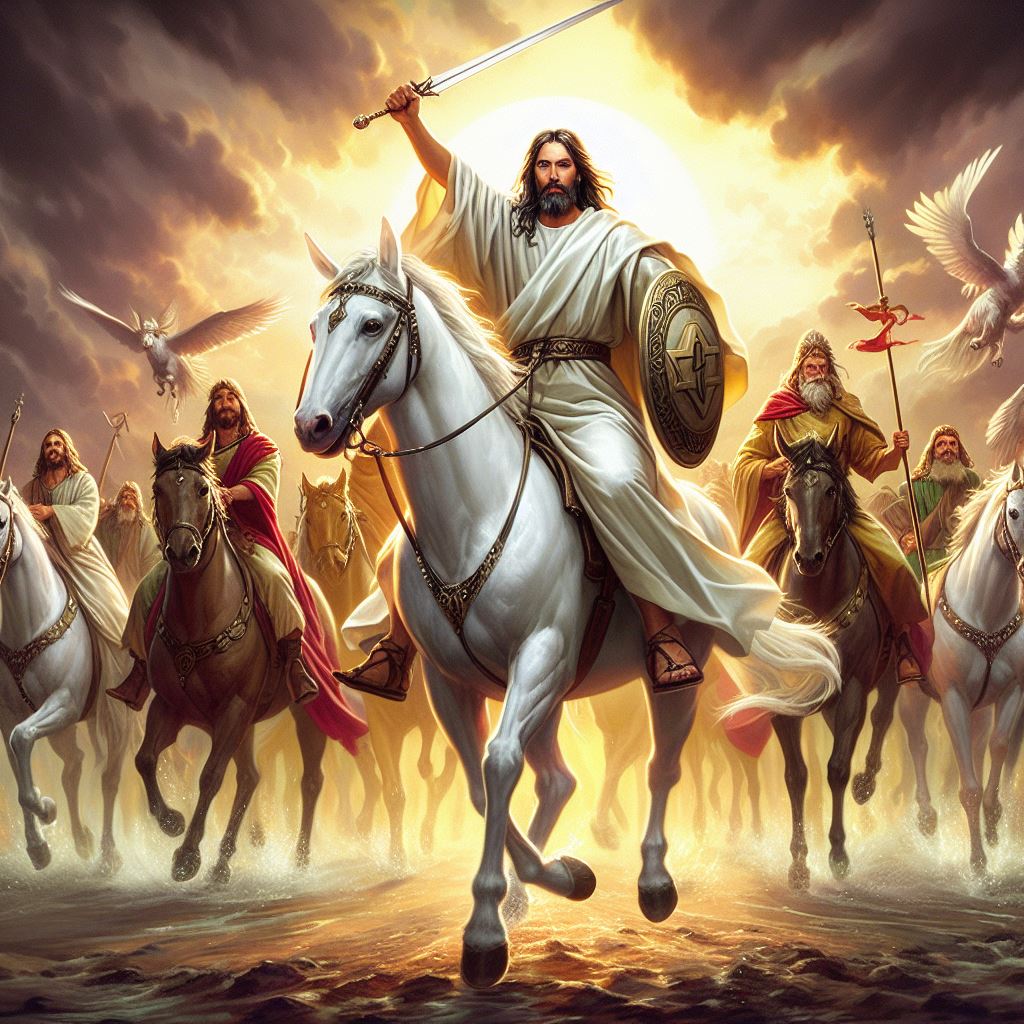

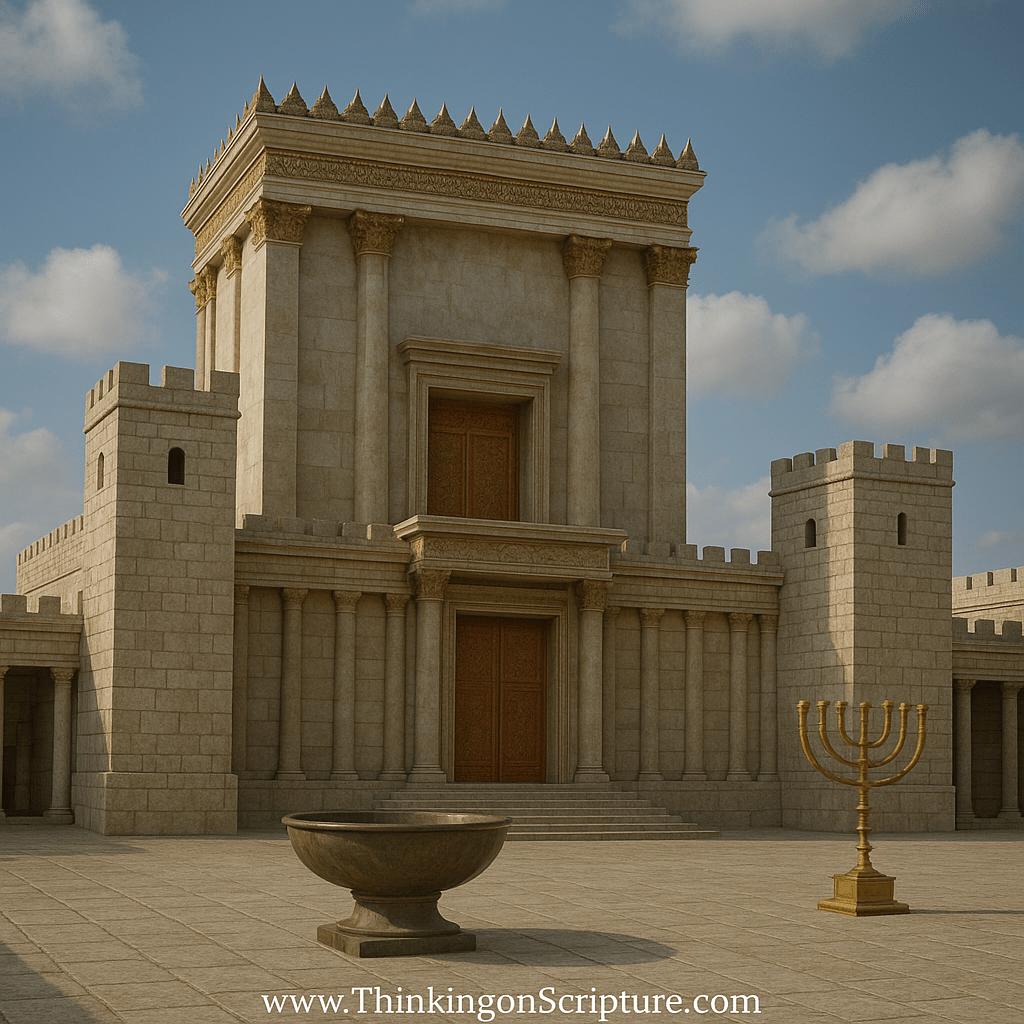


 When Jesus returns to the earth after the time of the seven year Tribulation, He will establish His kingdom on earth.
 The eschatological subject of the Rapture of the church can be related the study of Soteriology because it is regarded as a form of deliverance. When Messiah returns at the end of the church age, He will deliver His church from an evil world and a coming judgment that will last for seven years (Read Revelation chapters 6-18). A distinction is here drawn between Jesus coming for His saints at the Rapture, and Jesus coming with His saints at His Second Coming (Dan 7:13-14; Matt 19:28; 25:31; Rev 19:11-21). Jesus is now in heaven preparing a place for believers to be with Him there (John 14:1-3). Paul revealed Jesus will return for His church and that all Christians will be “caught up” to meet the Lord in the air (1 Th 4:13-18).
 When applied to Christians in the New Testament, ekklesia takes on a technical meaning and refers to those who have been joined to the spiritual body of Christ (1 Cor. 12:13; Eph. 1:22-23) by means of personal faith in Jesus as Savior (Acts 4:12; 1 Cor. 15:3-4; Eph. 2:8-9). The first reference to the Christian church occurs in Matthew 16:18 after Peter had confessed that Jesus is “the Christ, the Son of the living God” (Matt. 16:16), and based on the rock-solid truth of Peter’s statement, Jesus said, “I will build [future tense] My church [ekklesia]; and the gates of Hades shall not prevail against it” (Matt. 16:18). Jesus’ future tense statement reveals a church that was not in existence when He spoke. The Christian church began on the day of Pentecost, in Acts 2, when the Holy Spirit began His baptizing ministry of placing believers into the body of Christ. Concerning this work of the Holy Spirit, Paul writes, “For by one Spirit we were all baptized into one body—whether Jews or Greeks, whether slaves or free—and have all been made to drink into one Spirit” (1 Cor. 12:13; cf. Gal. 3:26-28). “The Holy Spirit of God is the primary agent who identifies the believer with other believers. Each one is a member of the body, and each member is united with the other members and with Christ (Rom. 6:1–4).”
 The word church is also used to refer to a local assembly of those who regularly meet at a specific location (1 Cor. 1:2; Col. 1:2; Rev. 2-3). Luke mentions “the church which was at Jerusalem (Acts 8:1), and “the church that was at Antioch” (Acts 13:1). Paul mentions “the church in Cenchrea” (Rom. 16:1), “the church of God which is at Corinth” (1 Cor. 1:2), “the saints in Christ Jesus who are in Philippi” (Phil. 1:1), and “the saints and faithful brethren in Christ who are in Colosse” (Col. 1:2) (italics added). The apostle John wrote the book of Revelation to churches in Ephesus, Smyrna, Pergamos, Thyatira, Sardis, Philadelphia, and Laodicea (Revelation 2-3). These were all local churches that existed in ancient cities, where Christians lived and worked. However, we can narrow the local church down a little further and say that Christians met in the homes of specific church members within each city. The first church—which was Jewish—met “in the temple” in Jerusalem, as well as “from house to house” (Acts 2:46). As the church grew, and included Gentiles, the home continued as the primary meeting place for believers. Luke records Paul’s ministry to Christians in Ephesus and explained that he taught “publicly and from house to house” (Acts 20:20). Paul mentions several home churches such as the one run by Aquila and Priscilla and “the church that is in their house” (1 Cor. 16:19), and about “Nymphas and the church that is in his house” (Col. 4:15), and “to the beloved Apphia, Archippus our fellow soldier, and to the church in your house” (Phm. 1:2) (italics added).