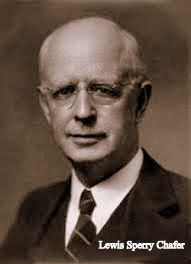
The Terms of Salvation
God requires that certain information be believed before He saves someone. This means saving faith requires content. Though faith alone is the only requirement by God, the content of faith has changed throughout the ages, depending on what God revealed at a particular time. What God revealed to Adam and Eve was different than what He revealed to Abraham, and what He revealed to Abraham was different than what He reveals to us. Before addressing the content of saving faith, let’s look at what it means to believe.
What it Means to Believe
 The word believe, in the OT, derives from the Hebrew verb aman (אָמַן) which means “to regard something as trustworthy, to believe in.”[1] And in the NT, the Greek verb pisteuō (πιστεύω) means “to consider something to be true and therefore worthy of one’s trust.”[2] In Genesis we see where Abraham “believed [aman] in the LORD; and He reckoned it to him as righteousness” (Gen 15:6). When citing this passage in the NT (Rom 4:3; Gal 3:6; Jam 2:23), the writers used the Greek verb pisteuō (πιστεύω) in place of the Hebrew verb aman (אָמַן), which shows the words are synonymous. Faith, as a verb, is used of trust in God (Gen 15:6; Heb 11:6; cf. Rom 4:3), trust in Jesus (Acts 16:31; 1 Pet 1:8), and trust in Scripture (John 2:22).[3] Biblically, faith means having an attitude of confidence in God, being certain that He will keep His Word and do as He promised, for He cannot lie (Num 23:19; Heb 6:18; Tit 1:2). When faith is exercised, it trusts solely in the object and no one else. Abraham is an example of a believer who trusted God at His Word, for “with respect to the promise of God, he did not waver in unbelief but grew strong in faith, giving glory to God, and being fully assured that what God had promised, He was able also to perform” (Rom 4:20-21).
To believe is to have a mental conviction that a testimony is true or that someone or something is reliable and worthy of confidence. Faith starts with mental assent and results in placing one’s faith in the object itself. For example, one can assent that a chair is structurally sound and able to support a person, and then, by faith, sit in the chair and relax. Or one can assent that an automobile is safe to drive, and then, trusting the car, get behind the wheel and drive it to a desired destination. Faith always demands an object, is exercised with a view to receiving a benefit, and the object gets the credit for doing what it was supposed to do. For Christians, Jesus is the object of our faith, eternal life is the benefit we receive, and Christ gets all the glory as the One who saves. When we believe in Jesus, we acknowledge that He is the incarnate Son of God (John 1:1, 14), that our salvation was accomplished by means of His death, burial, and resurrection (1 Cor 15:3-4), and we trust in Him alone to save us eternally (Acts 4:12; 16:31). Christ alone saves. Nothing more. The following illustration is helpful:
“Many people misunderstand what the Bible means by “believe.” Belief basically means trust. As an example, imagine you are stranded on one side of a river. The only way across is via a tightrope suspended overhead. A man on the other side has a wheelbarrow and says he can rescue you. Being a skilled acrobat, he crosses the tightrope with the wheelbarrow successfully. Now, you believe that the man himself can cross the tightrope, but in order to be saved, you have to trust him to get you over the tightrope in the wheelbarrow! Will you believe in him or not? Similarly, trusting Jesus for salvation means trusting him to do for you what you cannot do for yourself. There’s no way we can earn heaven; we must trust Jesus to carry us there.”[4]
The Content of Saving Faith
Eternal salvation has always been by grace alone through faith alone; however, the content of faith (i.e., what is believed), has changed throughout the ages. According to Arnold Fruchtenbaum, “Indeed, there always was, always is, and always will be only one means of salvation: by grace through faith.”[5] Though grace and faith are constants, the content of faith has changed over time, depending on what God revealed to each person or generation, as divine revelation came in stages. William MacDonald sates, “From Adam to Christ, God saved those who put their faith in Him on the basis of whatever revelation He gave them. Abraham, for example, believed God, and it was reckoned to him for righteousness (Gen 15:6).”[6] According to Norman Geisler, “the revealed content of the gospel varied from age to age in the progress of revelation.”[7] Charles Ryrie notes, “The basis of salvation is always the death of Christ; the means is always faith; the object is always God (though man’s understanding of God before and after the Incarnation is obviously different); but the content of faith depends on the particular revelation God was pleased to give at a certain time.”[8] Thomas Constable adds, “The basis of salvation is always the death of Christ. No one is saved except by what He accomplished at Calvary. The requirement for salvation is always faith. It is never works. The object of faith is always the Person of God. The content of faith is always a promise from God.”[9] The following examples demonstrate that the content of faith has changed over time.
 First, after the historic fall of Adam and Eve (Gen 3:1-7), the content of saving faith was God’s promise of an offspring of Eve who would crush the head of the serpent. In the presence of Adam and Eve, God told Satan, “I will put enmity between you and the woman, and between your seed and her seed; He shall bruise you on the head, and you shall bruise him on the heel” (Gen 3:15). This is commonly regarded as the protoevangelium; that is, the first gospel message. The crushing of Satan’s head—a fatal blow—was accomplished by the Lord Jesus at the cross where He triumphed over sin and death. How much Adam and Eve understood about this prophecy is not known. However, it is assumed they trusted God at His word concerning the future offspring that would crush the serpent’s head. Shortly after giving the promises, God killed an animal, which meant shedding its blood, and made clothes from its hide and gave it to them to wear (Gen 3:21). Arnold Fruchtenbaum notes, “The covering of animal skins, which required the shedding of blood to give them the atonement, replaced the covering of fig leaves. Then the verse states: and clothed them. Physically, He clothed their nakedness, but spiritually, He also covered their sin by making for them their atonement.”[10] And according to Charles Ryrie, “When Adam looked upon the coats of skins with which God had clothed him and his wife, he did not see what the believer today sees looking back on the cross of Calvary.”[11] We should not assume that Adam and Eve understood the death, burial, and resurrection of Messiah. What they understood was God’s promise of a future offspring who would crush the serpent, and then they witnessed God killing an animal, taking its skin, and making clothing for them. When they believed God’s promise and accepted His provision, it resulted in their salvation.
Second, in the book of Genesis we have the record of Abraham’s salvation. Moses wrote that Abraham “believed in the LORD; and He reckoned it to him as righteousness” (Gen 15:6). The content of Abraham’s faith was the promise of God concerning the Abrahamic covenant (Gen 12:1-3), especially as it related to God giving him a biological descendant (Gen 15:1-6). Abraham accepted God’s promise as true and reliable, which meant he trusted in God Himself. And when Abraham believed in Yahweh, we’re told that God “reckoned it to him as righteousness” (Gen 15:6b).[12] Concerning Abraham’s faith in God, Arnold Fruchtenbaum states, “The content of his faith was the promises of God. The object of his faith was Jehovah.”[13] According to J. Carl Laney Jr., “God had just promised Abraham, an elderly man with a barren wife, that his descendants would be as numerous as the stars. In spite of the physical hindrances to the fulfillment of this promise, Abraham trusted God…Because Abraham accepted God’s word as true and reliable, God declared him righteous, and therefore acceptable.”[14] Paul cited Genesis 15:6 in Romans (Rom 4:3) and Galatians (Gal 3:6) when making his case that believers are justified by faith alone, and not by any works of the Law (Rom 4:4-5).
Third, in the book of Ruth we find a good example of a Gentile who came to trust in the Lord. Ruth told her mother-in-law, Naomi, “Your people shall be my people, and your God, my God” (Ruth 1:16). Here is an expression of faith in the Lord Himself. God directed Israel to serve as His witnesses (Isa 43:10), telling others, “I, even I, am the LORD, and there is no savior besides Me” (Isa 43:11). For a Gentile to be saved, it meant trusting in Yahweh alone and not pagan idols. It also meant not trusting in works, which is what pagan idolatry required. Concerning this verse, Warren Wiersbe states, “Ruth’s statement in Ruth 1:16-17 is one of the most magnificent confessions found anywhere in Scripture…[as] she confessed her faith in the true and living God and her decision to worship Him alone.”[15] And Arnold Fruchtenbaum notes, “Ruth invoked the name of God in her oath and not the name of Chemosh. This shows in whom she truly believed.”[16] What’s interesting is that after Ruth married Boaz (Ruth 4:13), she was brought into the family line that led to King David (Ruth 4:18-22), and the Messiah Himself (Matt 1:1, 5). Ruth was among the Gentiles in the OT who believed in Yahweh and were saved. Other Gentile believers include Melchizedek (Gen 14:18), Rahab (Matt 1:5; Heb 11:31), and likely the Queen of Sheba (1 Ki 10:1-13), Naaman the Aramean (2 Ki 5:15-19), the Ninevites (Jonah 3:5, 9-10), Nebuchadnezzar (Dan 2:47; 3:29; 4:34-37),[17] and the Magi who came from the east to worship Messiah (Matt 2:1-2, 11).
 Fourth, during the time of Jesus’ life and ministry—but prior to His death on the cross—people were directed to believe the gospel of the kingdom (Matt 3:1-2; 4:17; Mark 1:14-15). The gospel of the kingdom directed Israelites to look to Jesus as the promised Messiah. This meant looking to Jesus as the “the Lamb of God who takes away the sin of the world!” (John 1:29; cf. Isa 53:4-11). Faith in Jesus would result in their spiritual and eternal salvation. The object of their faith is Christ alone. John wrote, “whoever believes in Him will have eternal life” (John 3:15), and “God so loved the world, that He gave His only begotten Son, that whoever believes in Him shall not perish, but have eternal life” (John 3:16), and “He who believes in the Son has eternal life” (John 3:36). And Jesus pointed others to Himself, saying, “For this is the will of My Father, that everyone who beholds the Son and believes in Him will have eternal life, and I Myself will raise him up on the last day” (John 6:40), and “Truly, truly, I say to you, he who believes has eternal life” (John 6:47; cf., John 10:28).
The gospel of the kingdom also pertained to Israel’s theocratic kingdom, where God would rule over His people through Jesus, the descendant of David and rightful King of the nation (2 Sam 7:16; Psa 89:3-4, 35-37; Isa 9:6-7; Jer 23:5; 33:15; Luke 1:31-33; Matt 19:28; 25:31; Rev 11:15; 20:4-6). John the Baptist preached, “Repent, for the kingdom of heaven is at hand” (Matt 3:2). To be “at hand” meant the earthly kingdom was being offered to Israel. Additionally, the gospel of the kingdom was preached by Jesus and His disciples even after John had been arrested. Mark wrote, “Now after John had been taken into custody, Jesus came into Galilee, preaching the gospel of God, and saying, ‘The time is fulfilled, and the kingdom of God is at hand; repent and believe in the gospel’” (Mark 1:14-15; cf. Matt 9:35; 10:5-7). Norman Geisler correctly states, “The messianic kingdom is a visible, earthly, political kingdom promised to Israel in which Christ, her Messiah, will reign from a throne in Jerusalem over the whole earth, with His apostles and other disciples serving Him.”[18] Merrill F. Unger states, “The Gospel of the Kingdom [is] the good news that God’s purpose is to establish an earthly mediatorial kingdom in fulfillment of the Davidic covenant (2 Sam 7:16).”[19] If the leadership and people Israel would change their minds (i.e., repent) and accept Jesus as their rightful King, they would experience national deliverance from Gentile tyranny, which they were experiencing, being under the rule of Rome. According to Arnold Fruchtenbaum, “Jesus went around Israel, city to city and synagogue to synagogue, proclaiming His Messiahship and preaching the gospel of the Kingdom. He was offering to Israel the Kingdom of the Jewish prophets, but the Kingdom was preconditioned by Israel’s acceptance of Him as the Messianic King.”[20] We know that Israel rejected Jesus as the Messiah (Matt 12:24-32; 27:20-23), and the result was judgment upon them (Matt 23:37-39; Rom 11:25-26). Afterwards, Jesus was crucified for the sins of the world (John 3:16; 1 John 2:2), was buried, and raised again on the third day (1 Cor 15:3-4). The crucifixion of Jesus was part of God’s predetermined plan for the redemption of humanity, regardless of Israel’s response. The gospel of the kingdom was postponed until the time of the Tribulation. According to Merrill F. Unger, “Two proclamations of the gospel of the kingdom are mentioned, one already past, beginning with the ministry of John the Baptist, carried on by our Lord and His disciples, and ending with the Jewish rejection of the Messiah. The other preaching is yet future (Matt 24:14), during the Great Tribulation, and heralding the second advent of the King.”[21]
The gospel of the kingdom that was preached by John the Baptist, and Jesus and His disciples, cannot be the gospel of grace that is preached by Christians today. Why? The content of the gospels are different. Paul preached “the gospel of the grace of God” (Acts 20:24), which was “to everyone who believes, to the Jew first and also to the Greek” (Rom 1:16), whereas the gospel of the kingdom was solely “to the lost sheep of the house of Israel” (Matt 10:6). Furthermore, the gospel of grace includes “the cross of Christ” (1 Cor 1:17), telling us that “Christ died for our sins according to the Scriptures, and that He was buried, and that He was raised on the third day according to the Scriptures” (1 Cor 15:3-4). But the death, burial, and resurrection of Jesus was not communicated by the disciples when they preached the “gospel of the kingdom” (Matt 4:23). How do we know this? After Jesus had been rejected by the leadership of Israel, Matthew tells us, “Jesus began to show His disciples that He must go to Jerusalem, and suffer many things from the elders and chief priests and scribes, and be killed, and be raised up on the third day” (Matt 16:21). Apparently the disciples did not like what Jesus said, as Matthew tells us, “Peter took Him aside and began to rebuke Him, saying, ‘God forbid it, Lord! This shall never happen to You’” (Matt 16:22). For a brief moment, Peter was an enemy of the cross, trying to prevent Jesus from going to the cross, and he was rebuked for it. The Lord said to Peter, “Get behind Me, Satan! You are a stumbling block to Me; for you are not setting your mind on God’s interests, but man’s” (Matt 16:23). If Peter had had his way, Jesus would never have gone to the cross. The second time Jesus spoke about the events of His crucifixion (Matt 17:22-23), we’re told the disciples “were deeply grieved” (Matt 17:23b), implying they did not fully understand the significance of the cross. Jesus mentioned His crucifixion to His disciples a third time (Matt 20:18-19), but there was no response. Later, Peter tried to defend Jesus with a sword to prevent His arrest, which implied he did not understand the significance of the cross (Matt 26:51-52). Though they were saved by faith alone in Christ alone, they did not grasp the significance of the cross, for if they had, they would not have opposed His arrest or crucifixion. In fact, the disciples did not understand Jesus’ resurrection until after it happened (John 20:1-8), which is what John revealed, saying, “For as yet they did not understand the Scripture, that He must rise again from the dead” (John 20:9). After Jesus’ resurrection, they finally understood His words.
If the gospel of the kingdom that was preached by John the Baptist and Jesus’ disciples included the death burial and resurrection of Jesus, then Peter would not have been surprised and reacted so strongly to Jesus’ words. He would have thought, “Oh yeah, that’s what we’ve been preaching all along, and now the time is near for His death.” But that was not Peter’s reaction. Peter tried to stop Jesus from going to the cross (Matt 16:22; 26:51-52). Renald Showers correctly notes, “The language indicates that although the disciples had already been preaching one gospel [of the kingdom], up to this point Jesus had never told them about His coming death, burial, and resurrection. Therefore, the first gospel contained nothing concerning Jesus’ death, burial, and resurrection.”[22]
 Fifth, for those living in the church age, the content of faith is the good news that Jesus—the Messiah—died for our sins, was buried, and resurrected on the third day (1 Cor 15:3-4). When people accept this as historically true, and then place their faith in Jesus, they experience salvation. According to Fruchtenbaum, “we must believe that Yeshua died for our sins as our substitute, that He was buried and rose again, and that He therefore has provided salvation. Thus, one trusts Yeshua for one’s salvation.”[23] According to Robert B. Thieme Jr., “First Corinthians 15:3-4 defines the boundaries of the Gospel, beginning with the work of Christ and ending with His resurrection…Any Gospel message that strays from the cross or denies Jesus Christ’s resurrection from physical death is inaccurate and out of bounds.”[24] Today we understand the saving gospel message as, “Christ died for our sins according to the Scriptures, and that He was buried, and that He was raised on the third day according to the Scriptures” (1 Cor 15:3-4). Knowing the good news of what God accomplished for us through Christ at the cross, we must then “Believe in the Lord Jesus” (Acts 16:31), and trust exclusively in Him as our Savior, for “there is salvation in no one else; for there is no other name under heaven that has been given among men by which we must be saved” (Acts 4:12). Salvation is by grace alone (Rom 3:24; Eph 2:8-9), through faith alone (Rom 3:28; 5:1; Gal 2:16; Eph 2:8-9), in Christ alone (John 14:6; Acts 4:12. And when we believe in Christ as Savior, we are forgiven all our sins (Acts 10:43; Eph 1:7), given eternal life (John 10:28), become children of God (John 1:12; Gal 3:26), are “rescued us from the domain of darkness, and transferred to the kingdom of His beloved Son” (Col 1:13), become citizens of heaven (Phil 3:20), and are blessed “with every spiritual blessing in the heavenly places in Christ” (Eph 1:3).
Sixth, during the seven-year tribulation many will be saved, both Jews and Gentiles. The apostle John described 144,000 Jewish believers, taken from the twelve tribes of Israel, who are called “bond-servants of our God” (Rev 7:3), and who will be sealed by the Lord (Rev 7:4). After describing these Jewish believers, John then saw “a great multitude which no one could count, from every nation and all tribes and peoples and tongues, standing before the throne and before the Lamb, clothed in white robes” (Rev 7:9). When John asked, “where have they come from?” (Rev 7:13), the answer was given, “These are the ones who come out of the great tribulation, and they have washed their robes and made them white in the blood of the Lamb” (Rev 7:14). The last clause that mentions “the blood of the Lamb” speaks of the work of Jesus Christ on the cross, “the blood of Christ” (1 Pet 1:19) which purchased our salvation. But what did these Tribulational saints believe that resulted in their salvation?
In the Olivet Discourse (Matthew chapters 24-25), Jesus prophesied about the future tribulation and His second coming and said, “This gospel of the kingdom shall be preached in the whole world as a testimony to all the nations, and then the end will come” (Matt 24:14). The gospel of the kingdom that was offered to Israel during Messiah’s first coming is similar to the gospel message preached during the time of the Tribulation. J. Dwight Pentecost notes, “Although the news at the first advent was restricted to Israel, prior to the second advent it will be announced not only to Israel but to the whole world.”[25] William MacDonald states, “the gospel of the kingdom is the good news that Christ is coming to set up His kingdom on earth, and that those who receive Him by faith during the Tribulation will enjoy the blessings of His Millennial Reign.”[26] The gospel of the kingdom offers both spiritual and national deliverance to those living during the tribulation. According to J. Dwight Pentecost. “This was the Gospel Christ proclaimed as He offered Israel the covenanted kingdom and invited them to put faith in Him. This same message will be proclaimed again during the years of the Tribulation period preceding Messiah’s second advent to the earth.”[27] The first part of its message directs people to look to Jesus as “the Lamb of God who takes away the sin of the world!” (John 1:29). This results in spiritual and eternal salvation. The second part of the gospel of the kingdom pertains to Israel’s theocratic kingdom, where God will rule over His people and the world, through Jesus, the descendant of David and rightful King of the nation. This gospel will last until the seven years are completed, and then, as Jesus said, “the end will come” (Matt 24:14b). The “end” refers to the end of the seven year tribulation, when Jesus returns and puts down all rebellion (Rev 19:11-21) and establishes His kingdom on earth for a thousand years (Rev 20:1-6). It is at that time, “when the Son of Man comes in His glory, and all the angels with Him, then He will sit on His glorious throne” (Matt 25:31), and He will reign for “a thousand years” (Rev 20:6). According to Louis A. Barbieri Jr.:
“Though this will be a terrible time of persecution, the Lord will have servants who will witness and spread the good news concerning Christ and His soon-coming kingdom. This message will be similar to that preached by John the Baptist, Jesus, and the disciples at the beginning of Matthew’s Gospel, but this message will clearly identify Jesus in His true character as the coming Messiah. This is not exactly the same message the church is proclaiming today. The message preached today in the Church Age and the message proclaimed in the Tribulation period calls for turning to the Savior for salvation. However, in the Tribulation the message will stress the coming kingdom, and those who then turn to the Savior for salvation will be allowed entrance into the kingdom. Apparently many will respond to that message (cf. Rev 7:9-10).”[28]
J. Dwight Pentecost adds:
“The Gospel of the kingdom is the message that John the Baptist proclaimed to Israel. It involved first a call to repentance, then an invitation to behold or to look by faith to the Lamb of God that takes away the sin of the world (John 1:29). This is the same message that will be proclaimed in the world during that period Christ called, literally, “the tribulation, the great one” (Matt 24:21). This future period is the unfulfilled seven years of Daniel’s prophecy of the seventy weeks (Dan 9:24-27). During this period the Gospel of the kingdom will be preached to Gentiles by 144,000 who will be sovereignly redeemed and commissioned to be God’s servants (Rev 7:1-8). They will proclaim salvation by grace through faith based on blood so that men can have “washed their robes and made them white in the blood of the Lamb” (Rev 7:14). The same message will be proclaimed by the two witnesses (Rev 11:3), prophets God will raise up to bring a message to the nation Israel. Indeed, their message is no different than the one the prophets have always brought to a disobedient covenant people down through the ages.”[29]
In summary, saving faith is always a response to God and a promise He has made. Today, God the Holy Spirit draws people to Christ, convicting them of one particular sin, and that is the sin of not trusting in Jesus as Savior. Jesus specified the particular sin, saying, “because they do not believe in Me” (John 16:9). When people respond positively to the work of the Holy Spirit, they will believe in Jesus as Savior, accepting the truth “that Christ died for our sins according to the Scriptures, and that He was buried, and that He was raised on the third day according to the Scriptures” (1 Cor 15:3-4). And having accepted this good news, they will then turn to Christ as Savior, and “Believe in the Lord Jesus” (Acts 16:31), and be saved.
Dr. Steven R. Cook
If this article has enriched your understanding and walk with Christ, and you feel led to support my ministry, your generosity is greatly appreciated. Your gifts enable me to continue sharing the gospel of grace and providing in-depth biblical teachings. Thank you for partnering with me in this mission.
Related Articles:
__
[1] Ludwig Koehler et al., The Hebrew and Aramaic Lexicon of the Old Testament (Leiden: E.J. Brill, 1994–2000), 64.
[2] William Arndt et al., A Greek-English Lexicon of the New Testament and Other Early Christian Literature (Chicago: University of Chicago Press, 2000), 816.
[3] The NT also presents faith as a noun (πίστις pistis), which often refers to “that which evokes trust and faith…the state of being someone in whom confidence can be placed, faithfulness, reliability, fidelity” (BDAG 818). The word is used with reference to God who is trustworthy (Rom 3:3; 4:19-21), and of people who possess faith (Matt 9:2, 22; 21:21), which can be great (Matt 15:28; cf. Acts 6:5; 11:23-24), small (Matt 17:19-20), or absent (Mark 4:39-40; cf. Luke 8:25). It is also used of Scripture itself as a body of reliable teaching (i.e. Acts 14:22; 16:5; Rom 14:22; Gal 1:23; 2 Tim 4:7). And we see faith as an adjective (πιστός pistos), which describes someone “being worthy of belief or trust, trustworthy, faithful, dependable, inspiring trust/faith” (BDAG 820). The word is used God (1 Cor 1:9; 10:13; 2 Tim 2:13; Heb 10:23; Rev 1:5), and of people (Matt 25:23; 1 Cor 4:17; Col 1:7; 1 Tim 1:12; 2 Tim 2:2; Heb 3:5).
[4] Michael Klassen and William W. Klein, “Romans,” in The Apologetics Study Bible for Students, ed. Sean McDowell (Nashville, TN: Holman Bible Publishers, 2017), 1410.
[5] Arnold G. Fruchtenbaum, Ariel’s Bible Commentary: The Book of Genesis, 1st ed. (San Antonio, TX: Ariel Ministries, 2008), 275.
[6] William MacDonald, Believer’s Bible Commentary: Old and New Testaments, ed. Arthur Farstad (Nashville: Thomas Nelson, 1995), 1690.
[7] Norman L. Geisler, Systematic Theology, Volume Four: Church, Last Things (Minneapolis, MN: Bethany House Publishers, 2005), 484.
[8] Charles Caldwell Ryrie, Dispensationalism, Rev. and expanded. (Chicago: Moody Publishers, 1995), 140.
[9] Tom Constable, Tom Constable’s Expository Notes on the Bible (Galaxie Software, 2003), Ex 12:43.
[10] Arnold G. Fruchtenbaum, Ariel’s Bible Commentary: The Book of Genesis, 110.
[11] Charles C. Ryrie, Dispensationalism, 134.
[12] In his commentary on Genesis, Allen Ross notes, “The text does not necessarily mean that Abram came to faith here. Hebrews 11:8 asserts that he left Ur by faith. Genesis 15:6 simply reports at this point the fact that Abram believed, and for that belief God had credited him with righteousness.” (Allen P. Ross, Creation and Blessing: A Guide to the Study and Exposition of Genesis, Grand Rapids, MI: Baker Books, 1998, 310).
[13] Arnold G. Fruchtenbaum, Ariel’s Bible Commentary: The Book of Genesis, 275.
[14] J. Carl Laney Jr., “Soteriology”, Understanding Christian Theology, 238–239.
[15] Warren W. Wiersbe, Be Committed, “Be” Commentary Series (Wheaton, IL: Victor Books, 1993), 21.
[16] Arnold G. Fruchtenbaum, Ariel’s Bible Commentary: The Books of Judges and Ruth, 1st ed. (San Antonio, TX: Ariel Ministries, 2006), 300.
[17] It’s very likely that Nebuchadnezzar trusted God after being humbled by the Lord (see Daniel 4:1-37). Throughout the decades of Nebuchadnezzar’s life, he’d had interactions with Daniel, Hananiah, Mishael and Azariah, and the king gained knowledge about God. From his own mouth, Nebuchadnezzar said to Daniel, “Surely your God is a God of gods and a Lord of kings” (Dan 2:47), and to Hananiah, Mishael and Azariah he declared, “no other god is able to deliver in this way” (Dan 3:29). After the king had suffered for seven years, he eventually came to the place where he said, “I blessed the Most High and praised and honored Him who lives forever” (Dan 4:34), and “Now I, Nebuchadnezzar, praise, exalt and honor the King of heaven” (Dan 4:37). Though one cannot be dogmatic, Nebuchadnezzar’s final words strongly imply salvific faith in God—at least as he understood Him from his interactions with the Hebrews—and the result was one of worship to the Lord. If one accepts Nebuchadnezzar’s words as an expression of his conversion, it means he trusted in the God of Israel.
[18] Norman L. Geisler, Systematic Theology, Volume Four: Church, Last Things (Minneapolis, MN: Bethany House Publishers, 2005), 461.
[19] Merrill F. Unger, “Gospel,” ed. R.K. Harrison, The New Unger’s Bible Dictionary (Chicago: Moody Press, 1988), 493.
[20] Arnold G. Fruchtenbaum, The Footsteps of the Messiah: A Study of the Sequence of Prophetic Events, Rev. ed. (Tustin, CA: Ariel Ministries, 2003), 294.
[21] Merrill F. Unger, “Gospel,” ed. R.K. Harrison, The New Unger’s Bible Dictionary (Chicago: Moody Press, 1988).
[22] Renald E. Showers, There Really Is a Difference!: A Comparison of Covenant and Dispensational Theology (Bellmawr, NJ: The Friends of Israel Gospel Ministry, Inc., 1990), 3–4.
[23] Arnold G. Fruchtenbaum, Faith Alone: The Condition of Our Salvation: An Exposition of the Book of Galatians and Other Relevant Topics, ed. Christiane Jurik, Second Edition. (San Antonio, TX: Ariel Ministries, 2016), 6.
[24] Robert B. Thieme, Jr. “Gospel”, Thieme’s Bible Doctrine Dictionary, (Houston, TX., R. B. Thieme, Jr., Bible Ministries, 2022), 113
[25] J. Dwight Pentecost, Things to Come: A Study in Biblical Eschatology (Grand Rapids, MI: Zondervan, 1958), 472.
[26] William MacDonald, Believer’s Bible Commentary: Old and New Testaments, ed. Arthur Farstad (Nashville: Thomas Nelson, 1995), 1294.
[27] J. Dwight Pentecost, Thy Kingdom Come: Tracing God’s Kingdom Program and Covenant Promises throughout History (Grand Rapids, MI: Kregel Publications, 1995), 311.
[28] Louis A. Barbieri Jr., “Matthew,” in The Bible Knowledge Commentary: An Exposition of the Scriptures, ed. J. F. Walvoord and R. B. Zuck, vol. 2 (Wheaton, IL: Victor Books, 1985), 77.
[29] J. Dwight Pentecost, Thy Kingdom Come, 121–122.
 Salvation began in eternity past with the plan of God. Before the foundation of the world, God the Father designed redemption and commissioned God the Son to accomplish it. Scripture declares that God “saved us and called us… according to His own purpose and grace which was granted us in Christ Jesus from all eternity” (2 Tim. 1:9). The Son, the eternal Word, willingly agreed to this mission, saying, “Behold, I have come… to do Your will, O God” (Heb. 10:7). Scripture reveals, “when the fullness of the time came, God sent forth His Son, born of a woman” (Gal. 4:4). He entered history as the God-Man, true deity and true humanity united without confusion or division. This is the hypostatic union, the only Person qualified to mediate between God and man (1 Tim. 2:5).
 The Holy Spirit played a decisive role in the incarnation. Jesus was conceived through divine agency in the womb of the virgin Mary, a supernatural act. The angel Gabriel explained, “The Holy Spirit will come upon you, and the power of the Most High will overshadow you; and for that reason, the holy Child shall be called the Son of God” (Luke 1:35). This ensured that Christ’s humanity was real yet untainted by sin. He was born without a sin nature, fully human and perfectly righteous. Scripture affirms, “He knew no sin” (2 Cor. 5:21), and “in Him there is no sin” (1 John 3:5). His unstained humanity qualified Him to go to the cross as the spotless Lamb of God (John 1:29), uniquely able to bear the sins of the world.
 At the cross, the purpose of His coming reached its climax. In His humanity, in His physical body, Jesus bore our sins and paid the full penalty. Scripture states, “He Himself bore our sins in His body on the cross” (1 Pet. 2:24). The justice of God was satisfied as Christ was judged in our place. Isaiah writes, “He was pierced through for our transgressions” (Isa. 53:5), and “The Lord has caused the iniquity of us all to fall on Him” (Isa. 53:6). This is substitutionary atonement. Christ died as our substitute, taking the punishment we deserved, so that God could remain just while justifying the one who believes in Jesus (Rom. 3:26–28; 4:5; 5:1). When Jesus declared, “It is finished” (John 19:30), the work of redemption was fully accomplished. Afterward, He died physically and was placed in a grave (Matt. 27:59–60), and then was raised to life on the third day (Matt. 28:5–6).
 Jesus’ resurrection was bodily, literal, and permanent. He rose never to die again (Rom. 6:9), demonstrating victory over sin, death, and the grave. His work on the cross was sufficient for all mankind, for “He Himself is the propitiation for our sins; and not for ours only, but also for those of the whole world” (1 John 2:2). Unlimited atonement means “that Messiah died for all humanity, and salvation, based upon that death, is therefore offered to all humanity.”[1] Christ died for all, but the benefits of His work are applied only to those who believe. The sole condition for receiving eternal life is faith alone in Christ alone. Scripture states, “He who believes in Him has eternal life” (John 3:16). At the moment of faith in Jesus, God grants forgiveness (Acts 10:43), imputes His righteousness (2 Cor. 5:21), and gives eternal life (John 10:28).
 This brings the issue to a point of personal decision. Christ has done the work. The penalty has been paid in full. Eternal life is offered as a free gift. Scripture says, “The free gift of God is eternal life in Christ Jesus our Lord” (Rom. 6:23b). The question is whether one will believe in Him. Will you trust that Jesus is the eternal Son of God who came in the flesh, died for your sins, and rose again? This is not about good works, reform, or religion. Scripture is clear, “For by grace you have been saved through faith; and that not of yourselves, it is the gift of God not as a result of works, so that no one may boast” (Eph. 2:8–9). At this very moment, you can place your faith in Christ and receive eternal life. Scripture reveals, “whoever believes in Him shall not perish, but have eternal life” (John 3:16b), and “He who believes in the Son has eternal life” (John 3:36a). We need only Christ to be saved.





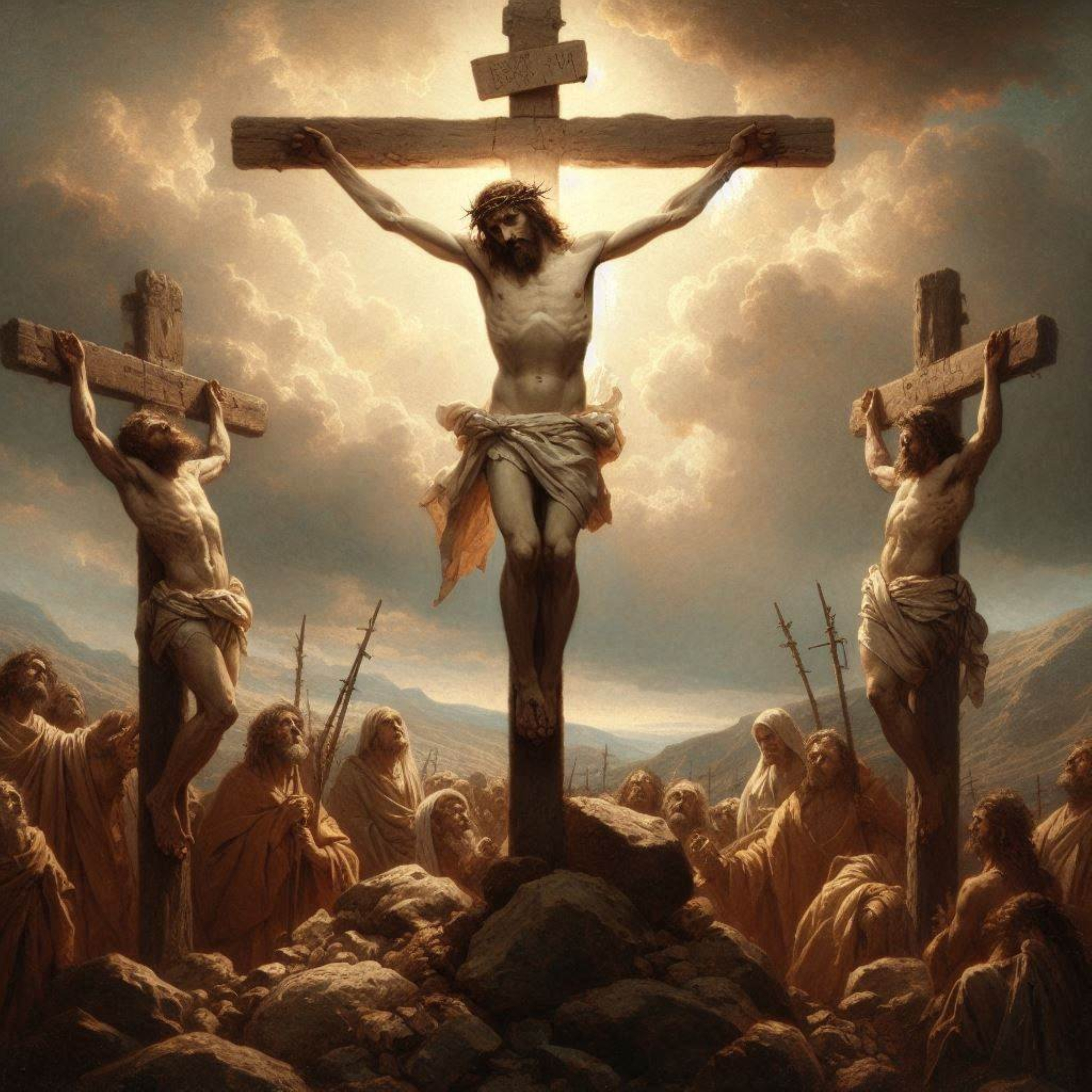



 Biblically speaking, guilt implies one has acted contrary to God’s moral character and laws. Divine laws are a reflection of the righteousness of God. The righteousness of God may be defined as the intrinsic, immutable, moral perfection of God, from which He commands all things, in heaven and earth, and declares as good that which conforms to His righteousness and as evil that which deviates. God’s character is the basis upon which all just laws derive; either divine laws from God Himself or human laws which conform to His righteousness.
 Those who reject God are left to create and impose arbitrary values on others, and the tyrants of the world are glad to bully and control others by means of strong arm tactics, whether social intimidation, economic coercion, or brute physical force. The only objective standard for measuring righteousness or guilt is set forth in God’s Word which defines reality. The Bible reveals God is “the Judge of all the earth” (Gen 18:25), and He “is a righteous judge” (Psa 7:11), and He “judges righteously” (Jer 11:20), and “will by no means leave the guilty unpunished” (Ex 34:7). Yet, the Bible also reveals God is “merciful and gracious, slow to anger and abundant in lovingkindness and truth” (Psa 86:15), and One “Who pardons all your iniquities” (Psa 103:3), when we come to Him in honesty and humility. And for those who come to Him in humility, who are like the tax collector, who “was even unwilling to lift up his eyes to heaven, but was beating his breast, saying, ‘God, be merciful to me, the sinner!’” (Luke 18:13), will find Him to be merciful. For those of us who trust in Christ as Savior, we are blessed with “forgiveness of sins” (Eph 1:7; cf., Acts 10:43), the “gift of righteousness” (Rom 5:17; cf., 2 Cor 5:21; Phil 3:9), “eternal life” (John 10:28), and become “children of God” (John 1:12), with a promise that we will spend eternity in heaven with Him (John 14:1-3). J. Dwight Pentecost notes, “If you should be without Jesus Christ as your personal Savior, you stand guilty before God because you are still in Adam’s race. Even though Christ bore that sin, it means nothing to you until you are related to Him by faith. The righteousness of Christ cannot be imputed to you unless you personally receive Jesus Christ as your Savior.”
 The gospel is the solution to a problem. The problem for us is that God is holy, mankind is sinful, and we cannot save ourselves. Salvation is never what we do for God; rather, it’s what He’s done for us through the Person and work of Jesus who is the Son of God incarnate (John 1:1, 14; 20:28; Heb 1:8; 1 John 4:2), whose sacrificial death on the cross atoned for our sins (Rom 6:10; 1 Pet 3:18; 1 John 2:2), who was resurrected (Rom 6:9; 1 Cor 15:3-4), and who grants eternal life to those who place their trust solely in Him (John 3:16-18; 10:28; Acts 4:12; 16:31). Jesus died for everyone (John 3:16; Heb 2:9; 1 John 2:2), but the benefits of the cross, such as forgiveness of sins (Eph 1:7), and eternal life (John 10:28), are applied only to those who believe in Him as Savior.
 All humanity is quite competent to produce sin, but utterly inept and powerless to produce the righteousness God requires for acceptance. Scripture reveals we are helpless, ungodly, sinners, and enemies of God (Rom 5:6-10), and prior to our salvation, we were dead in our trespasses and sins (Eph 2:1). We cannot save ourselves. Only God can forgive sins (Eph 1:7; Col 1:13-14), and only God can give the gifts of righteousness (Rom 5:17; 2 Cor 5:21; Phil 3:9) and eternal life (John 10:28) that make us acceptable in His sight. Our good works have no saving merit, as God declares righteous “the one who does not work, but believes in Him who justifies the ungodly” (Rom 4:5a), for “a man is not justified by the works of the Law…since by the works of the Law no flesh will be justified” (Gal 2:16), for “by grace you have been saved through faith; and that not of yourselves, it is the gift of God; not as a result of works, so that no one may boast” (Eph 2:8-9), and God saves us, but “not on the basis of deeds which we have done in righteousness” (Tit 3:5a). We cannot save ourselves any more than we can stop the rotation of the earth, jump across the Grand Canyon, or run at the speed of light. Christ alone saves. No one else. Nothing more.
 The Bible teaches that we are “justified as a gift by His grace through the redemption which is in Christ Jesus” (Rom 3:24), and “justified by faith apart from works of the Law” (Rom 3:28). Salvation is free, and it is received freely by “the one who does not work, but believes in Him who justifies the ungodly, his faith is credited as righteousness” (Rom 4:5). Our salvation was accomplished entirely by Jesus at the cross when He shed His blood at Calvary, for we are redeemed “with precious blood, as of a lamb unblemished and spotless, the blood of Christ” (1 Pet 1:19). And because our salvation was accomplished in full at the cross, it means there’s nothing for us to pay. Nothing at all. Salvation is a gift, given freely to us who don’t deserve it. That’s grace, which is unmerited favor, underserved kindness, unwarranted love, unearned generosity, and unprovoked goodness. Scripture reveals, “For by grace you have been saved through faith; and that not of yourselves, it is the gift of God; not as a result of works, so that no one may boast” (Eph 2:8-9). Salvation is never what we do for God; rather, it’s what He’s done for us by sending His Son into the world to live a righteous life and die a penal substitutionary death on the cross in our place, “the just for the unjust, so that He might bring us to God” (1 Pet 3:18).
 God’s children are called “to walk in a manner worthy of the calling with which you have been called” (Eph 4:1), to “conduct yourselves in a manner worthy of the gospel of Christ” (Phil 1:27), to “walk in a manner worthy of the Lord, to please Him in all respects, bearing fruit in every good work and increasing in the knowledge of God” (Col 1:10), and to “walk in a manner worthy of the God who calls you into His own kingdom and glory” (1 Th 2:12). In biblical language, the term “walk” often represents one’s way of life or conduct. It’s a metaphor for the journey of life and how one navigates it. To walk “worthy” emphasizes the importance of living in a manner that is fitting or appropriate for the calling we have received as Christians. We are children of God by faith in Christ (Gal 3:26), adopted brothers and sisters to the King of kings and Lord of lords, and our performance in life should match our position in Christ. Salvation is free. It’s a gift, paid in full by the Lord Jesus who died on Calvary. God’s gift is received freely, by grace, no strings attached, and is received by faith alone in Christ alone (John 3:16; Acts 4:12; 16:31; Eph 2:8-9). That’s all. However, living the sanctified life as a new Christian is radical and calls for commitment to God. This requires positive volition and dedication to learning and living God’s Word on a daily basis. It means prioritizing and structuring our lives in a way that factors God and His Word into everything. It means bringing all aspects of our lives—marriage, family, education, work, finances, resources, entertainment, etc.—under the authority of Christ. This is the sanctified life when we learn Scripture (Psa 1:2-3; Jer 15:16; Ezra 7:10; 2 Tim 2:15; 3 :16-17; 1 Pet 2:2; 2 Pet 3:18), walk by faith (2 Cor 5:7; Heb 10:38; 11:6), and advance to spiritual maturity (Heb 6:1). As we advance, God’s Word will saturate our thinking and govern our thoughts, values, words, and actions. A sign of maturity is when God and His Word are more real and dominant than our experiences, feelings, or circumstances. This is the place of spiritual maturity and stability.
 Of course, to talk about reconciliation is to assume there are two or more persons who need to be reconciled because of a fractured relationship, because at least one person has been offended by the actions of another. Biblically, God is the one who has been offended by His sinful creatures. Because of our offensive sin, our relationship with God was broken. God loves us, but not our sin. We are quite apt to produce sin, but are powerless to deal with it. God initiated the restoration of the relationship by dealing with our sin. This is why the cross was necessary, for “God demonstrates His own love toward us, in that while we were yet sinners, Christ died for us” (Rom 5:8). At the cross, God judged our sin as a His righteousness required, and offers salvation as His love desires. All our sin, which is an offense to God, was imputed to Christ on the cross where He was judged in our place and paid the penalty for all our sin. Jesus tasted “death for everyone” (Heb 2:9), and is Himself “the propitiation for our sins; and not for ours only, but also for those of the whole world” (1 John 2:2). God did His part to reconcile us to Himself. The positive human response to believe in Christ is what actuates the benefits of the cross to us and brings about the reconciliation God desires. When we trust in Christ as our Savior, we are given the very righteousness of God as a gift (Rom 5:17; 2 Cor 5:21; Phil 3:9), and are justified by the blood of Christ “and shall be saved from the wrath of God through Him” (Rom 5:9).
 Jesus loved the Father (John 14:31) and submitted Himself to do the Father’s will (Matt 26:39-44; cf. Rom 5:19; Phil 2:5-8), which included enduring the illegal trials of His accusers, as well as the eventual mockings, beatings, and crucifixion. All that Jesus suffered was prophesied in Scripture (Gen 3:15; Psa 22:16-18; Isa 50:4-7; 52:14; 53:3-12; Matt 26:67-68; Mark 10:32-34). God the Father was in complete control of the circumstances surrounding the trials and crucifixion of Jesus (Acts 2:23; 4:27-28). Though unjustly attacked, Jesus knew He was doing the Father’s will (John 6:38; 10:14-18; 12:27; 18:11) and did not retaliate against His attackers. Peter wrote, “while being reviled, He did not revile in return; while suffering, He uttered no threats, but kept entrusting Himself to Him who judges righteously” (1 Pet 2:23).
 When God the Son added perfect humanity to Himself, this enabled Him to experience suffering and death with, and on behalf of, humanity. The suffering of Christ may be viewed in at least two ways: 1) His suffering during His time on earth prior to the cross, and 2) the suffering of the cross. As the God-Man, Jesus was perfectly holy in all His thoughts, words, and actions. Such perfect holiness brought with it a special form of suffering in this world that the rest of us could never know, since we are capable of yielding to the pressures of sinful temptation. When the time of His death was nearing, Jesus told His disciples “that He must go to Jerusalem, and suffer many things from the elders and chief priests and scribes, and be killed, and be raised up on the third day” (Matt 16:21; cf., Mark 8:31; Luke 9:22). It’s noteworthy that Jesus said His suffering, dying, and resurrection were things that “must” happen to Him. The use of the Greek verb dei (δεῖ) here denotes divine necessity, which meant it was the will of God the Father that these things happen to Christ. Thomas Constable notes, “Jesus said that it was necessary (Gr. dei) for Him to go to Jerusalem. He had to do this because it was God’s will for Messiah to suffer, die, and rise from the dead. He had to do these things to fulfill prophecy (Isa 53; cf. Acts 2:22–36).”
 A third area where the Holy Spirit is working in the hearts of unbelievers concerns judgment, “because the ruler of this world has been judged” (John 16:11). Satan has been judged and found guilty before God. This means that Satan and his world-system is condemned. Being the ruler of this world, Satan naturally rules in the hearts of all unbelievers. Three times Jesus referred to Satan as “the ruler of this world” (John 12:31; 14:30; 16:11). Other passages of Scripture call Satan “the god of this world” (2 Cor 4:4), and “the prince of the power of the air” (Eph 2:2), informing us “that the whole world lies in the power of the evil one” (1 John 5:19). Satan rules as a tyrant who has “weakened the nations” (Isa 14:12), and currently “deceives the whole world” (Rev 12:9). Satan continues to attack God’s people today (1 Pet 5:8), practices deception (2 Cor 11:13-15), and has well developed strategies of warfare (Eph 6:10-12). Furthermore, humanity is living in an “evil age” (Gal 1:4), under “the dominion of Satan” (Acts 26:18), whose sphere of influence is called “the domain of darkness” (Col 1:13). But Satan has been judged and his punishment is pending execution. Furthermore, those who side with Satan in this life will be judged with him in eternity. According to Ryrie, “At the cross, Christ triumphed over Satan, serving notice on unbelievers of their judgment to come.”
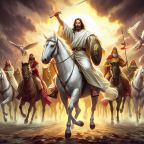 When Jesus returns to the earth after the time of the seven year Tribulation, He will establish His kingdom on earth.
 The eschatological subject of the Rapture of the church can be related the study of Soteriology because it is regarded as a form of deliverance. When Messiah returns at the end of the church age, He will deliver His church from an evil world and a coming judgment that will last for seven years (Read Revelation chapters 6-18). A distinction is here drawn between Jesus coming for His saints at the Rapture, and Jesus coming with His saints at His Second Coming (Dan 7:13-14; Matt 19:28; 25:31; Rev 19:11-21). Jesus is now in heaven preparing a place for believers to be with Him there (John 14:1-3). Paul revealed Jesus will return for His church and that all Christians will be “caught up” to meet the Lord in the air (1 Th 4:13-18).
 After Jesus’ resurrection, He appeared to many on several occasions. His final appearance was to His apostles. Luke wrote, “And He led them out as far as Bethany, and He lifted up His hands and blessed them. While He was blessing them, He parted from them and was carried up into heaven” (Luke 24:50-51). And in Acts we’re told, “He was lifted up while they were looking on, and a cloud received Him out of their sight” (Acts 1:9). It’s important to note that Jesus ascended bodily into heaven, and that He will return the same way. Jesus’ ascension into heaven was the beginning of His session at the right hand of God. Concerning Jesus’s session, R. B. Thieme Jr. notes, “At His session, the humanity of Christ was ‘crowned with glory and honor’ and exalted to a position far higher than the angels (Heb 2:9). The Father put all powers and authorities in subjection to His Son and confirmed the ultimate subjugation of all who oppose Him.”
 Jesus’ resurrection is an essential element in soteriology. In fact, every writer of the NT assumes that Jesus was resurrected from the grave and treat it as an event that took place in time and space. Paul wrote that Jesus “was raised on the third day according to the Scriptures” (1 Cor 15:4), that He was “the first fruits of those who are asleep” (1 Cor 15:20), and that “having been raised from the dead, is never to die again” (Rom 6:9). After His resurrection, Jesus appeared to numerous persons over a period of forty days (Acts 1:3), namely, Mary Magdalene and other women (Matt 28:1-10; John 20:10-18), two disciples on the road to Emmaus (Luke 24:13-32), the disciples without Thomas (John 20:19-25), the disciples with Thomas (John 20:26-29), the disciples by the Sea of Galilee (John 21:1-23), Peter, James, and more than 500 brethren at one time (1 Cor 15:5-7). After these appearances, Jesus ascended bodily into heaven (Luke 24:50-51; Acts 1:9-11). It is recorded that God the Father “raised Him from the dead and seated Him at His right hand in the heavenly places” (Eph 1:20). Ralph Earle notes the importance of Jesus’ resurrection as follows:
 The animal sacrificial system under the Mosaic Law taught that God is holy, man is sinful, and that God was willing to judge an innocent creature as a substitute in place of the sinner. The animal that shed its blood gave up its life in place of the one who had offended God, and it was only through the shed blood that atonement was made. A life for a life. The animal sacrificial system under the Mosaic Law was highly symbolic, temporary, and pointed forward to the work of Jesus Christ on the cross. The Levitical priests would regularly perform their temple sacrifices on behalf of the people to God, but being a symbolic system, the animal sacrifices could never “make perfect those who draw near” to Him, for the simple reason that “it is impossible for the blood of bulls and goats to take away sins” (Heb 10:1, 4). For nearly fourteen centuries the temple priests kept “offering time after time the same sacrifices, which can never take away sins” (Heb 10:11), until finally Christ “offered one sacrifice for sins for all time” (Heb 10:12), and through that one offering “perfected for all time those who are sanctified” by it (Heb 10:14). What the Mosaic Law could never accomplish through the sacrifice of symbols, Christ did once and for all time through His substitutionary death on the cross when he died in the place of sinners.
 Jesus’ death on the cross was a satisfactory sacrifice to God which completely paid the price for our sin. We owed a debt to God that we could never pay, and Jesus paid that debt in full when He died on the cross and bore the punishment that rightfully belonged to us. In Romans 3:25 Paul used the Greek word hilasterion (ἱλαστήριον)—translated propitiation—to show that Jesus’ shed blood completely satisfied God’s righteous demands toward our sin, with the result that there is nothing more for the sinner to pay to God. Jesus paid our sin-debt in full. The Apostle John tells us “He Himself is the propitiation for our sins; and not for ours only, but also for those of the whole world” (1 John 2:2; cf., 1 John 4:10). Jesus’ death on the cross forever satisfied God’s righteous demands toward the sins of everyone for all time! God has “canceled out the certificate of debt consisting of decrees against us, which was hostile to us; and He has taken it out of the way, having nailed it to the cross” (Col 2:14). Regarding Christ’s death, J. Dwight Pentecost states:
 It is in the understanding of the suffering and death of Christ that the sinner appreciates God’s great love and the price that was paid for our salvation. Christ suffered in our place, bearing the penalty that rightfully belongs to us. Scripture tells us that “Christ also died for sins once for all, the just for the unjust, so that He might bring us to God” (1 Pet 3:18a). Perhaps no section of Scripture in the Old Testament bears greater testimony to this truth than Isaiah 52:13 through 53:12, in which the prophet reveals the Messiah as the Suffering Servant. Isaiah 53 is mentioned several times in the New Testament as specifically referring to Christ (Matt 8:17; John 12:38; Acts 8:30-35; Rom 10:16; 1 Pet 2:22-25), so that there is no mistake in the minds of the New Testament writers that the passage points to Jesus. According to John Stott, “The New Testament writers quote eight specific verses as having been fulfilled in Jesus…eight verses out of the chapter’s twelve are all quite specifically referred to Jesus.”
 God the Father is seen as the initiator, planner, and orchestrator of the salvation of mankind. God the Father is loving, merciful, and kind, and “desires all men to be saved and to come to the knowledge of the truth” (1 Tim 2:4), and is “not wishing for any to perish but for all to come to repentance” (2 Pet 3:9). Salvation is necessary because of the problem of sin in the human race. All mankind is utterly helpless to bring about a remedy by human effort (Rom 3:10, 23; 5:6-10; Gal 2:16, 21; 3:21-22). Everyone is said to be “darkened in their understanding, excluded from the life of God because of the ignorance that is in them, because of the hardness of their heart” (Eph 4:18), and “dead” in their “trespasses and sins” (Eph 2:1; cf., Col 2:13). This refers to spiritual death, which means separation from God. We are trapped in sin and stand guilty before a holy and righteous God and are completely unable to save ourselves. Warren Wiersbe observes:
 As Christians, when we think of salvation, it most often pertains to our spiritual deliverance from the lake of fire, which is the place of eternal suffering for those who reject Christ as Savior. John tells us, “if anyone’s name was not found written in the book of life, he was thrown into the lake of fire” (Rev 20:15). Spiritual salvation is the most important kind of salvation mentioned in the Bible, for it matters little if one is rescued a thousand times from physical danger, but ultimately fails to receive deliverance from the danger of hell. God loves everyone and is “not wishing for any to perish but for all to come to repentance” (2 Pet 3:9). And He has made a way for lost sinners to be saved from hell and brought to heaven, and this through His Son, Jesus, for “there is salvation in no one else; for there is no other name under heaven that has been given among men by which we must be saved” (Acts 4:12).
 God’s greatest provision was for our eternal salvation, which came through His Son, Jesus, Who died in our place and bore the punishment that rightfully belongs to us (Rom 5:8; 1 Cor 15:3-4; 1 Pet 3:18). When we trust in Christ alone as our Savior, we receive forgiveness of sins (Eph 1:7), eternal life (John 10:28), are transferred into “the kingdom of His beloved Son” (Col 1:13), become “children of God” (John 1:12), and are blessed “with every spiritual blessing in the heavenly places in Christ” (Eph 1:3). God’s wonderful grace is amazing! And God, having done the most for us at the cross, will not do less for us after our salvation. Paul wrote, “What then shall we say to these things? If God is for us, who is against us? He who did not spare His own Son, but delivered Him over for us all, how will He not also with Him freely give us all things?” (Rom 8:31-32). Since God has already demonstrated His maximum love and generosity by giving His Son for our salvation, it only stands to reason that He will certainly provide everything else needed for our well-being, and for a life that glorifies Him and edifies others.
 By faith we trust God and rest in His promises. Failure to trust God will result in worry, fear, and an anxious heart that is never at rest. Do our hearts ever become anxious? Of course they do. And does fear ever rise up? Yes, of course it does. Well over a hundred times in the OT & NT believers are told “do no fear” and “do not be afraid” (e.g., Gen 15:1, Deut 1:21; Isa 41:10; Matt 10:28; 1 Pet 3:14). These directives would be superfluous if sinful fear was not a problem for the believer. Sometimes we become like Peter and look at the storm around us (Matt 14:30), become frightened, and sink into what we fear. But when fear rises up, faith must rise higher, always trusting God to keep His Word. When trials come (and they will), we must see them as opportunities to grow in our faith (Jam 1:2-4). The benefit of living by faith is a relaxed mental attitude as the believer focuses on the Lord and His promises. Remember, God always keeps His promises, for “God is not a man, that He should lie, nor a son of man, that He should repent; has He said, and will He not do it? Or has He spoken, and will He not make it good?” (Num 23:19). Yes, He will always keep His Word, for “the Glory of Israel will not lie or change His mind; for He is not a man that He should change His mind” (1 Sam 15:29), for “it is impossible for God to lie” (Heb 6:18). God has integrity and keeps His Word, and “is able to do far more abundantly beyond all that we ask or think” (Eph 3:20a).
 God will provide. The challenge for us, as His children, is to accept His Word as true and apply it to our lives on a regular basis. The walk of faith requires us to have discipline of mind and will, to learn and live God’s Word, and to stay focused on Him and His promises. As God’s children, we are to “walk by faith and not by sight” (2 Cor 5:7). The walk of faith is what He wants, for He says, “My righteous one shall live by faith” (Heb 10:38), and “faith is the assurance of things hoped for, the conviction of things not seen” (Heb 11:1). The life of faith is what Pleases God, “without faith it is impossible to please Him, for he who comes to God must believe that He is and that He is a rewarder of those who seek Him” (Heb 11:6). Will there be failure on our part? Yes, more often than most of us would like to admit. But that’s why daily confession is important (1 John 1:9), as we acknowledge our sins to God, trust that He forgives, and then move back into a walk of faith. Let us continually learn and live God’s Word, always trusting the Lord will provide and that He will keep His promises to us. This way of living will glorify God, edify others, and result in a relaxed mental attitude for us as we lean on the Lord.
 Amazingly, there were some at the church in Corinth who taught “that there is no resurrection of the dead” (1 Cor 15:12). Paul addressed this issue head on, saying, “if there is no resurrection of the dead, not even Christ has been raised; and if Christ has not been raised, then our preaching is vain, your faith also is useless…For if Christ has not been raised, your faith is worthless; you are still in your sins.” (1 Cor 15:13-14, 17). The clear teaching of Scripture is that “Christ has been raised from the dead, the first fruits of those who are asleep” (1 Cor 15:20), and being “raised from the dead, is never to die again” (Rom 6:9). Praise God! By His resurrection, Jesus overcame sin and death.
 Biblically, we understand that it is God who saves (John 3:16). The gospel is what we must believe to receive that salvation. Paul wrote, “How will they believe in Him whom they have not heard? And how will they hear without a preacher?” (Rom 10:14). But now you’ve heard the good news. I’ve just preached it to you. And if you’ve not trusted Christ as your Savior, I beg you, don’t wait another moment. Place your faith in Him. That single decision will forever change the course of your life and eternal destiny in ways that are beyond your ability to fully calculate, for “No eye has seen, no ear has heard, and no mind has imagined what God has prepared for those who love him” (1 Cor 2:9). At the moment you trust Christ as your Savior, you will receive forgiveness of all your sins (Eph 1:7; Heb 10:10-14), the gift of righteousness (Rom 5:17; Phil 3:9), eternal life (John 10:28), become a child of God (John 1:12), be rescued from Satan’s “domain of darkness” and transferred “to the kingdom of His beloved Son” (Col 1:13), and become a member of the royal family of God, related to Jesus, Who is “the King of kings and Lord of lords” (1 Tim 6:15). These, and other wonderful blessings will become yours at the moment you trust in Christ as your Savior, for God will bless you with a portfolio of spiritual blessings that stagger the imagination (Eph 1:3). The gospel is simple, and the choice is yours. I pray you act wisely.
 In Acts 4:12, Peter states, “There is salvation in no one else; for there is no other name under heaven that has been given among men by which we must be saved.” And the name he’s talking about is the name of Jesus, the theanthropic Person who came into this world (John 1:1, 14), lived a sinless life (2 Cor 5:21; Heb 4:5; 1 John 3:5), and went to the cross and died a penal substitutionary death for all mankind (1 Cor 15:3-4; 1 Pet 3:18). Peter dogmatically states that salvation is found only in Jesus Christ. This is exclusive, for it means there is only way to be saved. The word “must,” in Acts 4:12, translates the Greek verb δεῖ dei, which speaks of divine necessity. This means it is necessary to come to Jesus, and Jesus alone, for our salvation, “for there is no other name under heaven that has been given among men by which we must be saved.” We need only Christ to be saved. And to be saved (σῴζω sozo) calls for one action only, and that is to trust in Christ as our Savior. This means we accept the good news “that Christ died for our sins according to the Scriptures, and that He was buried, and that He was raised on the third day according to the Scriptures” (1 Cor 15:3-4). And if we trust in Jesus as our Savior, we will have forgiveness of sins (Eph 1:7), eternal life (John 10:28), and the gift of righteousness (Rom 5:17; Phil 3:9). Here is grace, as we can be forgiven and made right with God. We are saved by grace alone, through faith alone, in Christ alone (Eph 2:8-9). We are not required to produce any works to be saved (Rom 4:4-5). None whatsoever. No works before, during, or after salvation, “For we maintain that a man is justified by faith apart from works of the Law” (Rom 3:28). Our forgiveness of sins and eternal life are a free gift from God to us, paid in full by the Lord Jesus. We are helpless to save ourselves (Rom 5:6-10), and we come with the empty hands of faith, offering nothing, only receiving the free gift that God offers to us. Once we are saved, good works should follow salvation (Eph 2:10; Tit 2:11-14), but they are NEVER the condition of it. Good works that follow salvation earn us rewards in heaven; but heaven itself is the blessing that comes to us by grace, and this blessing to us is the work of Christ alone.
 The good news of the gospel is that Jesus died for everyone (John 3:16; 1 John 2:2), which means everyone is savable. That’s unlimited atonement. But, though Christ died for everyone, the benefit of salvation is given only to those who believe in Jesus as their Savior. These are the elect. The gospel message is simple, even a child can understand it and be saved. If you’ve not trusted in Jesus as Savior, then I “beg you on behalf of Christ, be reconciled to God” (2 Cor 5:20). Turn to Christ as your Savior, believing He died for your sins, was buried, and raised again on the third day. And no matter what your past sins may be, no matter how many or egregious, God will forgive you (Eph 1:7), give you eternal life (John 10:28), and bless you with a portfolio of spiritual assets (Eph 1:3) that will open for you the most wonderful life you can have in this world; a life in relationship with God. And this all starts when you simply believe in Christ as your Savior. This is the most important decision you can make in your life, for it determines both the quality of life you have in this world, as well as your eternal destiny afterwards.
 In this passage we observe these early descendants of Noah all spoke the same language and chose to settle in the land of Shinar contrary to God’s previous command to “fill the earth” (Gen 9:1). After settling, they began to use God’s resources of volition, intelligence, language, and building materials to build a city for themselves, as well as a tower into heaven. All of this was done to make a name for themselves, rather than to obey and glorify God. Their big plans and big tower were small in the sight of God, who “came down to see the city and the tower which the sons of men had built” (Gen 11:5). No matter how big their tower, it would never reach heaven, and the Lord condescended to see their production. Of course, the Lord knew all along what they were doing, and this satirical language helps us understand the work of men from the divine perspective. Because it was God’s will for them to fill the earth, He confused their language and scattered them over the earth (Gen 11:6-9). According to Allen Ross:
 Atonement is a very important concept in the Old Testament. The word atonement translates the Hebrew verbכָּפַר (kaphar) which means to “cover over, pacify, propitiate, [or] atone for sin.”
 Jesus’ death on the cross was a satisfactory sacrifice to God which completely paid the price for our sin. We owed a debt to God that we could never pay, and Jesus paid that debt in full when He died on the cross and bore the punishment that rightfully belonged to us. In Romans 3:25 Paul used the Greek word ἱλαστήριον (hilasterion)—translated propitiation—to show that Jesus’ shed blood completely satisfied God’s righteous demands toward our sin, with the result that there is nothing more for the sinner to pay to God. Jesus paid our sin-debt in full. There’s nothing for us to pay. The Apostle John tells us “He Himself is the propitiation [ἱλασμός hilasmos – the satisfactory sacrifice] for our sins; and not for ours only, but also for those of the whole world” (1 John 2:2; cf., 4:10). Jesus’ death on the cross forever satisfied God’s righteous demands toward the sins of everyone for all time! God has “canceled out the certificate of debt consisting of decrees against us, which was hostile to us; and He has taken it out of the way, having nailed it to the cross” (Col. 2:14). Regarding Christ’s death, J. Dwight Pentecost states:
 The word soteriology comes from two Greek words: σωτήρ soter which means savior, deliverer, preserver