Soteriology is the study of salvation. The word soteriology is derived from the Greek words soter (σωτήρ), which means savior, and logos (λόγος), which means a word about, or the study of something. Soteriology is the sphere of systematic theology that speaks to the nature, means, scope, and purpose of salvation. It is an important theme that runs throughout Scripture and reveals the God who saves.
 As Christians, when we think of salvation, it most often pertains to our spiritual deliverance from the lake of fire, which is the place of eternal suffering for those who reject Christ as Savior. John tells us, “if anyone’s name was not found written in the book of life, he was thrown into the lake of fire” (Rev 20:15). Spiritual salvation is the most important kind of salvation mentioned in the Bible, for it matters little if one is rescued a thousand times from physical danger, but ultimately fails to receive deliverance from the danger of hell. God loves everyone and is “not wishing for any to perish but for all to come to repentance” (2 Pet 3:9). And He has made a way for lost sinners to be saved from hell and brought to heaven, and this through His Son, Jesus, for “there is salvation in no one else; for there is no other name under heaven that has been given among men by which we must be saved” (Acts 4:12).
God’s love for lost humanity is what motivated Him to act. Scripture reveals, “For God so loved the world, that He gave His only begotten Son, that whoever believes in Him shall not perish, but have eternal life” (John 3:16). And, “By this the love of God was manifested in us, that God has sent His only begotten Son into the world so that we might live through Him. In this is love, not that we loved God, but that He loved us and sent His Son to be the propitiation for our sins” (1 John 4:9-10). And, “God demonstrates His own love toward us, in that while we were yet sinners, Christ died for us” (Rom 5:8).
God offers salvation because we are lost in sin and helpless to save ourselves. If we could save ourselves, then the death of Christ would have been unnecessary. But we cannot save ourselves, as our sin renders us helpless before God. A weak understanding of God’s work in salvation will produce a weak gospel, one that tends to emphasize human good and man’s ability to save himself, or to participate in that salvation. When we understand the total depravity of mankind, and that we are totally lost and unable to save ourselves, only then does the work of God through Christ come into its full glory, and love and grace become so pronounced, that lost sinners realize their utterly helpless condition, and turn to Christ alone for that salvation which cannot be secured by any other means. What follows is a look at the meaning of salvation in the Old and New Testament.
Definition of Salvation in the Old Testament
The most common word for salvation in the Hebrew OT is yasha (יָשַׁע – sometimes as יְשׁוּעָה yeshuah) which means “deliverance, rescue, salvation, also safety, [and] welfare.”[1] God is said to deliver His people from military attacks (2 Sam 22:3-4; 1 Ch 16:35; Psa 3:6-8), fear (Psa 34:4), troubles (Psa 34:17), or physical death (Psa 56:13).[2] Earl Radmacher notes, “Often the words save and salvation refer to physical not spiritual deliverance. This is especially true in the Old Testament. People were ‘saved’ (rescued or delivered) from enemies on the battlefield (Deut 20:4), from the lion’s mouth (Dan 6:20), and from the wicked (Psa 59:2).”[3] According to Charles Ryrie:
The most important Hebrew root word related to salvation in the Old Testament is yasha. Originally it meant to be roomy or broad in contrast to narrowness or oppression. Thus it signifies freedom from what binds or restricts, and it came to mean deliverance, liberation, or giving width and breadth to something. Sometimes this deliverance came through the agency of man (e.g., through judges, Judg 2:18; 6:14; 8:22; or kings, 1 Sam 23:2), and sometimes through the agency of Yahweh (Pss 20:6; 34:6; Isa 61:10; Ezek 37:23). Sometimes salvation is individual (Psa 86:1–2) and sometimes corporate, that is, of the nation (Isa 12:2, though all the world will share in it, Isa 45:22; 49:6).[4]
Yahweh is repeatedly referred to as the “the God of my salvation” (Psa 18:46; cf., Psa 25:5; 27:9; 51:14; 88:1; Isa 12:2; 17:10; Mic 7:7; Hab 3:18), and Jonah said, “Salvation is from the LORD” (Jon 2:9). In helpless situations, only God could save His people (Isa 43:11; cf., Isa 45:5-7, 22), and He saved them primarily for His own glory and reputation, as the psalmist states, “He saved them for the sake of His name, that He might make His power known” (Psa 106:8).
When delivering His people from a military threat, there were times when God called His people to do nothing, but watch Him fight their battles (2 Ch 20:17; Hos 1:7). When Israel left Egypt and Pharaoh’s army pursued them, Moses told the people, “Do not fear! Stand by and see the salvation [yeshuah] of the LORD which He will accomplish for you today; for the Egyptians whom you have seen today, you will never see them again forever. The LORD will fight for you while you keep silent” (Ex 14:13-14). Here, the Lord fought alone, killing the Egyptian soldiers who were pursuing His people for the purpose of killing them (see Ex 14:22-31). However, there were times when God required His people to take up arms and engage their enemy, and in those moments He would fight with them, ensuring their victory. For example, when Israel was to enter the land of Canaan, Moses told the people, “the LORD your God is the one who goes with you, to fight for you against your enemies, to save [yasha] you” (Deut 20:4). As Israel’s army fought the wicked Canaanites, God would be with them to secure their victory. And David, when standing against Goliath, said, “the battle is the LORD’S and He will give you into our hands” (1 Sam 17:47), and then he picked up his sling and a stone and struck his enemy with a mortal blow (1 Sam 17:48-49). God brought salvation through David, His servant. Liefeld states, “Although military leaders and others bring salvation in specific circumstances, ultimately it is God alone who is the true Savior. Israel had to learn not to trust human wisdom or military strength but to recognize God as the only source of deliverance.”[5] Solomon states the matter well, saying, “The horse is prepared for the day of battle, but victory belongs to the LORD” (Prov 21:31). Today, we might say, the soldier is to train well and keep his weapons clean, ready for action, but always realize it is ultimately God who gives the victory.
There was also a spiritual and eternal salvation for individuals who placed their faith in God. For example, in Genesis 15:6, we’re informed that Abram “believed in the LORD; and He reckoned it to him as righteousness” (Gen 15:6). Henry Morris states, “Here is the great principle of true salvation, set forth for the first time in the Bible. Not by works do men attain or manifest righteousness, but by faith. Because they believe in the Word of God, He credits them with perfect righteousness and therefore enables sinful men to be made fit for the fellowship of a holy God.”[6] And Ryrie adds, “Faith was the necessary condition for salvation in the Old Testament as well as in the New. Abraham believed in the Lord, and the Lord counted it to him for righteousness (Gen 15:6). The Hebrew prefix beth indicates that Abraham confidently rested his faith on God (cf. Ex 14:31; Jon 3:5).”[7]
Definition of Salvation in the New Testament
The concept of salvation in the NT derives from three words. First is the verb sozo (σῴζω), which refers to the act of physical deliverance in some biblical passages (Matt 8:25; 14:30; Mark 13:20; Luke 6:9; John 11:12; Acts 27:20, 31), and spiritual deliverance in others (Luke 7:50; 19:10; John 12:47; 1 Cor 1:21; Tit 3:5). As to our spiritual deliverance, we are saved from the penalty of sin (Rom 8:1, 33-34; Eph 2:8-9), the power of sin (Rom 6:11; Col 3:5), and ultimately the presence of sin (Phil 3:20-21; 1 John 3:2, 5). Second is the noun soter (σωτήρ), which means Savior, and refers to the agent of salvation, the one who rescues or delivers another from harm or danger (Luke 2:11; John 4:42; Acts 5:31; 13:23; Eph 5:23; Phil 3:20). Third is the noun soteria (σωτηρία), which refers to the provision of salvation, rescue, or deliverance brought by another (Luke 1:69; 19:9; John 4:22; Acts 7:25; 13:26, 47; Rom 1:16; 2 Cor 1:6; 6:2; Eph 1:13; Phil 1:28; 2:12; 2 Tim 2:10; Heb 1:14; 9:28; 1 Pet 1:5, 9; 2 Pet 3:15).
The Greek words in the NT communicate the basic meaning of yasha in the Hebrew OT. Radmacher notes, “In the New Testament the verb sōzō (“to save”) and the nouns sōtēr (“Savior”) and sōtēria (“salvation”) parallel the Hebrew word and its derivatives. Thus the Old Testament concept of deliverance is carried over to the New Testament.”[8] Ryrie agrees, saying:
In both the Septuagint and the New Testament the Greek verb sōzō and its cognates sōtēr and sōtēria usually translate yasha˒ and its respective nouns. However, a number of times the sōzō group translates shalom, peace or wholeness, and its cognates. Thus salvation can mean cure, recovery, remedy, rescue, redemption, or welfare. This can be related to preservation from danger, disease, or death (Matt 9:22; Acts 27:20, 31, 34; Heb 5:7).[9]
Earl Radmacher adds:
A number of times, however, sōtēria translates síālôm (“peace” or “wholeness”), which broadens the idea of rescue or deliverance to include recovery, safety, and preservation. There is a progression in these concepts: (a) rescue from imminent and life-threatening danger to (b) a place of safety and security and (c) a position of wholeness and soundness. The narrowness and restriction created by danger is replaced by the “breadth” of liberation in salvation. Visualize a person on the Titanic facing the imminent expectation of drowning and death, but then being placed in a lifeboat. That is rescue. Then picture the person now in the lifeboat removed from danger and death. That is safety. Now picture an ocean liner coming alongside the lifeboat and hoisting it and its passengers aboard ship. Now they enjoy security and soundness of mind. All three ideas are included in the biblical concept of salvation.[10]
The majority of usages of salvation in the NT refer to physical healing or deliverance from what injures, restricts, or threatens harm. For example, when Jesus was traveling between Samaria and Galilee, He healed ten men of leprosy (Luke 17:11-14), and when one of them returned to thank Him (Luke 17:15-16), He told the man, “your faith has made you well [sozo]” (Luke 17:19). In this context, the Greek verb sozo refers to physical deliverance from an infirmity. On another occasion, when Jesus was approaching the city of Jericho, a blind man called out for Jesus to have mercy on him (Luke 18:35-41), and Jesus healed the man, saying, “Receive your sight; your faith has made you well [sozo]” (Luke 18:42). Again, this refers to physical healing. An example of deliverance from physical danger is observed when Jesus came to His disciples when they were on a stormy sea (Matt 14:22-27). When Peter saw Jesus walking on the water, he called out to the Lord and asked to come to Him (Matt 14:28-29). However, as Peter was walking on the water, He took his eyes off Jesus and began looking at the stormy wind, and “he became frightened, and beginning to sink, he cried out, ‘Lord, save me! [sozo]’” (Matt 14:30). Peter was not asking for forgiveness of sins and the gift of eternal life; rather, he was asking Jesus to save him from physical harm as he sinking into the sea. Earl Radmacher states:
When the New Testament uses save and salvation to refer to physical deliverance, those instances are more individual than national. Also the New Testament occurrences suggest not only rescue but also remedy and recovery. A graphic example of rescue from imminent death is God’s sparing Paul’s life in the shipwreck on his way to Rome (Acts 27:20, 31, 34). This case is of special interest in that God promised deliverance in advance (Acts 27:23–24), and Paul confidently moved ahead on those promises (Acts 27:25, 34). In a physical sense salvation refers to being taken from danger to safety (Phil 1:19), from disease to health (Jam 5:15), and from death to life (Jam 5:20).[11]
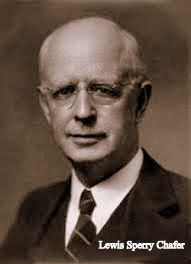
Often, as Christians, we think of salvation in the spiritual sense, in which we are delivered from our sins and made right with God because of the finished work of Christ on the cross. As believers, we have been “reconciled to God through the death of His Son” (Rom 5:10). We have been made spiritually alive, and “born again to a living hope through the resurrection of Jesus Christ from the dead” (1 Pet 1:3). We should realize our salvation appears in three tenses. Lewis Sperry Chafer states:
In its broadest significance, the doctrine of salvation includes every divine undertaking for the believer from his deliverance out of the lost estate to his final presentation in glory conformed to the image of Christ. Since the divine objective is thus all-inclusive, the theme is divided naturally into three tenses: (a) The Christian was saved when he believed (Luke 7:50; Acts 16:30–31; 1 Cor 1:18; 2 Cor 2:15; Eph 2:8; 2 Tim 1:9). This past-tense aspect of it is the essential and unchanging fact of salvation. At the moment of believing, the saved one is completely delivered from his lost estate, cleansed, forgiven, justified, born of God, clothed in the merit of Christ, freed from all condemnation, and safe for evermore. (b) The believer is being saved from the dominion of sin (Rom 6:1–14; 8:2; 2 Cor 3:18; Gal 2:20; 4:19; Phil 1:19; 2:12; 2 Th 2:13). In this second tense of salvation the believer is being divinely preserved and sanctified. (c) The believer is yet to be saved from the presence of sin when presented faultless in glory (Rom 13:11; 1 Th 5:8; Heb 1:14; 9:28; 1 Pet 1:3–5; 1 John 3:1–3). To this may be added other passages which, each in turn, present all three tenses or aspects of salvation—1 Cor 1:30; Phil 1:6; Eph 5:25–27; 1 Th 1:9–10; Tit 2:11–13.[12]
Our spiritual salvation is entirely the work of God through Christ (John 3:16), who took our sin upon Himself on the cross and paid the penalty for it, having been judged in our place (1 Cor 15:3-4). Peter tells us, “Christ also died for sins once for all, the just for the unjust, so that He might bring us to God” (1 Pet 3:18). And this salvation is found exclusively in Christ, for “there is salvation in no one else; for there is no other name under heaven that has been given among men by which we must be saved” (Acts 4:12). One needs only Christ to be saved. God offers salvation to sinful humanity as a gift, given freely and unconditionally to all who believe in Jesus Christ as Savior, believing He died for our sins, was buried, and raised again on the third day (1 Cor 15:3-4). Faith in Christ is the only condition for spiritual salvation.
Summary
Soteriology, the study of salvation, delves into the complex nature, means, scope, and purpose of God’s deliverance. Whether examining God’s deliverance in the Old Testament or the New Testament, this study reveals a salvation that encompasses both physical rescue from harm and spiritual deliverance from sin and eternal suffering. Ultimately, soteriology paints a vivid picture of God’s love and grace, showcasing the inexhaustible depth of His saving plan. At the heart of soteriology is the cross of Christ. The cross is God’s righteous solution to the problem of sin, as well as His greatest display of love toward sinners. At the cross, God judged our sin as His righteousness required, and pardons the sinner as His love desires. To understand the cross of Christ is to understand the heart of God toward a fallen world He wants to save.
Dr. Steven R. Cook
Related Articles:
[1] Francis Brown, Samuel Rolles Driver and Charles Augustus Briggs, Enhanced Brown-Driver-Briggs Hebrew and English Lexicon, electronic ed. (Oak Harbor, WA: Logos Research Systems, 2000), 447.
[2] For other Hebrew words, see W. L. Liefeld, “Salvation,” The International Standard Bible Encyclopedia, Revised, vol. 4, (Wm. B. Eerdmans, 1979–1988), p. 289.
[3] Earl Radmacher, eds. Charles R. Swindoll and Roy B. Zuck, “Salvation”, Understanding Christian Theology (Nashville, TN: Thomas Nelson Publishers, 2003), 806.
[4] Charles Caldwell Ryrie, Basic Theology: A Popular Systematic Guide to Understanding Biblical Truth (Chicago, IL: Moody Press, 1999), 321.
[5] W. L. Liefeld, “Salvation,” ed. Geoffrey W. Bromiley, The International Standard Bible Encyclopedia, Revised, vol. 4 (Wm. B. Eerdmans, 1979–1988), 289.
[6] Henry M. Morris, The Genesis Record: A Scientific and Devotional Commentary on the Book of Beginnings (Grand Rapids, MI: Baker Books, 1976), 325.
[7] Charles Caldwell Ryrie, Basic Theology, 321.
[8] Earl Radmacher, eds. Charles R. Swindoll and Roy B. Zuck, “Salvation” Understanding Christian Theology (Nashville, TN: Thomas Nelson Publishers, 2003), 805.
[9] Charles Caldwell Ryrie, Basic Theology, 321–322.
[10] Earl Radmacher, eds. Charles R. Swindoll and Roy B. Zuck, “Salvation”, Understanding Christian Theology, 805–806.
[11] Earl Radmacher, eds. Charles R. Swindoll and Roy B. Zuck, “Salvation”, Understanding Christian Theology, 806.
[12] Lewis Sperry Chafer, Systematic Theology, vol. 3 (Grand Rapids, MI: Kregel Publications, 1993), 6.
[13] Charles Caldwell Ryrie, Basic Theology, 321–322.
 How do you get to heaven and avoid the Lake of Fire? Simple. God did the hard part. Man could not. Salvation is never what we do for God. It is what God has done for us in Christ. Jesus Christ bore the judgment we deserved, satisfied divine justice, and accomplished the work in full (John 19:30; Rom. 5:8). Our good works don’t save us. His work on the cross does. The issue for the sinner is not effort, reform, ritual, or resolve. The issue is faith. “Believe in the Lord Jesus, and you will be saved” (Acts 16:31). One act of faith. One moment of trust. Eternal life is received as a free gift, not earned by good works (John 3:16; Eph. 2:8–9).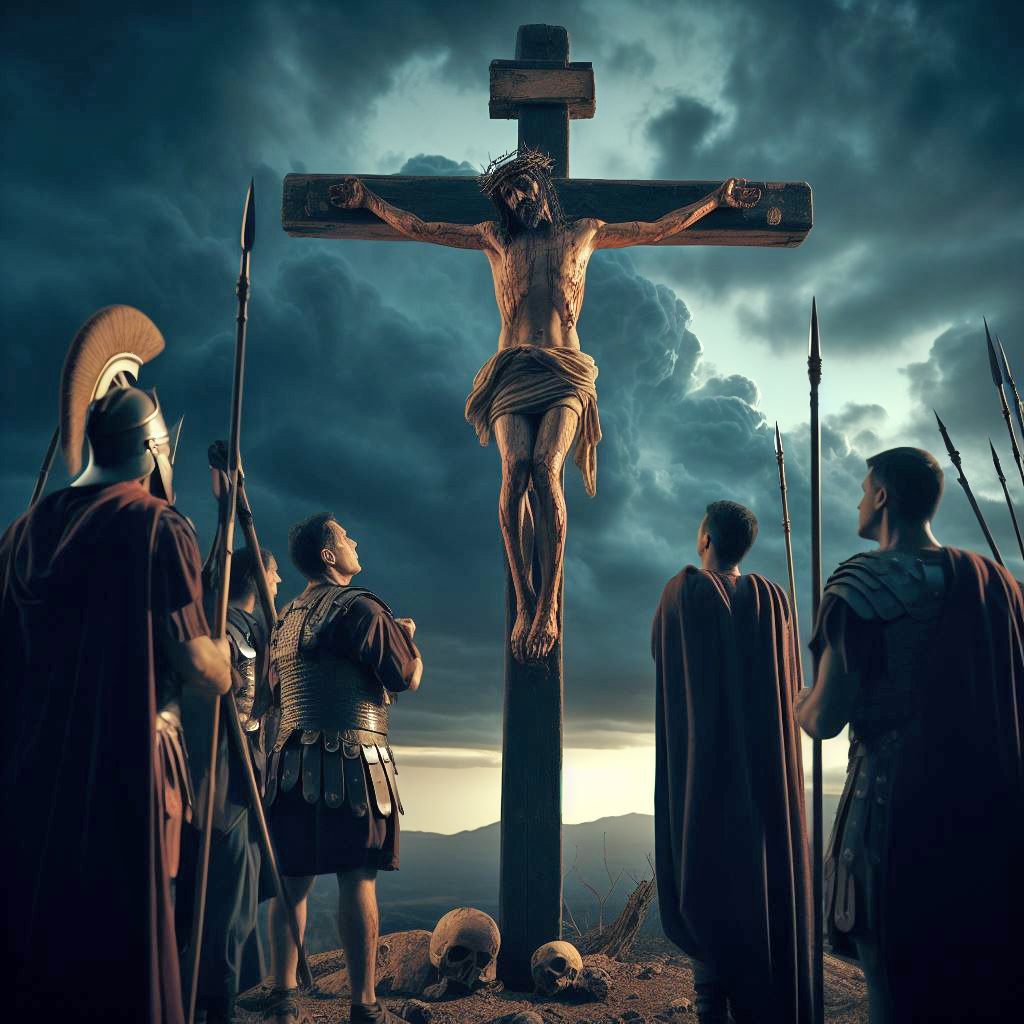










 A third area where the Holy Spirit is working in the hearts of unbelievers concerns judgment, “because the ruler of this world has been judged” (John 16:11). Satan has been judged and found guilty before God. This means that Satan and his world-system is condemned. Being the ruler of this world, Satan naturally rules in the hearts of all unbelievers. Three times Jesus referred to Satan as “the ruler of this world” (John 12:31; 14:30; 16:11). Other passages of Scripture call Satan “the god of this world” (2 Cor 4:4), and “the prince of the power of the air” (Eph 2:2), informing us “that the whole world lies in the power of the evil one” (1 John 5:19). Satan rules as a tyrant who has “weakened the nations” (Isa 14:12), and currently “deceives the whole world” (Rev 12:9). Satan continues to attack God’s people today (1 Pet 5:8), practices deception (2 Cor 11:13-15), and has well developed strategies of warfare (Eph 6:10-12). Furthermore, humanity is living in an “evil age” (Gal 1:4), under “the dominion of Satan” (Acts 26:18), whose sphere of influence is called “the domain of darkness” (Col 1:13). But Satan has been judged and his punishment is pending execution. Furthermore, those who side with Satan in this life will be judged with him in eternity. According to Ryrie, “At the cross, Christ triumphed over Satan, serving notice on unbelievers of their judgment to come.”
 God’s greatest provision was for our eternal salvation, which came through His Son, Jesus, Who died in our place and bore the punishment that rightfully belongs to us (Rom 5:8; 1 Cor 15:3-4; 1 Pet 3:18). When we trust in Christ alone as our Savior, we receive forgiveness of sins (Eph 1:7), eternal life (John 10:28), are transferred into “the kingdom of His beloved Son” (Col 1:13), become “children of God” (John 1:12), and are blessed “with every spiritual blessing in the heavenly places in Christ” (Eph 1:3). God’s wonderful grace is amazing! And God, having done the most for us at the cross, will not do less for us after our salvation. Paul wrote, “What then shall we say to these things? If God is for us, who is against us? He who did not spare His own Son, but delivered Him over for us all, how will He not also with Him freely give us all things?” (Rom 8:31-32). Since God has already demonstrated His maximum love and generosity by giving His Son for our salvation, it only stands to reason that He will certainly provide everything else needed for our well-being, and for a life that glorifies Him and edifies others.
 By faith we trust God and rest in His promises. Failure to trust God will result in worry, fear, and an anxious heart that is never at rest. Do our hearts ever become anxious? Of course they do. And does fear ever rise up? Yes, of course it does. Well over a hundred times in the OT & NT believers are told “do no fear” and “do not be afraid” (e.g., Gen 15:1, Deut 1:21; Isa 41:10; Matt 10:28; 1 Pet 3:14). These directives would be superfluous if sinful fear was not a problem for the believer. Sometimes we become like Peter and look at the storm around us (Matt 14:30), become frightened, and sink into what we fear. But when fear rises up, faith must rise higher, always trusting God to keep His Word. When trials come (and they will), we must see them as opportunities to grow in our faith (Jam 1:2-4). The benefit of living by faith is a relaxed mental attitude as the believer focuses on the Lord and His promises. Remember, God always keeps His promises, for “God is not a man, that He should lie, nor a son of man, that He should repent; has He said, and will He not do it? Or has He spoken, and will He not make it good?” (Num 23:19). Yes, He will always keep His Word, for “the Glory of Israel will not lie or change His mind; for He is not a man that He should change His mind” (1 Sam 15:29), for “it is impossible for God to lie” (Heb 6:18). God has integrity and keeps His Word, and “is able to do far more abundantly beyond all that we ask or think” (Eph 3:20a).
 God will provide. The challenge for us, as His children, is to accept His Word as true and apply it to our lives on a regular basis. The walk of faith requires us to have discipline of mind and will, to learn and live God’s Word, and to stay focused on Him and His promises. As God’s children, we are to “walk by faith and not by sight” (2 Cor 5:7). The walk of faith is what He wants, for He says, “My righteous one shall live by faith” (Heb 10:38), and “faith is the assurance of things hoped for, the conviction of things not seen” (Heb 11:1). The life of faith is what Pleases God, “without faith it is impossible to please Him, for he who comes to God must believe that He is and that He is a rewarder of those who seek Him” (Heb 11:6). Will there be failure on our part? Yes, more often than most of us would like to admit. But that’s why daily confession is important (1 John 1:9), as we acknowledge our sins to God, trust that He forgives, and then move back into a walk of faith. Let us continually learn and live God’s Word, always trusting the Lord will provide and that He will keep His promises to us. This way of living will glorify God, edify others, and result in a relaxed mental attitude for us as we lean on the Lord.