Introduction

What are the essential truths that define the Christian faith? Are some doctrines so foundational that rejecting them means rejecting Christianity itself? The Bible is God’s inerrant and infallible word. As such, it defines reality, reveals truth, and speaks with divine authority on all matters it addresses. Though all Scripture is true, authoritative, and important, some doctrines carry greater weight in defining the Christian faith. These are commonly distinguished as major and minor doctrines. Major doctrines establish the foundational truths of biblical Christianity, while minor doctrines concern matters about which genuine believers may disagree without compromising the fundamentals of the faith.
The apostle Paul spoke strongly concerning the gospel, warning that if anyone preached a contrary gospel, “he is to be accursed!” (Gal. 1:8). However, concerning the observance of holy days, Paul taught, “One person regards one day above another, another regards every day alike. Each person must be fully convinced in his own mind” (Rom. 14:5). Clearly, the content and accurate communication of the gospel are more important than one’s convictions concerning the observance of holy days. Charles Ryrie states:
Some doctrines are more important than others, so it particularly behooves us not to cut off our fellowship from those who share similar views about these important doctrines. There are few enough these days who believe in the fundamentals of the faith, and to ignore those who have declared themselves on the side of the truth of God is unwise.[1]
The essentials of the Christian faith consist of core doctrines revealed in Scripture that define biblical Christianity and distinguish it from false religious systems. To knowingly reject these fundamental truths is to depart from Christian orthodoxy. However, we must distinguish between the doctrines that define Christianity, the condition for receiving eternal life, and the doctrines necessary for Christian fellowship. These matters are related but not identical. Christian orthodoxy concerns the foundational doctrines revealed in Scripture concerning God, Christ, salvation, and divine revelation. Eternal salvation concerns the sinner’s personal faith in Jesus Christ as Savior (John 3:16; 6:47; Acts 4:12; 16:31). Christian fellowship concerns the shared beliefs and practices necessary for believers to worship, serve, and grow together (Acts 2:42; Eph. 4:11-16).
A person may genuinely believe in Jesus Christ for eternal life without possessing a developed understanding of every major Christian doctrine. Furthermore, a genuine believer may later depart from sound teaching without forfeiting eternal life, though such departure may result in divine discipline, loss of rewards, and exclusion from local church fellowship (1 Cor. 3:10-15; 11:30-32; 2 Tim. 2:13).[2] Conversely, someone may possess an accurate intellectual understanding of Christian doctrine without personally believing in Christ for salvation (John 5:39-40; Jam. 2:19). Therefore, understanding and affirming orthodox Christian doctrine must never be confused with the simple condition for receiving eternal life, which is faith alone in Christ alone.
As an orthodox evangelical Christian, I believe there are five foundational truths that define the Christian faith: the true God, the true Christ, the true work of Christ, the true gospel, and the true revelation of God. Together, these five truths establish the doctrinal boundaries of biblical Christianity and provide a standard for distinguishing truth from religious error.
The True God
There is one eternal, uncreated God who exists as three distinct Persons within the Trinity: God the Father (Gal. 1:1; Eph. 6:23), God the Son (John 1:1; 8:58; 20:28; Col. 2:9; Heb. 1:8), and God the Holy Spirit (Acts 5:3-4; 1 Cor. 2:11-12). All three are coequal, coinfinite, coeternal, and worthy of all praise and service. The three Persons of the Godhead are one in essence (Deut. 6:4; Isa. 43:10; 44:6-8; Matt. 28:19). The Father is not the Son, the Son is not the Holy Spirit, and the Holy Spirit is not the Father. Yet each Person is fully God, possessing the same undivided divine nature. God is not three gods, nor is He one Person appearing in three different forms. To deny this truth is to depart from the biblical revelation of God’s nature.
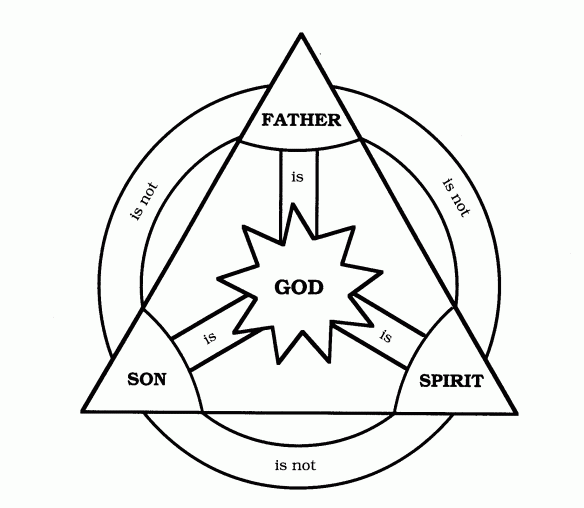
Scripture reveals that God possesses attributes that are intrinsic to His nature. God is living (Jer. 10:10; John 5:26), self-existent (Ex. 3:14; Acts 17:24-25), all-knowing (Ps. 139:1-6), all-present (Ps. 139:7-12), all-powerful (Job 42:2), sovereign (Dan. 4:35), righteous (Ps. 11:7), just (Ps. 9:7-8), holy (Ps. 99:9), immutable (Mal. 3:6), truthful (Tit. 1:2), loving (1 John 4:7-12), faithful (Lam. 3:23), merciful (Luke 6:36), gracious (1 Pet. 5:10), and eternal (1 Tim. 1:17). God possesses life inherently and eternally, and His self-existence, or aseity, means He depends on nothing outside Himself. These divine attributes belong equally and fully to the Father, Son, and Holy Spirit.
The doctrine of the Trinity is essential to historic Christian orthodoxy because it identifies the God revealed in Scripture. To deny the Trinity is to reject the biblical identity of God. Ancient errors such as Arianism, modalism, and tritheism misrepresent God’s revealed nature. Likewise, religious systems such as Mormonism and Jehovah’s Witnesses reject the biblical doctrine of the Trinity. However, ignorance of theological terminology is not the same as deliberate rejection of biblical truth. A new believer may not fully understand the Trinity, though he has genuinely believed in Jesus Christ as Savior.
The True Christ

At a point in time, the eternal Son of God added humanity to Himself without surrendering His deity, becoming the God-man, the Creator who entered His creation (John 1:1, 14; 8:58). Concerning Jesus, Scripture states, “For in Him all the fullness of Deity dwells in bodily form” (Col. 2:9). Jesus is theanthropic, meaning He possesses both a divine and human nature united forever in one Person, a doctrine known as the hypostatic union. Both natures are distinct and preserved, not mixed or confused, fully God and fully man. The hypostatic union is permanent, beginning with the incarnation and continuing forever. Both natures are essential to His saving work. As God, Jesus possesses the divine nature and authority necessary to save. As man, He could represent humanity and die as our substitute (1 Tim. 2:5; Heb. 2:14-17). Had Jesus not been fully God and fully man, He could not have accomplished the salvation revealed in Scripture. According to Lewis Chafer:
Of these two natures it may be affirmed from the evidence which Scripture provides, that they united in one Person, and not two; that in this union, that which is divine is in no way degraded by its amalgamation with that which is human; and, in the same manner and completeness, that which is human is in no way exalted or aggrandized above that which is unfallen humanity.[3]
Jesus was supernaturally conceived by the Holy Spirit in the womb of the virgin Mary (Isa. 7:14; Matt. 1:23; Luke 1:26-38). Mary is the mother of Jesus according to His humanity, though she is not the source of His eternal deity. The historical term Theotokos, meaning God-bearer, was used to affirm that the Person born of Mary was truly God incarnate, not that Mary originated His divine nature.
Jesus was a Jew, descended from Abraham and David (Matt. 1:1), from the tribe of Judah (Heb. 7:14), and is the promised Messiah (Matt. 1:1, 16-17; Luke 1:32-33; John 1:41). Concerning Jesus’ Jewishness, Arnold Fruchtenbaum notes, “The genealogies show Him to be of the Seed of Abraham, Isaac, and Jacob through the Tribe of Judah and from the family of David (Matt. 1:1-16; Luke 3:23-38).”[4] The baby Jesus grew in wisdom (Luke 2:40, 52) and lived a perfectly righteous life before God and man. The biblical record declares that Jesus “knew no sin” (2 Cor. 5:21), was “without sin” (Heb. 4:15), and that “in Him there is no sin” (1 John 3:5). In His humanity, Jesus walked in perfect conformity to God the Father’s holy character and divine revelation.
The deity and humanity of Jesus are essential to Christian orthodoxy. If Jesus were not truly God, He could not be the eternal Son who reveals the Father and accomplishes divine salvation (John 1:18; 14:9). If He were not truly human, He could not genuinely die as our substitute (1 Pet. 3:18; Heb. 2:14-17). The apostle John warned against those who denied the biblical identity of Jesus Christ (1 John 2:22-23; 4:2-3). Therefore, to knowingly reject His deity, genuine humanity, or identity as the eternal Son of God is to reject the Christ revealed in Scripture.
The True Work of Christ
God the Son became man that He might redeem fallen humanity from sin and death (Mark 10:45; Rom. 5:8). The Bible reveals, “In Him we have redemption through His blood, the forgiveness of our trespasses, according to the riches of His grace” (Eph. 1:7). In Jerusalem, Jesus willingly laid down His life and died a penal substitutionary death on a cross (John 3:16; 10:11, 17-18). That is, Jesus bore the penalty for our sins and died in our place, “the just for the unjust, so that He might bring us to God” (1 Pet. 3:18). His death satisfied the righteous demands of God concerning our sins (Rom. 3:24-26; Heb. 10:10-14; 1 John 2:2; 4:10) and provides the basis for forgiveness and reconciliation to God (Rom. 5:1-2; 2 Cor. 5:18-21; Eph. 1:7).

The cross is God’s righteous solution to the problem of sin, as well as His greatest display of love toward sinners (Rom. 5:8). Law and grace, life and death, as well as time and eternity all intersect at the cross, displaying a divine wisdom that staggers the imagination and leads the humble heart to bow in thankful adoration. To understand the cross of Christ is to understand the heart of God toward a fallen world He wants to save. On the cross, Jesus did not die merely as an example of love or as a martyr for a religious cause. His death was substitutionary, meaning He took our place, and penal, meaning He bore the judicial punishment for our sins (Isa. 53:5-6; 2 Cor. 5:21; 1 Pet. 2:24). His sacrifice fully satisfied God’s righteous demands, and nothing can be added to His finished work (John 19:30; Heb. 10:10-14). Christ died for the sins of everyone (John 3:16; Heb. 2:9; 1 John 2:2), but only those who believe in Him as Savior receive forgiveness of sins (Acts 10:43; Eph. 1:7) and eternal life (John 3:16; 20:31).
After His death on the cross, Jesus was buried and resurrected bodily on the third day (Matt. 20:18-19; Acts 10:39-41; 1 Cor. 15:3-4, 20), never to die again (Rom. 6:9). Jesus physically rose from the dead and appeared to numerous witnesses, including Mary Magdalene (John 20:11-18), other women (Matt. 28:9-10), Peter (Luke 24:34), two disciples on the road to Emmaus (Luke 24:13-35), the apostles, including Thomas (Luke 24:36-43; John 20:24-29), James (1 Cor. 15:7), more than five hundred believers at one time (1 Cor. 15:6), and later Paul (1 Cor. 15:8; Acts 9:3-6). The resurrection of Jesus is essential to Christianity, for Paul declared, “if Christ has not been raised, your faith is worthless; you are still in your sins” (1 Cor. 15:17). Without His substitutionary death and bodily resurrection, there is no Christian gospel. H. Wayne House states:
If Jesus Christ was not raised bodily from the tomb of Joseph of Arimathea, then the faith of the Corinthians and the faith of every believer throughout church history since then is in vain—useless to the point of absurdity, and believers are still dead in their sins. If Jesus was not raised from the dead, then His life, ministry, miracles, and atoning death on a Roman cross meant nothing.[5]
Forty days after His resurrection, Jesus ascended bodily into heaven (Acts 1:3-10), where He presently sits at the right hand of God the Father (Heb. 1:3; 10:12). He now serves as our heavenly High Priest and Advocate, faithfully representing believers before the Father (Rom. 8:34; Heb. 7:25; 1 John 2:1). Though His substitutionary death was a finished work that fully satisfied God’s righteous demands concerning sin (John 19:30; Heb. 10:10-14), His ministry on behalf of believers continues. His ascension was also accompanied by the promise of His future physical return (Acts 1:9-11). Jesus is coming back physically to earth to establish His kingdom and reign for a thousand years (Matt. 25:31; Rev. 19:11-16; 20:4-6).
The substitutionary death and bodily resurrection of Jesus are indispensable to Christian orthodoxy. His ascension and future bodily return are also foundational apostolic teachings (Acts 1:9-11; Heb. 9:28). To knowingly deny that Jesus Christ will return is to reject His explicit promise and the testimony of Scripture (John 14:1-3; Rev. 22:12, 20). However, Christians may disagree about the timing of the rapture, tribulation, and millennium without departing from the Christian faith. Furthermore, a person may genuinely believe in Jesus Christ as Savior without fully understanding propitiation, imputation, or the judicial nature of His sacrifice. Such matters deserve careful study, but they must not be confused with the condition for receiving eternal life.
The True Gospel
Jesus is the only Savior for mankind, for “there is salvation in no one else; for there is no other name under heaven that has been given among men by which we must be saved” (Acts 4:12). Because of Adam’s historic fall (Gen. 3:1-24), every person enters the world spiritually dead, meaning they are separated from God (Rom. 5:12; Eph. 2:1-3). Furthermore, all people commit personal sins and fall short of God’s righteous standard (Rom. 3:10, 23). Fallen humanity is helpless to remedy this condition through personal effort, morality, religion, or good works (Rom. 5:6-10; Gal. 2:16; Eph. 2:8-9; Tit. 3:5). However, spiritual death does not mean fallen people are incapable of responding to God’s revelation and believing the gospel. Though sinners cannot save themselves through human effort, they remain responsible to believe in Jesus Christ for eternal life (John 3:16; Acts 16:31). According to Norman Geisler, “With respect to the freedom of accepting God’s gift of salvation, the Bible is clear: fallen beings have the ability to so do, since God’s Word repeatedly calls upon us to receive salvation by exercising our faith (cf. Acts 16:31; 17:30; 20:21).”[6]
Salvation is offered to helpless, ungodly sinners (John 3:16-18; Rom. 5:6-10) and is received by grace alone (Rom. 4:4-5; Eph. 2:8-9), through faith alone (John 3:16; Gal. 2:16), in Christ alone (John 3:16; 14:6; Acts 4:12). Salvation is “the gift of God” (Eph. 2:8) and is accomplished “according to His mercy, by the washing of regeneration and renewing by the Holy Spirit” (Tit. 3:5). Good works have no saving merit (Isa. 64:6; Rom. 4:4-5; Eph. 2:8-9). God has prepared good works to follow our salvation (Eph. 2:10; Tit. 2:11-14), but they are never the condition of receiving eternal life (Acts 16:30-31; Eph. 2:8-9).
The condition for receiving eternal life is simple: believe in Jesus Christ as Savior (John 3:16; 6:47; 20:31; Acts 16:31). Faith is not a promise to obey, a commitment to lifelong discipleship, or a pledge to perform good works. Rather, faith is being persuaded that Jesus Christ is the eternal Son of God, the Savior who gives eternal life to those who believe in Him. The object of saving faith is Christ Himself, not one’s personal faithfulness, obedience, or spiritual performance. Jesus said, “Truly, truly, I say to you, he who believes has eternal life” (John 6:47). The promise is clear. The one who believes in Christ receives eternal life at that moment, and that life can never be lost (John 5:24; 10:28-29).
The doctrines that explain salvation are more extensive than the information a person must understand to receive it. A child may believe in Jesus Christ as Savior without understanding justification, regeneration, imputation, or propitiation. These doctrines explain what God accomplishes at salvation, but a person is not required to master them before receiving eternal life. Furthermore, a genuine believer may later become confused about the gospel or adopt erroneous doctrines without forfeiting salvation (John 10:28-29; Rom. 8:38-39; 2 Tim. 2:13). Eternal security rests upon the faithfulness of Christ, not the continued theological accuracy or spiritual performance of the believer. Geisler correctly observed, “Not all doctrines necessary for salvation are necessary for a person to believe in order to be saved.”[7]
The gospel of grace must be guarded against any teaching that adds human works as a requirement for receiving or maintaining eternal life (Gal. 1:6-9; 2:16; 5:1-4). To teach that salvation must be earned through religious effort, moral reform, or personal obedience is to contradict the biblical message of grace. Such teaching obscures the finished work of Christ and directs the sinner’s confidence toward human performance rather than the Savior. Nevertheless, we should distinguish between someone who knowingly promotes a false gospel and a genuine believer who has become confused through poor teaching.
The True Revelation of God
Scripture is God’s inerrant and infallible written revelation that tells us who He is, what He has accomplished in time and space, and what He will accomplish in the future. The Bible does not reveal all there is to know about God or His plans, but only what He deems important (Deut. 29:29). God’s authority is in the text itself and is honored by those who interpret it plainly and obey His commands as applicable. The Bible consists of sixty-six books and letters, written by approximately forty human authors spanning nearly fifteen hundred years.
The human authors, without forfeiting their personal literary styles, wrote under the direction and superintending care of God the Holy Spirit (Ex. 17:14; Jer. 30:2; Luke 1:3; 1 Cor. 14:37). Therefore, what they wrote is the inspired, inerrant, and infallible word of God (1 Th. 2:13; 2 Tim. 3:16-17; 2 Pet. 1:20-21). The original languages were Hebrew, Aramaic, and Koine Greek, and the literary forms include historical narrative, law, poetry, proverbs, parables, prophecy, and symbolism.
The Christian faith rests upon God’s revelation through His prophets and apostles, preserved in Scripture (Eph. 2:20; 2 Tim. 3:16-17; 2 Pet. 1:20-21). Christianity is not a religion invented through human speculation. Its doctrines are revealed truths. The apostles were commissioned by Jesus Christ to proclaim His Person, saving work, and gospel message (Matt. 28:18-20; Acts 1:8; 1 Cor. 15:1-4). Their teaching provides the doctrinal foundation upon which the Church is built (Eph. 2:20). To reject their witness concerning God, Christ, and salvation is to reject the foundation upon which Christianity stands (1 John 4:6; 2 John 9).
The Bible communicates truth through understandable language and is received by those who possess positive volition toward God (Ps. 25:9; John 7:17) and respond to His illumination (Luke 24:45; Acts 16:14). Those with negative volition suppress God’s revelation and reject His truth (Rom. 1:18-32; 2 Cor. 4:3-4). Though unbelievers can understand the gospel sufficiently to believe in Christ, they cannot properly evaluate and appreciate the deeper truths of God’s word apart from the illuminating ministry of the Holy Spirit (1 Cor. 2:12-14). As believers, our sanctification depends upon Scripture (Ps. 119:9, 11; John 17:17), and we grow spiritually when we learn and live God’s word (Ps. 1:1-3; 1 Pet. 2:2; 2 Pet. 3:18). Christians do not worship the Bible, but neither can we properly worship God apart from the truth He has revealed (John 4:24).

Because Scripture is God’s inspired and authoritative revelation, it must be interpreted correctly (2 Tim. 3:16-17). The historical-grammatical method seeks to understand the biblical author’s intended meaning within his historical, cultural, and literary setting. This approach recognizes that God communicated His truth through human authors who used ordinary language, figures of speech, and various literary forms. Sound doctrine comes from Scripture properly interpreted, not from human speculation or personal preference (2 Tim. 2:15). Scripture serves as the epistemological foundation for interpreting reality. According to Charles Ryrie:
In giving us the revelation of Himself, God desired to communicate, not obscure, the truth. So we approach the interpretation of the Bible presupposing the use of normal canons of interpretation. Remember that when symbols, parables, types, etc. are used they depend on an underlying literal sense for their very existence, and their interpretation must always be controlled by the concept that God communicates in a normal, plain, or literal manner.[8]
Biblical inerrancy is foundational to sound Christian theology because Scripture is the final authority for establishing and evaluating doctrine. However, a correct understanding of inerrancy is not a condition for receiving eternal life. A person may believe in Jesus Christ as Savior without understanding inspiration, inerrancy, or the formation of the biblical canon. Likewise, a genuine believer may later adopt an erroneous view of Scripture without losing salvation. Such error is serious because it undermines confidence in God’s revelation, but it does not automatically prove that the individual was never saved.
Christian Orthodoxy, Salvation, and Fellowship
These five foundational truths define biblical Christianity and distinguish it from false religious systems. The first four concern the essential content of Christian doctrine, while the fifth identifies the divine revelation upon which those doctrines rest. However, we must distinguish between Christian orthodoxy, eternal salvation, and Christian fellowship.
Christian orthodoxy concerns the fundamental truths revealed in Scripture about God, Christ, and salvation. To knowingly reject the biblical identity of God, the deity and humanity of Christ, His saving work on the cross, His bodily resurrection, or His promised bodily return is to depart from historic Christian orthodoxy (John 8:24; Acts 1:9-11; 1 Cor. 15:14-17; 1 John 2:22-23; 4:2-3). Likewise, to proclaim a gospel that makes human works the basis of salvation is to contradict the message preached by the apostles (Gal. 1:6-9; 2:16).
However, departure from Christian orthodoxy does not necessarily mean loss of salvation. A person who has genuinely believed in Jesus Christ has received eternal life, and that life is secure because of God’s promise (John 3:16; 5:24; 10:28-29). A believer may later embrace serious doctrinal error, pursue a life of sin, or even turn to idolatry, but such failure does not undo regeneration or union with Christ. Rather, the disobedient believer becomes subject to divine discipline, loss of usefulness, forfeiture of eternal rewards, and possible exclusion from local church fellowship (1 Cor. 3:10-15; 5:1-13; Heb. 12:5-11). The universal Church consists of all believers united to Christ by the Holy Spirit (1 Cor. 12:13; Eph. 1:22-23).
Christians may disagree about secondary doctrines, such as spiritual gifts, the timing of the rapture, baptism, tithing, and church government, and still be regarded as members of the body of Christ. Such disagreements may affect local church fellowship or ministry cooperation, but they do not necessarily determine whether someone is saved. Sound doctrine matters because truth matters, and every teaching of Scripture deserves careful study, accurate interpretation, and faithful application. However, not every doctrinal disagreement carries the same consequences.
All Scripture is true and authoritative, but not every biblical doctrine is equally foundational to Christian identity, and not every doctrinal error is evidence that a person is unsaved. The Christian faith rests upon the Person and work of Jesus Christ, and eternal life is received through faith alone in Him alone. Sound doctrine provides the foundation for spiritual growth, faithful service, and Christian fellowship, but salvation itself rests entirely upon the grace of God and the finished work of Jesus Christ (John 19:30; Eph. 2:8-9).
Conclusion
The essential doctrines of Christianity concern the true God, the true Christ, His saving work, the true gospel, and God’s written revelation. These doctrines define historic Christian orthodoxy and distinguish biblical Christianity from false religious systems. However, doctrinal orthodoxy must be distinguished from the condition for receiving eternal life. A person does not need to understand every essential doctrine to be saved, though the foundational truths concerning Christ and His saving work must be true for salvation to be possible. Eternal life is received through faith alone in Christ alone (John 3:16; Acts 16:31). Furthermore, a genuine believer who later departs from sound doctrine does not forfeit salvation, though he may experience divine discipline and loss of eternal rewards (John 10:28-29; 1 Cor. 3:10-15). Salvation is permanent, but fellowship with God and spiritual growth are conditional upon faithful obedience to His word.
Dr. Steven R. Cook
If this article has enriched your understanding and walk with Christ, and you feel led to support my ministry, your generosity is greatly appreciated. Your gifts enable me to continue sharing the gospel of grace and providing in-depth biblical teachings. Thank you for partnering with me in this mission.
Related Articles:
- The Free Gift of God is Eternal Life
- The Bible as Divine Revelation
- The Person and Attributes of God
- Jesus is God
- The Holy Spirit is God
- The Hypostatic Union
- The Biblical Resurrections
- Could Jesus Sin?
- Soteriology – The Study of Salvation
- Christ to the Cross
- God’s Righteousness at the Cross
- Atonement for Sin
- Advancing to Spiritual Maturity
- The Despair of Atheism and the Hope of Christianity
- Knowing and Doing the Will of God
[1] Charles C. Ryrie, Dispensationalism, Rev. and expanded. (Chicago: Moody Publishers, 1995), 247.
[2] A believer can depart from sound teaching and pursue a life of sin, even turning to idolatry. Such a believer does not forfeit salvation but comes under divine discipline, which may result in suffering, physical death, and loss of eternal rewards (1 Cor. 3:10-15; 11:30; 1 John 5:16). King Solomon is a good example. God declared concerning Solomon, “he shall be My son and I will be his father” (1 Chron. 22:10). God used Solomon to build the temple, write Scripture, and rule Israel as His theocratic representative. Yet Solomon eventually turned from the Lord and worshiped false gods (1 Kings 11:1-8). Scripture states, “Solomon did what was evil in the sight of the LORD, and did not follow the LORD fully” (1 Kings 11:6). Nevertheless, Solomon remained God’s child, and his salvation was secure. Solomon’s later idolatry does not prove he was never saved or that he forfeited salvation. Though Scripture does not explicitly describe his eternal destiny, his relationship with God and the biblical doctrine of eternal security support the conclusion that he remained saved (1 Chron. 22:10; John 10:28-29).
[3] Lewis Sperry Chafer, Systematic Theology, vol. 1 (Grand Rapids, MI: Kregel Publications, 1993), 384.
[4] Arnold G. Fruchtenbaum, Israelology: The Missing Link in Systematic Theology, Rev. ed. (Tustin, CA: Ariel Ministries, 1994), 846.
[5] H. Wayne House and Dennis W. Jowers, Reasons for Our Hope (Nashville, TN: B&H Academic, 2011), 333.
[6] Norman L. Geisler, Systematic Theology, Volume Three: Sin, Salvation (Minneapolis, MN: Bethany House Publishers, 2004), 129.
[7] Norman L. Geisler, Essential Doctrine Made Easy: Key Christian Beliefs (Rose Publishing, 2022), np.
[8] Charles Caldwell Ryrie, Basic Theology: A Popular Systematic Guide to Understanding Biblical Truth (Chicago, IL: Moody Press, 1999), 16–17.
Pingback: Hebrews 5:11-14 – Literal Bible Blog