 Satan is a despicable genius who has created a world system which is the ultimate propaganda machine, a vast and sophisticated network of deception designed to enslave the minds of men. As the “god of this world” (2 Cor 4:4), he orchestrates a relentless information war (through various channels), saturating receptive human minds with lies that distort reality, obscure the truth, and keep unbelievers locked in spiritual blindness. His lies permeate every facet of human existence—religious, academic, political, economic, social, recreational, and cultural—conditioning mankind to embrace falsehood as reality. God’s Word informs us humanity is living in an “evil age” (Gal 1:4), under “the dominion of Satan” (Acts 26:18), whose sphere of influence is called “the domain of darkness” (Col 1:13). Satan’s strategy in his world system revolves around three primary objectives: discredit the gospel of grace, neutralize divine truth, and render believers ineffective. His warfare is designed to attack every phase of God’s plan—salvation, spiritual growth, and divine production. The devil knows he’s defeated, but he’s not giving up until the last shot is fired. His goal is to maximize deception, confusion, and distraction to keep both unbelievers and believers out of God’s will.
 First, Satan works to discredit the gospel of grace. The cross of Christ is the supreme issue in human history—salvation is by grace alone, through faith alone, in Christ alone (Eph 2:8-9). But Satan pushes counterfeit gospels—legalism, works-based salvation, sacramentalism, mysticism—anything to obscure the truth (Gal 1:6-9; Rom 10:3). His primary tactic? Blind the minds of the unbelieving so they don’t even see the issue (2 Cor 4:4). Throw up distractions. Promote human morality as a substitute for regeneration. Undermine the sufficiency of Christ’s finished work (John 19:30; Heb 10:10-14). If people can be convinced they must work for salvation or that there are “many paths to God,” then the gospel of grace is effectively neutralized. As God’s children, we must have a firm grasp of the gospel—understanding that salvation is by grace alone, through faith alone, in Christ alone (Eph 2:8-9). Any deviation from this is a satanic counterfeit designed to distort the truth. When a believer departs from this foundation, he inevitably turns inward, wondering whether he has done enough good works to earn or prove his salvation. In the end, assurance is lost, and he operates in fear and uncertainty rather than faith and confidence.
 Second, Satan targets divine truth. If he can’t stop a person from being saved, his next move is to distort or neutralize their understanding of Bible doctrine. Satan’s strategies have remained consistent since the Garden of Eden. His first attack was on the integrity of God’s Word. Satan asked Eve, “Indeed, has God said…?” (Gen 3:1). This is the original propaganda technique—casting doubt on divine authority, twisting Scripture, and eventually substituting a lie for absolute truth (Gen 3:4-5). He promises independence, but the result is always enslavement. Jesus said that Satan “does not stand in the truth because there is no truth in him. Whenever he speaks a lie, he speaks from his own nature, for he is a liar and the father of lies” (John 8:44). Through religion, he distorts grace and promotes works-based salvation (Gal 1:6-9). Through philosophy, he injects arrogance, convincing men that reason and science alone can answer life’s ultimate questions. Through culture, Satan redefines morality according to human standards rather than divine mandates. His entire system is a psychological operation—disguising evil as good, darkness as light (Isa 5:20), and slavery as freedom. He’s always twisting the truth. Scripture states, “See to it that no one takes you captive through philosophy and empty deception, according to the tradition of men, according to the elementary principles of the world, rather than according to Christ” (Col 2:8). Philosophy and tradition that is “according to Christ” will enlighten and empower those who adhere to it, but “empty deception” is for those who reject Him.[1]
 Third, Satan works to render believers ineffective. He knows he can’t take away salvation (John 10:28), but he can shut down a believer’s spiritual production. The primary tactic? Distraction—get believers fixated on the world, caught up in self-absorption, buried in the details of life (1 John 2:15-17). If that doesn’t work, he turns to fear and discouragement (2 Tim 1:7). Anything to get the believer off track. If necessary, he’ll push believers into sin patterns that destroy their testimony, break their fellowship with God, and neutralize their spiritual growth (1 John 1:6-9). And if all else fails, he promotes doctrinal instability—keep them confused, keep them untrained, and they’ll never execute the plan of God (Eph 4:14). Corrupt pastors serve Satan by distorting God’s Word, promoting false doctrine, and keeping people spiritually blind (2 Cor 4:4; 2 Tim 4:3-4). They appeal to human pride, emotions, and desires rather than teaching sound doctrine (Jer 23:16-17; Ezek 34:2-6; 2 Tim 4:3). Some knowingly deceive for personal gain (2 Pet 2:1-3), while others are deceived themselves and spread error unknowingly (1 Tim 4:1-2). Satan uses them to weaken believers, divide the Church, and hinder the spread of truth (Acts 20:29-30; Matt 23:13). Ultimately, they serve his agenda by replacing God’s wisdom with human tradition, confusion, and compromise (Col 2:8; 2 Cor 11:3-4).
Spiritual Self Defense
 The Christian’s defense against Satan’s relentless attacks is to fortify the soul with divine truth and engage in spiritual warfare using the full armor of God (Eph 6:10-18). The priority for every Christian must be spiritual growth through the consistent intake and application of Bible doctrine (2 Tim 2:15; 3:16-17; 1 Pet 2:2), which transforms the mind and guards against deception (Rom 12:2; Col 3:16). As Christians, we cannot live what we do not know, so learning God’s Word necessarily precedes living His will. And once learned, it must be applied by faith, “for we walk by faith, not by sight” (2 Cor 5:7; cf. Heb 10:38). Jesus said, “If you know these things, you are blessed if you do them” (John 13:17). James commanded, “prove yourselves doers of the word, and not merely hearers who delude themselves” (Jam 1:22). The walk of faith puts God’s Word into practice.
 Sound Bible teaching stabilizes the Christian’s soul by providing divine viewpoint, enabling him to think with truth rather than emotion or human reasoning (Rom 12:2; Col 3:16). When God’s Word saturates the mind, it produces stability, confidence, and discernment. Scripture states, “Those who love your instructions have great peace and do not stumble” (Psa 119:165). This doctrinal foundation equips the believer to recognize and resist Satan’s schemes—whether deception, fear, or temptation, “so that no advantage would be taken of us by Satan, for we are not ignorant of his schemes” (2 Cor 2:11; cf. Eph 6:11-17). Without divine truth, a Christian is vulnerable to doubt, instability, and spiritual defeat, “tossed here and there by waves and carried about by every wind of doctrine, by the trickery of men, by craftiness in deceitful scheming” (Eph 4:14). The mature Christian, operating by divine viewpoint, remains alert to Satan’s attacks (1 Pet 5:8), stands firm in the faith (1 Pet 5:9), and wields “the sword of the Spirit, which is the Word of God” (Eph 6:17) as a defense against his lies.
The believer must also guard against worldly entanglements, rejecting love for the world and its system of distractions (1 John 2:15-17). Satan’s weapons are neutralized when the believer walks by faith, trusts in God’s promises, and maintains focus on Him and His plan (Rom 12:1-2; 2 Cor 10:5; Col 3:1-2, 16; Heb 12:1-2). The battle is fierce, but God has provided everything necessary for victory through His Word, His Spirit, and His grace (2 Cor 12:9; Gal 5:16). The issue is not whether the believer will be attacked, but whether he will be prepared to stand firm when the attack comes.
Summary
In summary, Satan’s world system is an all-encompassing deception, a calculated assault on divine truth designed to enslave both unbelievers and believers alike. As the master propagandist, he distorts reality, undermines biblical authority, and conditions humanity to embrace falsehood in every sphere of life. His influence is especially potent in academia, culture, and even within the church, where weak pastors and false teachers dilute or pervert sound doctrine, leaving believers spiritually malnourished and ineffective. The only antidote to this deception is a relentless pursuit of biblical truth, daily fortified by the intake and application of God’s Word. Believers must stand firm, rejecting the world’s lies, taking every thought captive to Christ, and aligning their lives with divine viewpoint. Victory in the spiritual battle requires discernment, doctrinal integrity, and unwavering faithfulness to God’s truth.
Dr. Steven R. Cook
If this article has enriched your understanding and walk with Christ, and you feel led to support my ministry, your generosity is greatly appreciated. Your gifts enable me to continue sharing the gospel of grace and providing in-depth biblical teachings. Thank you for partnering with me in this mission.
Related Articles:
- The Free Gift of God is Eternal Life
- Our Enemy the Devil
- Satan’s Strategies to Defeat God’s People
- The Priority of the Gospel
- God’s Gift of Righteousness
- Eternal Life
- Assurance of Salvation
- Saved by Grace Alone, Through Faith Alone, in Christ Alone
- Not of Works
- Who is the One Who Saves?
- The Grace-Call to Live Righteously
- The Righteous Lifestyle of the Believer
- Walking in the Light
- When a Christian Turns to a Sinful Lifestyle
- God Uses Imperfect People
- Walking Worthy of God’s Call to Service
- Two Kinds of Forgiveness with God
- Knowing and Doing the Will of God
- The High Calling of God’s Servant
- The Life of Faith
[1] One of Satan’s most effective strategies is the establishment of secular education, which is a direct assault on truth through the institutionalization of human viewpoint. Once founded on biblical principles, many universities such as Harvard, Princeton, and Yale, have become propaganda centers for cosmic thinking. Education serves as a primary vehicle for indoctrination, promoting secular humanism, materialism, relativism, and naturalism—all designed to remove God from human consciousness. Evolution is pushed as scientific fact to eliminate the need for a Creator. Postmodernism undermines absolute truth, while Marxist ideology infiltrates the humanities and social sciences, promoting collectivism and utopian visions where man, not God, determines morality and builds a perfect world. The result is a generation enslaved to false ideologies.















 Two of these divine qualities mentioned above—love and faithfulness—are specifically highlighted by Solomon, who instructed his son, “Do not let love and faithfulness leave you; bind them around your neck, write them on the tablet of your heart. Then you will find favor with God and people, and you will earn a good reputation.” (Prov 3:3-4). The word love translates the Hebrew noun chesed (חֶסֶד) which means love, kindness, loyalty, and mercy, often within the context of a covenant relationship. It is love that is loyal to a person because of promise. This is not a sentimental love, but a commitment-love, a loyal-love, one that is borne out of strength of character and moral integrity. It is used of “the faithful God who keeps covenant and steadfast love” (Deut 7:9). The word faithfulness translates the Hebrew noun emeth (אֱמֶת) which means to be firm, true, faithful, loyal, steadfast, or constant. It refers to someone who can be trusted to complete a task, like a “faithful messenger…who refreshes the soul of his employer” (Prov 25:13). Love signifies a commitment to a relationship, while faithfulness conveys the idea of staying the course and completing what has been started. The directive implies that love and faithfulness are not automatic qualities within us, but must be intentionally and actively cultivated.
 The phrase, “bind them around your neck” conveys a deliberate and self-imposed commitment to the qualities of love and faithfulness. This imagery suggests that these virtues might not remain with us naturally; therefore, we must intentionally fasten them to ourselves so they become a permanent part of who we are. Wearing them on the neck implies openness, much like displaying a beautiful gold necklace for others to see. The phrase “write them on the tablet of your heart” underscores the necessity of internalizing these virtues. Love and faithfulness should become so ingrained that they flow naturally in our words and actions. Just as words chiseled into stone are permanent, we must deliberately engrave these qualities on our hearts. This process takes time and requires consistent study, intentional reflection, and faithful application.
 Jesus said, “I am the Light of the world; he who follows Me will not walk in the darkness, but will have the Light of life” (John 8:12). And He also declared, “I have come as Light into the world, so that everyone who believes in Me will not remain in darkness” (John 12:46). When we trust in Christ as our Savior, God rescues us “from the domain of darkness” and transfers us “to the kingdom of His beloved Son” (Col 1:13). This domain of darkness refers to Satan’s kingdom, a spiritual realm in which the majority of this world live. When one hear abouts Christ and the good news of the gospel, it affords them the opportunity to “turn from darkness to light and from the dominion of Satan to God” (Acts 26:18). Writing to Christians in Ephesus, Paul said, “you were formerly darkness, but now you are light in the Lord; walk as children of light—for the fruit of the light consists in all goodness and righteousness and truth—trying to learn what is pleasing to the Lord” (Eph 5:8-10).
 To us who are in Christ, Paul writes, “walk as children of light” (Eph 5:8c). This is the Lord’s will for us. The directive assumes we can walk in darkness, otherwise it’s an unnecessary command. The word walk translates the Greek verb peripateō, which is used here as a metaphor for how we live. The verb is in the active voice, present tense, and imperative mood. The active voice means we have the responsibility to act as God directs, and the present tense refers to habitual conduct, and the imperative mood means it’s a command to be obeyed. To walk as children of light means living transparently before God who sees all we think, say, and do. It also means we live in way that reflects His glory for others to see, and we seek to bring others to God through Christ and His Word that they might know and walk with the Lord too. But those who love the darkness (John 3:19)—and they are the majority of humanity—will avoid spiritual Christians because our values and lifestyle reveal the darkness of their hearts and lives, and they want nothing to do with us and will avoid biblical conversation and fellowship at all costs, even resorting to violence when they feel threatened.
 Paul does not leave us guessing as to what the production of our walk with the Lord should look like, as he states, “for the fruit of the Light consists in all goodness and righteousness and truth” (Eph 5:9). The fruit refers to the qualities that are seen in God Himself (Gal 5:22-23), and when we are filled with the Spirit (Eph 5:15), and walk in the Spirit (Gal 5:16), the Light within us will shine forth and bear fruit for others to see. This requires us to walk in fellowship with God, to “walk in the Light as He Himself is in the Light” (1 John 1:7), which means submitting to Him (Jam 4:7) and walking by faith (2 Cor 5:7) as obedient-to-the-Word believers. But if we “walk in the darkness” (1 John 1:6), which is always a possibility for the Christian, there will be nothing noticeable to distinguish us from an unbeliever who lives in perpetual carnality (1 Cor 3:1-3).
 Those of us who learn and live God’s Word on a regular basis are “trying to learn what is pleasing to the Lord” (Eph 5:10). There’s only one way to live a life that is pleasing to the Lord, and that is to learn His Word and walk by faith (2 Cor 5:7; Heb 10:38). God has revealed Himself and His will through His written Word, and when we devote ourselves to the daily study of Scripture, we come to know what pleases the Lord. Every thought, word, and deed must be measured by the Word God as it speaks to our conversations, friendships, resources, work ethic, and every aspect of life. When we yield our lives to God and walk by faith in obedience to His Word, we know that it pleases Him, for “without faith it is impossible to please Him” (Heb 11:6).
 There are two kinds of righteousness that matter to Christians: positional righteousness and experiential righteousness. Positional righteousness refers to the believer’s legal standing before God, achieved through faith in Jesus Christ (John 3:16; 2 Cor 5:21). The moment a person believes in Jesus Christ as Savior, God declares that person righteous on the grounds that God’s perfect righteousness has been credited to their account (Rom 4:5-7). God gives His righteousness to one who believes in Christ as Savior. The Apostle Paul describes this as “the gift of righteousness” (Rom 5:17). It’s a free gift from God to us. This righteousness is not our own, which is relative to whatever standard we might follow, but God’s righteousness deposited in us. Paul also calls it “the righteousness which comes from God on the basis of faith” (Phil 3:9). When God looks at us, as Christians, He sees His righteousness in us and declares us justified in His sight (Rom 3:24, 28; Gal 2:16). This righteousness is unchangeable and eternal because it depends entirely on Christ’s finished work (John 19:30) and God’s grace (Eph 2:8-9). And it cannot be given back to God after it’s been received, for all God’s gifts are irrevocable (Rom 11:29).
 Experiential righteousness refers to the believer’s daily life and conduct as they grow in spiritual maturity and obedience to God’s Word (2 Tim 2:15; 3:16-17; Jam 1:22; 1 Pet 2:2). Often called practical righteousness, it involves living in a manner consistent with the believer’s positional righteousness. Scripture instructs us to “walk in a manner worthy of the calling with which you have been called” (Eph 4:1; cf. Col 1:10; Phil 1:27). Experiential righteousness is empowered by the Holy Spirit (Eph 5:18; Gal 5:16-25) and involves making choices that align with God’s moral standards as revealed in Scripture. The degree of experiential righteousness varies among believers, depending on their spiritual growth, volition, and discipline in applying God’s Word to their lives (Rom 6:13; Jam 1:22). In this sense, all believers practice relative righteousness, as some live more “rightly” than others (1 Sam 24:17; Jer 3:11) due to their greater knowledge and adherence to God’s Word.
 Let us be Christians who operate in humility, walking by faith, and seeking to live in a manner that pleases God (2 Cor 5:7; Heb 10:38; 11:6). Let us learn and live God’s Word (2 Tim 3:16-17; 1 Pet 2:2; Jam 1:21-22), being transformed by the renewing of our minds (Rom 12:2) and confessing our sins as needed to maintain fellowship with Him (1 John 1:9). Let us be filled with the Spirit (Eph 5:18), walk by the Spirit (Gal 5:16), and manifest the fruit of the Spirit in our daily lives (Gal 5:22-23). We should also “walk in love” (John 13:34-35; Eph 5:2), and “rejoice always, pray without ceasing, and give thanks in everything” (1 Th 5:16-18). Let us perform good deeds (Gal 6:10; Eph 2:10), advance to spiritual maturity (Heb 6:1), and “grow in the grace and knowledge of our Lord Jesus Christ” (2 Pet 3:18). Such lives glorify God (1 Cor 10:31) and edify others as we use our spiritual gifts in service to the body of Christ (Rom 12:6-8; 1 Pet 4:10-11). Let us press on toward this high calling, remembering that our labor in the Lord is not in vain (1 Cor 15:58; Phil 3:13-14).
 As Christians, God’s Word directs us not to worry about the future (Prov 12:25; Matt 6:25-34; Luke 12:22-31), to “Be anxious for nothing, but in everything by prayer and supplication with thanksgiving let your requests be made known to God” (Phil 4:6), and to “Cast all your anxiety on him because he cares for you” (1 Pet 5:7). This requires divine viewpoint thinking, disciplined mental focus, and a will to live by faith rather than succumbing to worry. It requires believers to “Watch over your heart with all diligence” (Pro 4:23a), to “destroy speculations and every lofty thing raised up against the knowledge of God, and take every thought captive to the obedience of Christ” (2 Cor 10:5), and to “keep seeking the things above, where Christ is, seated at the right hand of God” (Col 3:1).
 Wise preparation for the future, on the other hand, is marked by prudence and responsibility. It involves making plans based on sound judgment, taking into account potential challenges, and considering how best to address them. Wise preparation is grounded in trust in God’s sovereignty and provision, recognizing that while we plan, we ultimately rely on God for the outcome. Solomon wrote, “The plans of the heart belong to man, but the answer of the tongue is from the LORD” (Prov 16:1). Wise planning is proactive, born not out of fear but from a desire to be a good steward of the resources, time, and opportunities God gives us. Solomon wrote, “The plans of the diligent lead surely to advantage” (Prov 21:5a). The person who wants to build something will “first sit down and calculate the cost to see if he has enough to complete it” (Luke 14:28b). This is wise planning. Wisdom involves thoughtful, intentional action, not anxious fretting over things we cannot control.
 Let’s face it: life is not fair. Sometimes it is unfair to our disadvantage, but at other times, it is unfair to our advantage. It is interesting how we are prone to cry foul when life is unfair to our disadvantage but are more than glad to accept and rejoice when it is unfair to our benefit. This inconsistency highlights the human tendency to be self-centered and myopic rather than God-focused and biblically wise. Scripture reminds us that we are all undeserving of God’s goodness, for “There is no one righteous, not even one… for all have sinned and fall short of the glory of God” (Rom 3:10, 23). If God dealt with us strictly based on fairness, we would face His righteous judgment and eternal separation from Him.
 Ultimately, our focus should rest on God’s grace and purposes rather than temporal fairness. His ways are higher than our ways, and His thoughts higher than our thoughts (Isa 55:8-9), and we trust that His actions are always based on perfect wisdom. By keeping our eyes on His grace, we are reminded of the immeasurable blessings we have received, which far outweigh the injustices of life. In all circumstances, we can trust that God is just, merciful, and working all things together for good for those who love Him (Rom 8:28). In everything, we know that “God’s work is perfect, for all His ways are just; a God of faithfulness and without injustice, righteous and upright is He” (Deut 32:4).
 In every situation, we should turn to God in prayer, seeking His wisdom and strength to respond appropriately (Jam 1:5), and trust in His sovereignty, knowing that He will bring justice in His perfect timing (Rom 12:19). We are called to be “kindhearted and humble in spirit; not returning evil for evil or insult for insult, but giving a blessing instead” (1 Pet 3:8b–9a). Jesus serves as our ultimate example: “While being reviled, He did not revile in return; while suffering, He uttered no threats, but kept entrusting Himself to Him who judges righteously” (1 Pet 2:23). We are told, “Never take your own revenge, beloved, but leave room for the wrath of God, for it is written, ‘Vengeance is Mine, I will repay,’ says the Lord” (Rom 12:19). God has said, “If you do all that I say, then I will be an enemy to your enemies and an adversary to your adversaries” (Ex 23:22). Furthermore, “it is just for God to repay with affliction those who afflict you, and to give relief to you who are afflicted” (2 Th 1:6b-7a). God is both a defender and a dispenser of justice.
 The Judgment Seat of Christ evaluation will take place in heaven and Jesus Himself will be the Judge. Scripture tells us, “For we must all appear before the judgment seat of Christ, so that each one may be recompensed for his deeds in the body, according to what he has done, whether good or bad” (2 Cor 5:10; cf. Rom 14:10). Again, this is not a judgment concerning who gets into heaven. That decision is made in time by those who believe in Christ as their Savior, for “whoever believes in Him shall not perish, but have eternal life” (John 3:16), and the person who believes in Christ “has eternal life, and does not come into judgment, but has passed out of death into life” (John 5:24), and “there is now no condemnation for those who are in Christ Jesus” (Rom 8:1).
 That some Christians will be rewarded in heaven more than others means they possessed positive volition and made many good choices to know and walk with God, seeking His will above their own. The humble and maturing Christian is devoted to studying God’s Word (2 Tim 2:15; 3:16-17; 1 Pet 2:2), being filled with the Spirit (Eph 5:18), walking by means of the Spirit (Gal 5:16), living by faith (2 Cor 5:7; Heb 10:38), advancing to spiritual maturity (Heb 6:1), walking in love (Eph 5:2), doing good to others (Gal 6:10), being kind and forgiving (Eph 4:32), serving others spiritually (Phil 2:3-4; 1 Pet 4:10), and living “to the glory of God” (1 Cor 10:31). Such a life will glorify God in time and eternity and He will reward His faithful servant in the eternal state.
 In conclusion, the evaluation at the judgment seat of Christ underscores the importance of living a life that honors God, one that reflects positive volition, spiritual growth, and a commitment to His will. While all Christians are secure in their salvation through faith in Christ alone (John 3:16; 10:28; Rom 8:1), the rewards they receive will be determined by their faithfulness in walking with God (2 Cor 5:7), studying His Word (2 Tim 3:16-17; 1 Pet 2:2), and serving others in love (1 Pet 4:10). As we anticipate this evaluation, let us strive to be those who live wisely (Eph 5:15-17), walking by faith and seeking to glorify God in all things (1 Cor 10:31). In doing so, we will be rewarded for our devotion and service to Christ (2 Cor 5:10). Let us, therefore, live each day in light of eternity, with our eyes fixed on the prize that awaits those who faithfully follow Christ.
 The Bible reveals that some things are more important than life itself. For the apostle Paul, his call to ministry was the most important thing to him. When speaking to the Elders at Ephesus, Paul said, “I do not consider my life of any account as dear to myself, so that I may finish my course and the ministry which I received from the Lord Jesus, to testify solemnly of the gospel of the grace of God” (Acts 20:24). The word “dear” translates the Greek adjective timian (τιμίαν), which means “costly, precious, of great worth…held in honor, high regard” (BDAG, 1005). Paul is expressing that he does not regard his life as precious or valuable for his own sake. His words reflect a self-sacrificial attitude in which his commitment to fulfilling his God-given mission took precedence over personal safety or comfort. Jesus taught this principle when He said, “If anyone wishes to come after Me, he must deny himself, and take up his cross and follow Me. For whoever wishes to save his life will lose it; but whoever loses his life for My sake will find it” (Matt 16:24-25). Paul exemplified this sacrificial life, saying, “The life which I now live in the flesh I live by faith in the Son of God, who loved me and gave Himself up for me” (Gal 2:20b). He also declared, “I have suffered the loss of all things, and count them but rubbish so that I may gain Christ” (Phil 3:8b).
 Paul’s mission was “to testify solemnly of the gospel of the grace of God” (Acts 20:24c). This gospel reveals that salvation is a free gift from God, based solely on His grace and received through faith alone in Christ alone, apart from human works. The word “gospel” means “good news,” and for Paul, the essence of this good news is that “that Christ died for our sins according to the Scriptures, and that He was buried, and that He was raised on the third day according to the Scriptures” (1 Cor 15:3-4). When we trust in Jesus as our Savior (John 3:16; Acts 4:12; Rom 3:24-28), we receive forgiveness of sins (Acts 10:43; Eph 1:7), and the free gift of eternal life (John 10:28; Rom 6:23; Eph 2:8-9). The gospel excludes human merit or works as a basis for salvation (Rom 4:4-5; Gal 2:16; Eph 2:8-9; Tit 3:5). We are saved by the grace of God. Salvation is never what we do for God; rather, it’s what He has done for us through the death, burial, and resurrection of Jesus Christ, and it is a free gift, received by us with the empty hands of faith.
 First, it should be noted that God gives every Christian a spiritual gift, which means every believer is called to some level of ministry. Paul wrote, “There are different kinds of spiritual gifts, but the same Spirit is the source of them all…[and] a spiritual gift is given to each of us so we can help each other” (1 Cor 12:4, 7). Peter wrote, “As each one has received a special gift, employ it in serving one another as good stewards of the manifold grace of God” (1 Pet 4:10). Whatever your spiritual gift, whether pastor, teacher, leadership, administration, serving, giving, helps, or mercy (just to name a few), it should be employed to help and bless others. Moreso, ministry relates to everyone, everywhere, all the time. And ministry is evangelistic toward the unsaved, and doctrinally encouraging to the saved. Those whom God calls, He equips to serve, and the blessing of service will edify others. Knowing your specific call to ministry is based largely on desire, ability, conviction, confirmation, and opportunity.
 Concerning ability, God will equip those He calls to ministry by giving them a spiritual gift (Rom 12:6-8; Eph 4:11-12). The spiritual gift is the personal possession and responsibility of each believer. If God calls one to be a pastor or teacher, He will provide the means for that man to receive the appropriate education necessary to properly study His Word and communicate it to others, first through the teaching ministry of God the Holy Spirit (John 14:26), and then through others (Acts 18:24-26; 19:9-10). If the spiritual gift is giving, God will bless that believer with the finances to be able to support others, much the way He used several women to financially support Jesus and His apostles (Luke 8:1-3), or the Christians at Philippi to support the apostle Paul (Phil 4:15-18).
 Concerning opportunity, Paul reported how God “had opened a door” for him to minister the gospel to Gentiles (Acts 14:27), and how “a wide door for effective service” had opened for him in Ephesus (1 Cor 16:9), and when he came to Traos, he said, “a door was opened for me in the Lord” (2 Cor 2:12). When God calls and equips His children for service, He also provides opportunity. But believers must also recognize there will be times when God, for reasons known only to Him, closes a door of opportunity. Luke recorded an event where Paul and his companions had “been forbidden by the Holy Spirit to speak the word in Asia; and after they came to Mysia, they were trying to go into Bithynia, and the Spirit of Jesus did not permit them” (Acts 16:6-7). But a closed door for ministry might indicate a calling elsewhere, for though Paul had been denied ministry in Asia, afterwards, he’d received a vision about Macedonia (Acts 16:9), and “When he had seen the vision, immediately we sought to go into Macedonia, concluding that God had called us to preach the gospel to them” (Acts 16:10).
 The spiritual life is inseparably connected to the walk of faith, for to “walk by the Spirit” (Gal 5:16) is to “walk by faith” (2 Cor 5:7). The former assumes the latter. God the Holy Spirit inspired the Scriptures (2 Tim 3:16-17; 2 Pet 1:20-21), ensuring the written text is God’s authoritative revelation, the very “Word of God, which performs its work in you who believe” (1 Th 2:13b). It follows that God the Holy Spirit will instruct us in the Word He authored.
 To walk by faith is important to the spiritual life. Faith is a mental activity that relies on information. Biblically, faith is never blind. It is never an irrational leap into the unknown. Rather, it is a reasonable response that follows reliable information. Faith trusts facts. For example, none of us have personally seen the resurrected Christ, yet the record of Scripture is historically true and reliable, based on eyewitness accounts of people who walked with Jesus (Luke 1:1-4; John 20:27, 30-31; 21:24; Acts 4:20; 10:39; 1 Cor 15:3-8; 1 Pet 5:1; 2 Pet 1:16-19; 1 John 1:1). After Jesus’ resurrection, He appeared to many people and gave proof of victory over sin and death. These eyewitnesses include Mary Magdalene and other women (John 20:10-18; Matt 28:8-9), two disciples on the road to Emmaus (Luke 24:13-32), the disciples without Thomas (John 20:19-25), the disciples with Thomas (John 20:26-29), the disciples by the Sea of Galilee (John 21:1-23), Peter, James, and more than 500 brethren at one time (1 Cor 15:5-7), the disciples at Jerusalem before His ascension (Acts 1:3-9), Stephen at the time of his martyrdom (Acts 7:56), Saul on the road to Damascus (Acts 9:1-6; 1 Cor 15:8), and John on the island of Patmos (Rev 1:9-18).
 Believing in Jesus as our Savior comes after we hear and accept as true the good news that Christ died for our sins, was buried, and rose on the third day (1 Cor 15:3-4), thus conquering sin and death. Jesus accomplished what we cannot—our eternal salvation. When we hear this good news of what Jesus has done for us, we can place our faith in Him (John 3:16; Acts 4:12) and be fully assured of forgiveness of sins (Acts 10:43; Eph 1:7) and eternal life (John 10:28; Rom 6:23). The benefits of the cross are applied to us the moment we believe in Jesus as our Savior. This simple act of faith results in our justification before God, “For we maintain that a man is justified by faith apart from works of the Law” (Rom 3:28), and “we have believed in Christ Jesus so that we may be justified by faith in Christ and not by the works of the Law” (Gal 2:16). Eternal salvation is by grace alone (Eph 2:8-9), through faith alone (Rom 3:24, 28; 5:1), in Christ alone (Acts 4:12).
 After being born again by faith alone in Christ alone, we are to continue in faith. Paul wrote, “as you have received Christ Jesus the Lord, so walk in Him” (Col 2:6). We received Jesus by faith, and after being born again, we are to “walk by faith, not by sight” (2 Cor 5:7). The word “walk” translates the Greek verb peripateō (περιπατέω), which is here used as a metaphor for how we live, behave, or habitually conduct our lives. To walk by faith means we learn and apply God’s Word to our lives (i.e., marriage, family, education, work, finances, etc.). It means obeying God’s directives, claiming His promises, and utilizing His resources for our daily problems. We are also instructed to “walk by the Spirit” and not the flesh (Gal 5:16). When we live by faith and depend on the Spirit for strength and guidance, we “walk in a manner worthy of the calling” with which we have been called (Eph 4:1).
 Ultimately, “whatever is not from faith is sin” (Rom 14:23). Faith starts with God and His directives and promises. Once we learn about God’s directives, provisions and promises, He expects us to live by them, to be “doers of the word, and not merely hearers who delude” ourselves (Jam 1:22). It is possible to learn God’s Word and not apply it by faith, which is why James wrote, “to one who knows the right thing to do and does not do it, to him it is sin” (Jam 4:17). It is a sin not to live by faith. The writer to the Hebrews warned his readers, saying, “Take care, brethren, that there not be in any one of you an evil, unbelieving heart that falls away from the living God” (Heb 3:12). After hearing God’s Word, it is evil for a Christian not to believe it. It’s evil because God’s Word is absolute truth (2 Sam 7:28; Psa 119:160; John 17:17), and rejecting or doubting it implies that God, who cannot lie (Num 23:19; Tit 1:2; Heb 6:18), is untrustworthy, which is an affront to His perfect nature. This evil behavior was exemplified by the Israelites in the wilderness, for after they’d been delivered from Egyptian bondage, they failed to live by faith (Num 14:11), angered the Lord (Psa 95:8-11), and so forfeited the blessing of inheriting the land (Heb 3:15-18). The danger for us as Christians is that we might know God’s directives and promises, but fail to apply them by faith, and never benefit from His blessings. The writer to the Hebrews said, “Therefore, let us fear if, while a promise remains of entering His rest, any one of you may seem to have come short of it. For indeed we have had good news preached to us, just as they also; but the word they heard did not profit them, because it was not united by faith in those who heard” (Heb 4:1-2).
 Though Peter had personally seen and heard Christ (2 Pet 1:16-18), he told his readers, “We have the prophetic word made more sure” (2 Pet 1:19a). Other translations read, “we possess the prophetic word as an altogether reliable thing” (2 Pet 1:19a NET), and “We also have the prophetic message as something completely reliable” (2 Pet 1:19a NIV). The words “more sure” translate the Greek adjective bebaios (βέβαιος) which means reliable, dependable, or trustworthy. According to BDAG, it refers to “something that can be relied on not to cause disappointment.”
 Living by faith is both a science and an art due to the interplay between objective truths and subjective experiences that characterize the faith journey. Faith is grounded in the objective truths of Scripture. Just as science relies on established laws and principles, living by faith involves understanding and applying biblical truths. This includes doctrines such as God’s character (i.e., He is righteous, merciful, loving, gracious, etc.), claiming His promises (i.e., He provides, never leaves, etc.), and the walk of faith that obeys God’s directives as they relate to life (i.e., marriage, education, finances, etc.). Just as scientific methods yield consistent results when applied correctly, living by faith produces reliable outcomes in the believer’s life. When principles of faith are properly and consistently applied—such as trust in God during trials or the practice of Bible study and prayer—believers can expect to experience spiritual growth, peace, and guidance. The art of living by faith involves the personal, subjective experience of our walk with God. Each believer’s journey is unique, with individual responses to challenges they face. How God dealt with Abraham was different than Jeremiah, who was different than Paul or John. Faith requires creativity in how one applies biblical truths to everyday life. And though each passage of Scripture has only one meaning, the applications can be many.
 At the moment of salvation, apart from the basics of the gospel, the believer’s mind is generally saturated with worldly thinking that needs to be expunged and replaced with divine viewpoint thinking via God’s Word. This renovation of the mind happens as we prioritize the intake and application of God’s Word to every aspect of life (i.e., education, marriage, finances, work, etc.). This means obeying the directive, “do not be conformed to this world, but be transformed by the renewing of your mind” (Rom 12:2). In this way, we are “trying to learn what is pleasing to the Lord” (Eph 5:10), and to “walk by faith and not by sight” (2 Cor 5:7). The walk of faith is what God expects of us, as He says, “My righteous one shall live by faith” (Heb 10:38), which we know pleases Him (Heb 11:6). As growing Christians who want to walk with the Lord, we need “the manifold wisdom of God” (Eph 3:10) rather than “the wisdom of this world” (1 Cor 3:19).
 When we face difficulties in life, the first area to be affected is our thinking. Having a focused mind that is properly calibrated to God’s Word is crucial for living successfully as a Christian. When Jeremiah faced the crisis of Jerusalem’s destruction by Nebuchadnezzar in 586 B.C., he experienced psychological and emotional disequilibrium, saying, “My soul has been rejected from peace; I have forgotten happiness. My strength has perished, and so has my hope from the LORD” (Lam 3:17-18). Here, Jeremiah was close to total despair. Huey states, Jeremiah “reached the lowest ebb of despair in verse 18 with the declaration that all his hope in the Lord had been destroyed…The sufferings were so deeply impressed in the heart of the victim that he found himself constantly thinking about them. His memory left him depressed and despondent.”
 After God brought Israel out of Egyptian captivity, He sought to humble and teach them His ways (Deut 8:1-2). God let them experience the hardship of hunger (Deut 8:3a), and then provided their nutritional needs to sustain them, and also ensured their clothing did not wear out (Deut 8:3b-4). God’s trial of privation was educational, “that He might make you understand that man does not live by bread alone, but man lives by everything that proceeds out of the mouth of the LORD” (Deut 8:3). The end result was that Israel was to “Know in your heart that as a parent disciplines his son, so the LORD your God disciplines you” (Deut 8:5).
 Solomon taught his son to accept God’s discipline, saying, “My child, do not despise discipline from the LORD, and do not loathe His rebuke. For the LORD disciplines those He loves, just as a father disciplines the son in whom he delights” (Prov 3:11-12). Concerning this passage, MacDonald states, “Too often we tend to think of discipline as meaning punishment, but it actually includes all that is involved in the proper training of a child, i.e., instruction, warning, encouragement, advice, correction, and chastening. Everything that God allows to come into our lives is purposeful.”
 God directs us to live holy and righteous lives, and He actively works in our lives to influence our behavior. He is, after all, our heavenly Father, and He loves us greatly. To be corrected by His Word is primary and optimal; however, if we are defiant, or become habitually rebellious, God will educate us by means of scourging (more severe punishment). God’s discipline is always tailored to the individual. The three days of suffering for Jonah (Jonah 1:17; 2:10; 3:1-3) was different than the seven years of suffering for Nebuchadnezzar (Dan 4:31-37). Furthermore, God’s discipline generally comes in stages (1 Cor 11:30), can result in physical death (1 John 5:16), and loss of eternal rewards (1 Cor 3:10-15; 2 John 1:8). Though carnal Christians may face terrible punishment from God in time, and loss of rewards in eternity, they will never face the lake of fire, (John 3:16; 10:28), for “there is now no condemnation for those who are in Christ Jesus” (Rom 8:1). All Christians have eternal life, and Jesus said, “they will never perish” (John 10:28a; cf., John 3:16; 5:27). Though God’s children should rightly fear His punishment in time, they should not fear their eternal destiny.
 The ideal form of self-discipline is seen in the children of God who devote themselves to studying and applying God’s Word on a regular basis. Discipline by learning Scripture is preferred over discipline by means of suffering. Paul wrote, “All Scripture is inspired by God and profitable for teaching, for reproof, for correction, for training in righteousness; so that the man of God may be adequate, equipped for every good work” (2 Tim 3:16-17). Here, the word “training” translates the Greek noun paideia (παιδεία), which refers to “the act of providing guidance for responsible living, upbringing, training, instruction.”
 Part of the fruit of the Spirit is self-control (Gal 5:23), and the Christian who is walking by means of the Spirit will show the gradual discipline of mind and life that is advancing toward spiritual maturity. The disciplined mind is a stable mind. It is one that responds to people and circumstances and does not react. It does not allow thoughts to run away like wild horses, but restrains them and brings them in to submission to God and His Word. It is a mind that suspends judgment on a matter until the facts are established, and then it renders a verdict. It is one that is governed by wisdom and not emotion. It focuses on dealing with the difficulties of each moment and leaves tomorrow’s troubles to God. Undisciplined Christians will never organize their thoughts and lives, and will never reach the heights to which God calls them.
 The English words disciple and discipline are linguistically related terms, revealing an important connection between the two concepts.
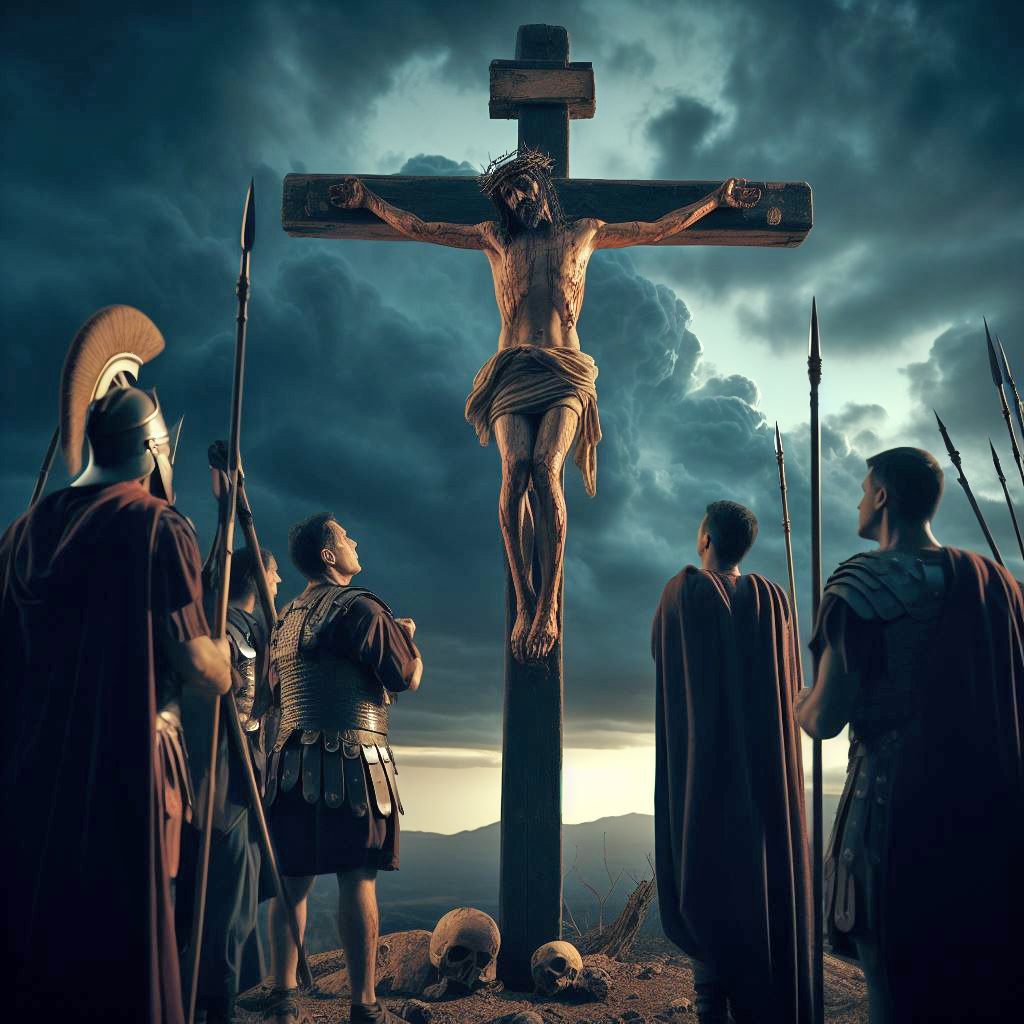
 Discipleship requires dedication and self-sacrifice. Jesus said, “If anyone wishes to come after Me, he must deny himself, and take up his cross and follow Me” (Matt 16:24), and “Whoever does not carry their own cross and come after Me cannot be My disciple” (Luke 14:27). The cross symbolizes self-denial and total commitment to God’s will. When Jesus commands us to deny ourselves and take up our cross, He calls us to surrender our personal desires, ambitions, and even our very lives to follow Him. Jesus’ own cross represented His ultimate obedience to the Father, leading to His sacrificial death for our salvation (Mark 10:45; John 12:32-33; 1 Cor 15:3-4). The cross was both an instrument of suffering and the means by which He accomplished God’s plan of salvation for everyone.
 Discipline, in the Bible, is twofold: God disciplines us as His children, and we are to be self-disciplined. God’s discipline is His ongoing correction and training that results in His people living righteous lives that conform to His character and will. The key OT terms for discipline are the verb yasar (יָסַר) and the noun musar (מוּסָר). Yasar means “to instruct…to chastise, rebuke…to teach, bring up.”
 God trains us to be self-disciplined, teaching us to exercise “self-control” (1 Cor 9:25-27; Gal 5:22-23) and to be fully committed to learning His Word, which is “profitable for teaching, for reproof, for correction, for training in righteousness” (2 Tim 3:16). Self-discipline is shown in the daily application of God’s Word to all aspects of our lives (whether in marriage, family, work, education, or finances). It requires focus, effort, dedication of time and resources, and the ability to resist distractions that pull us away from our walk with the Lord. As we mature, we are marked by a disciplined life of Bible study (2 Tim 2:15; 3:16-17; 1 Pet 2:2) and biblical meditation that recalibrates our minds to think with divine viewpoint (Psa 1:2; Rom 12:1-2), constantly being “nourished on the words of the faith and of sound doctrine” (1 Tim 4:6). In our advance to maturity, we directed to “walk by faith and not by sight” (2 Cor 5:7; cf. Heb 10:38), to be “doers of the word, and not merely hearers” (Jam 1:22), to “rejoice always” (1 Th 5:16), to “pray without ceasing” (1 Th 5:17), and to pursue “goodness and righteousness and truth, trying to learn what is pleasing to the Lord” (Eph 5:9-10). These are just a few things that characterize mature believers who practice biblical self-discipline. Ultimately, God’s purpose in this discipline is to shape us into the likeness of Christ, “to become conformed to the image of His Son” (Rom 8:29). Our journey of discipleship involves growing in Christ, and discipline is the ongoing process that guides and sustains that journey.
 Under the Mosaic Law, the transmission and teaching of God’s Word to subsequent generations was primarily the responsibility of the parents who served as conduits through which God’s law was passed down to children. The instruction to parents was, “These words, which I am commanding you today, shall be on your heart. You shall teach them diligently to your sons and shall talk of them when you sit in your house and when you walk by the way and when you lie down and when you rise up (Deut 6:6-7). The phrase, “teach them diligently,” translates the Hebrew verb “shanan” (שָׁנָן), which means “to engrave or chisel on stone.” The verb is in the Piel stem, which makes it intensive (i.e., teach diligently). Here, the tongue of the parents is likened to a chisel they keep applying to their children’s minds in order to engrave God’s Word into their thinking (cf., Prov 6:20-23). Where and when was this activity of training to take place? Moses said, you “shall talk of them when you sit in your house and when you walk by the way and when you lie down and when you rise up” (Deut 6:7b). “Sitting” suggests times of rest, and “walking” speaks of activity. When you “lie down” suggests evening time, and when you “rise up” suggests the morning hours. These form a double merism which encompass of all of life. In this way, Deuteronomy is aimed at subsequent generations, that they might learn God’s will and faithfully transmit it to their children, who will pass it along to their children, and so on.
 There is similar instruction in the NT where Paul directed Christians fathers to raise their children “in the discipline and instruction of the Lord” (Eph 6:4). Hoehner notes, “the training and admonition come from the Lord or are prescribed by the Lord through fathers.”
 In the New Testament, prophets were not only those who received direct revelation from God but also served as teachers of His Word. Their role involved both the foretelling of future events (Acts 11:27-28; 21:10-11) and the forth-telling or proclamation of God’s truth, which included explaining and applying existing Scripture. This dual function meant that prophets also acted as teachers in the early church, helping believers understand doctrine and the teachings of Christ. The role of prophets as teachers is seen in passages like 1 Corinthians, where Paul said, “One who prophesies speaks to men for edification and exhortation and consolation” (1 Cor 14:3), which were all aspects of instruction and spiritual growth. Prophets, by God’s guidance, helped to build up the church, teaching what had already been revealed in Scripture while also giving inspired messages. Their role was critical before the completion of the New Testament, as they served as communicators of God’s will and truth, similar to how teachers expound upon Scripture today. Hoehner notes, “New Testament prophets were gifts to the church to provide edification, exhortation, and comfort (1 Cor 14:3). They probably revealed God’s will to the church when the biblical canon was incomplete. Since the apostles and prophets were foundational, they did not exist after the first generation of believers.”
 Evangelists in the Bible were primarily focused on proclaiming the gospel and sharing the good news of Jesus Christ, but their role also included teaching. Evangelists were responsible for bringing the message of salvation to unbelievers and helping new converts understand the basics of the Christian faith. In Ephesians 4:11, evangelists are among the list of communication gifts—or gifted persons—God has provided to His church. This shows that their role, like the others listed, was to build up and strengthen the church (Eph 4:12). Evangelists did not just preach a simple message of salvation; they would have needed to teach the foundational truths of the gospel and explain what it meant to live as a disciple of Christ. Philip the evangelist is a good example. In Acts 8, he not only preached the gospel to the Ethiopian eunuch but also explained the meaning of Isaiah 53 and taught about Jesus (Acts 8:26-34). When the eunuch asked Philip about Isaiah 53:7-8, we’re told, “Then Philip opened his mouth, and beginning from this Scripture he preached Jesus to him” (Acts 8:35). Philip’s role in that encounter included teaching, since he had to guide the eunuch in understanding Scripture.
 Christians have the individual responsibility of studying God’s Word directly as well as through gifted teachers. This will help advance their spiritual life to they can grow to maturity (2 Tim 2:15; Heb 5:12-14; 1 Pet 2:2; 2 Pet 3:18). They are personally accountable to God for what they learn and how they live. If Christians can find a good Bible teacher and learn from him, they are blessed. However, no Bible teacher is perfect in his teaching, so Christians must be like the Bereans, “examining the Scriptures daily” (Acts 17:11) to verify the teaching is biblical. Furthermore, spiritual growth is a gradual process that requires discipline, perseverance, and a commitment to moving beyond the basics of the faith. The goal is to reach spiritual maturity, reflecting the fullness of Christ, which prepares believers for effective service and eternal rewards.
 The apostle Paul, in his letter to the Christians in Rome, acknowledged “the sufferings of this present time” (Rom 8:18), our inner “groaning” (Rom 8:23), and our “weakness” as humans (Rom 8:26). However, he shifted the focus away from our difficulties and onto God, stating, “And we know that God causes all things to work together for good to those who love Him, to those who are called according to His purpose” (Rom 8:28). The phrase “work together” (συνεργεῖ) implies that God is providentially orchestrating every event—whether pleasant or painful—for a good purpose. This aligns with Paul’s statement in Ephesians where he wrote that God “works all things according to the counsel of His will” (Eph 1:11). It emphasizes that nothing is random or outside of God’s plan for those who are His. According to MacDonald, “Our lives are not controlled by impersonal forces such as chance, luck, or fate, but by our wonderful, personal Lord”
 In Romans 8:28, the phrase “those who love God” does not primarily refer to emotion. Instead, it points to a deeper, volitional love—a commitment that transcends feelings and is reflected in loyalty and obedience to God. In Scripture, love for God is often tied to obedience and a commitment to His will, rather than being driven by fluctuating emotions. Obedience is a hallmark of love. God spoke of “those who love Me and keep My commandments” (Ex 20:6; cf., Deut 5:10; 7:9; Josh 22:5; Neh 1:5; Dan 9:4). Jesus said, “If you love Me, you will keep My commandments” (John 14:15), and “If anyone loves Me, he will keep My word” (John 14:23). The apostle John wrote, “this is love for God: to keep his commands” (1 John 5:3). This shows that love is demonstrated through willing obedience rather than merely emotional affection. Positive volition—making deliberate, purposeful decisions to follow God—is the core idea here. If we do not choose to love God with devotion of mind and will, it does not matter what else we choose, for the end will not be good as we see it.
 At the crucifixion of Jesus, the Lord accomplished His will by means of the wills of wicked men who sought to oppose Him. Luke tells us, “this Man, delivered over by the predetermined plan and foreknowledge of God, you nailed to a cross by the hands of godless men and put Him to death” (Acts 2:23). Here, wicked men did their worst against God and His Messiah, and yet, what was done to the Messiah, was done “by the predetermined plan and foreknowledge of God.” Luke states something similar when he recorded Peter’s prayer to God, saying, “For truly in this city there were gathered together against Your holy servant Jesus, whom You anointed, both Herod and Pontius Pilate, along with the Gentiles and the peoples of Israel, to do whatever Your hand and Your purpose predestined to occur” (Acts 4:27-28). These wicked men were “were gathered together against” Jesus, to oppose and crucify Him. Yet Peter says to God they did “whatever Your hand and Your purpose predestined to occur.” These wicked men—whose pride and power were threatened by Jesus—sought to destroy Him by means of false witnesses and illegal trials, and to put Him to death in the most horrible way possible; crucifixion. But God is sovereign, and by means of His invisible hand, used the very actions of those who opposed Him to accomplish the thing He desired; the death of Messiah for everyone. Here is a mystery that brings awe and bewilderment, as the wills of wicked men became the vehicle of divine destiny to produce exactly what God intended. God was in no way the author of their sin. Those who crucified Messiah acted freely. Yet their free actions were the modus operandi to accomplish His will, and so Messiah was crucified and bore the sins of those who placed Him on the cross.
 However, there are also times when God expects His ministers to support themselves through a trade or employment. In such cases, God expects them to remain faithful to their ministry and not compromise His Word. In the New Testament, we learn that the Apostle Paul worked to support himself financially while continuing to engage in regular ministry. He did this so he could freely “offer the gospel without charge” to others (1 Cor 9:18; cf. 2 Cor 11:17). When preaching in Ephesus, he said, “I have coveted no one’s silver or gold or clothes. You yourselves know that these hands ministered to my own needs and to the men who were with me” (Acts 20:33-34). To the Christians in Thessalonica, Paul wrote, “For you recall, brethren, our labor and hardship, how working night and day so as not to be a burden to any of you, we proclaimed to you the gospel of God” (1 Th 2:9). In his second letter to them, he emphasized, “we did not eat anyone’s bread without paying for it, but with labor and hardship we kept working night and day so that we would not be a burden to any of you; not because we do not have the right to this, but to offer ourselves as a model for you, so that you would follow our example” (2 Th 3:8-9). This ethic aligns with Jesus’ instructions to His disciples when He told them to preach to the lost sheep of Israel, saying, “Freely you received, freely give” (Matt 10:8). Jesus expected His disciples to engage in ministry without seeking personal gain, embodying the principle of grace.
 A pastor who does not like to hear this should check his attitude. If he teaches others to be content with “food and covering” (1 Tim 6:8), he should be content with the same. If he teaches others not “to fix their hope on the uncertainty of riches, but on God, who richly supplies us with all things to enjoy” (1 Tim 6:17), he should model this attitude himself. This does not mean a pastor cannot or should not enjoy support and prosperity if the Lord provides it, but his commission as a minister should not depend on it. Paul said, “I have learned to be content in whatever circumstances I am. I know how to get along with humble means, and I also know how to live in prosperity; in any and every circumstance I have learned the secret of being filled and going hungry, both of having abundance and suffering need. I can do all things through Him who strengthens me” (Phil 4:11-13).
 Integrity is the currency of a healthy relationship, but only among those who value it. It is the fruit of a morally upright heart that practices honesty, loyalty, and justice (Psa 15:1-5; Prov 19:1; 28:6; Mic 6:8). Without integrity, trust is compromised, communication suffers, and the stability of the relationship is jeopardized. Duplicity stands in stark contrast to integrity. While integrity involves honesty, loyalty, and adherence to moral principles, duplicity embodies deceit, unfaithfulness, and self-interest above the interests of others. Immoral people care nothing for integrity; therefore, they cannot be trusted.
 Despite his firm stance, Potiphar’s wife persisted. One day, when Joseph was alone in the house, she grabbed him by his cloak and again tried to seduce him. Joseph fled, leaving his cloak behind (Gen 39:12). Angered by his rejection, Potiphar’s wife falsely accused Joseph of trying to assault her, leading to his imprisonment. Even though Joseph’s integrity resulted in unjust punishment, God was with him, and he eventually rose to prominence in Egypt, becoming second in command to Pharaoh (Gen 41:39-41). His faithfulness and integrity not only preserved his character but also positioned him to save his family and many others during a severe famine. Joseph’s story illustrates the importance of maintaining integrity, even when faced with temptation and the potential for severe consequences. His commitment to doing what was right in God’s eyes, despite the personal cost, serves as a powerful example of godly character.
 Having Christian integrity does not mean we become sinless. As Christians, we still possess our fallen natures, live in a fallen world, and face temptations and attacks from various sources that seek to undermine our walk with God. Even the godliest of saints, such as Moses, David, Peter, and John, committed sin. The reality is that there will be times when we fail to model integrity, when we fail to keep our word—both to the Lord and to others. However, relapse does not have to mean collapse, for if there is humility, we can come before God’s “throne of grace, so that we may receive mercy and find grace to help in time of need” (Hebrews 4:16). If we confess our sins to Him, “He is faithful and righteous to forgive us our sins and to cleanse us from all unrighteousness” (1 John 1:9). God desires that we model integrity so that our character and life align with His righteous standards as revealed in Scripture. Developing godly integrity is the pursuit of a lifetime, requiring us to make moment-by-moment choices to submit ourselves to God, to learn and live His Word, to be honest with others, to speak the truth in love, and to keep our promises to others, even when the cost is great. As Christians who desire to serve the Lord, may we rise to pursue such an honorable life, for God’s glory and the benefit of others.
 Though Paul lived his life in ongoing submission to God, this did not mean he was sinless. Paul continued to possess a sinful nature and commit personal acts of sin (Rom 7:18-25). Despite his genuine commitment to God and his desire to live righteously, he recognized the ongoing reality of sin’s presence within himself. This is why Paul could say, “I find then the principle that evil is present in me, the one who wants to do good” (Rom 7:21). Submission to God is not characterized by sinless perfection but rather by a pattern of growth and dependence on His grace. While it is never God’s will for us to sin (1 John 2:1), the reality remains that we do sin, as “there is not a righteous man on earth who continually does good and who never sins” (Eccl 7:20). When we sin, we grieve the Holy Spirit (Eph 4:30) and break fellowship with God. Thankfully, God has provided a way to restore fellowship with Him through confession. According to 1 John 1:9, confessing our sins is the biblical response to personal sin, as it involves acknowledging our failure, agreeing with God about its seriousness, and relying on His promise to faithfully forgive and cleanse us.
 David provides a good example of an OT believer who lived in regular submission to God. The Bible describes David as a man after God’s own heart (1 Sam 13:14; cf. Acts 13:22). David walked faithfully with the Lord and surrendered to His will. David was an obedient king, for the most part, and subsequent kings were measured by him (1 Ki 3:14; 9:4-5; 11:4-6, 31-34, 38; 14:7-8; 15:1-5; 11-15; 2 Ki 14:1-4; 16:1-3; 18:1-3; 22:1-2). David set the bar for what it meant to be a good king, and this allowed others to have a standard to guide them. However, we should not conclude that David was perfectly obedient and kept the Lord’s will in all matters in his life. He did not. No believer ever does, for there are none who are sinless (Eccl 7:20; 1 John 1:8, 10), except the Lord Jesus Christ (2 Cor 5:21; Heb 4:15; 1 John 3:5).
 Despite David’s imperfections and sins, he was still regarded as a man after God’s own heart (1 Sam 13:14; Acts 13:22). His life demonstrates several key areas of faithfulness that are instructive for Christians. David exhibited a deep love and devotion to God, as reflected in his heartfelt expressions throughout the 73 Psalms he wrote (see Psa 3:1; 4:1; 5:1; 6:1; 8:1; 9:1; 11:1; 12:1; 13:1; 14:1; 15:1; 18:1; etc.).
 In Acts 23, the apostle Paul stood before his Jewish brethren, defending himself against unjust charges. After declaring that he had a clear conscience before God (Acts 23:1), Paul was struck on the mouth by order of the high priest Ananias (Acts 23:2). This act of violence was completely unwarranted. The high priest, who was supposed to uphold the fairness of the Mosaic Law in trials, violated this principle by ordering Paul to be punished before the trial had even begun. This behavior by Ananias is consistent from what we know about him historically. The ancient historian, Josephus, said Ananias “was a great hoarder up of money…and he also had servants who were very wicked, who joined themselves to the boldest sort of the people, and went to the threshing floors, and took away the tithes that belonged to the priests by violence, and did not refrain from beating such as would not give these tithes to them”
 In that moment, Paul realized he would not receive justice from the corrupt leadership, so he took the offensive by making statements that divided his hearers. Luke reports that Paul, “perceiving that one group were Sadducees and the other Pharisees, began crying out in the Council, ‘Brethren, I am a Pharisee, a son of Pharisees; I am on trial for the hope and resurrection of the dead!’” (Acts 23:6). As a result, “there occurred a dissension between the Pharisees and Sadducees, and the assembly was divided” (Acts 23:7). Paul lobbed his words into the Council like a grenade into an enemy foxhole, knowing it would cause an emotional explosion. His tactic succeeded, as his words led to “a great uproar” (Acts 23:9a) and “a great dissension” (Acts 23:10a) among the leadership who were unjustly treating him. The result was that Paul was rescued by a Roman commander who pulled him out of the unjust and dangerous situation (Acts 23:10b).
 Jesus’ submission to the Father started when He was very young. By age twelve, Jesus knew God was His Father and what the Father’s mission was for Him (Luke 2:40-47).
 For Christians, dedication to God is the starting point for the spiritual life and the advance to Christian maturity. Dedication is a synonym for commitment, devotion, loyalty, and positive volition. According to Charles Ryrie, “There is perhaps no more important matter in relation to the spiritual life than dedication.”
 Though God has blessed us, and continues to bless us, it is necessary for each of us to lay hold of those blessings and to walk in submission to the Lord, obeying His directives. Some of these directives include: “be filled with the Spirit” (Eph 5:18), “walk by the Spirit” (Gal 5:16), “work out your salvation with fear and trembling” (Phil 2:12), “walk in a manner worthy of the calling to which you have been called” (Eph 4:1), “be renewed in the spirit of your mind, and put on the new self” (Eph 4:23-24), “rejoice always; pray without ceasing; and in everything give thanks” (1 Th 5:16-18), “do all things without complaining or arguing” (Phil 2:14), and “be doers of the word, and not hearers only” (Jam 1:22). Christians who are dedicated to the Lord, and regularly learn and live His Word by faith, will advance to spiritual maturity.
 Whereas Romans 12:1 pertains to the Christian’s act of dedication to God, Romans 12:2 addresses how to begin the process of moving forward in our spiritual life. Paul wrote, “And do not be conformed to this world, but be transformed by the renewing of your mind, so that you may prove what the will of God is, that which is good and acceptable and perfect” (Rom 12:2). First, we are not to be conformed to the world in which we live. The word “conformed” translates the Greek verb suschematizō (συσχηματίζω), which, according to Louw-Nida, means “to form or mold one’s behavior in accordance with a particular pattern or set of standards—to shape one’s behavior, to conform one’s life.”
 I tried to reason with her on multiple occasions about work-related matters, but she wouldn’t listen and appeared closed-minded. She then began a process of elimination by marginalizing me, ignoring me in person, and in public settings. This tactic made me feel isolated, devalued, and unsupported, which felt like a betrayal and was very demoralizing. Her acts of rejection, ignoring me, and social isolation were very painful and caused me to experience psychological and emotional disequilibrium. Her lack of communication created uncertainty, making me feel insecure about my job status, performance, and future with the company. Her betrayal as a trusted supervisor hurt me. Biblically, David experienced the pain of betrayal, lamenting, “My friend, the one I trusted completely, the one who shared my food, has turned against me” (Psalm 41:9). Even Jesus “was deeply troubled” when Judas was about to betray Him (John 13:21). As people, none of us are exempt from the hurt caused when a trusted person turns against us for no good reason.
 My first course of action was to reprioritize my life and give attention to what mattered most. The years of dealing with a toxic boss had negatively impacted my marriage. After reflecting on my situation at work, I decided to step down from my position and assume a lesser role that removed me from daily interaction with my supervisor. I had to take a cut in pay, but I thought it was necessary given my painful circumstances at work. The subsequent separation from my boss was healthy, as it removed me from the line of fire. It took me a few months to recalibrate my thoughts and feelings, but after seeking medical help and digging deeply into God’s Word, the dark clouds rolled away, and the sun began to shine again in my life. What follows are some of the practices I employed during my time of dealing with a toxic boss, and these continue to be part of my daily routine.
 Meditate on God’s Word. David wrote of the righteous person who delights “in the law of the LORD, and in His law he meditates day and night” (Psa 1:2; cf. Josh 1:8). Elsewhere it is written, “O how I love Your law! It is my meditation all the day” (Psa 119:97). Paul wrote, “Let the word of Christ richly dwell within you, with all wisdom teaching and admonishing one another with psalms and hymns and spiritual songs, singing with thankfulness in your hearts to God” (Col 3:16). Meditating on Scripture involves more than just reading it. It encompasses a consistent practice of engaging with the text, allowing its teachings to permeate the mind. This process includes regularly reading passages from the Bible and taking time to ponder their meanings and implications. Throughout the day, meditation on Scripture encourages reflection on how its principles apply to daily life. This practice helps integrate biblical wisdom into everyday living and supports spiritual growth. This was essential for me during this difficult time.
 Live by faith. I understand the Christian life starts and ends with faith, which provides stability for my soul during difficult times. God said, “My righteous one shall live by faith” (Heb 10:38a). I need to trust God at His Word, claiming His promises and obeying His directives. Scripture teaches me to “walk by faith, not by sight” (2 Cor 5:7) and to “Trust in the LORD with all your heart and do not lean on your own understanding. In all your ways acknowledge Him, and He will make your paths straight” (Prov 3:5-6). As a Christian, I need to “trust in Him at all times” (Psa 62:8a) because “God is our refuge and strength, a very present help in trouble” (Psa 46:1). My challenge was to make sure my faith was greater than my feelings.
 Pray for leadership. God’s Word directs me to pray for leaders, and I made it a discipline to pray for my boss on a daily basis. Paul wrote, “I urge that entreaties and prayers, petitions and thanksgivings, be made on behalf of all men, for kings and all who are in authority, so that we may lead a tranquil and quiet life in all godliness and dignity” (1 Tim 2:1-2). Praying for leadership is an act of faith and obedience to God, even though a leader may be unjust. I did not approve of my supervisor’s values and practices, but I did not hate her either. I chose to pray for her and to seek God’s best in her life.
 Realize God uses difficulties to develop my character. God sometimes places me in the furnace of affliction to burn away the dross of weak character and to refine the golden qualities He wants to see in me. And whenever He turns up the heat, He never takes His hand off the thermostat. My response is always to be one of faith, as I trust Him in the trial. Paul wrote, “we also exult in our tribulations, knowing that tribulation brings about perseverance; and perseverance, proven character; and proven character, hope” (Rom 5:3-4). To “rejoice” in problems is surely an act of faith. James wrote similarly, saying, “Consider it all joy, my brethren, when you encounter various trials, knowing that the testing of your faith produces endurance; and let endurance have its perfect result, so that you may be mature and complete, lacking in nothing” (Jam 1:2-4). My faith was not always as strong as I would have liked, and there were times when darkness invaded my soul. Still, I learned to apply these verses to my boss and situation and, over time, grew stronger.
 Let God deal out retribution. It is valid for Christians to operate from a place of justice, but never revenge. Scripture states, “Do not say, ‘I will repay evil;’ wait for the LORD, and He will save you” (Prov 20:22). It also says, “Never pay back evil for evil to anyone. Respect what is right in the sight of all men. If possible, so far as it depends on you, be at peace with all men. Never take your own revenge, beloved, but leave room for the wrath of God” (Rom 12:17-19a). Additionally, it is written, “See that no one repays another with evil for evil, but always seek after that which is good for one another and for all people” (1 Th 5:15). Peter wrote, “All of you be harmonious, sympathetic, brotherly, kindhearted, and humble in spirit; not returning evil for evil or insult for insult, but giving a blessing instead; for you were called for the very purpose that you might inherit a blessing” (1 Pet 3:8-9). God will dispense justice in His time and way, as Paul states, “It is only just for God to repay with affliction those who afflict you, and to give relief to you who are afflicted” (2 Th 1:6-7). I chose to operate from a divine viewpoint and to place the matter in God’s hands, letting Him administer justice as He sees fit.
 Forgive the offender. I chose to forgive my boss, even though she did not apologize or change her behavior. I think of the words of Jesus, who said, “But if you do not forgive others their sins, your Father will not forgive your sins” (Matt 6:15). It’s interesting that Jesus prayed for those who crucified Him, saying, “Father, forgive them” (Luke 23:34). This did not remove the guilt of His attackers but did express the heart of Jesus toward those who harmed Him. Wanting to be like my Savior, I chose to have a forgiving heart toward my boss. Unconditional forgiveness benefits me personally, for holding on to unforgiveness is like drinking poison and hoping the other person dies. It doesn’t work out very well for me.
 Take time to rest and pray. As a caregiver, it’s important that I make time to rest and pray, for I cannot pour from an empty vessel. Even Jesus, during His earthly ministry, made time to get away by Himself to rest and pray. In Luke’s Gospel, we’re told, “Jesus Himself would often slip away to the wilderness and pray” (Luke 5:16), and “He went off to the mountain to pray, and He spent the whole night in prayer to God” (Luke 6:12; cf. Matt 14:23). Making time for rest is a necessity for good mental health. Lewis Sperry Chafer wrote, “It is a serious thing to remove the element of relaxation and play from any life. We cannot be normal physically, mentally, or spiritually if we neglect the vital factor in human life. God has provided that our joy shall be full” (Lewis S. Chafer, He That Is Spiritual, p. 61).
 I define spirituality as: The life the Christian experiences when properly living in dependence upon the Holy Spirit and walking according to Scripture. Spirituality assumes regeneration, as one cannot be spiritual without being born again to new life through God the Holy Spirit (John 3:3; 1 Pet 1:3, 23). This new spiritual birth—or regeneration—occurs at the moment of faith in Christ, when one believes in Jesus as Savior (John 3:15-16; 6:40; 20:31; Acts 4:12; 16:31). Once they are born again, their spiritual life will advance in proportion to their intake of Scripture and their willingness to apply it as the Holy Spirit directs. Since we cannot live what we do not know, it’s necessary to learn God’s Word in order to live His will. A Christian who consistently studies and applies God’s Word will reach spiritual maturity more quickly than one who studies little. Christians who are ignorant of God’s Word, or unwilling to obey it, will default to human viewpoint thinking, emotion, or experience as the rule for life. Consequently, immature Christians may define spirituality by non-biblical terms or by their feelings at any given moment. This humanistic and emotional metric will inevitably lead to uncertainty, instability, and inconsistency in their walk with the Lord due to incorrect thoughts and vacillating emotions. God wants our thinking to be properly calibrated according to His Word (Psa 1:2-3; 2 Tim 2:15; 3:16-17; 1 Pet 2:2), and to live by faith (2 Cor 5:7; Heb 10:38; 11:6), which eventually yields fruit (Gal 5:22-23) and a stable Christian life (Psa 119:165; Isa 26:3; Phil 4:6-7; Col 3:16; 2 Tim 1:7). But time is a key ingredient for the Christian to reach spiritual maturity. Charles Ryrie states:
 The disciplined Christian develops over time, as biblical thinking leads to righteous acts, and righteous acts develop into godly habits, and godly habits produce godly character. Spiritual disciplines bring us to the place of spiritual maturity, which is God’s desire for us (Heb 6:1). The writer to the Hebrews references mature believers, saying, “solid food is for the mature, who because of practice have their senses trained to discern good and evil” (Heb 5:14). Maturity translates the Greek adjective teleios (τέλειος) which denotes one who has attained a level of spiritual growth, which is witnessed in the daily application God’s Word (Heb 4:1-2). Mature Christians are what they are because of practice and training. The word “practice” translates the Greek noun hexis (ἕξις), which, according to Louw-Nida, refers to “a repeated activity—practice, doing again and again, doing repeatedly.”
 The successful Christian life starts with positive volition. Jesus said, “If anyone is willing to do His will, he will know of the teaching, whether it is of God or whether I speak from Myself” (John 7:17). The word “willing” translates the Greek verb thelō (θέλω), which, according to Louw & Nida, means “to desire to have or experience something—to desire, to want, to wish.”
 As a Christian, it is possible to have correct thinking (orthodoxy) and not live by it. James wrote, “To one who knows the right thing to do and does not do it, to him it is sin” (Jam 4:17). There are times when believers know God’s Word, but because of negative volition, do not apply it. Solomon, a true believer, is a good example of this. God called Solomon “My son” (2 Sam 7:14), heard his prayer (2 Ch 1:8-10), made him king over Israel (2 Ch 1:11), granted him “wisdom and knowledge” (2 Ch 1:12), used him to write three books of the Bible (Proverbs, Ecclesiastes, and Song of Solomon), directed him to build the temple in Jerusalem over a period of seven years (1 Ki 6:38), made him ruler of Israel for forty years (1 Ki 11:42), and we are told that “Solomon loved the LORD and walked in the statutes of his father David” (1 Ki 3:3a). These are all signs of a true believer. However, according to Scripture, Solomon disobeyed God’s command for the king of Israel, which stated, “He shall not multiply wives for himself” (Deut 17:17a). Despite this directive, Solomon practiced polygamy, having “seven hundred wives, princesses, and three hundred concubines, and his wives turned his heart away” (1 Ki 11:3).
 As Christians, God calls us to “pursue righteousness, faith, love, and peace, with those who call on the Lord from a pure heart” (2 Tim 2:22; cf. 1 Tim 6:11), to “present yourselves to God as those alive from the dead, and your members as instruments of righteousness to God” (Rom 6:13b), and to “present your members as slaves to righteousness” (Rom 6:19a). Addressing the Christians at Ephesus, Paul wrote, “you were formerly darkness, but now you are Light in the Lord; walk as children of Light, for the fruit of the Light consists in all goodness and righteousness and truth, trying to learn what is pleasing to the Lord” (Eph 5:8-10). Peter also wrote, “He Himself bore our sins in His body on the cross, so that we might die to sin and live to righteousness” (1 Pet 2:24a). Righteous living—that’s what God desires from us. He wants our thoughts, words, and actions to align with His righteous character and written Word as it applies to us as Christians. But this requires positive volition and a commitment to the Lord (Rom 12:1-2), to learn His Word (2 Tim 3:16-17; 1 Peter 2:2) and live His Word by faith (2 Cor 5:7; Heb 10:38).
 Forgiveness is the act of pardoning or releasing someone from an offense, wrongdoing, or debt. At the moment someone sins against me, it’s important that I forgive them and let the matter go. When I forgive, the matter is transferred to God, and the offender must deal directly with the Lord, and the Lord with him. By faith, I have fulfilled what the Lord requires of me. To ruminate on the offense only relives it in my mind and enflames my emotions which, if not controlled, can neutralize my ability to think and reason biblically. Forgiveness, at its core, transcends the realm of emotions and operates by faith in God and His Word. It is a conscious decision to align with God’s will, even when my feelings urge me otherwise.
 Forgiveness often comes from a place of pain. Remember, it was while Jesus was on the cross, suffering and dying, that He forgave those who crucified Him, saying, “Father, forgive them; for they do not know what they are doing” (Luke 23:34). Jesus’ persecutors were not asking for His forgiveness, and they certainly did not deserve it. By His actions on the cross, Jesus modeled the love He taught His disciples, saying, “love your enemies, do good to those who hate you, bless those who curse you, and pray for those who mistreat you” (Luke 6:27-28).
 Forgiveness leaves justice for God to administer. Jesus, while He was on the cross and being attacked, did not retaliate. Peter wrote, “while being reviled, He did not revile in return; while suffering, He uttered no threats, but kept entrusting Himself to Him who judges righteously” (1 Pet 2:23). When suffering unjustly, we are to look to the Lord, and “Never take your own revenge, beloved, but leave room for the wrath of God, for it is written, ‘Vengeance is Mine, I will repay,’ says the Lord” (Rom 12:19). We believe that God will administer justice in His time and way. Paul wrote, “it is only just for God to repay with affliction those who afflict you” (2 Th 1:6). It’s okay to be hurt, but never to hate, or retaliate.
 The Bible reveals God is holy.
 The third Person of the Trinity bears the specific title of the Holy Spirit (John 14:26), which emphasizes His righteousness and separateness from sin (Isa 63:10; Eph 4:30). Jesus, as the Son of God, embodies the holiness of God in human form. Scripture tells us that Jesus was “holy, innocent, pure, and set apart from sinners” (Heb 7:26). Jesus lived and interacted with sinners (i.e., eating with them, attending weddings, etc.), but He never had sinful thoughts, spoke sinful words, or acted in sinful ways. No matter what was happening around Him, Jesus never crossed the line into sin. Without abandoning righteousness, He loved and spoke truth, displayed compassion, helped the weak, and rebuked the arrogant. He was always holy in thought, word, and deed, and though near to others, He was still “set apart from sinners” (Heb 7:26).
 Christians living in the dispensation of the church age are called to holy living. Peter wrote, “like the Holy One who called you, be holy yourselves also in all your behavior; because it is written, ‘you shall be holy, for I am holy’” (1 Pet 1:15-16). God, who is our Father, is holy, and He calls for His children to live holy lives. For Christians, living holy to the Lord is accomplished by advancing to spiritual maturity and living as obedient-to-the-Word believers (Heb 6:1). It means learning God’s Word (Psa 1:2-3; Ezra 7:10; 2 Tim 2:15; 3:16-17; 1 Pet 2:2), living in submission to Him (Rom 12:1-2; Jam 4:7), walking by faith (2 Cor 5:7; Heb 10:38; 11:6), being filled with the Spirit (Eph 5:18), walking by means of the Spirit (Gal 5:16), accepting trials that help us grow (Jam 1:2-4), being devoted to prayer (Col 4:2; 1 Th 5:17; Eph 6:18), worship (Heb 13:15), being thankful (1 Th 5:18), fellowshipping with other believers (Heb 10:24-25), serving others (Gal 5:13; 6:10; 1 Pet 4:10; Phil 2:3-4), and taking advantage of the time we have (Eph 5:15-16). On the negative side, it means not loving the world (Jam 4:4; 1 John 2:15-16), nor quenching the Spirit (1 Th 5:19), nor grieving the Spirit (Eph 4:30). If we turn to sin—and that’s always a possibility—it means we are not living holy lives as God expects. When Christians sin, it does not result in loss of salvation, but loss of fellowship with God. It also means that if we continue to live sinfully, that God may discipline us (Heb 12:5-11), and deny us eternal rewards (1 Cor 3:10-15; 2 John 1:8). Humble believers acknowledge their sin, and God restores them to fellowship when they confess it to Him, seeking His forgiveness (1 John 1:9).
 When Jesus was on the cross, He prayed for those who crucified Him, saying, “Father, forgive them; for they do not know what they are doing” (Luke 23:34). From this passage we see that Jesus harbored no hatred toward His attackers who crucified Him. Certainly His attackers were operating on hatred and were not seeking forgiveness, yet Jesus asked the Father to forgive them. That’s unconditional love.
 Conditional forgiveness has a give-and-take dynamic and depends on certain conditions being fulfilled by the offender who has stopped causing harm, confessed his sin to us, and seeks reconciliation. When this happens, we are to forgive and let him back into our lives, assuming they’ve corrected their bad behavior. Jesus said, “Be on your guard! If your brother sins, rebuke him; and if he repents, forgive him. And if he sins against you seven times a day, and returns to you seven times, saying, ‘I repent,’ forgive him” (Luke 17:3-4). This is an amazing statement, for if the offender repeats the same sin over and over, presumably against us, our first order is to rebuke that person for their sin. And if the person who keeps repeating the same sin comes to us, even seven times in a day, and says, “I repent”, then each time, we are to forgive him. Forgive. That’s the directive. This kind of forgiveness requires faith, for it will never be accomplished by feelings. Jesus’ apostles understood this and “said to the Lord, ‘Increase our faith!’” (Luke 17:5). Forgiveness is an act of faith. When we forgive others, we are obeying the directive to “Be kind to one another, tender-hearted, forgiving each other, just as God in Christ also has forgiven you” (Eph 4:32).
 In our relationship with God, there are two kinds of forgiveness. One is judicial and the other is parental. Judicial forgiveness is the forgiveness we receive from God when we stand before Him as the Judge of all humanity. This forgiveness occurs at the moment of faith in Christ, where “everyone who believes in Him receives forgiveness of sins” (Acts 10:43; cf. Eph 1:7; Col 1:14). This is a one-and-done event that is never repeated, as we are “forgiven us all our transgressions” (Col 2:13). Parental forgiveness is the ongoing forgiveness we receive from God as our Father and is repeated many times throughout a believer’s life. Judicial forgiveness brings us into a right relationship with Him at the moment of faith in Christ. Parental forgiveness restores our fellowship with Him. Joseph Dillow states, “There are two kinds of forgiveness in the New Testament. One pertains to our eternal salvation (justification by faith), and the other to our temporal fellowship with the Father.”
 Judicial forgiveness relates to our eternal salvation and right relationship with God. Paul wrote, “In Him we have redemption through His blood, the forgiveness of our trespasses, according to the riches of His grace” (Eph 1:7), and God has “forgiven us all our transgressions, having erased the certificate of debt, with its obligations, that was against us and opposed to us, and has taken it out of the way by nailing it to the cross” (Col 2:13b-14). God’s forgiveness is not arbitrary, as though He simply releases someone from their sin-debt without any payment for the offenses that were committed. The payment for sin was not made by us, but Christ. Peter states, “you were not redeemed with perishable things like silver or gold from your futile way of life inherited from your forefathers, but with precious blood, as of a lamb unblemished and spotless, the blood of Christ” (1 Pet 1:18-19). God’s judicial forgiveness was made possible by the blood of Christ, which refers to His sacrificial atoning death on the cross where He died in our place, where “Christ died for sins once for all, the just for the unjust, so that He might bring us to God” (1 Pet 3:18). The blood of Christ is the only coin of the heavenly realm that the Father accepts as payment for our sin debt. This is the forgiveness we receive because Christ shed His blood on the cross and paid the penalty for our sins. Harold Hoehner notes, “The shedding of blood is necessary (Lev 17:11; Eph 2:13; 1 Pet 1:19) for without it there is no forgiveness of sins (Heb 9:22), and Paul makes it clear that God has been propitiated in Christ’s redemption, which was in connection with his blood (Rom 3:24–25), and that one is justified by means of Christ’s blood (Rom 5:9).”
 The second kind of forgiveness is the parental forgiveness we receive as God’s children who have committed sin and broken fellowship with our Father. As Christians, we continue to live in a fallen world with all sorts of external temptations, and we continue to possess a sin nature that tempts us internally. The sin nature is what Paul referred to when he gave instruction to “make no provision for the flesh in regard to its lusts” (Rom 13:14), and to “lay aside the old self, which is being corrupted in accordance with the lusts of deceit” (Eph 4:22). Paul, as a Christian, described his own struggle with ongoing sin (Rom 7:14-20), saying, “I find then the principle that evil is present in me, the one who wants to do good” (Rom 7:21). As Christians, we constantly deal with internal struggles as along we live in this world, as we have two opposing natures. Paul wrote of this struggle, saying, “the flesh sets its desire against the Spirit, and the Spirit against the flesh; for these are in opposition to one another, so that you may not do the things that you please” (Gal 5:17). When we yield to temptation, whether internal or external, we sin, which means we are operating according to Satan’s world-system (1 John 2:15-16), have grieved the Holy Spirit (Eph 4:30), and broken fellowship with God as we are walking in the darkness and not practicing the truth (1 John 1:6). At that moment we are sinning saints, and we are not in fellowship with God. Being honest with God and ourselves is important, for “If we say that we have no sin, we are deceiving ourselves and the truth is not in us…[and] If we say that we have not sinned, we make Him a liar and His word is not in us” (1 John 1:8, 10). When we accept this truth, we can then be humble and honest with God and come before His throne of grace and find mercy (Heb 4:16).
 The gospel is the solution to a problem. The problem for us is that God is holy, mankind is sinful, and we cannot save ourselves. Salvation is never what we do for God; rather, it’s what He’s done for us through the Person and work of Jesus who is the Son of God incarnate (John 1:1, 14; 20:28; Heb 1:8; 1 John 4:2), whose sacrificial death on the cross atoned for our sins (Rom 6:10; 1 Pet 3:18; 1 John 2:2), who was resurrected (Rom 6:9; 1 Cor 15:3-4), and who grants eternal life to those who place their trust solely in Him (John 3:16-18; 10:28; Acts 4:12; 16:31). Jesus died for everyone (John 3:16; Heb 2:9; 1 John 2:2), but the benefits of the cross, such as forgiveness of sins (Eph 1:7), and eternal life (John 10:28), are applied only to those who believe in Him as Savior.
 All humanity is quite competent to produce sin, but utterly inept and powerless to produce the righteousness God requires for acceptance. Scripture reveals we are helpless, ungodly, sinners, and enemies of God (Rom 5:6-10), and prior to our salvation, we were dead in our trespasses and sins (Eph 2:1). We cannot save ourselves. Only God can forgive sins (Eph 1:7; Col 1:13-14), and only God can give the gifts of righteousness (Rom 5:17; 2 Cor 5:21; Phil 3:9) and eternal life (John 10:28) that make us acceptable in His sight. Our good works have no saving merit, as God declares righteous “the one who does not work, but believes in Him who justifies the ungodly” (Rom 4:5a), for “a man is not justified by the works of the Law…since by the works of the Law no flesh will be justified” (Gal 2:16), for “by grace you have been saved through faith; and that not of yourselves, it is the gift of God; not as a result of works, so that no one may boast” (Eph 2:8-9), and God saves us, but “not on the basis of deeds which we have done in righteousness” (Tit 3:5a). We cannot save ourselves any more than we can stop the rotation of the earth, jump across the Grand Canyon, or run at the speed of light. Christ alone saves. No one else. Nothing more.
 The Bible teaches that we are “justified as a gift by His grace through the redemption which is in Christ Jesus” (Rom 3:24), and “justified by faith apart from works of the Law” (Rom 3:28). Salvation is free, and it is received freely by “the one who does not work, but believes in Him who justifies the ungodly, his faith is credited as righteousness” (Rom 4:5). Our salvation was accomplished entirely by Jesus at the cross when He shed His blood at Calvary, for we are redeemed “with precious blood, as of a lamb unblemished and spotless, the blood of Christ” (1 Pet 1:19). And because our salvation was accomplished in full at the cross, it means there’s nothing for us to pay. Nothing at all. Salvation is a gift, given freely to us who don’t deserve it. That’s grace, which is unmerited favor, underserved kindness, unwarranted love, unearned generosity, and unprovoked goodness. Scripture reveals, “For by grace you have been saved through faith; and that not of yourselves, it is the gift of God; not as a result of works, so that no one may boast” (Eph 2:8-9). Salvation is never what we do for God; rather, it’s what He’s done for us by sending His Son into the world to live a righteous life and die a penal substitutionary death on the cross in our place, “the just for the unjust, so that He might bring us to God” (1 Pet 3:18).
 God’s children are called “to walk in a manner worthy of the calling with which you have been called” (Eph 4:1), to “conduct yourselves in a manner worthy of the gospel of Christ” (Phil 1:27), to “walk in a manner worthy of the Lord, to please Him in all respects, bearing fruit in every good work and increasing in the knowledge of God” (Col 1:10), and to “walk in a manner worthy of the God who calls you into His own kingdom and glory” (1 Th 2:12). In biblical language, the term “walk” often represents one’s way of life or conduct. It’s a metaphor for the journey of life and how one navigates it. To walk “worthy” emphasizes the importance of living in a manner that is fitting or appropriate for the calling we have received as Christians. We are children of God by faith in Christ (Gal 3:26), adopted brothers and sisters to the King of kings and Lord of lords, and our performance in life should match our position in Christ. Salvation is free. It’s a gift, paid in full by the Lord Jesus who died on Calvary. God’s gift is received freely, by grace, no strings attached, and is received by faith alone in Christ alone (John 3:16; Acts 4:12; 16:31; Eph 2:8-9). That’s all. However, living the sanctified life as a new Christian is radical and calls for commitment to God. This requires positive volition and dedication to learning and living God’s Word on a daily basis. It means prioritizing and structuring our lives in a way that factors God and His Word into everything. It means bringing all aspects of our lives—marriage, family, education, work, finances, resources, entertainment, etc.—under the authority of Christ. This is the sanctified life when we learn Scripture (Psa 1:2-3; Jer 15:16; Ezra 7:10; 2 Tim 2:15; 3 :16-17; 1 Pet 2:2; 2 Pet 3:18), walk by faith (2 Cor 5:7; Heb 10:38; 11:6), and advance to spiritual maturity (Heb 6:1). As we advance, God’s Word will saturate our thinking and govern our thoughts, values, words, and actions. A sign of maturity is when God and His Word are more real and dominant than our experiences, feelings, or circumstances. This is the place of spiritual maturity and stability.
 Shrewdness is a quality that God’s people should possess. By shrewdness, I mean possessing divine wisdom that leads to thoughtful, wise, and sensible behavior. In the NT, Jesus instructed His disciples, saying, “I send you out as sheep in the midst of wolves; so be shrewd as serpents and innocent as doves” (Matt 10:16). In this perilous world filled with potential harm from wolf-like individuals, Christians are urged not to adopt a similar aggressive stance or conform to worldly standards. Unlike wolves, who hunt for self-interest, believers are called to emulate the traits of sheep and innocent doves—animals that pose no threat and actively avoid unnecessary conflict. As followers of Christ, our role is that of peacemakers rather than troublemakers. Despite the dangers and hostile forces at play in the world, Jesus doesn’t remove us from the environment but advises us to be “shrewd as serpents” (Matt 10:16b). The word shrewd translates the Greek adjective phronimos (φρόνιμος), which pertains to “understanding associated with insight and wisdom, sensible, thoughtful, prudent, wise.”
 A third area where the Holy Spirit is working in the hearts of unbelievers concerns judgment, “because the ruler of this world has been judged” (John 16:11). Satan has been judged and found guilty before God. This means that Satan and his world-system is condemned. Being the ruler of this world, Satan naturally rules in the hearts of all unbelievers. Three times Jesus referred to Satan as “the ruler of this world” (John 12:31; 14:30; 16:11). Other passages of Scripture call Satan “the god of this world” (2 Cor 4:4), and “the prince of the power of the air” (Eph 2:2), informing us “that the whole world lies in the power of the evil one” (1 John 5:19). Satan rules as a tyrant who has “weakened the nations” (Isa 14:12), and currently “deceives the whole world” (Rev 12:9). Satan continues to attack God’s people today (1 Pet 5:8), practices deception (2 Cor 11:13-15), and has well developed strategies of warfare (Eph 6:10-12). Furthermore, humanity is living in an “evil age” (Gal 1:4), under “the dominion of Satan” (Acts 26:18), whose sphere of influence is called “the domain of darkness” (Col 1:13). But Satan has been judged and his punishment is pending execution. Furthermore, those who side with Satan in this life will be judged with him in eternity. According to Ryrie, “At the cross, Christ triumphed over Satan, serving notice on unbelievers of their judgment to come.”


 Those who are children of Satan are called “sons of disobedience” (Eph 2:2), are under “the dominion of Satan” (Acts 26:18), and reside in his “domain of darkness” (Col 1:13; cf., Rom 2:19). These walk “in the futility of their mind” (Eph 4:17b), and are “darkened in their understanding, excluded from the life of God because of the ignorance that is in them, because of the hardness of their heart” (Eph 4:18). Paul said that Satan “has blinded the minds of the unbelieving so that they might not see the light of the gospel of the glory of Christ, who is the image of God” (2 Cor 4:4). But these are not unwilling victims; for though they are born into Satan’s kingdom and “held captive by him to do his will” (2 Tim 2:26), they also enjoy what he offers and are said to “love the darkness rather than the Light” (John 3:19). The word love in this passage translates the Greek verb agapao (ἀγαπάω), which is in the active voice and means they willingly love the darkness of Satan’s world system and all their affections are tied to it. They continue as residents of his kingdom by choice and not by chance. Freedom awaits them if they want it. Freedom in Christ. But they don’t want freedom. And when given the opportunity to be liberated from their captor, they prefer to clutch their chains of familiar pleasures and practices than to step into the unknown freedom and responsibilities of liberty in Christ. Jesus said of them, “you are unwilling to come to Me so that you may have life” (John 5:40).
 It is to our benefit to realize we live in a fallen world, and when we walk with God, in total devotion to Christ, the world will reject us. Jesus said, “If the world hates you, you know that it has hated Me before it hated you. If you were of the world, the world would love its own; but because you are not of the world, but I chose you out of the world, because of this the world hates you” (John 15:18-19). We understand that the gospel of grace and solid Bible teaching will, on occasion, threaten other people’s pride and power, and we should not be surprised when they react negatively and with hostility, either verbally or physically. If possible, we are to get along with others and pursue peace (Rom 12:18), but never at the price of neglecting our mission to preach the gospel (Mark 16:15), or gather together for Bible study (Acts 2:42; 2 Tim 2:15), fellowship (Heb 10:25), worship (Eph 5:19-20), and prayer (1 Th 5:17). Because we live in a fallen world, there will be times when we must choose whether we will serve God or man. Of course, the correct choice is, “We must obey God rather than men” (Acts 5:29; cf. Dan 3:18). And though we may enjoy periods of peace and blessing, the world is currently under Satan’s control, which means it will only get worse, not better. As Christians, we are both realistic and optimistic about the world and the future. Realistic that we will not win the world to Christ during our time on earth (though not for want of effort by sharing the gospel and Bible teaching), and optimistic because we know Christ is coming back and will make everything right when He returns. Lastly, we must keep our focus on God and His Word (Isa 26:3; Col 3:2, 16), as it provides mental and emotional stability when trouble comes (and it will). Adversity is inevitable, and we must handle it by wisdom and faith.
 The apostle Paul was committed to the Lord and to the ministry to which he was called. The Lord was faithful to provide for him and to meet his basic needs. Sometimes others supported Paul and his ministry, and in this way, were conduits of God’s grace. At others times, Paul’s needs were met when God opened doors for him to have employment. Either way, God provided. And Paul trusted the Lord, whatever his situation, whether he had few resources or many. Paul told Timothy, “If we have food and shelter, with these we shall be content” (1 Tim 6:8). And Paul practiced what he preached, saying, “I have learned to be content in whatever circumstances I am in. I know how to get along with humble means, and I also know how to live in prosperity; in any and every circumstance I have learned the secret of being filled and going hungry, both of having abundance and suffering need” (Phil 4:11-12). Here is a stable soul; one that trusts the Lord to provide.
 However, because Paul was not always financially supported by others, there were times he had to work to meet his needs. Luke tells us that Paul was a tentmaker by trade (Acts 18:2-3). This meant Paul had skill working with his hands. When addressing the elders at the church at Ephesus, Paul said, “You yourselves know that these hands ministered to my own needs and to the men who were with me” (Acts 20:34). And to the Christians in Thessalonica, he said, “we did not eat anyone’s bread without paying for it, but with labor and hardship we kept working night and day so that we would not be a burden to any of you” (2 Th 3:8). This meant that Paul had to do physical work at times in order to meet his daily needs. This is true perhaps for the majority of ministers today who work a full time job to pay the bills and then volunteer their spare time to study the Bible and teach it to others.
 Biblically, it’s right that a pastor be compensated for his work of ministry. Paul wrote of “those who work hard at preaching and teaching” (1 Tim 5:17), saying of them, “For the Scripture says, ‘You shall not muzzle the ox while he is threshing,’ and ‘The laborer is worthy of his wages’” (1 Tim 5:18). Paul wrote elsewhere, saying, “If we sowed spiritual things in you, is it too much if we reap material things from you?” (1 Cor 9:11), and “the Lord directed those who proclaim the gospel to get their living from the gospel” (1 Cor 9:14), and “The one who is taught the word is to share all good things with the one who teaches him” (Gal 6:6). Concerning Paul’s statement in Galatians, Arnold Fruchtenbaum wrote, “The point is that if one is benefiting spiritually from any teacher—be he a pastor, a Sunday School teacher, an author, or a radio teacher—if one is being blessed by these ministries, if he is learning Scripture from them, then he is obligated to share his material goods with the teacher. He should be financially supporting those from whom he is receiving spiritual benefits.”
 The more I understand biblical Christianity, the more I think our advance to maturity involves being willingly disadvantaged that others might receive an advantage. To be voluntarily disadvantaged means I am deprived of something so that others might gain an asset, an edge, a benefit, or an opportunity they might not have otherwise. This is charitable on my part, in which I give for the benefit of others. This is how Jesus lived, as He said, “For even the Son of Man did not come to be served, but to serve, and to give His life a ransom for many” (Mark 10:45). Jesus voluntarily gave His life on the cross that others might obtain what they could not receive by any other means; forgiveness of sins and eternal life. What was a disadvantage to Him resulted in a benefit to us.
 This article is written primarily to the one who has recently been released from jail or prison. The intention of the article is to provide some helpful advice to be successful. I write to let you know that success is possible after a life in prison, as long as one measures success by the right metric. For the Christian, that metric is God and His Word, and success is measured primarily by it. People and societies have their own metrics for success, and Christians must be careful to abide by society’s norms, as long as they don’t conflict with God’s. This requires wisdom and discernment.
 Study God’s Word: Learning God’s Word allows you to operate from a biblical worldview and to frame your life from the divine perspective. You are to “study to show yourself approved to God as a worker who does not need to be ashamed, rightly handling the Word of truth” (2 Tim 2:15). And “Like newborn babes, long for the pure milk of the Word, so that by it you may grow in respect to your salvation” (1 Pet 2:2). Your walk of faith is critical, and you will often face obstacles from a world that cares little about you; a world that also has satanic forces that are set against you. But God is with you and for you (Rom 8:31-39), to give wisdom, grace, and strength to advance in this world, and you must live moment by moment staying close to God and relying on Him for everything. Realize that adversity is inevitable, but stress is optional, as you can take up the shield of faith and protect yourself from the fiery darts of the enemy (Eph 6:16).
 Be Devoted to Prayer: Paul said, “Devote yourselves to prayer, keeping alert in it with an attitude of thanksgiving” (Col 4:2), and “pray without ceasing” (1 Th 5:17). Prayer is essential to spiritual success as you need to have upward communication with God to express yourself to Him. Prayer is the means by which you make requests to God, believing He has certain answers ready for you, and that you just need to ask (Jam 4:2). Life can be stressful, and developing the habit of prayer allows you to alleviate the pressures by “casting your cares upon the Lord, because He cares for you” (1 Pet 5:7).
 Let Your Past Help Others: Learn to let your past help others who face similar struggles. For over fifteen years I’ve had the privilege of teaching God’s Word in jails and prisons. For me to go back into that environment has been a blessing for me and the inmates that come to Bible class. Many have come to faith in Christ, and others have been helped in their walk with the Lord. My past experience of being in jail half a dozen times (mainly for petty drug offenses) and then going to prison allowed me to speak to others and offer helpful guidance. I’ve published two books that are specifically written for inmates, shared the gospel many times, and explained how to live spiritually while incarcerated. In this way, my past experience has been a help to others.

 Toward the end of Moses’ life, the Lord called Moses and Joshua to a special meeting (Deut 31:14), and appointed Joshua as Moses’ successor. It was at this meeting the Lord told Moses, “Behold, you are about to lie down with your fathers; and this people will arise and play the harlot with the strange gods of the land, into the midst of which they are going, and will forsake Me and break My covenant which I have made with them” (Deut 31:16). Here, the Lord informed Moses that those he’d led in the path of righteousness for forty years would begin a journey into apostasy after his death. Surely this was difficult news for Moses to hear.
 The prophet Isaiah was given a vision of the Lord (Isa 6:1-7), which was followed by a call to ministry (Isa 6:8a). Isaiah answered the call, saying, “Here am I. Send me!” (Isa 6:8b). But then Isaiah was told his ministry would be met with negative volition and his words would have a hardening effect upon those who were already committed to wickedness (Isa 6:9-10). When Isaiah asked, “how long” his difficult ministry would last (Isa 6:11a), the Lord answered, “Until cities are devastated and without inhabitant, houses are without people and the land is utterly desolate, the LORD has removed men far away, and the forsaken places are many in the midst of the land” (Isa 6:11b-12). Isaiah was faithful to the Lord for many years, even though his audience rejected his message.
 Of course, there’s no greater display of leadership than the Lord Jesus, Who spoke perfect truth all the time and called others to trust in Him (John 14:1) and to follow Him (Matt 4:19). During His time of ministry on the earth, as the God-Man, Jesus was the perfect leader. He repeatedly offered His kingdom to the nation (Matt 4:19; 10:7), was “full of grace and truth” (John 1:14), healed to sick (Matt 8:13; 12:15), raised the dead (Matt 27:52-53; Luke 7:14-15), fed the masses (Matt 14:19-20; 15:35-38), and perfectly executed the Father’s will. Near the end of His ministry, Jesus said to the Father, “I glorified You on the earth, having accomplished the work which You have given Me to do” (John 17:4). All that Jesus said and did was perfect; yet, the majority of those who heard His message and saw His miracles rejected Him (John 3:19; 12:37). Jesus was faithful to do His Father’s will, and though He was rejected at His first coming (Matt 12:24; John 19:15), He will be welcomed at His second coming, when all Israel will say, “Blessed is He Who comes in the name of the Lord” (Matt 23:39). At that time, “all Israel will be saved” (Rom 11:26), and Messiah will begin His reign on the earth (Rev 20:1-6).
 Virtue love and personal love are distinct. Personal love is based on an individual’s particular likes and affections, which fluctuate and change. Personal love is no greater than the person whose desires and feelings vacillate. Virtue love is greater, because it is tied to God and His love. God’s love is stable, constant, sacrificial, and does good to everyone. Virtue love is based on God’s truth. True love requires truth, otherwise, it becomes a lesser form of love that is subject to personal whims. According to R. B. Thieme Jr., “For human love to succeed, God’s perfect, unchanging truth must be the source, pattern, and basis of that love. Mankind can truly love only by possessing the virtue that derives from God Himself (1 John 4:9–10).”
 Being a godly servant glorifies God, benefits others in their walk with the Lord, and helps us advance to spiritual maturity. Having a servant’s heart is in line with that of our Lord, Jesus Christ, who said, “For even the Son of Man did not come to be served, but to serve, and to give His life a ransom for many” (Mark 10:45). Jesus, when speaking to His disciples, said, “The kings of the Gentiles lord it over them; and those who have authority over them are called ‘Benefactors.’ But it is not this way with you, but the one who is the greatest among you must become like the youngest, and the leader like the servant” (Luke 22:25-26). Paul wrote, “For you were called to freedom, brethren; only do not turn your freedom into an opportunity for the flesh, but through love serve one another” (Gal 5:13). And Peter wrote, “As each one has received a special gift, employ it in serving one another as good stewards of the manifold grace of God” (1 Pet 4:10). No greater picture of servanthood can be found than when Jesus, the King of kings and Lord of lords became the Servant of servants and washed the disciples’ feet (John 13:1-17). But service to others can happen only when they are open to receiving what is offered. Jesus offered truth and love and grace to others (John 1:14; 14:6), but He was rejected by the majority of those who saw and heard Him (John 1:11; 3:19; 5:39-40; 12:37; Matt 23:37). Being a Christian servant means being obedient to God first, following His Word and walking with Him. Below are a few examples of what being a Christian servant does not mean:
 Concerning our use of time, Paul wrote, “Be careful how you walk, not as unwise men but as wise, making the most of your time, because the days are evil” (Eph 5:15-16). Paul starts this instruction with the Greek verb βλέπω blepo, which the NASB translates as be careful. The Greek word basically denotes perception with the eye, but here refers to one’s mental state of alertness which, according to Louw & Nida, means “to be ready to learn about future dangers or needs, with the implication of preparedness to respond appropriately, to beware of, to watch out for, to pay attention to.”
 Paul, when writing to his young friend, Timothy, says, “discipline yourself for the purpose of godliness” (1 Tim 4:7).
 A baby believer may be spiritual because he is rightly related to the Holy Spirit and operating by God’s Word to the degree he knows it. Because of limited knowledge of God’s Word, he often defaults to human viewpoint in many situations and falls under the control of his sin nature, thus making him a carnal Christian (1 Cor 3:1-4). In contrast, the mature believer has a greater depth of knowledge concerning God’s Word and utilizes it often as the Spirit leads. The word practice (ἕξις hexis) refers to “a repeated activity—practice, doing again and again, doing repeatedly.”
 As a growing Christian I want to be wise in the ways of God and His Word. But this requires commitment and many choices throughout my life. I realize the wise are wise by choice and never by chance. That is, no one is accidentally wise. This is also true for being just, loving, gracious, kind, and merciful, for these and other godly virtues are the product of many good choices over the years. Some of our spiritual disciplines include: