 First John makes a consistent distinction between position and fellowship, eternal life and temporal life quality. John is not testing who is saved; he is diagnosing spiritual health among those already saved (1 John 5:13). His purpose is pastoral and corrective, calling believers to walk in the light so that their experience aligns with their secure standing in Christ (1 John 1:6–7). Below is a catalogue of the major controversial texts in First John, with explanations that remain internally consistent and exegetically defensible.
 Walking in the Light vs. Walking in Darkness (1 John 1:6–7). “Walking” (peripateō) refers to conduct and life direction, not entrance into salvation. Light is the sphere of God’s will, truth, and fellowship. Constable notes, “Walking in the light means walking in the sphere that the light of God’s will prescribes. Here light does not mean God Himself, as in 1 John 1:5, but the sphere in which God lives and operates.”[1] Darkness is the sphere of carnality, error, and self-rule. A believer can walk in darkness without forfeiting eternal life (cf. John 10:28; 1 Cor. 3:1–3). What is affected is fellowship, joy, and experiential cleansing, not justification, which is already settled (cf. John 15:4; Eph. 5:8; Gal. 5:16; 1 John 1:9).
- “If we say we have no sin” (1 John 1:8). John includes himself (“we”), showing this refers to believers, not unbelievers (cf. 1 John 1:10). The denial is experiential and doctrinal self-deception, specifically a refusal to acknowledge the continuing presence of the sin nature (Rom. 7:18, 21–23; Gal. 5:17; 1 Pet. 2:11). The issue is arrogance and rejection of biblical anthropology, which blocks fellowship and growth (Eccl. 7:20; 1 Kings 8:46; Prov. 20:9; Ps. 143:2; Jam. 3:2). This verse refutes perfectionism.
- “If we say that we have not sinned” (1 John 1:10). This refers to the denial of personal acts of sin, not the absence of salvation. John again includes believers (“we”). To deny one’s personal sins is to contradict God’s truthful assessment, which John describes as “making Him a liar.” Personal sin does not result in loss of eternal life but broken fellowship and doctrinal malfunction. The phrase “His word is not in us” means God’s Word is not operating or governing the believer’s thinking and conduct. Confession restores fellowship; denial entrenches carnality (cf. 1 John 1:9).
- “If anyone sins, we have an Advocate with the Father” (1 John 2:1b). This assumes believers will sin (Eccl. 7:20; Jam. 3:2; 1 John 1:8), not that they must sin (cf. Rom. 6:12–14; Gal. 5:16).[2] Radmacher notes, “According to Greek grammar, the if before anyone sins carries the added sense of ‘and it is assumed that we all do.’ This statement is not an encouragement to sin but a warning to all Christians to be on guard against sinful tendencies.”[3] Advocacy is for believers only, since it presupposes an existing family relationship with God as “the Father” (cf. John 1:12; Rom. 8:15–16; Gal. 4:6). Salvation was settled once for all at the moment of faith in Christ (Rom. 3:28; 5:1) and is not overturned by post-salvation failure (John 3:16; 10:28; 1 Cor. 1:30). 1 John 2:1 teaches that when a believer sins, Jesus Christ speaks on his behalf before the Father, maintaining fellowship on the basis of His finished work, not because the believer remains sinless.
- “Whoever keeps His word, in him the love of God has been perfected” (1 John 2:5). In this verse, the phrase “the love of God” (hē agapē tou Theou) is best understood as an objective genitive, referring to the believer’s love directed toward God, not God’s love toward the believer. This love reaches maturity through obedience (cf. John 14:21; 1 John 2:3). The verse teaches that obedience to God’s Word brings the believer’s love for God to maturity in experience as he walks by faith. The issue is spiritual growth and fellowship, not the believer’s eternal standing before God.
- “The one who says he abides in Him ought himself to walk” (1 John 2:6). Abiding (menō) means “to continue in an activity or state…to remain in, to keep on.”[4] This is fellowship language, referring to remaining in active, experiential dependence on Christ. It describes the believer’s moment-by-moment walk, not a fixed positional status. This usage is consistent throughout the New Testament, where believers are exhorted to abide, showing that it is not automatic but maintained through obedience and adherence to truth (John 15:4–10; 1 John 2:24; 3:24). All believers are “in Christ,” but not all abide.
- Loving the World (1 John 2:15–17). Believers are warned not to love the world. This presupposes the capacity of regenerate people to do so. Loving the world does not mean proof or loss of salvation, but loss of intimacy with the Father and loss of eternal reward (cf. 1 Cor. 3:12–15).
- “They went out from us” (1 John 2:19), where “us” most naturally refers to the apostolic circle and its authoritative witness rather than to the church at large. Hodges notes, “The special deceptiveness of the ‘many antichrists’ was that they had once been part of the same fellowship to which the apostles themselves belonged: they went out from us. No other meaning than this one is really suitable in this context.”[5] The false teachers had once aligned themselves with apostolic instruction but later departed when their doctrine deviated, exposing that they never truly shared the apostles’ teaching. John’s concern is not to establish perseverance as a test of salvation, but to explain the rise of antichrists who abandoned apostolic truth, making the issue fidelity to revealed doctrine rather than the loss or proof of eternal life.
 “Everyone who practices righteousness is born of Him” (1 John 2:29) describes the observable outworking of God’s life in the believer, not a test for determining who is saved. John uses present practice to show how divine influence expresses itself in conduct. Constable notes, “Practicing righteousness is normal, but not inevitable, for one who is truly born of God. Such behavior identifies one as a Christian. However, not everyone who practices righteous behavior is a Christian, because non-Christians can behave righteously, and Christians can walk in darkness. Therefore, we should not judge a person’s salvation by his or her behavior.”[6]
- “No one who abides in Him sins” (1 John 3:6) is durative, describing what is true while a believer is actively abiding in Christ. It does not teach sinless perfection, but that fellowship with Christ precludes sin at that moment; when fellowship is broken, sin resumes. This aligns with the command to “abide in Me” (John 15:4–6) and the promise that walking by the Spirit prevents the fulfillment of the flesh (Gal. 5:16).
 “No one who is born of God practices sin” (1 John 3:9). John is speaking of the new nature, not the whole person. The one “born of God” possesses God’s seed, the imparted life of regeneration, and that life cannot sin because sin never originates from the new nature. Sin arises from the flesh, which remains present in the believer until glorification, as Paul plainly states, “nothing good dwells in me, that is, in my flesh” (Rom. 7:18), and as John himself affirms, “If we say that we have no sin, we are deceiving ourselves” (1 John 1:8). John is not denying that believers commit sins; he is explaining that sin is inconsistent with the believer’s new nature in Christ. According to Constable, “The Christian becomes a partaker of God’s divine sinless nature when he or she experiences the new birth. The Christian sins because he also has a sinful human nature. However, in this verse, John was looking only at the sinless nature of the indwelling Christ that we possess.”[7]
- “By this the children of God and the children of the devil are obvious” (1 John 3:10). “Obvious” (phaneros) means “being evident so as to be readily known, visible, clear, plainly to be seen.”[8] It refers to observable conduct, not eternal destiny. John is contrasting patterns of influence, not redefining sonship. Baily notes, “Christians who are abiding in God will produce good works, and others can identify them as Christians by their godly behavior.”[9] A believer can act under satanic influence without becoming a child of the devil (cf. Matt. 16:23).
- “We know that we have passed out of death into life, because we love the brethren” (1 John 3:14). This is experiential death and life. John is speaking of vitality and fellowship, not justification. Love evidences spiritual health, not eternal security. Hodges notes, “It is a claim to a certain quality of experience. The apostles are able to recognize their experience of love as an experience of life rather than death.”[10]
- “No murderer has eternal life abiding in him” (1 John 3:15) means that a believer who lives in hatred is not experiencing the life he already possesses. John is not denying salvation, but the present enjoyment and expression of eternal life, just as Christ’s abiding presence is tied to fellowship (John 15:4). This is evident in believers such as David (2 Sam. 11:14–17; Ps. 32:1–5), Moses (Ex. 2:11–12; Matt. 17:3), and Paul (Acts 7:58; 8:1; 22:4), who committed murder yet remained saved. The issue is broken fellowship, not lost salvation.
- “Everyone who loves is born of God” (1 John 4:7). This verse teaches that love originates from God and is expressed when believers walk in fellowship with Him. John does not claim that all who are born of God will necessarily persevere in love, nor that the absence of love proves one was never saved. Love marks spiritual maturity and active fellowship, not the certainty or permanence of one’s walk, thereby undercutting the claim that perseverance in godliness is the necessary proof of regeneration.
- “Whoever does not love does not know God” (1 John 4:8). This continues the same line of thought as verse 7 by addressing experience, not entrance into salvation. The verb ginōskō points to personal, relational knowledge based on obedience, so a believer who fails to love is not enjoying intimate fellowship with God, even though his position as God’s child remains secure. John is describing the loss of experiential knowledge of God, not the absence of regeneration.
- “Perfect love casts out fear” (1 John 4:18). Fear is associated with divine discipline and accountability, not eternal condemnation. Mature love stabilizes the believer in fellowship and confidence. Hodges states, “The matured experience of God’s love is incompatible with fear and expels fear from the heart.”[11]
- “Whatever is born of God overcomes the world” (1 John 5:4). This verse teaches that victory belongs to every believer from the moment of faith in Christ. It does not promise a life of uninterrupted success over sin and the world. Overcoming is grounded in faith, which must continue to be exercised (cf. Rom. 8:37; 1 John 5:5). Scripture also makes clear that believers can live inconsistently with that victory when they set their minds on the flesh rather than on the things of the Spirit or drift into unbelief (cf. 1 Cor. 3:1–3; Heb. 3:12). Constable states, “Every Christian has overcome the world by his or her initial faith in Jesus Christ…To continue to overcome the world, the flesh, and the devil, all we need to do is continue to exercise faith in God (cf. Rom. 8:37; 1 Cor. 15:57).”[12]
- “The one who does not have the Son does not have the life” (1 John 5:12). John speaks positionally. Eternal life is secured solely by possessing the Son through faith, not by obedience, love, or perseverance (John 3:16; 5:24; 6:47; Rom. 3:28; 5:1; Eph. 2:8–9).
- Sin Leading to Death (1 John 5:16–17). John warns of extreme divine discipline for believers who persist in willful rebellion, which can culminate in physical death. This does not involve loss of salvation but removal from earthly life, as seen in the Corinthians who died under discipline (1 Cor. 11:30–32) and in Ananias and Sapphira (Acts 5:1–11).
- “We know that no one who is born of God sins” (1 John 5:18). This restates the principle of 1 John 3:9 and refers to the regenerate nature, which does not practice sin or live under its dominion (1 John 3:6, 9; Rom. 6:6–11). John does not deny acts of sin in the believer’s life (1 John 1:8–10; 2:1), but affirms God’s protecting work so that the evil one does not rule the believer who lives in dependence on Him (John 10:28–29; Jam. 4:7).



In summary, First John is not a salvation test. It is a fellowship manual. The epistle answers this question: How does eternal life function in daily experience? Eternal life is free and irrevocable. Fellowship is conditional, dynamic, and dependent on walking in truth.
Steven R. Cook, D.Min., M.Div.
If this article has enriched your understanding and walk with Christ, and you feel led to support my ministry, your generosity is greatly appreciated. Your gifts enable me to continue sharing the gospel of grace and providing in-depth biblical teachings. Thank you for partnering with me in this mission.
Related Articles:
- The Free Gift of God is Eternal Life
- When We Do Not Understand Scripture
- Salvation if Free, Discipleship is Costly
- The Gospel of Grace
- Eternal Life
- Assurance of Salvation
- Total Depravity, Faith in Christ, and Regeneration
- Saved by Grace Alone, Through Faith Alone, in Christ Alone
- Not of Works
- When a Christian Turns to a Sinful Lifestyle
- God Uses Imperfect People
- The Righteous Lifestyle of the Believer
- Walking Worthy of God’s Call to Service
- God’s Gift of Righteousness
- The Cross & Crucifixion of Jesus
- Defining Salvation in the Bible
- Who is the One Who Saves?
[1] Tom Constable, Tom Constable’s Expository Notes on the Bible (Galaxie Software, 2003), 1 John 1:7.
[2] The “if” in 1 John 2:1 is a first-class condition, assuming the reality of the case: believers do sin. John’s point is not uncertainty or threat, but assurance that when sin occurs, Christ’s advocacy with the Father is already in place.
[3] Earl D. Radmacher, et al, The Nelson Study Bible: New King James Version (Nashville: T. Nelson Publishers, 1997), 1 John 2:1.
[4] Johannes P. Louw and Eugene Albert Nida, Greek-English Lexicon of the New Testament: Based on Semantic Domains (New York: United Bible Societies, 1996), 655.
[5] Zane C. Hodges, The Epistle of John: Walking in the Light of God’s Love (Irving, TX: Grace Evangelical Society, 1999), 108.
[6] Tom Constable, Tom Constable’s Expository Notes on the Bible, 1 John 2:29.
[7] Ibid., 1 John 3:9.
[8] William Arndt et al., A Greek-English Lexicon of the New Testament and Other Early Christian Literature (Chicago: University of Chicago Press, 2000), 1047.
[9] Mark Bailey et al., Nelson’s New Testament Survey: Discover the Background, Theology and Meaning of Every Book in the New Testament (Nashville: Word, 1999), 587.
[10] Zane C. Hodges, The Epistle of John, 156.
[11] Zane C. Hodges, “1 John,” in The Bible Knowledge Commentary: An Exposition of the Scriptures, ed. J. F. Walvoord and R. B. Zuck, vol. 2 (Wheaton, IL: Victor Books, 1985), 900.
[12] Tom Constable, Tom Constable’s Expository Notes on the Bible, 1 John 5:4.
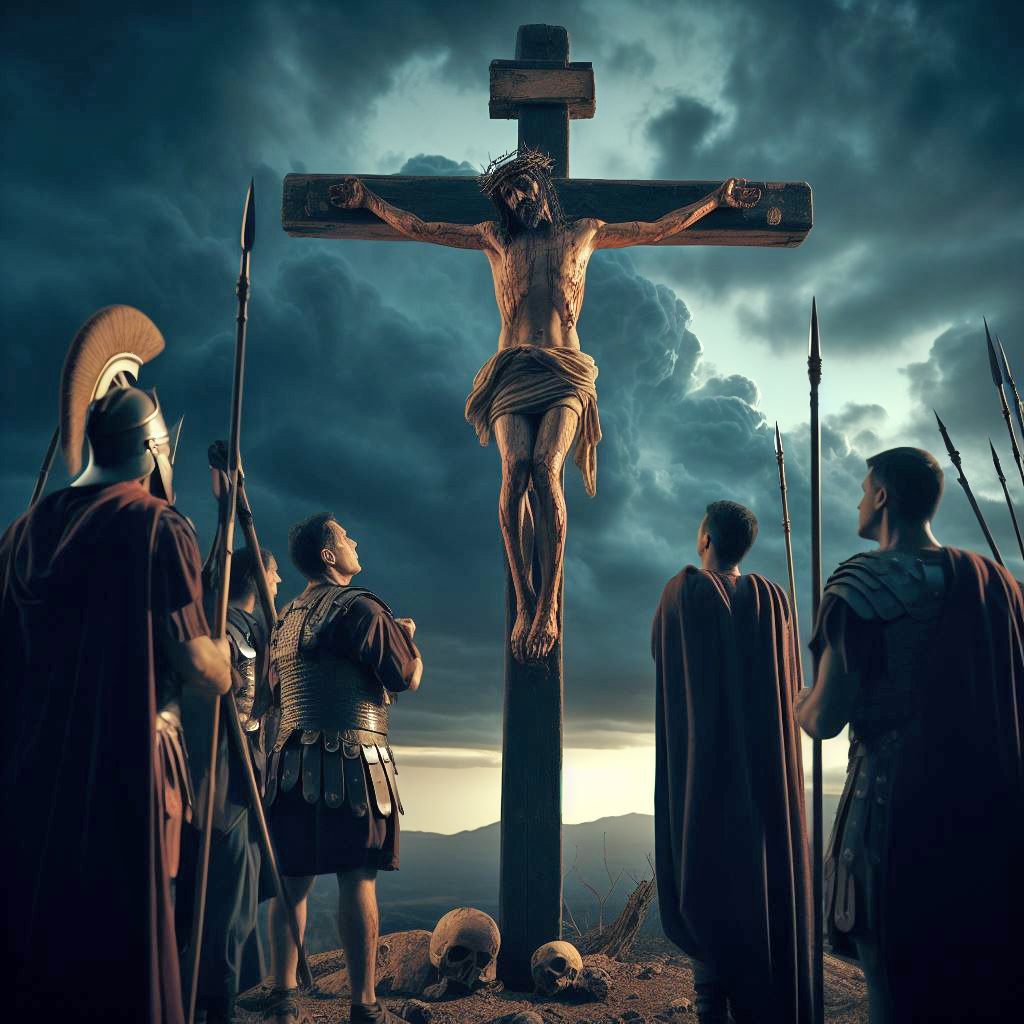



 The good news of the gospel is that Jesus took our sin upon Himself and bore the punishment that rightfully belongs to us (1 Cor. 1:18, 21; 15:3-4; Col. 2:13-14; 1 Pet. 2:24). This is substitutionary atonement, in which Jesus died in our place, “the just for the unjust, that He might bring us to God” (1 Pet. 3:18; cf. Rom. 5:6-10). Jesus paid the redemption price for our sins (Mark 10:45), and calls us into fellowship with Him (Acts 26:18; Col. 1:13-14). Salvation comes to us only as a free gift from God (Eph. 2:8-9; Tit. 3:5), “being justified as a gift by His grace through the redemption which is in Christ Jesus” (Rom 3:24). God is completely satisfied with the death of Christ, who “is the propitiation [ἱλασμός hilasmos – satisfaction] for our sins; and not for ours only, but also for those of the whole world” (1 John 2:2; cf. Rom. 3:25; 1 John 4:10). At the cross, God judged our sin as His righteousness requires and provides us salvation as His love desires.