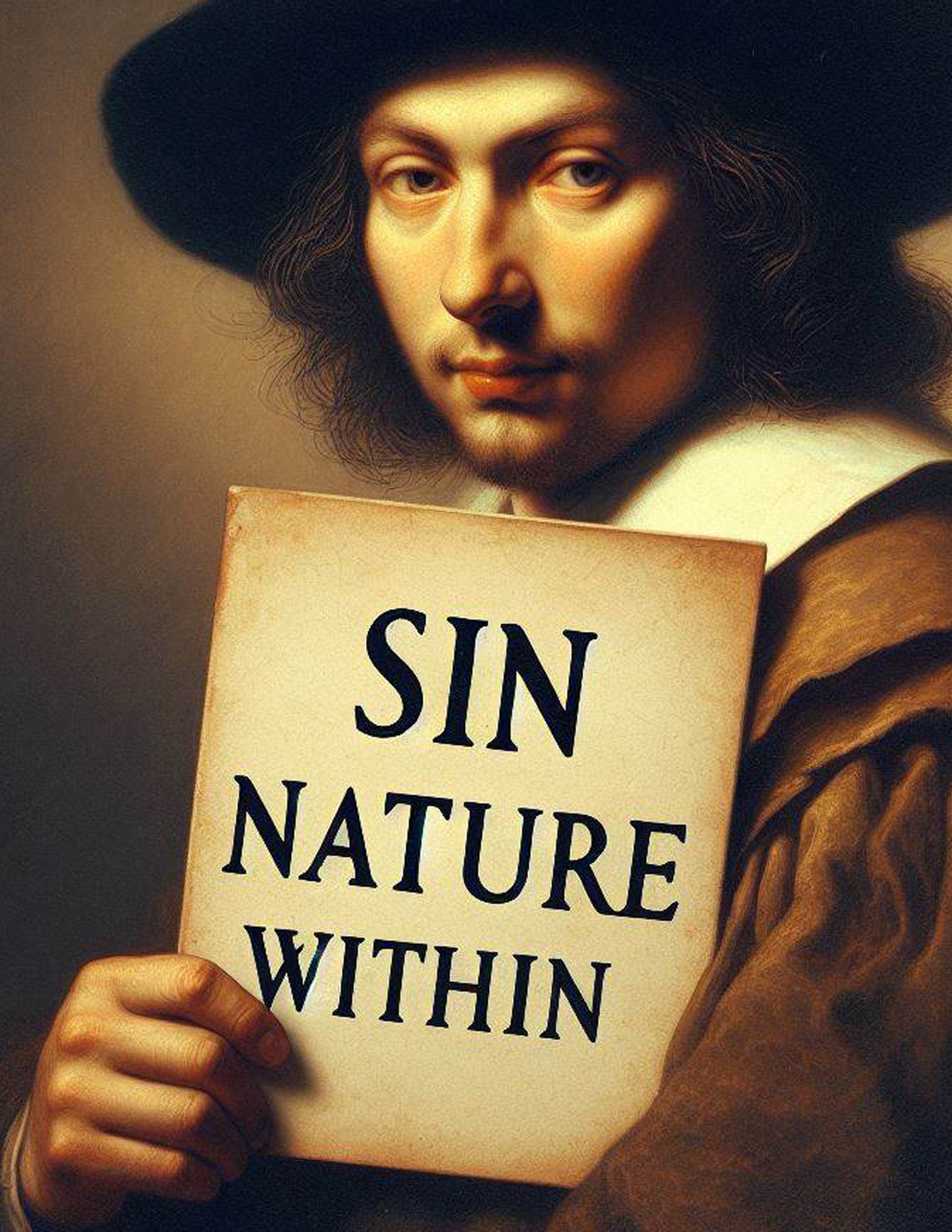
 At the moment of physical birth, every human being inherits a sin nature, passed down from Adam (Rom 5:12; Psa 51:5). This sin nature is the inner source of human corruption, influencing thoughts, emotions, and behaviors in opposition to God’s will (Jer 17:9; Mark 7:21-23). It manifests in various ways, ranging from self-righteous moralism to overt lawlessness, but both trends operate under the same principle—rebellion against divine righteousness. The unbeliever, possessing only the sin nature, has no spiritual life, no capacity for fellowship with God, and remains in a state of total depravity (Eph 2:1-3; Col 2:13). He may be moral or immoral, religious or irreligious, but he is always spiritually dead and incapable of pleasing God (Rom 8:7-8).
The sin nature has two primary trends—legalism and lawlessness. Those who trend toward legalism emphasize morality, religious works, and human effort as a means of achieving divine approval. These individuals often create and adhere to systems of manmade religion, attempting to approach God through ritual, self-denial, or personal merit. Such efforts are futile because salvation is by grace alone, through faith alone, in Christ alone, apart from works (Rom 4:4-5; Eph 2:8-9; Tit 3:5). Even after salvation, believers with a legalistic trend may fall into self-righteous arrogance, failing to recognize that the Christian life is lived by grace, not by works (Gal 3:1-3; 5:4). On the other hand, those who trend toward lawlessness indulge in sinful pleasures, rejecting divine authority in favor of unrestrained lusts. This results in patterns of behavior that include immorality, substance abuse, criminal activity, and a general pursuit of pleasure at the expense of divine viewpoint (Rom 1:24-32; Eph 4:17-19). These individuals seek happiness in temporal things, but their pursuits lead only to further enslavement to the flesh and eventual divine discipline (Gal 6:7-8; Heb 12:5-6).
 At the moment of faith in Christ, the believer receives a new nature, one that is created by God in righteousness and holiness of the truth (2 Cor 5:17; Eph 4:22-24; Col 3:9-10). This new nature, referred to as the “new man,” desires to obey God, learn doctrine, and live in a manner pleasing to the Lord (Rom 7:22; 1 John 3:9). However, the old sin nature is not eradicated at salvation. Instead, the believer enters into a lifelong conflict between the flesh and the Spirit (Rom 7:14-25; Gal 5:16-17). Victory in this conflict is only achieved through the consistent intake and application of Bible doctrine under the filling of the Holy Spirit (Rom 12:2; Eph 5:18; Col 3:16). While the sin nature’s ruling power has been broken (Rom 6:11-14), its presence remains until we receive our glorified bodies (1 Cor 15:51-53; Phil 3:20-21; 1 John 3:5). The Christian life is not about suppressing the sin nature through human effort, but about growing in grace and knowledge (2 Pet 3:18), renewing the mind with divine truth (Rom 12:2), and living under the power of the Holy Spirit (Gal 5:22-23; Eph 5:18). Only by operating under divine power can the believer experience true victory over the sin nature and advance to spiritual maturity, fulfilling the purpose for which they were saved (Eph 2:10; Phil 2:12-13).
Differences Between the Sin Nature and New Nature
 The sin nature, driven by selfish desires and the impulse to dominate (Rom 7:18; Gal 5:17), operates with urgency, seeking immediate gratification and exerting pressure to act contrary to God’s will. Paul describes this as a war between the flesh and the Spirit (Gal 5:16-17). The sin nature is not passive—it demands, manipulates, and entices, drawing believers toward self-centeredness. In contrast, the new nature, imparted at salvation (Eph 4:24; Col 3:9-10; 1 John 2:29; 3:9), is characterized by the fruit of the Spirit—love, joy, peace, patience, kindness, goodness, faithfulness, gentleness, and self-control (Gal 5:22-23). Unlike the sin nature, which compels through pressure, the new nature functions through positive volition, inviting the believer to walk in obedience. The Holy Spirit leads with conviction, encouragement, and truth (John 16:13; Rom 8:14), and the believer must choose to follow Him (Gal 5:25). The sin nature defies this process, ensuring an ongoing struggle for those who walk by the Spirit.
Before salvation, we were conditioned by the habits and instincts of the sin nature (Eph 2:1-3). Even after being made new in Christ (2 Cor 5:17) and receiving the indwelling Holy Spirit (Rom 8:9), our thinking and decision-making remain influenced by past experiences. The flesh has ingrained patterns—self-preservation, pride, impatience, impulsiveness—that do not disappear instantly. Spiritual growth involves unlearning these old patterns and aligning our thoughts with God’s truth. Romans 12:2 calls for transformation through the renewal of the mind, while Hebrews 5:14 associates maturity with discernment between good and evil. This process replaces human viewpoint with divine viewpoint (Rom 12:1-2). As we learn God’s Word (2 Tim 3:16-17; 1 Pet 2:2), we can walk by faith (2 Cor 5:7; Heb 10:38) in the filling and power of the Spirit (Gal 5:16; Eph 5:18), aligning with our new nature in Christ (1 John 3:6, 9).
 As we grow in Christ, we become more attuned to the Spirit’s leading. Unlike the flesh, which compels and pressures, the new nature operates through the calm conviction of the Spirit (John 16:13; Rom 8:14). This requires spiritual attentiveness—reading to the Word, walking by faith, and yielding to the Spirit’s direction. Over time, we develop an increasing sensitivity to His guidance, much like a musician refining their ear for subtle variations in tone and pitch. Initially, distinguishing the aggressive pull of the flesh from the gentle leading of the Spirit can be challenging. But through consistent exposure to Scripture (Psa 119:105; 2 Tim 3:16-17), prayer, and application of Bible doctrine (Jam 1:22), we become more responsive to the Spirit’s voice. Spiritual growth is not instantaneous but a lifelong process of learning, failing, and being refined (Phil 1:6; 2 Pet 3:18). The challenge for the believer is daily choosing to yield to the Spirit rather than the flesh (Rom 6:11-13).
In summary, every human inherits a sin nature from Adam, which corrupts thoughts and behaviors in opposition to God (Jer 17:9; Rom 5:12). This nature manifests in both self-righteous legalism and lawless indulgence, leaving unbelievers spiritually dead and incapable of pleasing God (Rom 8:7-8; Eph 2:1-3). At salvation, believers receive a new nature, created in righteousness, yet the old sin nature remains, leading to an ongoing battle between the flesh and the Spirit (Rom 7:14-25; Gal 5:16-17). Spiritual victory comes not through human effort but by renewing the mind with God’s Word and walking in the power of the Holy Spirit (Rom 12:2; Gal 5:16; Eph 5:18). As believers grow in grace, they learn to reject the flesh’s impulses and align their lives with divine truth, fulfilling God’s purpose and glorifying Him (Phil 1:6; 2 Pet 3:18).
Dr. Steven R. Cook
If this article has enriched your understanding and walk with Christ, and you feel led to support my ministry, your generosity is greatly appreciated. Your gifts enable me to continue sharing the gospel of grace and providing in-depth biblical teachings. Thank you for partnering with me in this mission.
Related Articles:
-
- The Free Gift of God is Eternal Life
- Walking in the Light
- When a Christian Turns to a Sinful Lifestyle
- Assurance of Salvation
- Righteousness and Sin in the Life of the Christian
- Saved by Grace Alone, Through Faith Alone, in Christ Alone
- God Uses Imperfect People
- The Doctrine of Simultaneity
- The Sin the Leads to Death
- Walking Worthy of God’s Call to Service
- God’s Gift of Righteousness
- Two Kinds of Forgiveness with God
- When Christians Sin Habitually
- The Price of Forgiveness
- Knowing and Doing the Will of God
- The High Calling of God’s Servant
- The Life of Faith
- The Righteous Lifestyle of the Believer
As a long term Thieme-ite and fan of most DTS-taught doctrines, I found this explanation of our Sin Nature to be the most lucid I have ever read. Thank you! Very helpful.
Thanks friend. I’m glad it was helpful. Lord knows I’ve struggled over the years to understand it and communicate it clearly. Wishing you a blessed day. 🙂