God’s Power in the Christian

Every believer has access to God’s power, yet few live in its reality, because divine provision must be understood before it is applied. Writing to the Christians in Ephesus, Paul prays that they will grasp the power of God available to them. He writes, “I pray that the eyes of your heart may be enlightened, so that you will know what is the hope of His calling, what are the riches of the glory of His inheritance in the saints” (Eph. 1:18). The believer’s riches in Christ must be understood before they can be lived. God has already “blessed us with every spiritual blessing in the heavenly places in Christ” (Eph. 1:3), yet those blessings require spiritual perception to be appreciated and applied. Paul then adds, “and what is the surpassing greatness of His power toward us who believe” (Eph. 1:19a). God’s “power” is dynamis, which denotes the “potential for functioning in some way, power, might, strength, force, capability.”[1] This refers to real, effective ability or power to act, especially God’s active strength working to accomplish His purposes in and through people.

Paul continues, “These are in accordance with the working of the strength of His might which He brought about in Christ, when He raised Him from the dead and seated Him at His right hand in the heavenly places” (Eph. 1:19b–20). This is resurrection power, the same power that conquered death and exalted Christ, now directed toward the believer and made operative within him (Eph. 3:16; Phil. 2:13; 3:10). According to Hoehner, “God’s energetic power which resurrected and exalted Christ in the past…is the same power available to believers in the present (cf. Phil. 3:10). What an amazing source of spiritual vitality, power, and strength for living the Christian life!”[2]

This power belongs to the believer as part of his position in Christ. It is not earned, developed, or achieved. It is received at salvation as part of the total package of spiritual blessings. The phrase “toward us who believe” (Eph. 1:19) shows that this power is directed to the believer with the intent of being experienced. It is both provision and potential, realized through faith (2 Cor. 5:7; Heb. 10:38; 11:6). Faith is the means by which the believer draws upon what God has already supplied. Thus, divine power is present and available, grounded in union with Christ and activated through a believing response.

The mechanics of applying this power are straightforward. The believer takes in the word of God until the inner man is enlightened and stabilized (Eph. 1:18; Col. 3:16; Rom. 12:2; 1 Pet. 2:2; 2 Pet. 3:18). He then believes what God has said and relies on it in real time. As he remains in fellowship and under divine control, being “filled with the Spirit” (Eph. 5:18), the Spirit strengthens “with power…in the inner man” (Eph. 3:16), resulting in a Spirit-directed life as he “walk[s] by the Spirit” (Gal. 5:16). The believer does not generate the power. He accepts God’s word as true and depends on His provision, allowing the Spirit to make that truth effective in his life.

In practical terms, this means rejecting fear and human viewpoint and replacing them with divine truth. Many know Scripture, yet live in anxiety because truth never governs their thinking. By contrast, the believer who walks by faith seeks not merely relief from pressure, but wisdom and strength to do God’s will. What God does not remove, He uses to develop character, humility, and faith (2 Cor. 12:9–10; Jam. 1:2–4). Rather than complain like Israel (Ex. 17:3; Heb. 3:7–4:2), the believer responds like Abraham, growing strong in faith and giving glory to God (Rom. 4:20–21). In financial pressure, relational conflict, or personal stress, he trusts God’s provision (Phil. 4:19), seeks His kingdom (Matt. 6:33), rests in His sovereign purpose (Rom. 8:28), walks by faith (2 Cor. 5:7; Heb. 10:38), prays with thanksgiving (1 Th. 5:16–18), thinks according to divine viewpoint (Rom. 12:2; Col. 3:2), and learns contentment (1 Tim. 6:8), knowing that God is at work in him for His glory and the good of others (Phil. 2:13; 1 Cor. 10:31).

The result is practical and observable. As the believer applies the riches of Christ’s power, he gains victory over sin, endurance under pressure, and consistency in obedience. Paul commands, “Suffer hardship with me, as a good soldier of Christ Jesus” (2 Tim. 2:3), and explains the source, “for it is God who is at work in you, both to will and to work for His good pleasure” (Phil. 2:13). Growth in godliness follows, because “His divine power has granted to us everything pertaining to life and godliness” (2 Pet. 1:3). God’s power (θείας δυνάμεως, theias dynameōs) is the source of the Christian life, granted as a completed act with ongoing results (perfect tense of δωρέομαι, dōreomai). According to Wiersbe:

When you are born into the family of God by faith in Christ, you are born complete. God gives you everything you will ever need “for life and godliness.” Nothing has to be added! “And ye are complete in Him” (Col. 2:10)…Just as a normal baby is born with all the “equipment” he needs for life and only needs to grow, so the Christian has all that is needed and only needs to grow.[3]

At the moment of faith in Christ, the believer receives the full provision of divine power as part of his riches in Christ (Eph. 1:3), lacking nothing essential for the Christian life (Col. 2:10). This power is not developed over time but granted in full, and it becomes effective in experience as the believer understands the word of God, believes it, walks by faith in the power of the Spirit, and responds in obedience. In this way, God’s power moves from provision to practice, producing stability in the mind, endurance under pressure, and consistent spiritual growth, all to the glory of God.

Steven R. Cook, D.Min., M.Div.

If this article has enriched your understanding and walk with Christ, and you feel led to support my ministry, your generosity is greatly appreciated. Your gifts enable me to continue sharing the gospel of grace and providing in-depth biblical teachings. Thank you for partnering with me in this mission.

Related Articles:


[1] William Arndt et al., A Greek-English Lexicon of the New Testament and Other Early Christian Literature (Chicago: University of Chicago Press, 2000), 262.

[2] Harold W. Hoehner, et al, “Ephesians,” in The Bible Knowledge Commentary, vol. 2 (Wheaton, IL: Victor Books, 1985), 621.

[3] Warren W. Wiersbe, The Bible Exposition Commentary, vol. 2 (Wheaton, IL: Victor Books, 1996), 437.
The Right to Pray to God

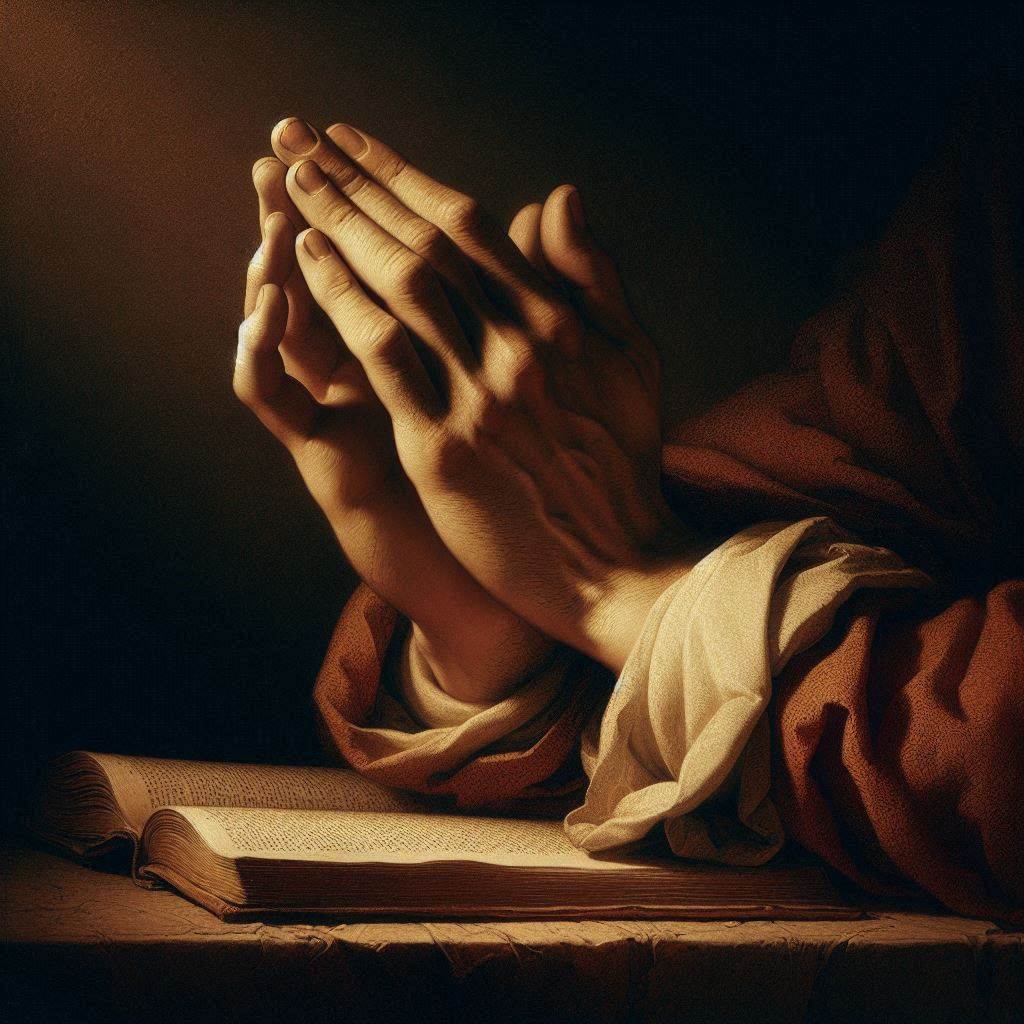
Christ grants believers direct access to the Father in prayer through His name (John 16:23; Eph. 2:18). This means we approach the Father on the basis of Christ’s merit and finished work, not our own performance or worthiness. Jesus said, “If you ask the Father for anything in My name, He will give it to you” (John 16:23b). To pray “in My name” is not a formula of words, but an appeal grounded in who Christ is and what He has accomplished. According to Hart, “The prayer is made for Jesus’ sake, not primarily for personal benefit. So we can ask in prayer as if Jesus were asking it. This implies that our prayers must be designed according to His will, character, and purpose (1 John 5:14–15).[1]

This access is also mediated through the Spirit. Paul writes, “through Him we both have our access in one Spirit to the Father” (Eph. 2:18). The Son provides the way, and the Spirit enables the approach. The believer does not strive to gain audience with God; he already possesses it. This reflects the new covenant reality, where barriers are removed. The veil has been torn (Matt. 27:51), and the believer is invited to “draw near with confidence to the throne of grace” (Heb. 4:16). Prayer, then, is not an attempt to secure God’s attention, but the exercise of a privilege already granted in Christ.

Jesus opened a new avenue of fellowship where the believer stands welcomed and heard because he is identified with the Son. Union with Christ is the ground of this relationship. As the Father hears the Son, so He hears those who are in Him. This establishes both confidence and responsibility. Confidence, because access is secured. Responsibility, because prayer is to be aligned with the character and will of God. John writes, “if we ask anything according to His will, He hears us” (1 John 5:14). The believer’s requests are shaped by Scripture (His revealed will), guided by the Spirit, and directed toward God’s purposes.

This privilege results in fullness of joy. Jesus said, “ask and you will receive, so that your joy may be made full” (John 16:24). Answered prayer is not merely about obtaining what is requested, but about deeper fellowship with God. As the believer learns to pray in dependence on Christ and in submission to the Father’s will, he experiences the stability, peace, and joy that come from communion with God.

Reasons why prayer is not answered:

Negative answers to prayer often trace back to the believer’s condition and thinking. Scripture identifies several causes. Domestic strife disrupts prayer, for “your prayers will not be hindered” only when there is proper harmony (1 Pet. 3:7). A pattern of evil living places one out of fellowship, since “the face of the Lord is against those who do evil” (1 Pet. 3:12), and inward sin blocks effectiveness, for “if I regard wickedness in my heart, the Lord will not hear” (Ps. 66:18). A lack of compassion can close the channel, since “he who shuts his ear to the cry of the poor will also cry himself and not be answered” (Prov. 21:13). Neglect of God’s word further blocks prayer, for “He who turns away his ear from listening to the law, even his prayer is an abomination” (Prov. 28:9; cf. Zec. 7:12–13), and effective prayer assumes that His word is abiding within (John 15:7). Self-centered, lust-driven requests fail because “you ask and do not receive, because you ask with wrong motives” (Jam. 4:3), and a lack of faith destabilizes prayer, since the one who doubts “ought not to expect that he will receive anything from the Lord” (Jam. 1:6–7). Disobedience further hinders prayer, for answered prayer is connected to walking in what pleases the Lord (1 John 3:22). Finally, prayer that runs contrary to God’s will is not granted, for “if we ask anything according to His will, He hears us” (1 John 5:14). The issue is not access, which is secured in Christ, but alignment with God’s word and will.

Steven R. Cook, D.Min., M.Div.

If this article has enriched your understanding and walk with Christ, and you feel led to support my ministry, your generosity is greatly appreciated. Your gifts enable me to continue sharing the gospel of grace and providing in-depth biblical teachings. Thank you for partnering with me in this mission.

Related Articles:


[1] John F. Hart, “John,” in The Moody Bible Commentary, ed. Michael A. Rydelnik and Michael Vanlaningham (Chicago, IL: Moody Publishers, 2014), 1648.

The Believer’s Inheritance in Christ

The believer’s inheritance originates in the eternal decree of God. Paul writes that we “have obtained an inheritance, having been predestined according to His purpose who works all things after the counsel of His will” (Eph. 1:11), and that the Holy Spirit “is given as a pledge of our inheritance” (Eph. 1:14). The Spirit is the pledge (arrabōn), referring to a payment made in advance, a “first installment, deposit, down payment, pledge.”[1] This is a nonrefundable deposit that guarantees what is to come. Hoehner observes, “The ‘deposit’ of the Holy Spirit is a little bit of heaven in believers’ lives with a guarantee of much more yet to come.”[2] Chafer notes, the pledge “is a prepayment, or foretaste of an oncoming bounty…an intimation of the boundless, experimental fulness of the inheritance which is yet to be.”[3] The inheritance was designed in eternity past, secured by the work of Christ, and applied at the moment of faith. Every believer stands in this position by grace, not by merit. It belongs to the family of God because of union with Christ.

This inheritance is also secured and protected. Peter states the inheritance is “imperishable and undefiled and will not fade away, reserved in heaven for you” (1 Pet. 1:4). The word τηρέω (tēreō) means “to continue, keep, hold, reserve, preserve.”[4] The inheritance is being carefully guarded by God Himself. What God protects cannot be ruined, taken away, or lost. The Spirit’s sealing ministry confirms this certainty, marking the believer as God’s possession and guaranteeing future realization (Eph. 1:13–14). Paul adds that as children of God, “if children, heirs also, heirs of God and fellow heirs with Christ” (Rom. 8:17). The status of heir flows from sonship. It is fixed, legal, and irrevocable. Eternal life and a share in Christ’s kingdom are included in this grant. According to Raymer, “A Christian’s inheritance cannot be destroyed by hostile forces, and it will not spoil like overripened fruit or fade in color. Each Christian’s inheritance of eternal life is kept in heaven or ‘kept watch on’ by God so its ultimate possession is secure (cf. Gal. 5:5).”[5]

This inheritance is entirely unearned. It refers to all that belongs to the believer by virtue of being in Christ. It includes eternal life, justification, a permanent relationship with God, and a guaranteed future in His kingdom. This inheritance is received at the moment of faith apart from works. “The free gift of God is eternal life in Christ Jesus our Lord” (Rom. 6:23), and “having been justified by faith, we have peace with God through our Lord Jesus Christ” (Rom. 5:1). It cannot be increased, diminished, or forfeited. It rests completely on Christ’s finished work and God’s unchanging promise.

The Christian possesses an inheritance that is guaranteed, secure, and eternal; therefore, he lives with certainty and assurance. It is grounded in grace, preserved by God, and independent of human performance. This truth stabilizes the believer’s thinking and directs his confidence away from self and toward the faithfulness of God, who secures every aspect of salvation for those who are in Christ.

Steven R. Cook, D.Min., M.Div.

If this article has enriched your understanding and walk with Christ, and you feel led to support my ministry, your generosity is greatly appreciated. Your gifts enable me to continue sharing the gospel of grace and providing in-depth biblical teachings. Thank you for partnering with me in this mission.

Related Articles:


[1] William Arndt et al., A Greek-English Lexicon of the New Testament and Other Early Christian Literature (Chicago: University of Chicago Press, 2000), 134.

[2] Harold W. Hoehner, et al, “Ephesians,” in The Bible Knowledge Commentary, vol. 2 (Wheaton, IL: Victor Books, 1985), 619.

[3] Lewis Sperry Chafer, The Ephesian Letter (New York: Loizeaux Brothers, 1935), 52.

[4] William Arndt et al., A Greek-English Lexicon of the New Testament and Other Early Christian Literature, 1002.

[5] Roger M. Raymer, et al “1 Peter,” in The Bible Knowledge Commentary, vol. 2 (Wheaton, IL: Victor Books, 1985), 841.

The Believer’s Place in God’s Plan

God’s plan for the believer begins with union with Christ. Paul structures Ephesians 1 around this controlling idea, expressed in the repeated phrases “in Him” (ἐν αὐτῷ) and “in Christ” (ἐν Χριστῷ), which define the sphere of every spiritual blessing. Election is therefore Christ-centered. Scripture identifies Christ as the chosen One, as Isaiah records, “My chosen one in whom My soul delights” (Isa. 42:1), and Peter affirms that He “is choice and precious in the sight of God” (1 Pet. 2:4). Believers, then, are elect only in relation to Christ. As Paul states, God “chose us in Him” (Eph. 1:4). The emphasis is not on isolated individuals, but on Christ as the Elect One and those who are united to Him by faith sharing in that election. According to Klein, “Christ is the Elect One; the church is elect by virtue of its incorporation in him. Before the foundation of the world God determined that those in Christ would be his people… The election here is corporate: God’s people in Christ.”[1]

Scripture first establishes that salvation is provided for all and received through faith alone in Christ alone (John 3:16; 1 Tim. 2:3–4; 1 John 2:2; 2 Pet. 3:9). Jesus “bore our sins in His body on the cross” (1 Pet. 2:24) and “died for sins once for all, the just for the unjust, so that He might bring us to God” (1 Pet. 3:18). Because Jesus paid our sin debt in full, God now offers forgiveness of sins (Acts 10:43) and eternal life as a free gift (Rom. 6:23; Eph. 2:8–9) to all who simply believe in Jesus as their Savior (Rom. 3:28; 4:5; 5:1). Scripture is plain: “Whoever believes in Him shall not perish, but have eternal life” (John 3:16; cf. Acts 16:31). The object of our faith is Jesus, the God-Man (John 1:1, 14; Col. 2:9), who “died for our sins… was buried… was raised on the third day… and appeared” alive to many witnesses (1 Cor. 15:3–8). At that moment of faith in Christ, God places the believer into union with His Son (1 Cor. 12:13; Col. 1:13), and from that point forward, the believer participates in all that is true of Christ.

Within that framework, Paul writes, “He chose us in Him before the foundation of the world” (Eph. 1:4). The emphasis is corporate. The “us” refers to believers as a class, those who are in Christ. The choice was made “before the foundation of the world,” but the object of that choice is Christ and the people united to Him. The issue is not who would believe, but what God determined for those who do believe. Election defines the blessings and destiny of those in Christ, not the means by which they come to faith. According to Flowers, “As a spiritual blessing, regeneration is only available to those who are corporately in Christ by faith. This is also why we find in Ephesians 1 that each of the spiritual blessings listed are carefully qualified as “in him” (Eph. 1:4), “in the Beloved One” (Eph. 1:6), “in him” (Eph. 1:7), “in Christ” (Eph. 1:9), “in Christ” (Eph. 1:10), and “in him” (Eph. 1:13).”[2]

Paul states the purpose of election: that believers would be “holy and blameless before Him” (Eph. 1:4). This speaks of positional sanctification and ultimate conformity to Christ. At the moment of faith, the believer is set apart in Christ (1 Cor. 1:2), for “by His doing you are in Christ Jesus” (1 Cor. 1:30). Election guarantees the believer’s standing and final perfection, for “we know that when He appears, we will be like Him, because we will see Him just as He is” (1 John 3:2).

Paul continues in Ephesians 1:5 by saying that God “predestined us to adoption as sons through Jesus Christ” (Eph. 1:5). In simple terms, this means God decided ahead of time what would happen to those who are in Christ. He did not decide who would believe, but what would be true of those who do believe. And what He decided is that they would become part of His family. Adoption means we are given full standing as God’s children, with all the rights and privileges that come with it. Because we are united to Christ, we share in His position and are treated as heirs with Him (Rom. 8:15–17).

This plan comes from God’s heart. It is “according to the kind intention of His will” (Eph. 1:5), which means it is based on His grace, not anything we earn. At the same time, people are still responsible to believe. The gospel is offered to everyone, and those who believe in Jesus enter into what God has already planned. As John says, those who “receive Him” are the ones who “believe in His name,” and they are given the right to become children of God (John 1:12).

Paul explains where all of this is heading. God’s plan is to bring everything together under Christ (Eph. 1:10). Christ is the center of history, and everything is moving toward Him. Within that plan, believers have a place. “In Him we have obtained an inheritance” (Eph. 1:11). This means we share in what God has prepared. That includes eternal life, a right standing with God, a future glory, and even rewards for faithful living (Rom. 8:17; Col. 1:12; 1 Cor. 3:12–15). This inheritance is not something we earn. It is given to us because we are in Christ.[3]

Paul repeats the idea of predestination in verse 11 to make the point clear. God decided ahead of time what would be true of those in Christ. He gave them a future and a role in His plan. This fits with what Paul says later, that we are “created in Christ Jesus for good works… prepared beforehand” (Eph. 2:10). At the same time, God is actively guiding history, “working all things after the counsel of His will” (Eph. 1:11), while still calling people to believe in Christ. The ultimate goal of all this is God’s glory. Paul says it is “to the praise of His glory” (Eph. 1:12). Those who first believed in Christ, likely Jewish believers, were the first part of this plan, and Gentiles were added soon after (Eph. 1:13). Together, all believers share in what God is doing.

In summary, corporate election means that God chose Christ as the Elect One and decided ahead of time that everyone who is joined to Him by faith would share in His blessings. A person is not chosen in order to believe. Rather, when a person believes, God places them into Christ, and they then share in everything God has already prepared.

Steven R. Cook, D.Min., M.Div.

If this article has enriched your understanding and walk with Christ, and you feel led to support my ministry, your generosity is greatly appreciated. Your gifts enable me to continue sharing the gospel of grace and providing in-depth biblical teachings. Thank you for partnering with me in this mission.

Related Articles:


[1] William W. Klein, “Corporate and Personal Election,” in Calvinism: A Biblical and Theological Critique, ed. David L. Allen and Steve W. Lemke (Nashville, TN: B&H Academic, 2022), 354.

[2] Leighton Flowers, “A Critique of Unconditional Election,” in Calvinism: A Biblical and Theological Critique, ed. David L. Allen and Steve W. Lemke (Nashville, TN: B&H Academic, 2022), 61.

[3] Scripture presents two aspects of inheritance that must be distinguished. First, every believer has an inheritance by virtue of being in Christ. At the moment of faith, he “obtains an inheritance” (Eph. 1:11), becomes an “heir of God” (Rom. 8:17), and is guaranteed an inheritance that is secure and based on Christ’s work, not his own (1 Pet. 1:4). Second, there is an inheritance related to obedience, which concerns reward. A believer’s works will be evaluated, and “if any man’s work… remains, he will receive a reward,” though even the one who suffers loss “will be saved” (1 Cor. 3:14–15). Paul also speaks of “the reward of the inheritance” tied to faithful service (Col. 3:24). In short, every believer has an inheritance in Christ, but faithful obedience determines the reward associated with that inheritance.

The Believer’s Position in Christ

At the moment of faith in Christ, God transfers the believer into the body of Christ, the Church. A spiritual transference occurs and a new identity is secured. From that instant, the believer is in Christ (ἐν Χριστῷ).[1] Paul writes, “But by His doing you are in Christ Jesus” (1 Cor. 1:30). The phrase “by His doing” translates ἐξ αὐτοῦ (ex autou) which denotes source, identifying God as the causal agent. The believer does not place himself into Christ; God does. This is positional truth. It is judicial and actual, not experiential or emotional. The declaration that a believer is in Christ is judicial because it is God’s legal act of transferring him from Adamic condemnation into a new standing of righteousness and life in Christ (1 Cor. 1:30; Rom. 8:1). The preposition ἐν (en) is locative, pointing to placement within a new sphere. The believer is transferred from Adamic headship into Christic headship: “For as in Adam all die, so also in Christ all will be made alive” (1 Cor. 15:22). Walvoord notes, “Before salvation, the individual was in Adam, partaking of Adam’s nature, sin, and destiny. In salvation, the believer is removed from his position in Adam, and he is placed in Christ.”[2]

In Christ, the believer shares in Christ’s righteousness, eternal life, and acceptance before the Father. Scripture states, God “made Him who knew no sin to be sin on our behalf, so that we might become the righteousness of God in Him” (2 Cor. 5:21; cf. Phil. 3:9). According to Ryrie, “When the individual receives Christ, he is placed in Christ. This is what makes him righteous. We are made the righteousness of God in Him. This righteousness alone overcomes our desperate, sinful condition and measures up to all the demands of God’s holiness.”[3] Chafer adds, “Imputed righteousness is secured by a vital union with Christ, while divine justification is a judicial decree of God which is based on, and is an acknowledgment of, imputed righteousness.”[4]

Scripture also reveals that Christ is our life, for “When Christ, who is our life, is revealed, then you also will be revealed with Him in glory” (Col. 3:4); and “the free gift of God is eternal life in Christ Jesus our Lord” (Rom. 6:23). The believer stands accepted before God, who “made us accepted in the Beloved” (Eph. 1:6). This acceptance means we will never face the lake of fire, for “there is now no condemnation for those who are in Christ Jesus” (Rom. 8:1).

At the instant of faith in Christ, the Holy Spirit identifies the believer with Christ’s death, burial, resurrection, and ascension (Rom. 6:3–5; Eph. 2:6). Paul wrote, “For all of you who were baptized into Christ have clothed yourselves with Christ” (Gal. 3:27). This baptism is the Spirit’s work of union, not water baptism (1 Cor. 12:13). It occurs once and permanently. Scripture states, “Therefore, if anyone is in Christ, he is a new creature; the old things passed away; behold, new things have come” (2 Cor. 5:17). The phrase “in Christ” speaks of standing before God, not performance in daily life.

Positional truth means God now sees the believer as sharing in Christ’s accomplishments. When Christ died, our position died with Him; when He was raised, our position was raised with Him. Paul commands, “Even so consider yourselves to be dead to sin, but alive to God in Christ Jesus” (Rom. 6:11). The believer understands what God has revealed, and because God has integrity and cannot lie (Heb. 6:18), the believer, by faith, reckons it to be so. God’s Word defines reality, and we accept His estimation of who we are. Experience may fluctuate; position does not. It rests on Christ’s finished work.

An illustration clarifies this. A bankrupt man is legally adopted by a wealthy benefactor and transferred into a new family. Instantly his status changes. He shares the family name and privileges, though he may still think like a poor man for a time. So the believer is rescued “from the domain of darkness” and transferred into a new realm (Col. 1:13). Position changes before behavior does. This position is permanent. Jesus said, “And I give eternal life to them, and they will never perish; and no one will snatch them out of My hand” (John 10:28), and “having been justified by faith, we have peace with God through our Lord Jesus Christ” (Rom. 5:1). Discipline may come for disobedience (Heb. 12:6), but the believer is forever secure from eternal condemnation (Rom. 8:1).

Positional truth forms the foundation for growth. One does not live the Christian life to get into Christ, but because he is already in Him. Paul exhorts, “Walk in a manner worthy of the calling with which you have been called” (Eph. 4:1). The walk refers to how we live after being saved. Constable notes, “To walk in a worthy manner means to bring one’s conduct into harmony with one’s calling.”[5] God does not force the Christian to walk. The Christian must obey, by faith (2 Cor. 5:7; Heb. 10:38). The calling precedes the walk. To be in Christ is to possess a new identity, a secure standing, and a permanent union with the risen Lord. All spiritual advance flows from that fixed position.

Steven R. Cook, D.Min., M.Div.

If this article has enriched your understanding and walk with Christ, and you feel led to support my ministry, your generosity is greatly appreciated. Your gifts enable me to continue sharing the gospel of grace and providing in-depth biblical teachings. Thank you for partnering with me in this mission.

Related Articles:


[1] Paul uses the phrase ἐν Χριστῷ and closely related expressions such as ἐν Κυρίῳ (en Kurio) and ἐν αὐτῷ (en auto) with great frequency. The exact count depends on whether one includes only the precise phrase “in Christ” or all cognate expressions. The strict phrase ἐν Χριστῷ occurs approximately eighty-five times in the Pauline epistles. When related formulas are included, the number exceeds one hundred fifty occurrences. This repetition signals a doctrinal emphasis.

[2] John F. Walvoord, The Holy Spirit (Galaxie Software, 2008), 141.

[3] Charles C. Ryrie, Basic Theology (Chicago, IL: Moody Press, 1999), 345.

[4] Lewis S. Chafer, Systematic Theology, vol. 2 (Grand Rapids, MI: Kregel Publications, 1993), 274.

[5] Tom Constable, Tom Constable’s Expository Notes on the Bible (Galaxie Software, 2003), Eph. 4:1.

The Believers’ Adoption Into God’s Family

Father holding child's handAs those who have been redeemed by the blood of Christ, we have been transferred from Satan’s “domain of darkness” (Col 1:13) and placed into the family of God. Our new status is as “children of God” (John 1:12; cf., Rom 8:16; Phil 2:15). John wrote, “See how great a love the Father has bestowed on us, that we would be called children of God; and such we are” (1 John 3:1a). We do not come into the world as natural born children of God; rather, we are naturally born “in Adam” (1 Cor 15:21-22), as “sons of disobedience” (Eph 2:2), and are “by nature children of wrath” (Eph 2:3). But at the moment of faith in Christ, we receive “adoption as sons” (Rom 8:15; cf. Gal 4:5; Eph 1:5). The term adoption derives from the Greek word huiothesia (υἱοθεσία) which, according to BDAG, refers to “those who believe in Christ and are accepted by God as God’s children…with full rights.”[1] For the first time, as children of God, we have the privilege and right to cry out to God as “Abba! Father!” (Rom 8:15). This adoption by God is an act of love and grace, for “He predestined us to adoption as sons through Jesus Christ to Himself, according to the kind intention of His will” (Eph 1:5). Norman Geisler states:

“Adoption (Grk: huiothesia) means “placing as a son”; it signifies, literally, “a legal child” (Ex 2:10) and is used five times in the New Testament. Theologically, adoption (Gal 4:5) refers to the act of God that places a person as a son in God’s family. Adoption is a term of position whereby one becomes a son by the new birth (John 1:12–13), is redeemed from the bondage of the law (Gal 4:1–5), and, although only a child (Grk: teknion), is by adoption made an adult son (Grk: huios), which is fully manifested at the resurrection of the body (Rom 8:23; cf. 1 John 3:2).”[2]

Robert B. Thieme Jr., adds:

“God’s bestowal of sonship and heirship upon believers is a grace gift at the moment of salvation (John 1:12–13; Gal 4:5–7; Eph 1:5). Through union with Christ, every Church Age believer, male or female, is adopted into God’s royal family and granted joint heirship with God the Son, who is the “heir of all things” (Heb 1:2). Even though the new believer is a spiritual infant, adoption recognizes his position not as nepios, a young child, but as huios, an adult son (Gal 4:1–7). This royal son of God receives the full privileges and responsibilities of spiritual aristocracy, along with an eternal inheritance (Rom 8:23; Eph 1:14; Col 3:24; Rev 21:7).”[3]

Our new position in God’s family should lead to better behavior in life, as each believer is “to walk in a manner worthy of the calling with which you have been called” (Eph 4:1), and to “walk in a manner worthy of the Lord, to please Him in all respects, bearing fruit in every good work and increasing in the knowledge of God” (Col 1:10). This will happen as we learn and live God’s Word (2 Tim 2:15; 3:16-17; 1 Pet 2:2), walk by faith (2 Cor 5:7; Heb 10:38; 11:6), advance to spiritual maturity (Heb 6:1), and “grow in the grace and knowledge of our Lord and Savior Jesus Christ” (2 Pet 3:18).

Though fully adopted as God’s children, there is an eschatological aspect to our adoption that is pending our future glorified bodies. Paul wrote, “the creation itself also will be set free from its slavery to corruption” (Rom 8:21), and then draws a parallel with our status as children, saying, “even we ourselves groan within ourselves, waiting eagerly for our adoption as sons, the redemption of our body” (Rom 8:23). We are children by position, and will experience our freedom from sin when we receive our glorified bodies (Phil 3:20-21; 1 John 3:2, 5).

Dr. Steven R. Cook

Related Articles:

[1] William Arndt et al., A Greek-English Lexicon of the New Testament and Other Early Christian Literature, 1024.

[2] Norman L. Geisler, Systematic Theology, Volume Three: Sin, Salvation, 226.

[3] Robert B. Thieme, Jr. “Adoption”, Thieme’s Bible Doctrine Dictionary, 3.