
 Israel was the only true theocracy to have ever existed, a nation uniquely governed by God Himself. Scripture reveals the Lord as Israel’s ultimate Judge, Lawgiver, and King. Isaiah declared, “For the LORD is our Judge, the LORD is our Lawgiver, the LORD is our King; He will save us” (Isa 33:22).[1] Though this verse anticipates the future Messianic reign when the Lord will personally rule in righteousness and peace, it also encapsulates the divine ideal that shaped Israel’s national life from the beginning. God alone was to be the source of all authority—judicial, legislative, and executive—directing the nation through His revealed Word and His appointed servants. Israel’s existence under this system demonstrated what it meant for a people to live under direct divine rule. Yet history records that the nation repeatedly rejected this theocratic structure, desiring to be governed like the surrounding nations. When they demanded a human monarch, the Lord told Samuel, “They have not rejected you, but they have rejected Me from being king over them” (1 Sam 8:7).
God as King
Yahweh was Israel’s King (melek). The nation was established as a true theocracy, ruled directly by God Himself, who reigned in both spiritual and national affairs. His kingship was first displayed in His mighty deliverance of Israel from Egyptian bondage, prompting Moses to declare, “The LORD shall reign forever and ever” (Ex 15:18). From that point forward, God’s sovereign rule was expressed through His covenantal authority, His law, and His presence among His people. His kingship was visibly represented in the tabernacle and later the temple, where His throne was symbolized above the mercy seat between the cherubim (1 Sam 4:4; Psa 99:1). Thus, Israel’s political and spiritual life were to be centered on the reality that Yahweh alone was their sovereign ruler, the true King who dwelt among them and governed by His Word. The Lord Himself declared, “I am the LORD, your Holy One, the Creator of Israel, your King” (Isa 43:15), and again, “Thus says the LORD, the King of Israel and his Redeemer, the LORD of hosts: ‘I am the first and I am the last, and there is no God besides Me’” (Isa 44:6). Because God was King, He established Israel’s constitution, determined Israel’s political decisions, declared alliances and wars, as would any ruler of a nation. When Israel later rejected divine rule in favor of a human monarch, the Lord said to Samuel, “They have not rejected you, but they have rejected Me from being king over them” (1 Sam 8:7).
God as Lawgiver
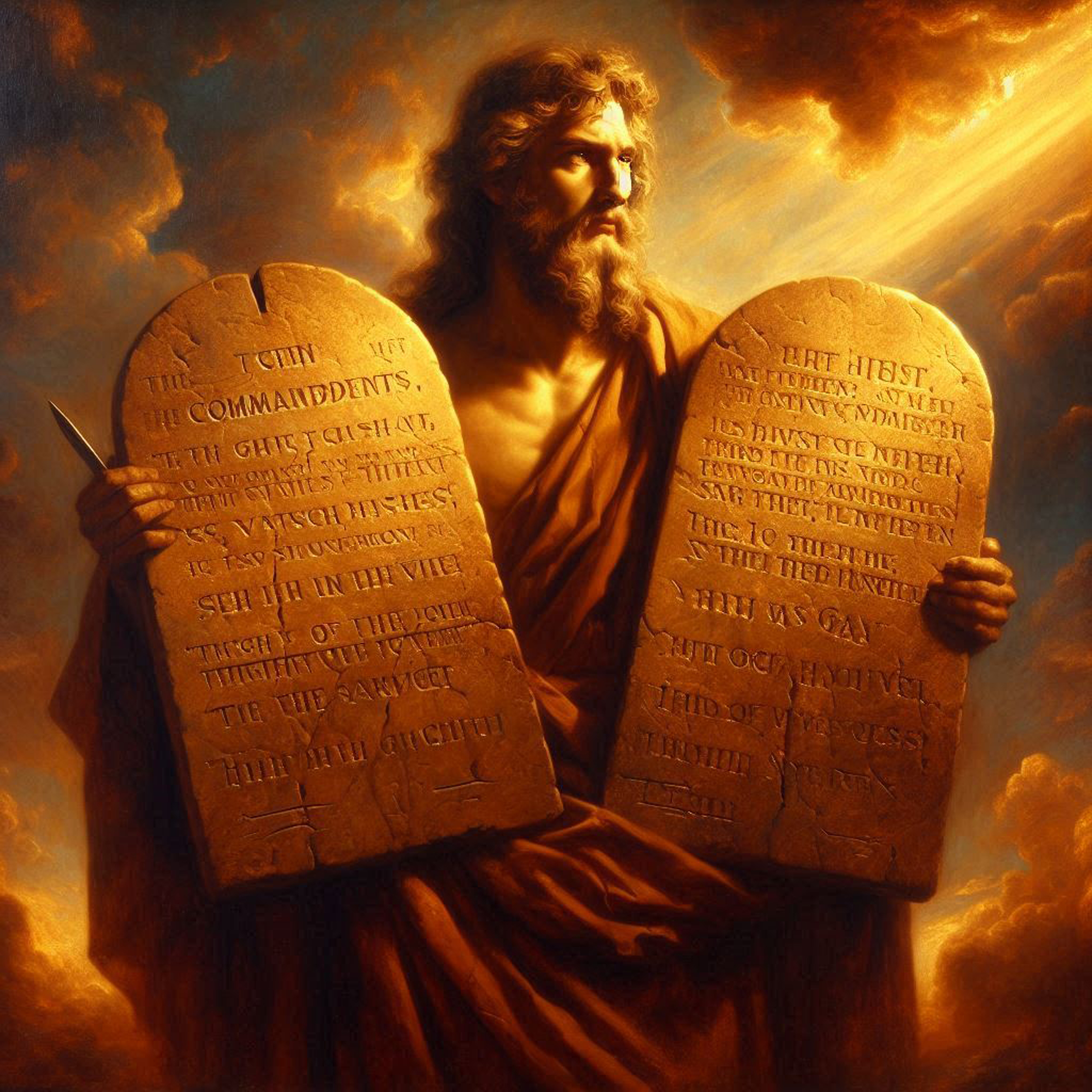 As the divine Lawgiver (chaqaq), God gave Israel His law through Moses at Mount Sinai, establishing the covenant constitution by which the nation was to live. Scripture states, “These are the statutes and ordinances and laws which the LORD established between Himself and the sons of Israel through Moses at Mount Sinai” (Lev 26:46), and “He declares His words to Jacob, His statutes and His ordinances to Israel. He has not dealt thus with any nation; and as for His ordinances, they have not known them” (Psa 147:19-20). Ryrie notes, “The Law was given to Israel. Both the Old and New Testaments are unanimous in this (Lev 26:46; Rom 9:4). Further, Paul contrasted the Jews who received the Law with the Gentiles who did not (Rom 2:14).”[2] The law was the expression of God’s holy character and revealed His righteous standards for every sphere of Israel’s life—moral, civil, and ceremonial (Deut 4:7–8; Psa 19:7–9). Through it, the Lord governed His people, defining how they were to relate to Him and to one another in covenant fellowship. The divine directives were intended to serve as the framework for a holy society that reflected His nature and glory. As Moses declared, “This is your wisdom and your understanding in the sight of the peoples who will hear all these statutes and say, ‘Surely this great nation is a wise and understanding people’” (Deut 4:6). Thus, the law served as the divine rule of life for Israel, intended to produce national order, righteousness, and blessing under God’s theocratic authority. Having been codified, God’s laws were to be studied and obeyed.
God as Judge
As Israel’s divine Lawgiver, God alone defines right and wrong for His people. As the Judge (shaphat), He alone has the prerogative to evaluate obedience or disobedience and to administer justice. God’s judgments reflected His holy character and were expressed through both blessing and discipline, rewarding obedience and correcting rebellion according to the covenant (Deut 28:1–2, 15). Ross notes, “Whatever charge God makes will be true; whatever decision God makes will be right.”[3] Throughout Israel’s history, He demonstrated this judicial oversight, especially during the period of the Judges, when He raised up deliverers to rescue the nation after they turned back to Him (Judg 2:16–18). Abraham acknowledged this same divine role when he appealed to “the Judge of all the earth” (Gen 18:25; cf. Psa 50:6; 75:7; Isa 11:4), affirming that God’s actions always conform to perfect righteousness. Yet even in His judgments, the Lord’s purpose was never to destroy His people but to restore them. As Hosea declared, “Come, let us return to the LORD. For He has torn us, but He will heal us; He has wounded us, but He will bandage us” (Hos 6:1). Moreover, the Lord delights in mercy and extends compassion to the humble who seek Him (Mic 7:18; Isa 57:15). God’s justice was not vindictive but corrective, designed to draw His people back into fellowship and bless them according to His covenant faithfulness.
Thus, Isaiah 33:22 stands as a comprehensive statement of God’s sovereignty over Israel—He is the One who rules as King, legislates as Lawgiver, and adjudicates as Judge. These roles anticipate their ultimate fulfillment in the Messiah, the Lord Jesus Christ, who will reign in righteousness during His future earthly kingdom (Isa 9:6–7; Jer 23:5–6; Zech 14:9).
Steven R. Cook, D.Min., M.Div.
If this article has enriched your understanding and walk with Christ, and you feel led to support my ministry, your generosity is greatly appreciated. Your gifts enable me to continue sharing the gospel of grace and providing in-depth biblical teachings. Thank you for partnering with me in this mission.
Related Articles:
- The Free Gift of God is Eternal Life
- God Loves Israel
- God’s Faithfulness to Israel
- Pray for Israel, God’s Chosen People
- Why and How I Pray for Israel
- The Faithfulness of the Lord
- A Brief Analysis of Israel in History and Prophesy
- Israel, Globalism, and the Rapture
- Israel’s Land Not Fully Possessed
[1] Isaiah’s order of God as Judge, Lawgiver, and King, reflects practical theology rather than historical chronology. Chronologically, God first reigned as King, then gave His Law, and finally judged according to that Law. Yet Isaiah writes from the standpoint of Israel under divine discipline, presenting God first as Judge who purifies His people, then as Lawgiver who restores righteousness, and finally as King who reigns in peace. The sequence thus anticipates the eschatological pattern of judgment, renewal, and rule (Isa 2:2–4; 11:1–5; 33:22).
[2] Charles C. Ryrie, Basic Theology: A Popular Systematic Guide to Understanding Biblical Truth (Chicago, IL: Moody Press, 1999), 350.
[3] Allen P. Ross, A Commentary on the Psalms 1–89: Commentary, vol. 2, Kregel Exegetical Library (Grand Rapids, MI: Kregel Academic, 2011–2013), 163–164.
I feel so privileged to be able to gain better understanding about God through the tutor of the law in greater detail through this teaching resource. Thank you!
You’re welcome, friend. I’m glad the article was helpful.
Thanks so much for this article, Steven. It’s so clear and helpful especially at this time of so much confusion. Shalom and blessings from Durban South Africa.
You’re welcome, friend. I’m glad the article was helpful.