 Unlimited atonement is the biblical teaching that Jesus died for everyone. Through His sacrificial death on the cross, Jesus bore the wrath of God by taking upon Himself the sins of all humanity and bearing the punishment that was due for our sins. His death on the cross paid the price for the sins of everyone. Jesus’ death for sins is the foundation for reconciliation with God because God judged our sins in the person of Christ, who died on the cross in our place. Peter said, “Christ died for sins once for all, the just for the unjust, so that He might bring us to God” (1 Pet 3:18). Jesus died as out substitute, bearing the wrath of God that rightfully belongs to us. Jesus died for everyone, not just a select few, as Calvinists wrongly teach. The Bible reveals Jesus is “the Lamb of God who takes away the sin of the world” (John 1:29), “who desires all men to be saved” (1 Tim 2:4), and “who gave Himself as a ransom for all” (1 Tim 2:6). Jesus tasted “death for everyone” (Heb 2:9), “is the Savior of all men, especially of believers” (1 Tim 4:10), and brings “salvation to all men” (Tit 2:11). Jesus is “the propitiation for our sins; and not for ours only, but also for those of the whole world” (1 John 2:2; cf. 1 John 4:10), and “the Father has sent the Son to be the Savior of the world” (1 John 4:14).
Though Jesus’ death is sufficient to save everyone, the benefits of the cross are applied only to those who believe in Him as Savior. In contrast, the Calvinistic teaching of limited atonement is that Christ died only for those whom God has elected to salvation. Those who teach limited atonement rely more on human logic than the testimony of Scripture. Arnold Fruchtenbaum states, “Those who hold to limited atonement do not come to their conclusion based upon the exegesis of Scripture because the fact is that there is no passage anywhere in the Bible that says He died only for the elect…The defense for limited atonement is not based upon exegesis; it is based upon logic.”[1] According to David Allen:
“Limited atonement is a doctrine in search of a text. No one can point to any text in Scripture that states clearly and unequivocally that Christ died for the sins of a limited number of people to the exclusion of others. Most Calvinists admit this. Alternatively, a dozen clear texts in the New Testament explicitly affirm Christ died for the sins of all people, and another half dozen plus that indirectly suggest it.”[2]
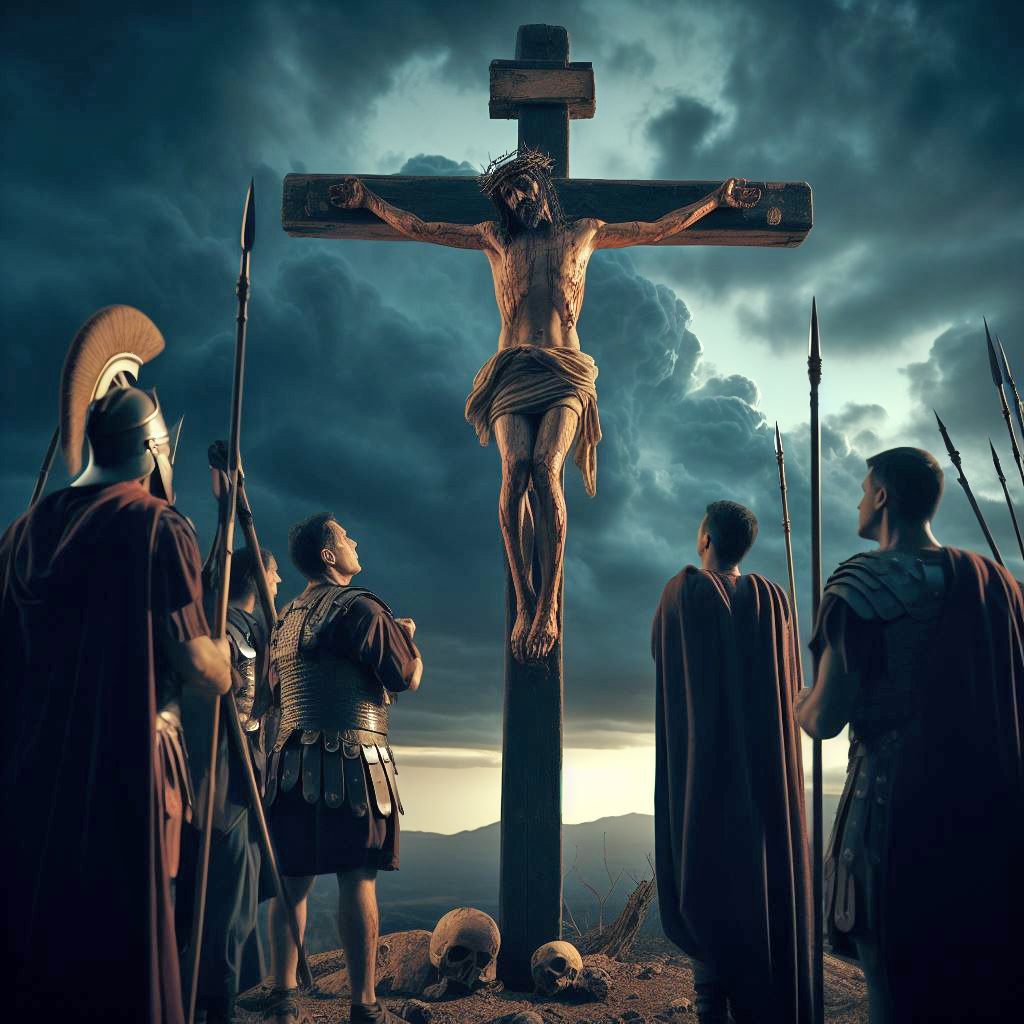 Because Christ died for everyone, eternal salvation is available to everyone. But though the death of Christ is sufficient to save everyone, only those who believe will benefit from His work on the cross. When people believe in Jesus, accepting the fact the He died for their sins, was buried, and resurrected on the third day (1 Cor 15:3-4), they receive forgiveness of sins (Acts 10:43; Eph 1:7), and eternal life (John 3:16; 10:28). Eternal life is a free gift from God and is received by faith alone in Christ alone (Rom 6:23; Eph 2:8-9). God’s gift is available to everyone, for “whoever believes in Him shall not perish, but have eternal life” (John 3:16). Human volition is the key, as “God is now declaring to men that all people everywhere should repent” (Acts 17:30). This means they must not trust in themselves or any system of good works to save, but trust in Christ alone to save them.
When the Philippian Jailer asked Paul and Silas, “Sirs, what must I do to be saved?” (Acts 16:30), the simple reply was given, “Believe in the Lord Jesus, and you will be saved” (Acts 16:31). The gospel is simple. It means believing in the One who died for our sins, was buried, and resurrected on the third day, as Scripture teaches (1 Cor 15:3-4). And salvation is by grace alone (totally undeserved), through faith alone (not by works), in Christ alone, and not by any human effort (Eph 2:8-9; Tit 3:5). Paul said, “the one who does not work, but believes in Him who justifies the ungodly, his faith is credited as righteousness” (Rom 4:5), and “by grace you have been saved through faith; and that not of yourselves, it is the gift of God; not as a result of works, so that no one may boast” (Eph 2:8-9). Good works should follow salvation, but they are never the condition of it (Gal 6:10; Eph 2:10; Tit 2:11-14). Jesus alone is our Savior, for “there is salvation in no one else; for there is no other name under heaven that has been given among men by which we must be saved” (Acts 4:12).
 Who is Jesus? Biblically, Jesus is the God-Man (John 1:1, 14; Heb 1:8), for “in Him all the fullness of Deity dwells in bodily form” (Col 2:9). He is fully God and perfect man, theanthropic, “God with us” (Isa 7:14). Jesus was a Jew, born a son of Abraham, Isaac, and Jacob (Matt 1:1-2), in the line of David (Luke 1:32; Rom 1:3), the promised Messiah (Matt 1:17). By means of God the Holy Spirt, Jesus was supernaturally conceived in the womb of the virgin Mary (Isa 7:14; Luke 1:30-35; Gal 4:4), was born without the taint of sin and lived a sinless life (2 Cor 5:21; Heb 4:15; 1 Pet 2:22; 1 John 3:5), which qualified Him to go to the cross and pay the ransom price for our sins by means of His shed blood (Mark 10:45; 1 Tim 2:6; 1 Pet 1:18-19). Jesus “did not come to be served, but to serve, and to give His life a ransom for many” (Mark 10:45), and He came “to seek and to save that which was lost” (Luke 19:10). When the divinely appointed time came for Jesus to go to the cross (John 12:23; 13:1), to die for the sins of humanity (John 3:16), He said to God the Father, “I glorified You on the earth, having accomplished the work which You have given Me to do” (John 17:4). He willingly went to the cross and died in our place and paid the penalty for our sins (John 10:17-18). Paul wrote, “God demonstrates His own love toward us, in that while we were yet sinners, Christ died for us” (Rom 5:8). Peter wrote, “For Christ died for sins once for all, the just for the unjust, so that He might bring us to God” (1 Pet 3:18). After Jesus paid for all our sins, “He said, ‘It is finished!’ And He bowed His head, and gave up His spirit” (John 19:30). Jesus died, was placed in a grave, and was resurrected to life on the third day (Acts 2:23-24; 4:10; 10:40; 1 Cor 15:3-4), never to die again (Rom 6:9). Jesus’ death and resurrection means He conquered sin and death. He accomplished what we cannot: our salvation. Eternal salvation is now available to everyone, and “whoever believes in Him will not perish, but have eternal life” (John 3:16).
The only sin that keeps a person out of heaven is the sin of unbelief. The apostle John wrote, “He who believes in Him is not judged; he who does not believe has been judged already, because he has not believed in the name of the only begotten Son of God” (John 3:18). Jesus, speaking to unsaved persons, said, “You search the Scriptures because you think that in them you have eternal life; it is these that testify about Me; and you are unwilling to come to Me so that you may have life” (John 5:39-40). And Jesus pointed out that the world as a whole is convicted by God the Holy Spirit of one sin, the sin of unbelief, “because they do not believe in Me” (John 16:9). Negative volition is the reason why unbelievers do not receive eternal life.
 For those who reject Christ as Savior, their future is one of eternal separation and punishment away from God for all eternity, for “if anyone’s name was not found written in the book of life, he was thrown into the lake of fire” (Rev 20:15). This need not happen. Hell is avoidable to the one who trusts in Christ as Savior, believing the gospel message “that Christ died for our sins according to the Scriptures, and that He was buried, and that He was raised on the third day according to the Scriptures” (1 Cor 15:3-4). And this salvation is a gift from God (Rom 3:24; 6:23), offered by grace alone (Eph 2:8-9), through faith alone (Gal 2:16; 3:26; 2 Tim 3:15), in Christ alone (John 14:6; Acts 4:12), totally apart from human works (Rom 4:5; Eph 2:8-9; Tit 3:5). Once we understand who Christ is and what He’s accomplished for us on the cross, we can then exercise our faith by trusting in Him as our Savior. Once we have trusted in Christ for salvation, God then bestows on us forgiveness of sins (Acts 10:43; Eph 1:7), the gift of righteousness (Rom 5:17; Phil 3:9), eternal life (John 10:28), and many other blessings (Eph 1:3). For lost sinners, the matter is simple, “Believe in the Lord Jesus, and you will be saved” (Acts 16:31). Believing in Jesus means we trust Him to do for us what we cannot do for ourselves: to save us. We need only Christ. No one else. Nothing more. Jesus alone saves, and He saves us forever.
Dr. Steven R. Cook
If this article has enriched your understanding and walk with Christ, and you feel led to support my ministry, your generosity is greatly appreciated. Your gifts enable me to continue sharing the gospel of grace and providing in-depth biblical teachings. Thank you for partnering with me in this mission.
Related Articles:
- Free Grace Salvation
- What is Free Grace Theology?
- Challenging Calvinism’s Perspective on Salvation
- Total Depravity, Faith in Christ, and Regeneration
- The Cross & Crucifixion of Jesus
- Who is the One Who Saves?
- Divine Election
- Saved by Grace Alone, Through Faith Alone, in Christ Alone
- The Work of the Trinity in Salvation
- God’s Gift of Righteousness
- Eternal Life
- Assurance of Salvation
- Two Kinds of Forgiveness with God
- Defining Salvation in the Bible
[1] Arnold G. Fruchtenbaum, God’s Will & Man’s Will: Predestination, Election, & Free Will, ed. Christiane Jurik, 2nd Edition. (San Antonio, TX: Ariel Ministries, 2014), 44.
[2] David L. Allen, “A Critique of Limited Atonement,” in Calvinism: A Biblical and Theological Critique, ed. David L. Allen and Steve W. Lemke (Nashville, TN: B&H Academic, 2022), 71.
 Penal substitution is the idea that Jesus bore the penalty for our sins on the cross. He was judged in our place and bore the wrath of God that rightfully belongs to us. The record of Scripture is that “He was pierced through for our transgressions, He was crushed for our iniquities; the chastening for our well-being fell upon Him, and by His scourging we are healed” (Isa 53:5), and “the LORD has caused the iniquity of us all To fall on Him” (Isa 53:6), for “by His knowledge the Righteous One, My Servant, will justify the many, as He will bear their iniquities” (Isa 53:11), and “the LORD was pleased to crush Him, putting Him to grief; if He would render Himself as a guilt offering” (Isa 53:10a). Jesus is presented in the NT as “the Lamb of God who takes away the sin of the world!” (John 1:29). We’re also told that God “made Him who knew no sin to be sin on our behalf” (2 Cor 5:21), and that “Christ redeemed us from the curse of the Law, having become a curse for us” (Gal 3:13), and that “He Himself bore our sins in His body on the cross” (1 Pet 2:24). In this way, the sins of all humanity were imputed to Christ while He was on the cross, suffering as our substitute. And we must always remember that the sacrifice of Christ was purely voluntary, as He said, “I am the good shepherd; the good shepherd lays down His life for the sheep” (John 10:11), and “No one has taken it away from Me, but I lay it down on My own initiative” (John 10:18). And Jesus has “been offered once to bear the sins of many” (Heb 9:28), and “Christ also died for sins once for all, the just for the unjust” (1 Pet 3:18).
 Sin is the breaking of God’s law, for “Everyone who commits sin also breaks the law; sin is the breaking of law” (1 John 3:4 CSB). The penalty for breaking God’s law is death, for “the wages of sin is death” (Rom 6:23). Jesus took our sins upon Himself and “bore our sins in His body on the cross” (1 Pet 2:24), and He “died for sins once for all, the just for the unjust, so that He might bring us to God” (1 Pet 3:18). And He died for the sins of everyone, for “He Himself is the propitiation for our sins; and not for ours only, but also for those of the whole world” (1 John 2:2). Though Christ died for everyone, the benefits of the cross are applied only to those who believe, and “everyone who believes in Him receives forgiveness of sins” (Acts 10:43; Eph 1:7). Additionally, we receive “the gift of righteousness” (Rom 5:17), and “eternal life” (John 10:28). At the moment of faith in Christ, we are “justified as a gift by His grace through the redemption which is in Christ Jesus” (Rom 3:24).
 Atonement is a very important concept in the Old Testament. The word atonement translates the Hebrew verbכָּפַר (kaphar) which means to “cover over, pacify, propitiate, [or] atone for sin.”
 Jesus’ death on the cross was a satisfactory sacrifice to God which completely paid the price for our sin. We owed a debt to God that we could never pay, and Jesus paid that debt in full when He died on the cross and bore the punishment that rightfully belonged to us. In Romans 3:25 Paul used the Greek word ἱλαστήριον (hilasterion)—translated propitiation—to show that Jesus’ shed blood completely satisfied God’s righteous demands toward our sin, with the result that there is nothing more for the sinner to pay to God. Jesus paid our sin-debt in full. There’s nothing for us to pay. The Apostle John tells us “He Himself is the propitiation [ἱλασμός hilasmos – the satisfactory sacrifice] for our sins; and not for ours only, but also for those of the whole world” (1 John 2:2; cf., 4:10). Jesus’ death on the cross forever satisfied God’s righteous demands toward the sins of everyone for all time! God has “canceled out the certificate of debt consisting of decrees against us, which was hostile to us; and He has taken it out of the way, having nailed it to the cross” (Col. 2:14). Regarding Christ’s death, J. Dwight Pentecost states: