 Before the giving of the Mosaic Law, priestly functions were carried out by family heads who served as mediators between God and their households. These patriarchal priests offered sacrifices and interceded on behalf of their families. Noah, for example, built an altar and offered burnt offerings after the Flood (Gen 8:20). Merrill F. Unger states, “Abraham, Isaac, and Jacob built altars, offered sacrifices, purified and consecrated themselves and their households (Gen 12:7; 13:18; 26:25; 33:20; 35:1–3).”[1] Melchizedek, the king of Salem, was described as “a priest of God Most High” (Gen 14:18), and Job offered burnt offerings for his children (Job 1:5). Before Sinai, priesthood was thus familial rather than institutional, and worship was based on a direct, personal relationship with God through sacrifice and prayer rather than through a formal priestly tribe or sanctuary system.
Transitioning to the covenant at Sinai, God’s original intention was for the entire nation of Israel to function as a kingdom of priests, representing Him to the nations and mediating His truth and blessing to the world. At Sinai, the Lord declared, “you shall be to Me a kingdom of priests and a holy nation” (Ex 19:6), revealing His desire that Israel live in covenant fellowship with Him and reflect His holiness among the Gentiles. Each Israelite was to know and serve the Lord directly, demonstrating through obedience and worship what it meant to live under divine authority.
 However, following Israel’s failure at Sinai and the golden calf incident (Ex 32:1–35), the priesthood became restricted to one tribe. The Aaronic priesthood was established when God formally appointed Aaron and his sons to serve as priests on behalf of the nation of Israel (Ex 28:1; Lev 8:1–2). According to Donald K. Campbell, “The main task of the high priest was to officiate at the ceremonies of the Day of Atonement (Lev 16). The ordinary priests were assigned to officiate at the specified Levitical sacrifices and offerings (Lev 1–6) and to declare clean those who had been made ceremonially unclean by certain infectious diseases (Lev 13–14).”[2] The Levites were chosen in place of Israel’s firstborn males to assist the priests in the service of the tabernacle (Num 3:5–13). The priests were responsible to maintain ritual purity, offer sacrifices, and teach the people the Law of God (Lev 10:8–11; Deut 33:10). Only those from the tribe of Levi could serve in tabernacle duties, and only male descendants of Aaron could function as priests (Ex 28:1). Levites began serving at age twenty-five and retired at fifty (Num 8:24–25), while priests began their sacrificial duties at age thirty (Num 4:3). Furthermore, priests had to be free from physical defect or deformity, for those with blemishes were disqualified from offering sacrifices, though they could still partake of the holy food (Lev 21:16–23).
At the heart of Israel’s worship stood the Mosaic sacrificial system, which provided a means for maintaining fellowship with God and covering sin until the coming of Christ (Heb 10:1–4). The five major offerings described in Leviticus 1–7 include the burnt offering (Lev 1), symbolizing complete devotion to God; the grain offering (Lev 2), expressing thanksgiving and dedication; the peace offering (Lev 3), celebrating fellowship with God; the sin offering (Lev 4), providing atonement for unintentional sin; and the guilt offering (Lev 5:14–6:7), which required restitution for specific offenses. Each sacrifice taught Israel essential truths about holiness, substitutionary atonement, and reconciliation to God.
 In contrast, believers in the present Church Age are all priests before God through Jesus Christ, who is Himself our great High Priest (Heb 4:14–16; 7:23–28).[3] Through faith in Christ, every believer has direct access to the Father without the need for a human mediator, for “there is one God, and one mediator also between God and men, the man Christ Jesus” (1 Tim 2:5). Walter A. Elwell notes, “It is remarkable that the term ‘priest’ is never used in the NT of a minister or order in the church.”[4] The New Testament identifies all believers as a “holy priesthood” and a “royal priesthood” (1 Pet 2:5, 9), declaring that Christ “has made us to be a kingdom, priests to His God and Father” (Rev 1:6; cf. Rev 5:10; 20:6). This universal priesthood is unrestricted by tribe, gender, or physical condition, but embraces all who have been redeemed by the blood of Christ (Gal 3:28; Eph 2:13–18; Heb 10:19–22). According to Robert L. Thomas, “The priestly office established by the OT law was hereditary, and only members of Aaron’s family were eligible. Jesus Christ has provided a new family relationship by which all believers have a priestly ministry to God.”[5]
 The New Testament teaches that Christians are called to offer “spiritual sacrifices acceptable to God through Jesus Christ” (1 Pet 2:5). These sacrifices express the believer’s priestly service in the Church Age and arise from gratitude rather than obligation. Paul urged believers to “present your bodies a living and holy sacrifice, acceptable to God, which is your spiritual service of worship” (Rom 12:1), indicating that consecration of the whole person (mind, body, and will) is a central act of priestly devotion. Moreover, believers are called to continual worship and thanksgiving, to “continually offer up a sacrifice of praise to God, that is, the fruit of lips that give thanks to His name” (Heb 13:15). Likewise, acts of goodness and generosity are viewed as sacred offerings, as we’re directed, “do not neglect doing good and sharing, for with such sacrifices God is pleased” (Heb 13:16). Evangelism and discipleship are also presented as priestly functions. Paul described his ministry “as a minister of Christ Jesus to the Gentiles, ministering as a priest the gospel of God” (Rom 15:16a). In addition, financial giving is regarded as a fragrant act of worship, for Paul commended the Philippians’ generosity, saying, “I have received everything in full… having received from Epaphroditus what you have sent, a fragrant aroma, an acceptable sacrifice, well-pleasing to God” (Phil 4:18). These offerings are not performed to gain or retain salvation but flow from hearts already justified by grace through faith, seeking to glorify the Lord in all things. As Scripture commands, “whatever you do, do all to the glory of God” (1 Cor 10:31).
In summary, before the Law, patriarchal priests represented their families before God through personal sacrifice and prayer. Under the Mosaic covenant, the Aaronic priesthood mediated between God and Israel through prescribed sacrifices that foreshadowed the redemptive work of Christ. Now, in the Church Age, all believers serve as priests, offering not the blood of animals but spiritual sacrifices of praise, service, generosity, and devotion through Jesus Christ, our eternal High Priest.
Steven R. Cook, D.Min., M.Div.
If this article has enriched your understanding and walk with Christ, and you feel led to support my ministry, your generosity is greatly appreciated. Your gifts enable me to continue sharing the gospel of grace and providing in-depth biblical teachings. Thank you for partnering with me in this mission.
Related Articles:
- The Free Gift of God is Eternal Life
- Faith from Beginning to End
- The Righteous Lifestyle of the Believer
- Walking Worthy of God’s Call to Service
- Walking in the Light
- God Uses Imperfect People
- Knowing and Doing the Will of God
- The High Calling of God’s Servant
- The Life of Faith
[1] Merrill Frederick Unger et al., The New Unger’s Bible Dictionary (Chicago: Moody Press, 1988).
[2] Don K. Campbell, “Priesthood,” in The Theological Wordbook, ed. Charles R. Swindoll and Roy B. Zuck, Swindoll Leadership Library (Nashville, TN: Word Publishing, Inc., 2000), 278.
[3] The book of Hebrews portrays Jesus Christ as the fulfillment of the Old Testament priesthood, combining in Himself both the Aaronic and Melchizedekian types. Like Aaron, He offered a sacrifice for sin—Himself (Heb 7:27)—and entered heaven, the true Holy of Holies, “by His own blood… having obtained eternal redemption” (Heb 9:12; cf. 9:7, 24), granting believers direct access to God (Heb 4:16). Yet His priesthood is patterned after Melchizedek’s, being eternal, non-hereditary, and superior to the Levitical order: Levitical priests died but Christ lives forever (7:23–28), and He mediates a “better covenant” through His once-for-all sacrifice (8:6–10:18). Thus, Jesus Christ is both High Priest and atoning Sacrifice, completing all that the Old Testament priesthood foreshadowed.
[4] Walter A. Elwell and Philip Wesley Comfort, Tyndale Bible Dictionary, Tyndale Reference Library (Wheaton, IL: Tyndale House Publishers, 2001), 1073.
[5] Robert L. Thomas, Revelation 1-7: An Exegetical Commentary (Chicago: Moody Publishers, 1992), 71.
 The animal sacrificial system under the Mosaic Law taught that God is holy, man is sinful, and that God was willing to judge an innocent creature as a substitute in place of the sinner. The animal that shed its blood gave up its life in place of the one who had offended God, and it was only through the shed blood that atonement was made. A life for a life. The animal sacrificial system under the Mosaic Law was highly symbolic, temporary, and pointed forward to the work of Jesus Christ on the cross. The Levitical priests would regularly perform their temple sacrifices on behalf of the people to God, but being a symbolic system, the animal sacrifices could never “make perfect those who draw near” to Him, for the simple reason that “it is impossible for the blood of bulls and goats to take away sins” (Heb 10:1, 4). For nearly fourteen centuries the temple priests kept “offering time after time the same sacrifices, which can never take away sins” (Heb 10:11), until finally Christ “offered one sacrifice for sins for all time” (Heb 10:12), and through that one offering “perfected for all time those who are sanctified” by it (Heb 10:14). What the Mosaic Law could never accomplish through the sacrifice of symbols, Christ did once and for all time through His substitutionary death on the cross when he died in the place of sinners.
 Jesus’ death on the cross was a satisfactory sacrifice to God which completely paid the price for our sin. We owed a debt to God that we could never pay, and Jesus paid that debt in full when He died on the cross and bore the punishment that rightfully belonged to us. In Romans 3:25 Paul used the Greek word hilasterion (ἱλαστήριον)—translated propitiation—to show that Jesus’ shed blood completely satisfied God’s righteous demands toward our sin, with the result that there is nothing more for the sinner to pay to God. Jesus paid our sin-debt in full. The Apostle John tells us “He Himself is the propitiation for our sins; and not for ours only, but also for those of the whole world” (1 John 2:2; cf., 1 John 4:10). Jesus’ death on the cross forever satisfied God’s righteous demands toward the sins of everyone for all time! God has “canceled out the certificate of debt consisting of decrees against us, which was hostile to us; and He has taken it out of the way, having nailed it to the cross” (Col 2:14). Regarding Christ’s death, J. Dwight Pentecost states:
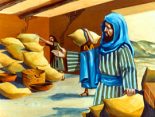
 Some pastors have grievously misapplied Malachi 3:8–10 by imposing it upon the Church, using the passage as a means to coerce believers through guilt and intimidation into financial giving. In extreme cases, some have demanded access to members’ tax returns or have publicly displayed individual contributions as a method of exerting social pressure. The misuse of this Old Testament text reveals both a lack of sound hermeneutical understanding and a deficiency in spiritual maturity among church leaders. In its original context, Malachi 3:8–10 pertains to Israel under the Mosaic Law, not to the Church of Jesus Christ in the present dispensation.
 Atonement is a very important concept in the Old Testament. The word atonement translates the Hebrew verbכָּפַר (kaphar) which means to “cover over, pacify, propitiate, [or] atone for sin.”
 Jesus’ death on the cross was a satisfactory sacrifice to God which completely paid the price for our sin. We owed a debt to God that we could never pay, and Jesus paid that debt in full when He died on the cross and bore the punishment that rightfully belonged to us. In Romans 3:25 Paul used the Greek word ἱλαστήριον (hilasterion)—translated propitiation—to show that Jesus’ shed blood completely satisfied God’s righteous demands toward our sin, with the result that there is nothing more for the sinner to pay to God. Jesus paid our sin-debt in full. There’s nothing for us to pay. The Apostle John tells us “He Himself is the propitiation [ἱλασμός hilasmos – the satisfactory sacrifice] for our sins; and not for ours only, but also for those of the whole world” (1 John 2:2; cf., 4:10). Jesus’ death on the cross forever satisfied God’s righteous demands toward the sins of everyone for all time! God has “canceled out the certificate of debt consisting of decrees against us, which was hostile to us; and He has taken it out of the way, having nailed it to the cross” (Col. 2:14). Regarding Christ’s death, J. Dwight Pentecost states: