The Gospel is Good News (Download FREE Gospel Tract)
The gospel is God’s solution to man’s greatest problem. The Greek word for “gospel” (euangelion) means “good news.” The bad news is that we are sinners before a holy God and helpless to save ourselves (Rom. 3:23; 5:6; Tit. 3:5). The good news is that Jesus Christ died for our sins and rose from the dead, and God offers forgiveness (Acts 10:43) and eternal life as a free gift to anyone who believes in Christ (Rom. 6:23; Eph. 2:8-9). Eternal life is free to us because Jesus paid the full price for our salvation (John 19:30). It was infinitely costly to Him, yet He offers it freely to us. We receive eternal life by faith alone in Christ alone (John 3:16; Acts 16:31). Let’s break this down.
The Bad News
Biblically, we are sinners before a righteous and holy God. Scripture states, “There is none righteous, not even one,” and “all have sinned and fall short of the glory of God” (Rom. 3:10, 23). We are helpless to save ourselves, and no amount of morality, religion, ritual, or good works can make us righteous before God (Rom. 3:28; 5:6; Tit. 3:5). Sin brings spiritual death, and a guilty sinner cannot acquit himself or earn eternal life (Rom. 6:23). God must provide what we cannot produce: forgiveness, righteousness, and eternal life. This is exactly what He has provided through Jesus Christ (Rom. 3:24-26). At the cross, God judged our sin in Christ, and He now freely justifies everyone who believes in Jesus (Rom. 3:25-28; 5:1).
The Solution God Provided

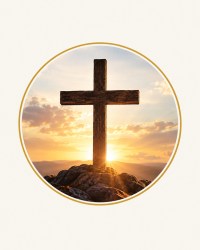
Jesus Christ is the eternal Son of God who became man (John 1:1, 14). He lived without sin and died in our place for our sins (1 John 3:5; 1 Pet. 3:18). At the cross, He paid our sin debt in full and satisfied God’s righteous demands (Rom. 3:24-26). He declared, “It is finished” (John 19:30). Nothing remains to add to His payment. The cross is God’s righteous solution to the problem of sin and His greatest display of love toward sinners. At the cross, God judged our sin as His righteousness required, and saves the sinner as His love desires. Law and grace, life and death, time and eternity all intersect at the cross, displaying a divine wisdom that staggers the imagination and leads the humble heart to bow in thankful adoration. To understand the cross of Christ is to understand the heart of God toward a fallen world He wants to save.
The gospel message is that Jesus died for our sins, was buried, and rose bodily from the dead on the third day (1 Cor. 15:3-4). His resurrection demonstrated His victory over sin and death. Scripture states, “He was handed over to die because of our sins, and he was raised to life to make us right with God” (Rom. 4:25). The gospel tells us what Jesus did; faith in Him as Savior is how we receive eternal salvation. Jesus said, “whoever believes in Him shall not perish, but have eternal life” (John 3:16). Scripture commands, “Believe in the Lord Jesus, and you will be saved” (Acts 16:31). Christ does the saving. We receive His gift by faith (Rom. 6:23)
The Response of Faith Alone

What must you do to be saved eternally from the Lake of Fire? The answer is simple: “Believe in the Lord Jesus, and you will be saved” (Acts 16:31). Believing in Jesus means trusting Him alone to accomplish what we cannot: our eternal salvation. Faith rests in Christ alone. It adds no good works as a precondition, cocondition, or postcondition of salvation. Scripture states, “to the one who does not work, but believes in Him who justifies the ungodly, his faith is credited as righteousness” (Rom. 4:5). Christ accomplished the saving work; by faith we receive what He freely offers. You need not make a pledge, recite a prescribed prayer, undergo baptism, or promise future obedience to be saved. Scripture states, “For by grace you have been saved through faith; and that not of yourselves, it is the gift of God; not as a result of works, so that no one may boast” (Eph. 2:8-9). Good works should follow salvation, but they are never the condition of it.
The object of faith matters. Do not trust your sincerity, your moral record, or your ability to remain faithful. Trust the living Christ and His completed work. You can believe in Him right where you are. There is no ritual or waiting period. Trust the Savior and rest on His promise. The moment you believe in Him, you have eternal life (John 5:24; 6:47). Jesus said, “I give eternal life to them, and they will never perish” (John 10:28). You have eternal life at the moment you believe in Jesus
Spiritual Growth After Salvation

Salvation is the beginning of the Christian life, not the end of it. After receiving eternal life, God calls the believer to spiritual growth: the lifelong process of learning His word (1 Pet. 2:2; 2 Pet. 3:18), renovating the mind (Rom. 12:1-2), being filled with the Spirit (Eph. 5:18), walking by the Spirit (Gal. 5:16), applying biblical truth by faith (2 Cor. 5:7; Heb. 10:38), and developing spiritual maturity (Heb. 6:1). Spiritual growth requires consistent intake and application of God’s word as the believer learns to think and live according to God’s will (Rom. 12:2).

This requires positive volition toward God and His word. The believer must choose to learn biblical truth, believe it, and apply it. God provides everything necessary for spiritual growth, but He does not force the believer to advance spiritually. Growth requires a willing response to divine truth (John 7:17; 1 Pet. 1:22). Good works belong to the Christian life after salvation, but they are never a condition of it. God desires that believers walk in good works (Gal. 6:10; Eph. 2:10), but works neither earn eternal life nor keep it secure (John 10:28; Eph. 2:8-10). The believer still sins and needs to grow. He may experience discipline and loss of reward for failure to advance spiritually, but Christ does not revoke the life He promised (1 Cor. 3:15; Heb. 12:6; John 10:28-29). Assurance rests on God’s word (1 John 5:13).
Heaven After This Life
For the believer, physical death is not the end of life but departure from this world into the presence of the Lord. At death, the believer leaves the body and goes immediately to be with Christ (2 Cor. 5:6-8; Phil. 1:21-23). Because Jesus conquered death through His resurrection, the Christian can face death with confidence and hope (John 11:25-26; 1 Cor. 15:20-22). Eternal life begins the moment a person believes in Jesus and continues forever. Jesus promised, “I give eternal life to them, and they will never perish” (John 10:28).

The believer’s future also includes bodily resurrection. At the Rapture, deceased Church Age believers will be raised, living believers will be transformed, and all will receive glorified bodies suited for eternity (1 Cor. 15:51-53; 1 Th. 4:13-17). From that point forward, believers will always be with the Lord (1 Th. 4:17). Our ultimate hope is not merely life after death, but resurrection, glorification, and everlasting fellowship with Christ. Believers will also appear before the judgment seat of Christ, not to determine whether they possess eternal life, but to have their Christian service evaluated for reward (1 Cor. 3:12-15; 2 Cor. 5:10). Eternal life is a free gift received by faith alone, whereas eternal rewards are associated with faithful service after salvation (Rom. 6:23; 1 Cor. 3:14-15).
Steven R. Cook, D.Min., M.Div.
If this article has enriched your understanding and walk with Christ, and you feel led to support my ministry, your generosity is greatly appreciated. Your gifts enable me to continue sharing the gospel of grace and providing in-depth biblical teachings. Thank you for partnering with me in this mission.
Related Articles:
- The Free Gift of God is Eternal Life
- The Marks of Spiritual Maturity
- Learning to Rest in God
- Faith from Beginning to End
- Mastering Focus as We Walk by Faith
- Trusting God in Difficult Times
- Recalibrating the Mind with Scripture
- The Christian with Integrity
- The Righteous Lifestyle of the Believer
- Walking Worthy of God’s Call to Service
- Walking in the Light
- God Uses Imperfect People
- Knowing and Doing the Will of God
- The High Calling of God’s Servant
- The Life of Faith