 God gives law to humans living in every age. He gave commands to the first humans living in the sinless environment of the Garden of Eden (Gen 1:26-30; 2:15-17). He gave commands to Noah (Gen 6-9). He gave commands to Abraham (Gen 12:1; 17:10-14). He gave commands to the Israelites—known as the Mosaic Law—after delivering them from their bondage in Egypt (Ex 20 – Deut 34). He has given commands to Christians (Romans 1 to Revelation 3). These biblical distinctions are important, for though all Scripture is written for the benefit of the Christian, only some portions of it speak specifically to him and command his walk with the Lord. Just as the Christian would not try to obey the commands God gave to Adam in Genesis 1-2, or the commands God gave to Noah in Genesis 6-9, so he should not try to obey the commands God gave to Israel in Exodus through Deuteronomy. Romans chapter 1 through Revelation chapter 3 marks the specific body of Scripture that directs the Christian life both regarding specific commands and divine principles. Charles Ryrie states:
Adam lived under laws, the sum of which may be called the code of Adam or the code of Eden. Noah was expected to obey the laws of God, so there was a Noahic code. We know that God revealed many commands and laws to Abraham (Gen 26:5). They may be called the Abrahamic code. The Mosaic code contained all the laws of the Law. And today we live under the law of Christ (Gal 6:2) or the law of the Spirit of life in Christ (Rom 8:2). This code contains the hundreds of specific commandments recorded in the New Testament.[1]
Israel and the Church are both the people of God, but they operate under distinct law codes. The Mosaic Law was given specifically to the nation of Israel and referred to “the statutes and ordinances and laws which the LORD established between Himself and the sons of Israel through Moses at Mount Sinai” (Lev 26:46). The Mosaic Law revealed the holy character of God (Lev 11:45; cf. Rom 7:12), was given specifically to Israel circa 1445 BC (Lev 27:34), was regarded as a unit of laws (613 total), was to be taken as a whole (Gal 3:10; 5:3; Jam 2:10) and existed for nearly 1500 years before being rendered inoperative (Heb 7:18; 8:13; cf. Rom 7:1-4). Jesus was born under the Mosaic Law (Gal 4:4), and directed others to abide by it (Matt 8:1-4; 23:1-3). However, on the night before He was crucified, Jesus provided teaching to His disciples that pertained to the dispensation of the Church (John chapters 13-17); then He went to the cross and died for our sins, just as He’d prophesied (Matt 16:21; 17:22-23; 20:18-19; Mark 10:45).
The Mosaic Law was never a means of justification before God, as that has always been by faith alone in God and His promises (Rom 3:24-28; 4:1-5; Gal 2:16, 21; 3:21; Eph 2:8-9). Over time, the Mosaic Law became perverted into a system of works whereby men sought to earn their salvation before God. Merrill F. Unger states:
By nature the Law is not grace (Rom 10:5; Gal 3:10; Heb 10:28). It is holy, righteous, good, and spiritual (Rom 7:12, 14). In its ministry it declares and proves all men guilty (Rom 3:19). Yet it justifies no one (Rom 3:20). It cannot impart righteousness or life (Gal 3:21). It causes offenses to abound (Rom 5:20; 7:7-13; 1 Cor 15:56). It served as an instructor until Christ appeared (Gal 3:24). In relationship to the believer, the Law emphatically does not save anyone (Gal 2:21). A believer does not live under the Law (Rom 6:14; 8:4), but he stands and grows in grace (Rom 5:2; 2 Pet 3:18). The nation, Israel, alone was the recipient of the Law (Ex 20:2).[2]
The New Testament reveals the Mosaic Law was regarded as a “yoke” which Israel had not “been able to bear” because their sinful flesh was weak (Acts 15:1-11). There is no fault with the Mosaic Law, for it “is holy, and the commandment is holy and righteous and good” (Rom 7:12). The Mosaic Law is holy because it comes from God who is holy. Because the Mosaic Law is holy, it exposes the faults of people and shows them to be sinful (Rom 3:20), and among many, it actually stimulates their sinful nature (Rom 5:20; 7:7-8). Paul made clear that the Mosaic Law was not the rule of life for the Christian (Rom 6:14). He even referred to it as a “ministry of death” (2 Cor 3:7) and a “ministry of condemnation” (2 Cor 3:9). Paul stated that it was intended to be temporary (Gal 3:19), that it was never the basis for justification (Gal 2:16, 21; 3:21, Rom 24-28; 4:1-5; Eph 2:8-9), but was intended to lead people to Christ that they may be justified by faith (Gal 3:24). Now that Christ has come and fulfilled every aspect of the Law and died on the cross, the Mosaic Law, in its entirety, has been rendered inoperative as a rule of life (Matt 5:17-18; Rom 10:1-4; Heb 8:13). According to Fruchtenbaum, “As a rule of life, the Law of Moses was temporary … [and] came to an end with the death of the Messiah.”[3] The Christian living in the dispensation of the church age is now under the Law of Christ (1 Cor 9:21; Gal 6:2).
God is the Author of both the Mosaic Law as well as the Law of Christ; therefore, it is not surprising that He chose to incorporate some of the laws He gave to Israel into the law-code which He has given to the Church. When trying to understand which laws have carried over and which have not, the general rule is: what God has not restated, has been altogether abrogated. Charles Ryrie states, “The Mosaic Law was done away in its entirety as a code. It has been replaced by the law of Christ. The law of Christ contains some new commands (1 Tim 4:4), some old ones (Rom 13:9), and some revised ones (Rom 13:4, with reference to capital punishment).”[4] The Church is no more under the Mosaic Law than a Canadian is under US law, as laws only have authority to its citizenry. Thomas Constable states:
The law of Christ is the code of commandments under which Christians live. Some of the commandments Christ and His apostles gave us are the same as those that Moses gave the Israelites. However, this does not mean that we are under the Mosaic Code. Residents of the United States live under a code of laws that is similar to, but different from, the code of laws that govern residents of England. Some of our laws are the same as theirs, and others are different. Because some laws are the same we should not conclude that the codes are the same. Christians no longer live under the Mosaic Law; we live under a new code, the law of Christ (cf. 5:1).[5]
Though rendered inoperative as a rule of life, the Mosaic Law can be used to teach such things as God’s holiness, people’s sinfulness, the need for atonement, and the ultimate need for people to trust in Christ for salvation (Rom 3:10-25; 5:20; 10:1-4). All Scripture is for us, though not all Scripture is to us (1 Cor 10:11). And being under the grace-system does not mean believers are without law and can therefore sin as they please (Rom 6:14-16; Tit 2:11-12). The New Testament speaks of “the perfect law of liberty” (Jam 1:25), “the royal law” (Jam 2:8), the “Law of Christ” (Gal 6:2), and “the law of the spirit of life in Christ Jesus” (Rom 8:2). Henry Thiessen states:
The believer has been made free from the law, but liberty does not mean license. To offset this danger of antinomianism, the Scriptures teach that we have not only been delivered from the law, but also “joined to another, to Him who was raised from the dead, that we might bear fruit for God” (Rom 7:4). We are thus not “without the law of God but under the law of Christ” (1 Cor 9:21; cf. Gal 6:2). Freedom from law should not result in license, but love (Gal 5:13; cf. 1 Pet 2:16). The believer is, consequently, to keep his eyes on Christ as his example and teacher, and by the Holy Spirit to fulfill his law (Rom 8:4; Gal 5:18).[6]
Arnold Fruchtenbaum adds:
The Law of Moses has been disannulled and we are now under a new law. This new law is called the Law of Christ in Galatians 6:2 and the Law of the Spirit of Life in Romans 8:2. This is a brand new law, totally separate from the Law of Moses. The Law of Christ contains all the individual commandments from Christ and the Apostles applicable to a New Testament believer. A simple comparison of the details will show that it is not and cannot be the same as the Law of Moses. Four observations are worth noting. First, many commandments are the same as those of the Law of Moses. For example, nine of the Ten Commandments are also in the Law of Christ. But, second, many are different from the Law of Moses. For example, there is no Sabbath law now (Rom 14:5; Col 2:16) and no dietary code (Mark 7:19; Rom 14:20). Third, some commandments in the Law of Moses are intensified by the Law of Christ. The Law of Moses said: love thy neighbor as thyself (Lev 19:18). This made man the standard. The Law of Christ said: love one another, even as I have loved you (John 15:12). This makes the Messiah the standard and He loved us enough to die for us. Fourth, the Law of the Messiah provides a new motivation. The Law of Moses was based on the conditional Mosaic Covenant and so the motivation was: do, in order to be blessed. The Law of Christ is based on the unconditional New Covenant and so the motivation is: you have been and are blessed, therefore, do. The reason there is so much confusion over the relationship of the Law of Moses and the Law of Christ is that many commandments are similar to those found in the Mosaic Law, and many have concluded that certain sections of the law have, therefore, been retained.[7]
The Church is not Israel and is not under the Mosaic Law as the rule for life. Just as Israel had a clear body of Scripture which guided their walk with the Lord, so the Church has a body of Scripture that guides us. According to Fruchtenbaum, “The rule of life for the saint today is found in the epistles of the New Testament. As with the Law of Moses, instructions and commandments of the New Testament are not the means of salvation but they are a ‘heavenly rule of life’ for those who are heavenly citizens through the power of God.”[8] Christians living under the Law of Christ have both positive and negative commands that direct their lives. Where the Scripture does not provide specific commands, it gives divine principles that guide the Christian’s walk (i.e., to walk in love, to glorify God in all things, etc.).
In Scripture, we learn that Israel is a nation (Ex 19:6), but the church is not a nation (Rom 10:19). God’s program for Israel focused on the land promised to Abraham (Gen 12:1; 15:18; 17:8), whereas the church is called to go out to many lands (Matt 28:19-20; Acts 1:8). Israel was mentioned throughout the Old Testament and recognized by other nations (Num 14:15; Josh 5:1), but the church was a mystery not known in the Old Testament (Eph 3:1-6; Col 1:26-27; cf. Rom 16:25-26).[9] Israel was under “the Law” of Moses (John 1:17), whereas the Church is under the “Law of Christ” (1 Cor 9:21; Gal 6:2). Israel had a priesthood that was specific to the tribe of Levi (Num 3:6-7), whereas all Christians are priests to God (Rev 1:6). Israel worshipped first at the Tabernacle and later the Temple (Ex 40:18-38; 2 Ch 8:14-16), but for Christians, their body is the temple of the Lord and they gather locally where they want (1 Cor 6:19-20; cf. 1 Cor 16:19; Col 4:15). Israel offered animal sacrifices to God (Lev 4:1-35), but Christians offer spiritual sacrifices (1 Pet 2:5; cf. Rom 12:1; Heb 13:15). Israel was required to tithe from the produce of their land (Deut 14:22-23; 28-29; Num 18:21), but there is no tithe required from Christians, only a joyful attitude when giving, “for God loves a cheerful giver” (2 Cor 9:7).
Dr. Steven R. Cook
Related Articles:
- The Gospel Explained
- The Free Gift of God is Eternal Life
- Our Spiritual Blessings in Christ
- What is the Church?
- A Dispensational View of God’s Righteousness
- The New Covenant and the Lord’s Supper
- The Biblical Teaching on Tithes
- Walking Worthy of God’s Call to Service
- Enjoying the Spiritual Life
- The High Calling of God’s Servant
- The Righteous Lifestyle of the Believer
- Knowing and Doing the Will of God
- The Life of Faith
[1] Charles Ryrie, Basic Theology (Chicago, IL: Moody Press, 1999), 351.
[2] Merrill F. Unger, Unger’s Commentary on the Old Testament (Chattanooga, TN., AMG Publishers, 2002), 125.
[3] Arnold G. Fruchtenbaum, Israelology: The Missing Link in Systematic Theology, Rev. ed. (Tustin, CA: Ariel Ministries, 1994), 373.
[4] Charles Ryrie, Basic Theology (Chicago, IL: Moody Press, 1999), 351-52.
[5] Tom Constable, Tom Constable’s Expository Notes on the Bible (Galaxie Software, 2003), Gal. 6:2.
[6] Henry Clarence Thiessen and Vernon D. Doerksen, Lectures in Systematic Theology (Grand Rapids, MI; Cambridge: William B. Eerdmans Publishing Company, 1979), 171.
[7] Arnold G. Fruchtenbaum, Israelology: The Missing Link in Systematic Theology, Rev. ed. (Tustin, CA: Ariel Ministries, 1994), 650-51.
[8] Ibid., 379.
[9] A mystery (musterion) is something “which in other ages was not made known to the sons of men, as it has now been revealed by the Spirit to His holy apostles and prophets” (Eph. 3:5). Paul then states what that mystery is, “that the Gentiles should be fellow heirs, of the same body, and partakers of His promise in Christ through the gospel” (Eph. 3:6).

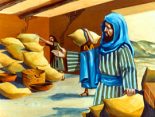
 Some pastors have grievously misapplied Malachi 3:8–10 by imposing it upon the Church, using the passage as a means to coerce believers through guilt and intimidation into financial giving. In extreme cases, some have demanded access to members’ tax returns or have publicly displayed individual contributions as a method of exerting social pressure. The misuse of this Old Testament text reveals both a lack of sound hermeneutical understanding and a deficiency in spiritual maturity among church leaders. In its original context, Malachi 3:8–10 pertains to Israel under the Mosaic Law, not to the Church of Jesus Christ in the present dispensation.