The King, the Kingdom, and the Coming Reign of Christ

God’s kingdom program is rooted in the covenants and unfolds progressively throughout Scripture. Central to that program is the Davidic Covenant, in which God promised David an eternal dynasty, throne, kingdom, and descendant who would rule forever (2 Sam. 7:12-13; Ps. 89:3-4, 34-37). David had an earthly kingdom, and his “throne shall be established forever” (2 Sam. 7:16). Isaiah declared that the promised Son would sit “on the throne of David and over his kingdom” and that His government and peace would never end (Isa. 9:6-7). Jeremiah foretold a “righteous Branch” from David who would reign wisely and execute justice in the land (Jer. 23:5-6; 33:14-17). Ezekiel spoke of a restored Israel living securely under “My servant David” (Ezek. 34:23-24; 37:24-28). Daniel saw the Son of Man receiving an everlasting dominion that would crush all Gentile kingdoms (Dan. 2:44; 7:13-14, 27). Zechariah announced that the Lord Himself would one day be “king over all the earth” (Zech. 14:9). The New Testament opens with these promises still intact, as Gabriel told Mary that Jesus would receive “the throne of His father David” and reign forever (Luke 1:31-33). Jesus is repeatedly identified as the Son of David and rightful heir to the kingdom promises (Matt. 1:1; Rom. 1:3; Rev. 22:16). The kingdom promised in Scripture is a literal, earthly kingdom in which Christ will rule on earth, fulfilling the prayer, “Your kingdom come. Your will be done, on earth as it is in heaven” (Matt. 6:10).

Scripture also gives an extensive description of the ruler of this kingdom. The Messiah would come from the tribe of Judah and possess the scepter of rule (Gen. 49:10). He would be both human and divine, born of a virgin and called Immanuel (Isa. 7:14), “God with us” (Matt. 1:23; cf. John 1:1, 14; Col. 2:9), “Mighty God” and “Prince of Peace” (Isa. 9:6). Psalm 45 describes Him as a righteous king whose throne is eternal (Ps. 45:6-7), while Psalm 110 reveals Him as both King and Priest after the order of Melchizedek (Ps. 110:1-4). Isaiah 11 portrays Him as empowered by the Holy Spirit, ruling in righteousness and equity (Isa. 11:1-5). Micah declared that though He would be born in Bethlehem, His origins are “from the days of eternity” (Mic. 5:2). Yet before reigning in glory, the Messiah would first suffer for sin, bearing the iniquities of others (Isa. 53:1-12). The New Testament identifies Jesus as the fulfillment of these prophecies. He is the Son of David (Matt. 1:1), the King of Israel (John 1:49), and the returning conqueror who will rule the nations (Rev. 19:11-16).

At Christ’s first coming, the kingdom was genuinely offered to Israel. John the Baptist announced, “Repent, for the kingdom of heaven is at hand” (Matt. 3:1-2).[1] Jesus proclaimed the same message and traveled throughout Israel “preaching the gospel of the kingdom” (Matt. 4:17, 23; 9:35). The disciples were sent specifically to “the lost sheep of the house of Israel” with the message that “the kingdom of heaven is at hand” (Matt. 10:5-7). Christ authenticated His messianic claims through miracles that fulfilled kingdom prophecies concerning healing and restoration (Isa. 35:5-6; Matt. 11:2-6; Acts 2:22). The offer was real, the King was present, and the credentials of the kingdom were publicly displayed. According to Pentecost:

The “Gospel of the kingdom” is what was preached by both John and Jesus (Matt. 3:2, 4–17). This “Gospel” was the Good News that the kingdom was near and was a message with both a soteriological (salvation) and an eschatological (prophetic) emphasis. This Gospel directed sinners to “the Lamb of God, who takes away the sin of the world” (John 1:29) and promised the expectant ones that “the kingdom of heaven is near” (Matt. 3:2).[2]

The Kingdom Rejected

Israel’s leadership rejected the King and committed the offense that led to the removal of the kingdom offer. This climactic rejection occurred when the Pharisees attributed Christ’s miracles, performed through the power of the Holy Spirit, to Satan himself (Matt. 12:22-24; Mark 3:22-30; Luke 11:14-20). This marked a decisive turning point in Christ’s ministry. Jesus warned of judgment for this national rejection (Matt. 12:31-32) and began speaking in parables to conceal truth from hardened hearts while revealing it to responsive disciples (Matt. 13:10-17). Later, in the parable of the vineyard, Jesus declared, “the kingdom of God will be taken away from you and given to a people, producing the fruit of it” (Matt. 21:43). He lamented over Jerusalem and announced that the nation would not see Him again until it welcomed Him as Messiah (Matt. 23:37-39). John wrote, “He came to His own, and those who were His own did not receive Him” (John 1:11). The nation ultimately cried, “We have no king but Caesar” (John 19:15).

The Kingdom Postponed

Because the King was rejected, the establishment of the kingdom was postponed. Fruchtenbaum states, “When Jesus was rejected, the offer of the Messianic Kingdom was rescinded.”[3] This rejection did not cancel the covenant promises but delayed their fulfillment until Christ’s return. Jesus illustrated this postponement in the parable of the nobleman who went to a distant country to receive a kingdom and then return (Luke 19:11-27). Even after the resurrection, the disciples still expected a future earthly kingdom for Israel, asking, “Lord, is it at this time You are restoring the kingdom to Israel?” (Acts 1:6). Christ did not deny the kingdom’s future restoration but only the timing (Acts 1:7). Peter later preached that Christ remains in heaven until the “period of restoration of all things” spoken of by the prophets (Acts 3:19-21). Hebrews also states that the world has not yet been subjected to Christ in visible rule (Heb. 2:5-8). Presently, Christ sits at the Father’s right hand awaiting the time when His enemies will be made His footstool (Ps. 110:1; Acts 2:34-35).

The Millennial Kingdom

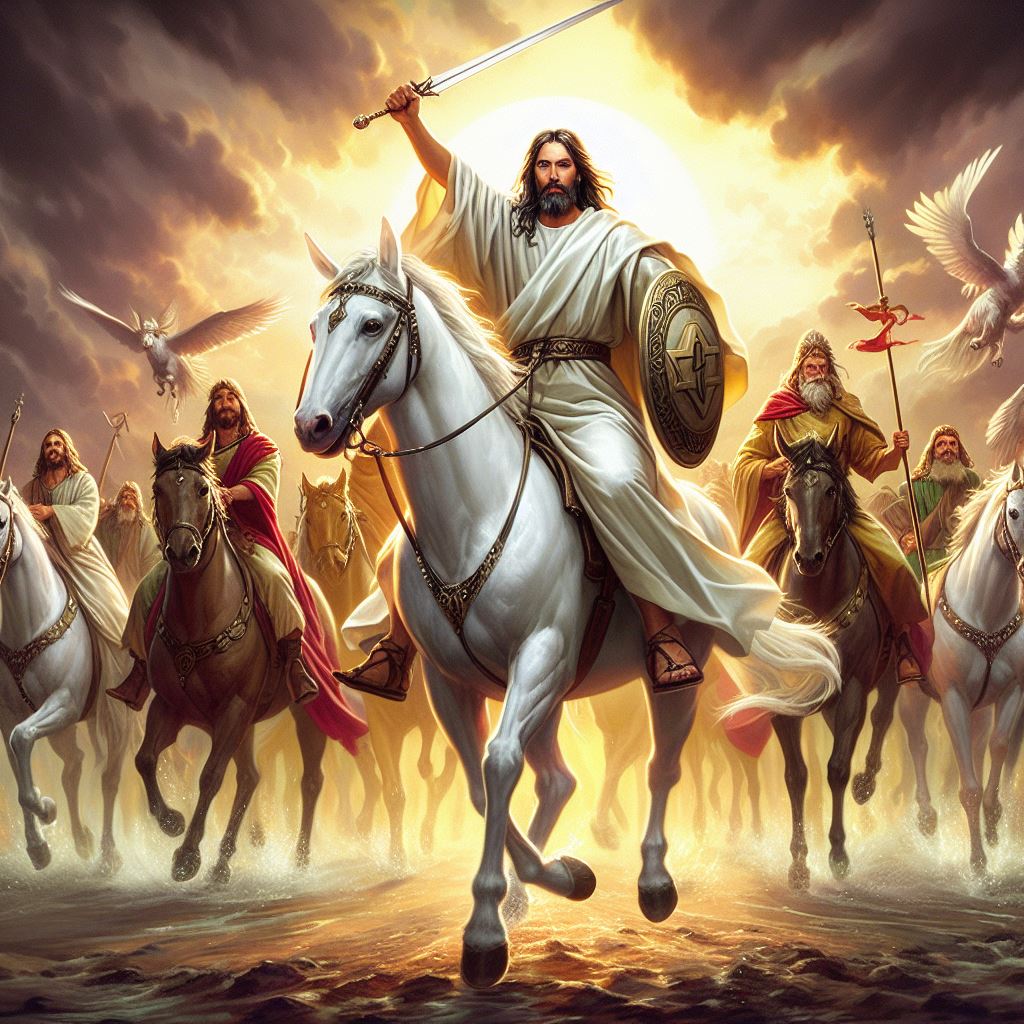
The kingdom will finally be established at the Second Coming of Christ described in Revelation 19 and 20. Jesus will return from heaven in power and glory, destroy His enemies, and judge the rebellious nations (Rev. 19:11-21). Satan will then be bound and imprisoned for one thousand years so that he cannot deceive the nations (Rev. 20:1-3). Christ will reign on earth for a thousand years with resurrected saints who share in His rule (Rev. 20:4-6). This period of a thousand years is called the Messianic Kingdom because it will be ruled by Messiah. According to Fructenbaum, “The name Millennial Kingdom emphasizes how long this kingdom will last: one thousand years. The form of the Messianic or Millennial Kingdom is that of an earthly literal kingdom which Jesus will rule from the Throne of David.”[4] After the millennium, Satan will be released briefly, lead a final rebellion, and then be cast forever into the lake of fire (Rev. 20:7-10). This is followed by the Great White Throne Judgment and the eternal state (Rev. 20:11-15; 21:1-4).

The prophets describe the millennial kingdom as a time of worldwide righteousness, peace, prosperity, and divine rule. Christ will reign personally from Jerusalem, and the nations will stream to Zion to learn the ways of the Lord (Isa. 2:1-4; Mic. 4:1-8; Zech. 14:9, 16-21). His government will be marked by perfect justice and righteousness (Isa. 11:3-5; Jer. 23:5; Ps. 72:1-4). War will cease as weapons are transformed into tools for agriculture (Isa. 2:4; Mic. 4:3). Even the animal kingdom will experience harmony as the curse is partially lifted from creation (Isa. 11:6-9; 35:1-7). Human life spans will increase, and the earth will produce abundantly (Isa. 65:20-25; Amos 9:13-14; Joel 3:18). Israel will be spiritually restored and regathered to the land under the blessings of the new covenant (Ezek. 36:24-28; 37:21-28; Rom. 11:25-27). A millennial temple will stand in Jerusalem as described in Ezekiel 40-48, and the nations will worship the King there (Zech. 14:16-21). Above all, the kingdom will be characterized by universal knowledge of God, “for the earth will be full of the knowledge of the LORD as the waters cover the sea” (Isa. 11:9; Hab. 2:14).

The Kingdom a Reward for the Faithful

Though all believers will enter the future earthly kingdom by grace, participation in its privileges and rulership is a reward for faithfulness in this life. Scripture consistently draws this distinction. Those who suffer with Christ will also reign with Him (2 Tim. 2:12), and those who overcome in the Christian life will be granted authority to rule the nations (Rev. 2:26-27). Faithful service, spiritual maturity, and endurance under trial form the pathway to inheriting the kingdom, not in terms of salvation, which is a free gift (Rom. 6:23), but in terms of honor, responsibility, and reward (Luke 19:17; 1 Cor. 3:13-15; Rom. 8:17b). Jesus will reward His servants at the Judgment Seat of Christ, and those who have proven faithful in smaller responsibilities will be entrusted with greater authority in His coming reign (2 Cor. 5:10; Luke 19:11-19). As Paul exhorted, “Whatever you do, do your work heartily, as for the Lord rather than for men, knowing that from the Lord you will receive the reward of the inheritance. It is the Lord Christ whom you serve” (Col. 3:23-24). This eternal perspective motivates us to live with intention and integrity, not merely content to enter the kingdom, but longing to reign with Christ in it. According to Fruchtenbaum, “All believers will enter the Messianic Kingdom but only those who live an obedient spiritual lifestyle will inherit the Kingdom (Gal. 5:21). This means that only such believers will be rewarded, honored, and given crowns of authority to co-rule in the Messianic Kingdom with Messiah, the King.”[5]

Steven R. Cook, D.Min., M.Div.

If this article has enriched your understanding and walk with Christ, and you feel led to support my ministry, your generosity is greatly appreciated. Your gifts enable me to continue sharing the gospel of grace and providing in-depth biblical teachings. Thank you for partnering with me in this mission.

Related Articles:


[1] In Mark 1:15, “the gospel of the kingdom” referred to the announcement that Israel’s promised Messianic King had arrived and the kingdom was being offered to the nation through repentance and faith, whereas the later gospel of grace centered on Christ’s death, burial, and resurrection (1 Cor. 15:3-4), truths the disciples did not yet understand and initially resisted when Jesus first revealed them (Matt. 16:21-22; Mark 9:31-32; Luke 18:31-34).

[2] J. Dwight Pentecost, Thy Kingdom Come: Tracing God’s Kingdom Program and Covenant Promises throughout History (Grand Rapids, MI: Kregel Publications, 1995), 251.

[3] Arnold G. Fruchtenbaum, Israelology: The Missing Link in Systematic Theology, Rev. ed. (Tustin, CA: Ariel Ministries, 1994), 624.

[4] Ibid., 611.

[5] Arnold G. Fruchtenbaum, The Messianic Jewish Epistles: Hebrews, James, First Peter, Second Peter, Jude, 1st ed. (Tustin, CA: Ariel Ministries, 2005), 244.


The Coming Seven Year Tribulation

The seven-year Tribulation refers to the future time of unprecedented distress that will fall upon the earth after the church is removed to heaven at the Rapture (1 Th 4:13–18; 1 Cor 15:51-52). This period is anchored in Daniel’s prophecy of the “seventy weeks” (Dan 9:24–27), where the final “week” (a heptad of years) is reserved for God’s dealings with Israel and the nations (Rev 6–19) before the establishment of Messiah’s earthly kingdom (2 Sam 7:12–16; Isa 2:2–4; Isa 9:6–7; Jer 23:5–6; 30:7; Ezek 37:24–28; Zech 14:3–9; Matt 19:28; 24:21-22; Luke 1:32–33; Acts 1:6–7; Rev 20:1–6). The event that begins this period is the confirmation of a covenant between “the prince who is to come” (the Antichrist) and unbelieving Israel (Dan 9:27). This covenant will likely promise Israel’s security and religious freedom, including the reinstitution of temple worship (2 Th 2:3–4; Rev 11:1–2), but it’s a façade for deception, as the Antichrist’s true character will be revealed in the middle of the Tribulation (Matt 24:15; Dan 9:27; Rev 13:4–7). Importantly, the Rapture of the church does not initiate the Tribulation but rather marks the conclusion of the church age, which began at Pentecost in Acts 2. The Tribulation formally begins with the signing of this covenant between the Antichrist and Israel. Fruchtenbaum clarifies, “The Rapture precedes the Tribulation, but it does not begin the Tribulation, a fact confused by many Pretribulationists. It is not the Rapture, but the seven-year covenant which begins the Tribulation. The Rapture will merely come some time before this, and may very well precede the Tribulation by a good number of years” (Arnold G. Fruchtenbaum, The Footsteps of the Messiah, p. 155).

The term Tribulation designates the entire seven-year period revealed in Daniel’s prophecy of the seventy weeks (Dan 9:27), a future era of unparalleled upheaval and divine judgment. The first half of this period is marked by the Antichrist’s deceptive rise, political consolidation, and restrained but mounting judgments. Jesus described this stage as “the beginning of birth pangs” (Matt 24:8), emphasizing that while distress is genuine, it steadily intensifies in both frequency and severity. During this time, the seal and trumpet judgments unfold (Rev 6–9), bringing economic collapse, ecological devastation, warfare, famine, and widespread death. Yet these judgments, though severe, remain restrained compared to what is to come.

The second half of the seven years is specifically called the Great Tribulation (Matt 24:21), when the full measure of God’s wrath is unleashed upon a rebellious world. Scripture identifies this climactic period as lasting “a time, times, and half a time” (Dan 7:25; 12:7; Rev 12:14), “forty-two months” (Rev 11:2; 13:5), or “1,260 days” (Rev 11:3; 12:6), underscoring its exact duration of three-and-a-half years. It begins at the midpoint when the Antichrist breaks his covenant with Israel, sets up the abomination of desolation in the temple (Dan 9:27; Matt 24:15; 2 Th 2:4), and demands global worship. During these final forty-two months (Rev 11:2; 13:5), the bowl judgments are poured out (Rev 16), unleashing the most catastrophic expressions of divine wrath. At the same time, the persecution of Israel intensifies as the Antichrist seeks to eradicate God’s covenant people (Rev 12:13–17), and worldwide rebellion against the Lord reaches its peak. According to Thomas Ice, “the Bible distinguishes between the tribulation period (seven years) and what is known as the great tribulation (the final three and a half years). In Matthew 24:9 the term ‘tribulation’ most likely refers to the full seven-year period of the tribulation. On the other hand, Matthew 24:21 speaks of the ‘great tribulation,’ which begins with the abomination of desolation that takes place after the midpoint of the seven-year period (Matt 24:15).” (Timothy J. Demy & Thomas Ice, Answers to Common Questions about the End Times, p. 65).

The coming seven-year Tribulation must be understood as an eschatological necessity: God’s appointed means to bring an end to human rebellion (Jer 25:31-33; Rev 6:15-17), to purify Israel for her Messiah (Ezek 20:37-38; Zech 13:8-9; Rom 11:26), and to prepare the nations for the visible return and reign of Christ (Matt 24:29-30; Rev 19:11-16). Thus, the Tribulation is both a period of judgment and of hope, for it paves the way for the long-awaited kingdom of God on earth (Dan 2:44; Zech 14:9; Rev 20:1-6) and the millennial blessings that will follow (Isa 11:6-9; Amos 9:13-15).

Steven R. Cook, D.Min., M.Div.

If this article has enriched your understanding and walk with Christ, and you feel led to support my ministry, your generosity is greatly appreciated. Your gifts enable me to continue sharing the gospel of grace and providing in-depth biblical teachings. Thank you for partnering with me in this mission.

Related Articles:

Overview of Future Prophetic Events

What follows is an overview of future prophetic events as revealed in Scripture. It is not a comprehensive or technical analysis, but a panoramic survey designed to provide clarity and structure for understanding God’s prophetic program. This presentation moves sequentially—from the Rapture of the Church to the eternal state—outlining the major movements of eschatology as understood from a literal, historical, grammatical interpretation of Scripture. Each section is grounded in key biblical passages and reflects a traditional dispensational perspective, affirming the distinctiveness of Israel and the Church and the unfolding of God’s sovereign plan through both time and eternity. Readers should note that this is a bird’s-eye view, intended to give the big picture. Deeper exegetical and theological treatments of these subjects are available elsewhere—but for now, we take our place as students of prophecy, watching history move steadily toward its divine consummation.

Prophetic Overview

The next great event in God’s prophetic program is the Rapture of the Church (John 14:1-3), which is the sudden, bodily, and upward catching away of all Church-age believers—both living and dead—to meet Christ in the air (1 Th 4:13-18; 1 Cor 15:51-53). The word Rapture—though not found in English Bibles—comes from the Latin rapturo, which translates the Greek harpazō (“to snatch away”) in 1 Thessalonians 4:17, and accurately describes the sudden catching away of believers to meet Christ in the air. This event is imminent, meaning it could occur at any moment, with no signs preceding it. It is distinct from the Second Coming and is exclusively for the Church, the body and bride of Christ (Eph 5:25-27). At the Rapture, deceased believers will be resurrected, and living believers will be instantly transformed. This marks the end of the Church Age—a mystery age not revealed in the Old Testament—and removes believers from the earth before God pours out His wrath in the Tribulation (1 Th 1:10; 5:9). The Church is promised deliverance, not participation, in the Day of the Lord (Rev 3:10). According to Fruchtenbaum:

“The Church is composed of all true believers from Pentecost in Acts two until the Rapture of the Church. The Rapture excludes the Old Testament saints. It also excludes the Tribulation saints. The only saints who will be raptured are the Church saints. The Rapture passages clearly state that only those who are in Christ will partake of the Rapture.”[1]

After the Rapture and while the Tribulation unfolds on earth, believers in heaven will appear before the judgment seat of Christ—also called the Bema seat—for evaluation and reward (2 Cor 5:10; Rom 14:10-12). According to Pentecost, “The believer’s works are brought into judgment, called ‘the things done in his body’ (2 Cor. 5:10), in order that it may be determined whether they are good or bad.”[2] This is not a judgment for sin, as all sins were fully paid for by Christ on the cross (Rom 8:1; Heb 10:14), and believers are already justified by faith (Rom 3:28; 5:1; Gal 2:16). Rather, the Bema is a judgment of the believer’s service, motives, and faithfulness in the Christian life. Paul describes this as a testing of each person’s work—whether it was built with gold, silver, and precious stones, or with wood, hay, and straw (1 Cor 3:12-15). Those works of eternal value, done in alignment with God’s Word, empowered by the Spirit, and offered for the glory of God, will endure the fire of divine evaluation and be rewarded. Unfruitful or self-centered efforts will be burned up, resulting in loss of reward—but not loss of salvation. The Bema seat thus underscores the seriousness of our stewardship in this life and highlights the grace of God, who not only saves but also rewards His people for their faithfulness. It is here that crowns are awarded (2 Tim 4:8; 1 Pet 5:4; Jam 1:12), and the Church is made ready as the adorned bride of Christ (Rev 19:7-8).

Following the Rapture, the Tribulation period begins, a seven-year timeframe marked by divine judgment and escalating global chaos (Dan 9:27; Matt 24:4-28). According to Thomas Ice, “In this discourse [Matt 24:4-28], Jesus describes for the disciples the tribulation period. In verses 4-14, He speaks about the first half of the tribulation, and in verses 15-28, He describes the second half leading up to the second coming.”[3] The Tribulation begins with the signing of a covenant between the coming world ruler—the Antichrist—and Israel (Dan 9:27). This covenant allows Israel to resume temple worship, likely including animal sacrifices. The first half of the Tribulation (three and a half years) is marked by political deception, regional wars, famine, and limited divine judgments (Rev 6:1-8). Though catastrophic, these judgments are restrained, giving the world time to repent. Two notable events during this time include the ministry of the 144,000 sealed Jewish evangelists (Rev 7:1-8) and the rise of global religious syncretism symbolized by the harlot of Revelation 17.

Midway through the Tribulation, the Antichrist breaks his covenant with Israel, halts temple sacrifices, and sets up the abomination of desolation in the rebuilt Jewish temple, proclaiming himself to be God (Dan 9:27; Matt 24:15; 2 Th 2:3-4). This initiates the Great Tribulation, the second and more intense half of the seven-year period (Matt 24:21-22). During this time, Satan is cast down to earth with great fury (Rev 12:7-12), and the Antichrist is empowered to wage war against the saints, particularly the believing Jewish remnant and Gentile converts who refuse to worship him (Rev 13:7-10). The False Prophet promotes this global idolatry and enforces the mark of the beast (Rev 13:11-18). Despite escalating evil, God continues to offer grace through angelic proclamations (Rev 14:6-7) and the faithful witness of believers, many of whom are martyred.

As the Tribulation nears its end, a series of cataclysmic judgments intensify God’s wrath: trumpet and bowl judgments devastate the environment, economy, and world population (Rev 8-9; 16). Political alliances form against Israel, setting the stage for the Battle of Armageddon. The kings of the earth, stirred by demonic influence, gather in the valley of Megiddo to destroy Jerusalem and annihilate the Jewish people (Zech 12:2-3; Rev 16:13-16). But just as it seems all hope is lost, the heavens open, and Christ returns in glory with His holy angels and glorified saints (Zech 14:1-11; Rev 19:11-16). According to Ryrie, “the second coming of Christ will occur prior to the Millennium, which will see the establishment of Christ’s kingdom on this earth for a literal one thousand years.”[4] This Second Coming is visible, dramatic, and earth-shaking. Christ will personally destroy the Antichrist and the False Prophet, casting them into the lake of fire (Rev 19:19-20), and He will bind Satan in the abyss for 1,000 years (Rev 20:1-3).

At the return of Christ, the Millennial Kingdom will be established—a literal 1,000-year reign of Jesus Christ on earth, centered in Jerusalem (Rev 20:4-6). Fruchtenbaum states, “The Millennium will not begin the day immediately following the last day of the Great Tribulation because there will be a seventy-five day interval.”[5] The 75-day interval serves to cleanse and prepare the earth for Christ’s Millennial reign by judging the nations, restoring order, and inaugurating millennial blessings (Dan 12:11-12; Matt 25:31-46). After that, Christ will establish His kingdom on earth. He will fulfill all Old Testament covenants with Israel, including the Abrahamic (Gen 12:1-3), Davidic (2 Sam 7:16; Psa 89:35-37; Luke 1:31-33), and New Covenants (Jer 31:31-34). Israel will be regathered, restored, and exalted among the nations (Isa 2:2-4; Zech 14:16-21). The curse on nature will be partially lifted, and peace, righteousness, and justice will characterize Christ’s reign (Isa 11:1-10). Temple worship will resume, though modified, with sacrifices serving as memorials of Christ’s once-for-all sacrifice (Ezek 40–48). Though Satan is bound, human beings born during the Millennium—descendants of Tribulation survivors—will still have sin natures and need salvation.

At the end of the thousand years, Satan is released for a final rebellion (Rev 20:7-9). He will deceive a vast number of people, proving that even in a perfect environment, man’s sin nature still inclines him to rebel against God. Fire from heaven will consume the rebellious forces, and Satan will be cast into the lake of fire forever (Rev 20:10). Then comes the Great White Throne Judgment, where all unbelievers throughout history are resurrected, judged according to their works, and condemned to eternal separation from God in the lake of fire (Rev 20:11-15). This is not a judgment to determine salvation, but to reveal the just grounds for condemnation due to their rejection of God’s provision of grace. There is no mention of the Church here, as believers were already judged at the Bema Seat following the Rapture (2 Cor 5:10; Rom 14:10).

After the final judgment, God creates a new heaven and a new earth where righteousness dwells (2 Pet 3:13; Rev 21:1). The eternal state begins, free from sin, death, pain, and sorrow. The New Jerusalem descends from heaven, adorned like a bride, and becomes the dwelling place of the redeemed (Rev 21:2-4). God’s people from all ages will dwell in perfect fellowship with Him forever, enjoying His presence, His glory, and His goodness without end. There will be no temple in the New Jerusalem, for the Lord God and the Lamb are its temple (Rev 21:22). The curse is gone (Rev 22:3), the water of life flows freely, and the leaves of the tree are for the healing of the nations. Eternity will be a time of unbroken peace, joy, service, and worship. The former things will have passed away, and the redeemed will enjoy their inheritance in the presence of their Savior forever.

Summary

The prophetic Word of God unveils a majestic and ordered panorama of future events, from the imminent Rapture of the Church to the eternal state in the new heavens and new earth. Each stage—whether the Tribulation, Christ’s return, the Millennial Kingdom, or the final judgment—demonstrates God’s sovereign control over history and His faithfulness to fulfill every covenant and promise. For the Church, prophecy is about prediction and preparation. It reminds us that history is moving steadily toward divine consummation, and that our hope is anchored not in the shifting sands of this world, but in the unshakable promises of our returning Savior. As we await that blessed hope, we do so with confidence, vigilance, and joy, knowing that the same God who keeps His Word about the future is the same God who sustains us in the present. Come, Lord Jesus (Rev 22:20).

Steven R. Cook, D.Min., M.Div.

If this article has enriched your understanding and walk with Christ, and you feel led to support my ministry, your generosity is greatly appreciated. Your gifts enable me to continue sharing the gospel of grace and providing in-depth biblical teachings. Thank you for partnering with me in this mission.

Related Articles:


[1] Arnold G. Fruchtenbaum, The Footsteps of the Messiah: A Study of the Sequence of Prophetic Events, Rev. ed. (Tustin, CA: Ariel Ministries, 2003), 142.

[2] J. Dwight Pentecost, Things to Come: A Study in Biblical Eschatology (Grand Rapids, MI: Zondervan, 1958), 223.

[3] Timothy J. Demy and Thomas Ice, Answers to Common Questions about the End Times (Grand Rapids, MI: Kregel Publications, 2011), 64.

[4] Charles C. Ryrie, Basic Theology: A Popular Systematic Guide to Understanding Biblical Truth (Chicago, IL: Moody Press, 1999), 522.

[5] Arnold G. Fruchtenbaum, The Footsteps of the Messiah, 361.

The New Covenant

The Bible presents several key covenants that reveal God’s unfolding plan for humanity. Divine covenants are formal agreements established by God, central to His redemptive plan, and can be classified as unilateral or bilateral. Unilateral covenants are unconditional, where God guarantees to fulfill His promises regardless of human actions. Examples include the Noahic Covenant, in which God promises never to flood the earth again (Gen 9:8-17); the Abrahamic Covenant, assuring land, descendants, and blessings for all the families of the earth (Gen 12:1-3; 15:18-21); the Davidic Covenant, promising an eternal throne through David’s lineage (2 Sam 7:12-16; Psa 89:3-4); and the New Covenant, offering forgiveness and a transformed heart (Jer 31:33-34; Ezek 36:26-27). Bilateral covenants, on the other hand, are conditional, requiring both parties to fulfill specific obligations. The Mosaic Covenant is a key example (Ex 19-24), where Israel must obey God’s law to receive blessings and avoid curses (Deut 28). Unilateral covenants highlight God’s sovereign grace, while bilateral ones emphasize human responsibility in maintaining covenant faithfulness.

The New Covenant was made between God and the nation of Israel (Jer 31:33-34; Ezek 36:26-27). Unlike the Mosaic Covenant, which Israel had broken, the New Covenant promises an internal transformation, with God’s law written on their hearts, a restored relationship with Him, and the complete forgiveness of sins. Ezekiel elaborates on this transformation by describing how God will give Israel a new heart and spirit, removing their heart of stone and replacing it with a heart of flesh, and by placing His Spirit within them, enabling them to live in obedience. The covenant will reach its full realization during the millennial reign of Christ, when all Israel will know the Lord and experience these promised blessings in their entirety (Rom 11:25-27; Zech 12:10).

The church is not a party to the New Covenant, but it shares in its spiritual blessings through its union with Christ (Rom 11:17-24; 1 Cor 11:25; 2 Cor 3:6). At the Last Supper, Jesus declared that His blood inaugurated the New Covenant (Luke 22:20; 1 Cor 11:25). Fruchtenbaum states, “By His shedding of blood, He [Jesus] inaugurated the New Covenant. He replaced, by His sacrifice, the old system and established the New Covenant.”[1] Constable states, “Jesus ratified the New Covenant when He died on the cross, the blessings that will come to Israel did not begin then. They will begin when Jesus returns and establishes His kingdom on the earth. However, the church enters into some of the blessing of the New Covenant now.”[2] Hebrews 8-10 affirms that Christ is the Mediator of a better covenant, highlighting the superiority of His sacrifice over the Old Covenant system. However, to be clear, the church does not replace Israel but is grafted into Israel’s spiritual blessings (Rom 11:17-24). As a result, believers in the church age experience forgiveness of sins (Eph 1:7) and the indwelling of the Holy Spirit (1 Cor 6:19)—blessings that flow from Christ’s New Covenant work. Fruchtenbaum states, “The Church is merely partaking of the spiritual blessings of the New Covenant as she is partaking of the spiritual blessings of the Abrahamic Covenant.”[3] The full realization of the covenant remains future, awaiting Israel’s national restoration at Christ’s return (Rom 11:25-27). Showers notes, “the Church is partaking of the spiritual blessings of the New Covenant, the material and national promises of that covenant are not being fulfilled with the Church.”[4] Fruchtenbaum states:

“There is only one New Covenant which is made with Israel. Like the Abrahamic Covenant, it contains both physical and spiritual promises. As with the Abrahamic Covenant, the physical promises are limited to Israel but the spiritual were promised to go out to the Gentiles. Gentile believers have become “partakers” of the spiritual blessings of the New Covenant as they are of the Abrahamic Covenant.”[5]

Since Israel has not yet accepted the Messiah as a nation, the New Covenant awaits its complete fulfillment in the millennial kingdom. The New Covenant’s full intent is national and eschatological—meaning that while believers today experience aspects of its blessings (such as forgiveness of sins and the indwelling Spirit), its covenantal structure remains distinctly tied to Israel’s future national restoration. Fruchtenbaum notes, Jesus “will some day come back, judge, and bring in the Millennial Kingdom with the full application of the New Covenant.”[6] During this time, Israel will be fully restored to their land (Ezek 36:24-28), experience national regeneration (Jer 31:34), have God’s law written on their hearts (Ezek 36:26-27), and see the Davidic kingdom fully established with Christ reigning as King (Jer 33:15-17). This perspective maintains the essential dispensational distinction between Israel and the church, affirming that God’s unconditional promises to Israel remain intact and will be fulfilled in the future. Fruchtenbaum notes:

“The Church is related to the New Covenant only insofar as receiving the spiritual benefits of the Covenant (salvation benefit), but the Church is not fulfilling it. The Church has become a partaker of Jewish spiritual blessings, but the Church is not a taker-over of the Jewish covenants. The Church partakes of the spiritual blessings and promises, but not the material or physical promises or blessings.”[7]

For the church today, Christ’s inauguration of the New Covenant means we share in its spiritual blessings, such as forgiveness of sins, and the indwelling of the Holy Spirit, but without nullifying God’s future plan for Israel. This distinction is critical. God’s faithfulness to His unconditional covenants with Israel guarantees that He will also fulfill His promises to the church. Failure to distinguish between Israel and the church leads to serious doctrinal confusion, including the false doctrine of replacement theology. By maintaining this biblical separation, believers gain clarity regarding God’s eschatological timeline and the future fulfillment of all covenantal promises during the millennial reign of Christ, when Israel’s national restoration will occur, and the Messianic Kingdom will be established.

Dr. Steven R. Cook

If this article has enriched your understanding and walk with Christ, and you feel led to support my ministry, your generosity is greatly appreciated. Your gifts enable me to continue sharing the gospel of grace and providing in-depth biblical teachings. Thank you for partnering with me in this mission.

Related Articles:

[1] Arnold G. Fruchtenbaum, The Messianic Jewish Epistles: Hebrews, James, First Peter, Second Peter, Jude, 1st ed. (Tustin, CA: Ariel Ministries, 2005), 133.

[2] Tom Constable, Tom Constable’s Expository Notes on the Bible (Galaxie Software, 2003), Matt 26:28.

[3] Arnold G. Fruchtenbaum, Israelology: The Missing Link in Systematic Theology, Rev. ed. (Tustin, CA: Ariel Ministries, 1994), 359.

[4] Renald E. Showers, There Really Is a Difference!: A Comparison of Covenant and Dispensational Theology (Bellmawr, NJ: The Friends of Israel Gospel Ministry, Inc., 1990), 107.

[5] Arnold G. Fruchtenbaum, Israelology, 364.

[6] Arnold G. Fruchtenbaum, The Messianic Jewish Epistles, 183.

[7] Arnold G. Fruchtenbaum, Israelology, 636.

Jesus’ Return with His Saints

Jesus Coming with His SaintsWhen Jesus returns to the earth after the time of the seven year Tribulation, He will establish His kingdom on earth.[1] This is a time when humanity will be saved from the tyranny of Satan who currently rules over the earth.[2] At His Second Coming, it is written, “And the armies which are in heaven, clothed in fine linen, white and clean, were following Him on white horses” (Rev 19:14). Concerning this passage, Radmacher states, “The armies in heaven may be angelic hosts (Rev 5:11; Matt 26:53), but Revelation 17:14 speaks of those with the Lord at His coming as being ‘called, chosen, and faithful,’ all terms for believers (Rom 1:7; Eph 1:1; 1 Pet 2:9).”[3] Wiersbe adds, “Certainly the angels are a part of this army (Matt 25:31; 2 Th 1:7); but so are the saints (1 Th 3:13; 2 Th 1:10).”[4] Norman Geisler states:

“Before the Tribulation, Christ comes for His bride (1 Th 4:16–17; John 14:3); then, at the end of the Tribulation, He will return with all His saints. Jude wrote, “See, the Lord is coming with thousands upon thousands of his holy ones” (Jude 1:14; cf., Matt 24:29–31). He cannot come with them until He has first come for them; we have identified the time interval between these events as seven years.”[5]

Wayne House comments:

“It is important to remember that when we say “the second coming” of Christ, we are not talking about the rapture that occurs prior to the second coming. The rapture is most clearly presented in 1 Thessalonians 4:13–18. It is characterized in the Bible as a “translation coming” (1 Cor 15:51–52; 1 Th 4:15–17) in which Christ comes for His church. The second advent is Christ returning with His saints, descending from heaven to establish His earthly kingdom (Zech 14:4–5; Matt 24:27–31).”[6]

At His Second Coming, Jesus will put down all rebellion, both human and satanic. The two main leaders of the world, the Antichrist and his false prophet, will be defeated and “thrown alive into the lake of fire which burns with brimstone” (Rev 19:20). Furthermore, those people who followed Antichrist “were killed with the sword which came from the mouth of Him who sat on the horse, and all the birds were filled with their flesh” (Rev 19:21). Afterwards, the Lord will send one of His angels to arrest and imprison Satan (Rev 20:1-3). John wrote about this angel, saying, “And he laid hold of the dragon, the serpent of old, who is the devil and Satan, and bound him for a thousand years; and he threw him into the abyss, and shut it and sealed it over him, so that he would not deceive the nations any longer” (Rev 20:2-3a). This will be a time of global deliverance from evil as Messiah reigns over all the earth in perfect righteousness.

Dr. Steven R. Cook

Related Articles:

[1] The subject of Messiah’s earthly kingdom is found throughout the OT (Dan 2:44; 7:13-14; 2 Sam 7:16; Psa 89:3-4, 34-37; Isa 9:6-7; Jer 23:5-6) and the NT (Matt 6:9-10; 19:28; 25:31; Luke 1:31-33; Rev 19:11-16; Rev 20:4-6).

[2] Three times Jesus referred to Satan as “the ruler of this world” (John 12:31; 14:30; 16:11). Other passages of Scripture call Satan “the god of this world” (2 Cor 4:4), and “the prince of the power of the air” (Eph 2:2), informing us “that the whole world lies in the power of the evil one” (1 John 5:19). Satan rules as a tyrant who has “weakened the nations” (Isa 14:12), and currently “deceives the whole world” (Rev 12:9). Satan continues to attack God’s people today (1 Pet 5:8), practices deception (2 Cor 11:13-15), and has well developed strategies of warfare (Eph 6:10-12). Furthermore, humanity is living in an “evil age” (Gal 1:4), under “the dominion of Satan” (Acts 26:18), whose sphere of influence is called “the domain of darkness” (Col 1:13).

[3] Earl D. Radmacher, Ronald Barclay Allen, and H. Wayne House, Nelson’s New Illustrated Bible Commentary (Nashville: T. Nelson Publishers, 1999), 1762.

[4] Warren W. Wiersbe, The Bible Exposition Commentary, vol. 2 (Wheaton, IL: Victor Books, 1996), 618.

[5] Norman L. Geisler, Systematic Theology, Volume Four: Church, Last Things (Minneapolis, MN: Bethany House Publishers, 2005), 618–619.

[6] H. Wayne House and Timothy J. Demy, Answers to Common Questions about Jesus (Grand Rapids, MI: Kregel Publications, 2011), 75–76.