 The Rapture of the Church is imminent—it could happen at any moment, without warning or prerequisite signs. However, while no event must occur before the Rapture, Scripture does reveal the conditions of the world leading up to the seven-year Tribulation that follows. As we observe present global trends, it appears that the stage is being set for the fulfillment of end-times prophecy. These developments, though not signs of the Rapture itself, may indicate how close the Tribulation—and thus the Rapture—may be.
 The most significant prophetic development in modern history is the rebirth of Israel in 1948. After nearly two millennia of dispersion, the Jewish people were regathered to their ancient homeland in fulfillment of passages such as Ezekiel 36–37. This regathering is essential for later events in Daniel’s 70th week (Dan 9:27) and the book of Revelation. Alongside Israel’s return is the growing global focus on Jerusalem, which Zechariah foretold would become a burdensome stone for the nations (Zech 12:2-3). Today, political pressure continues to mount for the division of Jerusalem, in direct defiance of God’s covenant purposes (Joel 3:2).
 In tandem with these geopolitical shifts, we see the rise of globalism. Revelation 13 describes a future one-world government under the Antichrist. Although the Antichrist cannot appear until after the Rapture (2 Th 2:6-8), the groundwork for centralized global control is clearly underway. Institutions such as the United Nations and the World Economic Forum openly advocate for global governance, digital identification, and economic systems that would allow for global compliance—precursors to the mark of the beast system in Revelation 13:16-17. Technological advances now enable worldwide surveillance, biometric tracking, and central bank digital currencies (CBDCs), all of which could be tools of totalitarian control during the Tribulation.
In the spiritual realm, the apostasy of the professing church is another powerful indicator. Paul warned of a falling away from the faith in the last days (1 Tim 4:1-3; 2 Tim 3:1-5), and that’s exactly what we’re witnessing. Many churches are abandoning sound doctrine in favor of entertainment, social agendas, or ecumenical compromise. The Gospel is often distorted—either by works-based systems or watered down to moralistic self-help. The rise of false teachers, doctrinal confusion, and biblical illiteracy is precisely what Scripture foretold.
Meanwhile, society at large is spiraling into moral chaos. Paul’s vivid description of last-days culture in 2 Timothy 3:1-5 reads like today’s headlines: people are lovers of self, arrogant, disobedient to parents, and lovers of pleasure rather than lovers of God. From the normalization of sin to the celebration of rebellion against divine design, the moral fabric of civilization is unraveling. Godlessness is promoted while righteousness is increasingly ridiculed.
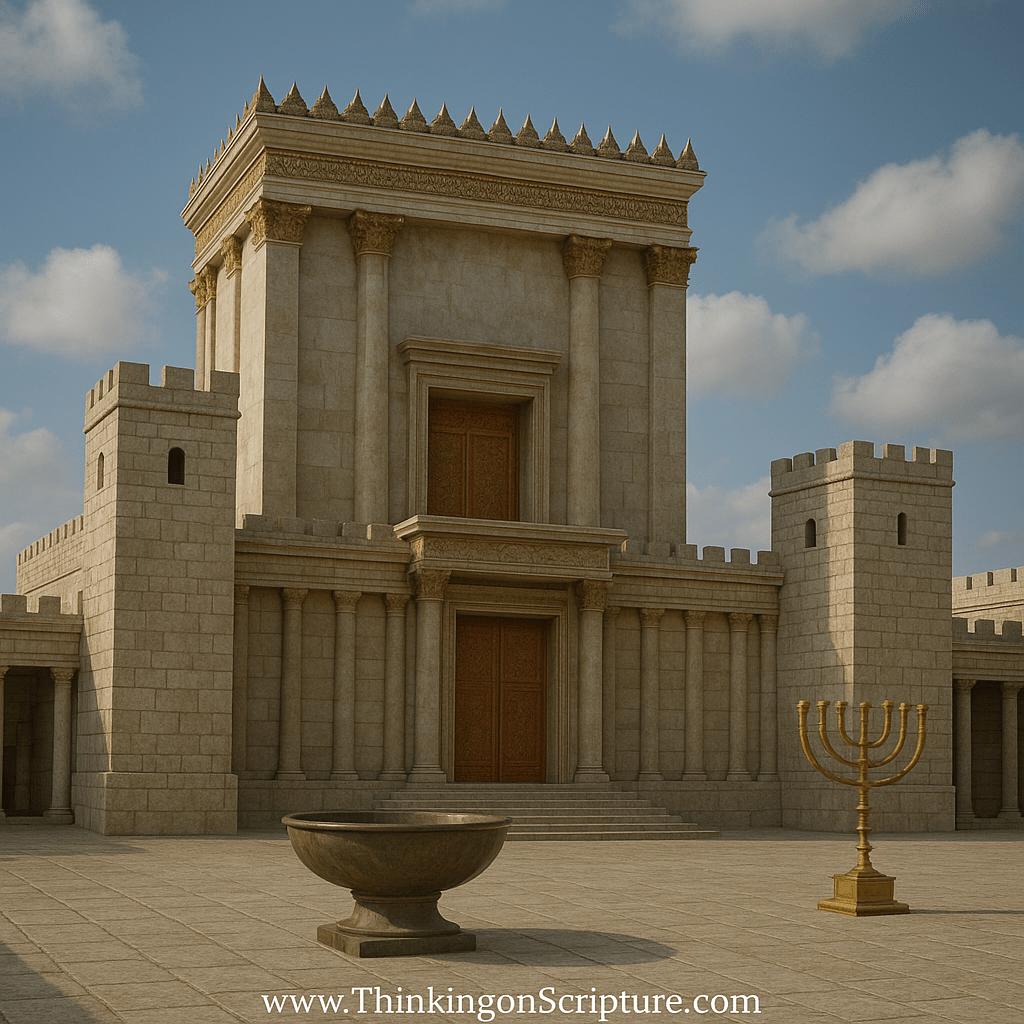 Another fascinating development is the preparation for a third Jewish temple. According to Daniel 9:27 and 2 Thessalonians 2:4, the Tribulation temple must be present for the Antichrist to desecrate it mid-week. Today, groups such as the Temple Institute have recreated priestly garments, temple instruments, and have even bred red heifers for ritual purification. The desire and readiness for temple worship are alive and well in Jerusalem, awaiting only political opportunity.
Equally remarkable is the alignment of nations foretold in Ezekiel 38–39. Russia (Rosh), Iran (Persia), and Turkey (Togarmah) are all forging alliances today, united by hostility toward Israel. These are precisely the nations listed in Ezekiel’s prophecy of a northern coalition that will invade Israel. Though this invasion will be sovereignly thwarted by God, its precursors are visible on today’s geopolitical stage.
Economic instability is also setting the stage. Revelation 6:5-6 describes global hyperinflation and food shortages in the Tribulation. While these judgments have not yet arrived, current economic turmoil—soaring debt, inflation, unstable markets, and supply chain failures—highlight the fragility of modern economies and how quickly the world could tip into chaos when divine restraint is removed.
Lastly, there has been a dramatic rise in occultism and spiritual deception. Paul warned that in the latter times, many would follow deceitful spirits and doctrines of demons (1 Tim 4:1). This trend is exploding today through New Age mysticism, witchcraft, astrology, and Satanism—all marketed as personal empowerment and heavily promoted through media and pop culture. Spiritual darkness is gaining traction, especially among the youth.
Taken together, these developments create a compelling picture. While the Rapture itself is signless and could happen at any time, the stage-setting for the Tribulation strongly suggests that we may be living in the final moments before Christ calls His Church home. We are not looking for signs—we are listening for the shout (1 Th 4:16-17). Until then, we walk by faith, proclaim the gospel of grace, and remain steadfast in hope, knowing our blessed hope is Christ Himself (Tit 2:13).
 Friend, if you’ve never trusted in Jesus Christ as your Savior, now is the time. The gospel of grace is the good news that the eternal Son of God took on human flesh (John 1:1, 14), lived a sinless life in perfect obedience to the Father (1 John 3:5), and willingly died a substitutionary death in our place (Rom 5:8; 2 Pet 3:18). On the cross, He bore all our sins—past, present, and future—in full (1 Pet 2:24). He was buried, and on the third day He rose again bodily, just as the Scriptures foretold (1 Cor 15:3-4). Through His finished work (John 19:30), Jesus offers complete forgiveness of sins (Acts 10:43) and eternal life as a free gift—freely given, never earned (Rom 6:23; Eph 2:8-9). This gift is available to anyone who believes in Him alone for salvation (John 3:16; Acts 16:31). You don’t need to clean yourself up, make promises, or prove yourself worthy. Simply believe in Jesus as your Savior, “for whoever believes in Him shall not perish, but have eternal life” (John 3:16).
Steven R. Cook, D.Min., M.Div., B.Sc.
If this article has enriched your understanding and walk with Christ, and you feel led to support my ministry, your generosity is greatly appreciated. Your gifts enable me to continue sharing the gospel of grace and providing in-depth biblical teachings. Thank you for partnering with me in this mission.
Related Articles:
- The Free Gift of God is Eternal Life
- Assurance of Salvation
- Saved by Grace Alone, Through Faith Alone, in Christ Alone
- Not of Works
- The Cross & Crucifixion of Jesus
- Defining Salvation in the Bible
- Who is the One Who Saves?
- Faith from Beginning to End
- The Righteous Lifestyle of the Believer
- Walking Worthy of God’s Call to Service
- Walking in the Light
- God Uses Imperfect People
- Knowing and Doing the Will of God
- The High Calling of God’s Servant
- The Life of Faith
 When Jesus returns to the earth after the time of the seven year Tribulation, He will establish His kingdom on earth.
 The eschatological subject of the Rapture of the church can be related the study of Soteriology because it is regarded as a form of deliverance. When Messiah returns at the end of the church age, He will deliver His church from an evil world and a coming judgment that will last for seven years (Read Revelation chapters 6-18). A distinction is here drawn between Jesus coming for His saints at the Rapture, and Jesus coming with His saints at His Second Coming (Dan 7:13-14; Matt 19:28; 25:31; Rev 19:11-21). Jesus is now in heaven preparing a place for believers to be with Him there (John 14:1-3). Paul revealed Jesus will return for His church and that all Christians will be “caught up” to meet the Lord in the air (1 Th 4:13-18).