When God Uses Evil Actions for His Good

And we know that God causes all things to work together for good to those who love God, to those who are called according to His purpose (Rom. 8:28).

    All Things for GoodWhen I read this verse I’m reminded of Joseph, the son of Jacob, who at a young age was sold into captivity by his brothers who hated him (Gen. 37). Joseph was carried to Egypt by slave-traders where he was sold to a man named Potiphar. After a short time, Potiphar’s wife also treated Joseph unjustly and lied about him, which resulted in his incarceration for several years (Gen. 39). But the Lord was with Joseph and orchestrated his release from prison and promotion to the right hand of Pharaoh (Gen. 40-41). God then blessed Egypt with seven years of agricultural prosperity before sending seven years of famine upon the land. These events set the stage for God to move Joseph’s brothers geographically into Egypt and to bring them directly to the feet of Joseph (Gen. 42-45). Once there, Joseph’s brothers were afraid of him, fearing he would retaliate for the evil that was done to him. But Joseph interpreted the events of life—including the evil actions of his brothers—from the divine perspective, and this gave him the spiritual capacity to respond to his brothers with love rather than hate, with grace rather than revenge. Joseph told his brothers, “Now do not be grieved or angry with yourselves, because you sold me here, for God sent me before you to preserve life. For the famine has been in the land these two years, and there are still five years in which there will be neither plowing nor harvesting. God sent me before you to preserve for you a remnant in the earth, and to keep you alive by a great deliverance” (Gen. 45:5-7). And later he said, “As for you, you meant evil against me, but God meant it for good in order to bring about this present result, to preserve many people alive” (Gen. 50:20). Joseph operated from the divine perspective, whereas his brothers operated merely from their human viewpoint. From the divine perspective, Joseph realized God had orchestrated all the events of his life for a specific purpose and had incorporated the evil actions of his brothers to help develop his character and to strengthen his faith. Joseph’s divine perspective and strong faith enabled him to stand in God’s will and to show love and grace to those who sought his harm.

     Through Scripture, God gives His people the capacity to see all of life from His vantage point. Having God’s perspective allows us to rise above the daily grind of life and the petty actions of others and realize there is a sovereign God who rules over His creation and directs the activities of mankind—even evil activities—for His own good and the good of His people. For this reason, we can understand Paul’s words and know “that God causes all things to work together for good to those who love God, to those who are called according to His purpose” (Rom. 8:28). Let’s face the day with God in mind and let faith rise above our circumstances and feelings.

Dr. Steven R. Cook

Related Articles:

Alexander the Coppersmith

    Alexander the CoppersmithThere are times when it’s necessary to specifically name a person as hostile in order to warn others to avoid unnecessary harm. This was true of the apostle Paul, who warned his friend, Timothy, about a man named Alexander. The warning came at a time when Paul was in prison (2 Tim 1:8, 16) and wrote to his friend Timothy, saying, “Make every effort to come to me soon” (2 Tim 4:9). Paul informed Timothy his support of friends had diminished for various reasons, saying, “Demas, having loved this present world, has deserted me and gone to Thessalonica; Crescens has gone to Galatia, Titus to Dalmatia” (2 Tim 4:10), and “Tychicus I have sent to Ephesus” (2 Tim 4:12). He informed Timothy, “Only Luke is with me” (2 Tim 4:11a). Knowing that Timothy would come to visit him, he requested, “Pick up Mark and bring him with you, for he is useful to me for service” (2 Tim 4:11b), and “When you come bring the cloak which I left at Troas with Carpus, and the books, especially the parchments” (2 Tim 4:13).

     Then, Paul’s tone quickly changed, saying, “Alexander the coppersmith did me much harm; the Lord will repay him according to his deeds. Be on guard against him yourself, for he vigorously opposed our teaching” (2 Tim 4:14-15). Why this comment by Paul? It seems likely Paul imagined the route his friend Timothy would take as he navigated through the streets of Rome to get to him and realized the possibility that Timothy might encounter this dangerous man, so he warned him to be on guard. Because Alexander was a common name, Paul carefully identified him by his profession, as the coppersmith.[1] Paul informed his friend that Alexander “did me much harm” (2 Tim 4:14a). Paul did not state what the specific harm was, but clearly he’d been marked by his encounter with Alexander and carried the memory of the hurt. As a Christian, Paul did not seek personal vengeance against Alexander, but rather, put the matter in the Lord’s hands, saying, “the Lord will repay with him according to his deeds” (2 Tim 4:14b).[2] Because God is the one who dispenses justice, we are commanded, “Never take your own revenge, beloved, but leave room for the wrath of God, for it is written, ‘Vengeance is Mine, I will repay,’ says the Lord” (Rom 12:19). Paul knew God would deal with Alexander in His own time and way and that the punishment would be equitable payment for the harm done to him.

     Though Paul did not seek retaliation, neither did he desire another hostile encounter with the man who hurt him. More so, Paul sought to warn his friend, Timothy, who was coming to him, lest he suffer unnecessary hostility. Paul told Timothy, “Be on guard against him yourself, for he vigorously opposed our teaching” (2 Tim 4:15). The word “guard” translates the Greek verb “phulasso” (φυλάσσω), which means to guard, watch, or protect. The form of the verb tells us that Timothy is to act now (present tense), that he is to act in his own interests (middle voice), and that the action is mandatory (imperative mood). Like all God’s enemies, Alexander was hostile to the teaching of Christianity and sought to harm those who carried its message. He’d certainly left his mark on Paul, who was concerned that others might be hurt by him as well.

     As Christians, we realize there are times when it’s valid to specifically name a person as hostile in order to warn others to avoid unnecessary harm. And, as God’s children, we are not to seek revenge when hurt by others (Rom 12:19), but realize God is righteous and will dispense equitable justice upon those who hurt us (Psa 62:12; 2 Th 1:6).

Dr. Steven R. Cook

Related Articles:

[1] The word coppersmith translates the Greek word χαλκεύς chalkeus, which literally means a worker of metal and perhaps points to Alexander’s profession as a manufacturer of idols. One cannot be dogmatic here, but it makes good sense to understand that Alexander was connected with the idol industry, for “he vigorously opposed” Paul’s teaching (2 Tim. 4:15b), which teaching forbid the manufacture of idols and idol worship (Ex. 20:3-5; 1 Thess. 1:9-10), identifying it as the worship of demons (1 Cor. 10:20-21). We should realize that theology is never neutral and touches matters social and economic. Paul’s teaching would have directly threatened Alexander’s profession and income, for as people turned to Christ as Savior, they would have stopped worshipping idols and even influenced others to turn from that wicked practice as well.

[2] The word “repay” translates the Greek verb ἀποδίδωμι apodidomi, which means to give up, give back, or repay. The verb is in the future tense and anticipates imminent action by the Lord, who always dispenses the proper judgment at the proper time. As Christians, we are never called to seek revenge upon those who have hurt us, but rather, to put the matter in the Lord’s hands. Scripture teaches that God repays people according to their actions, as David writes, “For You [God] recompense a man according to his work” (Ps. 62:12b; cf. Prov. 24:12; Jer. 15:15), and to the Christians at Thessalonica, Paul wrote, “it is only just for God to repay with affliction those who afflict you” (2 Thess. 1:6).

Submission to Authority – Part III

    submitThis is my third and final article on the subject of submission to authority. The first article addressed God’s sovereign authority over His creation, as well as those persons to whom He’s delegated authority on earth to serve as administrative overseers to others; and these administrators can be believers or unbelievers. The second article addressed Satan, as well as his counterfeit leaders, who seek to lead others outside of the will of God; and these leaders are to be resisted. This third article will address submission to persons in authority, who may at times behave harshly, but neither commit sin, nor command their subordinates to commit sin. This article, like others, is subject to revision.

     Submission is based on the legitimate authority that has been delegated to a person despite their personality or character flaws. There are examples in Scripture of persons who are in a position of authority and who behave harshly toward subordinates, but their harsh behavior is not sinful, nor are they demanding those under their supervision to commit sin. The account of Sarai and Hagar in Genesis 16 provides a good example.

     The account opens, “Now Sarai, Abram’s wife had borne him no children, and she had an Egyptian maid whose name was Hagar (Gen. 16:1). A decade earlier, God had promised a son to Abram (Gen. 12:2; 13:15-16; 15:5), and though they’d tried to produce an heir, Sarai was not able.[1] Because of impatience, Sarai proposed Abram marry her servant, Hagar, as a solution to their problem. “Sarai said to Abram, ‘Now behold, the LORD has prevented me from bearing children. Please go in to my maid; perhaps I will obtain children through her.’ And Abram listened to the voice of Sarai” (Gen. 16:2). And, “After Abram had lived ten years in the land of Canaan, Abram’s wife Sarai took Hagar the Egyptian, her maid, and gave her to her husband Abram as his wife” (Gen. 16:3).

In the legal custom of that day a barren woman could give her maid to her husband as a wife, and the child born of that union was regarded as the first wife’s child. If the husband said to the slave-wife’s son, “You are my son,” then he was the adopted son and heir. So Sarai’s suggestion was unobjectionable according to the customs of that time. But God often repudiates social customs.[2]

     What Sarai proposed to Abram was socially acceptable in their day; however, there’s nothing in Scripture that reveals they’d consulted the Lord about the matter, and we know from other Scripture that it was not God’s will, and that Ishmael would ultimately be rejected as Abram’s heir (see Gen. 21:1-12). Hagar’s status had been elevated from servant to servant-wife, and Abram “went in to Hagar, and she conceived; and when she saw that she had conceived, her mistress was despised in her sight” (Gen. 16:4). Promotion is not always easy to handle, and it’s possible that Hagar became prideful about her new place, and for this reason despised Sarai and treated her disrespectfully. “Hagar became a slave wife, not on equal standing with Sarai. However, if Hagar produced the heir, she would be the primary wife in the eyes of society; when this eventually happened, Hagar become insolent, prompting Sarai’s anger.”[3] Sarai got upset and said to Abram, “May the wrong done me be upon you. I gave my maid into your arms, but when she saw that she had conceived, I was despised in her sight. May the LORD judge between you and me” (Gen. 16:5). Sarai felt jilted by Hagar after she’d conceived, and she brought her complaint to her husband, Abram. At this point is appears Abram returned Hagar to servant status, saying to Sarai, “Behold, your maid is in your power; do to her what is good in your sight” (Gen. 16:6). Having been reduced to a servant again, we learn that “Sarai treated her [Hagar] harshly, and she fled from her presence” (Gen. 16:6).

     Hagar was probably hurt and confused over all that had happened to her and we can understand why she ran away. God, who is very compassionate, extended grace to Hagar and appeared to her while she was running away from her troubles. “Now the angel of the LORD found her by a spring of water in the wilderness, by the spring on the way to Shur” (Gen. 16:7). The “angel of the LORD” is later identified by Hagar as God Himself (vs. 13). And the Lord said to her, “where have you come from and where are you going?” And she replied, “I am fleeing from the presence of my mistress Sarai” (Gen. 16:8). God then said, “Return to your mistress, and submit yourself to her authority” (Gen. 16:9). The command to return translates the Hebrew verb שׁוּב shub (Qal imperative), which is used of someone “who has shifted direction in a particular way and then shifted back from it in the opposite way. As long as there is no contrary factor the assumption is that such persons or people will turn back and reach the original point from which they departed.”[4] God expected Hagar to return to Sarai, and once there, to submit to her authority. Submit is a rendering of the Hebrew verb עָנָה anah, which commonly means to be bowed down, afflicted, or humbled. The verb form is imperative which means it’s a command, and the stem is reflexive (Hithpael), which means that Hagar is to act upon herself; in this case, to humble herself. No one is forcing Hagar into submission, as she must to do it to herself in compliance with the divine mandate. To obey the will of God she must submit herself to Sarai’s authority. Lastly, the word authority translates the Hebrew noun יָד yad, which is the word for hand. “The phrase ‘into (or ‘under’) someone’s hand’ conveys authority involving responsibility, care, and dominion over someone or something.”[5] Here the word denotes the authority Sarai has over Hagar. It is possible that submission to Sarai’s mistreatment could be in view, hence the CSB translation, “You must go back to your mistress and submit to her mistreatment” (Gen. 16:9). It is likely that Sarai’s anger was not born out of a deep-seated hatred of Hagar, which might result in long lasting mistreatment of her; rather, it seems to be the anger of the moment which will pass with time.

     The command for Hagar to return and submit to Sarai’s authority was God’s will. God strengthened Hagar by telling her, “I will greatly multiply your descendants so that they will be too many to count” (Gen. 16:10), saying further, “Behold, you are with child, and you will bear a son; and you shall call his name Ishmael, because the LORD has given heed to your affliction” (Gen. 16:10-11). The name Ishmael (יִשְׁמָעֵאל Yishmael) means, God hears, and speaks of the compassion God had for the cries of Hagar, who was suffering unjustly. God then described Ishmael, saying, “He will be a wild donkey of a man, his hand will be against everyone, and everyone’s hand will be against him; and he will live to the east of all his brothers” (Gen. 16:12). This description by God reveals that Ishmael, unlike his mother, would be free to live where he pleased. “The prophecy is not an insult. The wild donkey lived a solitary existence in the desert away from society. Ishmael would be free-roaming, strong, and like a Bedouin; he would enjoy the freedom his mother sought.”[6] These would have been very encouraging words to Hagar. Operating from divine viewpoint, Hagar stated, “You are a God who sees” (Gen. 16:13). Knowing that God was aware of her plight, and promised to bless her in the midst of her suffering, Hagar was internally strengthened and sustained by God’s Word as she returned to Sarai and submitted to her authority. Hagar’s return was an act of faith as she obeyed God’s Word. With every harsh word or action against her, Hagar could think of her son and rejoice in God’s blessing, which outweighed any hardship she would endure. The historical account closes with the statement, “So Hagar bore Abram a son; and Abram called the name of his son, whom Hagar bore, Ishmael. Abram was eighty-six years old when Hagar bore Ishmael to him” (Gen. 16:15-16).

     Submission to harsh authority is never easy, and like Hagar, we might feel tempted to run away. But as Christians who seek God’s will above all else, who desire to submit to His authority, we must be willing to subordinate ourselves to those whom He’s placed over us, even if those persons are at times harsh. And, like Hagar, we know God is a God who sees and that He will strengthen us to endure the hardships of life.

     In the New Testament, the apostle Peter addressed the subject of suffering under harsh leadership. He wrote to Christian-servants who were dealing with harsh masters, saying, “Servants, be submissive to your masters with all respect, not only to those who are good and gentle, but also to those who are unreasonable” (1 Pet. 2:18).[7] We do not have servants and masters like those to whom Peter was writing, but certainly an employee and employer might serve as a suitable analog. The word servant is a translation of the Greek word οἰκέτης oiketes[8] which refers to a household servant, as over against the general term for slave (δοῦλος doulos). The term master translates the Greek word δεσπότης despotes which refers to “one who has legal control and authority over persons, such as subjects or slaves, lord, [or] master.”[9] The word master is used both positively and negatively, depending on the character of the individual. In fact, the word is used of God (Luke 2:29; Acts 4:24) and Jesus (2 Pet. 2:1; Jude 1:4). Biblically, some masters were recognized as good and gentle, while others were unreasonable. We’re always pleased to submit to a good and gentle boss who is thoughtful, kind and generous; but the unreasonable boss is a challenge. The word unreasonable translates the Greek word σκολιός skolios, which was used in secular Greek literature “of rivers and roads…also to the movements of snakes, and may refer, too, to a labyrinth or to ringlets or matted hair.”[10] In this passage it refers “to being morally bent or twisted, crooked, unscrupulous, [or] dishonest.”[11] It is likely the unreasonable boss is one who lives by a worldly ethic and is selfish, overbearing, controlling, and perhaps dishonest. It is only natural that we would recoil and rebel against such a person, except that we are governed by God’s Word and the Holy Spirit. “Obedience should not vary according to the temperament of the employer. Anyone can submit to an employer who is good and gentle. Believers are called to go beyond that and be respectful and obedient to the harsh, overbearing boss. This stands out as distinctly Christian behavior.”[12] Submitting to a harsh employer does not mean obeying illegal or sinful commands, for this would be wrong. “This submission is not in the sense of carrying out devious activities but in the sense of complying with a crooked master who demands legitimate actions. Such obedience is the evidence of grace in an individual’s life.”[13]

     It is natural to ask why the Christian is to submit to an unreasonable boss, especially if the boss is hostile toward an innocent worker. Peter answers, “For this finds favor, if for the sake of conscience toward God a person bears up under sorrows when suffering unjustly” (1 Pet. 2:19). The phrase, “For this finds favor,” communicates the idea of what is commendable in the sight of another; and in this instance, the other person is God. “The reason we should behave this way is that this behavior is God’s will (cf. vv. 13, 17). The fact that this is how God wants us to behave is sufficient reason for compliance. Our conscious commitment to God should move us to do what is right resulting in a clear conscience.”[14] Christians are to operate according to divine viewpoint, which means God’s Word defines our reality and serves as a filter through which we interpret our experiences and bring our will into alignment with the will of God. Scripture serves as a divine guide to help us respond to various situations as God would have, and to operate according to the ethical standards He prescribes. The answer, Peter tells us, is a matter of “conscience toward God” for the Christian who works under a difficult boss. Peter goes on to say, “For what credit is there if, when you sin and are harshly treated, you endure it with patience? But if when you do what is right and suffer for it you patiently endure it, this finds favor with God” (1 Pet. 2:20). Certainly there’s nothing commendable about those who patiently endure harsh treatment, when such treatment is the result of being disobedient and doing wrong. However, it is commendable in the sight of God when His child patiently endures unjust suffering from the hand of an unreasonable supervisor.

Christian employees must never take advantage of Christian employers. Each worker should do a good day’s work and honestly earn his pay. Sometimes a Christian employee may be wronged by an unbelieving coworker or supervisor. For conscience’ sake, he must “take it” even though he is not in the wrong. A Christian’s relationship to God is far more important than his relationship to men. “For this is grace [thankworthy]” to bear reproach when you are innocent (see Matt. 5:10–12). Anybody, including an unbeliever, can “take it patiently” when he is in the wrong! It takes a dedicated Christian to “take it” when he is in the right. “This is grace [acceptable] with God.” God can give us the grace to submit and “take it” and in this way glorify God.[15]

     Biblically, there is no greater example of dealing with unjust suffering than the Lord Jesus Christ, and Peter points this out to his readers, saying, “For you have been called for this purpose, since Christ also suffered for you, leaving you an example for you to follow in His steps” (1 Pet. 2:21). The phrase, “For you have been called for this purpose” means that suffering is a part of the Christian life (Matt. 10:38, 16:24; Luke 14:27; Acts 14:22), and it is purposeful (Rom. 5:3-5; Jam. 1:2-4). Peter then points to Jesus, saying, “Christ also suffered for you.” Jesus suffered for doing good—which resulted in our salvation—and becomes our example for suffering while doing what is right. The word example translates the Greek word ὑπογραμμός hupogrammos, which occurs only once in the Bible (a hapax legomenon), and means to write under. The word was used of a writing template that a child would use as a guide to practice proper writing or drawing. Here, the word is used of Christ, who is our model of example that we are to pattern our lives after. We are to copy Jesus and follow in His steps, even when it leads us to suffering.

     Jesus did not suffer as one who deserved punishment; rather, Peter describes Him as one “who committed no sin, nor was any deceit found in His mouth; and while being reviled, He did not revile in return; while suffering, He uttered no threats, but kept entrusting Himself to Him who judges righteously” (1 Pet. 2:22-23). We know from Scripture why Jesus suffered and died, and we rejoice that He did, for without His sacrifice, we would be lost in sin and forever damned. But the suffering and death of Christ affects more than just our salvation, as it also serves as a template, a paradigm, for the believer to endure unjust suffering at the hands of harsh leaders. And as our example, Jesus did not revile or threaten His persecutors, but presented His case before the Supreme Court of heaven, “to Him who judges righteously.” Likewise, Christian servants, while living holy lives, free from the lust and tyranny of self-vindication, can submit to harsh supervisors, and do so with kindness, never seeking retaliation, but trusting that God sees and will judge righteously.

     We’re not always given the reason why we suffer unjustly at the hands of those who are in authority over us, but we know that God is sovereignly in control of all things, “And we know that God causes all things to work together for good to those who love God, to those who are called according to His purpose” (Rom. 8:28). Sometimes God uses difficult people or circumstances to shape our character to be more like the character of Christ. In this sense we can rejoice, because even though the suffering is difficult, it is purposeful, as God is using it to shape us into the people He wants. He has our best interests at heart, and the trials we face serve as a vehicle to transform us into better persons (Rom. 5:3-5; Jam. 1:2-4). We must always remember that God is more concerned with our Christian character than our creaturely comforts, and our behavior should always be motivated by a desire to please the Lord above all else.

Summary

     Christians will, at times, suffer unjustly at the hands of those whom God has placed in authority over us, like the suffering Hagar experienced at the hand of Sarai. And, the harsh or immoral character of leaders should never dictate our response; rather, we should be governed by God’s Word, as we look to Christ as our example of unjust suffering. Lastly, we should obey those in authority over us, doing what they command, so long as they do not command us to sin.

Steven R. Cook, D.Min.

Related Articles:


[1] It appears God intentionally created a dilemma in which Abram and Sarai were helpless to produce a son, so that it would be obvious in the end that what God had promised them, only He was able to execute (cf. Rom. 4:18-21). This leads to the principle that a promise delayed is not a promise denied.

[2] Allen P. Ross, “Genesis,” in The Bible Knowledge Commentary: An Exposition of the Scriptures, ed. J. F. Walvoord and R. B. Zuck, vol. 1 (Wheaton, IL: Victor Books, 1985), 56.

[3] Biblical Studies Press, The NET Bible First Edition Notes (Biblical Studies Press, 2006), Ge 16:3.

[4] Ludwig Koehler et al., The Hebrew and Aramaic Lexicon of the Old Testament (Leiden: E.J. Brill, 1994–2000), 1429.

[5] Ralph H. Alexander, “844 יָד,” ed. R. Laird Harris, Gleason L. Archer Jr., and Bruce K. Waltke, Theological Wordbook of the Old Testament (Chicago: Moody Press, 1999), 362.

[6] Biblical Studies Press, The NET Bible First Edition Notes (Biblical Studies Press, 2006), Ge 16:12.

[7] Concerning slavery in the first century, the NT writers were not called to reform society, and so their letters were not written to governing officials who might affect political, economic, or social change. Rather, their sphere of authority was to the Christian church, and so they wrote to those who were members of those churches (husbands, wives, children, masters, slaves, free person, rich, poor, etc.), directing their values and behavior within the church. This is important to understand, because NT writers, though acknowledging the institution of slavery—which was very different than the American form of slavery—did not address the evils of that institution or its creators and managers. Slavery was common to the Roman world, and as many came to faith in Christ and were added to the church, it was proper that they should be addressed as equals, like all members of the body of Christ (Gal. 3:26-28). In his letter to the Ephesians, the apostle Paul addressed both slaves and masters who had believed in Christ as Savior, and made it very clear they both have one Master in Heaven, the Lord Jesus Christ (Eph. 6:9). And, when writing to his friend Philemon concerning the return of his runaway slave, Onesimus, Paul instructed Philemon to receive Onesimus “no longer as a slave, but more than a slave, a beloved brother” (Phm 1:16). However, there were times when a Christian-servant did not have a Christian-master, and submission to authority was strained.

[8] The word is used four times in the NT (Luke 16:13; Acts 10:7, Rom. 14:14, 1 Pet. 2:18).

[9] William Arndt et al., A Greek-English Lexicon of the New Testament and Other Early Christian Literature (Chicago: University of Chicago Press, 2000), 220.

[10] Gerhard Kittel, Gerhard Friedrich, and Geoffrey William Bromiley, Theological Dictionary of the New Testament (Grand Rapids, MI: W.B. Eerdmans, 1985), 1046.

[11] William Arndt et al., A Greek-English Lexicon of the New Testament and Other Early Christian Literature, 930.

[12] William MacDonald, Believer’s Bible Commentary: Old and New Testaments, ed. Arthur Farstad (Nashville: Thomas Nelson, 1995), 2264.

[13] Arnold G. Fruchtenbaum, The Messianic Jewish Epistles: Hebrews, James, First Peter, Second Peter, Jude, 1st ed. (Tustin, CA: Ariel Ministries, 2005), 349.

[14] Tom Constable, Tom Constable’s Expository Notes on the Bible (Galaxie Software, 2003), 1 Pe 2:19.

[15] Warren W. Wiersbe, The Bible Exposition Commentary, vol. 2 (Wheaton, IL: Victor Books, 1996), 406.

Submission to Authority – Part I

    submitThis is the first of three articles on the subject of submission to authority. These articles are born out of a previous article I wrote titled Twelve Ways to Deal with a Bad Boss. The first article will address submission to God and legitimate human authorities. By definition, authority refers to the right that one person or group has to make decisions, give orders, or demand obedience from another. God’s authority is intrinsic, whereas human authority is delegated. Human authorities include politicians, police officers, teachers, parents, employers, and so on. The second article will address Satan’s counterfeit systems of authority, to which the believer is not to submit. Corrupt leaders—like Satan himself (Gen. 3:1-7)—seek to lead people into sin, and these must be resisted. The third article will address the command to believers to submit to human authorities that may be harsh and unreasonable, though not sinful. Though it is difficult for us to understand, there are times when God will place us under harsh leaders, and we are required to submit to their authority. I’ll address this more in that section. Like all my articles, these are subject to revision as I consider the subject more and more.

     First and foremost, we must understand that God’s authority is supreme and He sovereignly rules over all. Scripture reveals, “The LORD has established His throne in the heavens, and His sovereignty rules over all”[1] (Ps. 103:19), and “Whatever the LORD pleases, He does, in heaven and in earth, in the seas and in all deeps” (Ps. 135:6). Daniel wrote, “It is He who changes the times and the epochs; He removes kings and establishes kings” (Dan 2:21), and “the Most High is ruler over the realm of mankind, and bestows it on whom He wishes and sets over it the lowliest of men” (Dan 4:17; cf. Dan 4:34-35; 5:21; 1 Chron. 29:11-12; Rom. 13:1-2). God has established the governmental systems of the world to promote law and order. This means He has delegated authority to persons and groups who serve as administrative overseers to others. When functioning properly, government produces harmony by establishing and enforcing laws in society, and by restricting and punishing wrongdoers and promoting and rewarding those who do good.

     Paul wrote to Christians in Rome, saying, “Every person is to be in subjection to the governing authorities. For there is no authority except from God, and those which exist are established by God. Therefore whoever resists authority has opposed the ordinance of God; and they who have opposed will receive condemnation upon themselves” (Rom. 13:1-2), and to his friend Titus, he wrote, “Remind them to be subject to rulers, to authorities, to be obedient, to be ready for every good deed, to malign no one, to be peaceable, gentle, showing every consideration for all men” (Tit 3:1-2). And Peter wrote, “Submit yourselves for the Lord’s sake to every human institution, whether to a king as the one in authority, or to governors as sent by him for the punishment of evildoers and the praise of those who do right” (1 Pet. 2:13-14). Of special note is the fact that the king—or emperor—in Paul’s and Peter’s day was none other than that rascal Nero, who wrongly blamed Christians for starting a fire that burned much of Rome, and who, according to church tradition, had Paul beheaded and Peter crucified.[2] Based on Paul’s and Peter’s statements, we can say: 1) governing authorities exist by divine placement, 2) to resist those authorities is to resist God Himself, 3) to subject to rulers and authorities means being obedient, and 4) that we can generally expect punishment from the same when we do wrong, and praise when we obey and do what is right.

     The word submit is a translation of the Greek verb ὑποτάσσω hupotasso which means “to subject oneself, be subjected or subordinated, obey.”[3] The idea is of “submission involving recognition of an ordered structure…of the entity to whom or which appropriate respect is shown.”[4] Submission means that we subordinate our will to the will of another. New Testament examples of submission include: the young Jesus submitting to Joseph and Mary (Luke 2:51), God the Son submitting to God the Father (1 Cor. 15:27-28), the church submitting to Christ (Eph. 1:22), believers submitting to God (Heb. 12:9; Jam. 4:7), believers submitting to their pastor (1 Pet. 5:5; Heb. 13:17), Christians submitting to governmental authority (Rom. 13:1, 5; Tit. 3:1-2; 1 Pet. 2:13-14), the Christian husband submitting to Christ (1 Cor. 11:3[5]), and the Christian wife submitting to her husband (Eph. 5:22, 24; Col. 3:18; Tit. 2:5; 1 Pet. 3:1; 5-6). We submit to authority because it produces harmony in our relationships with those God has placed over us.

     As Christians, we hold dual citizenship. We are citizens of heaven (Phil. 3:20), and citizens of whatever country we live in. Our first allegiance is to God, and then to those whom He has placed over us. God’s commands are found in only in Scripture, which is the basis for the Christian’s faith and conduct. This means: 1) our thinking is theocentric, not anthropocentric, 2) that our values are derived from God, not ourselves, or any other source, and 3) that we consciously submit ourselves to do God’s will at all times and in all situations. Ultimately, we can say that all submission is to God, Who commands us to obey Him directly, as well as to obey those whom He’s placed in authority over us.

     Worldly-minded persons seek to live independently from God and to establish their own rules and laws, which they arbitrarily create because they fit their personal values for the moment. These persons operate horizontally and not vertically. That is, God is not in their thinking (or is only included to the degree they permit), and this is often intentional, for they seek to be a law unto themselves. These persons are best described by the word autonomous, which comes from two Greek words that mean to be self-governed (autos = self + nomos = law). Though to some degree we are self-governed (for God made us rational and volitional creatures), we are never totally free from God or from the authoritarian structures He’s placed around us. Even if we were to flee from human governmental structures and live in the wilderness, we’d quickly learn there are laws there as well, even a hierarchical structure among the animals, and so we are never totally free to live as we please.

     God delegates authority in all aspects of society, including political officials, military officers, police, pastors, teachers, coaches, parents, employers, etc. Human authority is limited to certain persons, for a certain period of time, and harmoniously interlocks with other laws and systems of authority. For example, the authority of a mother is only over her own children and not neighborhood children (Eph. 6:1-3), and only for the duration they reside in the home. Additionally, her authority operates harmoniously with her husband, who is in authority over her (Eph. 5:22, 24; Col. 3:18; Tit. 2:5; 1 Pet. 3:1; 5-6). The wife’s submission is to her husband’s godly and loving leadership (Eph. 5:25-33), as he submits himself to Christ who is his authority (1 Cor. 11:3). As a good Christian, the husband is to lead his wife into God’s will, and his authority is never divorced from Scripture. The wife is to reject her husband’s leadership if/when he seeks to lead her into sin, or subject her to violence. This same thinking can be applied to governing officials, police, pastors, teachers, coaches, employers, etc. We submit to human authority, whether saved or lost, until we are commanded to act contrary to God’s authority as it is revealed in Scripture, and then we must disobey, albeit respectfully.

     Lastly, we are to pray for those whom God has place in authority over us, in order that we might live godly lives and pursue righteousness. Paul wrote, “I urge that entreaties and prayers, petitions and thanksgivings, be made on behalf of all men, for kings and all who are in authority, so that we may lead a tranquil and quiet life in all godliness and dignity” (1 Tim. 2:1-2).

Summary

     God is the supreme Ruler of His creation, and He has established human governmental authorities to promote law and order. This means He has delegated authority to persons and groups who serve as administrative overseers to others. As Christians, we are commanded to submit to those in authority over us, whether it is the president, state governors, local city officials, police officers, employers, parents, teachers, etc. Failure to submit to human authority is regarded as failure to submit to God, Who has placed those persons over us. Though human leaders may fail in their character and commands, this does not invalidate their authority or right to rule. The believer is to reject those commands that direct his/her behavior to sin. At this point, the believer says “no” to human authority only because he/she is saying “yes” to God’s authority. Lastly, we are to constantly pray for our leaders that they may be governed by God’s wisdom and character and that we may live peaceful and godly lives.

Steven R. Cook, D.Min.

Related Articles:


[1] Unless otherwise stated, all Scripture quotes are taken from the New American Standard Bible, published by The Lockman Foundation, 1995.

[2] Both Paul and Peter knew governmental authorities could abuse their power for selfish ends; however, the occasional abuse of power does not necessarily mean their authority is diminished in any way. Paul and Peter called Christians to submit to Rome’s emperor as well as those officials he placed in office to serve as overseers and administrators to Roman citizens.

[3] William Arndt et al., A Greek-English Lexicon of the New Testament and Other Early Christian Literature (Chicago: University of Chicago Press, 2000), 1042.

[4] Ibid., 1042.

[5] The word ὑποτάσσω hupotasso does not appear in 1 Corinthians 11:3, but the concept is certainly present.

The Faithfulness of the Lord

No king is delivered by his vast army; a warrior is not saved by his great might. A horse disappoints those who trust in it for victory; despite its great strength, it cannot deliver. Look, the LORD takes notice of His loyal followers, those who wait for Him to demonstrate His faithfulness by saving their lives from death and sustaining them during times of famine. We wait for the LORD; He is our deliverer and shield. For our hearts rejoice in Him, for we trust in His holy name. May we experience your faithfulness, O LORD, for we wait for you. (Psa 33:16-22)

     It is the natural proclivity of a person to look to his own resources when facing an enemy threat; for the king, it is his vast army, his war machine, his mighty warriors and strong horses. But the psalmist here challenges human viewpoint with divine viewpoint, reminding the reader of a biblical principle: that victory in life comes only from the Lord.

    Faithfulness of the LordIt is a discipline of the mind and will to trust in God during a conflict. Too often we’re tempted to look around rather than look up; yet, that’s exactly what we’re supposed to do. We are to “look” to the Lord; to think on Him and His promises to us. The psalmist declares, “Look, the LORD takes notice of His loyal followers, those who wait for Him to demonstrate His faithfulness” (Psa 22:18). The phrase “The LORD takes notice” is more literally “The eye of the LORD,” which refers to His look of favor that is cast upon His “loyal followers.” And who are His loyal followers? It is “those who wait for Him to demonstrate His faithfulness.” It is those who by faith take Him at His word, believing He will do what He’s promised.

     The one who fails to look to God will instinctively look to self and others, and whatever temporary resources this failing world can offer. But Scripture instructs us, “Do not trust in princes, in mortal man, in whom there is no salvation” (Psa 146:3). Rather, we are to “Trust in the LORD and do good; dwell in the land and cultivate faithfulness” (Psa 37:3).

     God manifests His provision and protection to His loyal followers, to those who wait for him to demonstrate his faithfulness, “by saving their lives from death and sustaining them during times of famine” (Psa 33:19). Death and famine represent extreme scenarios in life, and for the psalmist, may reflect his reality. However, for those of us who do not face such extreme threats, the a fortiori rationale serves as a tool for reason and helps us to understand that if God will protect from greater dangers (i.e. death & famine), then He will certainly protect from lesser ones. At this point, we should not conclude that we won’t face trials or dangers, but rather, that God will give us the fortitude of character to withstand them, if we’ll look to Him in faith.

     And how does the psalmist respond in the midst of his trial? He responds with faith in God! Notice that he graciously includes his readers by using the plural pronouns “we” and “our” as he writes, “We wait for the LORD; He is our deliverer and shield. For our hearts rejoice in Him, for we trust in His holy name. May we experience your faithfulness, O LORD, for we wait for you” (Psa 33:20-22). The word wait translates the Hebrew verb יָהַל yachal, which means “to wait, to cause to hope.”[1] The verb is intensive (Piel stem), which means we are to focus intensely on the Lord and not the conflict at hand. There is almost always a tension in the mind, as the threat seeks to distract us from the solution.

“Hope” (יָחַל; s.v. Ps. 31:24) includes the ideas of waiting with some tension until the thing hoped for arrives (see Gen. 8:2) and of a confident expectation of trust (Ps. 42:5). It is not a last resort, a hoping against hope, as it were. Rather, it is an expectant faith, but a faith that struggles with the tensions in life. Here the object of the hope is “the loyal love” of the LORD.[2]

     The strength of the believer is in God, as we trust His Word, believing He will sustain us as we face life’s difficulties. O lord, strengthen our minds according to Your Word, and nourish our hearts that our faith may be strong. Do not let us be overcome by life’s trials, but to see them as purposeful, as the fire that burns away the useless dross of a weak character, and purifies those golden qualities that are born out of a healthy walk with You; and may Your faithfulness calm our fears and cause our hearts to rejoice.

Steven R. Cook, D.Min.

Related Articles:


[1] Ludwig Koehler et al., The Hebrew and Aramaic Lexicon of the Old Testament (Leiden: E.J. Brill, 1994–2000), 407.

[2] Allen P. Ross, A Commentary on the Psalms 1–89: Commentary, vol. 1, Kregel Exegetical Library (Grand Rapids, MI: Kregel Academic, 2011–2013), 739.

The Choice of Blessing or Cursing

Thus says the LORD, “Cursed is the man who trusts in mankind and makes flesh his strength, and whose heart turns away from the LORD. For he will be like a bush in the desert and will not see when prosperity comes, but will live in stony wastes in the wilderness, a land of salt without inhabitant. Blessed is the man who trusts in the LORD and whose trust is the LORD. For he will be like a tree planted by the water, that extends its roots by a stream and will not fear when the heat comes; but its leaves will be green, and it will not be anxious in a year of drought nor cease to yield fruit.” (Jer. 17:5-8)[1]

     The prophet Jeremiah lived in a day when the majority of persons in society, starting from the leadership down, trusted in human alliances and idols when they should have been trusting in God. The Lord Himself declared, “Cursed is the man who trusts in mankind and makes flesh his strength, and whose heart turns away from the LORD” (Jer. 17:5). The word cursed translates the Hebrew verb אָרָר arar, which means, “to bind with a curse.”[2] The form of the verb is passive, which means a curse is received by the person who trusts in others rather than God. The one who does this starves himself of the spiritual nutrients necessary for spiritual health and strength, and “he will be like a bush in the desert and will not see when prosperity comes, but will live in stony wastes in the wilderness, a land of salt without inhabitant” (Jer. 17:6).

     The troubles of life are constant, and the natural inclination of people is to look to self and/or others for solutions when problems arise. This is not always bad, except when God clearly calls us to look to Him and live by faith on a regular basis (Heb. 10:36-39). The growing believer trains his mind to look to God for divine solutions rather than to people for human solutions.

    Choose the BlessingGod then declares, “Blessed is the man who trusts in the LORD and whose trust is the LORD” (Jer. 17:7). The word blessed translates the Hebrew verb בָּרָךְ barak which means to be “blessed, filled with strength, [made] full.”[3] In the Old Testament the word basically means “to endue with power for success, prosperity, fecundity, longevity, etc.”[4] Do you want to fail as a believer? Then think about life from a purely humanistic perspective and make it your regular practice to look merely to yourself and others for the solutions to life’s problems. Do you want to succeed as a believer and enjoy God’s blessings? Then learn divine viewpoint by studying Scripture and discipline your mind to look to God for guidance and strength for the trial. Learn to trust God and obey His Word. The word trust, both in Jeremiah 17:5 and 7, translates the Hebrew verb בָּטַח batach, which means, “to feel secure, to trust…to be confident.”[5] Whereas the one who trusts merely in himself and/or others will live a barren life (vs. 6), the one who trusts in God will find spiritual nourishment and grow strong, and “will be like a tree planted by the water, that extends its roots by a stream and will not fear when the heat comes; but its leaves will be green, and it will not be anxious in a year of drought nor cease to yield fruit” (Jer. 17:8).

Such a person would experience a constantly growing and fruitful life. He would enjoy stability, confidence, mental health, freedom from anxiety even in trying times, and a consistently radiant testimony before others (cf. Ps. 1:3). An essential difference between a bush and a tree is its root system. A tree can outlast a drought and continue to bear fruit whereas a bush cannot (cf. Matt. 13:6, 21).[6]

     The value and blessing that comes from trusting in God is tremendous. Those who trust in the Lord will find “He is a shield to all who take refuge in Him” (2 Sam. 22:31; cf. Ps. 34:8), for “The LORD is good, a stronghold in the day of trouble, and He knows those who take refuge in Him” (Nah. 1:7). And, “How blessed is the man who has made the LORD his trust, and has not turned to the proud, nor to those who lapse into falsehood” (Ps. 40:4), for “It is better to take refuge in the LORD than to trust in man” (Ps. 118:8).

Steven R. Cook, D.Min.

Related Articles:


[1] Unless otherwise stated, all Scripture quotes are from the New American Standard Bible (The Lockman Foundation, 1995).

[2] Ludwig Koehler et al., The Hebrew and Aramaic Lexicon of the Old Testament (Leiden: E.J. Brill, 1994–2000), 91.

[3] Ibid., 159.

[4] John N. Oswalt, “285 בָּרַך,” ed. R. Laird Harris, Gleason L. Archer Jr., and Bruce K. Waltke, Theological Wordbook of the Old Testament (Chicago: Moody Press, 1999), 132.

[5] Ludwig Koehler et al., The Hebrew and Aramaic Lexicon of the Old Testament, 120.

[6] Tom Constable, Tom Constable’s Expository Notes on the Bible (Galaxie Software, 2003), Je 17:8.

Babylonianism

Babylon is named after the city of Babel, which was founded by a descendant of Noah named Nimrod, who is described as a “mighty hunter before the Lord” (Gen 10:9). Moses tells us that Nimrod founded several cities, namely, “Babel and Erech and Accad and Calneh, in the land of Shinar” (Gen 10:10). Shinar is in the region of what is today known as Iraq. Moses wrote about the origin of Babylon, with its values and practices.

Now the whole earth used the same language and the same words. It came about as they journeyed east, that they found a plain in the land of Shinar and settled there. They said to one another, “Come, let us make bricks and burn them thoroughly.” And they used brick for stone, and they used tar for mortar. They said, “Come, let us build for ourselves a city, and a tower whose top will reach into heaven, and let us make for ourselves a name, otherwise we will be scattered abroad over the face of the whole earth.” (Gen 11:1-4)

BabylonIn this passage we observe these early descendants of Noah all spoke the same language and chose to settle in the land of Shinar contrary to God’s previous command to “fill the earth” (Gen 9:1). After settling, they began to use God’s resources of volition, intelligence, language, and building materials to build a city for themselves, as well as a tower into heaven. All of this was done to make a name for themselves, rather than to obey and glorify God. Their big plans and big tower were small in the sight of God, who “came down to see the city and the tower which the sons of men had built” (Gen 11:5). No matter how big their tower, it would never reach heaven, and the Lord condescended to see their production. Of course, the Lord knew all along what they were doing, and this satirical language helps us understand the work of men from the divine perspective. Because it was God’s will for them to fill the earth, He confused their language and scattered them over the earth (Gen 11:6-9). According to Allen Ross:

The Bible teaches that those who exalt themselves shall be abased (Matt 23:12). In this little story the proud rebellion was met by God in talionic judgment. What they feared the most came upon them, and the fame they craved came in the form of notoriety. By such justice God demonstrates his sovereignty over the foolish plans of mortals, turning their rebellion into submission to his will.[1]

Babylon is the birthplace of organized rebellion against God, in which people used the Lord’s resources in defiance of His will. Babylon is mentioned over three hundred times in Scripture, and in several places is identified for her pride (Isa 13:19), idolatry (Isa 21:9; Jer 51:44), sorceries (Isa 47:13), and tyrannical form of government (Dan 1:1-8; 3:1-22). By the time we get to the book of Revelation, Babylon is seen both as a city and a system that promotes religious, political, and economic agendas that are antithetical to God. Babylon is described as a great harlot who influences all of humanity with false religions (Rev 17:1-5), is guilty of persecuting and murdering prophets and saints (Rev 17:6), is a dwelling place of demons and unclean spirits (Rev 18:2), with whom “the kings of the earth have committed acts of immorality with her, and the merchants of the earth have become rich by the wealth of her sensuality” (Rev 18:3), and she sees herself as a queen that will never know mourning (Rev 18:7). Eventually, Babylon is completely destroyed just prior to the Second Coming of Christ (Rev 18:2, 10, 21).

Babylonianism is a philosophy of human autonomy that permeates all aspects of society including literature, music, art, politics, economics, business, academic institutions, and culture at large. It is a system of values that start and end with man, and is embraced by the vast majority of people who assign no serious thought of God to their discussions, plans, or projects, but who seek to use His resources independently of His wishes. Babylonianism is also the mother of all world religions, which provide people a system of beliefs and rituals whereby they can work their way to heaven by human effort. There is even a Babylonian form of Christianity, which undermines the grace of God and convinces people they are saved by good works.

Biblical Christianity is not a religion, whereby people bring themselves to God through ritual practices or good works. Rather, it presents the truth that God is holy and can have nothing whatsoever to do with sin (Hab. 1:13; 1 John 1:5), that people are helpless to save themselves (Rom 4:1-5; 5:6-10; Gal 2:16; Tit 3:5), and are under His wrath (John 3:18; 36). The gospel message is that God provided a way for helpless sinners to be saved, and this is through the death, burial, and resurrection of Jesus (1 Cor 15:3-4), who died in our place on the cross and paid the penalty for our sins (Rom 5:6-8; Heb 10:10-14; 1 Pet 3:18). The simple truth of Scripture is that we are saved by grace alone (Eph 2:8-9), through faith alone (John 3:16), in Christ alone (John 14:6; Acts 4:12), whose substitutionary death provides forgiveness of sins (Eph 1:7; Col 1:13-14), eternal life (John 3:16; 10:28), and the gift of righteousness (Rom 5:17; 2 Cor 5:21; Phil 3:9).

Biblical Christianity is more than just a way to be saved. It also provides a structured philosophical framework that tells us why everything exists (i.e. the universe, mankind, evil, etc.) and helps us to see God sovereignly at work in everything, providing purpose for our lives, and directing history toward the return of Christ. This gives us hope for the future; for “according to His promise we are looking for new heavens and a new earth, in which righteousness dwells” (2 Pet 3:13). When properly understood and applied, Scripture guards us from harmful cultural influences (Phil 4:6-8), and directs and enriches our lives (Psa 119:14, 111). Jeremiah wrote, “Your words were found and I ate them, and Your words became for me a joy and the delight of my heart; for I have been called by Your name, O LORD God of hosts” (Jer 15:16). It sets us free to enjoy God’s world and to pursue righteousness and goodness (Rom 6:11-13; Tit 2:11-14).

As Christians, must be careful that we do not fall into Babylonianism, either by following the lead of those who seek to silence or pervert the voice God, or be enticed by pleasures or activities that lead us to trust in people or things instead of Him. Rather, we must consciously place God at the center of our lives and pursue His glory, and humbly serve others above our own self-interests (Phil 2:4-8).

Dr. Steven R. Cook

Related Articles:

[1] Allen P. Ross, Creation and Blessing: A Guide to the Study and Exposition of Genesis (Grand Rapids, MI: Baker Books, 1998), 244.

Reasons why we obey God

Reasons why we obey God     As a Christian, I want to serve the Lord and do His will, but I find myself caught in a battle, pulled by various desires from within and pressures from without. Sometimes I have the support of others who encourage me to do God’s will, and sometimes I’m alone. Though I’ve had failures over the years (too many to count), I’ve learned that relapse does not have to mean collapse, for there is forgiveness after my failure as I come before God’s “throne of grace” (Heb. 4:16) and confess my sin and am restored to fellowship (1 John 1:9). That being said, I would rather succeed as a Christian and walk in God’s will than fail as a disobedient child. But I ask myself, “Why should I obey God? What’s my motivation to do good?” I ask myself this because I find that motivation drives much of my behavior, good or bad. I also find that some motivations are more powerful than others, as love is a greater motivator than fear. Below is a list of reasons why believers obey God.

  1. Fear of divine punishment. Scripture teaches, we are to “fear God and keep His commandments, because this applies to every person” (Eccl. 12:13; cf. Heb. 10:26-27). And, “The fear of the LORD is the beginning of wisdom; a good understanding have all those who do His commandments; His praise endures forever” (Ps. 111:10). In many instances the word fear ( יָרֵא yare) means fright or distress, because we know God may discipline us if we continue in sin (Heb. 12:5-11). In other instances the word communicates His awesome character and ways (Deut. 7:21; 10:17; Ps. 66:3).
  2. It brings us joy. Jesus said, “If you keep My commandments, you will abide in My love; just as I have kept My Father’s commandments and abide in His love. These things I have spoken to you so that My joy [Grk. χαρά chara] may be in you, and that your joy may be made full” (John 15:10-11; cf. John 13:1-17). Worldly joy depends on circumstances and feelings, whereas God’s joy is found in doing His will. Jesus had joy even while suffering on the cross (see Heb. 12:2).
  3. It pleases God. Scripture directs us to “walk in a manner worthy of the Lord, to please Him in all respects, bearing fruit in every good work and increasing in the knowledge of God” (Col. 1:10). And, “do not neglect doing good and sharing, for with such sacrifices God is pleased” (Heb. 13:16).
  4. We want God’s blessing. “You shall walk in all the way which the LORD your God has commanded you, that you may live and that it may be well with you” (Deut. 5:33). And, “Be careful to listen to all these words which I command you, so that it may be well with you and your sons after you forever, for you will be doing what is good and right in the sight of the LORD your God” (Deut. 12:28).
  5. We desire future rewards. Jesus said, “But love your enemies, and do good, and lend, expecting nothing in return; and your reward will be great, and you will be sons of the Most High; for He Himself is kind to ungrateful and evil men” (Luke 6:35; cf. 1 Cor. 3:10-15). And Paul wrote, “Instruct them [rich believers] to do good, to be rich in good works, to be generous and ready to share, storing up for themselves the treasure of a good foundation for the future, so that they may take hold of that which is life indeed” (1 Tim. 6:18-19).
  6. In response to God’s love for us. “Beloved, if God so loved us, we also ought to love one another” (1 John 4:11). And, “Therefore be imitators of God, as beloved children; and walk in love, just as Christ also loved you and gave Himself up for us, an offering and a sacrifice to God as a fragrant aroma.” (Eph. 5:1-2). Jesus said, “If you love Me, you will keep My commandments” (John 14:15). And Paul wrote, “For the love of Christ controls us, having concluded this, that one died for all, therefore all died; and He died for all, so that they who live might no longer live for themselves, but for Him who died and rose again on their behalf” (2 Cor. 5:14-15).

     This list is by no means exhaustive, but touches on those major motivations mentioned in Scripture as to why we obey God and seek to do His will above our own. In my opinion, the greatest motivation to serve God is love—love in response to His love for us. But this motivation assumes we’ve read our Bible and learned something about who God is and what He’s done for us (hint hint).

Steven R. Cook, D.Min.

Related Articles:

The Basics of Prayer

     There are two statements I hear people make about prayer that are incorrect: 1) there’s power in prayer, and 2) prayer changes things. Both statements give undue authority to the one who prays. Biblically, the power lies in the One who answers the prayer, and He alone reserves the right to change things if He wills. God answers prayer, but He does so according to His sovereign will.[1] Sometimes He says yes, sometimes no, and sometimes wait. It is good to remember that a prayer delayed is not necessarily a prayer denied. Sometimes we just need patience.

Kneeling at Window     Prayer is discussion with God. It is motivated by different causes and takes different forms.[2] Most often prayer is an appeal to God to change a difficult or helpless situation. Sometimes God changes our situations as we request (i.e., concerning employment, health, finances, family matters, etc.), and sometimes He leaves the difficult situation and seeks to change our attitude (2 Cor 12:7-10). When God does not remove a difficult situation as we request, then He intends for us to deal with it by faith (Jam 1:2-4). God uses difficult situations to remove pride (Dan 4:37; 2 Cor 12:7-10), and to develop our Christian character (Rom 5:3-5). It’s almost always the case that we prefer God change our circumstances rather than our attitude; and yet, it seems both biblically and experientially that God prefers to do the opposite. Though the Lord is concerned about our difficult situations, He’s more concerned with developing our Christian character than relieving our discomfort. However God chooses to answer, He has His reasons and they always glorify Him. A challenge to us is to trust that His plan is better than ours, wherever it happens to lead us, or however difficult the journey becomes.

     Prayer is for believers, for one can address God as Father only as a member of the family of God (John 1:12; Gal 3:26).[3] Jesus prayed often, both publicly and privately (Matt 11:25-26; 14:23; 19:13; 26:36; Mark 6:46; Luke 5:16; 6:12; 9:28; 10:21; 22:41-42; John 11:41-42; 12:27-28; 17:1-26), and His prayer life was so noticeable, that His disciples asked Him to teach them to pray (Luke 11:1-4; cf. Matt 6:9-13). For the Christian, prayer should be directed to God the Father (Matt 6:6; Luke 11:2; Eph 5:20; 1 Pet 1:17),[4] in the name of Jesus (John 14:13; 15:16), and in the Holy Spirit (Eph 6:18; Jude 1:20). Praying in the name of Jesus is not a magic formula that makes our prayers acceptable to God; rather, it means our request is consistent with Jesus’ character and will (1 John 5:14-15). Praying in the Spirit means we pray as the Spirit leads according to Scripture.[5] It is interesting to note that both God the Holy Spirit and God the Son offer intercessory prayers for us to God the Father (Rom.8:26; Heb 7:24-25).

     Some of the different types of prayer found in Scripture include: request (Phil 4:6; Eph 6:18), thanksgiving (John 11:41; Phil 4:6), submission (Luke 22:41-42), faith (Jam 5:15), imprecation[6] (Psa 58:6-8; 69:23-28), and intercession (Acts 12:1-5). The best prayers seek to glorify God above all else. Moses provides a model prayer in Exodus 32:7-14 where he prayed on behalf of His people, Israel, that God would not pour out His wrath on them because of their idolatry (Ex 32:1-6). Moses’ prayer to God starts by identifying Israel as “Your people” whom He had rescued from Egyptian bondage (Ex 32:11). Israel was not just any people, but God’s chosen nation, who had already tasted of His great grace and compassion.[7] After citing God’s deliverance, Moses then argued with God to withhold His wrath for two reasons: First, if God destroyed Israel, then His reputation among the pagan nations would be tarnished (Ex 32:12). Moses sought to protect God’s reputation in the eyes of others, even unbelievers, and to uphold His glory above self-interest. Second, if God destroyed Israel, He would be in violation of the promises He’d made to Israel’s forefathers, Abraham, Isaac, and Israel (Ex 32:13). Moses did not want others to see God as one who fails to keep His promises. Moses’ prayer was heard and God relented of the judgment He intended to bring on His people because of their sin (Ex 32:14).

When God Does Not Hear Our Prayers

     There are some things in life that God conditions on prayer (Jam 4:2), but praying is no guarantee He’ll grant our request. Being a righteous God, He only hears the prayers of those who seek to know Him and do His will. The apostle Peter writes, “For the eyes of the Lord are upon the righteous and his ears are open to their prayer. But the Lord’s face is against those who do evil” (1 Pet 3:12). The apostle John writes, “This is the confidence which we have before Him, that, if we ask anything according to His will, He hears us. And if we know that He hears us in whatever we ask, we know that we have the requests which we have asked from Him” (1 John 5:14-15).

Praying Hands    Biblically, there are several reasons why God does not answer the prayer of believers: lack of faith (Jam. 1:5-8), worship of other gods (Jer 1:16; 11:12-14), failure to take in Bible teaching (Prov 1:24-31; 28:9; Zech 7:11-13), selfishness (Jam 4:2-3), carnality (Psa 66:18; Mic 3:4; Isa 1:15; 59:1-3), lack of harmony in the home (1 Pet 3:7), pride and self-righteousness (Job 35:12-13), and lack of obedience (Deut 1:43-45; 1 John 3:22; 5:14). All of these failings can be corrected as the believer learns God’s Word and lives obediently by faith. Failure to learn God’s Word and/or apply it results in self-harm, much like a child who will not listen to her parents, but repeatedly keeps reaching for the hot flame because it’s pretty. God’s commands are designed to bring blessing, either by teaching us to avoid that which is harmful, or to pursue that which is helpful.

     The apostle Paul reveals a situation when God refused to answer his prayer. Paul was struggling with something he called his “thorn in the flesh” (2 Cor 12:7). We don’t know what it was, except that it caused him great hardship. Paul asked God to take it away, saying, “I implored the Lord three times that it might leave me” (2 Cor. 12:8). Paul uses the Greek verb παρακαλέω parakaleo, which in this context means “to make a strong request for something.”[8] Paul was pleading with God to remove his problem, but God said no. The Lord had a reason for it to be there, and He told Paul, “My grace is sufficient for you, for power is perfected in weakness” (2 Cor 12:9a). Paul did not like being weak. He did not like feeling helpless about this thing that caused him discomfort. But Paul’s thorn, however difficult it was to him, kept him close to God, and that’s what God wanted. It’s as though God were telling Paul, “Paul, I know you don’t like your suffering, but the very thing you don’t like is what keeps you close to me, and the strength of our fellowship is more important than the alleviation of your discomfort.” Suffering is our friend when it keeps up humble and close to God. When Paul understood this, his attitude changed, and he accepted his suffering and praised God for it. Paul said, “Most gladly, therefore, I will rather boast about my weaknesses, so that the power of Christ may dwell in me. Therefore I am well content with weaknesses, with insults, with distresses, with persecutions, with difficulties, for Christ’s sake; for when I am weak, then I am strong” (2 Cor 12:9-10). This is a faith response, for it could never be born out of our emotions.

Summary

     Prayer is a blessing we enjoy as believers as we can come before God’s throne of grace and make requests. As Christians, we are to “pray at all times in the Spirit” (Eph. 6:18), and to “pray without ceasing” (1 Th 5:17; cf. Luke 18:1; Rom 12:12; Col 4:2). As we advance toward spiritual maturity, God will occupy our thoughts in all matters, and prayer will come more and more naturally. And, like Moses, we will seek God’s interests above our own and pray according to His will.

Dr. Steven R. Cook

Related Articles:

[1] Scripture reveals, “Whatever the LORD pleases, He does, in heaven and in earth, in the seas and in all deeps” (Ps. 135:6), for “He does according to His will in the host of heaven and among the inhabitants of earth” (Dan 4:35), declaring, “My purpose will be established, and I will accomplish all My good pleasure” (Isa. 46:10).

[2] The most common words in the Bible translated prayer are תְּפִלָּה tephillah (Job 16:17; Ps. 65:2) and προσευχή proseuche (Luke. 19:46; Acts 12:5), which simply speak of the act of prayer. Other words include פָּלַל palal – to intervene as a mediator (Gen. 20:7; Job 42:8), לַחַשׁ lachash – a whispering prayer (Isa. 26:16; 29:4), שָׁאַל shaal – to ask, inquire (Isa. 7:11; 45:11), עָתַר athar – a prayer related to sacrifice (Job 33:26), δέησις deesis – an urgent request (Eph. 6:18), and ἔντευξις enteuxis – simple prayer, childlike prayer (1 Tim. 2:1). The word αἰτέω aiteo is not translated as prayer, but is clearly used when making requests to God (Matt. 7:7; John 14:13).

[3] The general agreement among theologians is that God does not hear the prayers of unbelievers, for they are not God’s children but belong to Satan. Jesus said of unbelieving Jews, “You are of your father the devil” (John 8:44). Logically, one cannot call God his Father if He is not. In another place, a man who had been healed by Jesus said to the Jewish religious leaders, “We know that God does not hear sinners; but if anyone is God-fearing and does His will, He hears him” (John 9:31). However, there does seem to be at least one occasion in which God heard the prayer of an unbeliever who was seeking Him for salvation (e.g. Acts 10:1-2, 30-31; 11:14). It could be that if an unbeliever seeks God for salvation, as Cornelius did, then His prayers for salvation are answered.

[4] Although there is at least one petition in the NT directed to Jesus (Acts 7:59-60).

[5] The Greek preposition ἐν can mean, “in” “by” or “with” the Spirit. Hoehner translates the prepositional phrase ἐν παντὶ καιρῷ ἐν πνεύματι as “at every opportunity or occasion in the Spirit” (Harold Hoehner, Ephesians: An Exegetical Commentary, Grand Rapids, Mich.; Baker Academic, 2002, p. 856). Hoehner further states, “In the immediate context [of Eph. 6:18], praying in the Spirit may well be connected to the sword of the Spirit. The sword of the Spirit is, on the one hand, God’s spoken word to put His enemies to flight and, on the other hand, the believer’s utterance to God in prayer in the power of the Holy Spirit to aid in the struggle against the evil powers” (p. 857).

[6] Imprecatory prayers were valid under the Mosaic Law where obedient Israelites could expect God to dispense justice to their enemies (Deut. 28:7). These types of prayers are not valid for Christians because we are not under the Mosaic Law (Rom. 6:14). We are commanded to pray for our enemies that God will bless them (Matt. 5:44-45; Luke 6:28, 35; cf. Rom. 12:17-21; 1 Thess. 5:15; 1 Pet. 3:9). If God dispenses judgment upon our enemies, He will do so at His discretion and not ours (Rom. 12:17-19; 2 Thess. 1:6).

[7] God’s deliverance was not based on any righteousness found in Israel, for He describes them as a “stubborn” and “rebellious” people who keep defying Him, in spite of His goodness (Deut. 9:6-7).

[8] William Arndt et al., A Greek-English Lexicon of the New Testament and Other Early Christian Literature (Chicago: University of Chicago Press, 2000), 765.

Helping the Poor

     HelpingIt’s a fact of life that the poor always exist (Matt. 26:11). There are differing degrees of poverty, and some of the poorest in our society are homeless.[1] There are various reasons why a person becomes poor. Some are poor because of their own bad choices (Prov. 24:30-34; cf. 13:18; 23:21), while some are poor because of the bad choices of others (Mic. 2:1-2; cf. Jer. 22:13; Jam. 5:4).[2] Some look for a hand up, while others want a hand out. Our ability to help is sometimes hindered by our lack of resources, and other times by the recipient’s unwillingness to receive what we offer. It’s possible that giving money to the poor may harm them if it facilitates a destructive drug addiction or fosters laziness. Certainly, we don’t want to do that. Scripture promotes a strong work ethic, saying, “if anyone is not willing to work, then he is not to eat” (2 Thess. 3:10). This assumes that a person is able to work and that work is available, but that he/she chooses to be lazy, which is wrong. If we know the person and the situation, then certainly giving money might encourage laziness. Helping the poor in society is always a good thing, but compassion must be coupled with wisdom.

     Scripture reveals God has compassion on the poor (Ps. 72:13), helps the poor (1 Sam. 2:8; Psalm 12:5), is a refuge (Ps. 14:6), saves those who cry out to Him (Psalm 34:6), rescues the afflicted (Psalm 35:10), provides for them (Psalm 68:10), lifts them up (Ps. 113:7, and seeks justice for them (Ps. 140:12). God also works through the agency of others to care for the poor.

     Helping the poor is a demonstration of grace.[3] Being gracious to the poor means listening to their cry for help (Prov. 21:13), giving to meet their need (19:17), and defending their social rights (31:9). Such actions honor the Lord (Prov. 14:31), who “will repay him [the giver] for his good deed” (Prov. 19:17; cf. 28:27). Below are a few Scriptures that address helping the poor:

If there is a poor man with you, one of your brothers, in any of your towns in your land which the LORD your God is giving you, you shall not harden your heart, nor close your hand from your poor brother. (Deut. 15:7)

How blessed is he who considers the helpless; the LORD will deliver him in a day of trouble.  (Ps. 41:1)

There is one who scatters, and yet increases all the more, and there is one who withholds what is justly due, and yet it results only in want. The generous man will be prosperous, and he who waters will himself be watered. (Prov. 11:24-25)

He who despises his neighbor sins, but happy is he who is gracious to the poor. (Pro 14:21)

He who oppresses the poor taunts his Maker, but he who is gracious to the needy honors Him. (prov. 14:31)

One who is gracious to a poor man lends to the LORD, and He will repay him for his good deed. (Prov. 19:17)

He who is generous will be blessed, for he gives some of his food to the poor. (Prov. 22:9)

He who gives to the poor will never want, but he who shuts his eyes will have many curses. (Prov. 28:27)

In everything I showed you that by working hard in this manner you must help the weak and remember the words of the Lord Jesus, that He Himself said, “It is more blessed to give than to receive.” (Acts 20:35)

But whoever has the world’s goods, and sees his brother in need and closes his heart against him, how does the love of God abide in him? (1 John 3:17)

     Simple ways to help the poor include: 1) spending personal time with them and treating them with respect, 2) sharing the gospel of Christ, 3) giving kind words and praying for them, 4) sharing Bible promises, 5) personally delivering freshly prepared meals or snacks, 6) giving clothes and blankets, 7) sharing information about local charities that might help them, 8) giving money, 9) volunteering at a homeless shelter, 10) offering gift cards that can be used at local restaurants such as McDonalds or Taco Bell, 11) giving to a local church that helps the poor, 12) and giving to a local charity such as Meals on Wheels or the Salvation Army. May our hearts be open to helping the poor. 

Steven R. Cook, D.Min.

Related Articles:


[1] I was homeless once during the summer of 1989, living on the streets of Las Vegas for several weeks. Previously I’d stayed at a Salvation Army shelter on two separate occasions. My time of homelessness was predicated on a severe drug addiction that nearly killed me. Some of what I write about in this article is based on personal experience, some from observation, and some from a biblical perspective. Thankfully, God rescued me from the many poor choices that ruined me. 

[2] Certainly there are those who suffer a mental illness that prevents them from being lifted out of poverty.

[3] Those who have tasted of God’s grace are more likely to show grace. Sadly, there are some who show no grace to others.

Bible Promises that Strengthen our Faith

     without faith it is impossible to pleaseOne of Satan’s strategies is to get us to focus on anything and everything to the exclusion of God and His Word. Both prosperity and adversity can lead us away from the Lord. The Lord permits us to face trials in order to develop our Christian character (Jam. 1:2-4). He also gives us promises that are rooted in His character that we might learn to trust Him as we walk with Him. The tests of life are inevitable, but how we handle them is optional. Faith is not automatic in the Christian, but is a discipline of the mind and will. The growing Christian learns the Word of God and consciously applies it to his life moment by moment. As the believer studies Scripture, he learns that God has perfect integrity and always keeps His promises. The believer benefits from his study of Scripture only when he learns to trust in God and to take Him at His Word.  It’s only by faith that we receive the blessings God offers. 

     For the Christian, faith requires learning, as the Scripture declares, “Faith comes from hearing, and hearing by the word of God” (Rom. 10:17).[1] Once learned, Scripture must be applied by faith, for “without faith it is impossible to please Him, for he who comes to God must believe that He is and that He is a rewarder of those who seek Him” (Heb. 11:6). Learning and living is the proper order as we advance spiritually in our walk with God. Below are a few Bible promises that will stabilize the believer’s thinking in the midst of adversity.

As for God, His way is blameless; the word of the LORD is tried; He is a shield to all who take refuge in Him. (Ps. 18:30)

Cast your burden upon the LORD and He will sustain you; He will never allow the righteous to be shaken. (Ps. 55:22)

Trust in the LORD with all your heart and do not lean on your own understanding. In all your ways acknowledge Him, and He will make your paths straight. (Prov. 3:5-6)

The steadfast of mind You will keep in perfect peace, because he trusts in You. Trust in the LORD forever, for in GOD the LORD, we have an everlasting Rock. (Isa. 26:3-4)

Do not fear, for I am with you; do not anxiously look about you, for I am your God. I will strengthen you, surely I will help you, surely I will uphold you with My righteous right hand. (Isa. 41:10)

The LORD’S lovingkindnesses indeed never cease, for His compassions never fail. They are new every morning; great is Your faithfulness. (Lam. 3:22-23)

Come to Me, all who are weary and heavy-laden, and I will give you rest. Take My yoke upon you and learn from Me, for I am gentle and humble in heart, and you will find rest for your souls. For My yoke is easy and My burden is light.” (Matt. 11:28-30)

My sheep hear My voice, and I know them, and they follow Me; and I give eternal life to them, and they will never perish; and no one will snatch them out of My hand. (John 10:27-28)

And we know that God causes all things to work together for good to those who love God, to those who are called according to His purpose. (Romans 8:28)

For I am convinced that neither death, nor life, nor angels, nor principalities, nor things present, nor things to come, nor powers, nor height, nor depth, nor any other created thing, will be able to separate us from the love of God, which is in Christ Jesus our Lord. (Rom. 8:38-39)

Be anxious for nothing, but in everything by prayer and supplication with thanksgiving let your requests be made known to God. And the peace of God, which surpasses all comprehension, will guard your hearts and your minds in Christ Jesus. (Phil. 4:6-7)

Rejoice always; pray without ceasing; in everything give thanks; for this is God’s will for you in Christ Jesus. (1 Thess. 5:16-18)

Therefore let us draw near with confidence to the throne of grace, so that we may receive mercy and find grace to help in time of need. (Heb. 4:16)

He Himself has said, “I will never desert you, nor will I ever forsake you.” (Heb. 13:5b)

     By trusting in God, we can experience confidence to face the daily pressures of life. I pray you memorize some or all the verses in this article so you can quickly draw them from memory when you need them. 

Steven R. Cook, D.Min.

Related Articles:

[1] Most Scripture is taken from the NASB.

God’s Favor Toward His People

For it is You who blesses the righteous man, O LORD, You surround him with favor as with a shield (Psa 5:12).

  We show someone favor when we treat them with special kindness, granting them a blessing or improving the quality of their life. God’s favor refers to the goodness and blessings He bestows on others. His favor is based on His sovereignty, for He is under no compulsion to act, but does so according to His good pleasure, freely, from the abundance of His own goodness. God’s favor is sometimes extended through the agency of other people or through various circumstances. 

    God's FavorGod shows a certain amount of favor, or grace, to everyone, including the righteous and the wicked. Jesus revealed, “For He causes His sun to rise on the evil and the good, and sends rain on the righteous and the unrighteous” (Matt 5:45). This is the goodness God shows to all mankind regardless of their character. However, though the evil and unrighteous encounter God’s favor, it does not change them. Isaiah explained, “Though the wicked is shown favor, he does not learn righteousness; he deals unjustly in the land of uprightness, and does not perceive the majesty of the LORD” (Isa 26:10). Apart from the general favor God shows to all mankind, there is a special favor He shows to some. In the case of special favor, God either directly blesses someone, or creates a favorable disposition in the hearts of others, even unbelievers, so that they treat His people with exceptional kindness (Prov 21:1).
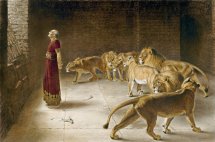
     The Bible reveals “Noah found favor in the eyes of the Lord” (Gen 6:8), so God saved him and his family from the destruction of the flood (Gen 6:10-8:22). Abraham found favor in the Lord’s sight (Gen 18:3-5), and God promised him a son within a year (Gen 18:10; cf. Gen 21:2). Lot was granted the Lord’s favor (Gen 19:19), and was spared the destruction of Sodom and Gomorrah (Gen 19:24-25).

     Joseph had been sold into slavery by His brothers to Midianite traders (Gen 37:28), who took Joseph to Egypt and sold him to an Egyptian official named Potiphar (Gen 37:36). However, even in slavery, “The LORD was with Joseph, so he became a successful man” (Gen 39:2). It was God Who granted Joseph favor in the sight of Potiphar, his Egyptian master, and the Lord even blessed Potiphar’s house (Gen 39:4-5). Later, when Joseph was betrayed by Potiphar’s wife and sent to prison (Gen 39:7-20), even there “the LORD was with Joseph and extended kindness to him, and gave him favor in the sight of the chief jailer” (Gen 39:21).

     Later, when God called His people out of Egypt, He again caused others to treat His people favorably. Before the Exodus, God promised, “I will grant this people favor in the sight of the Egyptians; and it shall be that when you go, you will not go empty-handed” (Ex 3:20-21; cf. Ex 11:3). And God’s Word came to pass, as Scripture states, “Now the sons of Israel had done according to the word of Moses, for they had requested from the Egyptians articles of silver and articles of gold, and clothing; and the LORD had given the people favor in the sight of the Egyptians, so that they let them have their request. Thus they plundered the Egyptians” (Ex 12:35-36).

     Moses, while leading God’s people in the wilderness, requested of the Lord, “let me know Your ways that I may know You, so that I may find favor in Your sight” (Ex 33:13; cf., Ex 33:16; 34:9). The Lord granted Moses’ request, saying, “I will also do this thing of which you have spoken; for you have found favor in My sight and I have known you by name” (Ex 33:17). 

     Ruth found favor in Boaz’ sight and this resulted in many blessings (Ruth 2:2, 10, 13). Daniel had been taken into Babylonian captivity (Dan 1:1-4) and was subjected to a pagan reeducation program (Dan 1:5-8). However, “God granted Daniel favor and compassion in the sight of the commander of the officials” (Dan 1:9), so that Daniel could maintain his integrity (Dan 1:9-16). The Lord’s favor led to Daniel’s promotion within the Babylonian kingdom (Dan 1:17-21). Later, toward the end of the Israelite captivity, God moved the heart of the Persian king, Cyrus, to show favor to the Israelites by supporting their return to Jerusalem and rebuilding the temple (Ezra 1:1-8; 7:27). It was during this time that God caused Esther to find favor in the eyes of the pagan king, Ahasuerus (Est 2:17; 5:2), who helped save Israel from a holocaust (Est 8:1-17).

     Those who love God’s ways and seek His wisdom open themselves to His favor. The psalmist writes, “The LORD favors those who fear Him, those who wait for His lovingkindness” (Ps. 147:11), and Solomon states, “Do not let kindness and truth leave you; bind them around your neck, write them on the tablet of your heart. So you will find favor and good repute in the sight of God and man” (Prov. 3:3-4). Wisdom says, “Blessed is the man who listens to me, watching daily at my gates, waiting at my doorposts. For he who finds me finds life and obtains favor from the LORD” (Prov 8:32-35).

Dr. Steven R. Cook

Related Articles:

Living in Babylon

Daniel is one of my favorite characters in the Bible. His life and times are recorded in the Old Testament.[1] Daniel was born into a good family of noble birth in Judah (Dan 1:3-6). In his early years he witnessed the spiritual and moral decline of his country. Idolatry was rampant in Israel to such an extent that human sacrifice had become acceptable (Ezek 16:20-21). As a result of Judah’s spiritual decline, God brought judgment upon the nation through Nebuchadnezzar, a Babylonian king (Jer 25:8-9; Dan 1:1-2), who besieged Jerusalem in 605 B.C. and transported many captives to his homeland. Though Daniel was young—perhaps about sixteen— he was taken from his family and deported to Babylon where he lived for nearly seventy years under the administration of several kings (most notably Nebuchadnezzar, Belshazzar and Cyrus). While most Israelites were conforming to the influences of the pagan[2] culture around them, Daniel resisted. He was a rebel in the best sense of the word, for he walked with God while others bowed to idols. Daniel is recorded in Scripture as a righteous person (Ezek 14:14, 20); however, God allowed him to be taken captive, and this was because God had a plan for him to serve as a minister in Babylon.

Briton Riviere - Daniel in the Lions DenDaniel was a role model for other Jews living in captivity. Upon arrival in Babylon, Daniel and his friends were forced into a Chaldean reeducation program which was intended to assimilate them into the Babylonian culture. Where possible, Daniel submitted himself to his new culture by learning “the literature and language of the Chaldeans” (Dan 1:4), accepting a new name (Dan 1:7), and serving as a governmental administrator (Dan 1:17-21; 6:1-3). God expected Daniel to pray for the prosperity of the city where he lived, saying, “Seek the welfare of the city where I have sent you into exile, and pray to the LORD on its behalf; for in its welfare you will have welfare” (Jer 29:7). If possible, God’s people were to get along with their temporary captors. “The exiles were to be peacemakers, not troublemakers, and they were to pray sincerely for their enemies (Matt 5:43–48; 1 Tim 2:1–3; Tit 3:1–2).”[3] However, there were times when Daniel would not go along with the values of his new culture. Specifically, Daniel refused to submit to Babylonian authority when it commanded him to violate God’s Word (Dan 1:8a), or to pray to a human as though he were a god (Dan 6:4-11). In the first act of refusal, Daniel wisely sought a diplomatic solution to his problem (Dan 1:8b-16), and in the second he simply defied the king—albeit respectfully—and trusted God to care for him (Dan 6:12-23).

Daniel’s life manifested biblical wisdom applied to everyday circumstances. Overall, his life was characterized by righteousness (Ezek 14:14, 20), diplomacy (Dan 1:6-16; 2:1-16), prayer (Dan 2:17-18; 6:10; 9:3-19), wisdom (Dan 1:17; 2:23), worship (Dan 2:20-22), excellence (Dan 6:3), faithfulness (Dan 6:1-10), and humility (Dan 9:4). We learn from Daniel that God allows faithful believers to experience difficulties in the Devil’s world, which often serve to grow the believer spiritually so that he/she might be a light to others. And, like Daniel living in Babylon, we realize this earth is not our final home, and we are to regard ourselves as “as aliens and strangers” living in a foreign land (1 Pet 2:11). As Christians, our citizenship is in heaven (Phil 3:20).

Open BibleSo, how do Christians overcome the demanding influences of a pagan culture and serve as lights to others? First, we must be in submission to God. Scripture tells us to “Submit to God” (Jam 4:7), and “present your bodies a living and holy sacrifice, acceptable to God, which is your spiritual service of worship” (Rom 12:1). Being in submission to God means we desire the Lord’s will above all else. When this happens, God’s Word opens up to us (John 7:17). Second, we must replace a lifetime of human viewpoint thinking with God’s Word (Psa 1:2-3; 2 Tim 2:15; 3:16-17; 1 Pet 2:2; 2 Pet. 3:18). As Christians, we cannot live what we do not know, and learning God’s Word necessarily precedes living His will. A biblical worldview enables us to see our spiritual identity as children of God (Rom 8:15; Gal 4:1-5; Eph 1:3-6; 1 Pet 2:9-10), as saints (Acts 9:13; Rom 1:7; 8:27; 1 Cor 1:2; 6:1-2), and ambassadors of Jesus Christ (2 Cor 5:20) who have meaningful and eternal purposes in God. More so, biblically trained minds empower us to properly interpret the world in order to see it from the divine perspective. Cultural conformity is effectively resisted by believers who are “destroying speculations and every lofty thing raised up against the knowledge of God, and taking every thought captive to the obedience of Christ” (2 Cor 10:5). This means Scripture saturates our Christian minds (Prov 3:5-6; Isa 26:3; Col 3:1), and we are not allowing our thoughts to be bogged down with the cares of this world (Matt 6:25-34). Mental discipline is necessary, for our psychological stability is often predicated on the biblical content and continuity of our thinking. Third, we must learn to be filled with the Holy Spirit (Eph 5:18), and to walk in dependence on the Holy Spirit (Gal 5:16, 25). Being filled with the Holy Spirit means being controlled by Him. It means we follow where He guides, and His guidance is always according to Scripture. Being filled with the Spirit does not mean we have more of the Spirit, but that Spirit has more of us, as we submit to His guidance. It means the Spirit is fulfilling in us all He desires. Fourth, we must learn to live by faith in God and His Word. Learning God’s Word becomes effective when mixed with our faith as we apply it to all aspects of our lives. Our faith is effective when God’s Word is more real than our experiences, feelings, or circumstances. The writer to the Hebrews states, “But my righteous one shall live by faith; and if he shrinks back, my soul has no pleasure in him” (Heb 10:38), for “without faith it is impossible to please Him, for he who comes to God must believe that He is and that He is a rewarder of those who seek Him” (Heb 11:6). Fifth, we must accept God’s trials that help us grow. God uses trials to strengthen our faith and develop us spiritually. Often, we don’t like hardship, but we must learn to accept it as necessary. For the Lord uses it to burn away the dross of our weak character and to refine those golden qualities consistent with His character. The growing believer learns to praise God for the trials, knowing He uses them to advance us spiritually (Psa 119:71; Rom 5:3-5; 2 Cor 12:7-10; Heb 12:11; Jam 1:2-4; 1 Pet 4:12-13). Sixth, we must restore fellowship with God through confession of personal sin. As Christians, when we sin, we break fellowship with God and grieve and/or quench the Holy Spirit (Eph 4:30; 1 Th 5:19). Fellowship is restored when we simply confess our sin to God and trust that He forgives us as He promises (1 John 1:5-9). Seventh, we must maintain fellowship with other believers. Scripture teaches, “let us consider how to stimulate one another to love and good deeds, not forsaking our own assembling together, as is the habit of some, but encouraging one another; and all the more as you see the day drawing near” (Heb 10:24-25). Spiritual growth does not happen in isolation, as God expects us to exercise our spiritual gifts for the benefit of others (see Acts 2:42; Rom 12:10-13; 14:19; Eph 4:32; Phil 2:3-4; 1 Th 5:11-15). Eighth, we must serve others. We are part of the body of Christ and God calls us to love and serve each other. Peter states, “As each one has received a special gift, employ it in serving one another as good stewards of the manifold grace of God” (1 Pet 4:10).  Lastly, we must be wise stewards of the time and opportunities God provides us to advance spiritually. Paul writes, “Be careful how you walk, not as unwise men but as wise, making the most of your time, because the days are evil” (Eph 5:15-16). The believer does not reach spiritual maturity overnight, and since we have only a measure of time allotted to us by God (Psa 139:16), we must make sure our days are not wasted on meaningless pursuits, but on learning God’s Word and living His will. (Eph 5:15-17; cf. Heb 5:12; 1 Pet 1:17; 4:1-2).

As Christians, we will face ongoing worldly distractions in our lives which are designed by Satan to prevent spiritual growth. We have choices to make on a daily basis, for only we can choose to allow these distractions to stand between us and the Lord. As Christians, we experience our greatest blessings when we reach spiritual maturity and utilize the rich resources God has provided for us. However, learning takes time, as ignorance gives way to the light of God’s revelation. Frustration is often the handmaiden of ignorance, but spiritual success comes with knowledge of God and His Word.

Dr. Steven R. Cook

Related Articles:

[1] English translations of the Bible place Daniel among the prophets, and there is good cause for this, since Daniel received direct revelation from God and was called a prophet by Jesus (Matt 24:15).  Daniel is also listed among the prophets in the Septuagint (the Greek translation of the Hebrew Old Testament).  However, the Hebrew Bible—called the Tanakh, an acronym for the Torah (Law), Nebi’im (Prophets), and Kethuvim (Writings)—places Daniel among the Writings (Psalms, Proverbs, Job, etc.).  It’s possible that the book of Daniel was listed under the Writings in the Hebrew Bible because his words and life modeled the wisdom one needed to live successfully in a pagan culture.

[2] I use the term “pagan” to refer to any value system that is contrary to God and His word.  Unfortunately, pagan values are often the norm, permeating every aspect of society including education, politics, law, art, literature, music, and so on.  To stand against paganism is not merely to resist the final forms it takes within a culture, but to see those forms as derivatives of a worldly system that is set against God and to resist the very value system upon which those forms are predicated.

[3] Warren W. Wiersbe, Be Decisive, “Be” Commentary Series (Wheaton, IL: Victor Books, 1996), 124.

The Plain Interpretation of Scripture

     We live our lives on the assumption that language—whether written or spoken—serves as a reliable vehicle for the expression of ideas.  Our survival and success depends on the plain use of language whether we’re reading the words on highway signs, food packages, or work documents.  A nonliteral reading of the instructions on a medicine bottle could be fatal and we could suffer greatly if we failed to take plainly the words on tax documents, legal papers, or instructions on how to use a chain saw. 

     The Bible is a collection of sixty six books written by nearly forty human authors spanning approximately sixteen hundred years.  The authors originally wrote in Hebrew and Koine Greek (some chapters in Daniel were written in Aramaic).  Behind each human author was the divine Author who communicated His thoughts through them and superintended their writings (2 Pet. 1:20-21) so that what they wrote reveals His mind, His work in creation, His will for mankind, His plan for history, and His provision of salvation through His Son, Jesus Christ.  The Bible is written in propositional terms and understood and accepted by those whom the Holy Spirit illumines (1 Cor. 2:14-16; 2 Cor. 3:14-16; 4:3-4).  

     The Bible is divinely inspired.  Though there are different views of inspiration, verbal plenary inspiration best fits what Scripture says about itself.  Verbal plenary inspiration teaches that Scripture originates with God (inspired – 1 Cor. 2:12-13; 2 Pet. 1:21), pertains to the very words themselves (verbal – Matt. 5:17-18; cf. Gal. 3:16), and extends to all of Scripture (plenary – 2 Tim. 3:16).  The apostle Paul regarded his letters as divinely inspired when he wrote to the Christians at Thessalonica, saying, “when you received the word of God which you heard from us, you accepted it not as the word of men, but for what it really is, the word of God, which also performs its work in you who believe” (1 Thess. 2:13). 

     Several English translations accurately communicate the original meaning of the biblical author (such as the ESV, HCSB, KJV, NKJV, NET, NAS, RSV), and most people read the Bible plainly as they would any other book, understanding the words and phrases according to their contextual usage.  There are some passages in the Bible that are difficult to comprehend, but most of it is simple to understand.  The Bible consists mostly of historical narrative which reveals how God acted in the lives of people.  Other biblical genres include law, prophecy, psalms, proverbs, poetry, parables, and epistles.  These literary genres require a literal reading in order to identify how the author is communicating so we can know what he is saying.  Liberal teachers advocate a nonliteral, non-grammatical, non-historical reading of the Bible, which opens the floodgates of speculation and allows the imagination of the reader to make the Bible say whatever he/she wants it to say.  Ironically, those who advocate a nonliteral reading of the Bible expect their words to be taken literally.  A plain reading of Scripture protects the reader from fanciful interpretations.  “If one does not use the plain, normal, or literal method of interpretation, all objectivity is lost.”[1]  

When the plain sense of Scripture makes common sense, seek no other sense; therefore, take every word at its primary, ordinary, usual, and literal meaning unless the facts of the immediate context, studied in the light of related passages and axiomatic and fundamental truths, clearly indicate otherwise.[2]

    A normal reading of the Bible is commonly called the grammatical-historical method of interpretation.  The grammatical-historical method of interpretation means the Christian reads the Bible in a plain manner, paying attention to the normal rules of grammar and the meaning of words as they were commonly used in their historical setting.[3]  A normal reading also considers each word and verse in the light of its immediate context, as well as the larger context of the book, and the whole Bible.  

     In summary, the Bible is God’s inerrant and enduring written revelation that tells us who He is and what He’s accomplished in time and space.  It was written by approximately forty human authors spanning nearly sixteen hundred years.  The human authors—without forfeiting their personal literary style—wrote under the direction (Ex. 17:14; 34:27; Isa. 30:8; Jer. 30:2; 1 Cor. 14:37; Rev. 1:11) and superintending care of God the Holy Spirit (2 Pet. 1:20-21), so that what is written is the inerrant and infallible “word of God” (1 Thess. 2:13; cf. Ps. 12:6-7; Rom. 15:4; 1 Cor. 2:13-14; 2 Tim. 3:16).  Some of the various literary styles include historical narrative, law, poetry, psalms, proverbs, parables, epistles, and apocalypse.  It is best to read the Bible plainly, literally, according to the grammatical-historical approach in which the reader pays attention to the normal meaning of words as they were commonly used in their historical setting.  

Steven R. Cook, D.Min.

Related Articles:


[1] Charles C. Ryrie, Dispensationalism (Chicago, Ill. Moody Press, 1995), 82.

[2] David L. Cooper, The God of Israel (Los Angeles: Biblical Research Society, 1945), iii.

[3] For further reading on the subject of hermeneutics, I recommend Basic Biblical Interpretation by Roy B. Zuck, and Protestant Biblical Interpretation by Bernard Ramm. 

Religious Syncretism

Religious Syncretism    Several years ago I had a strange conversation with a young woman who was in graduate school and finishing her degree in Social Work. The woman became excited when I mentioned I was in seminary and she proceeded to tell me about the Baptist church she was attending. She’d been active in her church for several years and was involved in the choir and occasionally substituted for her Sunday school teacher. The conversation took a confusing turn when she told me she follows her daily horoscope, believing it helps guide her life. Stanger yet, she began talking about how she believes in reincarnation. When I asked her why she believes in reincarnation she said, “Because I believe God is fair and gives people second chances in another life to make up for bad choices in a previous one.” She said all this with a big smile on her face. However, when I politely tried to explain the biblical teaching against astrology and reincarnation, she quickly shut the conversation down, saying, “I believe what I believe.” She then changed the subject and started talking about her work. This woman was engaging in religious syncretism. 

     Religious syncretism is the blending of the doctrines and practices of two or more religions in order to come up with something new. Religious syncretism has been going on for millennia. Modern day examples include Chrislam, New Age, Christian Science, and the Interfaith Movement. A biblical example that dates to about 1100 B.C. is found in Judges 17 where an Israelite named Micah blended the idolatrous practices of the Canaanites with the worship of Yahweh. The culmination was a monstrous self-serving religion that fostered spiritual anarchy among God’s people (see Judges 18). In Judges 17 Micah is introduced as a son who stole a great amount of wealth from his mother. He returned the wealth fearing the curse she’d uttered on the thief, and his mother subsequently blessed him the name of Yahweh (Judg 17:1-2). The historical account gets bizarre when Micah’s mother—in the name of Yahweh—used some of her wealth (silver) to create a molten image and graven image, which she gave to her son (Judg 17:3-4). Micah took the images from his mother and put them in his shrine and made an ephod (either to be used during worship, or as an object of worship; see Judg 8:24-27). He added several small household idols (teraphim) and then ordained his son to be the family priest (Judg 17:5). Micah’s house was a type of Israel during the period of the Judges, in which “every man did what was right in his own eyes” (Judg 17:6), and all of this was against God’s instruction for Israel (Ex 20:4-5; Deut 27:15). Micah then welcomed a wandering Levite (Judg 17:7-10), whom he consecrated to serve as his family priest (Judg 17:11-12). This was contrary to Scripture, for only descendants of Aaron could serve as priests, whereas Levites were to serve as priestly assistants (Num 8:19; 18:1-7). Micah falsely believed that by having a Levitical priest as the leader of his new religion that he would also have God’s blessing (Judg 17:13). This would later prove untrue (see Judges chapter 18). 

     God’s revelation in the Bible makes it clear that there is no room for religious syncretism (Ex 20:4-5; Deut 27:15; John 14:6; Acts 4:12; Phil 1:27), and Christians should be mindful to “contend earnestly for the faith which was once for all handed down to the saints” (Jude 1:3). Christianity is built on certain theological essentials from which Christians cannot depart. There is room for love and grace when disagreeing on secondary doctrinal matters. There will always be false teachers who will deny the inerrancy of Scripture, the doctrine of the Trinity, the hypostatic union, Jesus’ substitutionary atonement, His death, burial, and bodily resurrection, and His second coming. Only those who are advancing toward spiritual maturity by learning and living God’s Word will find protection against false teachers (Deut 13:1-4; 18:18-22; Acts 20:28-30; 2 Pet 2:1-3; 1 John 4:1; Rev 2:2). Those who fail to grow spiritually will find themselves vulnerable to all sorts of pagan concepts. 

Dr. Steven R. Cook

Related Articles:

Jesus is God

     Does the Bible teach that Jesus is God?  Yes, the Bible clearly teaches that Jesus is God.  He is properly identified as one of the three Persons of the Godhead, commonly referred to as the Trinity.  There is God the Father (Gal. 1:1; Eph. 6:23; Phil. 2:11), God the Son (John 1:1, 14, 18; 8:58; 20:28; Col. 2:9; Heb. 1:8), and God the Holy Spirit (Acts 5:3-4; 1 Cor. 2:11-12; 2 Cor. 13:14).  All three Persons of the Trinity are co-equal, co-infinite, co-eternal, and worthy of all praise and service.  The three Persons of the Trinity are one in essence (Deut. 6:4; Isa. 43:10; 44:6-8; 45:5, 18; Matt. 28:19; John 10:30; 2 Cor. 13:14; 1 Pet. 1:2). 

     The Bible presents Jesus as God.  In the OT, the proper name of God is YHWH (sometimes used with vowels as Yahweh) and is translated LORD, using all capital letters.  When the Septuagint was written around 250 B.C. (the Greek translation of the Hebrew OT) the translators chose the Greek word kurios as a suitable substitute for the Hebrew name YHWH.  Though the word is sometimes used in the NT to mean sir (John 4:11; Acts 16:30), and master (Col. 3:22), it is also used to refer to the deity of Jesus Christ (compare Isa. 40:3 and John 1:23; or Deut. 6:16 and Matt. 4:7; cf. John 20:28; Rom. 10:11; Phil. 2:11).  The NT writers clearly saw Yahweh-God from the OT as referring to Jesus as God.  Please note the following comparison:

OT Passage about Yahweh/God

NT Passage applied to Jesus

A voice is calling, “Clear the way for the LORD [Yahweh or Jehovah] in the wilderness; Make smooth in the desert a highway for our God [Elohim]. (Isa. 40:3)

He [John the Baptist] said, “I am a voice of one crying in the wilderness, ‘Make straight the way of the Lord [kurios – referring to Jesus],’ as Isaiah the prophet said.” (John 1:23)
You shall not put the LORD [Yahweh or Jehovah] your God to the test, as you tested Him at Massah. (Deut. 6:16) Jesus said to him, “On the other hand, it is written, ‘You shall not put the Lord [kurios – referring to Jesus] your God to the test.’” (Matt. 4:7)
God said to Moses, “I AM WHO I AM”; and He said, “Thus you shall say to the sons of Israel, ‘I AM has sent me to you.’” (Ex. 3:14) Jesus said to them, “Truly, truly, I say to you, before Abraham was born, I am.” (John 8:58)
Your throne, O God, is forever and ever; a scepter of uprightness is the scepter of Your kingdom. (Ps. 45:6)

But of the Son [Jesus] he says, “Your throne, O God, is forever and ever, and the righteous scepter is the scepter of His kingdom. (Heb. 1:8)

The NT reveals Jesus as God:

In the beginning was the Word, and the Word was with God, and the Word was God…And the Word became flesh [Jesus in hypostatic union], and dwelt among us, and we saw His glory, glory as of the only begotten from the Father, full of grace and truth. (John 1:1, 14)

For this reason therefore the Jews were seeking all the more to kill Him [Jesus], because He not only was breaking the Sabbath, but also was calling God His own Father, making Himself equal with God. (John 5:18)

“I and the Father are one.” 31 The Jews picked up stones again to stone Him. 32 Jesus answered them, “I showed you many good works from the Father; for which of them are you stoning Me?” 33 The Jews answered Him, “For a good work we do not stone You, but for blasphemy; and because You, being a man, make Yourself out to be God.” (John 10:30-33)

Thomas answered and said to Him [Jesus], “My Lord and my God!” (John 20:28)

For in Him [Jesus] all the fullness of Deity dwells in bodily form (Col. 2:9)

[We are] looking for the blessed hope and the appearing of the glory of our great God and Savior, Christ Jesus (Tit. 2:13)

As God, Jesus accepts the worship of men and angels:

Then Jesus said to him, “Be gone, Satan! For it is written, “‘You shall worship the Lord your God and him only shall you serve.’” (Matt. 4:10)

“Where is He who has been born King of the Jews? For we saw His star in the east and have come to worship Him.” (Matt. 2:2)

After coming into the house they saw the Child with Mary His mother; and they fell to the ground and worshiped Him. Then, opening their treasures, they presented to Him gifts of gold, frankincense, and myrrh. (Matt. 2:11)

And those who were in the boat worshiped Him [Jesus], saying, “You are certainly God’s Son!” (Matt. 14:33)

And behold, Jesus met them and greeted them [the disciples]. And they came up and took hold of His feet and worshiped Him. (Matt. 28:9)

When they saw Him, they worshiped Him [Jesus]; but some were doubtful. (Matt. 28:17)

Jesus heard that they had put him out, and finding him, He said, “Do you believe in the Son of Man?” 36 He answered, “Who is He, Lord, that I may believe in Him?” 37 Jesus said to him, “You have both seen Him, and He is the one who is talking with you.” 38 And he said, “Lord, I believe.” And he worshiped Him [Jesus]. (John 9:35-38)

And again, when he brings the firstborn into the world, he says, “Let all God’s angels worship him.” (Heb. 1:6)

As God, Jesus forgives sins:

I, even I [Jehovah], am the one who wipes out your transgressions for My own sake, and I will not remember your sins. (Isa. 43:25)

And Jesus seeing their faith said to the paralytic, “Son, your sins are forgiven.” 6 But some of the scribes were sitting there and reasoning in their hearts, 7 “Why does this man speak that way? He is blaspheming; who can forgive sins but God alone?” (Mark 2:5-7)

     Some—such as Jehovah’s Witnesses and Mormons—see Jesus only as a man, or as a god lesser than what the Bible teaches.  The end result is that they’re trusting in a Jesus that is not the Jesus of the Bible, and are therefore putting their hope in a false Jesus who cannot save them (Gal. 1:6-9).

Steven R. Cook, D.Min.

Related articles:

Walking with God

Enoch walked with God three hundred years after he became the father of Methuselah, and he had other sons and daughters. So all the days of Enoch were three hundred and sixty-five years. Enoch walked with God; and he was not, for God took him. (Gen. 5:22-24)

       footstepThe genealogical record of Genesis chapter 5 is repetitious: men lived and died.  The repetition is broken with one man, Enoch, as Moses wrote, “God took him” (Gen. 5:24).  God decided His friend, the one who “walked” with Him, would not see death, so the Lord took him directly to heaven.  “The word walk implies a steady, progressive relationship and not just a casual acquaintance. To walk with God is the business of a lifetime, and not just the performance of an hour.”[1]  It is written in the New Testament, “By faith Enoch was taken up so that he would not see death; and he was not found because God took him up; for he obtained the witness that before his being taken up he was pleasing to God” (Heb. 11:5). 

…“Enoch walked with God and he was not; for God took him.” The phrase is full of meaning. Enoch walked with God because he was His friend and liked His company, because he was going in the same direction as God, and had no desire for anything but what lay in God’s path. We walk with God when He is in all our thoughts; not because we consciously think of Him at all times, but because He is naturally suggested to us by all we think of; as when any person or plan or idea has become important to us, no matter what we think of, our thought is always found recurring to this favorite object, so with the godly man everything has a connection with God and must be ruled by that connection. When some change in his circumstances is thought of, he has first of all to determine how the proposed change will affect his connection with God—will his conscience be equally clear, will he be able to live on the same friendly terms with God and so forth. When he falls into sin he cannot rest till he has resumed his place at God’s side and walks again with Him. This is the general nature of walking with God; it is a persistent endeavor to hold all our life open to God’s inspection and in conformity to His will; a readiness to give up what we find does cause any misunderstanding between us and God; a feeling of loneliness if we have not some satisfaction in our efforts at holding fellowship with God, a cold and desolate feeling when we are conscious of doing something that displeases Him. This walking with God necessarily tells on the whole life and character. As you instinctively avoid subjects which you know will jar upon the feelings of your friend, as you naturally endeavor to suit yourself to your company, so when the consciousness of God’s presence begins to have some weight with you, you are found instinctively endeavoring to please Him, repressing the thoughts you know He disapproves, and endeavoring to educate such dispositions as reflect His own nature. It is easy then to understand how we may practically walk with God—it is to open to Him all our purposes and hopes, to seek His judgment on our scheme of life and idea of happiness—it is to be on thoroughly friendly terms with God.[2]

       Walking with God starts with a relationship.  It is a relationship in which we are rightly related to God by faith (John 3:16), and one that continues in faith (2 Cor. 5:7), trusting Him in all things (Prov. 3:5-6).  To “walk with God” is the ideal standard for a believer (Lev. 26:3-12; Gal. 5:16, 25; Eph. 4:1; Col. 2:6-7; cf. Rev. 3:4).  It does not mean a life of sinless perfection; rather, it means that when we sin, we handle it in a biblical manner with humility and confession (e.g. 2 Sam. 12:1-23; cf. 1 Kings 11:4; 1 Jo. 1:8-10).  Walking with God means we go in the same direction He is going, and like a friend, we are glad to share in His fellowship (1 Jo. 1:1-10).  It means God is regularly in our thoughts, and we live every day conscious of Him and His will for our lives (Rom. 12:1-2; Col. 3:16-17).  Walking with God means we are open and honest with Him about everything, and agree to let His light shine in our lives, not fearing what it exposes (1 Jo. 1:5-7).  It means being sensitive to what may offend Him, and making every effort to please Him through a life of faith (2 Cor. 5:9; Heb. 11:6).  May we all learn to walk with the Lord.

Steven R. Cook, D.Min.

Related Articles:

[1] William MacDonald, Believer’s Bible Commentary: Old and New Testaments, ed. Arthur Farstad (Nashville: Thomas Nelson, 1995), 38.

[2] Marcus Dods, The Book of Genesis (London: Hodder & Stoughton, 1893), 51-53.

I Am Barabbas

       Several years ago I was doing a Bible study and learned that all four Gospels record the prisoner exchange between a notorious criminal named Barabbas and the Lord Jesus (Matt 27:16-26; Mark 15:7-15; Luke 23:18; John 18:40). Barabbas was in jail for insurrection, murder, and robbery, and was surely going to face death for his crimes (Luke 23:18-19; John 18:40). Jesus, on the other hand, was innocent of all the charges brought against Him. Pilate, the Roman Governor who presided as judge over the two men, knew it was “because of envy” that Jesus had been handed over to him to be scourged and crucified (Matt 27:18; cf. Mark 15:10). Pilate knew Jesus was not guilty of the charges leveled against Him and sought to have Him released (Luke 23:20); however, Pilate eventually proved a weak leader who surrendered to the insane demands of the mob who kept shouting “crucify, crucify him!” (Luke 23:21). All of this occurred according to God’s predetermined plan (Acts 2:22-24; 4:27-28).

     I imagine Barabbas was sitting in his jail cell when a Roman guard came, unlocked his door, and informed him he was free to leave. I suppose Barabbas was puzzled because freedom was not what he expected. Barabbas was in a dark place with no ability to save himself. Outside the prison walls, Jesus was being led away to die as his substitute, the innocent for the guilty, the just for the unjust. I am Barabbas. You are Barabbas. Spiritually, we are all in a dark place without hope, facing eternal death, and with no ability to save ourselves. But there’s good news! Outside our prison is a free and innocent Man who has died in our place, who bore the punishment that rightfully belongs to us. Paul wrote, “For while we were still helpless, at the right time Christ died for the ungodly. For one will hardly die for a righteous man; though perhaps for the good man someone would dare even to die. But God demonstrates His own love toward us, in that while we were yet sinners, Christ died for us.” (Rom 5:6-8)

Steve-16

       It was through a simple presentation of the gospel message that I came to believe in Jesus Christ as my Savior when I was eight, with the result that I received forgiveness of sins (Eph 1:7), and eternal life (John 3:16; 10:28; 1 Cor 15:3-4). However, I learned that being saved does not guarantee a godly life. The apostle Peter once wrote to Christians and said, “Make sure that none of you suffers as a murderer, or thief, or evildoer, or a troublesome meddler” (1 Pet 4:15). It is possible for Christians to commit all the sins Peter stated, otherwise his command is meaningless. As a young teenager living in Las Vegas, Nevada (in the 1980’s), I was completely surrounded by worldly-minded people, and I was free to chase after the world and the lusts of my flesh. For nearly seven years, I was unopposed in my pursuit of a life marked by drugs and low-level, non-violent crime. From the beginning of my rebellion, I used the hardest drugs I could find (Cocaine, LSD, PCP, Meth, etc.). I did a lot of bad things when I was a younger Christian and it nearly destroyed me. 

       One morning in the summer of 1988, I was sleeping on some grass and woke to the sound of children walking past a fence near the alley where I’d slept the night before. Years of bad choices and heavy drug use had caught up with me and the few weeks I’d spent living on the streets and at a homeless shelter were enough to awaken me to the despair of my situation. Worldly living had produced such a darkness within me, there were times I had considered suicide as a solution to end the misery that was my pathetic life. From the time I started using illegal drugs until that morning on the grass, I had not been living as a righteous man, but rather as the wicked, which “are like chaff which the wind drives away” (Psa 1:4). My life at that time epitomized worldliness, as I had rejected God’s authority over my life, and that came with harmful consequences. By excluding Him, I had become my own worst enemy. Though I had excluded God from my life, He had not excluded me from His.

       The Lord loved me and humbled me by divine discipline (Heb 12:5-11). He caused me to suffer for my own good. Like the psalmist, I came to say, “It is good for me that I was afflicted, that I may learn Your statutes” (Psa 119:71). The Lord brought me to a place where I was helpless and ready to listen to Him. When my heart was broken, and I had no place to look but to Him, then Scripture my grandmother had helped me memorize when I was a little boy came to mind, and I found hope (Psa 1:1-6; 23:1-6). I was homeless, hurt, hungry, wearing only rags, and more thankful than I’d been in many years. The Lord, who allowed me to destroy my life through bad choices, forgave me and called me back to fellowship with Him (1 John 1:9). Like the prodigal son returning home, I welcomed His love and grace.

       The joy of my salvation was refreshed within me. A fire was ignited in my soul and I was ready to walk with the Lord. I knew I had to be responsible and face my prison sentence and serve time for the crimes I’d committed, and I knew the Lord was with me all the way. My two year prison term was a time of spiritual development as I faced many tests and grew in my knowledge and application of Scripture. As a Christian, my spiritual growth began the day I submitted my life to God. Many worldly people had previously influenced me in an ungodly way, and I was stupid enough to let them. No more. No more hanging around foolish people, or reading worldly books, or watching movies that promote worldly values, or listening to music that glorifies degeneracy. No more. God had blessed me with everything I needed to grow and mature and I decided to lay hold of that life (Eph 1:3; 4:11-13). Oh, I made bad choices along the way and fell into sin, but God continually showed me grace. I confessed my sin (1 John 1:9) and got back to living the spiritual life and “walking in the light as He Himself is in the light” (1 John 1:7). As I grew in my love for Him I learned that “His commandments are not burdensome” (1 John 5:3).

PrisonCell

      I remember when I first entered prison back in 1989. The medium security prison unit outside of Las Vegas, Nevada, had a practice of placing new inmates into solitary confinement the first twenty one days after their arrival. My cinder block cell was approximately 6 by 9 feet and had a metal bed and toilet. After I completed my stay in solitary confinement, I was released onto the prison yard with the other inmates. I was tested within hours after being assigned my new sleeping quarters, as I was approached by an inmate who offered to sell me marijuana and I refused his offer. I made it clear to him, albeit respectfully, that I wanted to live as a Christian and had no desire to do drugs. I was treated with hostility, even though I gave none. My initial reaction was to return hostility to him, but I knew that was wrong, as the Scripture directs me, “Never pay back evil for evil to anyone. Respect what is right in the sight of all men. If possible, so far as it depends on you, be at peace with all men. Never take your own revenge, beloved, but leave room for the wrath of God, for it is written, ‘Vengeance is Mine, I will repay’ says the Lord.” (Rom 12:17-19)

       I could not control the situation or the other man’s attitude, but at the same time, I would not allow myself to be controlled by it. As a Christian, I had to start living by God’s Word and stop reacting to the sinful attitudes and actions of others as I was previously accustomed to doing. In prison, I was constantly challenged to live by God’s Word and not my circumstances or the pressures of others. This prepared me for living in society after prison. As a young Christian, I came to realize that much of the Christian life is a discipline of the mind and will. A discipline to study God’s Word and to live it by faith on a regular basis. A discipline to walk in truth, to be loving and kind, gracious and merciful, humble and giving, selfless and honest (just to name a few of the Christian virtues). 

Steve in Prison 1989

On another occasion, I faced a challenge pertaining to racism when I was at a prison unit in northern Nevada. During meal time many of the inmates would sit separately with blacks on one side of the dinner hall and whites on the other side. This was the choice of the inmates. However, some of my Christian friends were black and some were white, and we would sit together at one table to talk about Scripture and pray. Biblically, we realized that there is only one race: the human race (Gen 1:26-27; Acts 17:26). Not wanting to be a slave to the prison culture, we chose to sit together and have Christian discussion. After a few weeks I was approached by another inmate who told me to “stop sitting with the other men” because it “looked bad.” I knew what he meant. I made it clear to this inmate, albeit respectfully, that I was going to sit with my Christian brothers so we could talk theology and pray together. To be honest, I thought there was going to be a fight that morning as this inmate got in my face and tried to bully me. Though I was somewhat intimidated, Christian courage demanded I stand my ground. To be clear, I was not trying to change the attitudes of the other inmates or reform the prison culture in any way. I think that’s impossible; much like I think it’s impossible to reform the devil’s world. I was simply trying to enjoy fellowship with my Christian brothers, even though I knew it meant standing against the corrupt values and practices of the prison culture. 

       To some degree, surviving in prison means conforming to the environment and getting along as best one is able. Where Scripture is silent this can mean compromise. However, living for Christ means walking in the light of God’s Word, and that meant standing against the values of the prison culture at times in order to obey Scripture. I wish I could say I walked according to Scripture all the time, but I did not. I was learning and applying Scripture during my time in prison, and was learning to pick my battles from one moment to the next. Picking battles is very important, for some battles are more important than others. As we learn God’s Word, we’ll gain wisdom for the moment. 

Steven R. Cook Doctor of Ministry

       Four months after my release from prison, in 1990, I actively started serving in jail ministry and continued for over twelve years (until June, 2002). I loved teaching Bible classes several times a week and sharing the gospel with others. I started college in 1992 and completed a Bachelor of Science degree in Human Services from Wayland Baptist University in 1998. Afterward, I studied Classical Literature for several years at Texas Tech University, and then began graduate school in 2002 at Southwestern Theological Seminary in Fort Worth, Texas, and completed a Master of Divinity degree in 2006. I also completed my Doctor of Ministry degree from Tyndale Theological Seminary in 2017.

Kenny Guinn
Pardon-1

The Lord also blessed me with a pardon. On February 10, 2005, the Governor of Nevada, Kenny Guinn, along with the Nevada Supreme Court and Attorney General, granted me a full pardon for the crime that sent me to prison. In 2006 I had my criminal records permanently sealed. This is the grace of God. The Lord has opened doors of opportunity for ministry and education and undone much of the damage I had inflicted on myself many years before. The fifteen years between the time of my release from prison in 1990 until the time of my pardon in 2005 were very difficult. Convicted felons are generally viewed with great suspicion in society and are automatically denied jobs, places to live and other opportunities in life. I’ve learned that life is not fair and not to expect justice from the world. I accepted my hardship during that time and lived where I could. I worked menial jobs while I was in school, sought to live honorably, and above all kept my focus on the Lord who gave me joy and hope from day to day. Now I choose to live a simple life and work in quiet. I enjoy writing articles and books and teaching a Bible lesson when someone asks. I’ve also been blessed to teach Bible classes at a nearby federal prison since 2018. I am very thankful for all God’s blessings. 

Steven R. Cook, D.Min, M.Div.

Related Articles:

Learning to Live by Faith

       Everyone lives by faith; it’s a fact of life. We trust in things and people in order to live from day to day. We trust in chairs to support us, cars to transport us, employers to pay us, telephones for communication, and so on. Over time we learn that some things and some people prove more reliable than others. Unfortunately, everything and everyone in this world eventually fails, as everything wears out and winds down. The only exception is God and His Word (Deut 31:8; Matt 24:35).

       When Moses was nearing death, he gave Joshua instructions about leading the Israelites into the Promised Land, and he said “The LORD is the one who goes ahead of you; He will be with you. He will not fail you or forsake you. Do not fear or be dismayed” (Deut.31:8). It’s easy to be afraid when you’ve had someone fail you over and over again. However, God never fails His people and His faithfulness is a repeated theme throughout Scripture (Deut 4:31; Josh 1:5; 1 Ch 28:20; Zeph 3:5; 2 Th 3:3). As the believer studies the Bible, he learns that God has perfect integrity and always keeps His promises. The believer only benefits from his study of Scripture when he learns to trust in God and to take Him at His Word. It’s only by faith that we receive the blessings God offers. 

       The Christian received salvation by grace alone, through faith alone, in Christ alone (John 3:16; 20:31; Acts 4:12; 16:31; Eph 2:8-9). The faith that trusted Christ as savior in order to receive salvation is the same faith that trusts the divine promises, claiming them for self and living in confident expectation that God will do what He said. The word faith is used three ways in Scripture:

  1. Faith, as a noun (πίστις pistis), refers to the ability to trust, or to a thing or person that is regarded as reliable or trustworthy. Some people have faith (Matt 9:2, 22), others have no faith (Mark 4:39-40), little faith (Matt 17:19-20), or great faith (Matt 15:28). Abraham grew strong in faith and trusted God (Rom 4:19-21). The word is also used of Scripture itself as a body of reliable teaching (Gal 1:23; cf., Acts 6:7).
  2. Faith, as a verb (πιστεύω pisteuo), means to believe, trust, or have confidence in something or someone. It is used of faith in God (Rom 4:3; Heb 11:6), Jesus (Acts 16:31; 1 Pet 1:8), and Scripture (John 2:22).
  3. Faith, as an adjective (πιστός pistos), describes someone as being characteristically trustworthy, faithful, or reliable. The word is used both of man (1 Cor 4:17; Col 1:7), and God (2 Tim 2:13; Rev 1:5).

The Cross       Faith demands an object as it must have something or someone upon which to rest. To receive salvation, the unbeliever is told to “believe in the Lord Jesus, and you will be saved” (Acts 16:31a). For the unbeliever, faith in Christ is exercised with a view to receiving a benefit, and that benefit is eternal life (John 3:16). To be clear, faith does not save; God saves! Faith is merely the means by which the unsaved person receives salvation, as God alone does the saving. Though we may exercise faith and receive a benefit, the object always gets the credit, and in the case of our salvation, God alone gets the glory.  

       Faith is never blind, but is an intelligent act of the will by the believer who hears and understands God’s Word, as “faith comes from hearing, and hearing by the word of Christ” (Rom 10:17; cf. Rom 14:23; Heb 4:2; Jam 1:22). As he learns to live by faith, the growing Christian will submit to God (Rom 12:1), claim promises (Rom 8:28; 1 Cor 10:13; 1 John 1:9), give his cares to God (1 Pet 5:6-7), overcome fear (Deut 31:6-8; Isa 41:10-13), love others (1 Th 4:9), rejoice always (1 Th 5:16), pray continually (1 Th 5:17), be thankful (1 Th 5:18), and live with a relaxed mental attitude (Isa 26:3; Phil 4:11). Faith will be tested (1 Pet 1:6-7), faith is the only thing that pleases God (Heb 11:6), and faith should be exercised daily in the Christian’s life as a manifestation of the Holy Spirit (Gal 5:22-23).

       Until Christ returns, we remain in this world and to some degree must trust in people and things to live from day to day; however, we should realize that people fail (Jer 17:5), money fails (Psa 62:10), governments fail (Psa 146:3), and even the creation fails us because it behaves in an unpredictable manner; just ask any meteorologist. Though we rely in a small way in the things and people of this world, ultimately, we should be looking to the Lord Himself, knowing that He alone never fails us and that His promises are always true and reliable (2 Cor 1:20; 2 Pet 1:2-4).    

       Satan will strive to get the believer to rely on anything and everything other than God and His Word. If the believer falls into Satan’s trap, he will experience anger, frustration, worry, anxiety, depression, and eventually a deep rooted sense of despair and apathy. Where God and His Word are absent, in that place darkness can settle. Occasionally the believer may look away from the Lord and become fixed on another person or the darkness in this world and find himself full of anxiety; however, relapse does not have to lead to collapse, as the believer can turn back to God and live by faith in the Lord. God wants us to have joy (Neh 8:10), peace (Isa 26:3), love (1 John 4:16-17), contentment (Phil 4:11-13), and every other attitude that brings an abundant life (John 10:10). Only through faith can we know the blessings that belong to every Christian. This takes time, study, and willingness to trust God at His Word. Without faith, we cannot win. With faith, we cannot fail.

       When the believer is living by faith in God on a regular basis it produces stability in his soul.  Over time, God’s Word becomes more real to him than his feelings or ever changing circumstances. God’s Word is stable and always true, whereas our feelings and circumstances constantly change. God’s Word provides us a true estimation of the world as it really is, and His Word gives us a basis for stability in our thinking as well as the choices we make on a daily basis. 

Bible       The Bible gives us truth that is certain, though our feelings and circumstances are unstable. We may feel good and be completely in sin, or we may feel bad and be completely in God’s will. Jesus was always in the will of God, though there were times He felt grieved and distressed. The Scripture declares that Jesus was, “despised and forsaken of men, a man of sorrows and acquainted with grief” (Isa 53:3). And just hours before His crucifixion, Jesus “began to be grieved and distressed” (Matt 26:37), telling a few of His disciples, “My soul is deeply grieved, to the point of death” (Matt 26:38). Even during His time of human rejection and sorrow, Jesus was sustained by the Holy Spirit (Heb 9:14). Jesus was always spiritual, even when He was experiencing emotional anguish. Emotions are wonderful, and in many ways complement our spiritual life (Acts 20:36-38; Eph 5:18-20). However, we do well to subordinate our emotions to the truths of Scripture, for God calls us to live by faith in Him and His Word, not by our feelings (Rom 10:17; Heb 11:6). 

       The believer who is advancing spiritually may fail occasionally in various situations as emotions overrun his soul. This happens to all of us, and I can think of a few godly men who failed during times of pressure and then later returned to the Lord (Elijah and Peter come to mind, see1 Ki 19:1-18 & Mark 14:66-72; John 21:15-17). Biblically, the Lord extends grace and calls the believer back into fellowship with Him and to resume his spiritual walk toward spiritual maturity (1 John 1:9; 1 Pet 2:2; 2 Pet 3:18). 

       God has done so much for us as Christians to save us and bless us. The Lord now calls us to walk with Him and to grow spiritually day after day by devoting ourselves to the continual study of Scripture (2 Tim 2:15; 3:14-16; 1 Pet 2:2; 3 Pet 3:18), submitting ourselves to Him on a regular basis (Rom 12:1-2), and living by faith in His Word (Rom 10:17; 2 Cor 5:7; Heb 11:6). This is a lifelong journey we take that starts the day we are born again as Christians and ends only when we leave this world and enter into the presence of God. During the time we are in the world, we will face many struggles and distractions that will seek to impede our spiritual walk and pull us away from God and His Word, but it is our responsibility to stay the course with His help, and always walk in the light of His truth. 

Dr. Steven R. Cook

Related Articles:

–