Guidance is an experiential blessing that belongs to the Christian who is walking according to divine truth. Knowing God’s will is closely connected with spiritual transformation. Paul calls believers to “present your bodies a living and holy sacrifice” and “do not be conformed to this world, but be transformed by the renewing of your mind, so that you may prove what the will of God is, that which is good and acceptable and perfect” (Rom. 12:1-2). Warren Wiersbe states:
Understanding suggests using our minds to discover and do the will of God. Too many Christians have the idea that discovering God’s will is a mystical experience that rules out clear thinking. But this idea is wrong—and dangerous. We discover the will of God as He transforms the mind (Rom. 12:1-2); and this transformation is the result of the Word of God … If God gave you a mind, then He expects you to use it.[1]

God has already revealed His moral will in Scripture, but the believer must think deductively, applying general biblical principles to the particular circumstances and decisions of daily life. Deductive guidance means taking what God has already revealed in Scripture and reasoning from that truth to the particular decision before you. For example, Scripture commands believers to “not be bound together with unbelievers” (2 Cor. 6:14). That is the general principle. Scripture will not tell a particular Christian, “Do not enter this specific business partnership with John Smith.” Rather, the believer knows the biblical principle and, through wisdom and the Spirit’s ministry, applies it to the particular circumstance. Likewise, Proverbs 13:20 teaches that “he who walks with wise men will be wise, but the companion of fools will suffer harm,” providing a general principle the believer can apply when choosing close friendships and associations.
A mind saturated with divine viewpoint is increasingly able to evaluate circumstances, priorities, relationships, and decisions from God’s perspective. A mind dominated by the world will naturally interpret those same circumstances through human viewpoint. Guidance, therefore, is closely connected to spiritual growth and the renewal of the mind. According to John Walvoord:
Guidance is a most important element in Christian experience, and it is essential to a life in the will of God. Guidance while similar to the teaching work of the Spirit has a distinct character. While the teaching ministry of the Spirit in this age is directed to making clear the content of the Word of God, guidance is the application of the truths thus known to the individual problems of life. Guidance is always deductive, that is, the application of general Biblical principles to the particular problem at hand.[2]
Guidance is conditional because the believer can resist the very truth necessary for sound judgment. God’s revealed will remains available in Scripture, and His providential sovereignty continues even when the believer acts foolishly (Prov. 16:9). What is conditional is the believer’s experiential capacity to recognize, understand, and wisely apply God’s revealed truth. Christians are commanded to “be careful how you walk, not as unwise men but as wise” and to “understand what the will of the Lord is” (Eph. 5:15-17). According to Radmacher, “Discerning the will of the Lord is not a matter of feeling or emotion, but of mental understanding, applying our minds to Scripture.”[3] Wisdom requires both knowledge and application. The Christian who neglects Scripture, lives carnally, or repeatedly rejects known truth should not expect to have clear spiritual judgment. His problem is not that God has hidden His will, but that his own thinking has become clouded. Spiritual discernment weakens whenever divine viewpoint is displaced by worldly values, emotional reasoning, personal ambition, fear, pride, or self-interest.

Trust is another condition related to divine guidance. The believer is commanded, “Trust in the LORD with all your heart and do not lean on your own understanding. In all your ways acknowledge Him, and He will make your paths straight” (Prov. 3:5-6). According to Allen Ross, “When obedient faith is present, the Lord will guide the believer along life’s paths in spite of difficulties and hindrances. The idea of ‘straight’ (v. 6) contrasts to the crooked and perverse ways of the wicked.”[4] The believer must consciously reject autonomous thinking and place confidence in God’s written revelation. To “acknowledge” God means to recognize Him throughout the whole course of life rather than compartmentalizing one’s decisions. When the believer insists on leaning upon his own understanding, he places limited human reasoning above divine wisdom. But when he trusts the Lord and orders his thinking according to Scripture, God directs his path toward what is wise and pleasing to Him. John Kitchen states:
The straight paths of the wise contrast with the crooked or perverse ways of the wicked (Prov. 2:13, 15; 3:17; 10:9). The reward is more than the promise of simple guidance. It includes the removal of obstacles (Isa. 40:3; 45:13) from the path of the wise and the surety of arriving at one’s destination. When you abandon yourself to God in trusting obedience, finding your entire support in Him and striving in every avenue of your life to know Him more intimately, He guarantees that the path before you will be clearer and smoother than otherwise it would have been, and that He will keep you in His will.[5]
The Spirit of God leads the child of God into the will of God by means of the word of God. According to Wiersbe, “The will of God is revealed in the Word of God (Col. 1:9–10), and the only way to know His will is to study His Word and obey it.”[6] As biblical knowledge increases and spiritual discernment develops, the believer becomes better equipped to distinguish between what is sinful or righteous, foolish or wise, permissible or profitable. Mature guidance frequently appears not as a dramatic sign from heaven, but as sound judgment formed through years of learning and applying God’s word.
The Holy Spirit is essential to this process because He teaches and empowers the believer to understand and apply spiritual truth. Believers have received “the Spirit who is from God, so that we may know the things freely given to us by God” (1 Cor. 2:12). Jesus also promised that the Spirit would guide His apostles “into all the truth,” a promise connected directly with the revelation of New Testament truth (John 16:13). Today the Holy Spirit works through the written word He inspired, using biblical truth to reshape the believer’s thinking. His guidance should therefore not be reduced to subjective impressions, inner voices, or unexplained feelings. The Spirit leads through the objective truth of Scripture, producing wisdom, discernment, and spiritual stability as truth is learned, believed, and applied. F. Duane Lindsey states:
The Holy Spirit is the transforming Agent as He employs the Word of God to change the believer inwardly into the image of the incarnate Son of God. Thus, the Holy Spirit is the dynamic power and transforming Agent of the beautiful Christian life. However, this is not an automatic process for it is the Word of God which is used by the Spirit to produce such a life. This involves obedience to God’s Word on the part of the believer. Obedience to the Word of God, in dependence upon the Spirit of God, is essential both to the development of a beautiful Christian life style and also to the formation of a beautiful Christian personality pattern.[7]

It is helpful to distinguish several aspects of God’s will, all of which are illustrated in Genesis 1-3. God’s sovereign will is seen in His creation of the heavens, the earth, and everything in them according to His purpose (Gen. 1:1-31). His directive will is seen when He commanded Adam concerning the tree of the knowledge of good and evil, clearly stating what Adam was and was not to do (Gen. 2:16-17). His permissive will is seen when God allowed Adam and Eve to exercise their volition and disobey His command, though He neither caused nor approved their sin (Gen. 3:1-7). His overruling will is seen after the fall when He drove them from the garden and stationed the cherubim and flaming sword to prevent their return to the tree of life (Gen. 3:22-24). His providential will is seen throughout the account as God continued to govern their circumstances after the fall, providing garments for Adam and Eve and preserving their lives while His purposes continued to unfold (Gen. 3:15, 21). These distinctions help explain divine guidance: the believer is responsible to obey God’s directive will, exercise responsible volition where God permits freedom, and trust His sovereign, overruling, and providential activity in the circumstances of life.
Not every decision is specifically addressed in Scripture. The Bible does not identify which job to accept, where to live, whom to marry, whom to hire, or which legitimate opportunity to pursue. In such matters, guidance comes through the application of biblical principles, prayer for wisdom, careful evaluation of circumstances, and confidence in God’s providential oversight. Scripture states, “The mind of man plans his way, but the LORD directs his steps” (Prov. 16:9). The mature believer is therefore free to think, plan, investigate, seek wise counsel, and make responsible decisions within the boundaries of God’s revealed will. He does not need to manufacture certainty where Scripture has given liberty. He makes the wisest decision available from the information he possesses and then rests in the sovereignty and providence of God.
Divine guidance, then, is an experiential blessing connected to positive volition toward God and His word. The believer must present himself to God and renew his thinking (Rom. 12:1-2), walk carefully and seek wisdom (Eph. 5:15-17; Jam. 1:5), trust the Lord rather than himself (Prov. 3:5-6), and develop discernment through increasing biblical knowledge (Phil. 1:9-10). Under these conditions, the Christian becomes increasingly capable of navigating life from divine viewpoint. The mature Christian knows Scripture, trusts God’s character, evaluates circumstances wisely, makes responsible choices, and rests in divine providence. Guidance is not a substitute for spiritual maturity; it is one of its practical expressions.
Steven R. Cook, D.Min., M.Div.
If this article has enriched your understanding and walk with Christ, and you feel led to support my ministry, your generosity is greatly appreciated. Your gifts enable me to continue sharing the gospel of grace and providing in-depth biblical teachings. Thank you for partnering with me in this mission.
Related Articles:
- The Free Gift of God is Eternal Life
- The Marks of Spiritual Maturity
- Learning to Rest in God
- Faith from Beginning to End
- Mastering Focus as We Walk by Faith
- Trusting God in Difficult Times
- Recalibrating the Mind with Scripture
- The Christian with Integrity
- The Righteous Lifestyle of the Believer
- Walking Worthy of God’s Call to Service
- Walking in the Light
- God Uses Imperfect People
- Knowing and Doing the Will of God
- The High Calling of God’s Servant
- The Life of Faith
[1] Warren W. Wiersbe, The Bible Exposition Commentary, vol. 2 (Wheaton, IL: Victor Books, 1996), 47.
[2] John F. Walvoord, The Holy Spirit (Galaxie Software, 2008), 221.
[3] Earl D. Radmacher, Ronald Barclay Allen, and H. Wayne House, Nelson’s New Illustrated Bible Commentary (Nashville: T. Nelson Publishers, 1999), 1538.
[4] Allen P. Ross, “Proverbs,” in The Expositor’s Bible Commentary: Psalms, Proverbs, Ecclesiastes, Song of Songs, ed. Frank E. Gaebelein, vol. 5 (Grand Rapids, MI: Zondervan Publishing House, 1991), 917.
[5] John A. Kitchen, Proverbs: A Mentor Commentary, Mentor Commentaries (Fearn, Ross-shire, Great Britain: Mentor, 2006), 77.
[6] Warren W. Wiersbe, Be Skillful, “Be” Commentary Series (Wheaton, IL: Victor Books, 1996), 38.
[7] F. Duane Lindsey, “Essays toward a Theology of Beauty Part III: The Beautiful Christian Life,” Bibliotheca Sacra 131 (1974): 317.

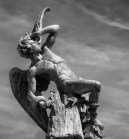 A third area where the Holy Spirit is working in the hearts of unbelievers concerns judgment, “because the ruler of this world has been judged” (John 16:11). Satan has been judged and found guilty before God. This means that Satan and his world-system is condemned. Being the ruler of this world, Satan naturally rules in the hearts of all unbelievers. Three times Jesus referred to Satan as “the ruler of this world” (John 12:31; 14:30; 16:11). Other passages of Scripture call Satan “the god of this world” (2 Cor 4:4), and “the prince of the power of the air” (Eph 2:2), informing us “that the whole world lies in the power of the evil one” (1 John 5:19). Satan rules as a tyrant who has “weakened the nations” (Isa 14:12), and currently “deceives the whole world” (Rev 12:9). Satan continues to attack God’s people today (1 Pet 5:8), practices deception (2 Cor 11:13-15), and has well developed strategies of warfare (Eph 6:10-12). Furthermore, humanity is living in an “evil age” (Gal 1:4), under “the dominion of Satan” (Acts 26:18), whose sphere of influence is called “the domain of darkness” (Col 1:13). But Satan has been judged and his punishment is pending execution. Furthermore, those who side with Satan in this life will be judged with him in eternity. According to Ryrie, “At the cross, Christ triumphed over Satan, serving notice on unbelievers of their judgment to come.”
 God’s greatest provision was for our eternal salvation, which came through His Son, Jesus, Who died in our place and bore the punishment that rightfully belongs to us (Rom 5:8; 1 Cor 15:3-4; 1 Pet 3:18). When we trust in Christ alone as our Savior, we receive forgiveness of sins (Eph 1:7), eternal life (John 10:28), are transferred into “the kingdom of His beloved Son” (Col 1:13), become “children of God” (John 1:12), and are blessed “with every spiritual blessing in the heavenly places in Christ” (Eph 1:3). God’s wonderful grace is amazing! And God, having done the most for us at the cross, will not do less for us after our salvation. Paul wrote, “What then shall we say to these things? If God is for us, who is against us? He who did not spare His own Son, but delivered Him over for us all, how will He not also with Him freely give us all things?” (Rom 8:31-32). Since God has already demonstrated His maximum love and generosity by giving His Son for our salvation, it only stands to reason that He will certainly provide everything else needed for our well-being, and for a life that glorifies Him and edifies others.
 By faith we trust God and rest in His promises. Failure to trust God will result in worry, fear, and an anxious heart that is never at rest. Do our hearts ever become anxious? Of course they do. And does fear ever rise up? Yes, of course it does. Well over a hundred times in the OT & NT believers are told “do no fear” and “do not be afraid” (e.g., Gen 15:1, Deut 1:21; Isa 41:10; Matt 10:28; 1 Pet 3:14). These directives would be superfluous if sinful fear was not a problem for the believer. Sometimes we become like Peter and look at the storm around us (Matt 14:30), become frightened, and sink into what we fear. But when fear rises up, faith must rise higher, always trusting God to keep His Word. When trials come (and they will), we must see them as opportunities to grow in our faith (Jam 1:2-4). The benefit of living by faith is a relaxed mental attitude as the believer focuses on the Lord and His promises. Remember, God always keeps His promises, for “God is not a man, that He should lie, nor a son of man, that He should repent; has He said, and will He not do it? Or has He spoken, and will He not make it good?” (Num 23:19). Yes, He will always keep His Word, for “the Glory of Israel will not lie or change His mind; for He is not a man that He should change His mind” (1 Sam 15:29), for “it is impossible for God to lie” (Heb 6:18). God has integrity and keeps His Word, and “is able to do far more abundantly beyond all that we ask or think” (Eph 3:20a).
 God will provide. The challenge for us, as His children, is to accept His Word as true and apply it to our lives on a regular basis. The walk of faith requires us to have discipline of mind and will, to learn and live God’s Word, and to stay focused on Him and His promises. As God’s children, we are to “walk by faith and not by sight” (2 Cor 5:7). The walk of faith is what He wants, for He says, “My righteous one shall live by faith” (Heb 10:38), and “faith is the assurance of things hoped for, the conviction of things not seen” (Heb 11:1). The life of faith is what Pleases God, “without faith it is impossible to please Him, for he who comes to God must believe that He is and that He is a rewarder of those who seek Him” (Heb 11:6). Will there be failure on our part? Yes, more often than most of us would like to admit. But that’s why daily confession is important (1 John 1:9), as we acknowledge our sins to God, trust that He forgives, and then move back into a walk of faith. Let us continually learn and live God’s Word, always trusting the Lord will provide and that He will keep His promises to us. This way of living will glorify God, edify others, and result in a relaxed mental attitude for us as we lean on the Lord.
 Good character is never automatic but is consciously developed over many years through right learning and living amidst trials, storms, and conflicts. It is an inescapable truth that strong character—like a strong body—is forged through training and testing. As the adage goes, “No pain, no gain.” If we are willing, we can view life’s trials as opportunities to make us better rather than bitter. We can voluntarily submit ourselves to the furnace of affliction, which burns away the dross of weak character and cultivates those golden qualities that reflect the highest and best in humanity. Over time, we may even learn to smile at the storm, knowing the One who sends it and trusting that it comes with a purpose—one that includes developing the good character that could not mature by any other means.