Biblical Meditation

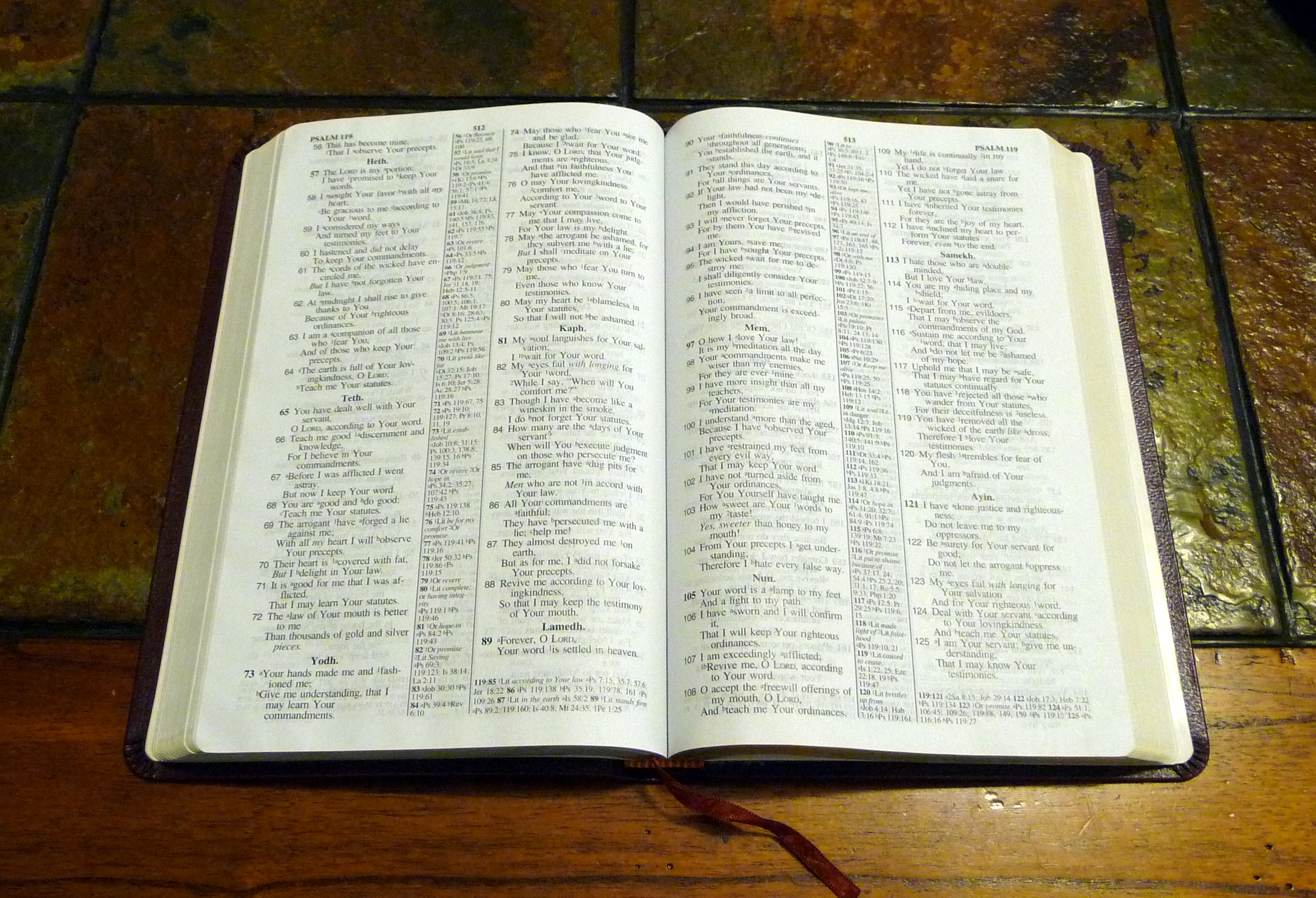
     Meditation, in the biblical sense, is an intentional filling of the mind with divine viewpoint; specifically, God’s Word. The purpose is to saturate our thinking with Scripture so that it will permeate all aspects of our reasonings and guide us in God’s will. This stands in stark contrast to the eastern view of meditation, which instructs adherents to empty the mind and to think nothing at all.

Meditate     The word meditate, in the Bible, translates the Hebrew verb הָגָה hagah, which means “to growl…to utter a sound…to moan…to read in an undertone…to mutter while meditating”[1] The word is used of a moaning dove (Isa 38:14), and a growling lion which hovers over its prey (Isa 31:4). Meditation, when applied to God’s people, connotes the student reads the biblical text no faster than her/his mouth can utter the words, which implies slowness, and perhaps greater comprehension, because one is hearing it as well as seeing it. And, it is the biblical text itself which is contemplated, first for understanding, and then for application. One can see this clearly in the command God gave to Joshua, saying, “This book of the law shall not depart from your mouth, but you shall meditate on it day and night, so that you may be careful to do according to all that is written in it; for then you will make your way prosperous, and then you will have success” (Jos 1:8). Here is the principle that we cannot live what we do not know, that knowledge of God’s Word necessarily precedes living His will.

     Meditating on Scripture refers not only to the regular reading of Scripture, but the reflection of it throughout the day, in all aspects of life. David writes of the righteous person who delights “in the law of the LORD, and in His law he meditates day and night” (Psa 1:2). Elsewhere it is written, “O how I love Your law! It is my meditation all the day. Your commandments make me wiser than my enemies, for they are ever mine. I have more insight than all my teachers, for Your testimonies are my meditation. I understand more than the aged, because I have observed Your precepts” (Psa 119:97-100).

Regardless of the time of day or the context, the godly respond to life in accordance with God’s word. Even where the word is not explicit, the godly person has trained his heart to speak and act with wisdom (Prov 1:1–7). According to Proverbs 3:1–6, the wise man receives instruction (tôrāh), writes it on his heart, and wholeheartedly trusts in the Lord with all his heart in all his daily activities.[2]

Dr. Steven R. Cook

Related Articles:


[1] Ludwig Koehler et al., The Hebrew and Aramaic Lexicon of the Old Testament (Leiden: E.J. Brill, 1994–2000), 237.

[2] Willem A. VanGemeren, “Psalms,” in The Expositor’s Bible Commentary: Psalms, Proverbs, Ecclesiastes, Song of Songs, ed. Frank E. Gaebelein, vol. 5 (Grand Rapids, MI: Zondervan Publishing House, 1991), 55.

Theological Categories of God’s Justice

    God’s JusticeThe Bible reveals God is righteous and just. He is declared to be righteous by nature (Deu 32:4; Psa 119:137, 142; Isa 45:21; John 17:25), and just in all His ways (Psa 145:17; Rev 15:3). Divine righteousness may be defined as the intrinsic, immutable, moral perfection of God, from which He commands all things, in heaven and earth, and declares as just that which conforms to His righteousness and as sinful that which deviates. One discovers throughout the Bible that righteousness and justice are related words. The former speaks of God’s moral character, whereas the latter speaks of the actions that flow out of His character. Whatever God’s righteousness requires, His justice executes; either to approve or reject, to bless or condemn. Theologically, the justice of God is observed in several categories as follows:

  1. Rectoral justice recognizes God as the absolute legislative moral ruler who judges all mankind for their thoughts and actions. Abraham recognized God as “the Judge of all the earth” (Gen 18:25; cf. 94:2), and David writes, “the heavens declare His righteousness, for God Himself is judge” (Psa 50:6), and “Surely there is a reward for the righteous; surely there is a God who judges on earth!” (Psa 58:11). God righteously judges those to whom He has revealed Himself and who know right and wrong, either through written revelation (Rom 2:12), or the intrinsic moral code written on their hearts (Rom 2:14-15; cf. 1:18-20).
  2. Retributive justice means God will administer just punishment to the wicked for their actions. The Lord told Moses, “Vengeance is Mine, and retribution, in due time their foot will slip; for the day of their calamity is near, and the impending things are hastening upon them” (Deu 32:35). And Paul wrote to the church at Thessalonica concerning their suffering, saying, “it is only just for God to repay with affliction those who afflict you, and to give relief to you who are afflicted” (2 Thess 1:6-7a).
  3. Remunerative justice pertains to the distribution of rewards. Sometimes this is based on righteous behavior, such as when David wrote, “The LORD will repay each man for his righteousness and his faithfulness” (1 Sam 26:23a; cf. 2 Sam 22:25); and elsewhere, “The LORD has rewarded me according to my righteousness; according to the cleanness of my hands He has recompensed me” (Psa 18:20). In addition, it can refer to the compensation paid by the Egyptians to the Israelites for their four hundred years of slavery (Ex 3:22).
  4. Redemptive justice refers to God forgiving and justifying helpless sinners because Christ has redeemed them by paying the price for their sin. The price for redemption is the blood of Christ that was shed in our stead (1 Pet 1:18-19). The believer is “justified as a gift by His grace through the redemption which is in Christ Jesus; whom God displayed publicly as a propitiation in His blood through faith” (Rom 3:24-25a). God’s redemptive justice saves us from the penalty of sin, guaranteeing “there is now no condemnation for those who are in Christ Jesus” (Rom 8:1). At the cross, God judged our sin as His righteousness requires, and saves the sinner as His love desires.
  5. Restorative justice refers to the familial forgiveness God gives to His children who humble themselves and confess their sin to Him. When we sin, we break fellowship with God, and when we confess our sin to Him, He forgives and restores us. David wrote, “I acknowledged my sin to You, and my iniquity I did not hide; I said, ‘I will confess my transgressions to the LORD’; and You forgave the guilt of my sin” (Psa 32:5). In the Old Testament, forgiveness was predicated on confession of sin (Lev 5:5; 16:21; Psa 32:5; 38:18) as well as animal sacrifice (Lev 4:20; 5:6; 6:6-7). In the New Testament, God requires confession alone (1 John 1:9), which rests on the once for all atoning sacrifice of Christ at the cross (Heb 10:10-14). Concerning confession of sin, John wrote, “If we confess our sins, He is faithful and righteous to forgive us our sins and to cleanse us from all unrighteousness” (1 John 1:9).

     Understanding these aspects of God’s character help us know who He is and why He holds people accountable with regard to the laws He has revealed to them through general or special revelation. Furthermore, as Christians, we never retaliate against our attackers, but cast our cares upon the Lord and trust that He sees and acts righteously, in His time and way (Lev 19:18; Pro 20:22; Rom 12:14, 17-21; 1 Thess 5:15; 1 Pet 3:8-9).

Dr. Steven R. Cook

Audio Lesson:

Related Articles:

  1. The Gospel Message  
  2. God’s Righteousness at the Cross 
  3. Righteousness Exalts a Nation 
  4. A Dispensational View of God’s Righteousness 
  5. The Righteous Lifestyle of the Believer  
  6. Choosing Righteous Friends  
  7. Walking with God  

Chasing After Donkeys

  29332497 - donkey on natural enviornment     I recently delivered a message on God’s providence to a small church in White Settlement, Texas (the audio message is below). My passage was 1 Samuel 9:1-17, and my focus was on primary and secondary causes in the life of Saul. The passage provides an example of how God providentially controls circumstances to accomplish His will. The central idea of the pericope is that Saul went out to find his father’s donkeys, but was actually being directed by God to find a kingdom. The meeting of Saul and Samuel was divinely orchestrated, for neither of them knew each other or planned the occasion. In the passage, God is portrayed as the divine conductor orchestrating the events. What seemed like a normal, even mundane activity—searching for lost donkeys—was ultimately under God’s sovereign control, as He used the situation to guide Saul geographically to the place where he would be anointed king of Israel.

     God’s providence refers to His wise and personal acts, whereby He creates and controls circumstances in order to direct history according to His predetermined plan, all for His glory and the benefit of His people. As Christians, we live in the flow of history, and are moved by the circumstances He controls, for the Lord “does according to His will in the host of heaven and among the inhabitants of earth; and no one can ward off His hand or say to Him, ‘What have You done?’” (Dan 4:35).

Providence is normally defined in Christian theology as the unceasing activity of the Creator whereby, in overflowing bounty and goodwill (Ps. 145:9 cf. Mt. 5:45–48), he upholds his creatures in ordered existence (Acts 17:28; Col. 1:17; Heb. 1:3), guides and governs all events, circumstances and free acts of angels and men (cf. Ps. 107; Jb. 1:12; 2:6; Gn. 45:5–8), and directs everything to its appointed goal, for his own glory (cf. Eph. 1:9–12). (J. I. Packer, “Providence” in New Bible Dictionary, 979)

     God’s providential control is seen throughout the Bible. For example, God used the evil actions of Joseph’s brothers to bring him to Egypt (Gen. 37:23-28), and later used Joseph to deliver the very ones who betrayed him (Gen. 45:5-8; 47:11, 27-28; 50:20). It was God’s providence that drove Saul to chase after his father’s donkeys and be led to the prophet Samuel and anointed king of Israel (1 Sam. 9-10). It was God’s providence that directed Joseph and Mary to Bethlehem, so the baby Jesus would be born at the appointed time and place (Mic. 5:2; Luke 2:4-6; Gal. 4:4). It was God’s providence that forced Aquila and Priscilla out of Rome by the emperor Claudius’ decree, only to meet the apostle Paul in Corinth and join him in Christian ministry (Acts 18:1-3; Rom. 16:3; 1 Cor. 16:19). It was God’s providence that put the Lord Jesus on the cross to be crucified by the hands of godless men, and by this act He accomplished our salvation (Acts 2:23; 4:27-28).

     By God’s sovereign will He controls all the events of our lives, and the things we consider mundane are used by Him to direct us to the places and people He has predetermined. In this, we know there are no accidental events in our lives, nor chance encounters with other people, for God is working “all things after the counsel of His will” (Eph. 1:11; cf. Ps. 103:19; 135:6; Dan. 4:35), and causing “all things to work together for good to those who love God, to those who are called according to His purpose” (Rom 8:28).

     It is to our benefit that we see ourselves within the context of God’s sovereignty and providential control, otherwise we’ll wrongly interpret the circumstances of our lives as accidental, or worse, fail to recognize the divine purpose of our lives and to develop the personal sense of destiny that is rooted in the God who created us. It is by learning God’s written revelation that we elevate our thinking above the experience of daily circumstances and see ourselves within the larger context of His greater plan. We learn from Scripture there are no accidental people, for it is by God’s sovereign will that we exist, for “It is He who has made us, and not we ourselves; we are His people and the sheep of His pasture” (Psa 100:3). To paraphrase my good friend, Francis Schaeffer, “there are no little people or little places in God’s world.” We all have value and we all have a place of purpose, because God makes it so.

     God’s sovereignty, expressed through His providential control, produces confidence in us who know He is directing all things after the counsel of His will. The growing believer knows “it is God who is at work in you, both to will and to work for His good pleasure” (Phil. 2:13). Where the Bible is silent, the believer seeks to discern God’s will through His providential direction as He guides people and circumstances as He pleases. God controls all of life (Gen. 2:17; Job. 1:21; Ps. 104:29–30; Eccl. 12:7; Dan. 5:23), human birth and calling (Ps. 139:13-16; Jer. 1:4-5; Gal. 1:15), nature (Ps. 147:8; Jonah 1:4; Mark 4:39-41), plagues (Ex. 7–11; 12:29; Rev. 16:10-11), the roll of dice (Prov. 16:33; cf. Ps. 22:18; Matt. 27:35), health and sickness (Deut. 28:27-30; 2 Chron. 21:18; Ps. 41:3; Acts 3:16), prosperity and adversity (1 Sam. 2:7; Job 2:10; Isa. 45:5-7), suffering (Ps. 119:71; Heb. 12:5-11), and the development of Christian character (Rom. 5:2-5; 2 Cor. 12:7-10; Jam. 1:2-4), just to name a few things. The growing believer takes great delight in knowing his good, loving and wise God is in control of His creation and is directing all things according to His providential plan.

Dr. Steven R. Cook

Here’s the audio lesson:

[Part of this material is derived from another article I wrote a few years ago on God’s providence]

Related Articles:

Social Justice from a Biblical Perspective

Thus has the LORD of hosts said, “Dispense true justice and practice kindness and compassion each to his brother; and do not oppress the widow or the orphan, the stranger or the poor; and do not devise evil in your hearts against one another.” (Zec 7:9-10)

Social Justice     The phrase social justice is commonly used in America today in connection with socialism; and though the term is good, socialism is not.[1] Many of the passages cited in this article are from the Mosaic Law and properly describe God’s expectation of Israel toward the poor, widows, orphans, and aliens in their community, which was a theocracy. Though there are no theocracies today, the OT passages nonetheless reflect the heart of God toward the poor, needy, and most vulnerable in society. From a biblical perspective, social justice refers to the divinely bestowed rights that God legislates concerning vulnerable persons in society; specifically, the poor, widows, orphans, and sojourners. These rights were theirs by divine law in which God commanded those blessed with resources to provide for the needs, protection, and just treatment of the vulnerable. Blessed Israelites were theologically obligated by God to help the less fortunate. In God’s theocratic kingdom, the dependent could expect the powerful and wealthy to help meet their needs and defend their rights. Solomon wrote, “The righteous is concerned for the rights of the poor, the wicked does not understand such concern” (Pro 29:7).[2] The “righteous” are those who have regard for God and His laws and are “concerned for rights of the poor” (cf. Isa 10:1-2). Those who disregarded God’s laws concerning the vulnerable could expect to be judged by Him, as Moses wrote, “Cursed is he who distorts the justice due an alien, orphan, and widow” (Deu 27:19). God’s written law was the basis for “the justice due” to the vulnerable in Israel. According to God’s law:

  1. If a person became poor and had to sell his land, it could be purchased back by a near relative, or by himself if able. However, if there was no one to buy the land, it was automatically returned to the owner in the Year of Jubilee, which came once every fifty years (Lev 25:23-28).
  2. The poor could expect those whom God had blessed to be open-handed toward them and to give generously (Deu 15:7-11).
  3. If a poor person sold himself as a slave to a fellow Israelite, he was to be set free in the seventh year, and sent away with abundant resources. But if the slave chose, he could stay with his master forever (Deu 15:12-17; cf. Lev 25:39-42). Moreover, slaves were to be treated fairly, as God declared, “You shall not rule over him with severity, but are to revere your God” (Lev 25:43).
  4. If a poor person gave their cloak as a pledge, it was to be returned to him at sunset so that he would not get cold during the night (Deu 24:10-13).
  5. If one of God’s people hired a poor person to perform labor, he was to be paid the same day (Deu 24:14-15).[3] This is because the poor person relied on that money to eat.
  6. Sojourners, widows and orphans were free to eat the remnants of a crop after harvest (Deu 24:19-21).
  7. Levites, sojourners, widows and orphans were to enjoy the tithe of produce that came every third year (Deu 14:28-29).

     God called His people to be righteous, honest, truthful, protective and open-handed toward the less fortunate in society. Sadly, there were times when kings, princes, judges, wealthy, prophets and priests behaved wickedly and abused the poor.[4] For this reason, God raised up prophets such as Isaiah, Hosea, Amos, Micah, Zechariah and others who called for His people to “Learn to do good; seek justice, reprove the ruthless, defend the orphan, [and] plead for the widow” (Isa 1:17). This call for obedience was rooted in the ethics of the Mosaic Law, which God’s people were to follow. And the prophets were functioning as prosecuting attorneys and not merely as social reformers as liberation theologians would have us believe. Unfortunately, God’s prophets were ignored or mistreated and the vulnerable continued to be exploited. When God’s people would not turn back to Him, He administered retributive justice, which brought about national discipline and eventual destruction (see Ex 22:21-24; Deu 10:17-18; Mal 3:5; Jer 21:12). God used both the Assyrians and Babylonians as His disciplinary agents to dispense retributive justice in Israel.

     In the Church age, governmental leaders—both Christian and non-Christian—serve as conduits of God’s grace to help care for the needy in society. In this case, tax dollars are used for basic necessities such as food, shelter, clothing, and medical care. Scripture teaches us to think of government as a “minister of God” (Rom. 13:4), and to regard rulers as “servants of God” who do His will (Rom. 13:6), and to pray for them (1 Tim. 2:1-2). We realize there is a legitimate sense in which the governmental leaders of this world accomplish God’s purposes by keeping harmony and promoting justice (Rom. 13:2-4; 6-7). Christian leaders who have a healthy walk with the Lord are ultimately directed by His Word. Non-Christian leaders are influenced directly by God who controls their hearts (Pro 21:1), their consciences (Rom 2:14-15), and through the influence of godly believers in their periphery (Dan 3:28-29; 6:25-27).

     As Christians, we use the phrase social justice within the context of God’s moral absolutes. We agree with the laws of man when those laws reflect God’s laws. As a result, we are to advocate for the poor, widows, orphans, and all who are vulnerable to exploitation. In many cases, we are the proponents who affect that blessing as we open our hands to the destitute. This was true of the early church, “And all those who had believed were together and had all things in common; and they began selling their property and possessions and were sharing them with all, as anyone might have need” (Acts 2:44-45). There is no model for socialism here, whereby the state acts as the mediator who takes from one and gives to another. Instead, these Christians willingly sold “their property and possession” to help others, and this was done freely in order to help “as anyone might have need.” James writes, “Pure and undefiled religion in the sight of our God and Father is this: to visit orphans and widows in their distress, and to keep oneself unstained by the world” (Jam 1:27). Individual Christians are to be open-handed when helping the poor, widows and orphans.[5] This can be done directly, or through the agency of others, including organizations that help the needy and defend their rights. We are called to be good stewards of God’s resources, and this means compassion for others should be governed by wisdom from God’s Word.

     Simple ways to help the poor include: 1) spending personal time with them and treating them with respect, 2) sharing the gospel of Christ, 3) giving kind words and praying for them, 4) sharing Bible promises, 5) personally delivering freshly prepared meals or snacks, 6) giving clothes and blankets, 7) sharing information about local charities that might help them, 8) giving money, 9) volunteering at a homeless shelter, 10) offering gift cards that can be used at local restaurants such as McDonalds or Taco Bell, 11) giving to a local church that helps the poor, 12) or giving to a local charity such as Meals on Wheels or the Salvation Army.

     Lastly, there will be no utopian government nor lasting social change until Jesus returns and establishes His millennial kingdom. At that time, “There will be no end to the increase of His government or of peace, on the throne of David and over his kingdom, to establish it and to uphold it with justice and righteousness from then on and forevermore. The zeal of the LORD of hosts will accomplish this” (Isa 9:7; cf. Jer 33:15). During that time “He will judge the poor, and decide with fairness for the afflicted of the earth” (Isa 11:4). 

When our Lord returns He will take the reins of government and rule the nations of this world as a benevolent dictator (Rev. 19:15). Then and only then will the world experience a time of righteousness, justice, social welfare, economic prosperity, and spiritual knowledge. He will show Himself to be King of kings and Lord of lords in the same arena where man’s rebellion against God took place.[6]

Summary:

     When Israel was a theocratic kingdom, God legislated certain benefits to the poor, widows, orphans and sojourners in order to meet their daily needs, and these were to be given by those whom He’d blessed with abundance. God instructed His leaders to uphold and defend the rights of the vulnerable, knowing there would be wicked persons who would seek to exploit them. Sadly, much of Israel’s history was marked by a breakdown among His people, as the leaders and wealthy in the land exploited the poor they were called to defend. Now, in the Church age, God provides care for the needy in society through human governments, as well as through individual Christians and local churches. Lastly, perfect government will come in the future when Jesus Christ returns and establishes His kingdom on earth and provides righteous reign and care for all.

Dr. Steven R. Cook

Here’s the audio lesson.

Related Subjects:

  1. The Gospel 
  2. Christians in America 
  3. What Does it Mean to be a Man? 
  4. Honor the Lord from Your Wealth 
  5. Treating Others with Dignity 
  6. Helping the Poor  

[1] Socialism is little more than thievery, in which governmental leaders extract wealth from one class of citizens—often the honest and hardworking—and redistributes it to others in order to create outcomes of equality. Socialism has brought nothing but social and economic ruin wherever it has been implemented.

[2] Solomon’s mother planted seeds of righteousness in the garden of her young son’s mind, hoping someday the landscape of his thinking would beautifully display the richness of God’s Word. She instructed her young son, saying “Open your mouth for the mute, for the rights of all the unfortunate. Open your mouth, judge righteously, and defend the rights of the afflicted and needy” (Pro 31:8-9). Oh, that mothers would instruct their children in the ways of the Lord; that children would grow up with godly values that instruct them to care for others and to help the less fortunate. That children would grow up to represent the highest and best within society and not the lowest and worst.

[3] The Bible promotes a strong and honest work ethic. In fact, God’s expectation of compensation for work performed is so strong, it even extended to animals, as Moses wrote, “You shall not muzzle the ox while he is threshing” (Deu 25:4). The animal that works has the right to benefit from its labor. In contrast, “if anyone is not willing to work, then he is not to eat” (2 Th 3:10).

[4] The wicked are described as those who “slay the widow and the stranger and murder the orphans” (Psa 94:6), who “deprive the needy of justice and rob the poor of My people of their rights, so that widows may be their spoil and that they may plunder the orphans” (Isa 10:2). In addition, “They are fat, they are sleek, they also excel in deeds of wickedness; they do not plead the cause, the cause of the orphan, that they may prosper; and they do not defend the rights of the poor” (Jer 5:28).

[5] Not all widows were eligible for support from the church, but only those who met the age requirements and displayed a life of humility and service to others (1 Tim 5:9-10). And, if a widow has children, they are to care for her (1 Tim 5:4). Younger widows were to seek remarriage and a godly life (1 Tim 5:11-14). And if a young woman has a dependent widow, she must care for her and not expect the church to do it (1 Tim 5:16).

[6] Charles Caldwell Ryrie, Basic Theology: A Popular Systematic Guide to Understanding Biblical Truth (Chicago, IL: Moody Press, 1999), 316.

When God Gives Us a Test

When God     God tests His people. It’s a fact that is repeated throughout Scripture (Exo 16:4; 20:20; Deu 13:3; Jud 3:1-2; Isa 48:10). He tests us with difficult situations in order to humble us, so that we will not look to ourselves for strength, but to Him. In the end, the test reveals that it is God who provides for us. In Genesis 22, Moses records an event in which “God tested Abraham” concerning his son Isaac (Gen 22:1). The Lord told Abraham, “Take now your son, your only son, whom you love, Isaac, and go to the land of Moriah, and offer him there as a burnt offering on one of the mountains of which I will tell you” (Gen 22:2). Abraham obeyed and did as the Lord instructed, right up to the moment that Isaac lay bound on the rock, with Abraham’s hand raised, ready to slay him with a knife (Gen 22:3-11). But God interrupted and told him, “Do not stretch out your hand against the lad, and do nothing to him; for now I know that you fear God, since you have not withheld your son, your only son, from Me” (Gen 22:12). Abraham then turned and saw a ram caught in a thicket, which he took and offered to God “in the place of his son” (Gen 22:13). Abraham passed the test. He loved and trusted the Lord above all else, even his precious son, Isaac. Abraham learned that God provides for him; therefore, he named the place “The Lord Will Provide” (Hebrew יְהוָה יִרְאֶה Yahweh Yireh or Jehovah Jireh) (Gen 22:14). The writer to the Hebrews mentions this event in the life of Abraham, and states:

By faith Abraham, when he was tested, offered up Isaac, and he who had received the promises was offering up his only begotten son; it was he to whom it was said, “IN ISAAC YOUR DESCENDANTS SHALL BE CALLED.” He considered that God is able to raise people even from the dead, from which he also received him back as a type. (Heb 11:17-19)

     In another situation, God tested the Israelites in the wilderness by placing them in a situation greater than their ability to cope. Moses spoke to them, saying, “You shall remember all the way which the LORD your God has led you in the wilderness these forty years, that He might humble you, testing you, to know what was in your heart, whether you would keep His commandments or not” (Deu 8:2). God tested them for a purpose, to humble them and to teach them something important. He wanted them to know that He is their provider. Moses went on, saying, “He humbled you and let you be hungry, and fed you with manna which you did not know, nor did your fathers know, that He might make you understand that man does not live by bread alone, but man lives by everything that proceeds out of the mouth of the LORD” (Deu 8:3).

     God never puts us in a difficult place, or calls us to a difficult task, without also providing the means to accomplish what He’s set before us. Our duty is to seek the Lord first, believing He will journey with us and provide for us all the way. David wrote, “they who seek the LORD shall not be in want of any good thing” (Psa 34:10). Our duty is to “seek the LORD and His strength; [to] seek His face continually” (Psa 105:4). Often, we are distracted with the everyday concerns of this life and focus more on them than on God. Jesus informs us that God knows our needs and will provide for us (Mat 6:25-34), but our concern should be to “seek first His kingdom and His righteousness, and all these things will be added to you” (Mat 6:33). This means we should live each moment trusting God to provide. For this reason, Jesus said, “So do not worry about tomorrow; for tomorrow will care for itself. Each day has enough trouble of its own” (Mat 6:34).

Dr. Steven R. Cook

Related Articles:

  1. The Virtue of Humility  
  2. God’s Grace is Sufficient 
  3. Walking with God  
  4. God Wrestled with Jacob  
  5. Psalm 23  
  6. The Value of Suffering  
  7. Thoughts About Spiritual Growth  
  8. I am Barabbas  

How to Deal with Jealousy

     Jealousy is mentioned throughout the Bible both in a healthy and unhealthy sense. The word jealousy translates the Hebrew קָנָא qanah and Greek ζηλόω zeloo.[1] Though closely related terms, there is a difference between envy and jealousy. Whereas the envious desire what belongs to another, the jealous desire to protect what belongs to self. Scripture reveals that God is jealous. The Lord states, “I, the LORD your God, am a jealous God” (Exo 20:5b; cf. 34:14; Deu 32:16, 21; Na 1:2). This statement occurs within the context of God forbidding His people to worship idols (Exo 20:3-4).[2] Idolatry is thievery. It seeks to steal God’s glory, and He’ll have none of it. He declares, “I am the LORD, that is My name; I will not give My glory to another, nor My praise to graven images” (Isa 42:8). Likewise, God is jealous to protect His name, saying, “I will be jealous for My holy name” (Eze 39:25), which means He is jealous to protect His reputation. And, God is jealous for Israel, saying, “I am exceedingly jealous for Zion, yes, with great wrath I am jealous for her” (Zec 8:2). In this sense, jealousy means God is committed to the protection of His people.

People sometimes have trouble thinking that jealousy is a desirable attribute in God. This is because jealousy for our own honor as human beings is almost always wrong. We are not to be proud, but humble. Yet we must realize that the reason pride is wrong is a theological reason: it is that we do not deserve the honor that belongs to God alone (cf. 1 Cor. 4:7; Rev. 4:11).[3]

     But what about jealousy among people? Is it ever right? Yes. There are times when jealousy is right. Jealousy is born out of a strong sense of relationship that is intolerant of rivals and this can be healthy, if the rival is real and it threatens a godly relationship.[4] If God’s values are our values, and we regard as precious what He regards as precious, then His jealousy will be our jealousy and we will be angry alongside Him and seek to protect what He loves. Elijah the prophet said “I have been very jealous for the LORD, the God of hosts” (1 Ki 19:10a). This jealousy—or zeal—in Elijah sought to protect what was good, namely God’s character and the walk of His people who were being led astray by false prophets. Elijah’s jealousy was provoked by his fellow Israelites, who “have forsaken Your covenant, torn down Your altars and killed Your prophets with the sword” (1 Ki 19:10b). Paul too had this kind of jealousy for the church at Corinth, saying, “For I am jealous for you with a godly jealousy; for I betrothed you to one husband, so that to Christ I might present you as a pure virgin” (2 Cor 11:2). Paul wanted to protect the church’s purity of devotion to Christ, as they were in danger of being led astray by false teaching and into worldly values and practices (2 Cor 11:3-4). Godly jealousy seeks to protect God’s relationship with others and naturally feels threatened by anything that would harm it.

    How to Deal with JealousyBut there is a sinful jealousy that is born out of the sin nature (Gal 5:19-20) and does not seek God’s interests or the best interests of others. Sinful jealousy desires to possess and protect what God forbids. “In contrast to righteous jealousy, the sinful perversion is based on the belief that one is entitled to something to which one has no natural right.”[5] Not having a “natural right” to something means it was acquired selfishly, apart from God’s will. This can be a relationship, education, career, or material possessions. There’s nothing wrong with any of these things, except that they can be pursued and possessed purely for self-interest, contrary to God’s will. If we ignore God and His will for our life, and selfishly enter into a relationship with another person, and that relationship becomes threatened by another selfish person, or the selfish actions of our partner, then we have no biblical right to protect that relationship. Jealousy will naturally arise, but it becomes a sinful jealousy if we seek to protect what was sinfully acquired.  

     Sinful jealousy cares nothing about God or others and will seek to destroy rather than protect and edify. It is selfish, irrational, and can even lead to violence. This is what happened when Joseph’s brothers sought to kill him. First, they were “jealous of him” (Gen 37:11), and their sinful jealousy led them to harm him (Gen 37:18-28). James wrote, “But if you have bitter jealousy and selfish ambition in your heart, do not be arrogant and so lie against the truth…For where jealousy and selfish ambition exist, there is disorder and every evil thing” (Jam 3:14, 16). It was because of sinful jealousy that the Sadducees rose up in anger and attacked the apostles and put them in prison (Acts 5:17-18). This was because the apostles’ teaching threatened their pride and pseudo authority in the community. Paul had experienced jealous men who opposed his ministry (Acts 13:45), and, at times, they attacked the innocent (Acts 17:5).

How to Deal with Sinful Jealousy

     Sinful jealousy is a beast. It rears its ugly head to protect what has been obtained by sinful choice (i.e. a relationship, job, money, etc.), it operates on irrational fear, and, if left to feed on fear, will seek to destroy what threatens. To deal with sinful jealousy, a few things need to change.

     First, it is necessary to operate from a biblical perspective.[6] God is all-knowing and all-good, and what He reveals and commands in Scripture is for our best interest. Furthermore, God’s Word defines reality and helps us to understand ourselves and the world in which we live. If we’re not thinking biblically, then human viewpoint will lead the way and all thoughts and actions will be rationalized from a purely human perspective. But this is not what’s expected of the Christian. We’re called to think biblically, in every aspect of our lives, and to make choices consistent with God’s revealed will. As we study the Bible, we realize it touches all of life, including matters related to family, social issues, education, finances, politics, science, art, etc. For example, the Bible teaches that marriage is between one man and one woman (Gen. 2:24), that a Christian should only marry another Christian (1 Cor 7:39), and that the relationship between the husband and wife should be loving and respectful (Eph 5:22-33). The mature Christian learns God’s Word, and then integrates it into all aspects of her/his life. Operating from a biblical perspective allows us to differentiate righteous jealousy from sinful jealousy, and to act according to God’s expectation.

     Second, as we study Scripture, we come to realize that we own nothing. Everything, including our own lives, belongs to the Lord. Scripture reveals, “The earth is the LORD’S, and all it contains, the world, and those who dwell in it” (Psa 24:1; cf. 89:11). Job understood this very well, for even when he lost his business, family, and health, he could say, “The LORD gave and the LORD has taken away. Blessed be the name of the LORD” (Job 1:21). Biblically minded Christians hold nothing tightly, for we know our possessions are on loan and can be taken at any moment (this includes family members); how much more those things we acquire through sinful choices. When we come to the place where we recognize God’s sovereign ownership of our lives and possessions, we can consciously live each moment by faith, with a relaxed mental attitude, knowing He is the One who gives and takes away. And, if God decides to take something away, by faith we can accept it, deal with the sorrow, and “know that God causes all things to work together for good to those who love God, to those who are called according to His purpose” (Rom 8:28).

     Third, we handle sinful jealousy in ourselves by pursuing Christian love, for jealousy cannot exist where love predominates. I’m speaking here about jealousy as it pertains to personal relationships. The apostle Paul, when describing the virtue of Christian love (1 Cor 13:4-8), writes about what love is and is not, and states in plain language, “Love…is not jealous” (1 Cor 13:4). Christian love is the answer to sinful jealousy. However, it is important to understand that Christian love is never manufactured on our own; rather, it is derived from God and is part of our healthy walk with Him. It is a reflection of God’s love toward us. The apostle John writes, “We love, because He first loved us” (1 John 4:19). That’s the order. And what was our state when God first loved us?  He loved us when we were sinners and in a state of hostility toward Him. Paul states, “God demonstrates His own love toward us, in that while we were yet sinners, Christ died for us” (Rom 5:8). In another place he writes, “But God, being rich in mercy, because of His great love with which He loved us, even when we were dead in our transgressions, made us alive together with Christ” (Eph. 2:4-5). God’s great love springs from His character and not from any beauty or worth found in the object of His love. God loves because, “God is love” (1 John 4:8b). Over time, as we walk with God, His love becomes ingrained within us and overtakes our hearts, and the conditional human love we’re so familiar with—that is natural to us all—is exchanged for His greater love, which is selfless and sacrificial. And God’s love is gracious in that it seeks to meet the needs of others without compensation. Grace refers to kind acts freely conferred on others, without expectation of return, and deriving its source in the abundance and open-handedness of the giver. Jesus explained this kind of gracious love when He said, “love your enemies, and do good, and lend, expecting nothing in return; and your reward will be great, and you will be sons of the Most High; for He Himself is kind to ungrateful and evil men” (Luke 6:35). 

     God’s Word gives us the standard for love and mature believers will display it in their lives. But love does not arise automatically in the Christian life, and it is typically not the first responder in a conflict. Love is learned, and once learned, it is applied by an act of the will by Christians who choose to love others. Love is not easy, and at times can be risky because we may be hurt. This is because the objects of our love can be offensive, and at times may hurt us. Christian love is not an emotion, for we are commanded to love, and a person cannot manufacture an emotion purely as an act of the will. Emotion follows thought. We are to love others regardless of how we feel. Mature believers learn to overcome their emotions and love others according to their needs.  J. I. Packer states:

Love is a principle of action rather than of emotion. It is a purpose of honoring and benefiting the other party. It is a matter of doing things for people out of compassion for their need, whether or not we feel personal affection for them. It is by their active love to one another that Jesus’ disciples are to be recognized (John 13:34–35).[7]

     This kind of love takes time. It is the product of spiritual growth that occurs in the life of the believer who is advancing in her/his Christian walk. Those who know the Lord and walk with Him manifest His character in their lives. They love because He loves. They are gracious because He is gracious. They are kind because He is kind. They are merciful because He is merciful. Walk closely with the Lord and love will grow. Love as God loves and sinful jealousy will depart.

Summary

     Jealousy can be either healthy or unhealthy, depending on the motivation of the heart. God is jealous. He is jealous to protect His glory (Isa 42:8), His name (Eze 39:25; cf. Isa 42:8), and His people (Zec 8:2). When we love what God loves, then we’ll possess a godly jealousy, like Elijah (1 Ki 19:10) and Paul (2 Cor 11:2). But when we care little about God, then sinful jealousy will dominate our hearts, and we’ll seek to destroy rather than protect and edify others, such as when Joseph’s brothers tried to kill him (Gen 37:11-28), or when the Sadducees attacked and imprisoned the apostles (Acts 5:17-18). We overcome sinful jealousy by: 1) placing God’s Word at the center of our lives and letting it direct our thoughts, words and actions (Psa 1:2; 2 Cor 10:5), 2) realizing the Lord owns everything (Psa 24:1; 89:11), and that He is free to leave or take whatever we have, including possessions, family, or health (Job 1:6-21), and, 3) that sinful jealousy cannot exist in a heart saturated with God’s love, for “Love…is not jealous” (1 Cor 13:4).

Dr. Steven R. Cook

Related Articles:

  1. The Gospel Message  
  2. Reasons why we Obey God  
  3. Steps to Spiritual Growth  
  4. Learning to Live by Faith  
  5. The Righteous Lifestyle of the Believer    

[1] Sometimes קָנָא qanah is translated envy, such as, “Do not envy [קָנָא qanah] a man of violence and do not choose any of his ways” (Pro 3:31), and “Do not let your heart envy [קָנָא qanah] sinners, but live in the fear of the LORD always” (Pro 23:17).  The Septuagint uses ζηλόω zeloo in both instances; however, when writing about envy, the NT writers chose φθόνος phthonos rather than ζηλόω zeloo.

[2] Asaph mentions God’s jealousy when he writes, “For they provoked Him with their high places and aroused His jealousy with their graven images. When God heard, He was filled with wrath and greatly abhorred Israel.” (Psa 78:58-59; cf. 1 Ki 14:22). God’s jealousy (and anger) rises both because of the violation of a promise, and because idolatry is really the worship of demons, which destroys those whom God loves (1 Cor 10:19-22).

[3] Wayne A. Grudem, Systematic Theology: An Introduction to Biblical Doctrine (Leicester, England; Grand Rapids, MI: Inter-Varsity Press; Zondervan Pub. House, 2004), 205.

[4] We must be careful not to feel threatened over an imaginary rival, for this can lead us down a dangerous road.

[5] Allen C. Myers, The Eerdmans Bible Dictionary (Grand Rapids, MI: Eerdmans, 1987), 556.

[6] Apart from divine revelation, we’re left to invent or borrow systems of thought with no greater reference point than ourselves, which means the foundation for knowledge is based on nothing more than our finite ability to observe and reason what is. The problem is that human perception only approximates reality but never fully encompasses or understands it; therefore, all systems of human thought are limited and subject to change (reading the various publications of the DSM prove my point). Scripture tells us why things exist, why the world is the way it is, and how to live successfully in God’s will. Any system of thought that simultaneously competes with God’s Word results in cognitive dissonance, and if not resolved, will render the believer ineffective. At the moment we believe the Gospel message and are born again, we enter into our Christianity with a lifetime of human viewpoint that must be dislodged and replaced with a thorough knowledge of God’s Word. Too often, when we come to believe in Christ as Savior, we assume that God will accept our human viewpoint—which may be organized and moral—as an adequate system from which He will direct our lives. We assume He wants to rearrange the furniture in our mental home to make it more beautiful. But the reality is God does not want to rearrange the furniture in our minds; rather, He wants to tear down the entire house along with its foundation and start over. He wants to destroy all the thoughts and values that are contrary to His revealed will. But we’re required to participate in this process. We must be willing to submit to Him and begin the lifelong process of learning Scripture. This is a process that occupies all our time, every day, morning and evening, and has both defensive and offensive aspects. Defensively, we must guard our minds against worldliness that comes to us from multiple avenues such as TV, radio, music, literature, art, and conversations. Solomon tells us, “Watch over your heart with all diligence, for from it flow the springs of life” (Pro 4:23). Positively, we acquire divine viewpoint through the daily study of God’s Word. David writes about the godly believer, saying, “But his delight is in the law of the LORD, and in His law he meditates day and night” (Psa 1:2). For, “The law of the LORD is perfect, restoring the soul; the testimony of the LORD is sure, making wise the simple” (Psa 19:7’ cf. 2 Tim 2:15; 3:16-17).

[7] J. I. Packer, “Love” Concise Theology: A Guide to Historic Christian Beliefs (Wheaton, IL: Tyndale House, 1993).

When God Uses Evil Actions for His Good

And we know that God causes all things to work together for good to those who love God, to those who are called according to His purpose (Rom. 8:28).

    All Things for GoodWhen I read this verse I’m reminded of Joseph, the son of Jacob, who at a young age was sold into captivity by his brothers who hated him (Gen. 37). Joseph was carried to Egypt by slave-traders where he was sold to a man named Potiphar. After a short time, Potiphar’s wife also treated Joseph unjustly and lied about him, which resulted in his incarceration for several years (Gen. 39). But the Lord was with Joseph and orchestrated his release from prison and promotion to the right hand of Pharaoh (Gen. 40-41). God then blessed Egypt with seven years of agricultural prosperity before sending seven years of famine upon the land. These events set the stage for God to move Joseph’s brothers geographically into Egypt and to bring them directly to the feet of Joseph (Gen. 42-45). Once there, Joseph’s brothers were afraid of him, fearing he would retaliate for the evil that was done to him. But Joseph interpreted the events of life—including the evil actions of his brothers—from the divine perspective, and this gave him the spiritual capacity to respond to his brothers with love rather than hate, with grace rather than revenge. Joseph told his brothers, “Now do not be grieved or angry with yourselves, because you sold me here, for God sent me before you to preserve life. For the famine has been in the land these two years, and there are still five years in which there will be neither plowing nor harvesting. God sent me before you to preserve for you a remnant in the earth, and to keep you alive by a great deliverance” (Gen. 45:5-7). And later he said, “As for you, you meant evil against me, but God meant it for good in order to bring about this present result, to preserve many people alive” (Gen. 50:20). Joseph operated from the divine perspective, whereas his brothers operated merely from their human viewpoint. From the divine perspective, Joseph realized God had orchestrated all the events of his life for a specific purpose and had incorporated the evil actions of his brothers to help develop his character and to strengthen his faith. Joseph’s divine perspective and strong faith enabled him to stand in God’s will and to show love and grace to those who sought his harm.

     Through Scripture, God gives His people the capacity to see all of life from His vantage point. Having God’s perspective allows us to rise above the daily grind of life and the petty actions of others and realize there is a sovereign God who rules over His creation and directs the activities of mankind—even evil activities—for His own good and the good of His people. For this reason, we can understand Paul’s words and know “that God causes all things to work together for good to those who love God, to those who are called according to His purpose” (Rom. 8:28). Let’s face the day with God in mind and let faith rise above our circumstances and feelings.

Dr. Steven R. Cook

Related Articles:

Alexander the Coppersmith

    Alexander the CoppersmithThere are times when it’s necessary to specifically name a person as hostile in order to warn others to avoid unnecessary harm. This was true of the apostle Paul, who warned his friend, Timothy, about a man named Alexander. The warning came at a time when Paul was in prison (2 Tim 1:8, 16) and wrote to his friend Timothy, saying, “Make every effort to come to me soon” (2 Tim 4:9). Paul informed Timothy his support of friends had diminished for various reasons, saying, “Demas, having loved this present world, has deserted me and gone to Thessalonica; Crescens has gone to Galatia, Titus to Dalmatia” (2 Tim 4:10), and “Tychicus I have sent to Ephesus” (2 Tim 4:12). He informed Timothy, “Only Luke is with me” (2 Tim 4:11a). Knowing that Timothy would come to visit him, he requested, “Pick up Mark and bring him with you, for he is useful to me for service” (2 Tim 4:11b), and “When you come bring the cloak which I left at Troas with Carpus, and the books, especially the parchments” (2 Tim 4:13).

     Then, Paul’s tone quickly changed, saying, “Alexander the coppersmith did me much harm; the Lord will repay him according to his deeds. Be on guard against him yourself, for he vigorously opposed our teaching” (2 Tim 4:14-15). Why this comment by Paul? It seems likely Paul imagined the route his friend Timothy would take as he navigated through the streets of Rome to get to him and realized the possibility that Timothy might encounter this dangerous man, so he warned him to be on guard. Because Alexander was a common name, Paul carefully identified him by his profession, as the coppersmith.[1] Paul informed his friend that Alexander “did me much harm” (2 Tim 4:14a). Paul did not state what the specific harm was, but clearly he’d been marked by his encounter with Alexander and carried the memory of the hurt. As a Christian, Paul did not seek personal vengeance against Alexander, but rather, put the matter in the Lord’s hands, saying, “the Lord will repay with him according to his deeds” (2 Tim 4:14b).[2] Because God is the one who dispenses justice, we are commanded, “Never take your own revenge, beloved, but leave room for the wrath of God, for it is written, ‘Vengeance is Mine, I will repay,’ says the Lord” (Rom 12:19). Paul knew God would deal with Alexander in His own time and way and that the punishment would be equitable payment for the harm done to him.

     Though Paul did not seek retaliation, neither did he desire another hostile encounter with the man who hurt him. More so, Paul sought to warn his friend, Timothy, who was coming to him, lest he suffer unnecessary hostility. Paul told Timothy, “Be on guard against him yourself, for he vigorously opposed our teaching” (2 Tim 4:15). The word “guard” translates the Greek verb “phulasso” (φυλάσσω), which means to guard, watch, or protect. The form of the verb tells us that Timothy is to act now (present tense), that he is to act in his own interests (middle voice), and that the action is mandatory (imperative mood). Like all God’s enemies, Alexander was hostile to the teaching of Christianity and sought to harm those who carried its message. He’d certainly left his mark on Paul, who was concerned that others might be hurt by him as well.

     As Christians, we realize there are times when it’s valid to specifically name a person as hostile in order to warn others to avoid unnecessary harm. And, as God’s children, we are not to seek revenge when hurt by others (Rom 12:19), but realize God is righteous and will dispense equitable justice upon those who hurt us (Psa 62:12; 2 Th 1:6).

Dr. Steven R. Cook

Related Articles:

[1] The word coppersmith translates the Greek word χαλκεύς chalkeus, which literally means a worker of metal and perhaps points to Alexander’s profession as a manufacturer of idols. One cannot be dogmatic here, but it makes good sense to understand that Alexander was connected with the idol industry, for “he vigorously opposed” Paul’s teaching (2 Tim. 4:15b), which teaching forbid the manufacture of idols and idol worship (Ex. 20:3-5; 1 Thess. 1:9-10), identifying it as the worship of demons (1 Cor. 10:20-21). We should realize that theology is never neutral and touches matters social and economic. Paul’s teaching would have directly threatened Alexander’s profession and income, for as people turned to Christ as Savior, they would have stopped worshipping idols and even influenced others to turn from that wicked practice as well.

[2] The word “repay” translates the Greek verb ἀποδίδωμι apodidomi, which means to give up, give back, or repay. The verb is in the future tense and anticipates imminent action by the Lord, who always dispenses the proper judgment at the proper time. As Christians, we are never called to seek revenge upon those who have hurt us, but rather, to put the matter in the Lord’s hands. Scripture teaches that God repays people according to their actions, as David writes, “For You [God] recompense a man according to his work” (Ps. 62:12b; cf. Prov. 24:12; Jer. 15:15), and to the Christians at Thessalonica, Paul wrote, “it is only just for God to repay with affliction those who afflict you” (2 Thess. 1:6).

Submission to Authority – Part III

    submitThis is my third and final article on the subject of submission to authority. The first article addressed God’s sovereign authority over His creation, as well as those persons to whom He’s delegated authority on earth to serve as administrative overseers to others; and these administrators can be believers or unbelievers. The second article addressed Satan, as well as his counterfeit leaders, who seek to lead others outside of the will of God; and these leaders are to be resisted. This third article will address submission to persons in authority, who may at times behave harshly, but neither commit sin, nor command their subordinates to commit sin. This article, like others, is subject to revision.

     Submission is based on the legitimate authority that has been delegated to a person despite their personality or character flaws. There are examples in Scripture of persons who are in a position of authority and who behave harshly toward subordinates, but their harsh behavior is not sinful, nor are they demanding those under their supervision to commit sin. The account of Sarai and Hagar in Genesis 16 provides a good example.

     The account opens, “Now Sarai, Abram’s wife had borne him no children, and she had an Egyptian maid whose name was Hagar (Gen. 16:1). A decade earlier, God had promised a son to Abram (Gen. 12:2; 13:15-16; 15:5), and though they’d tried to produce an heir, Sarai was not able.[1] Because of impatience, Sarai proposed Abram marry her servant, Hagar, as a solution to their problem. “Sarai said to Abram, ‘Now behold, the LORD has prevented me from bearing children. Please go in to my maid; perhaps I will obtain children through her.’ And Abram listened to the voice of Sarai” (Gen. 16:2). And, “After Abram had lived ten years in the land of Canaan, Abram’s wife Sarai took Hagar the Egyptian, her maid, and gave her to her husband Abram as his wife” (Gen. 16:3).

In the legal custom of that day a barren woman could give her maid to her husband as a wife, and the child born of that union was regarded as the first wife’s child. If the husband said to the slave-wife’s son, “You are my son,” then he was the adopted son and heir. So Sarai’s suggestion was unobjectionable according to the customs of that time. But God often repudiates social customs.[2]

     What Sarai proposed to Abram was socially acceptable in their day; however, there’s nothing in Scripture that reveals they’d consulted the Lord about the matter, and we know from other Scripture that it was not God’s will, and that Ishmael would ultimately be rejected as Abram’s heir (see Gen. 21:1-12). Hagar’s status had been elevated from servant to servant-wife, and Abram “went in to Hagar, and she conceived; and when she saw that she had conceived, her mistress was despised in her sight” (Gen. 16:4). Promotion is not always easy to handle, and it’s possible that Hagar became prideful about her new place, and for this reason despised Sarai and treated her disrespectfully. “Hagar became a slave wife, not on equal standing with Sarai. However, if Hagar produced the heir, she would be the primary wife in the eyes of society; when this eventually happened, Hagar become insolent, prompting Sarai’s anger.”[3] Sarai got upset and said to Abram, “May the wrong done me be upon you. I gave my maid into your arms, but when she saw that she had conceived, I was despised in her sight. May the LORD judge between you and me” (Gen. 16:5). Sarai felt jilted by Hagar after she’d conceived, and she brought her complaint to her husband, Abram. At this point is appears Abram returned Hagar to servant status, saying to Sarai, “Behold, your maid is in your power; do to her what is good in your sight” (Gen. 16:6). Having been reduced to a servant again, we learn that “Sarai treated her [Hagar] harshly, and she fled from her presence” (Gen. 16:6).

     Hagar was probably hurt and confused over all that had happened to her and we can understand why she ran away. God, who is very compassionate, extended grace to Hagar and appeared to her while she was running away from her troubles. “Now the angel of the LORD found her by a spring of water in the wilderness, by the spring on the way to Shur” (Gen. 16:7). The “angel of the LORD” is later identified by Hagar as God Himself (vs. 13). And the Lord said to her, “where have you come from and where are you going?” And she replied, “I am fleeing from the presence of my mistress Sarai” (Gen. 16:8). God then said, “Return to your mistress, and submit yourself to her authority” (Gen. 16:9). The command to return translates the Hebrew verb שׁוּב shub (Qal imperative), which is used of someone “who has shifted direction in a particular way and then shifted back from it in the opposite way. As long as there is no contrary factor the assumption is that such persons or people will turn back and reach the original point from which they departed.”[4] God expected Hagar to return to Sarai, and once there, to submit to her authority. Submit is a rendering of the Hebrew verb עָנָה anah, which commonly means to be bowed down, afflicted, or humbled. The verb form is imperative which means it’s a command, and the stem is reflexive (Hithpael), which means that Hagar is to act upon herself; in this case, to humble herself. No one is forcing Hagar into submission, as she must to do it to herself in compliance with the divine mandate. To obey the will of God she must submit herself to Sarai’s authority. Lastly, the word authority translates the Hebrew noun יָד yad, which is the word for hand. “The phrase ‘into (or ‘under’) someone’s hand’ conveys authority involving responsibility, care, and dominion over someone or something.”[5] Here the word denotes the authority Sarai has over Hagar. It is possible that submission to Sarai’s mistreatment could be in view, hence the CSB translation, “You must go back to your mistress and submit to her mistreatment” (Gen. 16:9). It is likely that Sarai’s anger was not born out of a deep-seated hatred of Hagar, which might result in long lasting mistreatment of her; rather, it seems to be the anger of the moment which will pass with time.

     The command for Hagar to return and submit to Sarai’s authority was God’s will. God strengthened Hagar by telling her, “I will greatly multiply your descendants so that they will be too many to count” (Gen. 16:10), saying further, “Behold, you are with child, and you will bear a son; and you shall call his name Ishmael, because the LORD has given heed to your affliction” (Gen. 16:10-11). The name Ishmael (יִשְׁמָעֵאל Yishmael) means, God hears, and speaks of the compassion God had for the cries of Hagar, who was suffering unjustly. God then described Ishmael, saying, “He will be a wild donkey of a man, his hand will be against everyone, and everyone’s hand will be against him; and he will live to the east of all his brothers” (Gen. 16:12). This description by God reveals that Ishmael, unlike his mother, would be free to live where he pleased. “The prophecy is not an insult. The wild donkey lived a solitary existence in the desert away from society. Ishmael would be free-roaming, strong, and like a Bedouin; he would enjoy the freedom his mother sought.”[6] These would have been very encouraging words to Hagar. Operating from divine viewpoint, Hagar stated, “You are a God who sees” (Gen. 16:13). Knowing that God was aware of her plight, and promised to bless her in the midst of her suffering, Hagar was internally strengthened and sustained by God’s Word as she returned to Sarai and submitted to her authority. Hagar’s return was an act of faith as she obeyed God’s Word. With every harsh word or action against her, Hagar could think of her son and rejoice in God’s blessing, which outweighed any hardship she would endure. The historical account closes with the statement, “So Hagar bore Abram a son; and Abram called the name of his son, whom Hagar bore, Ishmael. Abram was eighty-six years old when Hagar bore Ishmael to him” (Gen. 16:15-16).

     Submission to harsh authority is never easy, and like Hagar, we might feel tempted to run away. But as Christians who seek God’s will above all else, who desire to submit to His authority, we must be willing to subordinate ourselves to those whom He’s placed over us, even if those persons are at times harsh. And, like Hagar, we know God is a God who sees and that He will strengthen us to endure the hardships of life.

     In the New Testament, the apostle Peter addressed the subject of suffering under harsh leadership. He wrote to Christian-servants who were dealing with harsh masters, saying, “Servants, be submissive to your masters with all respect, not only to those who are good and gentle, but also to those who are unreasonable” (1 Pet. 2:18).[7] We do not have servants and masters like those to whom Peter was writing, but certainly an employee and employer might serve as a suitable analog. The word servant is a translation of the Greek word οἰκέτης oiketes[8] which refers to a household servant, as over against the general term for slave (δοῦλος doulos). The term master translates the Greek word δεσπότης despotes which refers to “one who has legal control and authority over persons, such as subjects or slaves, lord, [or] master.”[9] The word master is used both positively and negatively, depending on the character of the individual. In fact, the word is used of God (Luke 2:29; Acts 4:24) and Jesus (2 Pet. 2:1; Jude 1:4). Biblically, some masters were recognized as good and gentle, while others were unreasonable. We’re always pleased to submit to a good and gentle boss who is thoughtful, kind and generous; but the unreasonable boss is a challenge. The word unreasonable translates the Greek word σκολιός skolios, which was used in secular Greek literature “of rivers and roads…also to the movements of snakes, and may refer, too, to a labyrinth or to ringlets or matted hair.”[10] In this passage it refers “to being morally bent or twisted, crooked, unscrupulous, [or] dishonest.”[11] It is likely the unreasonable boss is one who lives by a worldly ethic and is selfish, overbearing, controlling, and perhaps dishonest. It is only natural that we would recoil and rebel against such a person, except that we are governed by God’s Word and the Holy Spirit. “Obedience should not vary according to the temperament of the employer. Anyone can submit to an employer who is good and gentle. Believers are called to go beyond that and be respectful and obedient to the harsh, overbearing boss. This stands out as distinctly Christian behavior.”[12] Submitting to a harsh employer does not mean obeying illegal or sinful commands, for this would be wrong. “This submission is not in the sense of carrying out devious activities but in the sense of complying with a crooked master who demands legitimate actions. Such obedience is the evidence of grace in an individual’s life.”[13]

     It is natural to ask why the Christian is to submit to an unreasonable boss, especially if the boss is hostile toward an innocent worker. Peter answers, “For this finds favor, if for the sake of conscience toward God a person bears up under sorrows when suffering unjustly” (1 Pet. 2:19). The phrase, “For this finds favor,” communicates the idea of what is commendable in the sight of another; and in this instance, the other person is God. “The reason we should behave this way is that this behavior is God’s will (cf. vv. 13, 17). The fact that this is how God wants us to behave is sufficient reason for compliance. Our conscious commitment to God should move us to do what is right resulting in a clear conscience.”[14] Christians are to operate according to divine viewpoint, which means God’s Word defines our reality and serves as a filter through which we interpret our experiences and bring our will into alignment with the will of God. Scripture serves as a divine guide to help us respond to various situations as God would have, and to operate according to the ethical standards He prescribes. The answer, Peter tells us, is a matter of “conscience toward God” for the Christian who works under a difficult boss. Peter goes on to say, “For what credit is there if, when you sin and are harshly treated, you endure it with patience? But if when you do what is right and suffer for it you patiently endure it, this finds favor with God” (1 Pet. 2:20). Certainly there’s nothing commendable about those who patiently endure harsh treatment, when such treatment is the result of being disobedient and doing wrong. However, it is commendable in the sight of God when His child patiently endures unjust suffering from the hand of an unreasonable supervisor.

Christian employees must never take advantage of Christian employers. Each worker should do a good day’s work and honestly earn his pay. Sometimes a Christian employee may be wronged by an unbelieving coworker or supervisor. For conscience’ sake, he must “take it” even though he is not in the wrong. A Christian’s relationship to God is far more important than his relationship to men. “For this is grace [thankworthy]” to bear reproach when you are innocent (see Matt. 5:10–12). Anybody, including an unbeliever, can “take it patiently” when he is in the wrong! It takes a dedicated Christian to “take it” when he is in the right. “This is grace [acceptable] with God.” God can give us the grace to submit and “take it” and in this way glorify God.[15]

     Biblically, there is no greater example of dealing with unjust suffering than the Lord Jesus Christ, and Peter points this out to his readers, saying, “For you have been called for this purpose, since Christ also suffered for you, leaving you an example for you to follow in His steps” (1 Pet. 2:21). The phrase, “For you have been called for this purpose” means that suffering is a part of the Christian life (Matt. 10:38, 16:24; Luke 14:27; Acts 14:22), and it is purposeful (Rom. 5:3-5; Jam. 1:2-4). Peter then points to Jesus, saying, “Christ also suffered for you.” Jesus suffered for doing good—which resulted in our salvation—and becomes our example for suffering while doing what is right. The word example translates the Greek word ὑπογραμμός hupogrammos, which occurs only once in the Bible (a hapax legomenon), and means to write under. The word was used of a writing template that a child would use as a guide to practice proper writing or drawing. Here, the word is used of Christ, who is our model of example that we are to pattern our lives after. We are to copy Jesus and follow in His steps, even when it leads us to suffering.

     Jesus did not suffer as one who deserved punishment; rather, Peter describes Him as one “who committed no sin, nor was any deceit found in His mouth; and while being reviled, He did not revile in return; while suffering, He uttered no threats, but kept entrusting Himself to Him who judges righteously” (1 Pet. 2:22-23). We know from Scripture why Jesus suffered and died, and we rejoice that He did, for without His sacrifice, we would be lost in sin and forever damned. But the suffering and death of Christ affects more than just our salvation, as it also serves as a template, a paradigm, for the believer to endure unjust suffering at the hands of harsh leaders. And as our example, Jesus did not revile or threaten His persecutors, but presented His case before the Supreme Court of heaven, “to Him who judges righteously.” Likewise, Christian servants, while living holy lives, free from the lust and tyranny of self-vindication, can submit to harsh supervisors, and do so with kindness, never seeking retaliation, but trusting that God sees and will judge righteously.

     We’re not always given the reason why we suffer unjustly at the hands of those who are in authority over us, but we know that God is sovereignly in control of all things, “And we know that God causes all things to work together for good to those who love God, to those who are called according to His purpose” (Rom. 8:28). Sometimes God uses difficult people or circumstances to shape our character to be more like the character of Christ. In this sense we can rejoice, because even though the suffering is difficult, it is purposeful, as God is using it to shape us into the people He wants. He has our best interests at heart, and the trials we face serve as a vehicle to transform us into better persons (Rom. 5:3-5; Jam. 1:2-4). We must always remember that God is more concerned with our Christian character than our creaturely comforts, and our behavior should always be motivated by a desire to please the Lord above all else.

Summary

     Christians will, at times, suffer unjustly at the hands of those whom God has placed in authority over us, like the suffering Hagar experienced at the hand of Sarai. And, the harsh or immoral character of leaders should never dictate our response; rather, we should be governed by God’s Word, as we look to Christ as our example of unjust suffering. Lastly, we should obey those in authority over us, doing what they command, so long as they do not command us to sin.

Steven R. Cook, D.Min.

Related Articles:


[1] It appears God intentionally created a dilemma in which Abram and Sarai were helpless to produce a son, so that it would be obvious in the end that what God had promised them, only He was able to execute (cf. Rom. 4:18-21). This leads to the principle that a promise delayed is not a promise denied.

[2] Allen P. Ross, “Genesis,” in The Bible Knowledge Commentary: An Exposition of the Scriptures, ed. J. F. Walvoord and R. B. Zuck, vol. 1 (Wheaton, IL: Victor Books, 1985), 56.

[3] Biblical Studies Press, The NET Bible First Edition Notes (Biblical Studies Press, 2006), Ge 16:3.

[4] Ludwig Koehler et al., The Hebrew and Aramaic Lexicon of the Old Testament (Leiden: E.J. Brill, 1994–2000), 1429.

[5] Ralph H. Alexander, “844 יָד,” ed. R. Laird Harris, Gleason L. Archer Jr., and Bruce K. Waltke, Theological Wordbook of the Old Testament (Chicago: Moody Press, 1999), 362.

[6] Biblical Studies Press, The NET Bible First Edition Notes (Biblical Studies Press, 2006), Ge 16:12.

[7] Concerning slavery in the first century, the NT writers were not called to reform society, and so their letters were not written to governing officials who might affect political, economic, or social change. Rather, their sphere of authority was to the Christian church, and so they wrote to those who were members of those churches (husbands, wives, children, masters, slaves, free person, rich, poor, etc.), directing their values and behavior within the church. This is important to understand, because NT writers, though acknowledging the institution of slavery—which was very different than the American form of slavery—did not address the evils of that institution or its creators and managers. Slavery was common to the Roman world, and as many came to faith in Christ and were added to the church, it was proper that they should be addressed as equals, like all members of the body of Christ (Gal. 3:26-28). In his letter to the Ephesians, the apostle Paul addressed both slaves and masters who had believed in Christ as Savior, and made it very clear they both have one Master in Heaven, the Lord Jesus Christ (Eph. 6:9). And, when writing to his friend Philemon concerning the return of his runaway slave, Onesimus, Paul instructed Philemon to receive Onesimus “no longer as a slave, but more than a slave, a beloved brother” (Phm 1:16). However, there were times when a Christian-servant did not have a Christian-master, and submission to authority was strained.

[8] The word is used four times in the NT (Luke 16:13; Acts 10:7, Rom. 14:14, 1 Pet. 2:18).

[9] William Arndt et al., A Greek-English Lexicon of the New Testament and Other Early Christian Literature (Chicago: University of Chicago Press, 2000), 220.

[10] Gerhard Kittel, Gerhard Friedrich, and Geoffrey William Bromiley, Theological Dictionary of the New Testament (Grand Rapids, MI: W.B. Eerdmans, 1985), 1046.

[11] William Arndt et al., A Greek-English Lexicon of the New Testament and Other Early Christian Literature, 930.

[12] William MacDonald, Believer’s Bible Commentary: Old and New Testaments, ed. Arthur Farstad (Nashville: Thomas Nelson, 1995), 2264.

[13] Arnold G. Fruchtenbaum, The Messianic Jewish Epistles: Hebrews, James, First Peter, Second Peter, Jude, 1st ed. (Tustin, CA: Ariel Ministries, 2005), 349.

[14] Tom Constable, Tom Constable’s Expository Notes on the Bible (Galaxie Software, 2003), 1 Pe 2:19.

[15] Warren W. Wiersbe, The Bible Exposition Commentary, vol. 2 (Wheaton, IL: Victor Books, 1996), 406.

Submission to Authority – Part I

    submitThis is the first of three articles on the subject of submission to authority. These articles are born out of a previous article I wrote titled Twelve Ways to Deal with a Bad Boss. The first article will address submission to God and legitimate human authorities. By definition, authority refers to the right that one person or group has to make decisions, give orders, or demand obedience from another. God’s authority is intrinsic, whereas human authority is delegated. Human authorities include politicians, police officers, teachers, parents, employers, and so on. The second article will address Satan’s counterfeit systems of authority, to which the believer is not to submit. Corrupt leaders—like Satan himself (Gen. 3:1-7)—seek to lead people into sin, and these must be resisted. The third article will address the command to believers to submit to human authorities that may be harsh and unreasonable, though not sinful. Though it is difficult for us to understand, there are times when God will place us under harsh leaders, and we are required to submit to their authority. I’ll address this more in that section. Like all my articles, these are subject to revision as I consider the subject more and more.

     First and foremost, we must understand that God’s authority is supreme and He sovereignly rules over all. Scripture reveals, “The LORD has established His throne in the heavens, and His sovereignty rules over all”[1] (Ps. 103:19), and “Whatever the LORD pleases, He does, in heaven and in earth, in the seas and in all deeps” (Ps. 135:6). Daniel wrote, “It is He who changes the times and the epochs; He removes kings and establishes kings” (Dan 2:21), and “the Most High is ruler over the realm of mankind, and bestows it on whom He wishes and sets over it the lowliest of men” (Dan 4:17; cf. Dan 4:34-35; 5:21; 1 Chron. 29:11-12; Rom. 13:1-2). God has established the governmental systems of the world to promote law and order. This means He has delegated authority to persons and groups who serve as administrative overseers to others. When functioning properly, government produces harmony by establishing and enforcing laws in society, and by restricting and punishing wrongdoers and promoting and rewarding those who do good.

     Paul wrote to Christians in Rome, saying, “Every person is to be in subjection to the governing authorities. For there is no authority except from God, and those which exist are established by God. Therefore whoever resists authority has opposed the ordinance of God; and they who have opposed will receive condemnation upon themselves” (Rom. 13:1-2), and to his friend Titus, he wrote, “Remind them to be subject to rulers, to authorities, to be obedient, to be ready for every good deed, to malign no one, to be peaceable, gentle, showing every consideration for all men” (Tit 3:1-2). And Peter wrote, “Submit yourselves for the Lord’s sake to every human institution, whether to a king as the one in authority, or to governors as sent by him for the punishment of evildoers and the praise of those who do right” (1 Pet. 2:13-14). Of special note is the fact that the king—or emperor—in Paul’s and Peter’s day was none other than that rascal Nero, who wrongly blamed Christians for starting a fire that burned much of Rome, and who, according to church tradition, had Paul beheaded and Peter crucified.[2] Based on Paul’s and Peter’s statements, we can say: 1) governing authorities exist by divine placement, 2) to resist those authorities is to resist God Himself, 3) to subject to rulers and authorities means being obedient, and 4) that we can generally expect punishment from the same when we do wrong, and praise when we obey and do what is right.

     The word submit is a translation of the Greek verb ὑποτάσσω hupotasso which means “to subject oneself, be subjected or subordinated, obey.”[3] The idea is of “submission involving recognition of an ordered structure…of the entity to whom or which appropriate respect is shown.”[4] Submission means that we subordinate our will to the will of another. New Testament examples of submission include: the young Jesus submitting to Joseph and Mary (Luke 2:51), God the Son submitting to God the Father (1 Cor. 15:27-28), the church submitting to Christ (Eph. 1:22), believers submitting to God (Heb. 12:9; Jam. 4:7), believers submitting to their pastor (1 Pet. 5:5; Heb. 13:17), Christians submitting to governmental authority (Rom. 13:1, 5; Tit. 3:1-2; 1 Pet. 2:13-14), the Christian husband submitting to Christ (1 Cor. 11:3[5]), and the Christian wife submitting to her husband (Eph. 5:22, 24; Col. 3:18; Tit. 2:5; 1 Pet. 3:1; 5-6). We submit to authority because it produces harmony in our relationships with those God has placed over us.

     As Christians, we hold dual citizenship. We are citizens of heaven (Phil. 3:20), and citizens of whatever country we live in. Our first allegiance is to God, and then to those whom He has placed over us. God’s commands are found in only in Scripture, which is the basis for the Christian’s faith and conduct. This means: 1) our thinking is theocentric, not anthropocentric, 2) that our values are derived from God, not ourselves, or any other source, and 3) that we consciously submit ourselves to do God’s will at all times and in all situations. Ultimately, we can say that all submission is to God, Who commands us to obey Him directly, as well as to obey those whom He’s placed in authority over us.

     Worldly-minded persons seek to live independently from God and to establish their own rules and laws, which they arbitrarily create because they fit their personal values for the moment. These persons operate horizontally and not vertically. That is, God is not in their thinking (or is only included to the degree they permit), and this is often intentional, for they seek to be a law unto themselves. These persons are best described by the word autonomous, which comes from two Greek words that mean to be self-governed (autos = self + nomos = law). Though to some degree we are self-governed (for God made us rational and volitional creatures), we are never totally free from God or from the authoritarian structures He’s placed around us. Even if we were to flee from human governmental structures and live in the wilderness, we’d quickly learn there are laws there as well, even a hierarchical structure among the animals, and so we are never totally free to live as we please.

     God delegates authority in all aspects of society, including political officials, military officers, police, pastors, teachers, coaches, parents, employers, etc. Human authority is limited to certain persons, for a certain period of time, and harmoniously interlocks with other laws and systems of authority. For example, the authority of a mother is only over her own children and not neighborhood children (Eph. 6:1-3), and only for the duration they reside in the home. Additionally, her authority operates harmoniously with her husband, who is in authority over her (Eph. 5:22, 24; Col. 3:18; Tit. 2:5; 1 Pet. 3:1; 5-6). The wife’s submission is to her husband’s godly and loving leadership (Eph. 5:25-33), as he submits himself to Christ who is his authority (1 Cor. 11:3). As a good Christian, the husband is to lead his wife into God’s will, and his authority is never divorced from Scripture. The wife is to reject her husband’s leadership if/when he seeks to lead her into sin, or subject her to violence. This same thinking can be applied to governing officials, police, pastors, teachers, coaches, employers, etc. We submit to human authority, whether saved or lost, until we are commanded to act contrary to God’s authority as it is revealed in Scripture, and then we must disobey, albeit respectfully.

     Lastly, we are to pray for those whom God has place in authority over us, in order that we might live godly lives and pursue righteousness. Paul wrote, “I urge that entreaties and prayers, petitions and thanksgivings, be made on behalf of all men, for kings and all who are in authority, so that we may lead a tranquil and quiet life in all godliness and dignity” (1 Tim. 2:1-2).

Summary

     God is the supreme Ruler of His creation, and He has established human governmental authorities to promote law and order. This means He has delegated authority to persons and groups who serve as administrative overseers to others. As Christians, we are commanded to submit to those in authority over us, whether it is the president, state governors, local city officials, police officers, employers, parents, teachers, etc. Failure to submit to human authority is regarded as failure to submit to God, Who has placed those persons over us. Though human leaders may fail in their character and commands, this does not invalidate their authority or right to rule. The believer is to reject those commands that direct his/her behavior to sin. At this point, the believer says “no” to human authority only because he/she is saying “yes” to God’s authority. Lastly, we are to constantly pray for our leaders that they may be governed by God’s wisdom and character and that we may live peaceful and godly lives.

Steven R. Cook, D.Min.

Related Articles:


[1] Unless otherwise stated, all Scripture quotes are taken from the New American Standard Bible, published by The Lockman Foundation, 1995.

[2] Both Paul and Peter knew governmental authorities could abuse their power for selfish ends; however, the occasional abuse of power does not necessarily mean their authority is diminished in any way. Paul and Peter called Christians to submit to Rome’s emperor as well as those officials he placed in office to serve as overseers and administrators to Roman citizens.

[3] William Arndt et al., A Greek-English Lexicon of the New Testament and Other Early Christian Literature (Chicago: University of Chicago Press, 2000), 1042.

[4] Ibid., 1042.

[5] The word ὑποτάσσω hupotasso does not appear in 1 Corinthians 11:3, but the concept is certainly present.

Twelve Ways to Deal with a Bad Boss

The Bible does not directly address the subject of bosses and employees; therefore, much of what is set forth in this article is an extrapolation of truths related to good and bad leaders, whether kings, princes, governors, or any who are in positions of authority. Some points are also drawn from the practical wisdom of everyday life.

I write this article as a Christian who has spent the vast majority of my life in the secular workforce (since 1983), which is primarily governed by worldly philosophies and values rather than according to God’s Word. The challenge for me as a Christian, whether as an employee or supervisor, has been the daily application of Scripture with my coworkers. Where Scripture is silent on a work-related issue, I seek the Lord in prayer, as well as the counsel of godly persons who can help me work through the matter. Before I provide some biblical coping mechanisms, I’d like to take a moment to briefly describe some of the differences between a good and bad boss.

Characteristics of a Good Boss

Woman Offering Forgiveness

A good boss has integrity (Psa 78:72). This means he is not artificial but is genuine in character, honest in speech, and faithful to his promises. David writes of the man with integrity and describes him as one who “works righteousness and speaks truth in his heart” (Psa 15:2). Furthermore, he “does not slander with his tongue, nor does evil to his neighbor, nor takes up a reproach against his friend” (Psa 15:3; cf. Prov 11:3; Tit 2:7-8). He studies God’s Word (Psa 1:2; 119:1), does not associate with people of low moral character (Psa 1:1; 26:4), prays often (Psa 4:1; 17:6), seeks to govern wisely (Prov 8:15-16), listens to wise counsel (Prov 11:14; 15:22; 24:6), and brings stability to those under his care (Prov 29:4). He associates with honest and gracious persons (Prov 22:11), searches to find the facts of a matter (Prov 25:2; cf. 18:13), preserves the rights of others through clear thinking (Prov 31:4-5), and educates and delegates responsibility to trusted persons (Ex 18:13-26). He is selfless, humble, gentle, patient, compassionate, kind, and truly appreciates others (Eph 4:1-2; Phi 2:3-4; Col 3:12). He encourages and builds others up (Eph 4:29; 1 Th 5:11), and pursues peace rather than strife (Rom 14:19). He recognizes his authority and uses it to serve others, not to tear them down (Matt 20:25-28; John 13:1-17). He may, at times, criticize bad behavior (1 Th 5:14), but this is done to make the other person better, because he sincerely desires their success (Prov 9:8; Isa 1:17). He is slow to anger (Prov 15:18; 16:32; 17:27; 19:11; 29:11), uses wise and gracious words (Psa 37:30; Prov 16:21; Eccl 10:12; Col 4:6), is not argumentative (2 Tim 2:24-26), cares about justice (Lev 19:15; Mic 6:8), and the needs of the poor, orphans, and widows in the community (Isa 1:17; cf. Ex 22:22; Deut 10:18; 15:11; 24:17-22; Prov 14:21).

On a day-to-day basis, he is one who will listen to you, stand up for you, trust you, and not micromanage every aspect of your work. He communicates clearly, constantly, and in a collaborative manner. He seeks your advice, listens to your concerns, and consults you on the best solutions for success. He sets high expectations and encourages you to be the best you can be, operating according to agency standards, and striving for new heights of excellence. He also cares about your life outside of work and wants you to have good physical, social, and mental health. Lastly, the good boss can be tough when needed. He lives in reality and knows there are some who will not respond to his leadership, and he may be required to use his authority to reprimand and/or terminate staff; however, this is always his last recourse if all other positive strategies have failed.

Characteristics of a Bad Boss

A bad boss refuses to listen to God and His Word (Ex 5:2), is concerned about himself rather than others (1 Ki 12:1-15), oppresses his staff (Prov 28:15-16), listens to lies (Prov 29:12), abuses his authority (Mark 10:42), does not follow the guidance he gives (Matt 23:2-3), places heavy burdens on others but doesn’t offer to help (Ex 5:6-19; Matt 23:4; cf. Prov 29:2), oppresses the helpless for personal gain (Prov 14:31; 22:16), likes to be noticed by others and to sit in places of honor (Matt 23:5-7), and may outwardly appear righteous but is dishonest (Matt 23:28).

Bad BossThe bad boss can be threatening, unpredictable, hostile, and irrational. He generally feels insecure and does not like the thought of being out of control. This leads to a totalitarian style of leadership, which hinders optimal performance and makes staff feel undervalued. The bad boss is arrogant, and arrogant people rarely see their own faults; only the faults of others. He generally lacks the ability to introspect and does not care that others are damaged by his leadership. Once the bad boss does not like you, almost anything you say or do, no matter how great, will be viewed critically and devalued. He seeks to tear you down, only to defeat and destroy you. He cares little about you or your growth or success. He communicates very little or provides misleading information, is hostile, and will criticize you on a personal level rather than discuss your work. Sometimes the bad boss won’t fire you; rather, he’ll work to make your environment so toxic that you’ll get frustrated and leave.

The advantage of suffering under a bad boss is that you’ll have a clear picture of how NOT to behave if/when you ever become a boss to others. It can also teach you coping skills you’d otherwise never develop. Just like going to the gym builds muscle, so enduring difficult people can develop our character if we learn the right coping skills and consistently employ them.

Twelve Ways to Deal with a Bad Boss

Suffering under a bad boss can be a real challenge, especially when I feel trapped with no way out. Often I pray about my difficult situation, but I realize what God does not remove (as I desire), He intends for me to deal with. Below are some biblical coping mechanisms that help me deal with a bad boss and still be successful on the job. These are as follows:

  1. Live by faith. The Christian life starts and ends with faith, which provides stability for the soul during difficult times. God said, “My righteous one shall live by faith” (Heb 10:38a). This means we trust God at His Word, claiming His promises and obeying His directives. Scripture teaches us to “walk by faith, not by sight” (2 Cor 5:7) and to “Trust in the LORD with all your heart and do not lean on your own understanding. In all your ways acknowledge Him, and He will make your paths straight” (Pro 3:5-6). As believers, we “trust in Him at all times” (Psa 62:8a) because “God is our refuge and strength, a very present help in trouble” (Psa 46:1).
  2. Know that God is for you. God desires our best and works all circumstances for our good, to teach us and develop our character. Paul wrote, “And we know that God causes all things to work together for good to those who love God, to those who are called according to His purpose” (Rom 8:28). We also know “God is for us” (Rom 8:31), strengthening us in trials.
  3. Make sure your character and work are excellent. As Christians, we are to live an excellent life and work hard. Paul wrote, “Whatever your hand finds to do, do it with all your might” (Eccl 9:10a), and “Whatever you do, do your work heartily, as for the Lord rather than for men” (Col 3:23; cf. 1 Th 4:10-11).
  4. Don’t give yourself over to complaining. It’s easy to start complaining when under attack, especially if we feel it’s unjust. However, we must be careful because once we start down this road, it becomes increasingly difficult to turn back, and complaining does not solve problems. Scripture tells us, “Do all things without grumbling or disputing” (Phil 2:14) and “Be hospitable to one another without complaint” (1 Pet 4:9). Complaining fixes nothing. Faith in God and His Word is the answer.
  5. Pray for those in leadership. We should always be praying for leaders in positions of authority. Paul wrote, “I urge that entreaties and prayers, petitions and thanksgivings, be made on behalf of all men, for kings and all who are in authority, so that we may lead a tranquil and quiet life in all godliness and dignity” (1 Tim 2:1-2). Praying for leadership is an act of faith and obedience to God, even though a leader may be unjust.
  6. Submit to authority. We should be willing to submit to those in authority and follow orders. We are instructed “to be subject to rulers, to authorities, to be obedient, to be ready for every good deed, to malign no one, to be peaceable, gentle, showing every consideration for all men” (Tit 3:1-2). This, again, is a faith response. An exception to obedience is when that authority seeks to lead us outside God’s will; in such cases, we must resist (Acts 5:27-29).
  7. Respect leadership, even when the leadership is unreasonable. Respecting leadership can be challenging, especially when we realize those in positions of leadership may not operate according to the same ethical standards that guide us. It helps to understand that respect does not mean approval. Peter wrote, “Servants, be submissive to your masters with all respect, not only to those who are good and gentle, but also to those who are unreasonable. For this finds favor, if for the sake of conscience toward God a person bears up under sorrows when suffering unjustly” (1 Pet 2:18-19).
  8. Realize that God sometimes uses difficulties to develop our character. Paul wrote, “We exult in our tribulations, knowing that tribulation brings about perseverance; and perseverance, proven character; and proven character, hope; and hope does not disappoint, because the love of God has been poured out within our hearts through the Holy Spirit who was given to us” (Rom 5:3-5). James wrote, “Consider it all joy, my brethren, when you encounter various trials, knowing that the testing of your faith produces endurance; and let endurance have its perfect result, so that you may be mature and complete, lacking in nothing” (Jam 1:2-4). God sometimes places us in the furnace of affliction to burn away the dross of weak character and to refine the golden qualities He wants to see in us. And whenever He turns up the heat, He never takes His hand off the thermostat.
  9. Avoid trouble when possible. God’s Word directs us to make good choices, and sometimes this means being wise by avoiding unethical and harmful people. Solomon wrote, “A shrewd person sees danger and hides himself, but the naïve keep right on going and suffer for it” (Prov 22:3). It is valid, when possible, to avoid the attacks of abusive leaders. David twice fled when Saul tried to kill him with a spear (1 Sam 18:11; 19:10) and refused to retaliate, even when he had the opportunity (1 Sam 24:4-6). Obadiah hid one hundred prophets of the Lord from the hostile attacks of Ahab and Jezebel (1 Ki 18:1-4). Jehosheba hid Joash from the attacks of Athaliah, “So he was hidden with her in the house of the LORD six years, while Athaliah was reigning over the land” (2 Ki 11:3). Twice, it is recorded that Jesus “hid Himself” from some of the hostile Jewish leadership who wanted to kill Him (John 8:59; 12:36).
  10. Defend yourself against wrongful attacks when necessary. Some leaders are very abusive, and there may be times when legal action is required as a means of self-protection. The apostle Paul used legal force against his attackers by exercising his rights as a Roman citizen to protect himself from a flogging that might have killed him (Acts 22:25-29). On another occasion, he appealed to Caesar, the highest court in the land, because he felt he was not getting a fair trial (Acts 25:7-12).
  11. Let God deal out retribution. It is valid for Christians to operate from a place of justice, but never revenge. Scripture states, “Do not say, ‘I will repay evil;’ wait for the LORD, and He will save you” (Prov 20:22). It also says, “Never pay back evil for evil to anyone. Respect what is right in the sight of all men. If possible, so far as it depends on you, be at peace with all men. Never take your own revenge, beloved, but leave room for the wrath of God” (Rom 12:17-19a). Additionally, it is written, “See that no one repays another with evil for evil, but always seek after that which is good for one another and for all people” (1 Th 5:15). Peter wrote, “All of you be harmonious, sympathetic, brotherly, kindhearted, and humble in spirit; not returning evil for evil or insult for insult, but giving a blessing instead; for you were called for the very purpose that you might inherit a blessing” (1 Pet 3:8-9).
  12. Take time to rest and play. God’s Word tells us, “One hand full of rest is better than two fists full of labor and striving after wind” (Eccl 4:6). Taking time to care for yourself is very important, as it’s easy to let the pressures of work and life overwhelm you. Even Jesus, during His earthly ministry, found time to get away by Himself to rest and pray. Matthew wrote, “After He had sent the crowds away, He went up on the mountain by Himself to pray; and when it was evening, He was there alone” (Matt 14:23). Additionally, “Jesus Himself would often slip away to the wilderness and pray” (Luke 5:16), and “He went off to the mountain to pray, and He spent the whole night in prayer to God” (Luke 6:12). Making time for rest is a necessity for those who work hard. Lewis Sperry Chafer wrote, “It is a serious thing to remove the element of relaxation and play from any life. We cannot be normal physically, mentally, or spiritually if we neglect the vital factor in human life. God has provided that our joy shall be full” (Lewis S. Chafer, He That Is Spiritual, p. 61).

Dr. Steven R. Cook

Related Articles:

 __

The Wrath of God

     The Wrath of God-1When reading through the Bible, one encounters the subject of God’s wrath in numerous places (Num. 16:46; Deut. 9:7-8, 22; 29:23, 28; Ps. 7:11; Nah. 1:2; Matt. 3:7; John 3:36; Rom. 1:18; Rev. 6:16-17; 15:1; 16:1, 19). Scripture reveals, “God is a righteous judge and a God who shows His wrath every day” (Ps. 7:11), and “A jealous and avenging God is the LORD; the LORD is avenging and wrathful. The LORD takes vengeance on His adversaries, and He reserves wrath for His enemies” (Nah. 1:2). The apostle Paul states, “For the wrath of God is revealed from heaven against all ungodliness and unrighteousness of men who suppress the truth in unrighteousness” (Rom. 1:18). “More than twenty different words occurring about 580 times express the wrath of God in the Old Testament (2 Kings 13:3; 23:26; Job 21:20; Jer. 21:12; Ezek. 8:18; 16:38; 23:25; 24:13).”[1] The most common of these Hebrew words are אַף aph (210 times), חֵמָה chemah (115 times), קֶצֶף qetseph (28 times), חָרוֹן charon (33 times), and עֶבְרָה ebrah (24 times). The two Greek words are ὀργή orge (34 times) and θυμός thumos (18 times). “Orge conveys a more settled anger (John 3:36; Rom. 1:18; Eph. 2:3; 1 Thess. 2:16; Rev. 6:16), while thumos indicates a more passionate anger (Rev. 14:10, 19; 15:1, 7; 16:1; 19:15). Together they clearly convey the divine hostility against sin in a personal way.”[2]

A Definition of God’s Wrath

     God’s wrath refers to His intense hatred of sin. God’s hatred of sin is primarily born out of His attributes of righteousness and love.[3] Righteousness and love are eternal attributes, but wrath is not. God’s wrath is the natural response to that which is contrary to His righteousness and love. God loves righteousness and He loves His people. Concerning His righteousness it is written, “For the LORD is righteous, He loves righteousness; the upright will behold His face” (Ps. 11:7), and “He loves righteousness and justice; the earth is full of the lovingkindness of the LORD” (Ps. 33:5), and “You have loved righteousness and hated wickedness” (Ps. 45:7).[4] Concerning His people Israel, He says, “you are precious in My sight, you are honored and I love you” (Isa. 43:4), and in another place He says, “I have loved you with an everlasting love; therefore I have drawn you with lovingkindness” (Jer. 31:3). And of the church, it is written, “Christ also loved you and gave Himself up for us, an offering and a sacrifice to God as a fragrant aroma” (Eph. 5:2), and to John it was revealed that Jesus Christ “loves us and released us from our sins by His blood” (Rev. 1:5).

     To perpetually act contrary to God’s righteousness will eventually bring a response of anger, and to attack that which God loves—His people—will bring about divine retribution (Rom. 12:19; 2 Thess. 1:6; Rev. 6:9-10; 19:2). Good parents understand these concepts, for they love their children and desire that they live morally according to the righteous standard of God’s Word. Virtuous parents seek to protect their children from unhealthy values that will corrupt their minds and behavior, because they know this can destroy their life, and loving parents will rise in fury if anyone should seek to harm their children.

Examples of God’s Wrath

     A few examples of God’s wrath in the OT include the worldwide flood (Genesis 6-9), the destruction of Sodom (Genesis 19), the defeat of the Egyptians (Ex. 15:7), the suppression of the rebellion of Korah (Num. 16:1-50), the Assyrian destruction of the ten tribes of Israel (2 Ki. 17:1-23), and the Babylonian destruction of the two tribes of Judah (2 Ki. 24:1-4; Jer. 25:1-11). A few examples in the NT include Jesus’ anger at the hard-heartedness of religious leaders (Mark 3:1-6), His anger at the money changers in the Temple (John 2:13-16), God’s wrath during the Tribulation (Rev. 6:16-17; 14:9-10; 15:7; 16:1), at the second coming of Jesus (Rev. 19:2, 15), and at the Great White throne judgment where unbelievers are cast into the Lake of Fire (Rev. 20:11-15).

The Reasons for God’s Wrath

     God’s wrath is kindled against those who are disobedient to His revelation (2 Ki. 22:13; 2 Chron. 24:18-19; 36:15-16; Ps. 78:21-22; Jer. 32:31-33; Rom. 1:18; 2:5). When writing to the Romans, Paul states, “For the wrath of God is revealed from heaven against all ungodliness and unrighteousness of men who suppress the truth in unrighteousness” (Rom. 1:18). God’s revelation, both natural and special, reveals He is not friendly toward those who reject Him and perpetuate sin, especially the sin of idolatry (Deut. 28:21-25; 2 Ki. 22:17; Ps. 78:58-59; Jer. 7:17-20; 44:5-6; Rev. 9:20; 14:11). In another place Paul writes, “But because of your stubbornness and unrepentant heart you are storing up wrath for yourself in the day of wrath and revelation of the righteous judgment of God” (Rom. 2:5). Whenever God pours out His wrath, such as during the Tribulation, He is always declared to be righteous and true, and those who receive His righteous anger deserve what they get.

And I heard the angel of the waters saying, “Righteous are You, who are and who were, O Holy One, because You judged these things; for they poured out the blood of saints and prophets, and You have given them blood to drink. They deserve it.” And I heard the altar saying, “Yes, O Lord God, the Almighty, true and righteous are Your judgments.” (Rev. 16:5-7)

God’s Patience Delays His Wrath

     God’s anger is never rash. In fact, many biblical passages reveal God is very patient and slow to anger. Scripture reveals, “The LORD, the LORD God, compassionate and gracious, slow to anger, and abounding in lovingkindness and truth” (Ex. 34:6), and “You, O Lord, are a God merciful and gracious, slow to anger and abundant in lovingkindness and truth” (Ps. 86:15), and “You are a God of forgiveness, gracious and compassionate, slow to anger and abounding in lovingkindness” (Neh. 9:17; cf. Ps. 103:8; Jon. 4:2). God’s patience allows people time to humble themselves and turn to Him before judgment comes. Peter writes, “The Lord is not slow about His promise, as some count slowness, but is patient toward you, not wishing for any to perish but for all to come to repentance” (2 Pet. 3:9). Though God is patient, He is not patient forever, and there eventually comes a time when His judgment comes, both in time and in eternity.

God’s Wrath at the Cross

     God’s righteousness demands punishment for sin. We produce sin, but are helpless to deal with it. God alone solves our sin-problem, and the cross of Christ is that solution. At the cross God satisfied every demand of His righteousness by judging our sin in the substitute of His Son, Jesus, who bore the wrath that rightfully belongs to us (Isa. 53:6-12; Mark 10:45; Rom. 5:8-9; 1 Pet. 2:21-24; 3:18). As a result, God is propitiated by the blood of Christ (Rom. 3:21-26; Heb. 2:17; 1 John 2:2; 4:10), and extends grace and love to undeserving sinners (John 3:16-18; Rom. 5:6-10; Eph. 2:1-9; Tit. 3:5). Those who reject Christ as Savior continue under God’s wrath (John 3:18, 36; Rom. 1:18-32; 1 Thess. 2:14-16; 5:9-10). Those who trust Jesus as their Savior receive forgiveness of sins (Eph. 1:7; Col. 1:13-14), eternal life (John 10:28), and the imputation of God’s righteousness (Rom. 5:17-18; 2 Cor. 5:21; Phil. 3:9). Furthermore, we are reconciled to God (Rom. 5:10; Col. 1:22), have relational peace with Him (Rom. 5:1; Col. 1:20), will never know eternal condemnation (Rom. 8:1, 31-39), and will be spared from the wrath to come (Rom. 5:8-9; Eph. 2:1-7; 5:1-10; 1 Thess. 1:9-10; 5:9-10).

     It should be noted there is a difference between wrath and discipline. The Christian who falls into a lifestyle of perpetual sin may know God’s discipline (Heb. 12:5-11), even to the point of death (1 Cor. 11:30; 1 John 5:16). But discipline is born out of God’s love for the believer, not His anger, “For those whom the Lord loves He disciplines” (Heb. 12:6), and “Those whom I love, I reprove and discipline” (Rev. 3:19).

Should Believers Get Angry?

     Is it alright for God’s people to get angry? The answer is yes and no. There is a sinful anger that God’s people must avoid (Eph. 4:31; Col. 3:8; Titus 1:7); however, there are times when we will experience injustice, and it is natural and valid to be angry when this happens. The most common reasons for human anger are hatred, jealousy, fear, or injustice. Because we have such limited or faulty perceptions of circumstances or behaviors, as well as the causes and/or motivations behind them, we are often told not to get angry, as it can result in sin on our part (Eph. 4:31; Col. 3:8; Titus 1:7).

     When writing to Christians at Ephesus, Paul stated, “Be angry, and yet do not sin; do not let the sun go down on your anger, and do not give the devil an opportunity” (Eph. 4:26-27). Anger is wrong when it leads us to sin (i.e. revenge, lying, gossip, murder, etc.). Because we are prone to sin, we should always be slow to anger. Scripture states, “He who is slow to anger has great understanding, but he who is quick-tempered exalts folly” (Prov. 14:29), and “A hot-tempered man stirs up strife, but the slow to anger calms a dispute” (Prov. 15:18), and “He who is slow to anger is better than the mighty, and he who rules his spirit, than he who captures a city” (Prov. 16:32), and “A man’s discretion makes him slow to anger, and it is his glory to overlook an offense” (Prov. 19:11), and “Everyone must be quick to hear, slow to speak and slow to anger; for the anger of man does not achieve the righteousness of God” (Jam. 1:19-20). As Christians, we must be careful with anger, for sin crouches near the one who harbors it, tempting us to retaliate and exact revenge upon the offending party. Personal revenge is not the Christian way, for Scripture directs us, “Never take your own revenge, beloved, but leave room for the wrath of God, for it is written, ‘Vengeance is Mine, I will repay,’ says the Lord” (Rom. 12:19). More so, we are to love and pray for our enemies (Luke 6:27-29), and to bless them (Rom. 12:14; 1 Pet. 3:8-9), if perhaps God may grant them saving grace (2 Tim. 2:24-26). Though God promises to avenge the innocent (2 Thess. 1:6-7; Rev. 6:9-11; 19:1-2); there may be times when He surprises us by showing grace and mercy to those who don’t deserve it, such as the grace shown to Paul when he was persecuting the church (Acts 9:1-6; Gal. 1:15-16), or the grace shown to us while we were sinners (Rom. 5:6-10).

Steven R. Cook, D.Min.

Related Articles:

[1] Charles C. Ryrie, Basic Theology: A Popular Systematic Guide to Understanding Biblical Truth (Chicago, IL: Moody Press, 1999), 339.

[2] Ibid., 339–340.

[3] Other attributes may be involved as well, such as holiness and jealousy, but I will focus mainly on these two.

[4] This last verse shows the contrast between that which He loves and hates. To love something is to hate the opposite. To love righteousness is to hate sin. Jesus echoed similar language of antithesis when He said, “No one can serve two masters; for either he will hate the one and love the other, or he will be devoted to one and despise the other” (Matt. 6:24). And to the church at Ephesus, He states, “Yet this you do have, that you hate the deeds of the Nicolaitans, which I also hate” (Rev. 2:6).

Babylonianism

Babylon is named after the city of Babel, which was founded by a descendant of Noah named Nimrod, who is described as a “mighty hunter before the Lord” (Gen 10:9). Moses tells us that Nimrod founded several cities, namely, “Babel and Erech and Accad and Calneh, in the land of Shinar” (Gen 10:10). Shinar is in the region of what is today known as Iraq. Moses wrote about the origin of Babylon, with its values and practices.

Now the whole earth used the same language and the same words. It came about as they journeyed east, that they found a plain in the land of Shinar and settled there. They said to one another, “Come, let us make bricks and burn them thoroughly.” And they used brick for stone, and they used tar for mortar. They said, “Come, let us build for ourselves a city, and a tower whose top will reach into heaven, and let us make for ourselves a name, otherwise we will be scattered abroad over the face of the whole earth.” (Gen 11:1-4)

BabylonIn this passage we observe these early descendants of Noah all spoke the same language and chose to settle in the land of Shinar contrary to God’s previous command to “fill the earth” (Gen 9:1). After settling, they began to use God’s resources of volition, intelligence, language, and building materials to build a city for themselves, as well as a tower into heaven. All of this was done to make a name for themselves, rather than to obey and glorify God. Their big plans and big tower were small in the sight of God, who “came down to see the city and the tower which the sons of men had built” (Gen 11:5). No matter how big their tower, it would never reach heaven, and the Lord condescended to see their production. Of course, the Lord knew all along what they were doing, and this satirical language helps us understand the work of men from the divine perspective. Because it was God’s will for them to fill the earth, He confused their language and scattered them over the earth (Gen 11:6-9). According to Allen Ross:

The Bible teaches that those who exalt themselves shall be abased (Matt 23:12). In this little story the proud rebellion was met by God in talionic judgment. What they feared the most came upon them, and the fame they craved came in the form of notoriety. By such justice God demonstrates his sovereignty over the foolish plans of mortals, turning their rebellion into submission to his will.[1]

Babylon is the birthplace of organized rebellion against God, in which people used the Lord’s resources in defiance of His will. Babylon is mentioned over three hundred times in Scripture, and in several places is identified for her pride (Isa 13:19), idolatry (Isa 21:9; Jer 51:44), sorceries (Isa 47:13), and tyrannical form of government (Dan 1:1-8; 3:1-22). By the time we get to the book of Revelation, Babylon is seen both as a city and a system that promotes religious, political, and economic agendas that are antithetical to God. Babylon is described as a great harlot who influences all of humanity with false religions (Rev 17:1-5), is guilty of persecuting and murdering prophets and saints (Rev 17:6), is a dwelling place of demons and unclean spirits (Rev 18:2), with whom “the kings of the earth have committed acts of immorality with her, and the merchants of the earth have become rich by the wealth of her sensuality” (Rev 18:3), and she sees herself as a queen that will never know mourning (Rev 18:7). Eventually, Babylon is completely destroyed just prior to the Second Coming of Christ (Rev 18:2, 10, 21).

Babylonianism is a philosophy of human autonomy that permeates all aspects of society including literature, music, art, politics, economics, business, academic institutions, and culture at large. It is a system of values that start and end with man, and is embraced by the vast majority of people who assign no serious thought of God to their discussions, plans, or projects, but who seek to use His resources independently of His wishes. Babylonianism is also the mother of all world religions, which provide people a system of beliefs and rituals whereby they can work their way to heaven by human effort. There is even a Babylonian form of Christianity, which undermines the grace of God and convinces people they are saved by good works.

Biblical Christianity is not a religion, whereby people bring themselves to God through ritual practices or good works. Rather, it presents the truth that God is holy and can have nothing whatsoever to do with sin (Hab. 1:13; 1 John 1:5), that people are helpless to save themselves (Rom 4:1-5; 5:6-10; Gal 2:16; Tit 3:5), and are under His wrath (John 3:18; 36). The gospel message is that God provided a way for helpless sinners to be saved, and this is through the death, burial, and resurrection of Jesus (1 Cor 15:3-4), who died in our place on the cross and paid the penalty for our sins (Rom 5:6-8; Heb 10:10-14; 1 Pet 3:18). The simple truth of Scripture is that we are saved by grace alone (Eph 2:8-9), through faith alone (John 3:16), in Christ alone (John 14:6; Acts 4:12), whose substitutionary death provides forgiveness of sins (Eph 1:7; Col 1:13-14), eternal life (John 3:16; 10:28), and the gift of righteousness (Rom 5:17; 2 Cor 5:21; Phil 3:9).

Biblical Christianity is more than just a way to be saved. It also provides a structured philosophical framework that tells us why everything exists (i.e. the universe, mankind, evil, etc.) and helps us to see God sovereignly at work in everything, providing purpose for our lives, and directing history toward the return of Christ. This gives us hope for the future; for “according to His promise we are looking for new heavens and a new earth, in which righteousness dwells” (2 Pet 3:13). When properly understood and applied, Scripture guards us from harmful cultural influences (Phil 4:6-8), and directs and enriches our lives (Psa 119:14, 111). Jeremiah wrote, “Your words were found and I ate them, and Your words became for me a joy and the delight of my heart; for I have been called by Your name, O LORD God of hosts” (Jer 15:16). It sets us free to enjoy God’s world and to pursue righteousness and goodness (Rom 6:11-13; Tit 2:11-14).

As Christians, must be careful that we do not fall into Babylonianism, either by following the lead of those who seek to silence or pervert the voice God, or be enticed by pleasures or activities that lead us to trust in people or things instead of Him. Rather, we must consciously place God at the center of our lives and pursue His glory, and humbly serve others above our own self-interests (Phil 2:4-8).

Dr. Steven R. Cook

Related Articles:

[1] Allen P. Ross, Creation and Blessing: A Guide to the Study and Exposition of Genesis (Grand Rapids, MI: Baker Books, 1998), 244.

Contrasting Good and Bad Leaders

A leader is one who influences the thoughts and actions of others in order to achieve a specific outcome. The Bible differentiates between good and bad leaders, between the righteous and the wicked. Bad leaders exclude God from their daily thoughts and activities and selfishly pursue their own desires, even if it means harming others. Below are some qualities that describe bad leaders:

  1. They trust in human resources rather than God. “Woe to those who go down to Egypt for help and rely on horses, and trust in chariots because they are many and in horsemen because they are very strong, but they do not look to the Holy One of Israel, nor seek the LORD!” (Isa. 31:1).[1]
  2. They are open to lies. “If a ruler pays attention to falsehood [i.e. intentionally listens to lies], all his ministers become wicked” (Pro. 29:12).
  3. They make people groan. “When the righteous increase, the people rejoice, but when a wicked man rules, people groan” (Pro. 29:2).
  4. They oppress others. “Like a roaring lion and a rushing bear is a wicked ruler over a poor people. A leader who is a great oppressor lacks understanding, but he who hates unjust gain will prolong his days” (Pro. 28:15-16).
  5. They are sometimes described as beasts that are empowered by Satan. “Then I saw a beast coming up out of the sea…and the dragon gave him his power and his throne and great authority” (Rev. 13:1-2; cf. 7:1-8).
  6. They openly attack God and His people. “And he opened his mouth in blasphemies against God…It was also given to him to make war with the saints and to overcome them” (Rev. 13:6-7).

In contrast, the good leader is first and foremost a follower of God who wears a crown of humility and derives his values and strength from the Lord. Below are some of the qualities of a good leader:

  1. He is a servant to others. When Solomon died, his counselors advised his son, Rehoboam, “If you will be a servant to this people today, and will serve them and grant them their petition, and speak good words to them, then they will be your servants forever” (1 Kings 12:7; cf. Matt. 20:25-28; John 13:13-17; Phil. 2:3-4).
  2. He seeks God’s righteousness as his rule for judging others. “Give the king Your judgments, O God, and Your righteousness to the king’s son. May he judge Your people with righteousness and Your afflicted with justice” (Ps. 72:1-2).
  3. He cares about the poor and needy. “He [the king] will deliver the needy when he cries for help, the afflicted also, and him who has no helper. He will have compassion on the poor and needy, and the lives of the needy he will save. He will rescue their life from oppression and violence, and their blood will be precious in his sight.” (Ps. 72:12-14).
  4. He governs with integrity and skill. Of David, it is written, “So he shepherded them according to the integrity of his heart, and guided them with his skillful hands” (Ps. 78:72).
  5. He rules by wisdom. “By me [biblical wisdom] kings reign, and rulers decree justice. By me princes rule, and nobles, all who judge rightly” (Pro. 8:15-16).
  6. He displays impeccable judgment. “A divine decision is in the lips of the king; his mouth should not err in judgment” (Pro. 16:10; cf. read Deut. 17:18-20).
  7. He brings stability by adhering to justice. “The king gives stability to the land by justice, but a man who takes bribes overthrows it” (Pro. 29:4).
  8. He governs by loyalty and truth. “Loyalty and truth preserve the king, and he upholds his throne by righteousness” (Pro. 20:28).
  9. He governs in righteousness. “It is an abomination for kings to commit wicked acts, for a throne is established on righteousness. Righteous lips are the delight of kings, and he who speaks right is loved” (Pro. 16:12-13).
  10. He should be honest. “Excellent speech is not fitting for a fool, much less are lying lips to a prince” (Pro. 17:7).
  11. He punishes the wicked. “A wise king winnows the wicked, and drives the threshing wheel over them” (Pro. 20:26).
  12. He associates with honest and gracious persons. “He who loves purity of heart [i.e. has honest intentions] and whose speech is gracious [i.e. kind speech], the king is his friend” (Pro. 22:11).
  13. He searches to find the facts of a matter. “It is the glory of God to conceal a matter, but the glory of kings is to search out a matter” (Pro. 25:2; cf. 18:13).
  14. He preserves the rights of others by clear thinking. “It is not for kings, O Lemuel, it is not for kings to drink wine, or for rulers to desire strong drink, for they will drink and forget what is decreed, and pervert the rights of all the afflicted” (Pro. 31:4-5).
  15. He surrounds himself with wise counselors. “Where there is no guidance the people fall, but in abundance of counselors there is victory” (Pro. 11:14).
  16. He educates and delegates responsibility to trusted persons. When Moses began leading God’s people, Israel, he overextended himself and began to burnout. Scripture states, “It came about the next day that Moses sat to judge the people, and the people stood about Moses from the morning until the evening” (Ex. 18:13.). Moses’ father-in-law saw what was happening and said, “Why do you alone sit as judge and all the people stand about you from morning until evening?” (Ex. 18:14). Moses explained the people were coming to him and that he felt compelled to help them (Ex. 18:15-16). Moses’ father-in-law answered, “The thing that you are doing is not good. You will surely wear out, both yourself and these people who are with you, for the task is too heavy for you; you cannot do it alone” (Ex. 18:17-18). He advised Moses to educate God’s people concerning His statutes and laws and then select honest men who would serve as judges to the people. He said, “You be the people’s representative before God, and you bring the disputes to God, then teach them the statutes and the laws, and make known to them the way in which they are to walk and the work they are to do. Furthermore, you shall select out of all the people able men who fear God, men of truth, those who hate dishonest gain; and you shall place these over them as leaders of thousands, of hundreds, of fifties and of tens. Let them judge the people at all times; and let it be that every major dispute they will bring to you, but every minor dispute they themselves will judge. So it will be easier for you, and they will bear the burden with you. If you do this thing and God so commands you, then you will be able to endure, and all these people also will go to their place in peace” (Ex. 18:19-23). It is said of Moses, he “listened to his father-in-law and did all that he had said” (Ex. 18:24).

As believers, we are always to pray for those in leadership positions. Paul writes, “I urge that entreaties and prayers, petitions and thanksgivings, be made on behalf of all men, for kings and all who are in authority, so that we may lead a tranquil and quiet life in all godliness and dignity” (1 Tim. 2:1-2).

Dr. Steven R. Cook

Related Articles:

[1] Unless otherwise stated, all Scripture quotes are from the New American Standard Bible, 1995.

Faith or Regeneration – Which Comes First?

Faith or Regeneration     I’ve been teaching through the Gospel of John at the federal prison near my house over the past few months. As with any expositional study, certain theological issues naturally arise, and the issue of election has been popping up in our discussions. One of our conversations got a little heated one evening regarding the ordo salutis, or the order of salvation. The discussion focused primarily on whether regeneration precedes faith, or faith precedes regeneration. I was pleased to see them struggling with the issue and trying to work it out in their thinking. After nearly forty-five minutes I brought the discussion to a close, not because we’d resolved the matter, but because I needed get back to the expositional presentation of the Gospel of John, which is what the class is about. After I went home that evening, I spent a few hours writing this article, which I delivered to the inmates the following week. Though I take a position on this subject, I try to present both sides fairly.

     It’s important to keep in mind that there are good and loving theologians who stand on either side of the debate. Some believe regeneration precedes faith in Christ, and others that faith in Christ precedes regeneration. These are not dogmatic on the issue, stating the possibility that faith and regeneration may occur at the same time. Below are a few quotes from scholars who fall on either side of the debate. Though there are more teachers I could have chosen, I selected a few strong representatives from each side in order to keep the discussion focused and brief. A few opening remarks are important.

In view of the fact that the Bible does not specify the exact order that applies in the application of the work of redemption, there is naturally considerable room for a difference of opinion. And as a matter of fact the Churches are not all agreed as to the ordo salutis. The doctrine of the order of salvation is a fruit of the Reformation. Hardly any semblance of it is found in the works of the Scholastics. In pre-Reformation theology scant justice is done to soteriology in general.[1]

We should be flexible as to what goes into the ordo and what does not. The Bible itself doesn’t use the phrase ordo salutis any more than it speaks of an order of the decrees. And Scripture does not include anywhere a list of all the events theologians typically include under that label. Myself, I think that the ordo is mainly a pedagogical device.[2]

In the Reformed statement of the ordo salutis, regeneration precedes faith, for, it is argued, a sinner must be given new life in order to be able to believe. Although this is admittedly stated only as a logical order, it is not wise to insist even on that; for it may as well be argued that if a sinner has the new life through regeneration, why does he need to believe? Of course, there can be no chronological order; both regeneration and faith have to occur at the same moment. To be sure, faith is also part of the total package of salvation that is the gift of God (Eph. 2:9); yet faith is commanded in order to be saved (Acts 16:31). Both are true.[3]

A definition of regeneration:

He saved us, not on the basis of deeds which we have done in righteousness, but according to His mercy, by the washing of regeneration [παλιγγενεσία paliggenesia = regeneration, renewal] and renewing by the Holy Spirit (Tit. 3:5)

And Jesus said to them, “Truly I say to you, that you who have followed Me, in the regeneration [παλιγγενεσία paliggenesia = regeneration, renewal] when the Son of Man will sit on His glorious throne, you also shall sit upon twelve thrones, judging the twelve tribes of Israel.” (Matt. 19:28)[4]

Jesus answered and said to him, “Truly, truly, I say to you, unless one is born again [γεννάω gennao + ἄνωθεν anothen = born again, or born from above] he cannot see the kingdom of God.” (John 3:3)

     The word “regeneration” occurs only twice in the Bible (Matt. 19:28 and Tit 3:5). In both places the Greek word used is παλιγγενεσία paliggenesia, which means the “the state of being renewed… [the] experience of a complete change of life, rebirth of a redeemed person.”[5] Ryrie states, “The word, used only twice in the New Testament (Matt. 19:28; Tit 3:5), means to be born again. To be born from above (anothen) occurs in John 3:3 and probably includes the idea of being born again also (see the use of anothen in Gal. 4:9). It is the work of God that gives new life to the one who believes.”[6] Enns agrees, saying, “Succinctly stated, to regenerate means ‘to impart life.’ Regeneration is the act whereby God imparts life to the one who believes.”[7] The Greek word ἀναγεννάω anagennao can be added as well. The word appears twice in Peter’s first epistle (1 Pet. 1:3, 23). The basic meaning is, to begat again, and is translated born again in both instances and has the idea of imparting new life.

The argument that regeneration precedes faith in Christ:

     There are many Christians who believe that regeneration precedes faith in Christ. The reasoning is that an unregenerate person has no ability within himself to do anything, and even believing is made possible by means of the regenerating work of God the Holy Spirit. Packer states, “Jesus’ point throughout [John 3:3-8] is that there is no exercise of faith in himself as the supernatural Savior, no repentance, and no true discipleship apart from this new birth.”[8] In this formula, Packer places faith in Christ after regeneration. At another point he states, “Regeneration is a transition from spiritual death to spiritual life, and conscious, intentional, active faith in Christ is its immediate fruit, not its immediate cause.”[9] Discussing John 3:3-8, Grudem states:

Using the verses quoted above [John 3:3-8], we have defined regeneration to be the act of God awakening spiritual life within us, bringing us from spiritual death to spiritual life. On this definition, it is natural to understand that regeneration comes before saving faith. It is in fact this work of God that gives us the spiritual ability to respond to God in faith. However, when we say that it comes “before” saving faith, it is important to remember that they usually come so close together that it will ordinarily seem to us that they are happening at the same time. As God addresses the effective call of the gospel to us, he regenerates us and we respond in faith and repentance to this call. So from our perspective it is hard to tell any difference in time, especially because regeneration is a spiritual work that we cannot perceive with our eyes or even understand with our minds.[10]

Frame argues that regeneration is the first act in our salvation, saying:

When God calls us into fellowship with Christ, he gives us a new life, a new heart. Regeneration is the first effect of effectual calling. And regeneration is the first item on the list that occurs inside of us. The presupposition of Scripture is that apart from God’s grace we are spiritually dead (Eph. 2:1–3), as we saw in chapter 8. That means that in and of ourselves, we can do nothing to please God. Just as conception and birth bring new physical life, so the work of regeneration brings new spiritual life. Through the new birth we gain new desire and new ability to serve God.[11]

Frame further states:

So, the new birth comes before our faith, bringing it about. People sometimes say, “Believe in Jesus, and you will be born again.” This expression is biblically inaccurate. It is true that believing in Jesus is the path to blessing. But the new birth is the cause of faith rather than the other way around. Again, you cannot give birth to yourself, even by faith. Rather, God gives new birth to you and enables you to have faith. It is always God’s sovereignty, isn’t it?[12]

The argument that faith in Christ precedes regeneration:

     Regeneration is completely a work of God, for fallen persons have no ability to produce spiritual life. Chafer believes regeneration is a work of God alone, in which God the Holy Spirit produces new life in the believer, completely apart from any human merit or worth, and occurs at the moment of faith in Christ.

On the basis of this text [Tit. 3:5], the word “regeneration” has been chosen by theologians to express the concept of new life, new birth, spiritual resurrection, the new creation, and, in general, a reference to the new supernatural life that believers receive as sons of God. In the history of the church, the term has not always had accurate usage, but properly understood, it means the origination of the eternal life which comes into the believer in Christ at the moment of faith, the instantaneous change from a state of spiritual death to a state of spiritual life.[13]

     Walvoord argues that regeneration is completely a work of God, saying, “Regeneration by its nature is solely a work of God. While sometimes considered as a result, every instance presumes or states that the act of regeneration was an act of God.”[14] And he comments again, “As the word itself implies, the central thought in the doctrine of regeneration is that eternal life is imparted. Regeneration meets the need created by the presence of spiritual death.”[15] Further, Walvoord states clearly that eternal life is received by faith, saying:

The important fact, never to be forgotten in the doctrine of regeneration, is that the believer in Christ has received eternal life. This fact must be kept free from all confusion of thought arising from the concept of regeneration which makes it merely an antecedent of salvation, or a preliminary quickening to enable the soul to believe. It is rather the very heart of salvation. It reaches the essential problem of the lack of eternal life without which no soul can spend eternity in the presence of God. Regeneration supplies eternal life as justification and sanctification deal with the problem of sin specifically. It is a smashing blow to all philosophies which hold that man has inherent capacities of saving himself. Regeneration is wholly of God. No possible human effort however noble can supply eternal life. The proper doctrine of regeneration gives to God all glory and power due His name, and at the same time it displays His abundant provision for a race dead in sin.[16]

     Ryrie states, “God regenerates (John 1:13) according to His will (James 1:18) through the Holy Spirit (John 3:5) when a person believes (1:12) the Gospel as revealed in the Word (1 Pet. 1:23).”[17] Ryrie then defines faith, saying, “Faith means confidence, trust, to hold something as true. Of course, faith must have content; there must be confidence or trust about something. To have faith in Christ unto salvation means to have confidence that He can remove the guilt of sin and grant eternal life.”[18] And finally, addressing the necessity of faith, he states, “Salvation is always through faith, not because of faith (Eph. 2:8). Faith is the channel through which we receive God’s gift of eternal life; it is not the cause. This is so man can never boast, even of his faith. But faith is the necessary and only channel (John 5:24; 17:3).”[19] Enns agrees, saying:

John 1:13 indicates the new birth is not effected by the will of man. Regeneration is an act of God, not a cooperative effort between God and man. That is not to say, however, that faith is unnecessary in salvation. It may be suggested that although regeneration and faith are distinct, they occur simultaneously. The two are set side by side in John 1:12–13. In John 1:12, at the moment of receiving Christ (believing), the person becomes a child of God; in John 1:13 it indicates that at that very moment the persons have been born of God. Surely there is a mystery here that surpasses human comprehension.[20]

     I find myself more in agreement with Chafer, Walvoord, Ryrie, Enns, and many others who teach that regeneration occurs either just after faith in Christ, or at the same time. Biblically, there are numerous passages that place faith as the necessary prerequisite to having new life, or regeneration. It is written, “For God so loved the world, that He gave His only begotten Son, that whoever believes in Him shall not perish, but have eternal life” (John 3:16), and “This is the will of My Father, that everyone who beholds the Son and believes in Him will have eternal life” (John 6:40). In these and other instances, “eternal life” is given after we believe in Jesus as our Savior. Faith is never the cause of our salvation, but rather, the means by which we receive it. Scripture clearly states, “For by grace you have been saved through faith; and that not of yourselves, it is the gift of God; not as a result of works, so that no one may boast” (Eph. 2:8-9).

Dr. Steven R. Cook

If this article has enriched your understanding and walk with Christ, and you feel led to support my ministry, your generosity is greatly appreciated. Your gifts enable me to continue sharing the gospel of grace and providing in-depth biblical teachings. Thank you for partnering with me in this mission.

Related Articles:

Cited Sources:

[1] L. Berkhof, Systematic Theology (Grand Rapids, MI: Wm. B. Eerdmans publishing co., 1938), 417.

[2] John M. Frame, Salvation Belongs to the Lord: An Introduction to Systematic Theology (Phillipsburg, NJ: P&R Publishing, 2006), 183.

[3] Charles Caldwell Ryrie, Basic Theology: A Popular Systematic Guide to Understanding Biblical Truth (Chicago, IL: Moody Press, 1999), 376.

[4] Unless otherwise stated, all Scripture quotes are from the New American Standard Bible, 1995.

[5] William Arndt et al., A Greek-English Lexicon of the New Testament and Other Early Christian Literature (Chicago: University of Chicago Press, 2000), 752.

[6] Charles Ryrie, Basic Theology, 376.

[7] Paul P. Enns, The Moody Handbook of Theology (Chicago, IL: Moody Press, 1989), 338.

[8] J. I. Packer, Concise Theology: A Guide to Historic Christian Beliefs (Wheaton, IL: Tyndale House, 1993), 157–158.

[9] Ibid., 158.

[10] Wayne A. Grudem, Systematic Theology: An Introduction to Biblical Doctrine (Leicester, England; Grand Rapids, MI: Inter-Varsity Press; Zondervan Pub. House, 2004), 702.

[11] John M. Frame, Salvation Belongs to the Lord, 185.

[12] Ibid., 186.

[13] Lewis Sperry Chafer; Major Bible Themes (Grand Rapids, Mich. Zondervan Publishing, 2010), 97-98.

[14] John F. Walvoord, The Holy Spirit (Grand Rapds, Mich. Zondervan Publishing, 1977), 130.

[15] Ibid., 131.

[16] Ibid., 132.

[17] Charles Ryrie, Basic Theology, 376.

[18] Ibid., 377.

[19] Charles Ryrie, Basic Theology, 377.

[20] Paul P. Enns, The Moody Handbook of Theology, 340.

What is the Church?

[This article is included in the book: What is Dispensationalism?]

     The church refers to the body of Christ which began on the day of Pentecost in Acts chapter 2. It is comprised of Jews and Gentiles who have accepted Jesus as Savior. The church exists universally as an organism, the global presence of Christians who form the body of Christ. The church also exists locally as an organization, a nearby assembly of believers who gather together for Bible study, worship, fellowship, and the practice of the ordinances of baptism and the Lord’s Supper. The Christian church is a mystery not revealed in the Old Testament and is separate from Israel, having a different identity and purpose.

The Meaning of Ekklesia

    The term church is a common translation of the Greek word ekklesia, which means called out ones, assembly, congregation, or community of Christians.[1] The New Testament writers use the word both in a general and technical sense. When used in a general sense, the word refers to any assembly, such as an assembly of residents in a city (Acts 19:32, 39, 41). It is interesting that the assembly mentioned in Acts 19 refers to pagan worshippers of the Greek goddess Artemis and does not refer to believers at all (Acts 19:34-35). The word ekklesia is also applied to Israel as a general assembly or congregation (Matt. 18:17; Acts 7:38; Heb. 2:12). In Matthew 18:15-17 Jesus addresses the subject of discipline within the fellowship of a community (ekklesia); however, the evidence of the passage favors a Jewish assembly (i.e. a synagogue) and not the Christian church.[2] In Acts 7:38 Stephen is speaking to a Jewish audience and mentions “the congregation [ekklesia] in the wilderness.”[3] Stephen’s use of the word ekklesia simply refers to the assembly of Israelites who were brought out of Egypt by Moses. In Hebrews 2:12 the writer quotes Psalm 22:22, in which the Septuagint[4] has the term ekklesia, again, used in a general way of an assembly or congregation of Jewish people.

Curious Look     When applied to Christians in the New Testament, ekklesia takes on a technical meaning and refers to those who have been joined to the spiritual body of Christ (1 Cor. 12:13; Eph. 1:22-23) by means of personal faith in Jesus as Savior (Acts 4:12; 1 Cor. 15:3-4; Eph. 2:8-9). The first reference to the Christian church occurs in Matthew 16:18 after Peter had confessed that Jesus is “the Christ, the Son of the living God” (Matt. 16:16), and based on the rock-solid truth of Peter’s statement, Jesus said, “I will build [future tense] My church [ekklesia]; and the gates of Hades shall not prevail against it” (Matt. 16:18). Jesus’ future tense statement reveals a church that was not in existence when He spoke. The Christian church began on the day of Pentecost, in Acts 2, when the Holy Spirit began His baptizing ministry of placing believers into the body of Christ. Concerning this work of the Holy Spirit, Paul writes, “For by one Spirit we were all baptized into one body—whether Jews or Greeks, whether slaves or free—and have all been made to drink into one Spirit” (1 Cor. 12:13; cf. Gal. 3:26-28). “The Holy Spirit of God is the primary agent who identifies the believer with other believers. Each one is a member of the body, and each member is united with the other members and with Christ (Rom. 6:1–4).”[5] The comparison of Acts 1:4-5 with Acts 2:1-4 and 11:15-17 make a compelling case for the church’s origin in Acts 2. It is mainly in the writings of Paul that the Christian church is identified as the body of Christ. Note the following Scriptures:

And He put all things under His feet, and gave Him to be head over all things to the church, which is His body, the fullness of Him who fills all in all. (Eph. 1:22-23)

For the husband is head of the wife, as also Christ is head of the church; and He is the Savior of the body. (Eph. 5:23)

And He is the head of the body, the church, who is the beginning, the firstborn from the dead, that in all things He may have the preeminence. (Col. 1:18)

I now rejoice in my sufferings for you, and fill up in my flesh what is lacking in the afflictions of Christ, for the sake of His body, which is the church. (Col. 1:24)

     Several times in the New Testament Jesus is referred to as the Head of the body, the church. The Greek word soma, translated body, occurs 142 times in the New Testament and is used most often of physical bodies; however, it is used “sixteen times to refer to the church, the body of Christ (Rom. 12:5; 1 Cor. 10:17; 12:13; Eph. 1:23; 2:16; 4:4, 12, 16; 5:23, 30; Col. 1:18, 24; 2:19; 3:15). With the exception of Eph. 5:28, in Ephesians it is always used metaphorically as a reference to the body of Christ, the church.”[6] Paul first learned about this identification when he, as an unbeliever, encountered the Lord Jesus on the road to Damascus when he was persecuting Christians and putting them in prison. While on the road, the Lord Jesus appeared to him in a bright light, which caused him to fall to the ground, and then a voice said, “Saul, Saul, why are you persecuting Me?” (Act 9:4; cf. 22:7; 26:14). When Paul asked, “who are You Lord?” The reply came, “I am Jesus, whom you are persecuting” (Acts 9:5). Paul learned that an attack on Christians is an attack on the Lord Jesus Christ Himself. “The question, ‘Why do you persecute Me?’ (cf. Acts 9:5) is filled with significance for it shows the union of Christ with His church. The Lord did not ask, ‘Why do you persecute My church?’ The reference to ‘Me’ gave Saul his first glimpse into the great doctrine of Christians being in Christ.”[7] When a person believes in Jesus as Savior he/she is united to the body of Christ by means of the Holy Spirit. This is a new designation in which ethnic, social, and gender identity are all secondary to the believer’s new identity of being in Christ Jesus (Gal. 3:26-28).[8]

The Universal Church

     The New Testament church is understood both in a universal and local sense. The universal church refers to the global existence of the body of Christ. This is the organic church as it exists all over the planet. Several passages in the New Testament communicate the idea of a universal church, such as when Paul said, “Give no offense, either to the Jews or to the Greeks or to the church of God” (1 Cor. 10:32), and “God has appointed these in the church: first apostles, second prophets, third teachers, after that miracles, then gifts of healings, helps, administrations, varieties of tongues” (1 Cor. 12:28), and “He put all things under His feet, and gave Him to be head over all things to the church, which is His body, the fullness of Him who fills all in all” (Eph. 1:22-23; italics added). What is noticed in these and other places in Scripture is the use of the term church without a specific location (Matt. 16:18; Acts 8:3; 9:31; 20:28; Rom. 16:16; 1 Cor. 15:9; Eph. 3:10, 21; 5:23, 32; Col. 1:18, 24). Robert Lightner comments on this:

There are a number of usages of ekklesia that do not seem to refer to a local assembly of believers. Instead, they speak of that company of believers formed on the day of Pentecost into the body of Christ, which has been growing ever since as sinners trust Christ alone as Savior and are added to it. This company of the redeemed is called the church without consideration of whether or not those who are a part of it are members of local churches.[9]

     The universal church exists all over the earth. When the rapture of the church occurs, all believers, wherever they are on the planet, will be caught up to meet the Lord in the air (1 Thess. 4:13-18). That is, the church, as it exists globally, will be removed from the earth and taken to be with Christ. Also, whenever we meet another Christian, we are meeting someone who belongs to the global body of Christ, whether they belong to a local assembly or not.

The Local Church

First Century Christians     The word church is also used to refer to a local assembly of those who regularly meet at a specific location (1 Cor. 1:2; Col. 1:2; Rev. 2-3). Luke mentions “the church which was at Jerusalem (Acts 8:1), and “the church that was at Antioch” (Acts 13:1). Paul mentions “the church in Cenchrea” (Rom. 16:1), “the church of God which is at Corinth” (1 Cor. 1:2), “the saints in Christ Jesus who are in Philippi” (Phil. 1:1), and “the saints and faithful brethren in Christ who are in Colosse” (Col. 1:2) (italics added). The apostle John wrote the book of Revelation to churches in Ephesus, Smyrna, Pergamos, Thyatira, Sardis, Philadelphia, and Laodicea (Revelation 2-3). These were all local churches that existed in ancient cities, where Christians lived and worked. However, we can narrow the local church down a little further and say that Christians met in the homes of specific church members within each city. The first church—which was Jewish—met “in the temple” in Jerusalem, as well as “from house to house” (Acts 2:46). As the church grew, and included Gentiles, the home continued as the primary meeting place for believers. Luke records Paul’s ministry to Christians in Ephesus and explained that he taught “publicly and from house to house” (Acts 20:20). Paul mentions several home churches such as the one run by Aquila and Priscilla and “the church that is in their house” (1 Cor. 16:19), and about “Nymphas and the church that is in his house” (Col. 4:15), and “to the beloved Apphia, Archippus our fellow soldier, and to the church in your house” (Phm. 1:2) (italics added).

     Who were the members of these local house churches? From several writings in the New Testament we get a demographic breakdown of church members, which consisted of men and women (Eph. 5:22-23), parents and children (Eph. 6:1-4), slaves and free persons (Eph. 6:5-9), rich and poor (1 Tim. 6:17-19; Jam. 2:2-5), spiritual and carnal (1 Cor. 3:1-3; Gal. 6:1), mature and immature (1 Cor. 2:6; 1 Pet. 2:2). We can also surmise that home churches generally had few members because of the size of the homes (probably not exceeding 50 people) and the fellowship probably tended to be personal, with an emphasis on learning God’s Word and enjoying Christian fellowship. Luke gives us a snapshot of some of the values and practices of the early church in which he tells us “they continued steadfastly in the apostles’ doctrine and fellowship, in the breaking of bread, and in prayers” (Acts 2:42).

     We also know the first century church had problems. Churches then, like churches now, are no better or worse than the people who make up their fellowship. Christians who were immature, carnal and selfish tended to cause trouble. Churches struggled with problems such as jealousy and strife (1 Cor. 3:1-3), fornication (1 Cor. 5:1-2), selfishness and drunkenness (1 Cor. 11:21), relationship conflicts (Phil. 4:2), and legalism (Gal. 5:1-12). But God expected all to be “filled with the Spirit” (Eph. 5:18), and to “walk by the Spirit” (Gal. 5:16), manifesting “the fruit of the Spirit”, which is “love, joy, peace, patience, kindness, goodness, faithfulness, gentleness, [and] self-control” (Gal 5:22-23). In the church, Christians were to learn Scripture (2 Tim. 2:15; 1 Pet. 2:2), grow in grace (2 Pet. 3:18), advance to spiritual maturity (Eph. 4:11-16; 2 Tim. 3:16-17), seek the interests of others over self (Phil. 2:3-4), love one another (1 Cor. 13:4-8a; 1 Thess. 3:11-12; 4:9; 1 Jo. 4:7-11), pray for one another (Jam. 5:16), encourage one another (1 Thess. 5:11), edify each other (Rom. 15:1-2; Eph. 4:29), be kind and forgiving (Eph. 4:32), serve one another (Gal. 5:13; 1 Pet. 4:10), and do good works (Eph. 2:10; Tit. 2:11-14). These Christian qualities made the church attractive and productive.

     The primary purpose of the church is to glorify God. Paul states, “we who first trusted in Christ should be to the praise of His glory” (Eph. 1:12), and “to Him be glory in the church by Christ Jesus to all generations, forever and ever” (Eph. 3:21; cf. Rom. 11:36; 16:27; 1 Pet. 2:5). Other purposes of the church include evangelizing the lost (Matt. 28:18-20), edifying believers through biblical teaching so they might advance to spiritual maturity (Eph. 4:11-16), praying for one another (Jam. 5:16), and showing love (John 13:34).

A Divided Understanding of the Church

     One of the dispensational distinctives is that Israel and the church are separate. The church, which is the body of Christ (Eph. 1:22-23), is a company of believers, made up of Jews and Gentiles (1 Cor. 10:32), who have been spiritually united with Christ by means of the baptism of the Holy Spirit at the moment of salvation (1 Cor. 12:13; Gal. 3:26-28). The church, as the body of Christ, was revealed to the apostles only in the New Testament (Eph. 1:22-23; 3:1-12; 5:32; Col. 1:24-27). However, covenant theologians see the church existing as one people of God, a single group of people that goes all the way back to Genesis. Covenant theologian Wayne Grudem states, “The church is the community of all true believers for all time.”[10] And John Frame comments, “Israel was the church of the old covenant; the New Testament church is the Israel of the new covenant, what Paul calls ‘the Israel of God’ (Gal. 6:16).”[11] Covenant theologians such as Charles Hodge, B. B. Warfield, Louis Berkhof, Edward Young, J. I. Packer, R. C. Sproul, John Piper, and many others argue that Israel is the church and the church is Israel; they are the same. Though I have a great love for covenant theologians and am profoundly thankful for much of their writings, I respectfully disagree with their understanding of the church.

     When one reads back through the Old Testament there were basically two groups of people on the earth: Jews and Gentiles. This distinction began with the call of Abraham, when God called him into a special relationship and promised to bless the world through him (Gen. 12:1-3). Biblically, a Jew is a Jew because he/she is a biological descendant of Abraham, Isaac, and Jacob (Gen. 12:1-3; 15:5; 17:7, 19; 22:15-17; 28:13-14; Ex. 2:24-25). “The biblical basis for defining Jewishness lies in the Abrahamic Covenant which promised that a nation would descend from Abraham, Isaac, and Jacob in Genesis 12:2a; 13:16; 15:5; 17:1–2, 7; 22:17; 26:4, 24; and 28:14; from which a simple definition of Jewishness can be deduced.”[12] A Gentile is anyone who is not a Jew. And a Gentile, no matter how hard he/she tried, could never be a biological Jew. Certainly Gentiles could participate in the Jewish blessings if he/she embraced God. Rahab and Ruth believed in God, but, though saved and in the line of Christ (Matt. 1:5), they were never regarded as biological Jews. Ruth continued to be called a Moabitess, even after her conversion (Ruth 2:2, 21; 4:5, 10). The Jew and Gentile distinction continued for millennia until the formation of the Christian church. Now, in the church age, there are three groups of people: Jews, Gentiles, and the church. This is why Paul makes the comment, “Give no offense, either to the Jews or to the Greeks or to the church of God” (1 Cor. 10:32; italics added). The church is now a third group that consists of Jews and Gentiles who have trusted in Christ as their Savior and been joined to the body of Christ.[13]

     Though both Israel and Christians are the people of God, the Christian church is distinct from the nation of Israel. Several observations from the New Testament provide a compelling case. First, the term Israel occurs 73 times in the New Testament (30 times in the Gospels, 21 times in the book of Acts, 19 times in the Epistles, and 3 times in the book of Revelation), and not once does it refer to the church.[14] “The term Israel is either used of the nation or the people as a whole, or of the believing remnant within. It is never used of the Church in general or of Gentile believers in particular.”[15] The fact that Israel is still called Israel, even after the church is formed, argues that Israel is not the church. Second, the word Jew occurs 186 times in the New Testament (84 times in the Gospels, 76 times in the book of Acts, 24 times in the Epistles, and 2 times in the book of Revelation), and refers to anyone who is a biological descendant of Abraham, Isaac, and Jacob. The word Jew is never used of Gentiles or the church. The fact that these distinctions continue throughout the New Testament make a compelling case that Israel and the church are separate groups of people.

The distinction between Israel and the church is verified by several facts. (1) In the New Testament natural Israel and Gentiles are contrasted after the church was clearly established (Acts 3:12; 4:8, 10; 5:21, 31, 35; 21:19). (2) Natural Israel and the church are clearly distinguished, showing that the church is not Israel (1 Cor. 10:32). The apostle’s distinction would be meaningless if Israel were the same as the church.[16]

     Additional biblical distinctions reveal that Israel is a nation (Ex. 19:6), but the church is not a nation (Rom. 10:19). God’s program for Israel focuses on the land promised to Abraham (Gen. 12:1; 15:18; 17:8), whereas the church is called to go out to many lands (Matt. 28:19-20; Acts 1:8). Israel was mentioned throughout the Old Testament and recognized by other nations (Num. 14:15; Josh. 5:1), but the church was a mystery not known in the Old Testament (Eph. 3:1-6; Col. 1:26-27; cf. Rom. 16:25-26).[17] Israel was under “the Law” of Moses (John 1:17), whereas the Church is under the “Law of Christ” (1 Cor. 9:21; Gal. 6:2). Israel had a priesthood that was specific to the tribe of Levi (Num. 3:6-7), whereas all Christians are priests to God (Rev. 1:6). Israel worshipped first at the Tabernacle and later the Temple (Ex. 40:18-38; 2 Chron. 8:14-16), but for Christians, their body is the temple of the Lord and they gather locally where they want (1 Cor. 6:19-20; cf. 1 Cor. 16:19; Col. 4:15). Israel offered animal sacrifices to God (Lev. 4:1-35), but Christians offer spiritual sacrifices (1 Pet. 2:5; cf. Rom. 12:1; Heb. 13:15). Israel was required to tithe from the produce of their land (Deut. 14:22-23; 28-29; Num. 18:21), but there is no tithe required from Christians, only a joyful attitude when giving, “for God loves a cheerful giver” (2 Cor. 9:7). (See Chart Here)

     In the New Testament, there are Jewish unbelievers (Acts 14:2; 19:8-9), and Jewish believers (Acts 10:45; 14:1). This is what Paul referred to when he said, “For they are not all Israel who are of Israel” (Rom. 9:6). That is, one could be a biological Jew and not belong to the remnant of saved Jews who accept Jesus as Messiah. In addition, there are Gentile unbelievers (Acts 14:2-7), and Gentile believers (Acts 13:48; 21:25). Both Jews and Gentiles are distinguished in several passages (Acts 4:27; 9:15; 14:2, 5; 21:11, 21; Rom. 3:29; 9:24), as well as Jews and Christians (Gal. 2:11-14), Gentiles and Christians (Acts 11:1), and all three at once (Acts 14:4-5; 1 Cor. 10:32). In the book of Galatians, Paul draws a distinction between Gentile and Jewish believers, where he states, “And as many as walk according to this rule, peace and mercy be upon them [Gentile Christians], and upon the Israel of God [Jewish Christians]” (Gal. 6:16). Covenant theologians commonly reference Galatians 6:16 to argue that the church and Israel are the same; but this fails to consider the language of the text. “The first group is the them, the uncircumcision, the Gentile Christians to and of whom he [Paul] had devoted most of the epistle. The second group is the Israel of God. These are the circumcision, the Jewish believers who, in contrast with the Judaizers, followed the rule of salvation by grace through faith alone.”[18] These distinctions in the New Testament make a compelling argument that Jews, Gentiles, and Christians are seen as separate groups.[19]

     God’s current plan in human history is being worked out through His church. However, we should never draw the conclusion that God is finished with Israel. He is not. Israel as a nation is under divine discipline (Matt. 23:37-39; Rom. 11:25-27), but God has a future plan to restore them and to bless the world through them. God’s covenant promises to Israel are still in effect (Gen. 12:1-3; Rom. 9:1-5; 11:1-2), which promises point to a future regathering of the nation of Israel in the Promised Land (Isa. 14:1; 60:21; Jer. 30:3; Ezek. 11:17; 20:42; 37:12; Amos 9:14-15), a King and kingdom (2 Sam. 7:16; Ps. 89:3-4, 34-37; Dan. 2:44; 7:13-14; Luke 1:31-33; Matt. 6:9-10; 19:28; 25:31), and a righteous rule (Isa. 9:6-7; Jer. 23:5-6; Rev. 11:15; 19:11-16), which will last for a thousand years (Rev. 20:4-6). Jesus is the son of David, the son of Abraham, and He will inherit the throne of His father and rule on earth.

Summary

     The church is distinct from Israel and Gentiles. The church, which is the body of Christ (Eph. 1:22-23), is a company of believers, from Jews and Gentiles (1 Cor. 10:32), who have been spiritually united with Christ by means of the baptism of the Holy Spirit at the moment of salvation (1 Cor. 12:13; Gal. 3:26-28). More so, the church exists both in a universal and local sense, globally as an organism and locally as an organization. Once the church is caught up to heaven at the rapture (1 Thess. 4:13-18), God will resume His plan with national Israel and fulfill all the promises made to them through the covenants (Rom. 9:1-5; 11:1-2; 25-27).

Dr. Steven R. Cook

Audio lesson with PowerPoint Presentation (What is the Church) (PDF Version)

Related Articles:

[1] Walter Bauer, A Greek-English Lexicon of the New Testament and Other Early Christian Literature, rev. and ed. Frederick W. Danker, 3rd ed. (Chicago: University of Chicago Press, 2000), 303-304.

[2] There are several reasons Matthew 18:17 does not refer to the Christian church: Firstly, the Christian church did not come into existence until after the resurrection of Jesus. To make Matthew 18:17 refer to the Christian church is to have the church in existence before the baptizing work of the Holy Spirit, which is how believers are joined to the body of Christ (1 Cor. 12:13; cf. Acts 1:5; 2:4; 11:15-16). Secondly, Jesus cites the Mosaic Law as the rule for judging the brother in Matthew 18, and this would have been expected of those living under that code (Deut. 17:6; 19:15). Currently, Christians are not living under the Mosaic Law (Rom. 6:14), but under the “Law of Christ” (Gal. 6:2; cf. Rom. 8:2; Jam. 1:25; 2:8). Thirdly, if the brother refuses to listen to the assembly, he is to be treated “as a Gentile” (Matt. 18:17), a term which would make no sense for the Christian church, since Jewish and Gentile identity is subservient to the greater identity of being united with Christ (Gal. 3:26-28).

[3] Unless otherwise stated, all Scripture quotes are taken from the New King James Version (Nashville: Thomas Nelson, 1982).

[4] The Septuagint, or LXX, refers to the Greek translation of the Hebrew Old Testament, which was translated circa 250 B.C.

[5] Robert P. Lightner, Handbook of Evangelical Theology: A Historical, Biblical, and Contemporary Survey and Review (Grand Rapids, MI: Kregel Publications, 1995), 229.

[6] Harold Hoehner, Ephesians: An Exegetical Commentary (Grand Rapids, Mich., Baker Book House, 2002), 290.

[7] Stanley D. Toussaint, “Acts,” in The Bible Knowledge Commentary: An Exposition of the Scriptures, ed. J. F. Walvoord and R. B. Zuck, vol. 2 (Wheaton, IL: Victor Books, 1985), 375–376.

[8] Prior to this transfer, every person is identified positionally as being in Adam (1 Cor. 15:21-22). However, at the moment of faith in Christ, the believer obtains a new identity and is said to be in Christ Jesus (ἐν Χριστῷ Ἰησοῦ). Paul stresses this positional identification several times in the New Testament (Rom. 8:1; 16:3; 1 Cor. 1:2, 30; Gal. 3:14, 26, 28; Eph. 1:1; 2:6, 13; 3:6).

[9] Robert P. Lightner, Handbook of Evangelical Theology: A Historical, Biblical, and Contemporary Survey and Review, 228.

[10] Wayne A. Grudem, Systematic Theology: An Introduction to Biblical Doctrine (Leicester, England; Grand Rapids, MI: Inter-Varsity Press; Zondervan Pub. House, 2004), 853.

[11] John M. Frame, Salvation Belongs to the Lord: An Introduction to Systematic Theology (Phillipsburg, NJ: P&R Publishing, 2006), 235.

[12] Arnold G. Fruchtenbaum, Israelology: The Missing Link in Systematic Theology, Rev. ed. (Tustin, CA: Ariel Ministries, 1994), 748.

[13] In one sense, Jews and Gentiles retain their ethnic and cultural identity, even after believing in Christ as Savior. However, in another sense, their new identity as a Christian, which is part of the body of Christ, supersedes whatever identity they had before (Gal. 3:26-28; Col. 3:9-11).

[14] The term Israel is used to refer to the biological descendants of Abraham, Isaac, and Jacob, both saved and lost (Matt. 2:6; 9:33; 10:6; 15:24, 31; 27:9; Mark 12:29; Luke 1:16, 54, 80; 2:25, 34; 4:25, 27; 22:30; 24:21; John 1:31; 3:10; Acts 1:6; 2:22, 36; 3:12; 4:10; 5:21, 31, 35; 7:23, 37, 42; 10:36; 13:16-17, 23-24; 21:28; 28:20; Rom. 9:4, 6, 27, 31; 10:19, 21; 11:1-2, 7, 25-26; 1 Cor. 10:18; 2 Cor. 3:7, 13; 11:22; Gal. 6:16; Eph. 2:12; Phil. 3:5; Heb. 8:8, 10; 11:22; Rev. 2:14; 7:4; 21:12), the God of Israel (Matt. 15:31; Luke 1:68), Jesus as the king of Israel (Matt. 27:42; Mark 15:32; John 1:49; 12:13), the land of Israel (Matt. 2:20-21), the cities of Israel (Matt. 10:23), and in contrast with Gentiles (Matt. 8:10; Luke 2:32; 7:9; Acts 4:27; 9:15).

[15] Arnold G. Fruchtenbaum, Israelology: The Missing Link in Systematic Theology, 699.

[16] Charles Caldwell Ryrie, Basic Theology: A Popular Systematic Guide to Understanding Biblical Truth (Chicago, IL: Moody Press, 1999), 462.

[17] A mystery (musterion) is something “which in other ages was not made known to the sons of men, as it has now been revealed by the Spirit to His holy apostles and prophets” (Eph. 3:5). Paul then states what that mystery is, “that the Gentiles should be fellow heirs, of the same body, and partakers of His promise in Christ through the gospel” (Eph. 3:6).

[18] Arnold G. Fruchtenbaum, Israelology: The Missing Link in Systematic Theology, 691.

[19] A Christian can be a spiritual descendant of Abraham by exercising faith in the same God as Abraham (Rom. 4:11; Gal. 3:29), but this should not be confused with the covenants and promises of God which are promised to national Israel (Rom. 9:1-5).

Not of Works

One of the things I emphasize when presenting the gospel is that salvation is completely the work of God and not the work of people. We are saved by what Jesus accomplished for us at the cross and not by any good works we produce. Good works should follow salvation, but they are never the condition of it. Salvation is entirely the work of God, accomplished through the person and work of Jesus Christ, and is received by faith alone apart from any human effort. Scripture repeatedly affirms that justification is by grace through faith, not by works, so that no one may boast (Eph 2:8-9). Christ’s atoning sacrifice on the cross fully satisfied the demands of God’s justice, providing redemption through His blood (Rom 3:24-25; Col 1:14). While good works are the expected result of salvation, as believers are created in Christ for good works (Eph 2:10; Tit 2:14), they are never the basis or condition for receiving eternal life. Salvation is a free gift that cannot be earned (Rom 6:23), and any attempt to mix grace with works nullifies grace altogether (Rom 11:6; Gal 2:16). Faith in Christ alone secures eternal life (John 3:16; 5:24), and those who trust in Him are declared righteous solely on the basis of His finished work (2 Cor 5:21; Phil 3:9). The following Scriptures reveal that good works have no saving merit before God.

For we maintain that a man is justified by faith apart from works of the Law. (Rom. 3:28)

But to the one who does not work, but believes in Him who justifies the ungodly, his faith is credited as righteousness. (Rom 4:5)

Nevertheless knowing that a man is not justified by the works of the Law but through faith in Christ Jesus, even we have believed in Christ Jesus, so that we may be justified by faith in Christ and not by the works of the Law; since by the works of the Law no flesh will be justified. (Gal 2:16)

For by grace you have been saved through faith; and that not of yourselves, it is the gift of God; not as a result of works, so that no one may boast. (Eph 2:8-9)

who has saved us and called us with a holy calling, not according to our works, but according to His own purpose and grace which was granted us in Christ Jesus from all eternity (2 Tim 1:9)

He saved us, not on the basis of deeds which we have done in righteousness, but according to His mercy, by the washing of regeneration and renewing by the Holy Spirit (Tit 3:5)

     The Bible reveals that we are helpless to save ourselves (Rom 5:6-10; Eph 2:1-3), and human works, however noble or great, have no saving merit in God’s sight. How then are we saved? We are saved by grace alone, through faith alone, in Christ alone. Grace is God’s unmerited favor toward us. Grace is sometimes used as an acronym for God’s riches at Christ’s expense. This is correct. God richly provides our salvation through the death of Christ (1 Cor 15:3-4; 1 Pet 3:18). There is nothing we bring to God to be saved. He is completely satisfied with what Jesus did for us at the cross. By faith we trust in Christ alone to save us from our sins and eternal separation from God (John 3:16-18). The challenge for us is to stop trusting in human works to save us and to cast ourselves completely on Christ as our Savior.

Dr. Steven R. Cook

Related Articles:

A Commitment of the Heart

     A Commitment of the HeartGood and evil reflect a commitment of the heart, and this commitment determines our values and actions, either good or bad. It was said of king Rehoboam that “He did evil because he did not set his heart to seek the LORD” (2 Chron. 12:14). Rehoboam was a person, made in the image of God, with the capacity to think and act. The text tells us he did evil (Hebrew רָע ra) which means he acted contrary to the will of God and in a way that was harmful to himself and others (read 2 Chron. 12:1-13). The Hebrew particle כִּי ki, translated because, is used here to introduce a causal phrase, explaining that one thing caused another.[1] In this case, it’s explained that Rehoboam acted in an evil way because “he did not set his heart to seek the LORD.” What does it mean to set the heart? The word set translates the Hebrew verb כּוּן kun, which here means to “be intent on, be firmly resolved.”[2] That is, Rehoboam firmly resolved in his heart that he was going to do as he pleased without regard for what God required of him. Biblically, this is always a recipe for disaster. Any time we choose our will above God’s will, we act like the little child that reaches for the flame because it’s pretty, not realizing the harm it will cause. The passage also speaks of Rehoboam’s heart (Hebrew לֵב leb) which refers to his inner core; the very seat of his life, from which he controls his thoughts, feelings, and actions. The heart is the pilot seat where one guides his/her life. It is from this seat that we choose our course, either for or against God. Similar language of setting the heart is used in a positive sense of king Jehoshaphat, to whom it was said, “there is some good in you, for you have removed the Asheroth from the land and you have set your heart to seek God” (2 Chron. 19:3), and king David said, “My heart is steadfast [כּוּן kun – firmly set], O God, my heart is steadfast; I will sing, yes, I will sing praises!” (Ps. 57:7). Concerning this comment by David, Dr. Allen P. Ross states:

The word “steadfast” means established, fixed, firm, secure; and the fact that it is his heart that is steadfast means that he is firmly established in his faith so that his affections and actions are loyal to God. This quality of steadfastness is what the penitent prayed for in Psalm 51:10, a steadfast spirit, for without it he would waiver in his faith and make the wrong choices. Here the psalmist has an unwavering faith in the LORD.[3]

     Similar statements are found in the New Testament of people who turned away from God because of a choice that started with an orientation of the heart, a decision to love something or someone other than the Lord. For example, John tells us that Jesus came as the Light into the world, but most people rejected Him because they “loved the darkness rather than the Light, for their deeds were evil” (John 3:19). The word love translates the Greek verb ἀγαπάω agapao, which expresses a strong commitment to something; in this case, the darkness they hope will hide their evil deeds. A little later in His Gospel, John describes some Jewish rulers who believed in Jesus; however, they were afraid to publicly confess Him, “for fear that they would be put out of the synagogue; for they loved the approval of men rather than the approval of God” (John 12:42-43). John uses the same Greek word, ἀγαπάω agapao, to describe the choice these men made, which choice was based on fear rather than faith.

     In summary, the direction of the heart determines our values and actions, either good or bad. Jeremiah described those who reject God and His Word, saying, “they did not obey or incline their ear, but walked in their own counsels and in the stubbornness of their evil heart, and went backward and not forward” (Jer. 7:24). In contrast, Jesus spoke of those who receive God’s Word, saying, “these are the ones who have heard the word in an honest and good heart, and hold it fast, and bear fruit with perseverance” (Luke 8:15). Who are you? Are you one who has set your heart to turn away from God and live as you please? Is your will more important than His? Or, are you one who has an honest and good heart that welcomes God and His Word and who submits yourself to doing His will? I hope it’s the latter. Your words and actions will show it.

Steven R. Cook, D.Min.

Related Articles:

[1] John N. Oswalt, “976 כִי,” ed. R. Laird Harris, Gleason L. Archer Jr., and Bruce K. Waltke, Theological Wordbook of the Old Testament (Chicago: Moody Press, 1999), 437–438.

[2] Ludwig Koehler et al., The Hebrew and Aramaic Lexicon of the Old Testament (Leiden: E.J. Brill, 1994–2000), 465.

[3] Allen P. Ross, A Commentary on the Psalms, Volume 2 (Grand Rapids: Mich. Kregel Publications, 2013), 288.

When God Said “Do Not Pray”

     There are two instances in Scripture—that I’m aware of—when God told someone not to pray, for He would not hear their prayer. Moses is the first example, for though he’d been faithful to God most of his life, he was told by the Lord he’d not enter the land promised to Israel because of his disobedience as a leader when he struck the rock (Num. 20:8-12). Moses pleaded with the Lord, saying, “Let me, I pray, cross over and see the fair land that is beyond the Jordan, that good hill country and Lebanon. But the LORD was angry with me on your account, and would not listen to me; and the LORD said to me, ‘Enough! Speak to Me no more of this matter’” (Deut. 3:25-26). God’s decision concerning Moses was final. Moses would not enter the Promised Land, for the Lord said, “Go up to the top of Pisgah and lift up your eyes to the west and north and south and east, and see it with your eyes, for you shall not cross over this Jordan” (Deut. 3:25-27; cf. Deut. 1:37; 31:1-2). God explained to Moses why He would not hear his prayer, saying, “because you broke faith with Me in the midst of the sons of Israel at the waters of Meribah-kadesh, in the wilderness of Zin, because you did not treat Me as holy in the midst of the sons of Israel” (Deut. 32:51). No amount of prayer would change God’s mind, so He told Moses to stop praying about it.

     Do not pray-2The second example is the prophet Jeremiah. God told him not to pray for his fellow Israelites. Three times God told Jeremiah, “do not pray for this people, and do not lift up cry or prayer for them, and do not intercede with Me; for I do not hear you” (Jer. 7:16; cf. 11:14; 14:11). The reason behind God’s command was that He had decided to judge and punish His people (Jer. 7:20) because they’d repeatedly broken their covenant with Him by disobeying His commands and pursuing other gods, which He had forbidden (Ex. 20:2-4; cf. Ezek. 20:4-24).[1] Israel’s idolatry was terrible in Jeremiah’s day and included human sacrifice, as many caused their children to be burned alive (Jer. 19:4-5; cf. Ezek. 16:20-21; 20:25-26, 31). Over and over again, Israel disobeyed God’s commands and would not change their behavior (Jer. 7:21-26; 11:1-13).[2] Though Jeremiah had repeatedly spoken God’s Word to them for over two decades (Jer. 25:3), the people openly defied His message, telling him, “As for the message that you have spoken to us in the name of the LORD, we are not going to listen to you!” (Jer. 44:16). Their hearts were hardened to God’s Word. If Israel had listened to God and turned back to Him from their idolatry, God would have reversed His discipline and provided blessing instead (Jer. 7:3-7). Until they changed their ways, no amount of prayer was going to change their situation. God would not be moved by their pleas, or the petitions of His prophets.

     The New Testament teaches that God will discipline His disobedient people (Heb. 12:6; Rev. 3:19; 1 Cor. 11:32), even to the point of death (Acts 5:1-11; 1 Cor. 11:27-30, 1 John 5:16-17). However, there are no examples in the New Testament of God telling anyone not to pray. Instead, we are commanded to be “devoted to prayer” (Rom. 12:12; cf. Col. 4:2), to “pray at all times in the Spirit” (Eph. 6:18), and to “pray without ceasing” (1 Thess. 5:17; cf. Luke 18:1). This means the believer is to look to God always for wisdom and strength to do His will, lifting others before His throne of grace, requesting He will intervene as we ask, for His glory and their benefit.

Steven R. Cook, D.Min.

Related Articles:

[1] God had formed a covenant (בְּרִית berith) with the nation of Israel after He’d delivered them from Egyptian captivity (Ex. Chapters 3-14). The nation of Israel became a theocracy, and God gave them a total of 613 commands that were to guide their relationship with Him and others. God promised to bless Israel if they abided by the stipulations of the covenant (Deut. 28:1-14), and He promised to curse them if they did not (Deut. 28:15-68). God was being faithful to His word.

[2] The sin of idolatry was widespread in Jeremiah’s day, including Israel’s king, princes, and elders (Jer. 44:17), down to the basic unit of society, the family (Jer. 7:18). It’s an evil thing when parents lead their children away from righteousness and into gross immorality.

The Basics of Prayer

     There are two statements I hear people make about prayer that are incorrect: 1) there’s power in prayer, and 2) prayer changes things. Both statements give undue authority to the one who prays. Biblically, the power lies in the One who answers the prayer, and He alone reserves the right to change things if He wills. God answers prayer, but He does so according to His sovereign will.[1] Sometimes He says yes, sometimes no, and sometimes wait. It is good to remember that a prayer delayed is not necessarily a prayer denied. Sometimes we just need patience.

Kneeling at Window     Prayer is discussion with God. It is motivated by different causes and takes different forms.[2] Most often prayer is an appeal to God to change a difficult or helpless situation. Sometimes God changes our situations as we request (i.e., concerning employment, health, finances, family matters, etc.), and sometimes He leaves the difficult situation and seeks to change our attitude (2 Cor 12:7-10). When God does not remove a difficult situation as we request, then He intends for us to deal with it by faith (Jam 1:2-4). God uses difficult situations to remove pride (Dan 4:37; 2 Cor 12:7-10), and to develop our Christian character (Rom 5:3-5). It’s almost always the case that we prefer God change our circumstances rather than our attitude; and yet, it seems both biblically and experientially that God prefers to do the opposite. Though the Lord is concerned about our difficult situations, He’s more concerned with developing our Christian character than relieving our discomfort. However God chooses to answer, He has His reasons and they always glorify Him. A challenge to us is to trust that His plan is better than ours, wherever it happens to lead us, or however difficult the journey becomes.

     Prayer is for believers, for one can address God as Father only as a member of the family of God (John 1:12; Gal 3:26).[3] Jesus prayed often, both publicly and privately (Matt 11:25-26; 14:23; 19:13; 26:36; Mark 6:46; Luke 5:16; 6:12; 9:28; 10:21; 22:41-42; John 11:41-42; 12:27-28; 17:1-26), and His prayer life was so noticeable, that His disciples asked Him to teach them to pray (Luke 11:1-4; cf. Matt 6:9-13). For the Christian, prayer should be directed to God the Father (Matt 6:6; Luke 11:2; Eph 5:20; 1 Pet 1:17),[4] in the name of Jesus (John 14:13; 15:16), and in the Holy Spirit (Eph 6:18; Jude 1:20). Praying in the name of Jesus is not a magic formula that makes our prayers acceptable to God; rather, it means our request is consistent with Jesus’ character and will (1 John 5:14-15). Praying in the Spirit means we pray as the Spirit leads according to Scripture.[5] It is interesting to note that both God the Holy Spirit and God the Son offer intercessory prayers for us to God the Father (Rom.8:26; Heb 7:24-25).

     Some of the different types of prayer found in Scripture include: request (Phil 4:6; Eph 6:18), thanksgiving (John 11:41; Phil 4:6), submission (Luke 22:41-42), faith (Jam 5:15), imprecation[6] (Psa 58:6-8; 69:23-28), and intercession (Acts 12:1-5). The best prayers seek to glorify God above all else. Moses provides a model prayer in Exodus 32:7-14 where he prayed on behalf of His people, Israel, that God would not pour out His wrath on them because of their idolatry (Ex 32:1-6). Moses’ prayer to God starts by identifying Israel as “Your people” whom He had rescued from Egyptian bondage (Ex 32:11). Israel was not just any people, but God’s chosen nation, who had already tasted of His great grace and compassion.[7] After citing God’s deliverance, Moses then argued with God to withhold His wrath for two reasons: First, if God destroyed Israel, then His reputation among the pagan nations would be tarnished (Ex 32:12). Moses sought to protect God’s reputation in the eyes of others, even unbelievers, and to uphold His glory above self-interest. Second, if God destroyed Israel, He would be in violation of the promises He’d made to Israel’s forefathers, Abraham, Isaac, and Israel (Ex 32:13). Moses did not want others to see God as one who fails to keep His promises. Moses’ prayer was heard and God relented of the judgment He intended to bring on His people because of their sin (Ex 32:14).

When God Does Not Hear Our Prayers

     There are some things in life that God conditions on prayer (Jam 4:2), but praying is no guarantee He’ll grant our request. Being a righteous God, He only hears the prayers of those who seek to know Him and do His will. The apostle Peter writes, “For the eyes of the Lord are upon the righteous and his ears are open to their prayer. But the Lord’s face is against those who do evil” (1 Pet 3:12). The apostle John writes, “This is the confidence which we have before Him, that, if we ask anything according to His will, He hears us. And if we know that He hears us in whatever we ask, we know that we have the requests which we have asked from Him” (1 John 5:14-15).

Praying Hands    Biblically, there are several reasons why God does not answer the prayer of believers: lack of faith (Jam. 1:5-8), worship of other gods (Jer 1:16; 11:12-14), failure to take in Bible teaching (Prov 1:24-31; 28:9; Zech 7:11-13), selfishness (Jam 4:2-3), carnality (Psa 66:18; Mic 3:4; Isa 1:15; 59:1-3), lack of harmony in the home (1 Pet 3:7), pride and self-righteousness (Job 35:12-13), and lack of obedience (Deut 1:43-45; 1 John 3:22; 5:14). All of these failings can be corrected as the believer learns God’s Word and lives obediently by faith. Failure to learn God’s Word and/or apply it results in self-harm, much like a child who will not listen to her parents, but repeatedly keeps reaching for the hot flame because it’s pretty. God’s commands are designed to bring blessing, either by teaching us to avoid that which is harmful, or to pursue that which is helpful.

     The apostle Paul reveals a situation when God refused to answer his prayer. Paul was struggling with something he called his “thorn in the flesh” (2 Cor 12:7). We don’t know what it was, except that it caused him great hardship. Paul asked God to take it away, saying, “I implored the Lord three times that it might leave me” (2 Cor. 12:8). Paul uses the Greek verb παρακαλέω parakaleo, which in this context means “to make a strong request for something.”[8] Paul was pleading with God to remove his problem, but God said no. The Lord had a reason for it to be there, and He told Paul, “My grace is sufficient for you, for power is perfected in weakness” (2 Cor 12:9a). Paul did not like being weak. He did not like feeling helpless about this thing that caused him discomfort. But Paul’s thorn, however difficult it was to him, kept him close to God, and that’s what God wanted. It’s as though God were telling Paul, “Paul, I know you don’t like your suffering, but the very thing you don’t like is what keeps you close to me, and the strength of our fellowship is more important than the alleviation of your discomfort.” Suffering is our friend when it keeps up humble and close to God. When Paul understood this, his attitude changed, and he accepted his suffering and praised God for it. Paul said, “Most gladly, therefore, I will rather boast about my weaknesses, so that the power of Christ may dwell in me. Therefore I am well content with weaknesses, with insults, with distresses, with persecutions, with difficulties, for Christ’s sake; for when I am weak, then I am strong” (2 Cor 12:9-10). This is a faith response, for it could never be born out of our emotions.

Summary

     Prayer is a blessing we enjoy as believers as we can come before God’s throne of grace and make requests. As Christians, we are to “pray at all times in the Spirit” (Eph. 6:18), and to “pray without ceasing” (1 Th 5:17; cf. Luke 18:1; Rom 12:12; Col 4:2). As we advance toward spiritual maturity, God will occupy our thoughts in all matters, and prayer will come more and more naturally. And, like Moses, we will seek God’s interests above our own and pray according to His will.

Dr. Steven R. Cook

Related Articles:

[1] Scripture reveals, “Whatever the LORD pleases, He does, in heaven and in earth, in the seas and in all deeps” (Ps. 135:6), for “He does according to His will in the host of heaven and among the inhabitants of earth” (Dan 4:35), declaring, “My purpose will be established, and I will accomplish all My good pleasure” (Isa. 46:10).

[2] The most common words in the Bible translated prayer are תְּפִלָּה tephillah (Job 16:17; Ps. 65:2) and προσευχή proseuche (Luke. 19:46; Acts 12:5), which simply speak of the act of prayer. Other words include פָּלַל palal – to intervene as a mediator (Gen. 20:7; Job 42:8), לַחַשׁ lachash – a whispering prayer (Isa. 26:16; 29:4), שָׁאַל shaal – to ask, inquire (Isa. 7:11; 45:11), עָתַר athar – a prayer related to sacrifice (Job 33:26), δέησις deesis – an urgent request (Eph. 6:18), and ἔντευξις enteuxis – simple prayer, childlike prayer (1 Tim. 2:1). The word αἰτέω aiteo is not translated as prayer, but is clearly used when making requests to God (Matt. 7:7; John 14:13).

[3] The general agreement among theologians is that God does not hear the prayers of unbelievers, for they are not God’s children but belong to Satan. Jesus said of unbelieving Jews, “You are of your father the devil” (John 8:44). Logically, one cannot call God his Father if He is not. In another place, a man who had been healed by Jesus said to the Jewish religious leaders, “We know that God does not hear sinners; but if anyone is God-fearing and does His will, He hears him” (John 9:31). However, there does seem to be at least one occasion in which God heard the prayer of an unbeliever who was seeking Him for salvation (e.g. Acts 10:1-2, 30-31; 11:14). It could be that if an unbeliever seeks God for salvation, as Cornelius did, then His prayers for salvation are answered.

[4] Although there is at least one petition in the NT directed to Jesus (Acts 7:59-60).

[5] The Greek preposition ἐν can mean, “in” “by” or “with” the Spirit. Hoehner translates the prepositional phrase ἐν παντὶ καιρῷ ἐν πνεύματι as “at every opportunity or occasion in the Spirit” (Harold Hoehner, Ephesians: An Exegetical Commentary, Grand Rapids, Mich.; Baker Academic, 2002, p. 856). Hoehner further states, “In the immediate context [of Eph. 6:18], praying in the Spirit may well be connected to the sword of the Spirit. The sword of the Spirit is, on the one hand, God’s spoken word to put His enemies to flight and, on the other hand, the believer’s utterance to God in prayer in the power of the Holy Spirit to aid in the struggle against the evil powers” (p. 857).

[6] Imprecatory prayers were valid under the Mosaic Law where obedient Israelites could expect God to dispense justice to their enemies (Deut. 28:7). These types of prayers are not valid for Christians because we are not under the Mosaic Law (Rom. 6:14). We are commanded to pray for our enemies that God will bless them (Matt. 5:44-45; Luke 6:28, 35; cf. Rom. 12:17-21; 1 Thess. 5:15; 1 Pet. 3:9). If God dispenses judgment upon our enemies, He will do so at His discretion and not ours (Rom. 12:17-19; 2 Thess. 1:6).

[7] God’s deliverance was not based on any righteousness found in Israel, for He describes them as a “stubborn” and “rebellious” people who keep defying Him, in spite of His goodness (Deut. 9:6-7).

[8] William Arndt et al., A Greek-English Lexicon of the New Testament and Other Early Christian Literature (Chicago: University of Chicago Press, 2000), 765.

The Meaning of Sin

     The MeaningThe word sin is found throughout Scripture, and both the Hebrew and Greek share the same basic meaning. The Hebrew word חָטָא chata means “to miss the target, or to lose the way,”[1] and the Greek word ἁμαρτάνω hamartano is defined as “miss the mark, err, or do wrong.”[2] In Judges 20:16 the Hebrew word is used of skilled soldiers who do not miss their target, and in Proverbs 19:2 of a man who hurries and misses his way.[3] Sin is when we transgress God’s law and depart from His intended path.[4] The apostle John states, “Everyone who practices sin also practices lawlessness; and sin is lawlessness” (1 John 3:4). “Sin may be comprehensively defined as lack of conformity to the law of God in act, habit, attitude, outlook, disposition, motivation, and mode of existence.”[5]

     Divine laws are a reflection of the righteousness of God. The righteousness of God may be defined as the intrinsic, immutable, moral perfection of God, from which He commands all things, in heaven and earth, and declares as good that which conforms to His righteousness and as evil that which deviates. God’s character is the basis upon which all just laws derive; either divine laws from God Himself or human laws which conform to His righteousness.[6]

The underlying idea of sin is that of law and of a lawgiver. The lawgiver is God. Hence sin is everything in the disposition and purpose and conduct of God’s moral creatures that is contrary to the expressed will of God (Rom. 3:20; 4:15; 7:7; James 4:12, 17). The sinfulness of sin lies in the fact that it is against God, even when the wrong we do is to others or ourselves (Gen. 39:9; Ps. 51:4).[7]

     God permits sin, but is never the author of it. Sin is the expression of a creaturely will that is set against God. The sin we commit may be mental, verbal, or physical. It may be private or public, impacting one or many, with short or lasting results. Below are biblical examples of sin:

  1. Lucifer sought to place himself above God (Isa. 14:12-14; Ezek. 28:11-18).
  2. Adam and Eve disobeyed the command not to eat the fruit from “the tree of the knowledge of good and evil” (Gen. 2:15-17; 3:1-7).
  3. Lot’s daughters got him drunk and had sex with him (Gen. 19:30-38)
  4. Aaron led the Israelites to worship an idol (Ex. 32:1-6).
  5. Moses struck the rock when the Lord told him only to speak to it (Num. 20:8-12).
  6. Samson slept with prostitutes (Judg. 16:1-4).
  7. David had an affair with Bathsheba and conspired to have her husband, Uriah, murdered (2 Sam. 11:1-21).
  8. Solomon worshiped idols (1 Kings 11:1-10).
  9. Peter tried to prevent Jesus from going to the cross (Matt. 16:21-23).
  10. Peter publicly denied the Lord three times ( 26:34-35; 69-75).
  11. The Christians at Corinth engaged in quarrels (1 Cor. 1:11), jealousy and strife (1 Cor. 3:1-3), fornication (1 Cor. 5:1-2), selfishness and drunkenness (1 Cor. 11:21). 
  12. The Apostle John twice worshiped an angel and was rebuked for it (Rev. 19:10; 22:8-9).

     The above list is a just a sampling of sins in the Bible. Biblically, every person is a sinner in God’s sight. Jesus is the single exception.[8] We are sinners in Adam (Rom. 5:12; 1 Cor. 15:21-22), sinners by nature (Rom. 7:18-21; Gal. 5:17; Eph. 2:1-3), and sinners by choice (1 Kings 8:46; Prov. 20:9; Isa. 53:6; Rom. 3:9-23). Sin separates us from God and renders us helpless to merit God’s approval. We are helpless to solve the sin problem and save ourselves (Rom. 5:6-10; Eph. 2:1-3). Good works have no saving merit before God (Isa. 64:6; Eph. 2:8-9; Tit. 3:5). We cannot save ourselves any more than we can jump across the Grand Canyon or throw rocks and hit the moon. Sadly, many people buy into the lie that they can help save themselves by doing good works. The biblical teaching is that salvation is never based on good works or adherence to law, but by grace alone, through faith alone, in Christ alone (John 3:16; 14:6; Acts 4:12; 16:31). Scripture states, we are “not justified by the works of the Law but through faith in Christ Jesus, even we have believed in Christ Jesus, so that we may be justified by faith in Christ and not by the works of the Law; since by the works of the Law no flesh will be justified” (Gal 2:16; cf. Rom. 3:20, 28), for “if righteousness comes through the Law, then Christ died needlessly” (Gal. 2:21).

The Good News of the Gospel

     It does no good to talk about sin if we don’t also address God’s solution. God, because of His mercy and love toward us (John 3:16; Eph. 2:3-7), did for us what we cannot do for ourselves. He provided a solution to the problem of sin, and that solution is the cross of Christ (1 Cor. 1:18). God the Son—the second Person of the Trinity—came into the world by human birth (Luke 1:26-35), lived a perfectly righteous life (Matt. 5:17-21; 2 Cor. 5:21; Heb. 4:15; 1 John 3:5), and willingly died in our place and bore the punishment for our sins. The gospel message is that “Christ died for our sins according to the Scriptures, and that He was buried, and that He was raised on the third day according to the Scriptures” (1 Cor. 15:3-4).  Jesus died in our place, “the just for the unjust, that He might bring us to God” (1 Pet. 3:18; cf. Rom. 5:6-10). Biblically, we are “justified as a gift by His grace through the redemption which is in Christ Jesus (Rom. 3:24), and “we maintain that a man is justified by faith apart from works of the Law” (Rom. 3:28; cf. 4:5), “for by grace you have been saved through faith; and that not of yourselves, it is the gift of God; not as a result of works, so that no one may boast (Eph. 2:8-9), for “He saved us, not on the basis of deeds which we have done in righteousness, but according to His mercy, by the washing of regeneration and renewing by the Holy Spirit, whom He poured out upon us richly through Jesus Christ our Savior, so that being justified by His grace we would be made heirs according to the hope of eternal life” (Tit. 3:5-7). In order for us to be reconciled to God, we must simply trust in Jesus as our Savior (John 3:16; Acts 16:30-31). When we trust in Christ as our Savior, we are forgiven all our sins (Eph. 1:7; Col. 1:14), and given eternal life (John 3:16; 10:27-28).

Steven R. Cook, D.Min.

Related Articles:


[1] Ludwig Koehler et al., The Hebrew and Aramaic Lexicon of the Old Testament (Leiden: E.J. Brill, 1994–2000), 305.

[2] William Arndt et al., A Greek-English Lexicon of the New Testament and Other Early Christian Literature (Chicago: University of Chicago Press, 2000), 49.

[3] G. Herbert Livingston, “638 חָטָא,” ed. R. Laird Harris, Gleason L. Archer Jr., and Bruce K. Waltke, Theological Wordbook of the Old Testament (Chicago: Moody Press, 1999), 277.

[4] Other Hebrew and Greek words related to sin include: evil (רָע ra – Gen. 3:5), wicked (רָשָׁע rasha – Prov. 15:9), rebellion (פָּשַׁע pasha – Isa. 1:2), iniquity (עָוֹן avon – Isa. 53:6), error (שָׁגָה shagah – Lev. 4:13), guilt (אָשַׁם asham – Lev. 4:22), go astray (תָּעָה taah – Ps. 58:3), bad (κακός kakos – Rom. 12:17), evil (πονηρός poneros – Matt. 7:11), ungodly (ἀσεβής asebes – Rom. 4:5), guilty (ἔνοχος enochos – 1 Cor. 11:27), sin (ἁμαρτία hamartia – 1 Cor. 15:3), unrighteousness (ἀδικία adikia – Rom. 1:18), lawless (ἄνομος anomos – 1 Tim. 1:9), transgression (παράβασις parabasis – Gal. 3:19), ignorance (ἀγνοέω agnoeo – Acts 17:23), go astray (πλανάω planao – 1 Pet. 2:25), trespass (παράπτωμα paraptoma – Rom. 5:15), and hypocrisy (ὑπόκρισις hupokrisis – 1 Tim. 4:2). 

[5] J. I. Packer, Concise Theology: A Guide to Historic Christian Beliefs (Wheaton, IL: Tyndale House, 1993).

[6] If there is no God, then there is no absolute standard for right and wrong and we are left with arbitrary laws based on manufactured values.

[7] Merrill F. Unger and E. McChesney, “Sin,” ed. R.K. Harrison, The New Unger’s Bible Dictionary (Chicago: Moody Press, 1988), 1198.

[8] Jesus, because of His divine nature (John 1:1, 14; Col. 2:9), and the virgin conception (Isa. 7:14; Luke 1:30-35), is the only person ever born without sin and who committed no sin (2 Cor. 5:21; Heb. 4:15; 1 Pet. 2:22; 1 John 3:5). His perfect humanity and sinless life qualified Him to go to the cross and die in our place. Jesus said, “For even the Son of Man did not come to be served, but to serve, and to give His life a ransom for many” (Mark 10:45).

Why Believers Show No Grace

“Let your speech always be with grace” (Col. 4:6)

     The Bible reveals God is gracious, “The LORD, the LORD, a God merciful and gracious, slow to anger, and abounding in steadfast love and faithfulness” (Ex 34:6), and, “You, O Lord, are a God merciful and gracious, slow to anger and abundant in lovingkindness and truth” (Psa 86:15). God the Father is described as “the God of all grace” (1 Pet 5:10), who sits upon a “throne of grace” (Heb 4:16), who “gives grace to the afflicted” (Prov 3:34), and provides salvation “by grace” through faith in Jesus (Eph 2:8-9; cf. Acts 15:11; Rom 3:24). Jesus is said to be “full of grace and truth” (John 1:14), and the Holy Spirit is called “the Spirit of grace” (Heb 10:29). Grace is undeserved favor. It is the love, mercy, or kindness that one person freely confers upon another who deserves the opposite (Matt 5:44-45; Rom 11:6; Eph 1:6; 2:1-9; 2 Tim 1:9; Tit 3:5-7). The kindness shown is rooted in the goodness and open-handedness of the giver.[1]

     God is gracious to us and treats us better than we deserve. More so, He calls us to be like Him and to show grace to others. This means loving our enemies and being kind to those who hurt us. Jesus said, “love your enemies and pray for those who persecute you, so that you may be sons of your Father who is in heaven; for He causes His sun to rise on the evil and the good, and sends rain on the righteous and the unrighteous” (Matt 5:44-45), and “Love your enemies, do good to those who hate you, bless those who curse you, pray for those who abuse you” (Luke 6:27-28; cf. Rom 12:13-21). This is done by faith, not feelings. It is accomplished when we look to God and obey Him, drawing on His love and grace. John wrote, “Beloved, let us love one another, for love is from God, and whoever loves has been born of God and knows God. Anyone who does not love does not know God, because God is love” (1 John 4:7-8), and, “Beloved, if God so loved us, we also ought to love one another” (1 John 4:11).

Why Do Some Refuse Grace to Others?

     One would think that grace would flow from grace. That is, the one who is shown grace by God would show grace and mercy to others. Paradoxically, this is not always the case. I am amazed at Christians who welcome God’s grace, but show no grace to others. Many are mean-spirited, condescending, harsh, unforgiving, and speak with a critical spirit. This is contrary to the character of God and the teaching of Scripture. When it comes to our sin and unworthiness, the truth of Scripture is, “He has not dealt with us according to our sins, nor rewarded us according to our iniquities” (Psa 103:10). God has not treated us as we deserve. In fact, He treats us much better than we deserve; but again, that’s grace. The Lord is a God who loves, forgives, and shows great compassion toward the undeserving and has done so toward us. Yet some believers refuse to give grace to others, who are themselves undeserving. Jonah, for example, was a prophet of God who became angry when the Lord showed grace to Israel’s enemy, the Ninevites, and withheld judgment when they repented of their sin (Jonah 3:1-10). Jonah became angry at God’s display of grace, saying, “I knew that You are a gracious and compassionate God, slow to anger and abundant in lovingkindness, and one who relents concerning calamity” (Jonah 4:2). The contradiction is that Jonah personally enjoyed God’s grace, but then selfishly wanted God to withhold it from others. I also think of the story Jesus told about a servant who owed a great debt, and when the man could not pay, he pleaded with his master, who felt compassion and graciously forgave his debt (Matt 18:23-27). However, the man who had received forgiveness from his superior, later refused to forgive another man who owed him a very small amount (Matt 18:28-30). The man who was shown grace refused to show grace to others, and the Lord called him “wicked” (Matt 18:32).

     I’ve often pondered why some (including me), who rejoice in God’s grace, refuse to show grace to others? I think there are several reasons.

  1. Ignorance of God and His Word. Some believers fail to understand grace as a characteristic of God (Ex 34:6; Psa 86:15; Prov 3:34; John 1:14; Eph 1:6; Heb 4:16; 10:29; 1 Pet 5:10), and that He directs His people to be gracious and loving to others (Matt 5:44-45; Luke 6:27-28; Col 4:6). Grace is not automatic in the Christian life. It must be learned and actively applied. As the believer learns about God’s grace, he can then actively share it with others.
  2. A legalistic mindset. Legalism is the belief that one can earn God’s favor through religious practices and good works. This mindset prevents people from experiencing God’s grace because they don’t think they need it. Why would they? Their religious life and good works leads them to think they’ve earned God’s favor. But this has consequences in relationships with other people. If we earn God’s favor, then naturally we’ll only show favor to those we feel have earned it too.
  3. A judgmental spirit. It seems as though some people come out of the womb with a judge’s gavel in their hand. These stand in the place of God rendering judgment on others according to their own arbitrary standards and expectations. Often this judgmental spirit takes the form of gossip and maligning; badmouthing others we don’t like. Such a critical spirit lacks the capacity to show grace because everyone is guilty, and some more than others. In some ways, running others down is a subtle form of self-praise.
  4. Arrogance. Arrogant people don’t show grace. In fact, they lack the capacity because they’re so self-absorbed, consumed with thinking about themselves and their own life, they have no room in their thinking and speech to show grace to others. I’ve heard it said that “arrogant people never see their own faults, only the faults of others,” and I think there’s merit to the statement.
  5. Refusing to forgive. An unforgiving spirit makes it difficult to show grace. Forgiveness means we release someone from an offense or debt they owe us (or a debt we think they owe us). Forgiveness releases them from paying the penalty for their crime (real or imagined). Forgiveness does not mean continuing to tolerate abuse (physical, mental, sexual, etc.), but it means we continue to seek God’s best in their life by prayer and biblical discussion. By refusing to forgive, we end up harboring hatred, and there’s no room for grace in a hate-filled heart.

     How do we overcome these obstacles to grace? First, it starts with knowing what the Bible teaches about the gracious character of God. We cannot live what we do not know, and knowledge of God’s character and Word necessarily precedes living His will. We show grace only as we learn and experience it ourselves. Second, we must learn to see everyone from the biblical perspective, as undeserving of God’s grace and love. Then, with eyes open, we choose to love the unlovely and show them grace. We treat them better than they deserve. We seek God’s best in their lives. Third, learn to discipline the mind and will daily to think and act in grace. As we encounter unpleasant people, or those who have hurt us (i.e. family, friends, co-workers, etc.), we can consciously extend grace to them by showing love, kindness and mercy. Fourth, be ready to be hurt. Showing grace can be very difficult because it places us in a vulnerable spot where we may be hurt, sometimes on an ongoing basis. By faith we’re okay with absorbing the pain others inflict, much like our Lord (1 Pet 2:21-24). We know God is with us, to shield and sustain us as we do His will (Psa 18:30; 55:22; Isa 41:10; Phil 4:6-7; Heb 4:16). Since we’ve tasted of the grace of God, let us also be gracious to others. (Video Lesson)

Dr. Steven R. Cook

If this article has enriched your understanding and walk with Christ, and you feel led to support my ministry, your generosity is greatly appreciated. Your gifts enable me to continue sharing the gospel of grace and providing in-depth biblical teachings. Thank you for partnering with me in this mission.

Related Articles:

[1] Jesus is an example of grace, in that He cared for others, healing and feeding many (Matt. 4:24; 14:15-21), even to those who refused to show gratitude (Luke 17:12-19). He acted out of His own goodness, for the benefit of others, with a full knowledge the majority would reject Him and abuse His kindness (John 3:19; 12:37).

The Noetic Effects of Sin

     The NoeticThe noetic effects of sin refers to the affect sin has on the mind of every person. Sin impacts our ability to think rationally, especially about God, Who has made Himself known through general revelation (Ps. 19:1-2; Rom. 1:18-20) and special revelation (1 Cor. 14:37; 1 Tim. 5:18; 1 Thess. 2:13; 2 Tim. 3:16-17).[1] God’s revelation disrupts the mind of man, confronting wrong thoughts and inviting conformity to the mind of God. Though God’s revelation is clear, rebellious people “suppress the truth in unrighteousness” (Rom. 1:18), and their foolish heart is “darkened” (Rom. 1:21). When confronted with God’s revelation, the person who is negative to God either denies His existence (Ps. 14:1), or reduces Him to the status of a creature (Rom. 1:22-25).

     The biblical record of mankind is dark. It reveals that the majority of people throughout history think evil thoughts and are consumed with themselves and their own agendas rather than God’s will. Moses wrote of Noah’s contemporaries, saying, “The LORD saw that the wickedness of man was great on the earth, and that every intent of the thoughts of his heart was only evil continually” (Gen. 6:5). Later, Solomon declared, “the hearts of the sons of men are full of evil and insanity is in their hearts throughout their lives” (Eccl. 9:3). And Jeremiah wrote, “The heart is more deceitful than all else and is desperately sick; who can understand it?” (Jer. 17:9). One would think that when Jesus came into the world that mankind would rejoice in His light. However, the Scripture provides a different picture, telling us, “This is the judgment, that the Light has come into the world, and men loved the darkness rather than the Light, for their deeds were evil” (John 3:19; cf. 1:4-5). And Jesus Himself spoke of the human condition, saying, “for out of the heart come evil thoughts, murders, adulteries, fornications, thefts, false witness, slanders” (Matt. 15:19).

     Sin permeates every aspect of our being, corrupting the mind and will, so that the natural tendency of our heart is to think according to the ways of the world. A hostile heart may search the Scriptures to know God’s Word and yet be completely closed to accepting its message. This was the case with the religious Jewish leaders of Jesus’ day (John 5:39-40). When talking to religious Pharisees, Jesus declared, “Why do you not understand what I am saying? It is because you cannot hear My word” (John 8:43). This is true of all unbelievers, for “the natural man does not accept the things of the Spirit of God, for they are foolishness to him; and he cannot understand them, because they are spiritually appraised” (1 Cor. 2:14). Even something as simple as the Gospel message is “foolishness to those who are perishing” (1 Cor. 1:18), in whose case “the god of this world has blinded the minds of the unbelieving so that they might not see the light of the gospel of the glory of Christ, who is the image of God” (2 Cor. 4:3-4).

God Has a Solution

     Sin infects us all. We can’t control it and within ourselves we don’t have the cure. Without God, we are helpless. But God has a solution for a mind damaged by sin. First, one must be born again as a Christian and given a new heart (1 Pet. 1:3, 23) before the mind can be renewed to think as God intends (Rom. 12:2; Eph. 4:23). The new heart means we have the ability to accept what God says and the power to obey (Rom. 6:8-14). Second, is having a heart that fears the Lord. Solomon writes, “The fear of the LORD is the beginning of knowledge; fools despise wisdom and instruction” (Prov. 1:7). There is both a healthy and unhealthy fear. To fear the Lord means we reverence and obey Him, turning away from evil (Prov. 8:13; 16:6), and fear His loving discipline when we sin (Heb. 12:5-11). Third, there must be a desire to do God’s will. Jesus said, “If anyone is willing to do His will, he will know of the teaching, whether it is of God or whether I speak from Myself” (John 7:17). God’s revelation is understandable to the willing heart. Fourth, there must be a humble submission to the Lord (Jam. 4:7). Submission means we surrender our lives to God “a living and holy sacrifice, acceptable to God, which is your spiritual service of worship” (Rom. 12:1). This is a commitment to the Lord that lasts for a lifetime. At times, the Christian may fail; but relapse does not have to mean collapse, as the Christian can confess his sin and be restored to fellowship with God (1 John 1:9) and resume a life of obedience (Rom. 6:16-18; 2 Cor. 10:5; 1 Pet. 1:22-23). Fifth, the Christian must embark on a lifetime of learning God’s Word. This is a daily choice to study Scripture (2 Tim. 2:16) and to apply God’s Word in order to advance spiritually (2 Tim. 3:16-17; 1 Pet. 2:2). Sixth, one must endure trials throughout life, seeing them as opportunities to apply God’s Word by faith to each and every situation (Heb. 11:6; Jam. 1:2-4).

     Lastly, there is a warning to Christians, for we are all born on a spiritual battlefield and throughout our lives we will face opposition to the work of God.  The enemy will use pleasure and pain, success and failure, friends and enemies, to pull us away from God in order to stifle our walk.  We will experience opposition from out sin nature (Gal. 5:17, 19-21a; Rom. 6:6; Col. 3:9), the devil (2 Cor. 11:3; Jam. 4:7; 1 Pet. 5:8), and the world-system that is all around (Col. 2:8; Jam. 1:27; 4:4; 1 John 2:15-16). These three can work together or by themselves to stunt our spiritual walk and we must always be on guard against attack. Our spiritual success depends on a surrendered life to God, as we bring our thoughts and actions into conformity to the Word and character of God.

Steven R. Cook, D.Min.

Related Articles:

  1. Original Sin  
  2. When God’s People Sin  
  3. When a Believer Perpetually Sins  
  4. When Believers Hide  
  5. The Doctrine of Simultaneity  
  6. The Sin that Leads to Death  
  7. The Sin of Idolatry  
  8. The Worthless Person  
  9. The Sin Nature Within the Christian
  10. Our Enemy the Devil 
  11. Satan’s World System  
  12. The Gospel  
  13. Steps to Spiritual Growth  
  14. Learning to Live by Faith  

[1] At times God spoke directly to people (Ex. 19:9; 1 Sam. 3:1-14; Isa. 6:9-10), and at other times He revealed Himself through dreams (Gen. 28:12; 31:11; Dan. 7:1; 12:8-9), visions (Isa. 6:1; 1 Ki. 22:19), and angels (Dan. 10:10-21; Acts 27:23-24). Most specifically and clearly, He revealed Himself through His Son, Jesus Christ (John 1:1, 14, 18; 14:7; Heb. 1:1-3), and in the written Word (1 Cor. 14:37; 1 Tim. 5:18; 2 Tim. 3:16-17; 2 Pet. 3:14-16).  Jesus Christ is now in heaven and therefore not subject to observation such as when He was on the earth. Though God continues to reveal Himself through nature and acts of providence, it is Scripture alone that informs and guides the Christian concerning faith and conduct.

Original Sin

     Original SinSin is anything that is contrary to the holy character of God. The Bible teaches that everyone is a sinner (1 Ki. 8:46; Prov. 20:9; Eccl. 7:20; Isa. 53:6; 64:6; Jer. 17:9; Mark 7:20-23; Rom. 3:9-23; 7:18-21; Gal. 3:22; Eph. 2:1-3; 1 John 1:8-10). Sin separates us from God and renders us helpless to save ourselves (Isa. 59:2; Rom. 5:6-10; Eph. 2:1-3). When the subject of sin is studied, it results in a basic threefold classification that we are sinners in Adam (Ps. 51:5; Rom. 5:12, 19; 1 Cor. 15:21-22), by nature (Rom. 7:14-25; Gal. 5:17), and by choice (Jas. 1:14-15). The focus of this article is the original sin of Adam and its impact upon humanity. 

     Original sin refers to Adam’s sin in the garden in which he disobeyed God (Gen. 2:16-17; 3:1-24). Adam is the head of the human race. When Adam sinned, we all sinned with him. His fallen position is our fallen position. His guilt is our guilt. The pure image of God (imago Dei) that belonged to the first couple was marred when they sinned and all Adam’s children are born with a distorted image and a proclivity toward rebellion against God (Ps. 51:5; 58:3; Eph. 2:1-3). Adam’s sin is imputed to all his offspring (Rom. 5:12-21; cf. 3:9-23), excluding Jesus, who was neither born with sin, nor committed sin. Scripture reveals Jesus “knew no sin” (2 Cor. 5:21), was “without sin” (Heb. 4:15), and “in Him there is no sin” (1 John 3:5). His sinless life qualified Him to die a substitutionary death in our place, “the just for the unjust, so that He might bring us to God” (1 Pet. 3:18).

     Related to the subject of original sin is the biblical concept of total depravity, which means that sin permeates every aspect of our being. Our mind, will, sensibilities and flesh are all submerged in sin. We often think of total depravity as meaning that people are as bad as they can be; however, this is wrong. The truth is there are many moral unbelievers in the world who rely on their good works to gain them entrance into heaven. The fact of Scripture is that God declares everyone under sin, and this includes the most moral persons who have ever lived. Is there any person who can say, “I have cleansed my heart, I am pure from my sin?” (Pro 20:9). The answer is an emphatic NO! The human heart is corrupt, for “the heart is more deceitful than all else and is desperately sick” (Jer. 17:9). “Indeed, there is not a righteous man on earth who continually does good and who never sins” (Eccl. 7:20), and “There is none righteous; not even one. There is none who understands; there is none who seeks for God. All have turned aside; together they have become useless. There is none who does good, there is not even one” (Rom. 3:10-12; cf. 8:8). Some might argue, “What about unbelievers who live moral lives and do good? Certainly they exist. Doesn’t their morality provide something worthy in the eyes of God?” The biblical answer is NO! Even the most moral unbelievers are unacceptable to God. Scripture states:

For all of us have become like one who is unclean, and all our righteous deeds are like a filthy garment; and all of us wither like a leaf, and our iniquities, like the wind, take us away. (Isa. 64:6)

Nevertheless knowing that a man is not justified by the works of the Law but through faith in Christ Jesus, even we have believed in Christ Jesus, so that we may be justified by faith in Christ and not by the works of the Law; since by the works of the Law no flesh will be justified. (Gal. 2:16)

For by grace you have been saved through faith; and that not of yourselves, it is the gift of God; not as a result of works, so that no one may boast. (Eph. 2:8-9)

He saved us, not on the basis of deeds which we have done in righteousness, but according to His mercy, by the washing of regeneration and renewing by the Holy Spirit. (Titus 3:5)

     By human estimation, even the worst person can do some good. But human estimation is lower than God’s estimation and it is God’s standards that define what is truly good. “Total depravity must always be measured against God’s holiness. Relative goodness exists in people. They can do good works, which are appreciated by others. But nothing that anyone can do will gain salvational merit or favor in the sight of a holy God.”[1]

The phrase total depravity is commonly used to make explicit the implications of original sin. It signifies a corruption of our moral and spiritual nature that is total not in degree (for no one is as bad as he or she might be) but in extent. It declares that no part of us is untouched by sin, and therefore no action of ours is as good as it should be, and consequently nothing in us or about us ever appears meritorious in God’s eyes. We cannot earn God’s favor, no matter what we do; unless grace saves us, we are lost.[2]

     Only the work of Christ on the cross satisfies God’s righteous demands toward our sin (Rom. 3:25; 1 John 2:2), and only by faith in Jesus can we accept God’s gift of salvation (John 3:16; 14:6; 20:31; Acts 4:12; 16:30-31). To be saved, we must turn from all other considerations of merit, and trust in Christ alone as Savior. At the moment of faith in Jesus, God gives us the gift of His righteousness (Rom. 5:17; 2 Cor. 5:21; Phil. 3:8-9), which is imputed to us, ungodly sinners (Rom. 4:5), solely because of His goodness and not because of any worth in us (Eph. 2:3-9). The gift of God’s righteousness means that we are declared as perfect as He is perfect. Won’t you accept God’s free gift of righteousness by turning to Jesus as Savior and trusting that what He accomplished on the cross is sufficient to save? It’s simple; “Believe in the Lord Jesus, and you will be saved” (Acts 16:31).

Steven R. Cook, D.Min.

Related Articles:


[1] Charles Caldwell Ryrie, Basic Theology: A Popular Systematic Guide to Understanding Biblical Truth (Chicago, IL: Moody Press, 1999), 253.

[2] J. I. Packer, Concise Theology: A Guide to Historic Christian Beliefs (Wheaton, IL: Tyndale House, 1993).

The Worthless Person

     BelialIn several places in the Bible there are references to worthless persons (Deut. 13:13; Judg. 19:22; 20:13; 1 Sam. 25:17; 1 Ki. 21:9-13; Prov. 6:12-14; 16:27; 19:28; Nah. 1:11). The term worthless translates the Hebrew בְּלִיָּעַל belial, which occurs 27 times in Scripture. The word means “Uselessness, wickedness…good for nothing.”[1] These are people whom God designates as worthless because they continually resist His will and disrupt the activities of His people. Over time, the term Belial became a name for Satan (2 Cor. 6:15), who embodies wickedness, worthlessness and trouble, always resisting God and seeking to harm those who walk with Him (1 Pet. 5:8).

     Solomon writes, “A worthless [בְּלִיָּעַל belial] person, a wicked man, is the one who walks with a perverse mouth, who winks with his eyes, who signals with his feet, who points with his fingers; who with perversity in his heart continually devises evil, who spreads strife” (Prov. 6:12-14).  The worthless person employs all forms of communication using his “mouth,” “eyes,” “feet,” and “fingers” to advance his evil agenda. His companions understand his various forms of language and consent to do his bidding.  Solomon describes him as one “who with perversity in his heart continually devises evil.” That is, he revels in the natural inclinations of his own depravity (Jer. 17:9; Mark 7:21-22), and in his activities “spreads strife” among men.

     Elsewhere, Scripture describes the worthless person as one who “digs up evil” (Prov. 16:27), “makes a mockery of justice” (Prov. 19:28), and “plots evil against the LORD” (Nah. 1:11). He leads others away from the God (Deut. 13:13), is given to lewd behavior (Judg. 19:22), hides from justice (Judg. 20:13), is unreasonable (1 Sam. 25:17), defies authority (2 Sam. 20:1), is willing to lie against the innocent and promote injustice (1 Ki. 21:9-13), and seeks to overpower the timid leader (2 Chron. 13:7). It should be noted that worthless persons can be born into good families, for “the sons of Eli were worthless men; they did not know the LORD” (1 Sam. 2:12).  And, they can attach themselves to a godly leader and cause trouble, such as “the wicked and worthless men among those who went with David (1 Sam. 30:22).     

     It is a mistake to see the worthless person within the narrow context of criminals or public mischief-makers, although it certainly includes them. Rather, we must see them as permeating all aspects of society. Broadly speaking, worthless persons are males and females, fathers and mothers, sons and daughters, educators and students, politicians and citizens, bosses and employees, religious and irreligious, wealthy and poor, and they live to provoke rebellion and discord wherever they are.

     Is there hope for the worthless person to turn from his wickedness and live honorably? Yes, of course there is. But this requires humility and a willingness to turn to God for salvation (John 3:16; Acts 4:12; Eph. 2:8-9). Once saved, God generates a new heart that desires to walk with Him, and the once worthless person can be a worthy person who walks in a manner “worthy of the calling” of the Lord (Eph. 4:1; cf. Phil. 1:27; Col. 1:10; 1 Thess. 2:12; 2 Thess. 1:11-12; Rev. 3:4).

Steven R. Cook, D.Min.

Related Articles:


[1] Ludwig Koehler et al., The Hebrew and Aramaic Lexicon of the Old Testament (Leiden: E.J. Brill, 1994–2000), 134.

God’s Righteousness in the Future

But according to His promise we are looking for new heavens and a new earth, in which righteousness dwells. (2 Pet. 3:13)

     RighteousnessGod has a plan for the future and that plan involves His righteous rule over His people, both in time and eternity.  Only a sovereign God Who possesses all the attributes of deity, such as omniscience, omnipotence, omnipresence, and so on, can work providentially in His creation to guarantee a future righteous rule.  In one sense, God rules universally and eternally.  He is always the sovereign Ruler of all His creation (Ps. 145:13; Jer. 10:10).  Scripture reveals, “The LORD has established His throne in the heavens, and His sovereignty rules over all” (Ps. 103:19), and “Whatever the LORD pleases, He does, in heaven and in earth, in the seas and in all deeps” (Ps. 135:6).  Daniel writes, “His dominion is an everlasting dominion, and His kingdom endures from generation to generation. 35 All the inhabitants of the earth are accounted as nothing, but He does according to His will in the host of heaven and among the inhabitants of earth” (Dan 4:34b-35a).  From Genesis to Revelation, God sovereignly governs the lives of people and nations.  People exist because God gives them life.  David writes, “Know that the LORD Himself is God; it is He who has made us, and not we ourselves” (Ps. 100:3).  He determines the duration of each person’s life, having final control over the day and cause of a person’s death.  It is written, “In Your book were all written the days that were ordained for me, when as yet there was not one of them” (Ps. 139:16).  And Hannah, in her prayer says, “The LORD kills and makes alive; He brings down to Sheol and raises up” (1 Sam. 2:6).  People live and die as God decides, “For in Him we live and move and exist” (Acts 17:28).  God controls when and where people will live in history, for “He made from one man every nation of mankind to live on all the face of the earth, having determined their appointed times and the boundaries of their habitation” (Acts 17:26).  Even the great rulers of this world exist because of His plan, for “It is He who changes the times and the seasons; He removes kings and establishes kings; He gives wisdom to wise men and knowledge to men of understanding” (Dan. 2:21).  God has power over wealth and poverty, for “The LORD makes poor and rich; He brings low, He also exalts” (1 Sam. 2:7).  God allows fallen angels and humans to produce sin and evil, but they never act beyond or against His sovereign will (Job 1:1-21; Ps. 105:12-15; 1 Kings 22:19-23; 2 Cor. 12:7-10). 

     It is because God is absolutely sovereign that He can providentially control His creation and the affairs of mankind and bring about His will on the earth.  God’s providence refers to His wise and personal acts, whereby He creates and controls circumstances in order to direct history according to His predetermined plan, all for His glory and the benefit of His elect.  People live in the flow of history and are moved by the circumstances God controls.  God “causes all things to work together for good to those who love God, to those who are called according to His purpose” (Rom 8:28).  By His sovereign will God created all things in heaven and earth, and sustains and directs them as He desires.  God “is before all things, and in Him all things hold together” (Col. 1:17).  The Lord knows all things at all times.  He knows when a sparrow falls to the ground (Matt. 10:29), and the ever-changing number of hairs on our head (Matt. 10:30).  He knows our thoughts before we think them (Ps. 139:2), and our words before we speak them (Ps. 139:4).  He knows our wickedness (Jer. 17:9; Mark 7:21-22), and chooses to love us by grace, in spite of our sinfulness (Matt. 5:45; Rom. 5:6-10; Eph. 2:1-9).  Some He elects to purpose, even from the womb (Jer. 1:5; Gal. 1:15).  Because God is righteous, all His actions are just.  Because He is loving and good, He directs all things for His glory and the benefit of His elect.  The wicked are also under God’s sovereign control, and He uses them for His own ends (Prov. 16:4).

God’s Righteous Kingdom Promised to David

     One must distinguish God’s universal and eternal kingdom from His earthly kingdom.  God has a specific plan for the future to establish an earthly kingdom that will be centered in Jerusalem with Jesus Christ ruling on the throne.  This promise is rooted in the Davidic covenant where God promised David that one of his descendants would rule on his throne forever (2 Sam. 7:12-13).  The Lord said to David, “Your house and your kingdom shall endure before Me forever; your throne shall be established forever” (2 Sam. 7:16).  That this was a covenant promise from God to David is specified elsewhere, where God states, “I have made a covenant [בְּרִית berith] with My chosen; I have sworn to David My servant, 4 I will establish your seed forever and build up your throne to all generations” (Ps. 89:3-4), and He further declares, “Once I have sworn by My holiness; I will not lie to David. 36 His descendants shall endure forever and his throne as the sun before Me. 37 It shall be established forever like the moon, and the witness in the sky is faithful” (Ps 89:35-37).  A forever-kingdom requires a forever-Person to rule over it.  Jeremiah spoke prophetically about this King and kingdom, saying:

“Behold, the days are coming,” declares the LORD, “When I will raise up for David a righteous Branch; and He will reign as king and act wisely and do justice and righteousness in the land. 6 “In His days Judah will be saved, and Israel will dwell securely; and this is His name by which He will be called, ‘The LORD our righteousness.’” (Jer. 23:5-6)

“Behold, days are coming,” declares the LORD, “when I will fulfill the good word which I have spoken concerning the house of Israel and the house of Judah. 15 “In those days and at that time I will cause a righteous Branch of David to spring forth; and He shall execute justice and righteousness on the earth.” (Jer. 33:14-15)

     It cannot be missed that this promised descendant of David is described as “a righteous Branch” who shall “reign as king and act wisely and do justice and righteousness in the land.”  Concerning this King, justice and righteousness will be the chief characteristic of His rule over Israel and the earth.  Daniel writes about the eternal nature of this future earthly kingdom, saying, “In the days of those kings the God of heaven will set up a kingdom which will never be destroyed, and that kingdom will not be left for another people; it will crush and put an end to all these kingdoms, but it will itself endure forever” (Dan. 2:44).  Earthly kingdoms come and go because their rulers die or are conquered.  However, the future ruler of God’s kingdom on earth will never die, and this explains why it will “not be left for another people” and will last forever.  It was also revealed to Daniel that God’s saints will participate in this kingdom, saying, “Then the sovereignty, the dominion and the greatness of all the kingdoms under the whole heaven will be given to the people of the saints of the Highest One; His kingdom will be an everlasting kingdom, and all the dominions will serve and obey Him” (Dan. 7:27).  A king has authority and subjects over which to rule.  The saints of all time shall know the righteous rule of God’s King on the earth.

Jesus – God’s Righteous King

     Up until the conception of Jesus, no one knew by name Who the King would be.  There was only anticipation of His coming.  The promise that was given to David, and reiterated by Jeremiah and Daniel, was finally confirmed to Mary, that her Son, Jesus, would sit on David’s throne and would reign over the house of Jacob forever.  Jesus is the forever-King that God has decreed to rule over His forever-kingdom.  The angel Gabriel revealed this to Mary as follows:

The angel said to her, “Do not be afraid, Mary; for you have found favor with God. “And behold, you will conceive in your womb and bear a son, and you shall name Him Jesus. “He will be great and will be called the Son of the Most High; and the Lord God will give Him the throne of His father David; and He will reign over the house of Jacob forever, and His kingdom will have no end.” (Luke 1:30-33)

     Several things are noticed about what Gabriel said to Mary: 1) the name of her Son is Jesus, which is derived from the Hebrew Joshua, which means “Yahweh saves.”  2) Gabriel said, “He will be great,” which speaks both of Him as a Person as well as His accomplishments.  3) He would be called “Son of the Most High,” which means He is equal with God the Father.  4) God would “give Him the throne of His father, David.”  No doubt Mary would have thought of 2 Samuel 7:16 and perhaps Psalm 89:35-37, both of which reveal that God would raise a descendant of David to rule from his earthly throne in Jerusalem.  5) Jesus would “reign over the house of Jacob forever, and His kingdom will have no end.”  The question, as one reads the Biblical text, is how did Mary understand what was said to her.  It is natural that she would have understood the words in the plainest sense possible, that her Son, Jesus, would fulfill the Biblical promises concerning the son of David who would sit on His earthly throne and rule forever over Israel and the earth.[1]

Jesus’ Offer of God’s Kingdom to Israel

     As Jesus grew into manhood, His mother knew His identity, that He is the promised King of Israel and would set up the promised kingdom.  Just before Jesus’ public ministry, John the Baptist came as His forerunner and proclaimed the offer of the kingdom, saying, “Repent, for the kingdom of heaven is at hand” (Matt. 3:2).  Jesus also proclaimed this message, saying, “The time is fulfilled, and the kingdom of God is at hand; repent and believe in the gospel” (Mark 1:15).[2]  Both “repent” and “believe” are imperatives in Mark 1:15, which imply a volitional response of obedience from those who heard.  These words are closely related and go together, like two sides of the same coin.  Israelites were called to change their mind from whatever they were trusting in (i.e. repent), and to accept Jesus’ message that the kingdom was being offered to them (i.e. believe in Him as King and His offer of the kingdom).  The concept of the Davidic kingdom was prominent in the minds of many Jews in Jesus’ day, so it’s not like He had to persuade them about His message.  Jesus simply had to communicate the offer of the kingdom and wait for Israel’s response.

This concept was familiar to the Jews of Jesus’ day. In light of Old Testament prophecy (cf. 2 Sam. 7:8–17; Isa. 11:1–9; 24:23; Jer. 23:4–6; Micah 4:6–7; Zech. 9:9–10; 14:9) they were expecting a future messianic (Davidic) kingdom to be established on earth (cf. Matt. 20:21; Mark 10:37; 11:10; 12:35–37; 15:43; Luke 1:31–33; 2:25, 38; Acts 1:6). So Jesus did not have to arouse interest in His message. His hearers naturally understood His reference to the kingdom of God to be the long-awaited messianic kingdom predicted in the Old Testament.[3]

Israel’s Rejection of the Kingdom

     The arrival of the kingdom was contingent upon Israel’s repentance and belief.  Jesus repeatedly proclaimed His offer of the kingdom (Matt. 4:17, 23; Mark 1:38; Luke 4:43; 8:1) and even sent His disciples out to all Israel to proclaim the message with validating signs (Matt. 10:5-8).  Jesus confirmed His Messianic offer of the kingdom with many miracles (Matt. 11:2-5; 14:15-21; John 9:1-7; 10:37-38), which should have resulted in Israel’s acceptance of Him as their King.  However, after much proof, Israel did not repent, and Jesus “began to denounce the cities in which most of His miracles were done, because they did not repent” (Matt. 11:20).  It was the sad reality that “though He had performed so many signs before them, yet they were not believing in Him” (John 12:37).  The Light of the world had come, but “men loved the darkness rather than the Light, for their deeds were evil” (John 3:19).  The leadership of Israel did not deny Jesus was performing miracles, what they denied was the heavenly source behind His miracles, saying, “This man casts out demons only by Beelzebul the ruler of the demons” (Matt. 12:24).  Israel’s rejection of Jesus as their King brought a pronouncement of judgment upon the nation (Matt. 23:37-39), but Israel’s leadership did not care, as they publicly told Pilate, “We have no king but Caesar” (John 19:15).  So they crucified Jesus on a cross and treated Him as a lowly criminal (John 19:17-19).  This was all in accordance with God’s providential plan (Acts 2:22-23; 4:27-28).

The Postponement of the Kingdom for a Future Time

     The kingdom of God was postponed for a future time.  Though postponed, its future fulfillment is certain, for Jesus told His disciples, “Truly I say to you, that you who have followed Me, in the regeneration when the Son of Man will sit on His glorious throne, you also shall sit upon twelve thrones, judging the twelve tribes of Israel” (Matt. 19:28; cf. Matt. 20:20-21).  The Davidic kingdom will not arrive until the second coming of Jesus, for He says, “But when the Son of Man comes in His glory, and all the angels with Him, then He will sit on His glorious throne” (Matt. 25:31).  Though they knew it was coming, His disciples did not know the exact time of its arrival.  After Jesus death, burial and resurrection, His disciples asked, “Lord, is it at this time You are restoring the kingdom to Israel?” (Acts 1:6).  But Jesus left them without a specific time, saying, “It is not for you to know times or epochs which the Father has fixed by His own authority” (Act 1:7).  So, God has implemented the current church age, which is part of His eternal plan (Eph. 3:1-10; Col. 1:24-27), until such a time that He will establish His kingdom on the earth.

God Will Justly Reward Christians

     Between the first and second coming of Jesus, there is the church age, and the following seven year Tribulation.  The church age is marked by grace, whereas the seven year Tribulation will be a time of God’s wrath upon the earth.  Christians, who live in the church age, will not face God’s wrath during the Tribulation (1 Thess. 1:10; cf. Rom. 5:9; 1 Thess. 5:9), for God will rapture His church at the end of the church age and take those Christians who are alive at that time directly to heaven (1 Thess. 4:13-18).  Christians are not looking forward to a time of punishment upon the earth, but rather, we are “looking for the blessed hope and the appearing of the glory of our great God and Savior, Christ Jesus” (Tit. 2:13).  After the church is raptured to heaven, God will then dispense rewards to His faithful children who learned and lived His will during their lives on the earth.  It is right for Christians to think that God will justly reward them in the future for the life of obedience they now live.  Speaking about future rewards, Paul writes:

According to the grace of God which was given to me, like a wise master builder I laid a foundation, and another is building on it. But each man must be careful how he builds on it. 11 For no man can lay a foundation other than the one which is laid, which is Jesus Christ. 12 Now if any man builds on the foundation with gold, silver, precious stones, wood, hay, straw, 13 each man’s work will become evident; for the day will show it because it is to be revealed with fire, and the fire itself will test the quality of each man’s work. 14 If any man’s work which he has built on it remains, he will receive a reward. 15 If any man’s work is burned up, he will suffer loss; but he himself will be saved, yet so as through fire. (1 Cor. 3:10-15)

     This event will take place in heaven, after the rapture of the church, in which God will justly reward Christians.  Paul himself personally expected a reward from God, saying, “in the future there is laid up for me the crown of righteousness, which the Lord, the righteous Judge, will award to me on that day; and not only to me, but also to all who have loved His appearing” (2 Tim. 4:8).  “Because he had been faithful Paul did not dread dying but looked forward to seeing His Lord. On the day of rewards for Christians (the judgment seat of Christ; 1:12, 18; 2 Cor. 5:10) Paul was confident that the Lord would give him a reward that was proper.”[4]  The future appearance of Christ at the rapture is important, and those who long for it will be rewarded. 

God Will Suppress Rebellion before the Kingdom is Established

     Sin is upon the earth, and it will continue to have a negative impact because people are temporarily permitted to continue in rebellion against God.  However, Scripture reveals a time will come in which God will bring in everlasting righteousness, which will extend into eternity.  A future day will come in which God will pour out His wrath upon the earth and will suppress all rebellion, both human and demonic. 

     The Book of Revelation, chapters 6-19, reveal this time of judgment upon the earth.  In His wrath, God will put down the rebellion of Satan and his angels, unbelieving Israel, and unbelieving Gentiles.  In all His judgments, God is righteous and just, whereas men are wicked and deserve wrath (Rev. 16:6-7; cf. 19:2).  The hearts of men are corrupt, and rather than turning to God during this time of wrath, they try to flee and hide from Him (Rev. 6:15-16), they seek death rather than conform to His will (Rev. 9:6), they refuse to repent of their rebellion (Rev. 9:20-21), they rejoice and celebrate at the persecution and death of God’s servants (Rev. 11:7-10), they align themselves with the Satan (Rev. 13:3-4), they willfully blaspheme the holy name of God (Rev. 16:8-9, 11, 21), and they gather together to make war against Jesus Christ (Rev. 19:19).  During the tribulation, God will punish those who killed the saints, as John writes:

“And I heard the angel of the waters saying, ‘Righteous are You, who are and who were, O Holy One, because You judged these things; 6 for they poured out the blood of saints and prophets, and You have given them blood to drink. They deserve it.’ 7 And I heard the altar saying, ‘Yes, O Lord God, the Almighty, true and righteous are Your judgments’” (Rev. 16:5-7). 

     We should not see the seven year Tribulation solely as a time of judgment and gloom, for God’s love and grace are also manifest.  This is obvious in the kindness He shows to the 144,000 Jews He saves and calls to service (Rev. 7:4-8), to the martyrs who have died for their faith in Jesus (Rev. 7:9-17), to the two prophetic witnesses whom He resurrects (Rev. 11:11-12), to the nations who hear His gospel message (Rev. 14:6-7), and to those who enter into His kingdom after the Tribulation (Rev. 20:4-6).

     Toward the end of the seven year Tribulation, it is recorded that God will judge Babylon, which is described as the “great harlot” that has corrupted the earth and killed His saints.  Future Babylon has both religious and commercial aspects to it.  In its entirety, future Babylon is a satanic system that unites religious and commercial practices that, at their core, are independent of God.  John writes about God’s judgment, saying, “After these things I heard something like a loud voice of a great multitude in heaven, saying, ‘Hallelujah! Salvation and glory and power belong to our God; 2 because His judgments are true and righteous; for He has judged the great harlot who was corrupting the earth with her immorality, and He has avenged the blood of His bond-servants on her’” (Rev. 19:1-2).  God’s righteous judgment upon this great immoral system is just.  “God has indeed vindicated the injustice visited on his servants by meting out true justice on the great prostitute, Babylon. She deserves the sentence because she corrupted the earth (cf. 11:18; Jer. 51:25) and killed the saints of God (cf. 18:24).”[5]  At the close of the Tribulation, Satan will be defeated and eventually bound for a thousand years (Rev. 12:7-9; 20:1-3), all unbelievers will be defeated (Rev. 19:19-21; cf. Matt. 24:29-35:46), leaving only believing Jews and Gentiles to enter His kingdom on earth (Rev. 19:19-21; cf. Matt. 24:29-35:46).  

     At His first coming, Jesus did no come to judge the world, but to save it.  John writes, “For God did not send the Son into the world to judge the world, but that the world might be saved through Him” (Joh 3:17).  Later Jesus states, “If anyone hears My sayings and does not keep them, I do not judge him; for I did not come to judge the world, but to save the world” (John 12:14; cf. Luke 19:10; 1 John 4:14).  However, at His second coming, Jesus will judge the world, and He will judge it in righteousness.  Concerning this, the apostle Paul wrote, “Therefore having overlooked the times of ignorance, God is now declaring to men that all people everywhere should repent, 31 because He has fixed a day in which He will judge the world in righteousness through a Man whom He has appointed, having furnished proof to all men by raising Him from the dead” (Acts 17:30-31).  This teaching is not popular and frightens some.  This was true when Paul was defending himself before Felix, as Luke writes, “But as he was discussing righteousness, self-control and the judgment to come, Felix became frightened and said, ‘Go away for the present, and when I find time I will summon you’” (Acts 24:25).  The future becomes a fearful place for those who know they live sinful lives outside of God’s will.

     The end of the Tribulation marks the end of the age of the Gentiles, a period starting with the Babylonian exile in 586 B.C. and culminating with the return of Christ to establish His millennial kingdom on earth.  The apostle John writes about the second coming of Jesus, saying, “And I saw heaven opened, and behold, a white horse, and He who sat on it is called Faithful and True, and in righteousness He judges and wages war” (Rev. 19:11).  “The rider obviously is Jesus Christ, returning to the earth in glory. That He is coming as Judge is further supported by the fact that He is dressed in a robe dipped in blood (19:13; cf. Isa. 63:2–3; Rev. 14:20).”[6] 

     After Christ puts down earthly rebellion, He will then judge those that survived the Tribulation.  Matthew writes, “So it will be at the end of the age; the angels will come forth and take out the wicked from among the righteous” (Matt. 13:49).  Of the wicked, it is said of them, “These will go away into eternal punishment, but the righteous into eternal life” (Matt. 25:46).  This is a judgment that must take place before Christ sets up His kingdom.  “The righteous and the ungodly will be sent away to their respective final places. There is no hint that the verdict can be changed. In concluding his teaching about the last judgment, Jesus said that those on his left hand ‘will go away to eternal punishment, but the righteous to eternal life’” (Matt. 25:46).[7]

There will be a Future Resurrection of the Righteous

     To be resurrected means a person who has died will receive a new body that will never experience death.  Concerning resurrections in general, Daniel wrote, “Many of those who sleep in the dust of the ground will awake, these to everlasting life, but the others to disgrace and everlasting contempt” (Dan 12:1-2).  Daniel is writing in general and referring to the resurrection of all people, both believers and unbelievers.  However, we learn from other biblical passages that there are specific resurrections mentioned.  The first person to be resurrected is Jesus (Matt. 28:1-7; Mark 16:1-11; Luke 24:1-12; John 20:1-18; 1 Cor. 15:3-4; Rev. 1:5).  Jesus died because of our sin, and after three days in the grave, He was resurrected with a new body that will never die again.  Paul wrote, “But now Christ has been raised from the dead, the first fruits of those who are asleep” (1 Cor. 15:20).  After the resurrection of Jesus, there will be other resurrections.  These other resurrections are called the “first resurrection” (Rev. 20:5-6), or the “resurrection of the righteous” (Luke 14:14; Acts 24:15).  Jesus spoke about a future resurrection of the righteous, and rewards associated with that resurrection, which should impact how the believer lives here and now.  Jesus said, “But when you give a reception, invite the poor, the crippled, the lame, the blind, 14 and you will be blessed, since they do not have the means to repay you; for you will be repaid at the resurrection of the righteous” (Luke 14:13-14).  And Paul, when standing on trial before Felix, spoke about a future “resurrection of both the righteous and the wicked” (Acts 24:15).  The resurrection of the righteous includes believers from all ages up to the second coming of Jesus.  There is a final resurrection that will take place at the end of Jesus’ millennial reign and consists of unbelievers only who will be thrown into the Lake of Fire.  Concerning these various resurrections, Charles Ryrie states:

The resurrection of the just is also called the first resurrection and will occur in several stages, not all at once. The dead in Christ will be raised first at the rapture of the church (1 Thess. 4:16). The redeemed of the tribulation period who die during that time will be raised before the millennium (Rev 20:4). The redeemed of Old Testament times will also be a part of the resurrection of the just. Expositors are divided over when they will be raised, some believing that it will happen at the rapture when the church saints are raised, and others holding that it will occur at the second coming (Dan 12:2—the writer prefers the latter view)…all unsaved people of all time will be raised after the millennium to be judged and then cast into the lake of fire forever (Rev 20:11–15). At their resurrection they will apparently be given some sort of bodies that will be able to live forever and feel the effects of the torments of the lake of fire.[8]

The Millennial Kingdom of Christ

     After the Tribulation and judgment of those who survived, Jesus will set up His kingdom on the earth.  This earthly kingdom was anticipated throughout Scripture (Jer. 23:5-6; Dan. 2:44-45; 7:27; Amos 4:1-4; Zech. 14:3-12; Matt. 6:10; Luke 1:31-33; Acts 1:6), and described as being ideal (Isa. 2:2-4; 11:1-9; 19:23-25; 35:1-10; 65:19-25; Amos 9:11-15; Rev. 20:1-6).  Revelation chapter 20, for the first time in Scripture, specifies the duration of Christ’s reign on the earth as one thousand years (Rev. 20:1-6).  John writes, “Then I saw thrones, and they sat on them, and judgment was given to them. And I saw the souls of those who had been beheaded because of their testimony of Jesus and because of the word of God, and those who had not worshiped the beast or his image, and had not received the mark on their forehead and on their hand; and they came to life and reigned with Christ for a thousand years” (Rev. 20:4).  Paul explains that the kingdom of Christ on the earth will eventually become an eternal kingdom.  This will be after the thousand year reign of Christ.  Paul writes of this transition, saying, “then comes the end, when He hands over the kingdom to the God and Father, when He has abolished all rule and all authority and power. 25 For He must reign until He has put all His enemies under His feet” (1 Cor. 15:24-25). 

     Jesus came to earth the first time as a suffering Servant to die on the cross to bring salvation to all men (Gen. 3:15; Isa. 53; Mark. 10:45; John 3:16-19), and will come the second time to establish His righteous kingdom on earth (Isa. 9:7; 11:3-5; 42:1-4; Jer. 23:5; Rev. 20:1-6). The return of Christ is praiseworthy news to those who are in heaven and on the earth who love Him and look forward to His coming.  However, it is bad news to those who hate him and resist His will on the earth (2 Thess. 1:3-10; Rev. 19:11-21). 

Our Lord will be a King who reigns in righteousness (Isa. 32:1). Righteousness will be the belt of His loins (11:5). With righteousness He shall judge the poor (11:4; 16:5). Zion shall be called the city of righteousness (1:26). Only the righteous shall enter the kingdom at its inauguration (Matt. 25:37), and those who thirst after righteousness shall be filled (5:6).[9]

Judgment after the Millennial Kingdom

     After the millennial reign of Christ, there will be a time of judgment in which Christ will judge all unbelievers.  This is called the Great White Throne judgment, which consists of resurrected unbelievers only, and it is to point out that they are unrighteous, not having received the gift of righteousness that is imputed to those who have trusted in Christ alone for salvation (Rom. 3:21-28; 2 Cor. 5:21; Eph. 2:8-9; Phil. 3:9).  Since those who stand before the throne do not have God’s righteousness within them, they are left to be judged according to their human good works, which are not sufficient to gain them entrance into heaven (Isa. 64:6; Gal. 2:16; Tit. 3:5), and the fact that their names are not written in the book of life will ensure their assignment to the Lake of Fire forever (Rev. 20:14-15).

God Promises a Future World of Righteousness

     There is much sin in the world.  However, the believer anticipates a time in the future when God will remove all wickedness and bring in everlasting righteousness.  Peter writes, “according to His promise we are looking for new heavens and a new earth, in which righteousness dwells” (2 Pet. 3:13).  What promise is Peter thinking of?  Most likely the promise mentioned in Isaiah, who wrote, “For behold, I create new heavens and a new earth; and the former things will not be remembered or come to mind” (Isa 65:17).  This is a great hope of many Christians.  “When our Lord returns He will take the reins of government and rule the nations of this world as a benevolent dictator (Rev. 19:15). Then and only then will the world experience a time of righteousness, justice, social welfare, economic prosperity, and spiritual knowledge.”[10]

     Man, by his own efforts, cannot bring perfect or lasting righteousness into the world.  Certainly there are good and righteous people in the world, but the good they produce is often fleeting and has no lasting value.  Even good rulers are only good for the duration of their rule, and there is no guarantee that his/her successor will follow in the same pattern of goodness.  Because the nature of man is fallen and prone toward sin, the natural flow of human history tends toward corruption.  The tendency of people is to promote self and exclude God from human government and institutions, and they do this to their own harm.  However, apart from mankind’s weaknesses and failings, God has promised a new heavens and new earth, and the eternal state will be marked by righteousness.   

Summary

     God is sovereign and He rules over His creation.  The sovereign God promised an earthly kingdom to His servant, David, that one of his descendants would rule in righteousness on his throne forever.  Jesus, Who is Himself God, is that promised Son Who offered the kingdom to Israel, but they rejected Him and it.  Jesus pronounced a curse upon Israel for a time that would last until the age of the Gentiles concluded.  The Lord will reward church age believers after the rapture.  God will also reward His saints at the second coming of Jesus and He will justly judge the wicked.  Jesus will then establish His millennial kingdom on earth after He has put down all rebellion.  The earthly kingdom will become an eternal kingdom, and righteousness will go on into eternity. 

     The future is bright because there is the hope of a good and righteous King who will bring in everlasting righteousness.  This King is the Lord Jesus, the Christ, the Savior who will establish His kingdom upon the earth.  Jesus will reign forever.  Though His kingdom is preceded by a time of rebellion and judgment, He will suppress that rebellion, and once His righteous kingdom is established, it will never end.

Steven R. Cook, D.Min.

Related Articles:


[1] The simple fact of the Bible and history is that Jesus has not fulfilled these promised words.  Jesus is seated, no doubt, on a throne in heaven; but it is not David’s throne, which is an earthly throne.  In order for Jesus to fulfill the covenant promise given to David, as well as the reiteration stated by the angel Gabriel, Jesus must, at some time in the future, return and claim the throne that is rightfully His by promise. 

[2] The word “gospel” simply means good news, and the good news that Jesus preached here was that of the promised kingdom.  I’ve heard some preachers try to argue this “gospel” was the same as Paul’s and concerned the death, burial and resurrection of Jesus (1 Cor. 15:3-4).  However, the death, burial and resurrection of Christ was foreign to the minds of those who followed Him (see Matt. 16:20; 17:22-23; 20:17-19).  No, the gospel message of Jesus and John the Baptist was the good news about arrival of the Davidic King and the offer of His kingdom on earth.

[3] John D. Grassmick, “Mark,” in The Bible Knowledge Commentary: An Exposition of the Scriptures, ed. J. F. Walvoord and R. B. Zuck, vol. 2 (Wheaton, IL: Victor Books, 1985), 107.

[4] Tom Constable, Tom Constable’s Expository Notes on the Bible, 2 Tim. 4:8.

[5] Alan F. Johnson, “Revelation,” in The Expositor’s Bible Commentary: Hebrews through Revelation, ed. Frank E. Gaebelein, vol. 12 (Grand Rapids, MI: Zondervan Publishing House, 1981), 570.

[6] John F. Walvoord, “Revelation,” in The Bible Knowledge Commentary: An Exposition of the Scriptures, ed. J. F. Walvoord and R. B. Zuck, vol. 2 (Wheaton, IL: Victor Books, 1985), 976.

[7] Millard J. Erickson, Christian Theology, 1104.

[8]Charles C. Ryrie, “Resurrections” A Survey of Bible doctrine (Chicago, Ill.: Moody Press, 1995), 182-183.

[9] Charles C. Ryrie, Basic Theology: A Popular Systematic Guide to Understanding Biblical Truth, 594.

[10] Ibid., 316.

A Dispensational View of God’s Righteousness

     RighteousnessGod is forever righteous and the expectation of righteous behavior from His people is a timeless truth. God’s righteousness is manifest in the laws He gives, and He always expects righteousness from His people. In one sense, God’s people are declared righteous because of the righteousness He imputes to them as a free gift (Rom. 5:19; 2 Cor. 5:21; Phil. 3:9). Once saved, God expects His people to live righteous lives in conformity to His character and commands (Rom. 12:1-2; Tit. 2:11-14). Human righteousness is measured by one’s conformity to God’s character and commands, and though God’s character never changes, His commands for His people have changed over the millennia. God set forth commands for Adam and Eve, Noah, Abraham, Israel, and the Church. Because God is the Author of each set of laws, one can see similarities and differences, continuity and discontinuity.

Adam lived under laws, the sum of which may be called the code of Adam or the code of Eden. Noah was expected to obey the laws of God, so there was a Noahic code. We know that God revealed many commands and laws to Abraham (Gen. 26:5). They may be called the Abrahamic code. The Mosaic code contained all the laws of the Law. And today we live under the law of Christ (Gal. 6:2) or the law of the Spirit of life in Christ (Rom. 8:2). This code contains the hundreds of specific commandments recorded in the New Testament.[1]

God’s Righteousness before the Fall of Adam

     In the Garden of Eden, righteousness meant conforming to the laws God provided to Adam and Eve (Gen. 1:28; 2:15-17).  The commandments in the Garden of Eden were basic and few according to the Biblical revelation.  The commandments were: to procreate and fill the earth (Gen. 1:28a), to subdue and rule over it (Gen. 1:28b), to cultivate and keep the garden of Eden (Gen. 2:15), to enjoy the fruit of all trees (Gen. 2:16), but not to eat from the tree of the knowledge of good and evil, upon penalty of death (Gen. 2:17).  Adam and Eve rebelled against God and disobeyed His command not to eat of the fruit of the tree of the knowledge of good and evil (Gen. 3:1-8), and this resulted in judgement upon the serpent who deceived (Gen. 3:14-15), upon Adam and Eve (Gen. 3:17-19), upon creation (3:17-18; cf. Rom. 8:20-22), and all humanity (Rom. 5:12; 1 Cor. 15:21-22).[2]  The command to procreate is still in effect (repeated to Noah in Gen. 9:7); however, the commands to have dominion over the earth, cultivate and keep the Garden of Eden, as well as the negative command not to eat of the fruit of the tree of the knowledge of good and evil are no longer required.

God’s Righteousness after the Fall of Adam and Before Abraham

     From Genesis chapters four through eleven, God revealed Himself and His expectations personally to others, and He held them accountable for their behavior, either to bless or curse.  In Genesis chapter four we read that Cain and Abel brought offerings to the Lord, “And the LORD had regard for Abel and for his offering; 5 but for Cain and for his offering He had no regard” (Gen. 4:4b-5a).  The Biblical text is silent concerning how Cain and Abel knew to bring offerings to the Lord; however, it is revealed that God approved of Abel’s offering while rejecting Cain’s.  This language of acceptance and rejection reveals a standard of expectation God had for these two men, which, it is assumed, He revealed to them prior to their offering and which also served as the basis for his welcoming the one while refusing the other.  Cain apparently knew the Lord’s reaction, for he “became very angry and his countenance fell” (Gen. 4:5b).  Cain later became jealous and hostile toward Abel and “Cain rose up against Abel his brother and killed him” (Gen. 4:8).  This resulted in the Lord’s judgment on Cain (Gen. 4:9-16), which is an indication that God’s righteous expectations were known and enforced during this time. 

     Genesis chapter five is another indication of God’s righteousness on display as the record of death upon mankind is repeated over and over; first, with Adam (Gen. 5:5), and then with all his descendants (Gen. 5:8, 11, 14, 17, 20, 27, 31).  However, God’s judgment is not absolute, as we see God’s grace in the midst of His judgments, as Enoch was spared from the experience of death and this because “Enoch walked with God” (Gen. 3:22, 24).  This display of grace in the midst of judgment will be repeated throughout Scripture, culminating in the cross of Christ. 

     God’s righteousness is observed in Genesis chapter six, where the Lord disapproved of the wickedness of mankind and pronounced judgment.  Moses wrote:

Then the LORD saw that the wickedness of man was great on the earth, and that every intent of the thoughts of his heart was only evil continually. 6 The LORD was sorry that He had made man on the earth, and He was grieved in His heart. 7 The LORD said, “I will blot out man whom I have created from the face of the land, from man to animals to creeping things and to birds of the sky; for I am sorry that I have made them.” (Gen. 6:5-7)

     God’s righteous expectations must have been known to those who lived on the earth at this time in history.  What follows in Genesis chapters six though nine is the account of the universal flood upon the world, which destroyed all mankind except for Noah and his family.  Of Noah it is revealed that he “found favor in the eyes of God” (Gen. 6:8).  Here, again, is grace in the midst of judgment.  Now, for the first time in the Bible, we see the word righteous (צַדִּיק tsaddiq) applied to Noah, of whom it is written, “Noah was a righteous man, blameless in his time; Noah walked with God” (Gen. 6:9).  “By this word we learn that Noah was conforming to the requirements of the relationship he had with God.”[3]  The phrase, “Noah walked with God” (Gen. 6:9) means he walked in step with the Lord who was directing his life, and this was Noah’s righteousness.  God revealed to Noah that He was going to destroy all mankind (Gen. 6:11-13) and He commanded Noah to build an ark that would save only him, his family, and those animals that were brought onto the ark (Gen. 6:14-22); and so God judged mankind as His righteousness demanded.  God’s righteous commands upon Noah were particular to him and not required of any other person.  Noah was righteous because He welcomed God’s commands and obeyed them. 

     After the flood, Moses provided the genealogical record of Noah’s descendants (Gen. 10:1-32), which descendants set their wills against God and built the Tower of Babel in order to make a name for themselves (Gen. 11:1-4).  God’s righteousness was on display when He came down to see their work and to pronounce judgment upon them.  God’s judgment included confusing their language and scattering them over the face of the earth (Gen. 11:5-9). 

God’s Righteousness with the Patriarchs

     Moses then provided a genealogical account of Noah’s son, Shem, which continued down to the birth of Abram (Gen. 11:10-32), another recipient of God’s grace.  Now, in the life of Abram, we observe the Lord’s commands that Abram leave his homeland and travel to a land that God would eventually give to him (Gen. 12:1).  God also promised Abram that he would have a multitude of descendants and be a blessing to the entire world (Gen. 12:2-3); “So Abram went forth as the LORD had spoken to him” (Gen 12:4).  Here are God’s commands and Abram’s obedience.  Later, in Genesis chapter fifteen, Moses would reveal that Abram believed God’s promise to him, and this would bring the declaration that the Lord “reckoned it to him as righteousness” (Gen. 15:6).  “Moses probably recorded Abraham’s faith here because it was foundational for making the Abrahamic Covenant. God made this covenant with a man who believed in Him.”[4] 

     God’s righteous judgments of blessing or cursing continued throughout the book of Genesis for those who obeyed or disobeyed Him.  God judged the household of Pharaoh for taking Sarai, Abram’s wife from him (Gen. 12:17).  God judged the cities of Sodom and Gomorrah for their wickedness (Gen. 13:10; 18:20-21), but spared Lot because of the petition of Abraham (Gen. 18:22-33).  Abraham knew God to be a righteous Judge and that it would be wrong for Him to kill Lot along with the residents of Sodom; so Abraham said to the Lord, “Far be it from You to do such a thing, to slay the righteous with the wicked, so that the righteous and the wicked are treated alike. Far be it from You! Shall not the Judge of all the earth deal justly?” (Gen 18:25).  So God destroyed the cities of Sodom and Gomorrah and spared Lot (Gen. 19:1-25).  Throughout the rest of the book of Genesis it is observed that God directed, blessed and protected Abraham’s son Isaac (Gen. 17:19, 21; 25:5, 11), Jacob (Gen. 28:13-15; 31:3; 32:9-10), and Joseph (Gen. 32:9-5, 21-23; 45:7-9; 50:20). 

God’s Righteousness with Israel

     God then sent His people into Egyptian captivity for four hundred years, as He’d promised to Abraham (Gen. 15:13).  But the Lord also promised He would judge the Egyptians, saying, “I will also judge the nation whom they will serve” (Gen. 15:14).  God’s judgment upon Egypt would come through Moses, Israel’s deliverer.  The judgment upon Egypt further reveals God’s righteousness.  Exodus chapters three through eighteen reveal God’s judgment upon Egypt as well as Israel’s deliverance from tyranny.  In Exodus chapter nineteen Israel enters into a covenant relationship with Yahweh, Who provides a total of 613 commands that are revealed from Exodus chapter twenty through Deuteronomy chapter twenty eight.  Thus the Mosaic Law, a reflection of God’s righteous character, refers to “the statutes and ordinances and laws which the LORD established between Himself and the sons of Israel through Moses at Mount Sinai” (Lev. 26:46). 

     The 613 commands stated in the Mosaic Law—which were given exclusively to Israel as His covenant people—are a reflection of His righteous character.  As Israel’s perfect Lawgiver, God bound Himself to His laws, promising blessing or cursing to His people based on whether they obeyed or disobeyed (Deut. 28).  This meant the Israelite living under the Mosaic Code could predict God’s behavior, and this provided a degree of stability for the obedient-to-the-word Israelite.  The Israelite could rely on God to always do what He promised.  There were no surprises. 

     During the dispensation of Israel, God’s laws were to be continually communicated to the whole nation.  This was made clear on Mount Sinai where the Lord told Moses, “Come up to Me on the mountain and remain there, and I will give you the stone tablets with the law and the commandment which I have written for their instruction” (Ex. 24:12).  Once the Mosaic Law was given, the Lord assigned the priests as communicators to His people, saying, “They shall teach Your ordinances to Jacob, and Your law to Israel” (Deut. 33:10a; cf. Lev. 10:11), and “the lips of a priest should preserve knowledge, and men should seek instruction from his mouth; for he is the messenger of the LORD of hosts” (Mal. 2:7).  Also, Jewish parents were commanded to teach God’s Law to their children.  Moses ordered, “These words, which I am commanding you today, shall be on your heart. You shall teach them diligently to your sons and shall talk of them when you sit in your house and when you walk by the way and when you lie down and when you rise up” (Deut. 6:6-7).  The Law of God was to permeate all aspects of Jewish society. 

God’s Righteousness with the Church

     God’s righteous expectations for Israel continued until the death of Christ, which brought the Mosaic Law system to a close (Matt. 5:17-18; Rom. 8:2-4; 10:4; 2 Cor. 3:5-7, 11; Heb. 8:13), and a new law code was established for the Church.  Israel was under “the Law” of Moses (John 1:17; cf. Deut. 4:44; 5:1; 33:4; John 7:19), whereas the Church is under the “Law of Christ” (1 Cor. 9:21; cf. Gal. 6:2).  Because God is the Author of the Law of Moses as well as the Law of Christ, it is not surprising that He chose to incorporate some of the laws He gave to Israel into the law-code which He has given to the Church.  However, the two law-codes should be viewed separate from each other.  Paul stated the Church-age believer is “no longer under law, but under grace” (Rom. 6:14; cf. Gal. 5:1-4).  The New Testament speaks of “the law of the spirit of life in Christ Jesus” (Rom. 8:2), the “Law of Christ” (Gal. 6:2), “the perfect law of liberty” (Jam. 1:25), and “the royal law” (Jam. 2:8).

     Concerning the Mosaic Law, Paul stated that it was intended to be temporary (Gal. 3:19), that it does not justify anyone (Gal. 2:16, 21; 3:21; cf. Rom. 4:1-5), but was intended to lead men to Christ that they may be justified by faith (Gal. 3:24).  Now that Christ has come and fulfilled every aspect of the Mosaic Law, it has been rendered inoperative as a rule of life (Matt. 5:17-18; Rom. 8:2-4; 10:4; 2 Cor. 3:7, 11; Heb. 8:13).  “As a rule of life, the Law of Moses was temporary … [and] came to an end with the death of the Messiah.”[5]

The Mosaic Law was done away in its entirety as a code. It has been replaced by the law of Christ. The law of Christ contains some new commands (1 Tim. 4:4), some old ones (Rom. 13:9), and some revised ones (Rom. 13:4, with reference to capital punishment). All the laws of the Mosaic code have been abolished because the code has.[6]

     The closing of the Mosaic Law means a dispensational shift has occurred.  Though the Christian is not under the Mosaic Law as a rule of life (Rom. 6:14), he/she is under the Law of Christ (1 Cor. 9:31; Gal. 6:2).  “‘The law of Christ’ is basically Christ’s commandments (Matt. 28:19–20; John 13:34–35; 14:21) revealed through the New Testament writers (John 16:12–13; Gal. 6:2; James 1:25; 2:8, 12) and intended for Church-age believers (1 Cor. 9:21; Gal. 5:6, 18; 6:2; Heb. 8:10).”[7]  The Christian has specific commands in the New Testament that direct his/her thinking (Rom. 12:2), words (Col. 4:6), and actions (Jam. 1:22), and such commands flow out of God’s righteous character.[8]

     In order to conform to God’s righteous expectations, the Christian must learn and live in agreement with the “Law of Christ” as it is revealed in the New Testament (Gal. 6:2).  It is observed that some of the commands from the Mosaic Law have carried over into the “Law of Christ” (e.g. no other gods, honor father and mother, etc.), but most of Israel’s laws have been abrogated (e.g. slavery laws, tithing, sacrificial system, dietary laws, etc.), and there are some new commands (e.g. do not grieve the Holy Spirit, do not quench the Holy Spirit, love as Christ loved, etc.). 

The Law of Moses has been disannulled and we are now under a new law. This new law is called the Law of Christ in Galatians 6:2 and the Law of the Spirit of Life in Romans 8:2. This is a brand new law, totally separate from the Law of Moses. The Law of Christ contains all the individual commandments from Christ and the Apostles applicable to a New Testament believer. A simple comparison of the details will show that it is not and cannot be the same as the Law of Moses. Four observations are worth noting. First, many commandments are the same as those of the Law of Moses. For example, nine of the Ten Commandments are also in the Law of Christ. But, second, many are different from the Law of Moses. For example, there is no Sabbath law now (Rom. 14:5; Col. 2:16) and no dietary code (Mark 7:19; Rom. 14:20). Third, some commandments in the Law of Moses are intensified by the Law of Christ. The Law of Moses said: love thy neighbor as thyself (Lev. 19:18). This made man the standard. The Law of Christ said: love one another, even as I have loved you (John 15:12). This makes the Messiah the standard and He loved us enough to die for us. Fourth, the Law of the Messiah provides a new motivation. The Law of Moses was based on the conditional Mosaic Covenant and so the motivation was: do, in order to be blessed. The Law of Christ is based on the unconditional New Covenant and so the motivation is: you have been and are blessed, therefore, do.[9]

     Though both are the people of God, there are Biblical distinctions between Israel and the Church.  For example, Israel had a priesthood that was specific to Aaron and the tribe of Levi (Num. 3:6-10), whereas in the Church age, all Christians are priests to God (Rev. 1:5-6).  Israel’s worship was tied to the Tabernacle and later the Temple (Ex. 40:18-38; 2 Chron. 8:14-16), but Christians gather locally, wherever they wish, and their body is the temple of God (1 Cor. 6:19-20; cf. Col. 4:15).  Israel was required to offer animal sacrifices to God (Lev. 4:1-35), but Christians are called to offer spiritual sacrifices (1 Pet. 2:5; cf. Rom. 12:1; Heb. 13:15).  Israelites were required to tithe from the produce of their land (Deut. 14:22-23; 28-29; Num. 18:21), but God requires no tithe from Christians, only a joyful attitude when giving, “for God loves a cheerful giver” (2 Cor. 9:7).  Under the Mosaic Law, God demanded punishment for sin and some sins were punishable by death.[10]  Sometimes God Himself executed the punishment (Lev. 10:1-3; 2 Sam. 6:1-7), and other times it was carried out by Israel’s leaders (Ex. 32:19-28).  In the Church age, God does not call Christians to put anyone to death, but has delegated that authority solely to the governments of this world (Rom. 13:1-4), or He does it Himself (Acts 5:1-11; 1 Cor. 11:30; 1 John 5:16).  These are but a few of the distinctions between Israel and Church. 

Summary

     These dispensational distinctions are important to understand.  Though one can see God’s righteousness revealed in the commands given to those who lived in the Garden of Eden, it would be wrong for someone living outside of Eden to try to live by those commands.  In fact, it would be impossible, for the commands were tied to the people and conditions of that environment.  Similarly, one can see God’s righteousness revealed in the commands given to Noah, Abraham, and Israel; however, it would be wrong—even impossible—for those living in the Church age to try to live by those commands, seeing how those commands were specific to the people and conditions of that time. 

     God is righteous and He issues commands for people to obey.  Though God’s righteous character never changes, the specific commands He gives to people and groups throughout the millennia have changed.  What God expected from Adam and Eve is different from what He expected of Noah, Abraham, Israel, and the Church, but they always reflect a righteous standard.  Though there are differences in some laws, there is also continuity, and one would expect this from a single Lawgiver.  Confusion among Christians sometimes arises because some of the commands God gave to Israel were incorporated into the commands He’s given to the Church (e.g. nine of the Ten Commandments have been restated with the Church, with Sabbath keeping set aside).  God decides which laws are restated into the new law code and which ones are abrogated.  Christians have the responsibility to learn about God’s righteousness from all of Scripture, and to obey those commands that specifically belong to them.

Steven R. Cook, D.Min.

Related Articles:


[1] Charles Ryrie, Basic Theology: A Popular Systematic Guide to Understanding Biblical Truth, 351.

[2] The phrase, “and he died” occurs eight times in Genesis chapter 5.  This shows the consequence of death fell to Adam’s descendants, continuing down to the present day.

[3] Allen P. Ross, Creation and Blessing: A Guide to the Study and Exposition of Genesis, 193.

[4] Tom Constable, Tom Constable’s Expository Notes on the Bible, Gen. 15:6.

[5] Arnold G. Fruchtenbaum, Israelology: The Missing Link in Systematic Theology (Tustin, CA., Ariel Ministries, 2001), 373-374.

[6] Charles Ryrie, Basic Theology: A Popular Systematic Guide to Understanding Biblical Truth, 351-52.

[7] Charles R. Swindoll and Roy B. Zuck, Understanding Christian Theology, 1014.

[8] This writer is not aware of anyone who has catalogued all the New Testament commands for the Christian. 

[9] Arnold G. Fruchtenbaum, Israelology: The Missing Link in Systematic Theology, 650–651.

[10] There were certain laws under the Old Testament that brought the death penalty: intentional murder (Ex. 21:12-14; cf. Gen. 9:6), attacking or cursing a parent (Ex. 21:15), kidnapping (Ex. 21:16), habitual rebellion against God (Deut. 17:12), sacrificing to pagan gods (Ex. 22:20), cursing God (Lev. 24:15-16), working on the Sabbath (Ex. 35:2), being a false prophet and leading Israelites into idolatry (Deut. 13:1-5), religious human sacrifice (Lev. 20:2), the practice of divination, sorcery or witchcraft (Ex. 22:18; Deut. 18:9-14), adultery and premarital sex (Lev. 20:10-14; 21:9; Deut. 22:20-22), sex with an animal (Ex. 22:19; Lev. 20:15-16), incest (Lev. 20:11-12, 14), homosexuality (Lev. 18:22; 20:13), and the rape of a married woman (Deut. 22:25-27).

God’s Favor Toward His People

For it is You who blesses the righteous man, O LORD, You surround him with favor as with a shield (Psa 5:12).

  We show someone favor when we treat them with special kindness, granting them a blessing or improving the quality of their life. God’s favor refers to the goodness and blessings He bestows on others. His favor is based on His sovereignty, for He is under no compulsion to act, but does so according to His good pleasure, freely, from the abundance of His own goodness. God’s favor is sometimes extended through the agency of other people or through various circumstances. 

    God's FavorGod shows a certain amount of favor, or grace, to everyone, including the righteous and the wicked. Jesus revealed, “For He causes His sun to rise on the evil and the good, and sends rain on the righteous and the unrighteous” (Matt 5:45). This is the goodness God shows to all mankind regardless of their character. However, though the evil and unrighteous encounter God’s favor, it does not change them. Isaiah explained, “Though the wicked is shown favor, he does not learn righteousness; he deals unjustly in the land of uprightness, and does not perceive the majesty of the LORD” (Isa 26:10). Apart from the general favor God shows to all mankind, there is a special favor He shows to some. In the case of special favor, God either directly blesses someone, or creates a favorable disposition in the hearts of others, even unbelievers, so that they treat His people with exceptional kindness (Prov 21:1).

     The Bible reveals “Noah found favor in the eyes of the Lord” (Gen 6:8), so God saved him and his family from the destruction of the flood (Gen 6:10-8:22). Abraham found favor in the Lord’s sight (Gen 18:3-5), and God promised him a son within a year (Gen 18:10; cf. Gen 21:2). Lot was granted the Lord’s favor (Gen 19:19), and was spared the destruction of Sodom and Gomorrah (Gen 19:24-25).

     Joseph had been sold into slavery by His brothers to Midianite traders (Gen 37:28), who took Joseph to Egypt and sold him to an Egyptian official named Potiphar (Gen 37:36). However, even in slavery, “The LORD was with Joseph, so he became a successful man” (Gen 39:2). It was God Who granted Joseph favor in the sight of Potiphar, his Egyptian master, and the Lord even blessed Potiphar’s house (Gen 39:4-5). Later, when Joseph was betrayed by Potiphar’s wife and sent to prison (Gen 39:7-20), even there “the LORD was with Joseph and extended kindness to him, and gave him favor in the sight of the chief jailer” (Gen 39:21).

     Later, when God called His people out of Egypt, He again caused others to treat His people favorably. Before the Exodus, God promised, “I will grant this people favor in the sight of the Egyptians; and it shall be that when you go, you will not go empty-handed” (Ex 3:20-21; cf. Ex 11:3). And God’s Word came to pass, as Scripture states, “Now the sons of Israel had done according to the word of Moses, for they had requested from the Egyptians articles of silver and articles of gold, and clothing; and the LORD had given the people favor in the sight of the Egyptians, so that they let them have their request. Thus they plundered the Egyptians” (Ex 12:35-36).

     Moses, while leading God’s people in the wilderness, requested of the Lord, “let me know Your ways that I may know You, so that I may find favor in Your sight” (Ex 33:13; cf., Ex 33:16; 34:9). The Lord granted Moses’ request, saying, “I will also do this thing of which you have spoken; for you have found favor in My sight and I have known you by name” (Ex 33:17). 

     Ruth found favor in Boaz’ sight and this resulted in many blessings (Ruth 2:2, 10, 13). Daniel had been taken into Babylonian captivity (Dan 1:1-4) and was subjected to a pagan reeducation program (Dan 1:5-8). However, “God granted Daniel favor and compassion in the sight of the commander of the officials” (Dan 1:9), so that Daniel could maintain his integrity (Dan 1:9-16). The Lord’s favor led to Daniel’s promotion within the Babylonian kingdom (Dan 1:17-21). Later, toward the end of the Israelite captivity, God moved the heart of the Persian king, Cyrus, to show favor to the Israelites by supporting their return to Jerusalem and rebuilding the temple (Ezra 1:1-8; 7:27). It was during this time that God caused Esther to find favor in the eyes of the pagan king, Ahasuerus (Est 2:17; 5:2), who helped save Israel from a holocaust (Est 8:1-17).

     Those who love God’s ways and seek His wisdom open themselves to His favor. The psalmist writes, “The LORD favors those who fear Him, those who wait for His lovingkindness” (Ps. 147:11), and Solomon states, “Do not let kindness and truth leave you; bind them around your neck, write them on the tablet of your heart. So you will find favor and good repute in the sight of God and man” (Prov. 3:3-4). Wisdom says, “Blessed is the man who listens to me, watching daily at my gates, waiting at my doorposts. For he who finds me finds life and obtains favor from the LORD” (Prov 8:32-35).

Dr. Steven R. Cook

Related Articles:

When a Believer Perpetually Sins

parallel-tracks_0The purpose of this article is to show that a child of God can simultaneously surrender some areas of his life to God and other areas not. Like train tracks that run parallel, a believer may be obedient in one thing and disobedient in another. David and Solomon are my biblical examples. Both men were believers, were appointed by God to serve as kings in Israel, received direct revelation from the Lord, wrote Scripture, and are in heaven today. Yet, both men directly disobeyed God’s Word, not just on occasion, but on a continual basis throughout their lives (Solomon especially). To be clear, sin is when we transgress God’s law and depart from His intended path. Sin is not only acting contrary to God’s command, but contrary to His righteous character. The failure of both men pertained to their kingship. In order to understand their ongoing failure, we must start with what God commanded of the kings of Israel. Moses wrote:

When you enter the land which the LORD your God gives you, and you possess it and live in it, and you say, ‘I will set a king over me like all the nations who are around me,’ 15 you shall surely set a king over you whom the LORD your God chooses, one from among your countrymen you shall set as king over yourselves; you may not put a foreigner over yourselves who is not your countryman. 16 Moreover, he shall not multiply horses for himself, nor shall he cause the people to return to Egypt to multiply horses, since the LORD has said to you, ‘You shall never again return that way.’ 17 He shall not multiply wives for himself, or else his heart will turn away; nor shall he greatly increase silver and gold for himself. (Deut 17:14-17)

God wanted the kings of Israel to be servants who trusted in Him. God had proven He could deliver His people by His might (Ex 14-15), so He forbid the kings to multiply horses, wives, silver and gold because these would tempt them to turn away from the Lord and seek human solutions to their concerns. The natural inclination of the human heart is to trust in self and worldly wisdom rather than God and His Word. Multiplying horses meant the king would rely on his military power to deliver rather than the Lord. Kings also acquired wives as part of political alliances to keep their borders safe. And the accumulation of gold and silver would influence them to pursue pleasure and rely on wealth to solve their problems. There’s nothing wrong with horses, marriage, or wealth; except that these can, when increased, be impediments to our walk with God. When given the opportunity, most people will not intentionally place themselves in a weak and vulnerable place. Yet, it is often in the place of weakness that God’s wisdom and strength is magnified (see 2 Cor 12:7-10).

King_David,_the_King_of_IsraelOne of the things I love about the Bible is that it shows people as they really are, having both good and bad qualities, successes and failures. For example, Scripture reveals David was a man after God’s own heart (1 Sam. 13:14), was chosen by God to be king over Israel (1 Sam 16:12-13; cf. 1 Ch 28:4), defeated Israel’s enemies (1 Sam 17:1-58), and authored Scripture (73 Psalms). However, David was not without his faults. David sinned when he had an affair with Bathsheba and had her husband, Uriah, murdered (2 Sam 11:1-17), and later he failed as a father when he would not deal with the rape of his daughter, Tamar (2 Sam 13:1-39), and again when he sinned against the Lord by taking the census in Israel (2 Sam 24:1-15).

Like David, Solomon had his successes and failures. Solomon did well in the early part of his kingship. In humility he sought the Lord for wisdom (1 Ki 3:4-15; 4:29), executed wise judgment among God’s people (1 Ki 3:16-28; 10:9), ruled over a large area (1 Ki 4:21), was chosen by God to build the temple in Jerusalem (1 Ch 28:6), and wrote several books of the Bible including Proverbs, Ecclesiastes and Song of Solomon. However, we know that Solomon sinned when he broke God’s code for the kings of Israel by multiplying gold (1 Ki 10:14-15, 23), horses (1 Ki 4:26; 10:26), and wives (1 Ki 11:1-3).[1] This eventually led to a complete turning away from God. The final days of Solomon’s life were given over to worshipping idols (1 Ki. 11:4-8).

But what does the Bible say about David and Solomon’s perpetual sin? By perpetual sin I mean continuous, uninterrupted sin that lasts for many years. Both David and Solomon’s perpetual sin was polygamy. They both multiplied wives throughout their kingship in spite of God’s clear command (Deut 17:17), and they never turned from it. David had eight wives that we know by name: Michal (1 Sam 18:27), Abigail (1 Sam 25:39-42), Ahinoam (1 Sam 25:43), Bathsheba (2 Sam 12:24), Maacah, Haggith, Abital and Eglah (2 Sam 3:2-5), and other wives and concubines that are unnamed (2 Sam 5:13). As far as I can tell, David married only women within the Israelite community and he cared for his wives. In one biblical account, two of David’s wives, Abigail and Ahinoam, had been taken captive (1 Sam 30:5), and David prayed to God concerning the matter. God provided David victory so that he could reclaim his two wives as well as many possessions (1 Sam 30:6-18).

Solomon’s kingship started with a political marriage to Pharaoh’s daughter (1 Ki 3:1). By the end of his life, Scripture reveals Solomon “had seven hundred wives, princesses, and three hundred concubines, and his wives turned his heart away” (1 Ki 11:3). God permitted Solomon to sin in this area of his life, and it ultimately ruined his walk with the Lord. Solomon eventually worshipped idols (1 Ki. 11:4-10), and this brought God’s anger. God said to Solomon, “Because you have done this, and you have not kept My covenant and My statutes, which I have commanded you, I will surely tear the kingdom from you, and will give it to your servant” (1 Ki 11:11). God punished Solomon for his sin, but He punished him as a son and not an unbeliever. In spite of David and Solomon’s sin, God used them both to accomplish great things. Eventually, Jesus, the promised Messiah, was born in their family line (Matt 1:6-7, 17).

Today, there is a battle that rages concerning whether a believer can sin perpetually and still be a true believer. The answer is yes; he can. However, the believer who disobeys God’s Word and abandons his walk can expect the Lord to discipline him, perhaps severely (Heb 12:4-11), even to death (Lev 10:1-2; 2 Sam 6:1-7; Acts 5:1-10; 1 Cor 11:30; 1 John 5:16-17). The believer who dies by the hand of the Lord goes to heaven (John 10:28), but because of his sin, he forfeits eternal rewards (1 Cor 3:10-15). This need not happen. The sinning believer can turn from his rebellion and humbly seek the Lord through confession (1 John 1:9), and once restored, can pursue a life of righteousness, as God expects. God never desires or directs us to sin, but to pursue righteousness and goodness. The apostle Paul reflects this well when he wrote to his friend, Titus, saying:

For the grace of God has appeared, bringing salvation to all men, instructing us to deny ungodliness and worldly desires and to live sensibly, righteously and godly in the present age, looking for the blessed hope and the appearing of the glory of our great God and Savior, Christ Jesus, who gave Himself for us to redeem us from every lawless deed, and to purify for Himself a people for His own possession, zealous for good deeds. (Tit 2:11-14)

Dr. Steven R. Cook

Related Articles:

[1] Nehemiah dealt with pagan influence in his day, as foreign women did not convert to Judaism, but rather, turned the hearts of God’s people toward idolatry.  Nehemiah compared the situation in his day to that of Solomon, who sinned against the Lord.  Nehemiah said, “Did not Solomon king of Israel sin regarding these things? Yet among the many nations there was no king like him, and he was loved by his God, and God made him king over all Israel; nevertheless the foreign women caused even him to sin” (Neh. 13:26).

[2] As far as I can tell, David married only women within the Israelite community and he cared for his wives.  In one biblical account, two of David’s wives, Abigail and Ahinoam, had been taken captive (1 Sam. 30:5), and David prayed to God concerning the matter.  God provided David victory so that he could reclaim his two wives as well as many possessions (1 Sam. 30:6-18).

What it Means to Follow Jesus

     To follow Jesus means we follow Him for who He is and not who we want Him to be. There is a biblical Jesus and a worldly Jesus. The worldly Jesus is the one the world sets forth. He is the ecumenical Jesus who never judges, never offends, never stands up for truth, never divides, embraces other religions, wants to improve the world rather than convert the heart, and lets everyone into heaven. There are many moral people who follow this Jesus, and the world loves them for it. In the end, this is a Jesus of their making who fits their agendas. It’s a Jesus who serves them.

     But what does the Bible reveal about Jesus? The Bible reveals Jesus is God who added humanity to Himself (John 1:1, 14; 5:18; 10:33; 20:28), and that He is worthy of worship (Matt. 2:11; 14:33; 28:9). He lived a sinless life (2 Cor. 5:21; Heb. 4:15; 1 John 3:5), willingly went to the cross and died in our place (John 3:16; 10:14-18), and was buried and rose again on the third day (1 Cor. 15:3-4). Concerning salvation, Jesus is the only Savior (John 14:6), and it is only by grace through faith in Him that one is eternally saved (Eph. 2:8-9). There is no salvation apart from Jesus (Acts 4:12).

     During His incarnation, there was a time when Jesus was popular with the masses because He fed them (John 6:1-14), but when they wanted to take Him by force and make Him king, He withdrew from them (John 6:15). The same crowd later pursued Jesus, not because they embraced Him or His teaching, but because they wanted another free meal (John 6:24-26) and He corrected their selfish motives (John 6:27). Jesus was kind to the sick and helpless (Matt. 8:1-3; 20:34; Luke 5:13), yet He did not hesitate to condemn the religious and powerful (Matt. 23:13-36). For the most part, Jesus was rejected by the majority of those who heard and saw Him (John 3:19; 12:37; 15:24). At times He caused division (John 7:43; 9:16; 10:19), even among His own disciples (John 6:66), as well as members of a family in the same household (Luke 12:51-53).

     Jesus called men to follow Him (Matt. 4:18-19; 9:9; John 1:43), and He had many female followers as well, several of whom funded His earthly ministry (Luke 8:1-3). To follow Jesus means to learn His teaching, obey His commands and model our life after Him. Followers of Jesus were to share the gospel (Matt. 4:19), not be bound by the world’s values (Matt. 8:19-22), treasure Jesus above one’s profession (Matt. 9:9), be committed to Jesus above family (Matt. 10:34-38; cf. Mark 1:20), and deny self and take up one’s cross daily (Matt. 16:24; cf. Luke 9:23). There is no place for personal glory or selfishness in serving the Lord, as one’s life is given for His glory and the benefit of others (1 Cor. 10:32-33; Phil. 2:3-4). To follow Jesus is a lifelong pursuit.

Steven R. Cook, D.Min.

Audio Lesson: 

Related Articles:

The Lord’s Supper

And when He had taken some bread and given thanks, He broke it and gave it to them, saying, “This is My body which is given for you; do this in remembrance of Me.” And in the same way He took the cup after they had eaten, saying, “This cup which is poured out for you is the new covenant in My blood.” (Luke 22:19-20)

    Lords-Supper_555The Lord’s Supper is mentioned in the Gospels of Matthew (26:26-29), Mark (14:22-25), Luke (22:19-20), and by the apostle Paul in his letter to the Christians at Corinth (1 Cor. 11:23-34). The Lord’s Supper is also called the Eucharist, from the Greek word εὐχαριστέω eucharisteo, which means to give thanks, which is what Christ did when He instituted this church ordinance (Luke 22:19). And, it is called Communion, from the Geek word κοινωνία koinonia, which means communion, fellowship, or sharing (1 Cor. 10:15-17), because it took place during a community meal where believers fellowshipped with each other during a time of Bible study and prayer (see Acts 2:42). 

     The Lord’s Supper was instituted by Jesus on the night He and the disciples were celebrating the Passover meal. This was the night before His crucifixion. The Passover meal celebrated God’s deliverance from the final plague on Egypt as the Lord passed over the homes of those who had sacrificed an unblemished lamb and placed its blood on the doorpost and lintel of the home (Ex. 12:1-51). The flawless lamb foreshadowed the sinless humanity of Jesus who is “a lamb unblemished and spotless” (1 Pet. 1:19), “the Lamb of God who takes away the sin of the world” (John 1:29). Jesus is “our Passover lamb” (1 Cor. 5:7), and His death paid the price for our sins (Mark 10:45; Eph. 1:7; Heb. 9:22).

     Jesus’ death instituted the New Covenant which was given to Israel and will find its ultimate fulfillment in the future millennial kingdom when Jesus is ruling. Because Christ inaugurated the New Covenant, some of the spiritual blessings associated with it are available to Christians today; specifically, forgiveness of sins (Jer. 31:34; Matt. 26:28; Heb. 10:17) and the indwelling Holy Spirit (Ezek. 36:26-27; 37:14; 1 Cor. 3:16; 6:19).

     The elements of the Lord’s Supper include unleavened bread and red juice. The unleavened bread symbolizes the sinless person of Jesus who “gave Himself up for us, an offering and a sacrifice to God as a fragrant aroma” (Eph. 5:2). The red juice symbolizes the “blood of the covenant, which is poured out for many for forgiveness of sins” (Matt. 26:28). Throughout the church age, there have been four major views concerning the elements of the Lord’s Supper.

  1. The Roman Catholic view—Transubstantiation— teaches that the bread and red juice, without losing its form or taste, becomes the literal body and blood of Christ.
  2. The Lutheran view—Consubstantiation—holds that Christ is present in and with the bread and red juice in a real sense.
  3. The Reformed view—Spiritual—teaches that Christ is spiritually present in the bread and red juice.
  4. The Evangelical view—Symbolic—sees the bread and red juice as symbols that point to the body and blood of Christ (held by this writer).

     The first three views see Christ actually present in the bread and red juice, whereas the last view sees the elements as symbols that point to Christ. The last view is similar to how one understands the sacrificial lamb in the OT, which sacrifice did not actually contain Christ, but rather pointed to Him and His atoning work on the cross. Likewise, the Lord’s Supper does not actually contain Christ, but points the believer to His life and death.

     When Christians partake of the unleavened bread and red juice, we are recognizing our relationship with God through the life and death of Christ. Just as we are nourished bodily by physical food, so we are nourished spiritually by the life and shed blood of Jesus who died in our place. Eating the bread and drinking the red juice is a picture of the believer receiving the benefits that have been provided by the life and death of Jesus.

     There is a vertical and horizontal aspect to the Lord’s Supper. The vertical aspect indicates one is in a right relationship with God through faith in Jesus, for the Lord’s Supper has meaning only to the one who has trusted Christ as Savior and received forgiveness of sins and the gift of eternal life (John 3:16; 10:28; Eph. 1:7). The horizontal aspect of the Lord’s Supper indicates one is walking in love and living selflessly towards other Christians (1 Cor. 10:15-17; 11:17-34), for it is a picture of the love and selflessness of Christ who gave His life for the benefit of others. It is a sin to partake of the Lord’s Supper while behaving selfishly toward other believers, and God will punish those who do so (1 Cor. 11:27-30). Paul instructed the Christians at Corinth to partake of the Lord’s Supper retrospectively by looking back at the sacrificial life and death of Christ (1 Cor. 11:23-25), prospectively by looking forward to Jesus’ return (1 Cor. 11:26), and introspectively by examining their attitudes and actions (1 Cor. 11:27-32). A proper understanding of the Lord’s Supper will lead to unselfish love towards others (1 Cor. 11:33-34a).

Summary

     The Lord’s Supper was instituted by Jesus while celebrating the Passover meal on the night before His crucifixion. The unleavened bread symbolizes the perfect humanity of Christ, and the red juice symbolizes the blood of the New Covenant that was ratified on the cross. Christians who partake of the Lord’s Supper see themselves as the beneficiaries of the spiritual blessings of forgiveness and the indwelling Holy Spirit. The Lord’s Supper instructs us to look back to the selfless love of Christ, forward to His return, and inward to one’s values and actions.

Steven R. Cook, D.Min.

Christians Paying Taxes

     Paying taxes is a form of godliness for the believer, for we support divinely established institutions of government and believe in the rule of law (Rom. 13:1-5). As submitting Christians, we pay taxes to our city, state, and federal government. Paul writes, “For because of this [submission to government] you also pay taxes, for rulers are servants of God, devoting themselves to this very thing. Render to all what is due them: tax to whom tax is due; custom to whom custom; fear to whom fear; honor to whom honor” (Rom 13:6-7).

     Paying taxes to support the government is clearly biblical. But aren’t governments sometimes corrupt? And if I pay taxes, am I held accountable for the government’s corrupt use of that money?

     Jesus paid the temple tax (Matt. 17:24-27), which was required under the Mosaic Law (Ex. 30:13-15). He also taught it was valid to pay taxes to the Roman government (Luke 20:22), saying, “Render to Caesar the things that are Caesar’s” (Luke 20:25). Jesus never committed sin (2 Cor. 5:21; Heb. 4:15; 1 John 3:5), and even though He paid taxes, He was not responsible for how those taxes were used.

     The temple in Jesus’ day was under the control of corrupt leaders—Sadducees, Pharisees and Scribes—and some of the tax money given to the temple found its way in the pockets of godless men who used it for sinful purposes. Roman taxes paid the salaries of Roman officials and soldiers, some of whom wrongly judged our Lord and nailed Him to a cross. God sovereignly controls governments, even corrupt governments, and the actions of sinful men can be used to accomplish His will (John 19:10-11; Acts 2:22-23; 4:26-28). Occasional failure on the part of the state does not negate the authority of those whom God has delegated the right to rule. God sets up kings and nations, and He also removes them (Dan. 2:21; 4:17, 25; Rom. 13:1-5). As Christians, we are to pray for rulers (1 Tim. 2:1-4; cf. Jer. 29:7) and be subject to their authority (Titus 3:1; 1 Peter 2:13-17). We obey until we are commanded to act contrary to God’s Word, and then we say no (Dan. 3:16-18; Acts 5:29).

     In the US, Christians are to pay taxes. Tax dollars are used to pay salaries for military personnel, police officers, fire fighters, teachers, social workers, and to cover the cost for roads and highways, public transportation, medical benefits, subsidized housing for seniors and disabled persons, food for the hungry, clothing and shelter for the homeless, and so on. I work for a nonprofit organization that feeds the elderly and disabled in my community and approximately 45% of our annual budget comes from tax dollars. I also work with other social agencies that help the impoverished in society and I see the many good uses of tax dollars. Certainly there is corruption in some social agencies and this means some tax dollars are used for immoral purposes. However, one should not overlook the many good uses of tax dollars in our society and the many good people who serve as God’s ministers.

     Thank you to all the godly Christians in America who pay your taxes and help support the best moral practices in our society.

Steven R. Cook, D.Min.

Related Articles:

When Believers Hide

The hyphenated term Crypto-Christians is sometimes used to refer to believers who hide during times of persecution. The English word crypto is derived from the Greek κρύπτω krupto, which means to “hide, conceal, cover…to keep from being seen.”[1] The word is used in both a positive and negative sense in Scripture. During times of unjust persecution, there have been instances when God’s people hid themselves, or were hidden by others. Sometimes this appears to be a valid practice, and other times not.

Hiding MosesBy faith, Moses’ parents hid him from Pharaoh (Ex 2:1-2). The writer of Hebrews comments on this act, saying, “By faith Moses, when he was born, was hidden for three months by his parents, because they saw he was a beautiful child; and they were not afraid of the king’s edict” (Heb 11:23). By faith, Rahab protected the two spies that came to her house, for “she had brought them up to the roof and hidden them in the stalks of flax which she had laid in order on the roof” (Josh 2:6; cf. Heb 11:31).[2] When David was being persecuted by King Saul, Jonathan told David, “Saul my father is seeking to put you to death. Now therefore, please be on guard in the morning, and stay in a secret place and hide yourself” (1 Sam 19:2).[3] During the days of Elijah, “when Jezebel destroyed the prophets of the LORD, Obadiah took a hundred prophets and hid them by fifties in a cave, and provided them with bread and water” (1 Ki 18:4).[4] These were true prophets, for a false prophet would not have been afraid of the public hostility of Ahab and Jezebel. It is recorded that Jesus “hid Himself” (κρύπτω krupto) from an attack by the Jewish leadership (John 8:59). Certainly there was no sin in Jesus’ action. There was another time when Jesus “hid Himself” (κρύπτω krupto), though the text does not say why (John 12:36).

There are biblical examples of believers who hid themselves and the text neither justifies nor condemns their actions. For example, Elijah ran for his life and hid in a cave (1 Ki 19:1-2, 9-10). God showed the prophet grace, providing for him during his journey (1 Ki 19:4-8). Elijah thought he was the last prophet in Israel, saying, “I alone am left; and they seek my life, to take it away” (1 Ki 19:10b). However, Elijah was unaware of 7000 faithful Israelites who had not bowed the knee to Baal (1 Ki 19:18). One might question whether these 7000 believers were also concealing their faith for fear of persecution; otherwise, Elijah would have known about them and realized he was not the last of God’s prophets. Scripture reveals Joseph of Arimathea was “a disciple of Jesus, but a secret one (κρύπτω krupto) for fear of the Jews” (John 19:38). However, after the crucifixion, he exposed his faith for all to see and apparently did not fear oppression.

There are believers whom the biblical text chides for hiding. For example, some of the Jewish leadership in Jesus’ day had “believed in Him” (John 12:42a); however, “because of the Pharisees they were not confessing Him, for fear that they would be put out of the synagogue” (John 12:42b). These believers chose to hide their faith for selfish reasons, because “they loved the approval of men rather than the approval of God” (John 12:42-43). One could argue that Peter was hiding from persecution when he denied the Lord three times (Matt 26:33-35, 69-75).

In summary, there is Scriptural evidence of believers who hid from persecution. For some, it was not wrong, but for others, it was. How should we distinguish between them? Hiding to avoid unjust persecution seems permissible, and perhaps wise, as long as it does not mean disobeying or dishonoring God. A thorough knowledge of Scripture and strong faith in God will equip the believer to make good decisions in times of persecution. Wisdom and courage is needed if we are going to face unjust persecution for God’s glory and the benefit of others.

Dr. Steven R. Cook

Related Articles:

[1] William Arndt et al., A Greek-English Lexicon of the New Testament and Other Early Christian Literature (Chicago: University of Chicago Press, 2000), 571.

[2] The Septuagint uses the Greek word κρύπτω krupto as a synonym for the Hebrew טָמַן taman.

[3] The Septuagint uses the Greek word κρύπτω krupto as a synonym for the Hebrew טָמַן taman.

[4] Here, the Septuagint uses the Greek word κρύπτω krupto as a synonym for the Hebrew חָבָא chaba.

Honor the Lord From Your Wealth

Honor the LORD from your wealth and from the first of all your produce; so your barns will be filled with plenty and your vats will overflow with new wine (Prov. 3:9-10). 

     This wise word from Solomon was written to his son, a Hebrew living in God’s theocratic kingdom, under the Mosaic Law. Under that system, Israelites were required to pay mandatory tithes from the produce of their land.[1] Through their obedience in giving, they would “Honor the Lord” from their wealth, and the Lord would bless them “with plenty” (Prov. 3:9-10; cf. Deut. 28:1-14). For Solomon, giving to the Lord was a means of honoring Him. 

     Giving was not only to be done for the Temple and priests, but also for the needy in the community. Solomon writes, “One who is gracious to a poor man lends to the LORD, and He will repay him for his good deed” (Prov. 19:17), and “He who is generous will be blessed, for he gives some of his food to the poor” (Prov. 22:9), and “He who oppresses the poor taunts his Maker, but he who is gracious to the needy honors Him” (Prov. 14:31). 

     Christians are not under the Mosaic Law (Rom. 6:14), and are not, therefore, obligated to tithe to the local church.[2] However, though we are not commanded to tithe, I would argue that our attitude about money is a sign of our spiritual health. The Lord is certainly very kind to us and gives graciously with an open hand, and grace-minded believers will support His work, both in the church and in the community (i.e. helping one’s neighbor, the homeless, orphans, etc.). There are examples in the New Testament of believers who gave freely to help meet the needs of others (Acts 2:42-45; 4:34-35; 11:27-30; Gal. 2:10; 1 Cor. 16:1-4; 2 Cor. 8:1-5), and this was born out of a heart of compassion.

     Paul taught the Christians at Corinth to give regularly (1 Cor. 16:1-2). The Bible certainly teaches that Christians should support their pastor financially, as Paul writes, “the Lord directed those who proclaim the gospel to get their living from the gospel (1 Cor. 9:14), and “The one who is taught the word is to share all good things with the one who teaches him (Gal. 6:6; cf. 1 Tim. 5:17-18). However, though it was his right to receive compensation, on at least one occasion, the apostle Paul refused to accept financial contributions from others and supported himself in his own ministry so that his life would be example of sacrificial living.  Paul said:

I have coveted no one’s silver or gold or clothes. You yourselves know that these hands ministered to my own needs and to the men who were with me. In everything I showed you that by working hard in this manner you must help the weak and remember the words of the Lord Jesus, that He Himself said, “It is more blessed to give than to receive.” (Acts 20:33-35)

     Paul, in the New Testament, wrote that believers should not “to fix their hope on the uncertainty of riches, but on God, who richly supplies us with all things to enjoy” (1 Tim. 6:17). Paul then instructed them “to do good, to be rich in good works, to be generous and ready to share, storing up for themselves the treasure of a good foundation for the future, so that they may take hold of that which is life indeed” (1 Tim. 6:18-19). Giving for the Lord’s work is legitimate. The issue for the Christian is not how much one gives, but rather, that one gives joyfully, “for God loves a cheerful giver” (2 Cor. 9:7).

Steven R. Cook, D.Min.

Related Articles:

[1] There were actually three tithes the Israelites were obligated to pay: two tithes were required every year to the Temple in order to support the Levites and priests (Deut. 14:22-23; Num. 18:21) and a third tithe was taken every third year to help the poor, the alien, the orphans and the widows (Deut. 14:28-29).  For the most part, the tithes consisted of the fruit and grain that came out of the ground.

[2] See my article: Giving or Tithing?

God the King Maker

     Stress levels can be high during an election season. Political parties, and their constituents, tend to be sharply divided. The biased media often manipulates information in order to shape public opinion in favor of a particular political candidate. Because of a short attention span, most people prefer sound bites rather than substantive arguments. At times, the whole process can seem unstable and corrupt. 

     God Controls the WorldThe Christian is called to a biblical worldview, which means he/she sees all of life from the divine perspective, including the political process. God is never neutral. He meddles in the affairs of mankind, political or otherwise. His unseen hand works behind all the activities of mankind, controlling and directing history as He wills. “Whatever the LORD pleases, He does, in heaven and in earth, in the seas and in all deeps” (Ps. 135:6). Ultimately, it is God “who changes the times and the seasons; He removes kings and establishes kings” (Dan. 2:21a), for “the Most High is ruler over the realm of mankind, and bestows it on whom He wishes and sets over it the lowliest of men” (Dan. 4:14). God delegates authority to those whom He appoints as rulers, “For there is no authority except from God, and those which exist are established by God” (Rom. 13:1; cf. John 19:11). God controls the process of selecting a leader, whether that process is by family descent or democratic vote. 

     Because this is true, we might ask why an oppressive or divisive ruler comes into office and causes pain and suffering to a nation? Biblically, there were times when God appointed oppressive rulers over His people to punish them for their rebellion and sin. For example, when Judah rebelled against God, He declared, “I will make mere lads their princes, and capricious children will rule over them” (Isa. 3:4; cf. vs. 12). Even after divine discipline, God’s people continued in their sinfulness and the Lord declared, “You who have forsaken Me,” declares the LORD, “You keep going backward. So I will stretch out My hand against you and destroy you; I am tired of relenting!” (Jer. 15:6). Because Judah continued in their rebellion, God eventually raised up Nebuchadnezzar, a pagan-king, whom He called “My servant” (Jer. 25:9; cf. 27:6; 28:14), whom the Lord used to punish His people and to lead them into captivity (see Jer. 20:4-5; 29:4; 1 Chron. 9:1). After God’s people humbled themselves, the Lord raised up Cyrus, king of Persia, whom He called “My shepherd” (Isa. 44:28), and used him to be a blessing to Judah and to restore their land (2 Chron. 36:22-23; Ezra 1:1-3; 7-8; 5:11-13). This was all accomplished according to God’s sovereign rulership.

     America is under God’s sovereign control and our destiny is ultimately determined by His will. As Christians living in America, we can strive to make our nation great by learning and living God’s word in all aspects of our lives, whether in politics, business, family, recreation, or whatever else is common to the activities of mankind. And, when given opportunity, we should be sharing Christ with others and praying for our nation. 

Dr. Steven R. Cook

Related Articles:

Religious Syncretism

Religious Syncretism    Several years ago I had a strange conversation with a young woman who was in graduate school and finishing her degree in Social Work. The woman became excited when I mentioned I was in seminary and she proceeded to tell me about the Baptist church she was attending. She’d been active in her church for several years and was involved in the choir and occasionally substituted for her Sunday school teacher. The conversation took a confusing turn when she told me she follows her daily horoscope, believing it helps guide her life. Stanger yet, she began talking about how she believes in reincarnation. When I asked her why she believes in reincarnation she said, “Because I believe God is fair and gives people second chances in another life to make up for bad choices in a previous one.” She said all this with a big smile on her face. However, when I politely tried to explain the biblical teaching against astrology and reincarnation, she quickly shut the conversation down, saying, “I believe what I believe.” She then changed the subject and started talking about her work. This woman was engaging in religious syncretism. 

     Religious syncretism is the blending of the doctrines and practices of two or more religions in order to come up with something new. Religious syncretism has been going on for millennia. Modern day examples include Chrislam, New Age, Christian Science, and the Interfaith Movement. A biblical example that dates to about 1100 B.C. is found in Judges 17 where an Israelite named Micah blended the idolatrous practices of the Canaanites with the worship of Yahweh. The culmination was a monstrous self-serving religion that fostered spiritual anarchy among God’s people (see Judges 18). In Judges 17 Micah is introduced as a son who stole a great amount of wealth from his mother. He returned the wealth fearing the curse she’d uttered on the thief, and his mother subsequently blessed him the name of Yahweh (Judg 17:1-2). The historical account gets bizarre when Micah’s mother—in the name of Yahweh—used some of her wealth (silver) to create a molten image and graven image, which she gave to her son (Judg 17:3-4). Micah took the images from his mother and put them in his shrine and made an ephod (either to be used during worship, or as an object of worship; see Judg 8:24-27). He added several small household idols (teraphim) and then ordained his son to be the family priest (Judg 17:5). Micah’s house was a type of Israel during the period of the Judges, in which “every man did what was right in his own eyes” (Judg 17:6), and all of this was against God’s instruction for Israel (Ex 20:4-5; Deut 27:15). Micah then welcomed a wandering Levite (Judg 17:7-10), whom he consecrated to serve as his family priest (Judg 17:11-12). This was contrary to Scripture, for only descendants of Aaron could serve as priests, whereas Levites were to serve as priestly assistants (Num 8:19; 18:1-7). Micah falsely believed that by having a Levitical priest as the leader of his new religion that he would also have God’s blessing (Judg 17:13). This would later prove untrue (see Judges chapter 18). 

     God’s revelation in the Bible makes it clear that there is no room for religious syncretism (Ex 20:4-5; Deut 27:15; John 14:6; Acts 4:12; Phil 1:27), and Christians should be mindful to “contend earnestly for the faith which was once for all handed down to the saints” (Jude 1:3). Christianity is built on certain theological essentials from which Christians cannot depart. There is room for love and grace when disagreeing on secondary doctrinal matters. There will always be false teachers who will deny the inerrancy of Scripture, the doctrine of the Trinity, the hypostatic union, Jesus’ substitutionary atonement, His death, burial, and bodily resurrection, and His second coming. Only those who are advancing toward spiritual maturity by learning and living God’s Word will find protection against false teachers (Deut 13:1-4; 18:18-22; Acts 20:28-30; 2 Pet 2:1-3; 1 John 4:1; Rev 2:2). Those who fail to grow spiritually will find themselves vulnerable to all sorts of pagan concepts. 

Dr. Steven R. Cook

Related Articles:

God the Holy Spirit

     There is some confusion today among students of the Bible concerning the identity of the Holy Spirit.  Some heretical groups such as Jehovah’s Witnesses and Unitarians say the Holy Spirit is merely an impersonal force.  Mormons recognize the personhood of the Holy Spirit, but regard Him as a lesser deity, being conceived as the offspring of God the Father. 

     Biblical Christianity recognizes the Holy Spirit as God, as one of the three Persons of the Trinity.  Within the Trinity, there is God the Father (Gal. 1:1; Eph. 6:23; Phil. 2:11), God the Son (John 1:1, 14, 18; 8:58; 20:28; Col. 2:9; Heb. 1:8), and God the Holy Spirit (Acts 5:3-4; 1 Cor. 2:11-12; Matt. 28:19; 2 Cor. 13:14).  All three Persons of the Trinity share the same essence and are co-equal, co-infinite, co-eternal, and worthy of all praise and service (Gen. 1:26; Isa. 6:8; Deut. 6:4; Matt. 3:16-17; 28:19; John 10:30; 2 Cor. 13:14; 1 Pet. 1:2). 

     The Holy Spirit is a PersonThe Bible reveals that the Holy Spirit is God and that He displays the volitional and emotional qualities of personhood.  When referring to the Holy Spirit (John 16:13-14), Jesus used the demonstrative masculine pronoun “He” (ἐκεῖνος), and this indicates personhood.  Scripture also reveals the Holy Spirit can be lied to.  In the book of Acts, the apostle Peter accused Ananias of lying “to the Holy Spirit” (Acts 5:3).  In the very next verse Peter said, “You have not lied to men but to God” (Acts 5:4).  You cannot lie to a force (such as electricity), but only to a person.  In addition, the Holy Spirit can be grieved (Eph. 4:30), quenched (1 Thess. 5:19), resisted (Acts 7:51), and blasphemed (Matt. 12:31).  These are all activities that can only be done to a Person.  Here are some further Scriptural truths about the Holy Spirit:

  1. He was involved in the creation ( 1:2).
  2. He brought about the birth of Jesus (Luke 1:35).
  3. He guided the writers of Scripture (2 Sam. 23:2; 2 Pet. 1:21).
  4. He convicts unbelievers of the sin of unbelief (John 16:8-11).
  5. He regenerates unbelievers (John 3:6; 6:63).
  6. He baptizes us into union with Christ (1 Cor. 12:13).
  7. He indwells us (John 14:16-17; 1 Cor. 3:16; 6:19).
  8. He seals us (Eph. 1:13; 4:30).
  9. He gives us spiritual gifts (1 Cor. 12:7-11).
  10. He glorifies Jesus in our life (John 16:13-15).
  11. He fills us (i.e. empowers) (Eph. 5:18).
  12. He sustains our spiritual walk (Gal. 5:16-18, 25).
  13. He loves us (Rom. 15:30).
  14. He prays for us (Rom. 8:26-27).
  15. He comforts us (John 14:26).
  16. He teaches and guides us (John 14:26; 16:13-15).
  17. He makes Scripture understandable (1 Cor. 2:11-13).

     When the above Scriptures are read in their biblical context, paying attention to the linguistic, grammatical and historical context of each verse, it reveals that the Holy Spirit is God and that He displays the volitional and emotional qualities of a Person.  I pray the Lord gives you understanding. 

Steven R. Cook, D.Min.

Related Articles:

  1. Jesus is God  
  2. The Work of the Holy Spirit  
  3. The Filling of the Holy Spirit  
  4. Essentials of the Christian Faith  
  5. The Gospel Message  

Jesus is God

     Does the Bible teach that Jesus is God?  Yes, the Bible clearly teaches that Jesus is God.  He is properly identified as one of the three Persons of the Godhead, commonly referred to as the Trinity.  There is God the Father (Gal. 1:1; Eph. 6:23; Phil. 2:11), God the Son (John 1:1, 14, 18; 8:58; 20:28; Col. 2:9; Heb. 1:8), and God the Holy Spirit (Acts 5:3-4; 1 Cor. 2:11-12; 2 Cor. 13:14).  All three Persons of the Trinity are co-equal, co-infinite, co-eternal, and worthy of all praise and service.  The three Persons of the Trinity are one in essence (Deut. 6:4; Isa. 43:10; 44:6-8; 45:5, 18; Matt. 28:19; John 10:30; 2 Cor. 13:14; 1 Pet. 1:2). 

     The Bible presents Jesus as God.  In the OT, the proper name of God is YHWH (sometimes used with vowels as Yahweh) and is translated LORD, using all capital letters.  When the Septuagint was written around 250 B.C. (the Greek translation of the Hebrew OT) the translators chose the Greek word kurios as a suitable substitute for the Hebrew name YHWH.  Though the word is sometimes used in the NT to mean sir (John 4:11; Acts 16:30), and master (Col. 3:22), it is also used to refer to the deity of Jesus Christ (compare Isa. 40:3 and John 1:23; or Deut. 6:16 and Matt. 4:7; cf. John 20:28; Rom. 10:11; Phil. 2:11).  The NT writers clearly saw Yahweh-God from the OT as referring to Jesus as God.  Please note the following comparison:

OT Passage about Yahweh/God

NT Passage applied to Jesus

A voice is calling, “Clear the way for the LORD [Yahweh or Jehovah] in the wilderness; Make smooth in the desert a highway for our God [Elohim]. (Isa. 40:3)

He [John the Baptist] said, “I am a voice of one crying in the wilderness, ‘Make straight the way of the Lord [kurios – referring to Jesus],’ as Isaiah the prophet said.” (John 1:23)
You shall not put the LORD [Yahweh or Jehovah] your God to the test, as you tested Him at Massah. (Deut. 6:16) Jesus said to him, “On the other hand, it is written, ‘You shall not put the Lord [kurios – referring to Jesus] your God to the test.’” (Matt. 4:7)
God said to Moses, “I AM WHO I AM”; and He said, “Thus you shall say to the sons of Israel, ‘I AM has sent me to you.’” (Ex. 3:14) Jesus said to them, “Truly, truly, I say to you, before Abraham was born, I am.” (John 8:58)
Your throne, O God, is forever and ever; a scepter of uprightness is the scepter of Your kingdom. (Ps. 45:6)

But of the Son [Jesus] he says, “Your throne, O God, is forever and ever, and the righteous scepter is the scepter of His kingdom. (Heb. 1:8)

The NT reveals Jesus as God:

In the beginning was the Word, and the Word was with God, and the Word was God…And the Word became flesh [Jesus in hypostatic union], and dwelt among us, and we saw His glory, glory as of the only begotten from the Father, full of grace and truth. (John 1:1, 14)

For this reason therefore the Jews were seeking all the more to kill Him [Jesus], because He not only was breaking the Sabbath, but also was calling God His own Father, making Himself equal with God. (John 5:18)

“I and the Father are one.” 31 The Jews picked up stones again to stone Him. 32 Jesus answered them, “I showed you many good works from the Father; for which of them are you stoning Me?” 33 The Jews answered Him, “For a good work we do not stone You, but for blasphemy; and because You, being a man, make Yourself out to be God.” (John 10:30-33)

Thomas answered and said to Him [Jesus], “My Lord and my God!” (John 20:28)

For in Him [Jesus] all the fullness of Deity dwells in bodily form (Col. 2:9)

[We are] looking for the blessed hope and the appearing of the glory of our great God and Savior, Christ Jesus (Tit. 2:13)

As God, Jesus accepts the worship of men and angels:

Then Jesus said to him, “Be gone, Satan! For it is written, “‘You shall worship the Lord your God and him only shall you serve.’” (Matt. 4:10)

“Where is He who has been born King of the Jews? For we saw His star in the east and have come to worship Him.” (Matt. 2:2)

After coming into the house they saw the Child with Mary His mother; and they fell to the ground and worshiped Him. Then, opening their treasures, they presented to Him gifts of gold, frankincense, and myrrh. (Matt. 2:11)

And those who were in the boat worshiped Him [Jesus], saying, “You are certainly God’s Son!” (Matt. 14:33)

And behold, Jesus met them and greeted them [the disciples]. And they came up and took hold of His feet and worshiped Him. (Matt. 28:9)

When they saw Him, they worshiped Him [Jesus]; but some were doubtful. (Matt. 28:17)

Jesus heard that they had put him out, and finding him, He said, “Do you believe in the Son of Man?” 36 He answered, “Who is He, Lord, that I may believe in Him?” 37 Jesus said to him, “You have both seen Him, and He is the one who is talking with you.” 38 And he said, “Lord, I believe.” And he worshiped Him [Jesus]. (John 9:35-38)

And again, when he brings the firstborn into the world, he says, “Let all God’s angels worship him.” (Heb. 1:6)

As God, Jesus forgives sins:

I, even I [Jehovah], am the one who wipes out your transgressions for My own sake, and I will not remember your sins. (Isa. 43:25)

And Jesus seeing their faith said to the paralytic, “Son, your sins are forgiven.” 6 But some of the scribes were sitting there and reasoning in their hearts, 7 “Why does this man speak that way? He is blaspheming; who can forgive sins but God alone?” (Mark 2:5-7)

     Some—such as Jehovah’s Witnesses and Mormons—see Jesus only as a man, or as a god lesser than what the Bible teaches.  The end result is that they’re trusting in a Jesus that is not the Jesus of the Bible, and are therefore putting their hope in a false Jesus who cannot save them (Gal. 1:6-9).

Steven R. Cook, D.Min.

Related articles:

The Doctrine of Simultaneity

     Christian theologians will sometimes use the Latin phrase simul iustus et peccator, which translates as, simultaneously righteous and a sinner. The biblical teaching that we are righteous in God’s sight because of the righteousness of Christ imputed to us at salvation and at the same time we continue to possess a sin nature and practice sin. This is based on four biblical truths:

We are all born sinners with a sin nature

     Every person born into this world—with the exception of Jesus—is a sinner. We are sinners because Adam’s original sin is imputed to us (Ps. 51:5; Rom. 5:12, 19; 1 Cor. 15:21-22), we are born with a sinful nature which urges us to sin (Rom. 7:14-25; Gal. 5:17), and we choose to sin when we yield to temptation (Jas. 1:14-15). Sin is anything that is contrary to the holy character of God. Sin permeates every aspect of our being and renders us separated from God and helpless to save ourselves (Rom. 5:6-10; 6:23; Eph. 2:1-3). 

God has provided for our salvation

    Looking to the Cross 5The good news of the gospel is that Jesus took our sin upon Himself and bore the punishment that rightfully belongs to us (1 Cor. 1:18, 21; 15:3-4; Col. 2:13-14; 1 Pet. 2:24). This is substitutionary atonement, in which Jesus died in our place, “the just for the unjust, that He might bring us to God” (1 Pet. 3:18; cf. Rom. 5:6-10). Jesus paid the redemption price for our sins (Mark 10:45), and calls us into fellowship with Him (Acts 26:18; Col. 1:13-14). Salvation comes to us only as a free gift from God (Eph. 2:8-9; Tit. 3:5), “being justified as a gift by His grace through the redemption which is in Christ Jesus” (Rom 3:24). God is completely satisfied with the death of Christ, who “is the propitiation [ἱλασμός hilasmos – satisfaction] for our sins; and not for ours only, but also for those of the whole world” (1 John 2:2; cf. Rom. 3:25; 1 John 4:10). At the cross, God judged our sin as His righteousness requires and provides us salvation as His love desires. 
We receive a new nature at the moment of salvation

     At the moment we place our faith in Jesus Christ as our Savior we are born again (John 3:3; 1 Pet. 1:3, 23), and we acquire a new nature that desires to do God’s will (Rom. 7:21-23; 2 Cor. 5:17; Eph. 4:22; Col. 3:9-10; 1 John 2:29; 3:9). In addition, our identification with Adam is cancelled and we are immediately united with Christ (Rom. 5:14-18; 1 Cor. 15:22), we are indwelt with God the Holy Spirit (1 Cor. 6:19-20; Eph. 1:13-14), forgiven all our sins (Eph. 1:7; Col. 1:14), given eternal life (John 3:16; 10:27-28), bestowed with God’s own righteousness (Rom. 5:17; 2 Cor. 5:21; Phil. 3:9), and have the power to live righteously (Rom. 6:1-13; Tit. 2:11-14). 

Christians continue to possess a sin nature after salvation

     Though we have our new nature in Christ at the moment of salvation, we continue to possess our sinful nature, and this produces internal conflict throughout our Christian life (Rom. 6:6; 7:14-25; 13:14; Col. 3:9; Gal. 5:16-17). This reality explains why Paul tells the Christians at Rome to “put on the Lord Jesus Christ, and make no provision for the flesh in regard to its lusts” (Rom 13:14; cf. Rom. 6:6; Col. 3:9), and to the Christians at Galatia to “walk by the Spirit, and you will not carry out the desire of the flesh” (Gal. 5:16). Though we struggle with sin, we are assured that “there is no condemnation for those who are in Christ Jesus” (Rom. 8:1), for we are “the righteousness of God in Him” (2 Cor. 5:21; cf. Rom. 5:17; Phil. 3:9). Both are true. We are perfectly righteous in God’s sight because of the righteousness of Christ imputed to us, and we continue to possess a sin nature and commit sin.

Summary

     So then, as Christians, we are simultaneously righteous and sinners. We are righteous in God’s eyes because of the righteousness of Christ that is imputed to us as a free gift (Rom. 5:17; 2 Cor. 5:21; Phil. 3:9). And, we continue to possess a sin nature that continually causes internal temptation and conflict (Rom. 6:6; 7:14-25; 13:14; Col. 3:9; Gal. 5:16-17, 19). Though the power of the sin nature is broken (Rom. 6:11-14), the presence of the sin nature is never removed from us until God takes us from this world and gives us a new body like the body of Jesus (Phil. 3:20-21).

Dr. Steven R. Cook

Related Articles:

[1] Timothy George, Theology of the Reformers (Nashville, Tenn., Broadman and Holman publishers, 2013), 72.

The Sin of Idolatry

You shall have no other gods before Me. You shall not make for yourself an idol [פֶּסֶל pesel – an idol or carved image], or any likeness of what is in heaven above or on the earth beneath or in the water under the earth. You shall not worship [שָׁחָה shachah – to worship, bow down] them or serve [עָבַד abad – serve, work] them; for I, the LORD your God, am a jealous God, visiting the iniquity of the fathers on the children, on the third and the fourth generations of those who hate Me. (Ex. 20:3-5)

What is idolatry?

     Idolatry is the selfish sin of substitution in which we devote ourselves to worship something or someone in the place of God.  It is foremost a sin of a covetous heart that leads us to desire more than what God provides, and to trust something or someone lesser than God to satisfy our wants and needs.  Paul addresses the heart of idolatry when he writes that covetousness “is idolatry” (Col. 3:5).  Covetousness is idolatry because the covetous heart desires things and pleasures more than God.  The believer who is satisfied with God is content with what he has (1 Tim. 6:7-11; cf. Phil. 4:11), but the covetous heart is never content and always seeks more (i.e. money, success, friends, etc.) in order to feel secure or to please the flesh. 

In a general sense idolatry is the paying of divine honor to any created thing; the ascription of divine power to natural agencies. Idolatry may be classified as follows: (1) the worship of inanimate objects, such as stones, trees, rivers, etc.; (2) of animals; (3) of the higher powers of nature, such as the sun, moon, stars; and the forces of nature, as air, fire, etc.; (4) hero-worship or of deceased ancestors; (5) idealism, or the worship of abstractions or mental qualities, such as justice.[1]

What is an idol?

     Stone IdolThroughout Scripture an idol is almost always a carved image, something crafted by human hand, made of wood or stone.  An idol can be either a physical object that symbolizes a deity, or it can be an abstract concept such as greed or justice.  A physical idol is merely the work of a craftsman (see Isa. 44:9-19).  There is no life in it (Ps. 115:1-8; Jer. 51:17; Hab. 2:18-20), nor can it deliver in times of trouble (Isa. 46:5-7).   Ultimately, an idol is the thing or person we trust more than God to provide, protect, or guide us in life.  Biblically, there is only one God, and He demands that His people worship Him (Ex. 20:3-6).  The exclusive worship of God is for His glory and our benefit. 

Can God’s people engage in idolatry?

     Yes.  We can engage in idolatry.  The record of Israel’s history—with the exception of a few generations—is a record of their unfaithfulness to God as they worshipped pagan idols (Ex. 32:1-6), which at times included human sacrifice (Deut. 12:31; 18:10; 2 Ki. 21:6; Ezek. 16:20-21).  The books of Judges, 1 & 2 Kings, Isaiah, Jeremiah, Ezekiel and Hosea (just to name a few) all reveal Israel regularly committed idolatry, and this caused them to suffer greatly under God’s discipline as He faithfully executed the cursing aspects of the Mosaic Covenant (Deut. 28:15-68). 

The Adoration of the Golden Calf by Nicolas PoussinIdolatry is dangerous because it is connected with the activity of demons (1 Cor. 10:19-20), who seek to steal God’s glory and wreck our relationship with the Lord.  Many of God’s people have fallen into idolatry.  Aaron led Israel into idol worship (Ex. 32:1-6).  Solomon, by the end of his life, bowed down to idols (1 Ki. 11:6-10), and there is nothing in the biblical record that suggests Solomon ever turned back to the Lord.  The apostle Paul addressed idolatry in his letter to the church at Corinth (1 Cor. 8:1-13; 10:14-33; 2 Cor. 6:16).  The apostle John twice worshiped an angel and was rebuked for it (Rev. 19:10; 22:8-9).  John knew the sinful proclivity of all Christians and I believe this is why he warns us, “Little children, guard yourselves from idols” (1 John 5:21). 

Why do we commit idolatry? 

     Even though we are born again believers with a new heart (2 Cor. 5:17; Eph. 4:22-24; 1 Pet. 1:3, 23), we still possess a sin nature (Rom. 6:6; 13:14; Gal. 5:16-17, 19; Col. 3:9), and there is always a conflict within us (Rom. 7:19-25; Gal. 5:16-17).  We commit idolatry because we seek to satisfy our sinful desires over God and His will.  In American culture we tend to worship at the altar of self-interest, greed, personal achievement, personal security and self-satisfaction. 

How do we guard ourselves from falling into idolatry?

     First, realize our hearts are sinful and bent toward idolatry.  It is the natural proclivity of mankind to worship things and people in the place of God.  It comes very easy to us, even as Christians.  Second, be devoted to God.  Paul writes to Christians, stating, “present your bodies a living and holy sacrifice, acceptable to God, which is your spiritual service of worship” (Rom 12:1).  This is a lifetime commitment to God in which we bring all of our life under His directive will.  Third, constantly be in God’s Word, letting it guide our thinking and behavior.  As Christians, we do not worship the Bible, but neither can we worship God without it (John 4:24).  The Bible is God’s inerrant and enduring written revelation that tells us who He is and what He’s accomplished in time and space.  The Bible is written in understandable language and made acceptable by the Holy Spirit (1 Cor. 2:14-16; 2 Cor. 3:14-16; 4:3-4).  Our walk with God depends on rightly understanding and applying Scripture (John 17:17; 1 Pet. 2:2; 2 Pet. 3:18).  Fourth, surround yourself with Christian friends who will help you in your daily spiritual walk with the Lord.  Our fellowship with other growing believers is paramount concerning our spiritual health and growth.  The Bible is very clear when it states, “bad associations corrupt good morals” (1 Cor. 15:33).  This is true in every way, and it helps us to have growing Christian friends who influence us to worship God and stay close to Him always.  Fifth, make time to worship the Lord daily, singing to Him and praising Him for all His blessings (Ps. 95:2; 105:2; Eph. 5:18-21; Phil. 4:6; Col. 3:16-17; 1 Thess. 5:18).  A heart that is satisfied with God will not seek lesser people or things to fill the void that occurs when we turn away from Him. 

Steven R. Cook, D.Min.

Related Articles:

  1. Do God’s People ever Behave Poorly?  
  2. Restoring Fellowship with God.  
  3. I am a Saint. 
  4. I am a Sinner.  
  5. The Sin Nature Within the Christian.  

[1] Merrill F. Unger, ed. R.K. Harrison, “Idolatry” in The New Unger’s Bible Dictionary (Chicago: Moody Press, 1988).

What the Bible States About Marriage

For those who do not know, an evangelical is one who holds to the essentials of the Christian faith. The first of those essentials is an adherence to the Bible as God’s inerrant, infallible and authoritative truth. The Bible is a revelation from God to man. It does not address every subject, but what it does reveal is absolutely true about God, history, science, mankind, spirituality and morals. 

God’s Word Defines Marriage

MarriageGod’s Word reveals marriage is a divine institution and not a human social construct. Marriage is a covenant relationship between a man and a woman and is intended to be for a lifetime. Marriage began with the first humans—male and female—at the beginning of time-space-history (Gen 1:26-28; 2:18-25). Concerning marriage, Moses wrote “a man shall leave his father and his mother, and be joined to his wife; and they shall become one flesh” (Gen 2:24). Jesus stated marriage began in the Garden of Eden and is between a man and a woman. Jesus said, “And He answered and said, ‘Have you not read that He who created them from the beginning made them male and female, and said, ‘For this reason a man shall leave his father and mother and be joined to his wife, and the two shall become one flesh’? [Gen 2:24] So they are no longer two, but one flesh. What therefore God has joined together, let no man separate.” (Matt 19:4-6)

Two immediate observations come out of Jesus statement: 1) marriage is a divine institution that was given to mankind at the beginning of time-space-history and, 2) marriage is between one man and one woman. In Scripture, marriage is regarded as a holy institution. Marriage is illustrative of Yahweh’s relationship with Israel (Isa 54:5), and Christ’s relationship with the church (2 Cor 11:2; Eph 5:22-33). To pervert the institution of marriage—by definition and practice—is an attack on the God who gave it. Any deviation from this biblical model of marriage is a sin.

What is the Christian Response Toward Those Who Disagree with the Bible?

The Christian response is to speak and act with dignity. We are to be clear in speaking God’s truth to people who are made in His image (fallen as they are). We are to point them to Christ that they might turn to Him for salvation and be born again to a new spiritual life (1 Pet 1:3, 23). We are to “speak the truth in love” (Eph 4:15), “with grace” (Col 4:6), and “with gentleness and respect” (1 Pet 3:15). Scripture tells us:

The Lord’s bond-servant must not be quarrelsome, but be kind to all, able to teach, patient when wronged, with gentleness correcting those who are in opposition, if perhaps God may grant them repentance leading to the knowledge of the truth, and they may come to their senses and escape from the snare of the devil, having been held captive by him to do his will. (2 Tim 2:24-26). 

We know God is always present, working in the hearts of others (John 16:7-11), and will use us to speak truth and share Christ to those who will listen. We also realize most don’t want to hear God’s Word (John 3:19-20), and will not accept His message (Matt 7:13-14), so we leave them to God’s judgment (Matt 10:14-15; Rev 20:11-15). Whatever the response of others, our role is to know God’s will and to walk with Him.

Dr. Steven R. Cook

Related Articles:

  1. Essentials of the Christian Faith  
  2. The Gospel Explained
  3. Free Grace Salvation
  4. Living by Grace  
  5. Marriage Vows and Ceremonies  
  6. Making a Biblical Marriage  
  7. Choose a Christian Spouse  
  8. What Does it Mean to Be a Man?
  9. The Gospel Message  
  10. Atonement for Sins  
  11. I am a Sinner  
  12. God’s Mercy Toward Sinners  

When God’s People Sin

     Do God’s people every behave poorly?  Yes.  There are times we behave poorly.  As a Christian, there are times I behave poorly toward God by refusing to do His will (James 4:17).  There are times I behave poorly toward other Christians by not modeling the love or grace or truth that should characterize a growing believer.  And, there are times I behave poorly toward unbelievers by not modeling the love or grace or truth that reveals God to them.  Though I have eternal life by faith in Christ (John 3:16; 10:28), and am among the Lord’s righteous (2 Cor. 5:21; Phil. 3:9), I still sin (1 John 1:8, 10).  As a believer, Solomon understood “there is not a righteous man on earth who continually does good and who never sins” (Eccl. 7:20).  There are numerous biblical examples of believers who behaved poorly. 

Old Testament examples include:

  1. Lot’s daughters got him drunk and slept with him (Gen. 19:30-38).
  2. Judah slept with Tamar, assuming she was a prostitute (Gen. 38:13-18).
  3. Aaron led the Israelites in idol worship (Ex. 32:1-6).
  4. Samson slept with prostitutes (Judg. 16:1-4).
  5. David had an affair with Bathsheba and murdered her husband Uriah (2 Sam. 11:1-21).
  6. Solomon ended his life worshipping idols (1 Kings 11:1-10).

New Testament examples include:

  1. James and John (nicknamed Boanerges, or “Sons of Thunder”; Mark 3:17) wanted to call fire down from heaven to kill the residents of a Samaritan city (Luke 9:51-55).
  2. The mother of James and John requested special treatment for her sons, that they might have a place of prominence seated on thrones to the right and left of Jesus (Matt. 20:20-21). This upset the other disciples (Matt. 20:24).
  3. The disciples tried to send away a woman who had come to Jesus for help with her demon possessed daughter (Matt. 15:21-23).
  4. The disciples tried to prevent a man from doing the Lord’s work (Luke 9:49-50).
  5. The disciples argued amongst themselves as to who was greatest in the kingdom (Luke 9:46).
  6. Peter argued with Jesus and tried to prevent Him from going to the cross (Matt. 16:21-22). The Lord reproached Peter sharply (Matt. 16:23).
  7. Peter denied the Lord three times (Matt. 26:34-35; 69-75).
  8. Paul and Barnabas had a sharp disagreement that resulted in their separation as friends in ministry (Acts 15:36-39).
  9. The Christians at Corinth were guilty of quarrels (1 Cor. 1:11), jealousy and strife (1 Cor. 3:1-3), fornication (1 Cor. 5:1-2), selfishness and drunkenness (1 Cor. 11:21). 
  10. Peter engaged in hypocrisy and was publicly rebuked by Paul (Gal. 2:11-14).
  11. The Apostle John was twice corrected for worshipping an angel (Rev. 19:10; 22:8-9). John knew the depravity of his own heart and how easy it is to fall into idolatry, and he cautioned other Christians to “guard yourselves from idols” (1 John 5:21). 

Five of the seven churches mentioned in Revelation 2 and 3 behaved poorly by not doing God’s will, and the Lord Jesus reprimanded them. 

  1. Church at Ephesus – “you have left your first love” (Rev 2:4).
  2. Church at Pergamum – “you have there some who hold the teaching of Balaam, who kept teaching Balak to put a stumbling block before the sons of Israel, to eat things sacrificed to idols and to commit acts of immorality” (Rev 2:14).
  3. Church at Thyatira – “you tolerate the woman Jezebel, who calls herself a prophetess, and she teaches and leads My bond-servants astray so that they commit acts of immorality and eat things sacrificed to idols” (Rev 2:20).
  4. Church at Sardis – “I have not found your deeds completed in the sight of My God” (Rev 3:2).
  5. Church at Laodicea – “I know your deeds, that you are neither cold nor hot; I wish that you were cold or hot” (Rev 3:15).

     Though there are numerous examples of believers, both in the Old and New Testament, who behaved poorly toward God, other believers, and unbelievers, this is never what God expects from us.  As His children, God calls us to live holy and righteous lives (Tit. 2:11-14), to manifest love (1 Thess. 4:9), grace (Eph. 4:29), and truth to others (Eph. 4:15).  When we fail, we should humbly confess our sins and move on (1 John 1:9), as we keep striving to know God and walk in His will (2 Tim. 3:16-17; 1 Pet. 2:2; 2 Pet. 3:18). 

Dr. Steven R. Cook

Related Articles:

Video:

The Purpose of Life

     There comes a time in the lives of most people when they ask themselves “why am I here?” and “what is the purpose of my life?”  These are simple questions.  They are profound questions.  They are questions we can ask over and over, and spend a lifetime pondering.  To answer the questions, we must consider where we came from (origins), who/what we are (identity), and where we are going (eternity).  There are two major answers. 

  1. God does not exist and we are the accidental product of matter, motion, and time. Human worth is not intrinsic, but is arbitrarily assigned by self or others, and is most often predicated on personal likes and dislikes (i.e. personality or performance).  The existentialist believes we create meaning by an act of the will.  The hedonist argues we should avoid pain and resort to pleasure to cope with the emptiness of life.
  2. God exists and is the source of all purpose and meaning. We are created in the image of God (Gen. 1:27; Gen. 9:6; Jam. 3:9), with intelligence and volition.  Human worth is intrinsic, being imputed by God, not based on our personality or performance.  God created us for purpose, to have a relationship with Him and to walk Him.  God created us to have responsible dominion over His creation and to enjoy the blessing of His provisions (Gen. 1:26-30).  God, who creates and controls our destiny, provides a future hope for all who trust in Christ as Savior (John 3:16; 14:1-3).

     The Bible provides the best explanation for the origin of the universe, mankind, and our purpose in life.  It does not answer every question, but it does answer the important ones. From Scripture we understand God created the universe and all the creatures in it (Gen. 1-2; Heb. 11:3).  The creation glorifies God by being and doing what He intended (Ps. 19:1-2).  All three members of the Trinity were involved in the creation of Adam and Eve, who were uniquely created in God’s image (Heb. צֶלֶם tselem).  Adam and Eve were created with intelligence, volition, and purpose.  They were created for a relationship; first with God, then with each other, then the animals and world around them.  God created Adam to be a servant-ruler over His creation (Gen. 1:26-28), to cultivate and keep the garden as a work-assignment (Gen. 2:5, 15), to name the animals (Gen. 2:19-20), to enjoy the vegetation as food (Gen. 1:29; 2:16), and to fellowship with Eve who was to help him fulfill God’s will (Gen. 2:18, 21-24).  Adam and Eve were created to function as a unit, to complement each other, walking in the same direction, listening to God’s word, doing God’s work, enjoying God’s provision, and together abstaining from what would injure their relationship with the Lord (Gen. 2:17).  They had a clear sense of purpose under the authority of God.  Sin damaged the relationship between God and mankind (Gen. 3:1-8), as well as the physical world (Gen. 3:9-24; Rom. 8:19-23).  All of Adam and Eve’s descendants inherited a sinful nature and live in a fallen world that is temporarily under Satan’s dominion (Acts 26:18; Col. 1:13-14).  Our sinful propensity constantly pushes us to operate independently of God, using His resources for our own sinful purposes (e.g. Tower of Babel, Gen. 11:1-9).  However, human worth continues because the image of God—though marred—is retained (Gen. 9:6; Jam. 3:9).  This is why God requires just punishment for those who unjustly kill others (Gen. 9:6; Rom. 13:3-4). 

     Though humanity is corrupted because of sin (Gen. 3:1-24), God still loves us (John 3:16-17), and by faith we can accept our value as human beings made in His image (Gen. 1:26-28; 9:6; Jam. 3:9).  We can also learn to be content in our circumstances by trusting God to direct our lives (Prov. 3:5-6; Rom. 8:28; Phil. 4:11-13).  Our human experience is optimized when we are made spiritually alive (1 Pet. 1:3, 23), and when we walk with God and glorify Him in all things (1 Cor. 10:31; Eph. 2:10; 4:1-3).

     What is our eternal future?  Scripture reveals every person will be resurrected physically and will either spend eternity in heaven with God (Dan. 12:1-2; 1 Cor. 15:51–53; 1 Thess. 4:14–17; Rev. 20:4-6), or the Lake of Fire away from Him (Rev. 20:11-15).  God loves us and desires to have a relationship with us in time and eternity (John 3:16-17; 10:28; 14:1-3).  However, our sin separates us from God (Isa. 59:2; John 8:24; Rom. 5:12).  But God, who is merciful (Eph. 2:3-5; Tit. 3:5), dealt with our sin once and for all when He sent Jesus as a substitutionary atoning sacrifice to die in our place and pay the penalty for our sins (Isa. 53:1-12; Mark 10:45; 2 Cor. 5:21; Heb. 10:10-14; 1 Pet. 2:24; 3:18).  At the cross, God satisfied all His righteous demands toward our sin (1 John 2:2; 4:10).  Those who believe in Jesus as their Savior receive forgiveness (Eph. 1:7; Col. 2:13-14), the gifts of eternal life and righteousness (John 10:28; 2 Cor. 5:21; Phil. 3:9), and will spend eternity in heaven with God (John 14:1-3; 2 Cor. 5:1-5; Phil. 3:20-21).  Those who reject Jesus as their Savior have no future hope and will spend eternity away from God in eternal punishment (John 3:18, 36; Rev. 20:14-15).  When we turn to Christ as our Savior, we have a bright eternal destiny assured for us in heaven (1 Pet. 1:3-4). 

Steven R. Cook, D.Min.

Christians in America

       Open BibleOver the years I’ve had discussions with Christians in America who have made the mistake of thinking we are a Christian nation. The two words Christian and nation are never united in Scripture, nor should they be. America is a great nation in many ways and I love my freedoms, but it is not a Christian nation. The concept of a Christian nation is nowhere found in Scripture. It is true that some of America’s founding fathers where Christians who lived within a biblical worldview, but some were Unitarians (who deny the Trinity), and others were Deists (who deny God’s sovereign involvement in creation). Often those who argue that America is a Christian nation selectively cite the founding fathers, but rarely, if ever, cite Scripture. The Bible alone must guide our faith and conduct. The Church is a biblical concept, but a Christian nation is not. A Christian is one who has trusted in the Lord Jesus as his Savior and received forgiveness of sins (Eph. 1:7), the gift of eternal life (John 3:16; 10:28), and the imputation of God’s righteousness (Rom. 5:17; 2 Cor. 5:21; Phil. 3:9). A local church consists of Christians who gather on a regular basis for Bible study, fellowship, partaking of the Lord’s Supper and prayer (Acts 2:42). America is not a giant church made up of Christians.  

…the locus of God’s people under the new covenant is not a nation, and every attempt to establish a unified “Christian nation,” where the respective boundaries of church and state are made to coalesce, has not only been misconceived but has resulted in disastrous failure.[1]

       Scripture never directs the Christian to establish Christian laws for any nation. Scripture calls us to proclaim the message of Christianity and to win men with words, never social or political force. We have failed as Christians as soon as we seek to politicize our message and control others through legislative means. If Christians want to have a lasting impact on a nation, it must be done at the grassroots level through evangelization and biblical teaching, not legislation. It must done through sharing the gospel and teaching Christian virtues that are applied to all of life, not by a forced morality imposed through the halls of congress. 

       jesus-helping-the-poorHistorically, Christians in America have been a positive influence in society by promoting law and being charitable to the needy (Gal. 2:10; Jam. 1:27). They’ve built schools, hospitals, orphanages and other helpful organizations that lift man up. They’ve fed the hungry, cared for the sick, housed the homeless, provided for widows and orphans, and visited prisoners with the gospel. Christians have also promoted art, literature, music and science. Certainly there have been abuses in the name of Christianity; however, the historical record speaks favorably about Christian service. For the most part, believers have obeyed Scripture and become law abiding citizens rather than rebels. Scripture teaches Christians to think of government as a “minister of God” (Rom. 13:4), to obey leaders (Rom. 13:1, 5; Tit. 3:1; 1 Pet. 2:13-15), pay taxes (Rom. 13:6), regard rulers as “servants of God” who do His will (Rom. 13:6), and to pray for them (1 Tim. 2:1-2). We realize there is a legitimate sense in which the leaders of this world accomplish God’s purposes by keeping harmony and promoting justice (Rom. 13:2-4; 6-7). We do not blindly submit to their authority and should say no to governmental leaders when they command us to go against the commands of God (see Dan. 3:1-18; 6:1-13; Acts 4:19-20; 5:28-29). The Christian obeys or defies human authority only as the Bible directs. Ultimately, those who obey God’s Word prove to be a blessing that promotes righteousness within a nation. Christians who are learning God’s Word and growing spiritually will prove to be the moral fabric of any community, and this will make a nation strong. Mature Christians will reflect the highest and best virtues within a country, not the lowest and worst.  

Praying Hands       As Christians, we must get it into our thinking that our battle is spiritual (Eph. 6:12), not social or political. That’s not to say that we do not speak truth to leaders when given the opportunity; certainly we do (Dan. 3:16-18; Acts 4:19-20; 5:28-29; 26:1-29)! At times God will give us the ear of a human ruler, and we must take that opportunity to speak God’s truth and pray He moves the heart of the hearer. However, “The church cannot defeat spiritual wickedness by overthrowing corrupt governments or legislating better laws and ordinances. The conflict is far greater than such efforts and calls for divine power for the victory.”[2] As Christian’s living in America we should pray for our leaders (1 Tim. 2:1-2), strive to be upstanding citizens (Rom. 13:1-7; Tit. 3:1; 1 Pet. 2:13-14), help the needy in our communities (Acts 20:35; 1 Thess. 5:14), and above all, share the gospel and teach God’s Word (John 3:16; 1 Cor. 15:3-4; 2 Tim. 4:1-2).

Steven R. Cook, D.Min.

[1] D. A. Carson, How Long, O Lord? Reflections on Suffering and Evil, 2nd ed. (Grand Rapids, MI: Baker Academic, 2006), 89.

[2]Allen P. Ross, Creation and blessing: A guide to the study and exposition of Genesis (Grand Rapids, MI: Baker Books, 1998), 301

A Demonic Encounter

Camp Cedar Crest Sign

It was summertime in southern California. The year was 1976 and I was nine years of age. My parents put me on a church bus and shipped me off to Camp Cedar Crest for a week. The sights and smells of the forest were wonderful. The camp was nestled in the mountains of southern California, and I spent each day with friends. We hiked, played baseball, swam, studied the Bible, and sang around the campfire. There was a big, open dining hall where everyone ate together. I remember the tall A-frame ceiling and the rows of tables that were lined up straight. I’ll never forget that someone dared me to sniff pepper. I sneezed about a dozen times. Everyone laughed. I never did that again. I had good fun at the camp and was glad I went.  

Camp rules required that I always be with a friend when walking around camp. It was smart because it was easy to get lost if you wandered away. I was with two friends one time and we wandered up a hill just beyond the swimming pool. We climbed on top of two round boulders that were as big as cars. The boulders were leaning against each other, and we sat on one with our feet on the other. As we sat and talked, one of my friends pushed with his legs and noticed that the boulder in front of us moved a little. We looked at each other with big smiles, and all together began to rock that boulder back and forth with our feet until it fell forward. To our surprise, that giant boulder began to roll downhill toward the camp and we looked at each other in sheer panic. Fortunately, after rolling several times, the boulder hit a few trees and came to a loud, crashing stop. The impact bent several trees toward the camp. As we jumped off the boulder on which we were perched, we heard someone running up the hill and saw a camp counselor headed our way. He came to inspect the sound of the rolling boulder and the crash it made as it hit the trees. We admitted we had pushed the boulder over, but did not intend for it to go as far as it did. We all got in trouble for going outside the camp bounds that day. My punishment consisted of a reprimand and spending thirty minutes at the cabin with my nose pressed into a small circle drawn on a chalkboard. I’ll never forget that rolling boulder or the smell of that chalkboard.

It was not all sunshine and fun for some of the kids at camp that summer. In our cabin there was a boy who kept to himself. I remember he woke one night, trembling and shaking, holding onto the edge of the steel bunk bed as he cried. Many of the kids avoided him, not knowing anything about him. He rarely talked and kept to himself. He seemed to do his best to hide, hoping to make it through the week unnoticed. I had no way of knowing there was something wrong; something dark. A demon was at work in our cabin.

On the last night of camp everyone was gathered at the amphitheater where we sang songs and watched a movie on a big screen. I think the movie was Herbie Rides Again, which had come out a year or two before. Even though it was summertime, I remember the evenings got cold in the mountains, and I had forgotten to bring my jacket with me. I asked a camp counselor if I could run back to my cabin and grab my sleeping bag. He said yes, but to take a friend or two with me. Two of my friends ran with me as we cut across paths and raced to our cabin. We entered the cabin and turned on the light and to our surprise we saw a boy huddled in the corner. It was the same boy who had been having bad dreams during the week and avoiding others. He was sitting in the darkness, crouched in the corner, as though terrified of someone or something. 

I remember telling the boy he was not supposed to be at the cabin alone because everyone was at the amphitheater watching the movie. He just stared at me. My friends and I approached him and he stood up. He moved away from the corner and positioned himself between two of the bunk beds that were against the wall. His eyes darted around the room as though some danger was present. He looked afraid and I felt compassion for him. I remember my grandmother praying with me when I was afraid, and without much thought, I asked him if it was alright if we prayed for him. To my surprise, he slowly nodded, and we approached him with arms outstretched toward his shoulders. A look of fear washed over his face as he quickly walked backward. His eyes were darting around and his facial movements quickened as we closed the gap of only a few feet between us. Suddenly, his head bowed and he became calm, eerily calm, with his shoulders limp at his side, standing like a lifeless doll. 

We prayed as our hands rested on the boy’s shoulders. We were praying a simple prayer to God as only children can do. Our prayer contained no great theology or eloquent speech. There was only a basic understanding from Scripture that we could call on God the Father in the name of Jesus in a time of need. It was simple faith simply applied. Suddenly the boy in front of us turned violent. He threw up his arms and knocked away our hands. He turned and grabbed hold of the steel frame of the bunk bed and began to rock it back and forth with great strength. He began to throw suitcases at us—the suitcases we’d packed earlier in anticipation of leaving the next morning. Without any thought, I grabbed him by the waist and wrestled him to the ground. His strength was more than I could handle, and my two friends jumped on top of him and helped hold his arms and legs to prevent his violence from causing harm. 

It was at that moment he began to growl. Deep guttural sounds came from him, sounds too deep for a human voice. He tossed his head back and forth, from right to left, and kept growling like a wild animal. I could feel the deep vibration in the tone of his voice. I was frightened. I wanted to run, but was afraid to let go. Then his head stopped for a moment and our eyes met. That’s when I knew. His once brown eyes were now frosty white. I could see the outline of an iris and pupil, but they were shades of white; not brown and black like before. Something had changed physically in the boy and I was staring into the eyes of what appeared to be a demon. I cried out to my friends to look, and when they saw what I saw, together we started crying out to the Lord for help. The boy continued to whip his head back and forth and occasionally stop and stare at me. I knew there was something supernatural at work; something dark. My friends and I lay on the floor of the cabin, shaking, hearts racing, too afraid to let go, and calling out to the only One we knew could help us.

After nearly ten minutes, the boy began to calm down. The growling began to subside. His head stopped turning from side to side and he looked upward toward the ceiling. After about a minute, I watched his eyes slowly fade from white to brown. Suddenly, the boy’s facial expression turned from anger to confusion. He looked around the room in bewilderment and wanted to know how he got on the floor and why we were holding him. I was fearful it was some sort of demonic trick and asked my friends not to release him for a few minutes. After we saw his eyes remain normal for a little bit, and his strength and behavior seemed normal, we let go of him and lifted him to his feet. He said the last thing he remembered was us praying over him and being extremely afraid, although he did not know why he was afraid. 

The boy then conveyed what he saw in his mind after we started praying for him. At first, he said he could hear our prayers, but our voices gradually softened and then there was silence. He said he was standing in complete darkness, when there appeared a light from above. Like a spotlight, it shone on a dark figure that was tall, dressed in a black cloak, with red eyes. The light appeared to cause distress to the dark figure, although it made no sound. The boy said he watched the figure thrash its arms around as though trying to fight off the light, but it could not. Slowly the figure began to fall backwards, swinging its arms violently as it fell, and after about ten minutes, it finally hit the ground. The boy said after the light faded away, he suddenly became aware us laying over him on the ground and crying out to the Lord for help. We were stunned at his account. 

We grabbed him by his arms and with nervous excitement we marched back up to the main campground and grabbed the nearest adult we could find and exclaimed a demon had just been cast out of this boy. We were so nervous and excited, we kept repeating ourselves. Several adults took the boy from us and went into a nearby room where they prayed over him and shared the gospel message. About twenty minutes later the boy emerged and came and talked with us. He said someone in his family was involved in occult practices and several months earlier he’d been encouraged to invite a “friendly spirit” into his life to help guide him. He accepted the invitation and welcomed the spirit into his life. That’s when his life changed for the worse and his fears and nightmares began. By the time we finished talking, the movie had ended and it was time to go back to our cabins for the night. I barely slept a wink. I doubt the other boys did either. 

This personal story is true as best I remember. My thoughts and memories are adequately clear to lead me to think this was a legitimate case of demon possession. I realize only those who were there that night can verify this account, and I’ve not been able to contact any of them since that event.

Looking back, I believe the turning point in the boy’s life was not that night in the cabin but months earlier when he willingly invited what he believed to be a “friendly spirit” into his life. That invitation opened the door to something far darker than he could have imagined. Satan seldom presents himself as an enemy. He disguises evil as something good, appealing, and helpful. That deception lies at the very heart of the occult.

Dr. Steven R. Cook

Related Articles:

Heaven Belongs to Little Children

     Heaven belongs to little children.  Jesus’ disciples did not always understand this, and on one occasion they tried to prevent children from coming to Him for prayer (Matt. 19:13).  But Jesus corrected them saying, “Let the children alone, and do not hinder them from coming to Me; for the kingdom of heaven belongs to such as these” (Matt. 19:14).  Jesus welcomed little children, and was welcomed by them; and I think this says something about the Person of Jesus.  Little children are transparent and trusting with adults, and we must be the same with the Lord Jesus.  

       One goes to heaven by believing the gospel message that “Christ died for our sins according to the Scriptures, and that He was buried, and that He was raised on the third day according to the Scriptures” (1 Cor. 15:3-4).  However, the command to believe on the Lord Jesus Christ for salvation presupposes intelligence and the ability to exercise one’s volition.  Children and those who are mentally disabled lack the intellectual and volitional capacity to make a decision for or against Christ; therefore, they are not held accountable for sin (see my article on The Gospel). 

In the Bible, infants, little children, and others who cannot believe are neither told to believe nor expected to do so.  They are not classified as wicked evildoers and rejecters of God’s grace.  It is always adults who are addressed, either directly or indirectly, regarding these matters.  Because the Bible has so much to say about those who cannot believe and yet says nothing about their being eternally separated from God because of their inability, we conclude that they have heaven as their home.  They die safely in the arms of Jesus.[1] 

       King David had a son who became sick to the point of death (2 Sam. 12:1-15), and David “inquired of God for the child; and David fasted and went and lay all night on the ground” (2 Sam. 12:16).  However, after seven days the child died and David learned of the difficult news (2 Sam. 12:18).  Afterward, David got up and washed and changed his clothes and ate food and revived himself (2 Sam. 12:19-20).  David’s servants were somewhat surprised by his quick recovery and asked, “What is this thing that you have done? While the child was alive, you fasted and wept; but when the child died, you arose and ate food” (2 Sam 12:21).  David said:

While the child was still alive, I fasted and wept; for I said, ‘Who knows, the LORD may be gracious to me, that the child may live.’ “But now he has died; why should I fast? Can I bring him back again? I will go to him, but he will not return to me. (2 Sam. 12:22-23)

       While the child was alive, David prayed to God to be gracious, “that the child may live.”  However, after the child died, David expressed optimism by saying, “I will go to him, but he will not return to me.”  I am convinced David was thinking of heaven, where he knew his infant son had gone.

Life after death was a certainty for David.  That he would be with his son again in the future was his firm belief.  He never doubted that fact for a moment.  David was rightly related to the Lord, and he did not question that he would spend eternity with Him.  Nor did he have any doubt that his infant son, taken in death before he could decide for or against his father’s God, would be there also.[2]

       The death of a child can be a difficult experience.  I know friends and family who have had babies and little children die, and they need to know that heaven belongs to little children.  They need to know their little babies are safe in the arms of Jesus.  

A portion of this article is an except from my book – The Cross of Christ: Sufficient to Save

Steven R. Cook, D.Min.


[1] Robert P. Lightner, Safe in the Arms of Jesus (Grand Rapids, Mich., Kregel Publications, 2000), 15-16.

[2] Ibid., 55.

A Perfect Life Does Not Guarantee a Positive Response

AriI love my puppy dog.  My Havanese is actually four years old, but she acts like a puppy and I think of her that way.  She has a special place in my heart and I find myself singing to her, giving her special treats, and acting like a kid when I’m around her.  I guess I’m like a lot of dog owners.  As God’s creature, she is magnificent to me.  She glorifies Him in all she does, and I stand amazed to watch her from day to day.  I’m saddened at the thought, but I know a day will come when she will die.  But unlike people, I know that when she dies, her life is over, and there is nothing eternal waiting for her.  There is no doggy heaven, nor doggy hell.  This life is all she gets, so I try to make it good for her and me (I’m sure some will protest my doggy-theology).

     The afterlife of heaven and hell are choices for humans alone.  Jesus referred to heaven as a real place and mentioned it to His disciples when He told them, “In My Father’s house are many dwelling places; if it were not so, I would have told you; for I go to prepare a place for you. If I go and prepare a place for you, I will come again and receive you to Myself, that where I am, there you may be also” (John 14:2-3).  However, Jesus also spoke of hell and referred to it as “eternal fire” (Matt. 25:41), and warned others of its torment (Matt. 5:22; 29-30; 10:28; 18:9; 23:15, 33; Luke 16:22-31). 

The word translated hell is “Gehenna” (γέεννα, geenna), a Greek transliteration of the Hebrew words ge hinnom (“Valley of Hinnom”). This was the valley along the south side of Jerusalem. In OT times it was used for human sacrifices to the pagan god Molech (cf. Jer 7:31; 19:5–6; 32:35), and it came to be used as a place where human excrement and rubbish were disposed of and burned. In the intertestamental period, it came to be used symbolically as the place of divine punishment (cf. 1 En. 27:2, 90:26; 4 Ezra 7:36).[1]

     Because people are made in the image of God (Gen. 1:26-27), they have the intellectual capacity to think about Jesus and the gospel message.  People choose heaven when they trust Christ as their Savior (John 3:16; 1 Cor. 15:3-4), and they choose hell when they reject Him (John 3:18).  Sadly, the record of Scripture is that most people will spend eternity in the lake of fire because they love this world and their own sin more than they love Christ and the offer of eternal life.  Jesus said:

Enter through the narrow gate; for the gate is wide and the way is broad that leads to destruction, and there are many who enter through it. For the gate is small and the way is narrow that leads to life, and there are few who find it. (Matt. 7:13-14)[2]

     According to Jesus, the majority of humanity will not be saved, for “many” enter the wide gate to the broad path that leads to destruction, but “few” enter through the narrow gate to the narrow path of life.  Jesus is the “narrow gate” and the “narrow way”.  In another place Jesus said, “I am the door; if anyone enters through Me, he will be saved” (John 10:9), and later He declared, “I am the way, and the truth, and the life; no one comes to the Father but through Me” (John 14:6).  There is no way to be saved but through Christ, for “there is salvation in no one else; for there is no other name under heaven that has been given among men by which we must be saved” (Act 4:12).  Salvation is exclusively through Christ, and few will come to Him as Savior. 

     I learned some time ago that a perfect message and perfect life does not guarantee a positive response among the lost.  Jesus’ life on earth was a perfect display of righteousness, truth and love.  The Son of God in flesh lived in perfect righteousness, without sin (Heb. 4:15), and was always pleasing to the Father.  Every word He spoke was truth, and when He spoke, His words were perfectly suited to each person for their specific occasion.  Every action of love was perfect.  When He healed the sick, or fed the masses, or raised the dead, it was all done in love to demonstrate that He is the Savior.  Yet, in the Gospel of John we read, “But though He had performed so many signs before them, yet they were not believing in Him” (John 12:37).  Why did they not believe in Him?  They did not believe in Christ because they loved the world more than they loved the Son of God.  Earlier John had written, “This is the judgment, that the Light has come into the world, and men loved the darkness rather than the Light, for their deeds were evil” (John 3:19).  Men are always drawn to the thing that their heart values most, and they are repulsed by the thing that threatens what they love.  Those who love the darkness of this world are never drawn to Christ or those who follow Him.  There is no affinity between them.  In fact, they turn from Christ and avoid Him, for He exposes their evil hearts and actions, “For everyone who does evil hates the Light, and does not come to the Light for fear that his deeds will be exposed” (John 3:20).  Jesus’ perfect words and life, no matter how lovingly or consistently presented, were not enough to persuade the majority of those who were negative toward Him.  One might even argue that His words and life had a hardening effect, and produced hostility from those who walked in darkness.

Jesus is the light who came into the world. He was the sinless, spotless Lamb of God. He died for the sins of all the world. But do men love Him for this? No—they resent Him. They prefer their sins to having Jesus as Savior, and so they reject Him. Just as some creeping things scurry away from the light, so wicked men flee from the presence of Christ. Those who love sin hate the light, because the light exposes their sinfulness.[3]

     If Jesus had stood in front of His negative countrymen for a thousand years and spoken perfect truth and performed miracles day after day and demonstrated acts of love, in the end, they would still have rejected Him and His message and demanded that He be crucified.  We should not think this negative reaction was particular to Jesus’ day.  No.  This is all of humanity, throughout all of history.  What Jesus experienced was also true in Noah’s day, and in Abraham’s day, and in Moses’ day, and in the days of the Judges, and in the days of the kings of Israel, and in our day.  The majority of humans in every generation reject the Son of God.  From Genesis to Revelation, God’s Word reveals that men are depraved and their natural propensity is turn away from God, not toward Him.  Concerning the fallen nature of man, Moses states, “Then the LORD saw that the wickedness of man was great on the earth, and that every intent of the thoughts of his heart was only evil continually” (Gen. 6:5).  David writes, “The LORD has looked down from heaven upon the sons of men to see if there are any who understand, who seek after God. They have all turned aside, together they have become corrupt; there is no one who does good, not even one” (Ps. 14:2-3).  Isaiah, declares, “Their feet run to evil, and they hasten to shed innocent blood; their thoughts are thoughts of iniquity, devastation and destruction are in their highways” (Isa 59:7).  Jeremiah reveals, “The heart is more deceitful than all else and is desperately sick; who can understand it?” (Jer. 17:9).  And Paul adds, “the mind set on the flesh is hostile toward God; for it does not subject itself to the law of God, for it is not even able to do so, and those who are in the flesh cannot please God” (Rom. 8:7-8).  The human heart is sinful and its natural propensity is to turn away from God and embrace darkness.  It is only a humble few who accept God’s grace and are saved (Eph. 2:8-9; Tit. 3:5), and once saved, regularly approach His “throne of grace” (Heb. 4:16). 

     The teaching of Scripture is that the majority of those in the world will never turn to Christ for salvation.  As Christians, we pursue righteousness, grace and love in all we do.  We strive to grow spiritually and to please the Father and serve others more than ourselves (2 Cor. 5:9; Phil. 2:3-4).  However, if we were to live as righteously as Jesus, and speak perfect truth and show great love, we would get no better results than what our Lord observed when He was on the earth.  It is a myth among many Christians that if we unite our efforts and show love and speak truth that the world will respond positively and turn to Christ and be saved.  The unbelieving world saw Christ in perfection when He was on the earth, and they rejected Him.  They’ll do the same to us if given the opportunity. 

If the world [Grk. κόσμος kosmos] hates you, you know that it has hated Me before it hated you. If you were of the world, the world would love its own; but because you are not of the world, but I chose you out of the world, because of this the world hates you.  (John 15:18-19)

These things I have spoken to you, so that in Me you may have peace. In the world you have tribulation, but take courage; I have overcome the world.  (John 16:33)

I have given them Your word; and the world has hated them, because they are not of the world, even as I am not of the world. I do not ask You to take them out of the world, but to keep them from the evil one. They are not of the world, even as I am not of the world. Sanctify them in the truth; Your word is truth.  (John 17:14-17)

Do not be surprised, brethren, if the world hates you.  (1 John 3:13)

     The Apostle John uses the Greek word κόσμος kosmos 105 times in his writings (his Gospel, three Epistles, and Revelation).  He warns us that the world is a hostile place (John 15:18), where unbelievers are friendly toward their own (John 15:19), and where those governed by their sin natures love the darkness because it covers their sin (John 3:19).  Christians are called to “walk in the Light as He Himself is in the Light” (1 John 1:7).  By choosing to walk in the Light of God’s truth rather than the darkness of this world, we automatically become enemies of the world because we stand for truth and holiness, and the world does not want either.  John tells us, “Do not be surprised, brethren, if the world hates you” (1 John 3:13).

John depicts the world in darkness and in opposition to Christ; the world is hostile to Christ and all that He stands for, but this is because the world is blind. The world did not recognize Messiah when He came into the world. John describes two classes of people: those who come to the light and those who hate the light (John 1:12; 3:19–21). Persons of the world hate the light because the light exposes their sin; Jesus said that this was the reason the world hated Him (John 7:7). The world system leads people to sin even as Eve was first tempted in the garden: the lust of the flesh, the lust of the eyes, and the boastful pride of life (1 John 2:16). The basic issue of sin is the refusal to believe that Jesus is the light (John 3:19–20); the Holy Spirit continues to convict men concerning the same sin—refusal to believe in Christ (John 16:8–9). The tragic end result of sin is death (John 8:21, 24).[4]

     As Christians we must always live in the reality of God’s Word.  Some people in this world will respond positively to God’s gospel of grace and turn to Christ for salvation and be saved.  But the reality, according to Scripture, is that the majority of men will reject Christ.  The majority will spurn the gospel of grace and either deny God, or rely on themselves and religions of works to be saved.  How shall we respond?  We should always walk in the light of God’s truth, live righteously, and manifest love and grace.  We should always be kind and courteous to others, and never argumentative to those who may disagree.  Paul states:

The Lord’s bond-servant must not be quarrelsome, but be kind to all, able to teach, patient when wronged, with gentleness correcting those who are in opposition, if perhaps God may grant them repentance leading to the knowledge of the truth, and they may come to their senses and escape from the snare of the devil, having been held captive by him to do his will. (2 Tim. 2:24-26)

     This is a challenge for the growing believer, for the sin nature is often the first responder when faced with a challenge.  We must keep our focus on God and His Word, trusting the Holy Spirit to work in the hearts of others to convince them of Christ after we’ve shared the gospel of grace.  Our job is to preach the Word clearly, but only God saves those who positively turn to Christ and believe in Him. 

Dr. Steven R. Cook


[1] Biblical Studies Press, The NET Bible First Edition Notes (Biblical Studies Press, 2006), Mt 5:22.

[2] All Scripture quotes are from the New American Standard Bible, 1995.

[3] William MacDonald, Believer’s Bible Commentary: Old and New Testaments, ed. Arthur Farstad (Nashville: Thomas Nelson, 1995), 1480.

[4] Paul P. Enns, The Moody Handbook of Theology (Chicago, IL: Moody Press, 1989), 137.

Our Enemy the Devil

The devil is a real, personal being who opposes the Christian and seeks to make him ineffective in his Christian life. He is a formidable enemy of the Christian since he is intent on devouring Christians (1 Pet 5:8); hence, the Christian is called on to resist the devil (James 4:7). This can be accomplished through putting on the armor for a spiritual battle (Eph 6:10–17).[1] 

Fall of LuciferBefore his self-induced fall, Lucifer was a wise and beautiful creature, having “the seal of perfection, full of wisdom and perfect in beauty” (Ezek 28:12). He was an angel, called an “anointed cherub” (Ezek 28:14). However, this perfect angelic creature produced sin from the source of his own volition, and the Scripture states, “You were blameless in your ways from the day you were created until unrighteousness was found in you…and you sinned” (Ezek 28:15-16a). Concerning Lucifer’s sin, the Lord says, “Your heart was lifted up because of your beauty; you corrupted your wisdom by reason of your splendor” (Ezek 28:17a). Self-centered pride turned Lucifer’s wisdom into foolishness, and in his madness he sought to usurp God’s throne and rule over His creation. Lucifer became Satan (a term meaning “the adversary”) at the time of his rebellion when he declared:

I will ascend to heaven; I will raise my throne above the stars of God, and I will sit on the mount of assembly in the recesses of the north. ‘I will ascend above the heights of the clouds; I will make myself like the Most High.  (Isa 14:13-14)

       These five “I will” statements by Satan reveal that it was his every intent to set his will against the will of God and to make himself lord of the universe. Satan seeks to operate independently of God’s plan for him.  He leads others, both saved and unsaved, to do the same. J. Dwight Pentecost writes:

The desire of Satan was to move in and occupy the throne of God, exercise absolute independent authority over the angelic creation, bring the earth and all the universe under his authority, cover himself with the glory that belongs to God alone, and then be responsible to no one but himself.[2]

       After his fall Lucifer is called Satan (Job 1:6), the evil one (1 John 5:19), the tempter (1 Th 3:5), the devil (Matt 4:1), the god of this world (2 Cor 4:4), the accuser of the brethren (Rev 12:10), the prince of the power of the air (Eph 2:2), the serpent (Rev 12:9), the great red dragon (Rev 12:3), and the angel of light (2 Cor 11:14). It is this last designation that often catches people by surprise, because most think of Satan as a dark creature so nefarious in appearance and action that he’s easily recognized and guarded against. However, Scripture warns us that “Satan disguises himself as an angel of light” and that “his servants also disguise themselves as servants of righteousness, whose end will be according to their deeds” (2 Cor 11:14-15). Both Satan and his representatives appear as beautiful, friendly, and attractive people, and it is this charade that often deceives and traps people into believing false teaching.  Satan and his representatives are ultimately identified “according to their deeds,” which do not line up either with the character of God or the plain teaching of Scripture. It is from the place of biblical knowledge and spiritual adulthood that the Christian is able to discern the enemy and his tactics, especially when Satan is disguised as “an angel of light” (2 Cor 11:14).

       Lucifer created his kingdom of darkness when he rebelled against God, convincing a third of the angels to rebel with him (Rev 12:4), and through temptation he brought down to death the first humans when he convinced them to turn from God and follow his advice to eat the forbidden fruit (Gen 2:16-17; 3:1-7). As stated earlier, all men are born into this world of darkness, into Satan’s kingdom, born in Adam, born in sin. The minds of all men are darkened by the sin nature and have a propensity toward rebellion and foolishness. Even after regeneration, men’s minds are not suddenly wise, but still dark from a lifetime of exposure to all the world’s humanistic philosophies. Every person born in the world (with the exception of Jesus) is born into the family of Adam (Rom 5:12; 1 Cor 15:22), spiritually dead (Eph 2:1-3), enemies of God (Rom 5:8), and powerless to save themselves apart from God’s  grace (Rom 5:6; Eph 2:8-9; Tit 3:5). Without Christ men have no hope of being delivered from their state of spiritual death and darkness. 

       We find in Scripture instances where Satan has personally attacked people such Adam and Eve (Gen.3:1-7), Job (Job 1-2), Jesus (Matt 4:1-11), and Peter (Luke 22:31-32)  However, being the finite creature that he is, Satan must rely on others, both demons and people, to execute his plans. Warren Wiersbe writes:

The devil is “the spirit that now works in the children of disobedience.” This does not mean that Satan is personally at work in the life of each unbeliever, since Satan as a created being is limited in space. Unlike God, who is omnipresent, Satan cannot be in all places at one time. But because of his demonic associates (Eph 6:11–12), and his power over the world system (John 12:31), Satan influences the lives of all unbelievers, and also seeks to influence believers. He wants to make people “children of disobedience” (Eph 2:2; 5:6). He himself was disobedient to God, so he wants others to disobey Him too.[3]

       Demons are fallen angels that willfully joined Satan in his original rebellion against God and continue to follow him and promote his kingdom of darkness. Demons are spirit beings with intellect and emotion (Matt 12:43; Mark 1:23-26), can inflict disease to oppress men (Matt 9:32-33), can possess both beasts and unsaved men (Mark 5:13; 9:17), promote a system of teaching that leads to immoral behavior (1 Tim 4:1-3), and are highly organized by Satan to maximize their effectiveness in opposing God’s will in the lives on men (Eph 6:11-12). J. Dwight Pentecost states:

In Ephesians 6:12 Paul tells us that Satan has followed the pattern of God’s arrangement and has ordered his demons into different hierarchies called principalities and power and rulers.  To each of these hierarchies is assigned a different responsibility. Scripture does not tell us the responsibilities assigned to these different groups. We do know that they have one common purpose: to oppose God and to defeat God’s program for men in the earth as that purpose is revealed in the Scriptures.[4]

       Another aspect of Satan’s work is that he seeks to promote false teachers, both inside and outside the church (2 Pet 2:1-3; cf. Acts 20:29-30). Many of Satan’s false teachers are charming, friendly, well dressed, moral individuals who pray and give of their resources, and this is done with the intention to deceive Christians and draw them away from God and the truth of Scripture. Paul encountered some of these false teachers and described them as “false apostles, deceitful workers, disguising themselves as apostles of Christ” (2 Cor 11:13), men who deceptively “disguise themselves as servants of righteousness” (2 Cor 11:15). Though very religious, false teachers are spiritually dead, children of Satan, and bound for the Lake of Fire unless they turn to Jesus as their Savior. Some religious groups such as Mormons and Jehovah’s Witnesses fit well into Satan’s system.

       Satan will even use well-meaning believers to accomplish his plans. On one occasion Jesus was telling His disciples that “He must go to Jerusalem, and suffer many things from the elders and chief priests and scribes, and be killed, and be raised up on the third day” (Matt 16:21). Jesus was telling them of His Father’s will for Him to die by the hands of sinful men and be resurrected; however, Peter was alarmed by the news and rebuked the Lord.

And Peter took Him aside and began to rebuke Him, saying, “God forbid it, Lord! This [suffering and death] shall never happen to You.” But He turned and said to Peter, “Get behind Me, Satan! You are a stumbling block to Me; [opposing God’s will] for you are not setting your mind on God’s interests, but man’s.”  (Matt 16:22-23)

       Peter loved the Lord, and though he meant well, he was resisting God’s will because it was offensive to him. Jesus was forced to rebuke him for getting in the way of the cross, declaring “you are not setting your mind on God’s interests, but man’s.” For a few moments, Peter slipped into worldly thinking, and briefly became an enemy of the cross, for he was opposing it. Later, Peter would preach the cross and many thousands would be saved (Acts 2). 

       Satan is an enemy who is bent on our destruction and is described as one who “prowls around like a roaring lion, seeking someone to devour” (1 Pet 5:8). We must “resist him firm” in our Christian faith, and this can only be done as we regularly “submit to God” by learning His Word and living His will (1 Pet 5:9; Jam 4:7). It is only from the shelter of our right relationship with God that we find safety from the enemy. The Christian becomes his own worst enemy when he turns away from the Lord and abandons Scripture as his guide for life. Satan wants to trap and isolate us from God and His Word, because it’s only through worldly thinking that he can take advantage of us. The Christian who is filled with the Spirit and walking in the light of Scripture cannot fail, though great satanic storms are hurled against him.

       Satan is a defeated creature. Though he advanced himself in heaven and on earth by convincing others to follow him (angels and men), both he and his kingdom have been judged by God (John 12:31), and his punishment is coming (Matt 25:41). Attack is inevitable for Christians living in the devil’s world, but victory is certain for the believer who lives in God’s will and advances in his spiritual walk. 

Excerpt from: The Christian Life – pages 119-125

Dr. Steven R. Cook

Related Articles:


[1] Robert P. Lightner, Handbook of Evangelical Theology (Grand Rapids, Mich., Kregel Publications, 1995), 314.

[2] J. Dwight Pentecost, Your Adversary the Devil (Grand Rapids, Mich., Zondervan Publishing, 1969), 25-26.

[3] Warren Wiersbe, The Bible Exposition Commentary, New Testament, Vol. 2, 18.

[4] J. Dwight Pentecost, Your Adversary the Devil, 139.

Characteristics of a Controlling Personality

Generally, controlling people are self-absorbed and insensitive toward others. They push to get their own way and manipulate circumstances and people to achieve their own agendas. They care mainly about themselves and see others as a means to an end. When feeling threatened, they may resort to unethical behavior to destroy their opponents. They do not understand or appreciate freedom and grace. 

Controlling PersonControlling others involves breaking them down, destroying their self-worth, and degrading them psychologically and emotionally, sometimes even resorting to social and physical abuse. In many cases, controlling individuals lack the capacity to enjoy a mature, loving relationship because their thoughts are consumed with self, and they do not know how to love sacrificially for the benefit of others. They do not know how to love graciously, freely, with an open hand, expecting nothing in return. They give only to get. They may use the word “love,” but it’s only as a means to an end, to serve their own selfish programs and not the well-being of others. People are seen as objects to be manipulated, not individuals to be loved.

These are my observations as I’ve dealt with controlling people over the years. A controlling person can be male or female, religious or irreligious, old or young, rich or poor, educated or uneducated, and belong to any ethnic group. A controlling person may fit some or all of characteristics below. I’ve modified the list a few times, and may make corrections in the future. 

  1. The controlling personalities operate primarily from a base of power, not reason. This first point is very important to understand, for what follows is based on it. Often, we don’t understand the reasoning behind controlling persons’ behavior, when in fact, there is no consistent reason, because reason is not the base of operations; power is. Reason is employed as it benefits them and advances their power. Remember: rational words only work with rational minds, and the controlling personality is not always rational.
  2. Controlling people often like positions of authority (politician, professor, doctor, CEO, pastor, etc.). Being in control of others makes them feel important, powerful, and secure (authority is legitimate, but arrogant people abuse their authority and hurt the innocent). The problem with arrogant people is that they rarely see their own faults, but only the faults of others. Their hubris prevents them from being open to genuine discussion about change. Humble people do not abuse their positions of authority, but see themselves as servant-leaders, open to discussion, correction, and willing to make sacrifices for others (Phil 2:3-4).
  3. Controlling people often will try to destroy your confidence through subtle criticisms that keep you on the defensive, making you feel self-conscious all the time and walking on eggshells. The gradual chipping away at your self-esteem leaves you deflated, feeling insignificant, and eventually makes you feel like you have no value at all (criticism can be valid if it is followed with loving correction that builds the other person up). Scripture teaches we are to encourage one another (1 Th 5:11, 14; Heb 3:13) and build each other up (Rom 14:19), but controlling people prefer only destructive criticism.
  4. Controlling people will sometimes recruit others to help coerce or control you. Sometimes these other people are unsuspecting participants and may not know they are being used to cause harm.[1]
  5. Controlling people will sometimes use your past, or even your weaknesses, against you. This is unfortunate because in any relationship there must be trust, and this means sharing things about your past and perhaps areas where you may struggle. Controlling people will exploit these areas to their own advantage, either to keep you in their grip or to assassinate your character with others.
  6. Controlling individuals, such as bosses, may use ignoring or avoiding tactics to push others away or drive them to quit. By deliberately disregarding attempts to communicate or completely avoiding interactions, they create a sense of frustration and helplessness in their targets. This intentional neglect can make the affected person feel undervalued or insignificant, leading them to withdraw or abandon their efforts. These strategies not only reinforce the controller’s dominance but also manipulate the victim into conforming to their desired outcome, whether it’s stepping back from a relationship, a project, or a specific action.
  7. If threatened, controlling people will at times seek to cut off your friends (isolate you) or try to discredit or destroy your reputation in order to keep you under their controlling influence. The general rule is: what they cannot control, they will seek to destroy (psychologically, emotionally, socially, spiritually, and in some cases physically).
  8. Controlling people are often concerned with their own appearance and with the appearance of those within their grip. This helps them try to control the perception of others beyond their grasp (it’s good to be well dressed, but the emphasis should be on loving character more than appearance).
  9. Controlling people sometimes want to associate with important individuals because this adds to their own image of importance. Relationships are a means to an end, and this should always be kept in mind (sometimes we will know socially important people, but it’s wrong to flaunt our relationships with them for personal gain).
  10. Controlling people will rarely admit they are wrong, even when evidence is provided. This is important because arguing becomes an exercise in futility and frustration (humble individuals will readily admit their faults and be open to loving correction).
  11. Controlling people rarely change (since this requires humility), so it’s better to quietly leave the relationship if possible (especially if you’re in danger of harm). When leaving a controlling relationship, don’t worry about explaining yourself, as they will most likely not understand your words or actions. They will not be happy with your choice, but they’re not happy anyway, so you might as well be free from the controlling influence and seek a more mature relationship.

Broken ChainsThose who have suffered prolonged exposure to controlling people can lose self-confidence and personal joy unless they learn and develop strong coping skills. If good coping skills are developed, those who have suffered can grow and become better rather than bitter. The pursuit of God, wisdom, and good friends can lead to healing, but this takes time. If possible, it’s best to avoid controlling people altogether; however, don’t be rude if/when you encounter them. The Apostle Paul said, “Never pay back evil for evil to anyone. Respect what is right in the sight of all men. If possible, so far as it depends on you, be at peace with all men” (Rom 12:17-18). Be the better person. Treat them with grace and love, even though they do not show it to you. Seek to grow and be more than what they are to you. For coping skills, please see the related articles below. 

Dr. Steven R. Cook

Related Articles:

  1. The Gospel Explained
  2. Twelve Ways to Deal with a Bad Boss  
  3. Free Grace Salvation
  4. Let God Repay Those Who Hurt You  
  5. Alexander the Coppersmith – Dealing With Hurt  
  6. Biblical Self-Talk  
  7. Commitment Love  
  8. Two Kinds of Forgiveness with People  
  9. A Primer on the Doctrine of Separation  
  10. The Characteristics of a Christian Leader 
  11. What Does it Mean to Be a Man? 
  12. Why Believers Show No Grace  
  13. The Value of Suffering  
  14. Mature Christian Love  
  15. Commitment Love
  16. Bible Promises that Strengthen our Faith  
  17. Dealing with Fools  
  18. Choosing Righteous Friends  
  19. Choose a Christian Spouse  
  20. Love your Enemies  

[1] This happened to me back in 2002 when I was pastoring a Southern Baptist Church in Central Texas. The head deacon was disturbed that I did not perform traditional altar calls at the end of the church service (they are not biblical) and argued with me for hours, trying to force me to comply (it was a very unpleasant experience). When I politely refused, he quietly and quickly spread lies within the congregation and engaged in character assassination. After winning over many unsuspecting church members, he inspired a coup d’etat, and within a few days I was unjustly and forcefully voted out of the church. The control-freak won and the church lost its pastor and a third of the members walked out of the morning service. I was deeply hurt by the matter and still bear scars. Over the years I’ve had other—less traumatic—experiences with controlling church leaders.